
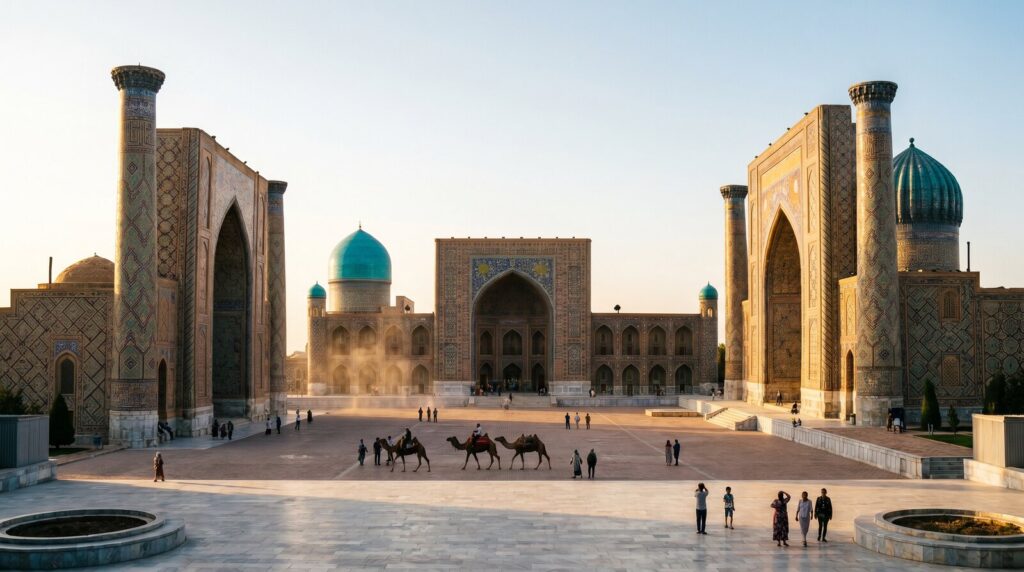
Samarkand, Uzbekistan: Silk Road Jewel, Registan Square & Turquoise Domes
Where Timurid grandeur meets Central Asian mystique along the legendary trade routes
Samarkand stands as one of the world’s most storied cities, a place where East and West collided, merged, and created artistic and architectural treasures that remain unsurpassed. Located in Uzbekistan on the ancient Silk Road trade network, this city witnessed the rise and fall of empires, the clash of civilizations, and the flourishing of cultures that produced some of humanity’s greatest intellectual and artistic achievements. For travelers seeking encounters with history that feel tangible and transformative, Samarkand offers an experience almost incomparable among world destinations.

The Timurid dynasty, which ruled Central Asia in the fourteenth and fifteenth centuries, transformed Samarkand from an important trade hub into an imperial capital of legendary magnificence. Under Timur (Tamerlane) and his successors, the city attracted scholars, artists, and architects from across Asia and the Mediterranean, creating an intellectual ferment that produced advances in mathematics, astronomy, poetry, and architecture. The ruins and surviving monuments of this era reveal ambitions that rival the greatest empires of history.
Table of Contents
Registan: The World’s Grandest Madrasah Complex
Registan Square represents perhaps the single most magnificent example of Islamic architecture in the world, a place where three massive madrasahs (schools) face each other across a plaza that once served as Samarkand’s public gathering space. The word “Registan” itself means “place of sand”—this sandy plaza has for centuries functioned as the city’s heart, witness to trade, celebration, execution, and imperial spectacle. Today, the three remaining madrasahs create a visual experience that defies adequate description, their facades covered entirely in tilework that catches light differently throughout the day.
The Ulugh Beg Madrasah, constructed in 1417-1420, represents the oldest of the three structures and was commissioned by the Timurid prince and astronomer Ulugh Beg. The building originally functioned as an educational institution where students studied theology, law, medicine, and mathematics. The portal—the massive archway entrance—stands over 35 meters high, covered in turquoise tiles arranged in geometric and calligraphic patterns that create a visual rhythm recognizable from enormous distances. Walking through the portal creates a profound psychological transition from external space to internal courtyard, a deliberate architectural effect designed to separate worldly concerns from spiritual learning.
The Sherdor Madrasah (built 1619-1636) faces the Ulugh Beg structure and features a distinctive design incorporating lion motifs (a controversial element in Islamic architecture that typically avoids figurative representation). The lions, rendered in tilework, appear to be prowling across the facade, their manes created through intricate tile arrangements. The interior courtyard opens onto vaulted student chambers where living and studying occurred simultaneously. Contemporary accounts describe the noise of students’ recitations flowing from cells, creating an almost musical quality as hundreds of voices studied Islamic texts simultaneously.
The Tilya-Kari Madrasah (completed 1659-1660) completes the triad, its name meaning “covered with gold” because the interior dome was originally covered in actual gold leaf—a detail that illustrates the extraordinary wealth concentrated in Central Asia’s trade networks. Though the gold has long since disappeared, the interior spaces remain breathtaking, with acoustic properties that make even whispers echo melodiously through vaulted chambers. The courtyard features a particularly well-preserved pool that reflects the facades, creating a doubling of visual magnificence.
The entire complex underwent restoration beginning in 1999, with teams carefully removing centuries of dust and deterioration without using modern cleaning methods that might damage original tilework. The restoration revealed details thought permanently lost, including portions of original gold leaf and decorative elements hidden beneath centuries of grime. This careful conservation allows contemporary visitors to experience the buildings more nearly as their creators intended.
Gur-Emir Mausoleum & Imperial Tombs
The Gur-Emir Mausoleum houses the remains of Timur himself and several members of his family, making it one of the Islamic world’s most significant burial monuments. The structure’s distinctive ribbed dome, covered in turquoise tiles and rising over 40 meters, dominates Samarkand’s skyline and has become the city’s most recognizable architectural element. Walking toward the mausoleum, you experience deliberate architectural progression that builds anticipation and reverence.
The name “Gur-Emir” translates as “Amir’s Tomb,” with “Emir” referring to Timur’s exalted status. The mausoleum was actually commissioned by Timur himself before his death, designed as a place of worship and commemoration. The interior contains not only Timur’s tomb but also those of his son Muhammad Sultan and grandson Muhammad Sultan II, as well as the spiritual mentors Mir Said Bereke and Khoja Ismail. This arrangement reflects Islamic hierarchies where great leaders and their spiritual guides are memorialized together, suggesting continuity between earthly and spiritual leadership.
The marble tomb itself, located in the underground chamber, measures over three meters long and is carved from a single piece of deep green jade-like stone brought from Khotan at enormous expense. The inscription reads in elegant Islamic calligraphy, and the stone’s color symbolizes renewal and resurrection in Islamic tradition. Access to this chamber requires descending stairs into cool darkness, creating psychological contrast with the light-filled upper mausoleum, a transition that medieval architects deliberately engineered to create spiritual introspection.
The interior decoration combines Islamic geometric patterns, calligraphic inscriptions from the Quran, and precious materials including lapis lazuli, jade, and semi-precious stones set into walls and floor. The tilework reaches extraordinary technical and aesthetic sophistication, with individual tiles hand-painted before firing and set in mortar mixed with powdered precious metals. The visual effect creates surfaces that seem to glow from within, as if the mausoleum itself emanates divine light.
The mausoleum’s dome construction uses sophisticated engineering principles, with the ribbed design distributing weight more efficiently than smooth domes would. The ribs themselves become decorative elements, covered in turquoise tiles that create a visual pattern suggesting infinity or mathematical progression. This marriage of structural necessity and aesthetic beauty exemplifies Timurid architecture’s philosophy that practical and spiritual elements should reinforce each other rather than exist separately.
Ancient Bazaars & Silk Road Trade
Samarkand’s bazaars represent living continuations of the trade networks that brought merchants from Constantinople to China, India to Russia, across deserts and mountains for centuries. The Samarkand bazaars remain active commercial centers where locals purchase daily necessities alongside goods sold to tourists, creating a genuine mixing of ancient and contemporary commerce. Walking through these markets, you encounter not only goods but the economic systems and relationships that sustained Silk Road trade.
The Siyob Bazaar, located near the Registan, specializes in traditional Central Asian crafts, silks, and ceramics. Artisans maintain workshops where visitors observe ancient craft techniques still producing goods through traditional methods. Craftspeople making suzani (embroidered textiles) work with colored thread, stitching complex patterns onto fabric that can require months or years of labor. The resulting textiles display geometric and floral patterns refined across centuries, with design principles passed down through families. Purchasing directly from craftspeople connects you not merely to objects but to living traditions and economic relationships that support artisan communities.
The Bibi-Khanym Bazaar, adjacent to the mosque of the same name, functions as the city’s primary food market. Here, vendors arrange produce, herbs, and spices in colorful displays that demonstrate agricultural produce grown in Uzbekistan’s varied climates. Dried fruits, nuts, and herbs particularly dominate, reflecting Central Asia’s favorable conditions for growing and preserving these products. The bazaar operates with unwritten rules and social hierarchies established over centuries, with particular vendors occupying inherited positions and relationships between buyers and sellers continuing across generations.
Bazaar etiquette and negotiation practices represent aspects of Silk Road culture still intact. Prices are often considered starting points for negotiation, with haggling a respected skill demonstrating both buyer and seller intelligence. The back-and-forth of negotiation establishes relationship and respect, with aggressive haggling sometimes leading to better final prices than accepting initial quotes. Understanding that bargaining represents cultural participation rather than mere price reduction allows deeper appreciation of bazaar interactions.
Tea houses scattered throughout bazaar areas function as social centers where merchants, craftspeople, and travelers gather to exchange information, conduct business, and rest. The tradition of tea service—served in handleless bowls with preserved fruits or bread—continues much as it did centuries ago when Silk Road merchants would gather to discuss routes, goods, and market conditions. Sitting in a bazaar tea house, surrounded by commerce and conversation, you occupy the same physical and social space that countless historical figures inhabited.
Timurid Architecture & Islamic Art
Samarkand’s architectural legacy represents the culmination of Islamic artistic traditions refined across the medieval Islamic world. Timurid architects synthesized Persian, Central Asian, and Ottoman influences into a distinctive style emphasizing geometric complexity, calligraphic beauty, and color harmony through elaborate tilework. Understanding these underlying principles reveals depths beyond mere visual appreciation.
Islamic geometric design follows principles derived from mathematical and spiritual understanding of how complex patterns emerge from simple rules. Tilework covers surfaces with intricate designs—sometimes purely geometric, sometimes combined with calligraphy—that create visual continuity and spiritual meaning. The mathematical precision underlying these designs wasn’t accidental; medieval architects explicitly understood how geometric rules could express divine order and infinite complexity. Many tilework patterns encode specific symbolic meanings, with eight-pointed stars representing divine knowledge and six-pointed stars indicating earthly existence.
Calligraphy in Samarkand’s monuments serves not merely decorative but deeply spiritual functions. Quranic verses inscribed on buildings communicate spiritual instruction to the literate, while the visual beauty of letters expresses reverence even for those who cannot read Arabic. The fluid lines of Arabic script, rendered in glazed tile, create visual rhythm that guides the eye across surfaces while conveying sacred text. The script’s inherent elegance—what medieval observers would have recognized as the art of “beautiful writing”—demonstrates that form and content could combine inseparably.
The tiling process itself represented one of the medieval world’s most sophisticated technical achievements. Artisans hand-painted glazes onto tiles before firing, then arranged completed tiles into patterns, sometimes cutting individual tiles to fit specific pattern requirements. The technical challenge of maintaining consistent colors across thousands of tiles, accounting for firing variations and ensuring durability against weather, temperature fluctuation, and centuries of exposure, demonstrates engineering sophistication often overlooked in contemporary analysis of medieval architecture.
Portal design in Timurid architecture represented deliberate psychological manipulation, with massive archways creating profound scale contrasts that made approaching individuals feel small and insignificant before entering sacred spaces. This architectural statement—that individual human concerns diminish before divine magnificence—communicated theological principles through spatial arrangement. Walking through these portals activates a visceral understanding of medieval Islamic theology that reading descriptions could never convey.
Planning Your Samarkand Visit
Samarkand’s tourism infrastructure has expanded significantly in recent years, with improved accommodations, restaurants, and transportation options making the city increasingly accessible to international travelers. Planning requires understanding visa requirements, logistics, best seasons, and practical details that ensure smooth travel experiences.
Uzbekistan requires visas for most nationalities, obtainable through embassies or online e-visa systems. The process typically takes three to seven days, though expedited services exist for additional fees. Citizens of certain countries receive visa-free or visa-on-arrival status, requiring verification before travel. Tourist visas typically permit thirty-day stays, sufficient for extensive Samarkand exploration combined with visits to other Uzbek cities like Bukhara and Tashkent.
Tashkent, Uzbekistan’s capital, serves as the primary international entry point, with Tashkent International Airport accommodating flights from major cities worldwide. From Tashkent, Samarkand is accessible via one-hour flights or three-hour train journeys. The train option offers excellent value and genuine Uzbek travel experiences, with comfortable sleeper cars and dining services. Shared taxis and buses provide the most economical options but require patience with stops and occasional crowding.
The tourist season extends from April through June and September through October, when temperatures remain comfortable without extreme heat. July and August bring temperatures exceeding 40°C (104°F), making outdoor exploration challenging. Winter (November-March) sees pleasant daytime temperatures (around 15°C/59°F) but occasional freezing nights. Spring brings vivid blooms in gardens and parks, while autumn displays subtle light quality favored by photographers.
Accommodations range from luxury hotels like the Hilton and Registan Plaza to mid-range options and budget guesthouses. Even budget accommodations maintain reasonable standards in Samarkand, with cleanliness and basic amenities generally assured. Many travelers choose mid-range options offering good value and reasonable comfort without extreme expense. Hotels commonly include breakfast, reducing daily food costs considerably.
Food in Samarkand reflects Central Asian cuisine, featuring plov (rice cooked with meat and vegetables), shashlik (grilled meat skewers), manti (steamed dumplings), and fresh breads. Bazaars offer exceptional produce and prepared foods at minimal cost. Restaurants catering to tourists maintain reasonable prices compared to international standards, though bargaining remains limited compared to guesthouses or bazaar vendors. Tea and bread remain the consistent companions of Central Asian dining.
Currency is the Uzbek Som, with exchange rates readily available through ATMs and money changers. Credit card acceptance remains limited outside major hotels and restaurants, necessitating cash for most transactions. Carrying cash also enables bazaar purchases and interactions with artisans, most of whom accept only currency. Internet connectivity functions well in hotels and increasing numbers of cafes, with SIM cards for temporary mobile service available at nominal cost.
Journey Along the Silk Road
Samarkand awaits with monuments that rival any structures created by human civilization, bazaars that continue commerce unchanged for centuries, and the tangible presence of empires that shaped world history.
Book your Samarkand journey today and experience the Silk Road’s greatest jewel—a city where history inhabits every corner and transforms casual visitors into devoted admirers.
2026 Travel Update for Samarkand
Uzbekistan has cemented its place as Central Asia’s hottest travel destination in 2026. The high-speed Afrosiyob train connecting Tashkent and Samarkand now runs multiple daily departures, cutting travel time to just over two hours. Samarkand’s Registan Square has undergone careful restoration work, with improved nighttime illumination that makes evening visits spectacular. The Uzbek government continues to ease visa requirements—citizens of over 90 countries can now visit visa-free for up to 30 days. New boutique hotels in restored caravanserais offer atmospheric accommodation, and the city’s traditional craft workshops have expanded to welcome more visitors interested in silk weaving, ceramics, and paper-making.
Frequently Asked Questions About Samarkand
What is the best time to visit Samarkand?
The best time to visit Samarkand is during spring (April to May) and autumn (September to October). These months offer pleasant temperatures of 20–28°C, clear skies, and comfortable conditions for exploring outdoor sites. Summers can be extremely hot with temperatures exceeding 40°C, while winters (December to February) are cold with occasional snow, though the lower tourist numbers and atmospheric winter light can be appealing.
How do I get to Samarkand?
Most international travelers fly into Tashkent’s Islam Karimov International Airport and take the Afrosiyob high-speed train to Samarkand (about 2 hours, tickets from $8–20). Samarkand also has its own international airport with some direct flights from Istanbul, Moscow, and Dubai. Shared taxis between cities are another popular option for budget travelers. Many visitors combine Samarkand with Bukhara and Khiva on a Silk Road itinerary.
Is Samarkand expensive?
Samarkand is remarkably affordable. Budget accommodation starts at $15–25 per night, mid-range hotels cost $40–80, and even the finest boutique stays rarely exceed $150. A full meal at a local restaurant costs $3–8, and entrance fees to major monuments are typically $3–5. The biggest expense is usually the international flight to Uzbekistan, but once there, daily costs are among the lowest in the region.
What should I see in Samarkand?
The must-see attractions include the Registan Square (three magnificent madrasas), Shah-i-Zinda necropolis (stunning tilework), Gur-e-Amir mausoleum (Tamerlane’s tomb), Bibi-Khanym Mosque, and the Siab Bazaar. Beyond the main sites, the Ulugh Beg Observatory, Afrosiyob Museum, and nearby Konigil paper mill offer fascinating cultural depth. Allow at least 2–3 full days to explore properly.
Do I need a visa for Uzbekistan?
As of 2026, citizens of over 90 countries can visit Uzbekistan visa-free for up to 30 days. This includes the US, UK, EU countries, Canada, Australia, Japan, South Korea, and many others. Check the current list on the Uzbekistan Ministry of Foreign Affairs website, as the visa-free program continues to expand. For longer stays, e-visas are available for up to 30 additional days.