
Vilnius, Lithuania: Baroque Old Town, Republic of Užupis & Baltic Spirit
Vilnius arrives as a revelation—a UNESCO-protected old town featuring stunning baroque architecture, a vibrant artistic district (Užupis) claiming independence as its own sovereign republic, and a contemporary culture dynamically transforming the city’s character. Lithuania’s capital, located at the confluence of the Vilnia and Neris rivers, developed as a major trading center and religious hub with deep connections to Catholic traditions, Jewish heritage, and Baltic independence movements. The city compressed centuries of Polish-Lithuanian Commonwealth history, Russian imperial occupation, Soviet domination, and finally independence into its architectural layers and cultural identity.
Vilnius refuses simplification. The old town’s baroque facades conceal courtyards, hidden passageways, and multiple neighborhoods with distinct characters. The quirky independent Republic of Užupis—actually a bohemian district on the riverbank—maintains countercultural values while attracting tourists seeking alternative culture. Contemporary Vilnius merges historical preservation with creative entrepreneurship, establishing itself as Baltic region’s cultural capital. The city’s relatively compact size makes exploration manageable while maintaining sufficient complexity to reward extended engagement.
In This Guide
Old Town: Baroque Beauty & Religious Heritage
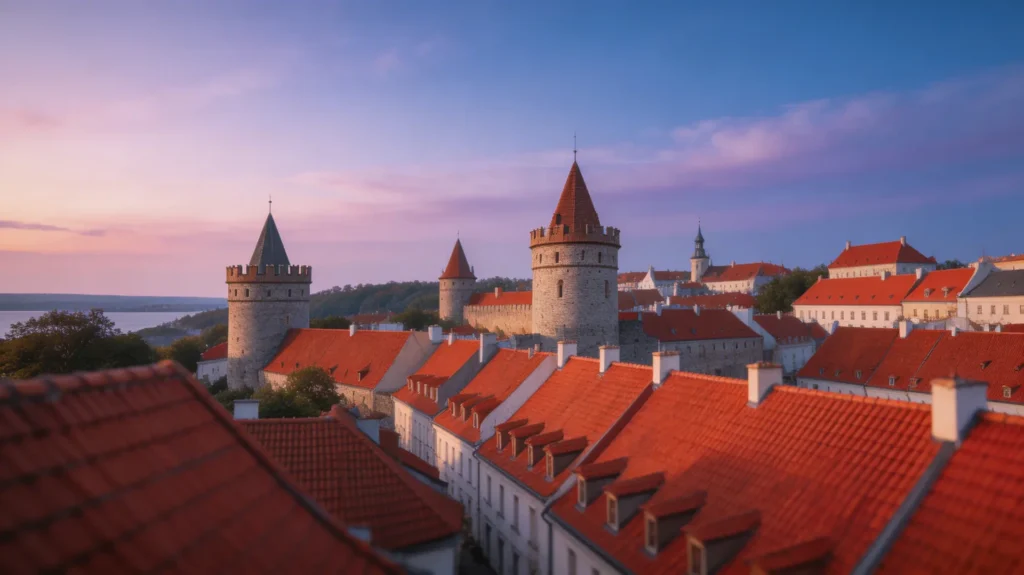
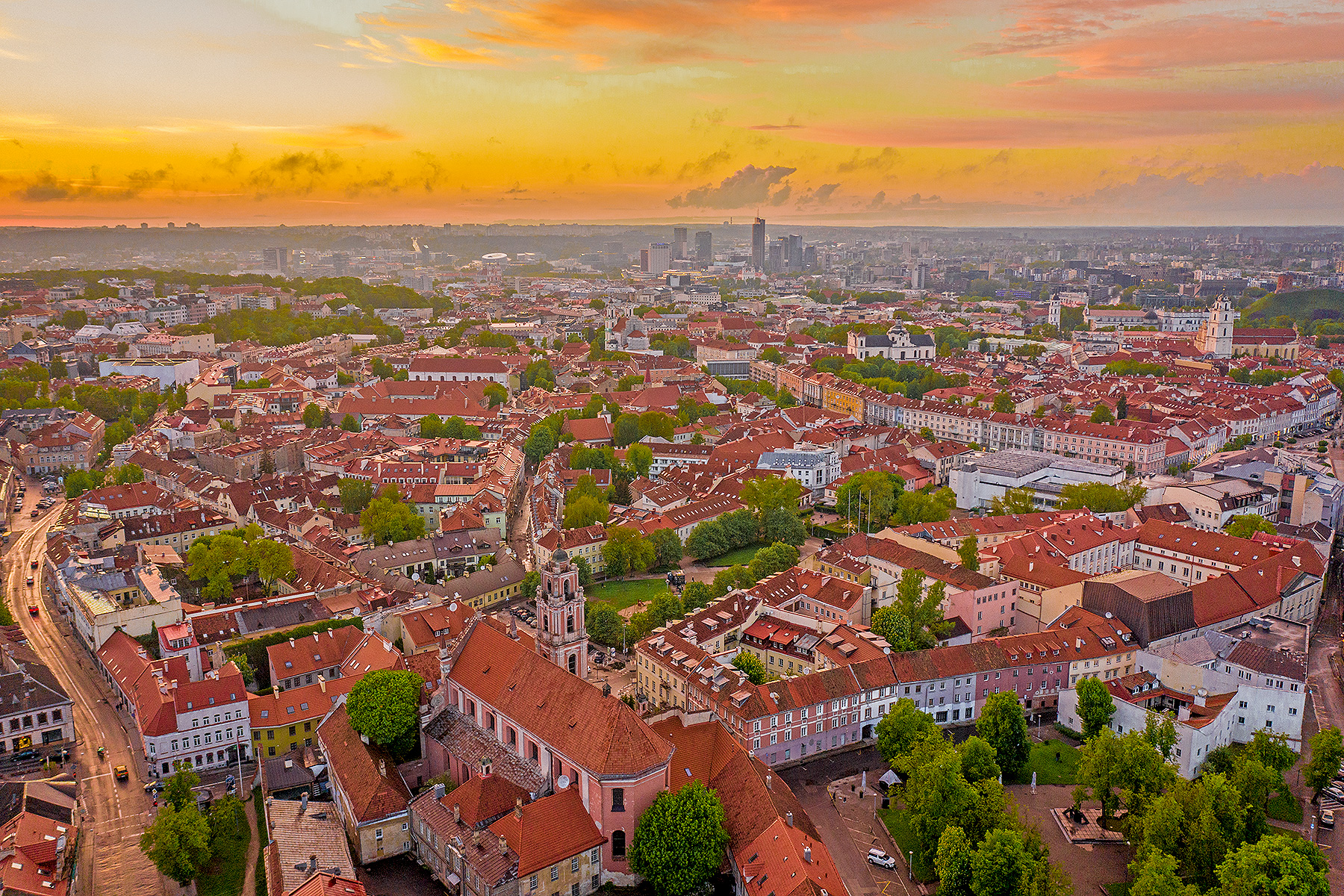
Vilnius’s old town occupies a UNESCO World Heritage-protected zone featuring one of Eastern Europe’s finest concentrations of baroque architecture. The style developed during the 17th-18th centuries when Vilnius prospered as a major city within the Polish-Lithuanian Commonwealth. Catholic nobility and merchant classes commissioned elaborate buildings featuring curved façades, ornamental decorations, and dramatic visual presence. The baroque architectural aesthetic became Vilnius’s defining characteristic, distinguishing it from other Baltic capitals with their Renaissance or medieval emphasis.
Walking through narrow cobblestone streets, you encounter baroque buildings housing contemporary shops, restaurants, galleries, and accommodations. The architectural authenticity—original courtyards, narrow passages, multiple-story structures organized vertically due to space constraints—creates genuinely medieval urban form despite baroque façade modifications. The streets curve and wind organically rather than following rational planning, creating visual discoveries at every corner.
The concentration of religious buildings dominates the old town. Vilnius developed as a significant Catholic pilgrimage site, attracting devotees from throughout Lithuania, Poland, and beyond. Over 40 churches and chapels occupy old town neighborhoods, many featuring baroque architecture, religious artwork, and historical significance. The Church of the Ascension features distinctive baroque style combining Italian and Eastern European influences. St. Johns Church hosts a bell tower accessible by narrow stairs offering panoramic views across red-tiled roofs.
Užupis: The Bohemian Republic
Užupis (literally “Beyond the River”) is a district occupying the east bank of the Vilnia River, physically separated from the old town yet intrinsically linked to Vilnius identity. Beginning in the 1990s post-independence era, artists and bohemians colonized the district’s decrepit buildings, establishing galleries, performance spaces, and creative studios. The community developed countercultural values emphasizing artistic freedom, questioning conventional authority, and celebrating creative expression. In 1997, the district declared itself an independent republic as artistic statement and playful rejection of conventional governance.
The Republic of Užupis maintains this artistic identity through public symbols—the independence flag flies from district boundaries, a constitution written in multiple languages appears on district walls, and annual celebrations commemorate independence day (April 1). The republic issues “passports,” collects “taxes” (donations supporting local artists), and maintains ambassador positions. The playfulness shouldn’t obscure genuine values—Užupis genuinely embraces artistic freedom and community-based governance diverging from conventional municipal structures.
Contemporary Užupis attracts tourists seeking alternative culture and artistic energy. Galleries featuring experimental art, cafes serving creative communities, street art adorning walls, and the general atmosphere of artistic independence distinguish the district from the old town’s more commercial character. Early morning visits before tourist crowds reveal authentic creative community; afternoon visits feature more tourism-oriented venues. The district balances maintaining artistic integrity while accommodating tourism economics.
Užupis Galleries
Independent galleries scattered throughout the district showcase contemporary art, installations, and experimental work. Many feature local artists’ practices alongside rotating exhibitions. Gallery openings and art events create dynamic cultural scene.
Užupis Constitution
The district’s constitution written in multiple languages asserts principles of artistic freedom, human dignity, and unconventional living. Plaques throughout the district proclaim constitutional articles, creating public art that defines the district’s values.
Eating in Užupis means discovering local restaurants and cafes serving communities rather than tourist masses. The food tends toward creative vegetarian options and experimental cuisines reflecting the district’s artistic character. Prices remain affordable compared to old town establishments, making Užupis attractive for budget-conscious travelers seeking authentic culture.
Cathedral: National Symbol & Sacred Space
The Vilnius Cathedral, located in Cathedral Square at the old town’s northern edge, represents Lithuania’s spiritual and national heart. The neoclassical structure, built on the site of earlier pagan temples, embodies Lithuania’s religious transformation from paganism through Catholicism to Orthodox influences. The cathedral’s architectural style—columns, pediment, geometric forms—reflects 18th-century enlightenment aesthetics diverging from the baroque ornamentalism dominating surrounding buildings.
The cathedral’s interior features religious artwork, a main altar, and the Vilnia chapel housing Saint Casimir, Lithuania’s patron saint. The saint’s historical significance reflects Lithuania’s religious traditions and national identity. During Soviet occupation, the cathedral was converted to an art museum and concert hall—denying religious function while appropriating the sacred space for cultural purposes. Post-independence restoration returned the cathedral to religious use, symbolizing Lithuania’s reclaimed freedom.
Cathedral Square surrounding the building serves as gathering space for celebrations, demonstrations, and community assemblies. The bell tower (Gediminas Tower), rising from an adjacent position, dominates Vilnius skyline and provides panoramic city views from its height. The tower’s visibility from throughout Vilnius makes it navigational reference point and constant reminder of national identity.
Visiting the cathedral requires respect for its sacred function—modest dress, quiet behavior, and understanding that religious ceremonies continue alongside visitor access. The space simultaneously functions as historical monument and living religious community, requiring visitors to balance tourism and reverence.
Jewish Heritage: History & Contemporary Remembrance
Vilnius hosted one of Eastern Europe’s largest and most vibrant Jewish communities before World War II. The city’s Jewish population included scholars, merchants, craftspeople, and cultural figures contributing significantly to city life. Jewish culture flourished—theaters, newspapers, schools, synagogues, and cultural institutions created dynamic community life. The community spoke Yiddish, maintained religious traditions, and produced distinctive culture recognizable across Eastern European Jewish diaspora.
The Holocaust devastated Vilnius’s Jewish community. During the Nazi occupation, the Vilnius ghetto housed thousands of Jews in confinement before deportation to killing camps. Approximately 95% of Vilnius’s pre-war Jewish population perished in the Holocaust—one of the highest mortality rates among Eastern European Jewish communities. The trauma fundamentally altered Vilnius’s cultural character, removing a community that had shaped the city for centuries.
Contemporary Vilnius confronts this history through museums, memorials, and historical documentation. The Vilna Gaon Museum explores the historical community and its destruction. Memorials throughout the city mark ghetto boundaries, killing sites, and commemorate victims. The Museum of Tolerance addresses historical antisemitism and contemporary diversity values. These institutions ensure historical memory persists and educates subsequent generations about the community destroyed.
Engaging with Vilnius’s Jewish heritage reveals historical complexity—the vibrant pre-war community, the devastating Holocaust, and contemporary efforts to remember and honor those lost. Visiting Holocaust-related sites requires emotional preparation and respectful approach to traumatic history.
Independence & Identity: Shaping Modern Vilnius
Lithuania’s declaration of independence in March 1990—the first Soviet republic to declare independence—initiated transformations reshaping Soviet Union’s future. The independence declaration demonstrated that Soviet authority wasn’t absolute and inspired independence movements throughout the Soviet sphere. The dramatic moment when Lithuania asserted self-determination inspired the “Singing Revolution” as Baltic independence movements embraced mass singing as peaceful resistance form.
Post-independence Vilnius experienced rapid transformation—market economics replacing Soviet planning, Western cultural influences entering previously isolated society, historical traditions reemerging after Soviet suppression. The city’s architecture underwent restoration, museums reopened with new interpretations, and community identity reasserted itself after 50 years of subordination. The pace of change created both opportunities and challenges—economic inequality, cultural disruption, and generational tensions accompanied newfound freedom.
Contemporary Vilnius celebrates independence through symbols, holidays, and cultural emphasis on Lithuanian national identity. The city’s creative energy partly reflects post-independence consciousness—the excitement of possibility, the confidence in cultural distinctiveness, the determination to create futures differing from Soviet past. This forward-looking energy combines with historical preservation, creating dynamic tension between tradition and innovation.
Contemporary Culture: Art, Music & Creative Energy
Vilnius’s contemporary cultural scene rivals Baltic region capitals. The National Philharmonic hosts orchestral performances, opera, and classical music. Independent galleries throughout the city showcase contemporary art. The annual Vilnius Open Festival brings together performance art, film, literature, and experimental work. Street art throughout the city—particularly in Užupis and outer neighborhoods—demonstrates vibrant visual culture addressing social issues, celebrating creativity, and transforming urban spaces.
Music festivals occur regularly, ranging from classical performances to electronic dance music celebrations. The city hosts international film festivals, theatrical productions, and literary events. This cultural vitality reflects Lithuania’s determination to establish cosmopolitan cultural identity distinct from historical Russian dominance. The creative energy combines with relatively low costs compared to Western Europe, attracting artists and creative workers establishing studios and venues.
Food culture experiences contemporary transformation alongside historical preservation. Traditional Lithuanian dishes—potato pancakes (bulviniai blynai), rye soup (rūgštus barščiai), filled pastries (koldūnai)—remain available in family restaurants and home cuisine. Simultaneously, contemporary chefs experiment with traditional ingredients, creating fusion cuisine establishing Vilnius as culinary destination. The interplay between tradition and innovation characterizes contemporary Vilnius culture across all dimensions.
Experience Vilnius’s Baroque Beauty & Artistic Spirit
Vilnius enchants through contrasts—baroque elegance alongside bohemian creativity, historical trauma beside contemporary vitality, religious tradition blended with countercultural independence. The city’s manageable size enables exploration while the architectural and cultural complexity rewards sustained engagement. Whether admiring baroque façades, discovering Užupis artistic culture, confronting Holocaust history, or celebrating post-independence transformation, Vilnius offers profound travel experiences combining history, culture, and human resilience.