
City Guide · China · Yangtze River Delta
Shanghai, China: The Bund, the Skyline, and a City of 24 Million
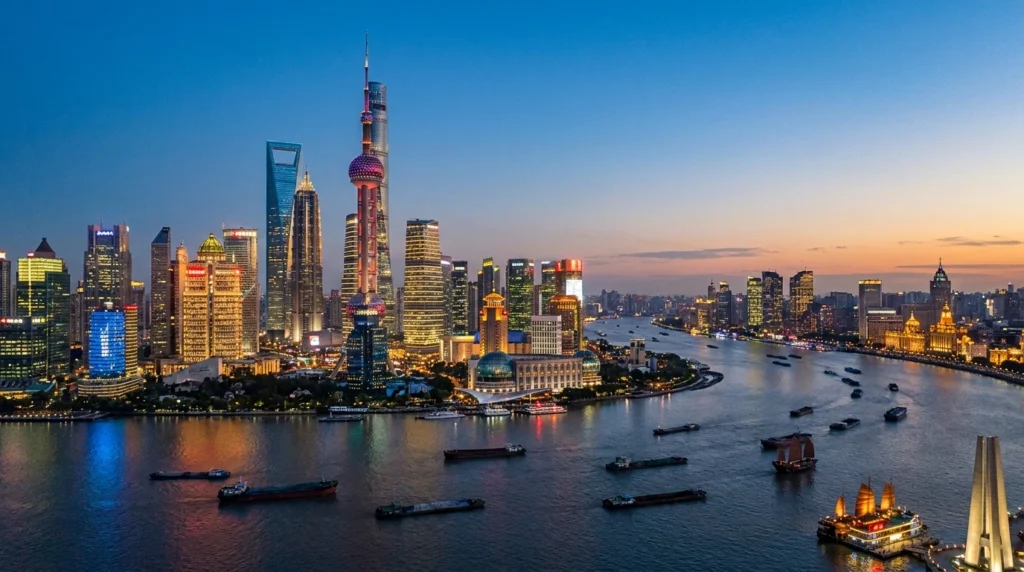
I have crossed the Huangpu River at dusk more times than I can count, and the trick I always pass on is to do it on foot or by ferry rather than by taxi, so you feel the whole city tip from one century into another. Stand on the Bund and the western bank hands you a curving parade of 1920s stone banks and trading houses; turn around and the Pudong skyline answers with the Oriental Pearl, the Jin Mao, and the 632-metre Shanghai Tower, the tallest building in China. This is a city of nearly 24.8 million people, the most populous in the country, and it wears its two faces — colonial-era treaty port and 21st-century financial capital — with total confidence. We treat Shanghai as the most approachable big city in China for a first-time visitor: glossy, fast, English-friendly by mainland standards, and threaded by the longest metro network on earth. Treat this guide as the briefing I hand my own friends before they land at Pudong.

Table of Contents
Why Shanghai?
Shanghai is China’s largest city and its financial capital, home to a permanent population of about 24.8 million at the end of 2024 — bigger than many countries — spread across a flat delta where the Huangpu River meets the mouth of the Yangtze. It is the mainland’s great port and trading city, and for a first-time visitor it is also the easiest big Chinese city to get to grips with: comparatively cosmopolitan, navigable by the longest metro system in the world, and stitched together by a skyline that has become one of the most recognisable on the planet.
The scale claims are blunt. The Shanghai Metro now runs to roughly 831 kilometres of track across some 20 lines and over 500 stations, the largest urban rail network on earth. The 632-metre Shanghai Tower in Lujiazui is the tallest building in China and one of the tallest in the world, twisting 128 storeys above the Pudong financial district. Shanghai Pudong International Airport handled about 76.8 million passengers in 2024, and the city’s two airports together moved more than 124 million — numbers that put Shanghai among the busiest aviation hubs on the planet.
The contradiction underneath those numbers is what makes Shanghai worth several days rather than a single skyline photo. This is at once a treaty-port museum and a 21st-century megacity: the Bund’s curving parade of 1920s neoclassical banks and trading houses faces, across a few hundred metres of river, the science-fiction towers of Pudong, and the two were a generation apart in their making. The British were granted the right to settle along the Huangpu after the First Opium War in 1842, and the foreign concessions that followed gave Shanghai its European architecture, its plane-tree boulevards, and its reputation as the “Paris of the East.”
Shanghai rewards the traveller who reads it in layers. There is the colonial layer of the Bund and the former French Concession, all stone facades and shaded lanes; the Chinese layer of the Old City around Yu Garden, a Ming-dynasty classical garden first laid out in 1559; and the hypermodern layer of Pudong, a district of rice paddies thirty years ago and a forest of supertall towers today. A walk that crosses all three in a single afternoon is the most Shanghai thing you can do.
This guide covers the neighbourhoods that define the city from the Bund to the French Concession to Pudong, the food scene behind soup dumplings and street breakfasts, the sights from Yu Garden to the Shanghai Tower, the day trips to the canal towns and to Hangzhou and Suzhou, and the transit, budget, climate, visa, and practical details that first-time visitors need to plan a trip in any season.
Neighborhoods: Finding Your Shanghai
📍 Shanghai Map: Every Place in This Guide
Shanghai reads less like one downtown than like several cities layered on the same map, and the fastest way to understand it is to think in terms of the river and the eras stacked along it. The historic west bank (Puxi) holds the colonial Bund, the Chinese Old City around Yu Garden, the shopping spine of Nanjing Road, and the leafy former French Concession; across the Huangpu, the east bank (Pudong) is the hypermodern financial district of Lujiazui and its supertall towers. A transit card or the metro QR code in your phone, plus a willingness to walk the lanes, will get you through all of the districts below.

Read the neighbourhoods below as a loose sweep from the river outward: the colonial waterfront, the Chinese Old City beside it, the shopping streets that run inland, the European concession to the south-west, and the modern towers across the water. Most visitors base themselves in Puxi — near the Bund, People’s Square, or the French Concession — for walkability and atmosphere, and cross to Pudong for the skyline and the observation decks. Whichever base you choose, plan your days by geography and let the metro carry you between them.
The Bund (Waitan)
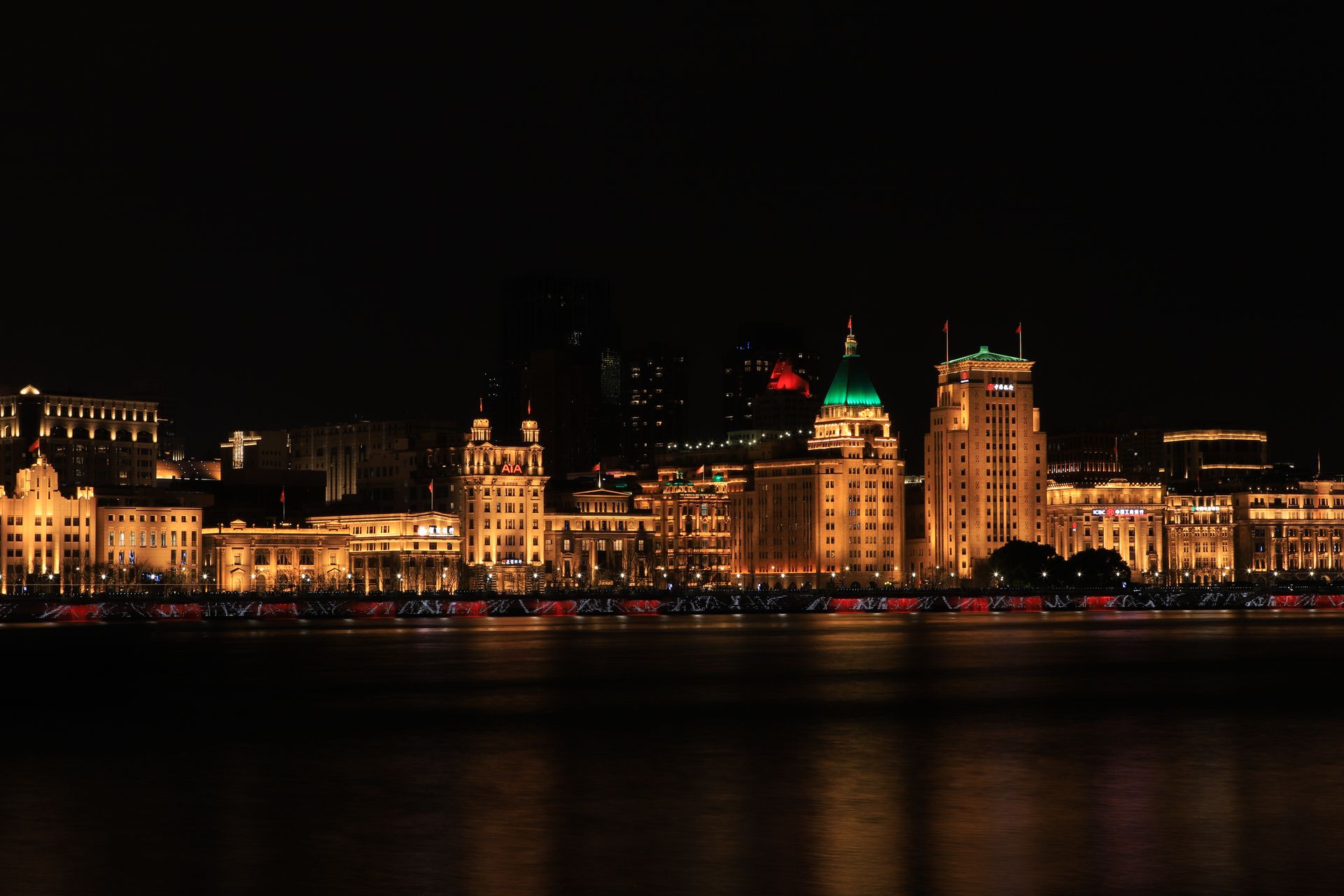
The mile-long curving waterfront promenade on the west bank of the Huangpu, lined with a parade of grand 1920s neoclassical, art-deco, and beaux-arts buildings — the former banks, customs house, and trading firms of the foreign concession era. It is the single most iconic stretch of the city, best walked at dawn for quiet light and after dark for the floodlit facades on one side and the neon towers of Pudong on the other. The promenade is free, open, and endlessly photographed.
- The waterfront promenade and its heritage facades
- The former Customs House and HSBC Building
- Sunset and after-dark views of the Pudong skyline
Best for: photography, architecture, river views. Access: Metro Line 2/10 to East Nanjing Road, then walk east.
The Old City & Yu Garden
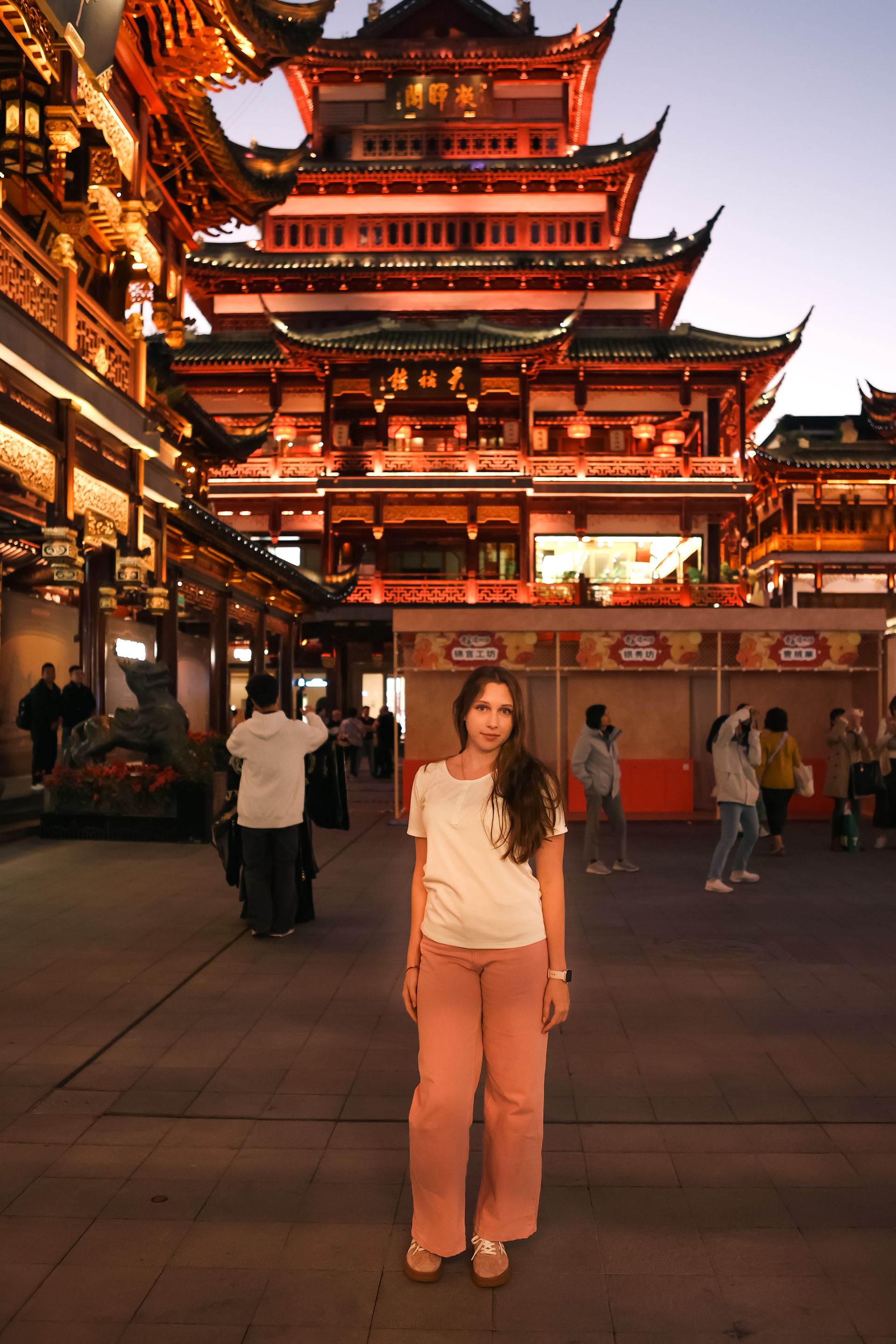
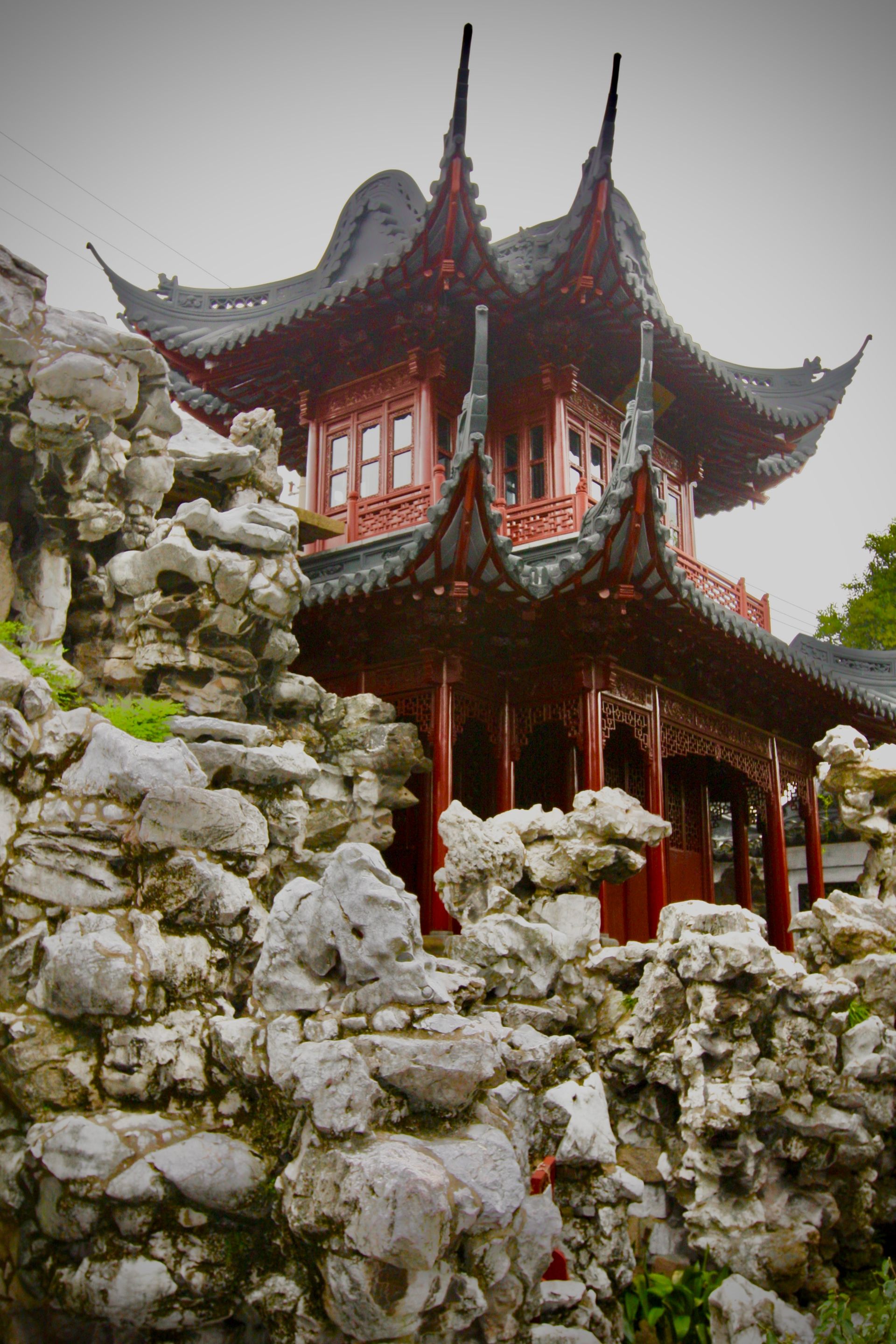
The historic Chinese heart of Shanghai, a once-walled quarter of narrow lanes south-west of the Bund, centred on the exquisite Yu Garden — a classical Jiangnan garden first laid out in 1559 during the Ming dynasty — and the busy Yuyuan Bazaar around it. This is the most traditionally Chinese corner of the city, all tiled roofs, zigzag bridges, and dumpling counters, and it is touristy but genuinely beautiful, especially when the bazaar lanterns light up at night.
- Yu Garden and the Huxinting teahouse
- The Yuyuan Bazaar and the City God Temple
- Nanxiang soup-dumpling counters
Best for: classical gardens, traditional architecture, snacks. Access: Metro Line 10/14 to Yuyuan Garden.
The Former French Concession
The leafy, low-rise district south-west of the centre that gives Shanghai its “Paris of the East” reputation: plane-tree boulevards, art-deco villas and shikumen lane houses, independent boutiques, and a dense scatter of cafes, wine bars, and restaurants. It is the most pleasant part of the city to walk aimlessly, and the neighbourhoods around Wukang Road, Anfu Road, and Xintiandi are where Shanghai’s style-conscious side comes out. Slow down here; the pleasure is the wandering, not any single sight.
- Wukang Road and its art-deco mansion blocks
- Xintiandi’s restored shikumen lanes
- Tianzifang’s warren of craft shops and cafes
Best for: cafes, boutiques, architecture, slow walks. Access: Metro Line 1/10 to South Shaanxi Road or Xintiandi.
Lujiazui & Pudong
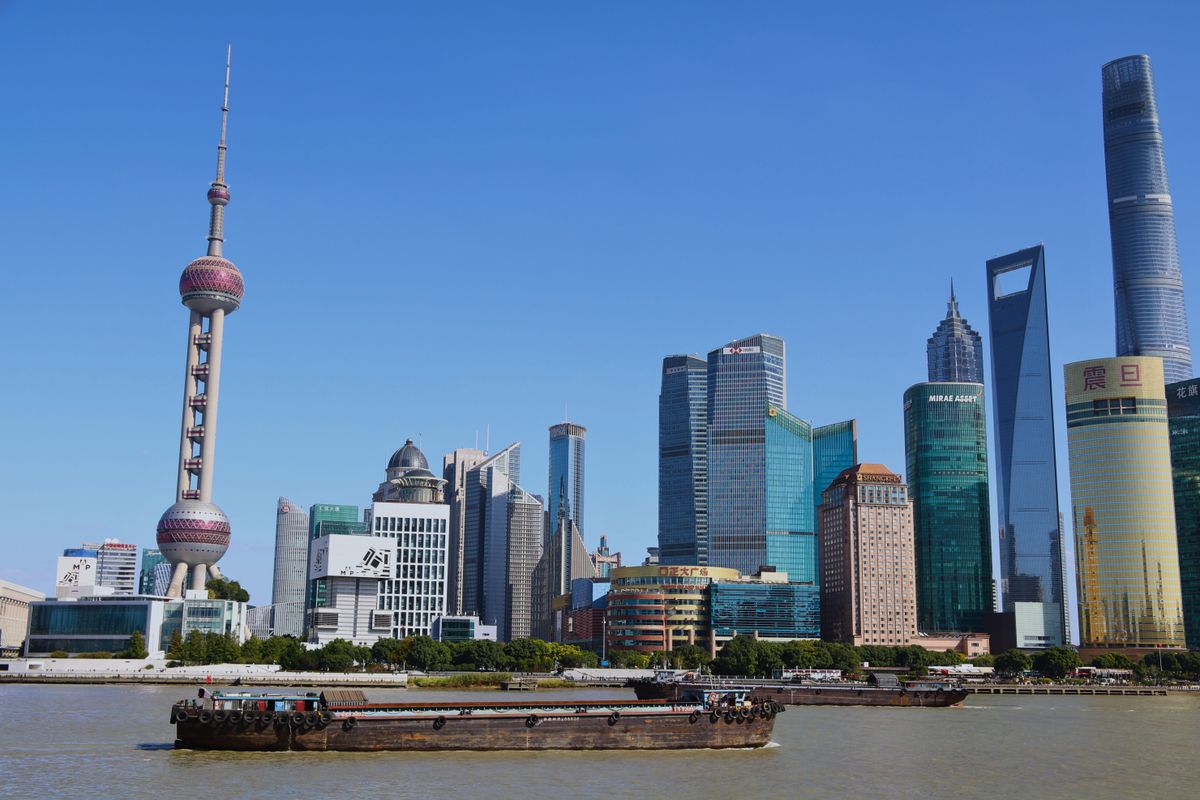
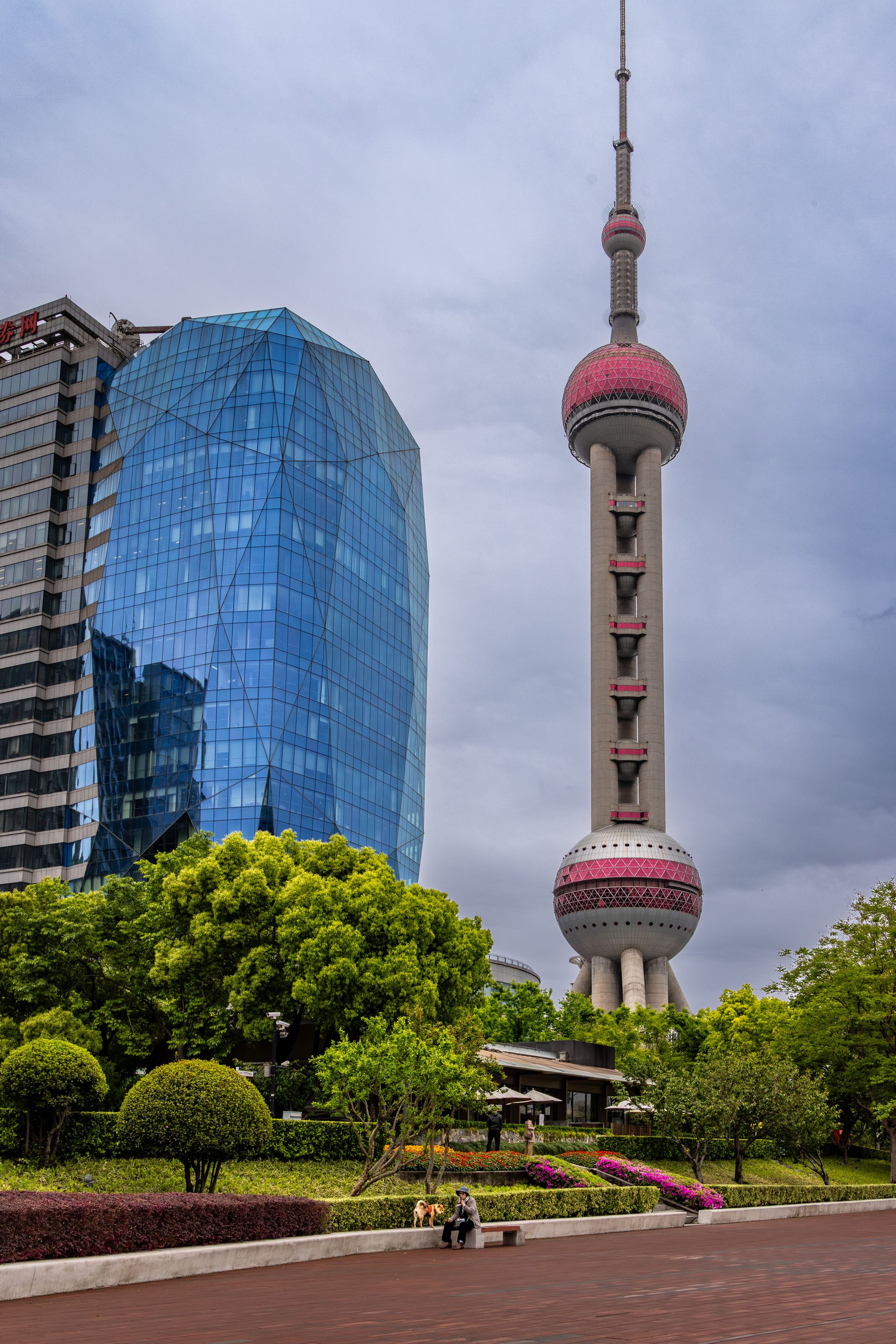
The futuristic financial district on the east bank, where rice paddies stood thirty years ago and a cluster of the world’s tallest buildings stands today: the bottle-opener Shanghai World Financial Center, the Jin Mao Tower, the spiralling 632-metre Shanghai Tower, and the rocket-like Oriental Pearl. This is the skyline you came to see, best appreciated from an observation deck at dusk or from the riverside promenade looking back at the Bund. It is more office park than neighbourhood at street level, but the views are unmatched.
- The Shanghai Tower observation deck
- The Oriental Pearl TV Tower
- The riverside promenade facing the Bund
Best for: skyline views, observation decks, modern architecture. Access: Metro Line 2 to Lujiazui.
People’s Square & Nanjing Road
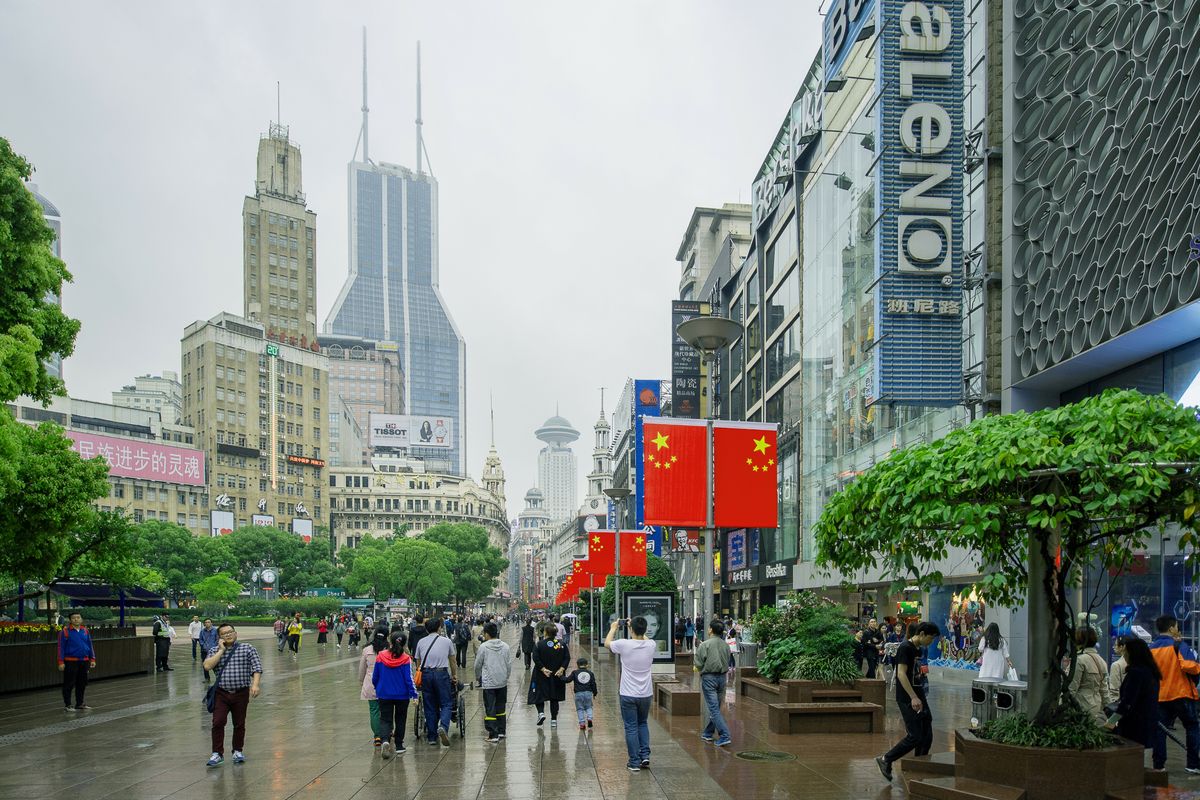
The civic and shopping core of Puxi, anchored by People’s Square — home to the excellent Shanghai Museum — and threaded by Nanjing Road, the city’s historic commercial spine, whose eastern pedestrian stretch is a river of shoppers, neon, and sightseeing trolleys. It is central, busy, and well connected, a logical base for first-timers who want everything a metro ride away. The square’s museums and the road’s department stores can fill a rainy day.
- The Shanghai Museum on People’s Square
- The Nanjing Road East pedestrian street
- People’s Park and the marriage market
Best for: museums, shopping, central base. Access: Metro Line 1/2/8 to People’s Square.
Jing’an & West Nanjing Road
The upscale commercial district north-west of the centre, built around the gilded Jing’an Temple and the luxury malls of West Nanjing Road. It blends serious shopping and dining with pockets of older lane life, and its hotels and connectivity make it a popular, slightly quieter alternative to the Bund area. The temple itself, a working Buddhist monastery wrapped in glass towers, is one of the city’s sharpest old-meets-new images.
- Jing’an Temple amid the skyscrapers
- The luxury malls of West Nanjing Road
- Quiet shikumen lanes off the main streets
Best for: upscale stays, shopping, dining. Access: Metro Line 2/7 to Jing’an Temple.
North Bund & Hongkou
The redeveloping waterfront district north of the Bund, where the river bends and the crowds thin, offering some of the best and least-crowded skyline views in the city. Historic Hongkou behind it holds the old Jewish quarter around the Ohel Moishe Synagogue and the Shanghai Jewish Refugees Museum, a sobering reminder that the city sheltered tens of thousands of refugees during the Second World War. It is a quieter, more lived-in counterpoint to the polished Bund.
- The North Bund riverside walk and its skyline views
- The Shanghai Jewish Refugees Museum
- Duolun Road’s literary heritage lane
Best for: quieter river views, history, local life. Access: Metro Line 12 to International Cruise Terminal.
How the City Fits Together
It helps to picture Shanghai as two banks joined by a river and stitched together underground. On the west bank, Puxi holds almost everything historic and atmospheric: the Bund waterfront, the Old City and Yu Garden just south of it, Nanjing Road and People’s Square running inland, and the leafy French Concession spreading south-west. On the east bank, Pudong’s Lujiazui delivers the skyline and the observation decks but little street life. The genius of the layout, and its scale, is that the metro — the longest network on earth — links all of it cheaply and fast, so you can base yourself anywhere central and reach the rest in twenty minutes underground. The travellers who enjoy Shanghai most cluster their days by bank and by district: a Bund-and-Pudong river day, an Old City day, a concession day, and let the subway carry them between bases rather than fighting the surface traffic, which is heavy and slow across the central districts.
Where to Base Yourself
For a first visit, somewhere central in Puxi is the most logical base. The Bund and East Nanjing Road area puts you a short walk from the waterfront and on the Line 2/10 spine, though it is touristy and pricier; People’s Square is the best-connected hub for hopping between districts; and the former French Concession trades convenience for charm, with the city’s nicest cafes, boutique hotels, and tree-lined walks at the cost of a slightly longer metro ride to the headline sights. Jing’an is a calmer, upscale alternative with excellent connections. Staying in Pudong gives you the skyline on your doorstep and big international hotels, but the district is short on street life and atmosphere after office hours, so most leisure travellers prefer to sleep in Puxi and cross the river by day. Wherever you land, choose a base within a few minutes’ walk of a metro station and plan your days by geography, clustering nearby sights, so you spend your time in the lanes and on the promenades rather than in traffic.
West Bund & Xuhui Riverside
South of the centre along the Huangpu, the former industrial waterfront of Xuhui has been reborn as the West Bund, a long ribbon of riverside parkland, art museums, and converted warehouses that has become the city’s contemporary-culture corridor. The Long Museum and the Yuz Museum anchor a string of private galleries, while the promenade itself draws joggers, skateboarders, and families at weekends. It is a glimpse of the Shanghai that the headline sights miss: spacious, design-conscious, and oriented toward the river rather than the road. Pair it with the nearby Xujiahui district, a busy commercial hub built around a nineteenth-century Catholic cathedral, for a contrast between the new art quarter and the older mission-era city.
- The West Bund art museums and gallery district
- The riverside park and its weekend crowds
- St Ignatius Cathedral in nearby Xujiahui
Best for: contemporary art, riverside walks, design. Access: Metro Line 11 to Yunjin Road or Longhua.
Reading the Lanes: Shikumen and Everyday Shanghai
Beyond the headline districts, the texture that makes Shanghai distinctive is the lane, the longtang of shikumen row houses that filled the city in the early twentieth century. These stone-gate terraces — a hybrid of British row housing and the Chinese courtyard — once housed most of the urban population, and although demolition and redevelopment have thinned them dramatically, surviving pockets in the French Concession, around Tianzifang, and in Hongkou still hum with the rhythms of older Shanghai: laundry strung across alleys, mahjong tiles clacking, breakfast carts at dawn. Walking these lanes, rather than ticking off towers and museums, is the surest way to feel the city’s grain. Some have been polished into boutique-and-cafe districts like Xintiandi; others remain stubbornly lived-in. Both are worth your time, and the contrast between them tells the story of how fast, and how unevenly, the city has remade itself in a single generation.
The Food

Shanghai eats at the meeting point of the Yangtze Delta and the wider world. At its heart is benbang cai, the city’s own cuisine — rich, sweet, soy-and-sugar-braised dishes built on river fish, pork, and freshwater shellfish — layered with the broader Jiangnan tradition of nearby Suzhou and Hangzhou and, thanks to a century as a treaty port, a deep appetite for the international. Prices below are indicative and were current at the time of writing; treat them as ranges, not quotes.
Soup Dumplings & Steamed Buns
The city’s defining snacks are its dumplings and buns. Xiaolongbao, the delicate soup dumpling, and shengjianbao, the thick-bottomed pan-fried pork bun, are eaten at breakfast and all day at counters across the city; the trick with both is to nip the skin, sip the broth, then eat.
- Xiaolongbao — steamed soup dumplings, pork or pork-and-crab (RMB 25–80 a basket, ~$3.50–11)
- Shengjianbao — pan-fried pork buns with crisp bottoms and a soupy centre (RMB 8–20 for four, ~$1–3)
- Crab-roe variations — seasonal hairy-crab dumplings in autumn (RMB 60–150, ~$8–21)
Benbang Cai (Local Shanghai Cuisine)
The city’s home cooking is dark, glossy, and a little sweet — sugar and soy are used with confidence — and built around the river and the pork pot. Seek out a benbang restaurant to taste the tradition that hotel menus only hint at.
- Hongshao rou — red-braised pork belly, the benchmark dish (RMB 45–90, ~$6–13)
- Youbao xia / drunken shrimp — river prawns, fried or marinated in wine (RMB 50–120, ~$7–17)
- Songshu guiyu — sweet-and-sour “squirrel” mandarin fish (RMB 80–180, ~$11–25)
Beyond Dumplings and Braised Pork
Shanghai’s street and snack culture runs far past its famous dumplings, from breakfast carts to noodle counters to autumn crab.
- Cong you bing — flaky pan-fried scallion pancakes from a street cart (RMB 5–12, ~$0.70–1.70)
- Da bing & you tiao — sesame flatbread and fried dough sticks, the classic breakfast (RMB 4–10, ~$0.55–1.40)
- Hairy crab — the prized autumn delicacy, steamed and eaten with vinegar (RMB 100–400, ~$14–56)
- Cifan tuan — a sticky-rice breakfast roll wrapped around a fried dough stick (RMB 6–12, ~$0.85–1.70)
Food Experiences You Can’t Miss
- A morning breakfast crawl through a wet-market lane for shengjianbao, scallion pancakes, and soy milk
- A basket of xiaolongbao at a Nanxiang counter in the Yuyuan Bazaar, eaten slowly with vinegar and ginger
- An autumn hairy-crab feast, the seasonal ritual that grips the whole city from October
Where the Delta Meets the World: Understanding Shanghai’s Plate
To eat well in Shanghai is to read the city’s position and its history. From the surrounding Yangtze Delta come the river fish, freshwater shrimp, and the sweet, soy-rich Jiangnan style shared with Suzhou and Hangzhou; from the city’s own kitchens comes benbang cai, the unapologetically sweet home cooking of the lanes; and from a century as China’s most international port comes an appetite for everything else, from the haipai “Shanghai-style” Western food of the concession era to the world-class contemporary dining of today. The smartest approach is to treat each meal as a chance to taste a different layer rather than chasing one definitive dish. A dumpling breakfast, a benbang lunch of red-braised pork, and a modern dinner in a French Concession townhouse will travel you across the whole map in a single day. The city also rewards curiosity over caution: the most memorable meals are rarely in hotel dining rooms but at the high-turnover counters and lane kitchens where a single dish has been perfected over decades. Watch where the queues form, point if you cannot read the menu, and do not let the glossy mall food courts convince you that you have seen the city’s food.
One practical note on prices and value: Shanghai spans the full range, from a few yuan for a street breakfast to some of the most expensive restaurants in Asia, so your food budget is almost entirely a matter of choice. The everyday food — dumplings, noodles, braised pork, breakfast carts — is genuinely cheap and often the best eating in the city, made at volume by specialists, so chase reputation and queues rather than price at that end. Where you do spend more — a hairy-crab banquet, a tasting menu in the concession — you are paying for the setting, the seasonality, and the service as much as the cooking. If you are nervous about ordering on a first trip, the mobile apps that locals live by (Dianping for reviews, the major delivery and payment apps) smooth almost everything, and many counters have picture menus. Go hungry, carry a payment app linked to your card, and treat the first dumpling counter as the on-ramp to a much deeper scene.
A Day of Eating, Hour by Hour
Start early at a breakfast cart or wet-market lane with shengjianbao, a scallion pancake, or a cifan tuan and a cup of warm soy milk, the way office workers and grandparents both begin the day. Mid-morning, take a basket of xiaolongbao at a famous counter, eaten slowly with black vinegar and slivered ginger. Lunch is the moment for benbang cai — a bowl of red-braised pork over rice, or a plate of river shrimp — at a busy local restaurant. Break in the afternoon with a sweet, or with bubble tea from one of the city’s ubiquitous chains, then spend the evening either on a long, multi-dish benbang dinner with friends or in the French Concession, where the contemporary and international scene comes alive after dark. In autumn, build at least one evening around hairy crab, the seasonal obsession that turns dinner into a slow, hands-on ritual.
Seasonal Eating & the Hairy-Crab Ritual
Shanghai’s food calendar peaks in autumn with hairy crab, the freshwater mitten crab prized for its rich roe and eaten with vinegar, ginger tea, and warming yellow wine from roughly October into early winter. It is less a dish than a ritual: the crabs are sold live by weight, steamed simply, and dismantled slowly by hand, and the season is marked across restaurants, markets, and family tables alike. Spring brings tender greens and river fish; summer leans on cold dishes and cooling soups against the heat and humidity; and winter is the season for the braises and the warming hotpots that have crept in from elsewhere in China. Eating with the season is the local instinct, and asking a restaurant what is good right now — rather than ordering the same dishes year-round — is the surest route to the best meal.
Vegetarian & Dietary Notes
Shanghai is workable but not effortless for vegetarians: Buddhist (sushi/zhai) restaurants serve elaborate meat-free menus, the contemporary scene caters well to plant-based diets, and many vegetable dishes are excellent, but pork, lard, and fish stock find their way into a great deal of everyday cooking, so be specific. The phrase to learn and to show on your phone is “wo chi su” (I eat vegetarian), and watch for hidden meat in “vegetable” dishes, dumplings, and broths. Vegans should add a clear “no egg, no dairy.” Translation apps and picture menus make all of this far easier than it once was, and the major review and delivery apps let you filter for vegetarian-friendly kitchens.
Drinking: Tea, Coffee, and the Bar Scene
What you drink in Shanghai maps neatly onto the city’s layered identity. The old world survives in its teahouses — the Huxinting in Yu Garden, reached by its famous zigzag bridge, is the most photographed — where green and oolong teas are served slowly in a setting little changed in a century. The new world arrives in a coffee culture that has, improbably, made Shanghai one of the most caffeinated cities on earth: the French Concession alone holds hundreds of independent roasters and specialty cafes, and the density of coffee shops here now rivals any city in the world. After dark, the bar scene runs from rooftop terraces overlooking the Bund and Pudong to speakeasies tucked behind unmarked doors in concession lane houses, plus the craft-beer taprooms and natural-wine bars that have multiplied in recent years. Local spirits centre on baijiu, the fierce sorghum liquor, and on warming yellow rice wine, the traditional partner to hairy crab. Whatever your preference, an evening that starts with tea and ends on a rooftop captures the city’s full range in a single arc.
Markets, Malls, and Where Locals Actually Eat
The honest answer to “where do Shanghainese eat” is everywhere and at all hours, but a few settings repay seeking out. Wet markets, though fewer than they once were, still anchor neighbourhood breakfast culture, with cart vendors clustered at their gates frying pancakes and steaming buns from before dawn. Mall food floors, often in the basements of the big shopping complexes, are not the afterthought they are elsewhere: they gather reputable regional chains and dumpling specialists under one roof and are reliable, air-conditioned, and easy to navigate with picture menus. And the lanes themselves hide tiny family kitchens with a handful of tables and one or two perfected dishes. The mobile review app Dianping is the local oracle for all of this, ranking everything by neighbourhood, and a payment app linked to your card unlocks counters that no longer take cash. Follow the queues of office workers at lunch and grandparents at breakfast, and you will eat better, and far cheaper, than any guidebook list can manage. One last habit serves visitors well: arrive hungry and order one more dish than feels sensible, because portions are made for sharing and the joy of a Shanghai table is the spread, not the single plate.
Cultural Sights

The Bund (Waitan)
Shanghai’s signature sight is not a building but a waterfront: the mile-long promenade of grand 1920s banks and trading houses on the west bank, facing the Pudong skyline across the river. Walk it at dawn for quiet and at dusk for the lights; it is free and open at all hours. Founded as the foreign settlement after 1842. Admission free. Best at sunrise or after dark.
Yu Garden (Yuyuan)
A classical Jiangnan garden of pavilions, rockeries, ponds, and zigzag bridges in the heart of the Old City, and one of the finest surviving Ming-dynasty gardens in the country. Founded 1559. Admission around RMB 40 (~$6). Open daily, best on a weekday morning before the bazaar fills.
Shanghai Tower & the Lujiazui Towers
The 632-metre Shanghai Tower, the tallest building in China, anchors the Lujiazui cluster alongside the Jin Mao Tower and the Shanghai World Financial Center; its top-floor observation deck is among the highest in the world. Admission around RMB 180 (~$25) for the observation deck. Best at dusk on a clear day; book ahead online.
The Shanghai Museum
One of China’s great museums, on People’s Square, with a superb collection of bronzes, ceramics, calligraphy, and painting spanning thousands of years; a second, larger East branch has opened in Pudong. Admission free (timed booking). Open daily except Mondays; allow at least half a day.
The Oriental Pearl TV Tower
The rocket-and-spheres tower that became the symbol of 1990s Pudong, with observation decks, a glass-floored skywalk, and a city history museum in its base. Admission from around RMB 160 (~$22) depending on the package. Best at dusk; the lower decks are cheaper and the views nearly as good.
Jing’an Temple
A working Buddhist monastery with a long history, rebuilt in gilded splendour and now ringed by glass skyscrapers — one of the city’s sharpest old-meets-new images. Admission around RMB 50 (~$7). Open daily; quietest in the early morning.
Xintiandi & the Shikumen Lanes
A restored block of shikumen lane houses — the stone-gated terraces that defined old Shanghai — turned into a polished dining and shopping quarter, alongside the small museum at the site of the First National Congress of the Chinese Communist Party. Admission free to wander (museum free, timed). Best in the early evening.
Planning Your Sightseeing
Shanghai’s sights divide neatly by district, which is how you should plan them. Cluster the Bund, the Old City and Yu Garden, and Nanjing Road into a single Puxi day on foot and by short metro hops; pair the Shanghai Tower and the Oriental Pearl into a Pudong half-day, ideally timed for dusk; and give the French Concession, Xintiandi, and the Shanghai Museum their own unhurried outings. Many of the headline experiences — the Bund promenade, the French Concession streets, the major museums — are free, while the observation decks and the classical gardens charge modest fees, so a sightseeing-heavy day is cheaper here than in many world cities. Book the popular observation decks and the free-but-timed museums online in advance, carry your passport for entry and ticketing, and set up a mobile payment app, since cash is increasingly awkward. Most sites open from morning to early evening; the Bund and Pudong are at their best at dusk, and the gardens and temples are quietest soon after opening, before the tour groups arrive.
Museums Beyond the Headliners
Shanghai’s museum culture runs far deeper than the famous Shanghai Museum. The Power Station of Art, China’s first state-run contemporary-art museum, occupies a converted riverside power plant and stages ambitious exhibitions in its cathedral-like turbine hall, free to enter. The West Bund corridor downstream gathers the Long Museum and the Yuz Museum among a cluster of private galleries, while the Shanghai Jewish Refugees Museum in Hongkou tells the moving story of the tens of thousands who found shelter here during the Second World War. For history, the small but significant museum at Xintiandi marks the 1921 founding of the Chinese Communist Party, and the Shanghai History Museum on People’s Square traces the city’s rise from fishing village to global metropolis. Many of these are free or charge only a token fee, and several require timed online booking, so a culture-focused visitor can fill several days for almost nothing beyond metro fares.
Temples, Churches, and Sacred Corners
Beneath the towers, Shanghai keeps a quiet layer of the sacred. The Jade Buddha Temple, an active monastery, houses two pale Burmese-jade Buddha figures brought to the city over a century ago and remains a working centre of worship rather than a museum piece. The Longhua Temple and its ancient pagoda, the city’s oldest, anchor the south; Jing’an Temple gleams amid the skyscrapers; and the treaty-port era left grand churches too, from the twin-spired St Ignatius Cathedral in Xujiahui to the riverside chapels of the old missions. Visiting early in the morning, before the tour groups and the heat, rewards you with incense smoke, chanting, and a stillness that feels improbable in a city of 24 million.
Entertainment

Rooftop Bars & the Bund at Night
Shanghai’s signature night out is a rooftop bar on the Bund or in Pudong, drink in hand and the floodlit skyline filling the view. Typical cost RMB 90–200 (~$13–28) a cocktail at the smart venues. Book a window or terrace table ahead for sunset, when the lights come on across the river.
Acrobatics & the Circus
The Shanghai acrobatics troupes are world-famous, and a nightly show of contortion, plate-spinning, and the motorcycle “globe of death” is a classic family-friendly evening. Typical cost RMB 150–400 (~$21–56). Book ahead and choose a central theatre near a metro line.
Jazz & Live Music
Shanghai has a jazz heritage going back to its 1930s heyday, kept alive in hotel bars and dedicated clubs, alongside a contemporary live-music and electronic scene in the concession. Typical cost RMB 80–250 (~$11–35) with a drink. The historic Peace Hotel jazz bar is the nostalgic choice.
Nanjing Road & Night Markets
The free, unforgettable evening “entertainment” of the city is simply walking the neon canyon of Nanjing Road East and the Bund promenade after dark, with the crowds and the lights. Typical cost free. Go after sunset, keep valuables close in the crush, and let the city put on its own show.
Theatre, Opera & the Arts
Shanghai’s arts scene is among the richest in China: the Shanghai Grand Theatre and the Poly and other concert halls stage opera, ballet, symphony, and touring musicals, while the city’s contemporary-art museums — the Power Station of Art in a converted power plant, the West Bund galleries — rival any in Asia. Typical cost RMB 100–800 (~$14–112) for a performance. Book ahead for the big productions; the museums are inexpensive or free.
Shopping as a Night Out
In a city this commercial, shopping is a form of entertainment, and the malls stay open late: the luxury flagships of West Nanjing Road and the IFC in Pudong, the boutiques of the French Concession, and the fakes-and-bargains markets are all part of the evening fabric. Typical cost free to browse. The concession boutiques and the Tianzifang lanes are the most enjoyable to wander after dinner.
How Shanghai Goes Out
Shanghai’s nightlife is sophisticated, varied, and runs later than much of China, splitting cleanly by district. The Bund and Pudong deliver the glossy, skyline-facing rooftop bars and hotel lounges; the former French Concession is the centre of gravity for the cool crowd, with its cocktail bars, wine bars, live-music rooms, and clubs tucked into lane houses and converted villas; and the big international hotels keep the smartest, latest bars. The practical rules are simple: set up a ride-hailing app (the major one works in English) and a mobile payment method before you go out, since hailing a street taxi late and paying cash is increasingly awkward; carry your passport, which some venues check; and remember that the metro stops running around eleven, so plan a ride home for a late night. For a more cultural evening that sidesteps the bar scene, an acrobatics show, a jazz set at a historic hotel, or simply the floodlit Bund offer a window onto the city that the clubs never touch. Whatever you choose, Shanghai after dark is safe, energetic, and easy to navigate for a visitor.
Festivals & the City’s Calendar
Shanghai’s entertainment calendar is busy year-round and worth checking before you book. Chinese New Year, in late January or February, brings temple fairs, lantern displays, and a city that both empties of migrant workers and fills with festivity. The Shanghai International Film Festival each June is one of Asia’s most important, packing cinemas with premieres, and autumn delivers a dense run of arts seasons, design weeks, and the Formula 1 calendar at the nearby circuit. Smaller, neighbourhood-scale events — gallery openings on the West Bund, jazz festivals, food and craft-beer weekends — happen almost constantly in the concession. If your trip coincides with a major festival, book tickets and tables well ahead, since the city’s scale means the best events sell out fast, and consider that the days around Chinese New Year itself see many smaller restaurants and shops close while the headline attractions stay open.
Day Trips

Zhujiajiao Water Town (~50 km / 1h by bus or metro)
The closest of the classic Yangtze Delta canal towns, a maze of stone bridges, whitewashed houses, and waterways on the edge of greater Shanghai. It is touristy but genuinely pretty, and reachable on a long metro ride plus a short hop, making it the easiest taste of old water-town China without leaving the municipality. Go on a weekday morning to beat the crowds.
Suzhou (~30 min by high-speed rail)
The “Venice of the East,” famous for its UNESCO-listed classical gardens and silk heritage, half an hour away on the bullet train. The Humble Administrator’s Garden and the old canal quarters make a perfect, easy day trip, and the frequent fast trains mean you can be there before mid-morning. Buy rail tickets in advance with your passport.
Hangzhou & West Lake (~1h by high-speed rail)
One of China’s most celebrated scenic cities, built around the willow-fringed West Lake, an hour south by bullet train. The lakeside pagodas, tea villages, and causeways reward a full day or an overnight; it is the classic longer day trip from Shanghai. Trains are frequent; book ahead in peak season.
Tongli & the Canal Towns (~1h 30m by car or train+taxi)
A cluster of beautifully preserved canal towns near Suzhou — Tongli, Luzhi, Wuzhen further afield — offering a quieter, more atmospheric version of the water-town experience than Zhujiajiao. Tongli’s bridges and gardens make a serene day. Best paired with a Suzhou trip or visited as a dedicated outing.
Sheshan & the Western Hills (~40 km / 1h by metro+bus)
The low green hills west of the city, topped by the Sheshan Basilica and an observatory, with forest walks and a theme park — an easy, family-friendly escape from the concrete when you want trees and a horizon. A relaxed half- or full day. Best in spring and autumn for the walking.
How to Choose & Book
The single most important decision for a Shanghai day trip is rail versus road. For Suzhou and Hangzhou, the high-speed train is the obvious choice — fast, frequent, cheap, and far more comfortable than the road — but you must book tickets in advance with your passport, ideally through the official rail app or a hotel concierge, and arrive early to clear security at the vast modern stations. For the canal towns closer to the city, a mix of metro and a short taxi works for Zhujiajiao, while a hired car with a driver for the day removes the hassle of connections for the more scattered towns like Tongli and Wuzhen. Whatever you choose, start early: the gardens and water towns are at their best before the tour buses arrive, and the bullet trains let you be in Suzhou or Hangzhou by mid-morning. Carry your passport for rail travel and ticketed sites, set up a mobile payment app, and if you only have time for one trip, make it Suzhou for the gardens or Hangzhou for the lake.
Making the Most of the Delta
What makes day trips from Shanghai so rewarding is the geography: the city sits at the heart of one of the most densely connected regions on earth, the Yangtze Delta, and the high-speed rail network has collapsed the distances between its historic cities to a matter of minutes. Within an hour or two by bullet train you can reach not only Suzhou and Hangzhou but also Nanjing, the old southern capital, with its Ming-dynasty walls and poignant modern history, and the well-preserved canal town of Wuzhen. The trains are frequent, punctual, and inexpensive, and the modern stations — though vast and security-conscious — are easy to use once you have booked with your passport. The practical art is to pick one destination and commit rather than trying to combine several: a single garden city or lake done slowly beats a rushed tour of three. Travel midweek where you can, start at dawn, and treat the journey itself, gliding across the delta at 300 kilometres an hour, as part of the experience.
Seasonal Guide

Spring (March – May)
One of the two prime windows: mild, increasingly warm days (roughly 10–25°C), blossom in the parks, and generally pleasant weather for walking the Bund and the concession, though spring can be damp and showery. A fine time to visit before the summer heat arrives.
Summer (June – August)
Hot, intensely humid, and the wettest season, with frequent thunderstorms and the risk of typhoons sweeping the coast from roughly July into the autumn. Temperatures regularly top 35°C with high humidity. It is the least comfortable time to walk the city; lean on the air-conditioned metro and malls, and watch the forecast in typhoon season.
Autumn (September – November)
The peak season and the best of the year: the summer heat and humidity ease into crisp, clear, mild days, the skies are at their bluest for skyline photography, and the hairy-crab season arrives. October and November are ideal for walking the whole city. Book ahead around the early-October national holiday week, when domestic travel surges.
Winter (December – February)
Cold, grey, and damp rather than snowy, with temperatures often near or just above freezing and a penetrating riverside chill, though clear cold snaps give sharp skyline views. It is the low season, with thinner crowds and lower prices; pack warm layers and a windproof coat for the Bund. Lunar New Year (usually late January or February) sees the city quieten as residents travel.
When Should You Actually Go?
The honest answer for most visitors is autumn — late September through November — with spring (March to May) a close second. Autumn delivers the trifecta: the summer heat and humidity have broken, the air is at its clearest for the skyline, and the hairy-crab season is in full swing, which is exactly why hotels fill and prices rise around the early-October golden-week holiday, so book ahead and avoid that single week if you can. Spring is the gentler alternative, mild and green, at the cost of more rain and grey. Summer is for travellers who do not mind heat, humidity, and the chance of a typhoon in exchange for long days and a buzzing city; lean hard on the air-conditioned metro and indoor sights. Winter rewards the cold-tolerant with thin crowds, low prices, and occasional brilliantly clear skyline days, though the damp riverside cold is real. Whatever the season, the metro makes Shanghai an all-weather city, and a rainy or sweltering day is easily spent among its world-class museums and malls.
Getting Around
The Metro
The Shanghai Metro is the backbone of getting around — the longest urban rail network in the world, with roughly 831 km of track, around 20 lines, and over 500 stations linking almost every district cheaply and fast. Trains run from early morning to around 11pm, are clean, air-conditioned, and signed in English, and a single ride costs only a few yuan by distance. It is the single best way to move around the city.
The Maglev Train
The Shanghai maglev — the world’s first commercial high-speed magnetic-levitation line — runs between Pudong airport and Longyang Road metro station in about eight minutes, currently at a cruising speed of 300 km/h (it ran at 431 km/h before 2021). It is more an experience than a practical airport transfer for most, since it stops short of the centre, but it is a memorable ride.
Transit Cards & Mobile Payment
Buy a rechargeable Shanghai Public Transportation Card for the metro, buses, and ferries, or — far easier — set up the metro QR code inside the major mobile-payment apps (linking an international card now works for most visitors). The same payment apps cover almost everything else in the city, so getting one running on arrival is the most useful single step you can take.
Airport Access
- Pudong International (PVG), ~30 km east: Metro Line 2 (~RMB 8, ~60–75 min) or the maglev to Longyang Road (~RMB 50, 8 min) then metro
- Hongqiao International (SHA), ~13 km west: Metro Line 2/10 direct into the centre (~RMB 5, ~30–45 min) — closest to the city and connected to the high-speed rail hub
Taxis & Ride-Hailing
Flag-fall is around RMB 14–18 for the first couple of kilometres, and metered taxis are plentiful and cheap by international standards, but few drivers speak English — have your destination written in Chinese or shown on a map. Ride-hailing through the dominant app (which has an English interface) is usually easier, fixes the price, and removes the language barrier. Use ride-hailing or the metro late at night.
Buses, Ferries & Bikes
City buses are cheap and extensive but harder for non-readers; the Huangpu River ferries are a cheap, scenic way to cross between Puxi and Pudong; and dockless shared bikes (unlocked through the payment apps) are everywhere and ideal for the flat, leafy French Concession. Each is a pleasant supplement to the metro rather than a replacement.
Walking & Realistic Expectations
Shanghai is a walking city at the district scale and a metro city across town. The Bund promenade, the Old City lanes, Nanjing Road, and above all the tree-lined French Concession are best explored entirely on foot, where the pleasure is in the wandering; the same is not true of the vast distances between districts, where the surface traffic is heavy and slow and the metro is far faster. The winning strategy is to ride the subway between districts and then explore each one on foot or by shared bike. Pavements are generally good and the central areas are pedestrian-friendly, but the city is large, so cluster your days by district and let the underground carry you between them. A transit card or the metro QR in your phone, a payment app, and comfortable shoes are the three things that make Shanghai effortless.
Navigation Tips
Apps: a mapping app that works in China (the major local maps app, or an offline map), the dominant ride-hailing app, and the metro QR inside a payment app. A VPN set up before you arrive keeps your usual maps, messaging, and search working, since many Western services are blocked on the mainland. Save your hotel’s name and address in Chinese to show drivers, since English is limited outside tourist areas, and keep your passport on you for ticketing and the occasional check.
Budget Breakdown: Making Your Yuan Count
| Tier | Daily | Sleep | Eat | Transport | Activities | Extras |
|---|---|---|---|---|---|---|
| Budget | RMB 250–450 (~$35–63) | RMB 120–280 hostel/budget hotel | RMB 60–120 street food & noodles | RMB 20–40 metro | RMB 40–100 site fees | RMB 30 water/SIM |
| Mid-Range | RMB 700–1,600 (~$98–225) | RMB 400–900 3-4 star hotel | RMB 200–500 restaurants | RMB 60–150 metro & ride-hailing | RMB 150–400 decks & tours | RMB 100 extras |
| Luxury | RMB 3,000+ (~$420+) | RMB 1,800+ 5-star/Bund hotel | RMB 800+ fine dining | RMB 300+ private car | RMB 600+ private guide | RMB 500+ spa/shopping |
Where Your Money Goes
Shanghai spans the full range. Everyday food and the metro are genuinely cheap — a street breakfast costs a few yuan and a cross-town metro ride well under RMB 10 — while accommodation and the high-end dining and bar scene can rival any world capital. The big variables are your hotel and how often you eat and drink at the smart, skyline-facing venues.
Sample Daily Budgets
To make the table concrete: a shoestring traveller in a hostel or budget hotel, eating at street counters and noodle shops, riding the metro, and seeing a mix of free sights (the Bund, the museums, the concession) and the occasional ticketed one can run a comfortable day on around RMB 350–450 (~$49–63). A mid-range traveller in a clean three- or four-star hotel, mixing metro with ride-hailing, eating in proper restaurants, and paying for an observation deck or two should plan for RMB 900–1,400 (~$126–196) a day. At the luxury end — a five-star or Bund-view hotel, fine dining, rooftop bars, and a private guide or car — RMB 3,500–6,000 (~$490–840) a day is realistic. The biggest swing factor is always accommodation, which spans hostel dorms to some of Asia’s most expensive suites; food and local transport stay affordable across all tiers if you eat where locals do. A few costs are easy to forget: the maglev and airport transfers, the observation-deck tickets, the data SIM or roaming, and the high-speed rail fares for day trips to Suzhou and Hangzhou, which sit outside the daily figures.
How Shanghai Compares on Cost
Set against other major Asian destinations, Shanghai is a city of two prices. Its everyday costs — metro fares, street food, neighbourhood restaurants, museum entry — are markedly cheaper than Tokyo, Hong Kong, or Singapore, so a frugal traveller can have a rich few days for very little. But its top end — five-star hotels, Bund-view dining, rooftop cocktails, designer shopping — matches or exceeds those same cities, because Shanghai is, after all, China’s financial capital. The practical lesson for budgeting is that your single biggest lever is accommodation, followed by how often you eat and drink at the glamorous, skyline-facing venues. Travellers who sleep modestly but eat adventurously at local counters often report that Shanghai delivered more for their money than anywhere else in the region, while those who chase the rooftop-and-fine-dining version of the city should budget accordingly. Plan which version of Shanghai you want before you book the hotel.
Money-Saving Tips
- Eat where the locals eat: a bowl of noodles or a basket of dumplings at a busy counter beats a mall food court on price and quality, and a full meal can cost under RMB 50 (~$7)
- Lean on the metro — it reaches almost everywhere for a few yuan and is far cheaper and often faster than taxis across the central districts
- Build your days around the free headline sights: the Bund, the French Concession, the Shanghai Museum, and the riverside promenades cost nothing
- Set up a mobile-payment app for the small discounts, coupons, and ride-hailing deals that locals use, and to avoid cash-handling friction
- Take the high-speed train for day trips rather than tours — Suzhou and Hangzhou are cheap and fast to reach independently
- Visit the observation decks at the lower (cheaper) levels or skip them for the free Bund and North Bund views, which are arguably better
Practical Tips

Language
Mandarin Chinese is the official language and Shanghainese is widely spoken locally; English is common in international hotels and the main tourist areas but limited elsewhere, including with taxi drivers and at street counters. A translation app, your destination written in Chinese, and a willingness to point will carry you through. A few words of Mandarin (nihao, xiexie) are warmly received.
Cash vs. Cards & Mobile Payment
Shanghai runs overwhelmingly on mobile payment, and linking an international card to one of the dominant apps is now the single most useful thing you can do; foreign credit cards work at international hotels and some larger venues, but many small shops and counters expect a QR-code payment, and cash, while legal, is increasingly awkward. Carry a little cash as backup and set up a payment app before or on arrival.
Safety
Shanghai is one of the safest big cities in the world for visitors, with very low levels of violent crime; petty theft in crowded tourist spots and overcharging or “teahouse” and “art student” scams around the Bund and Nanjing Road are the main hazards. Decline unsolicited invitations from strangers, use registered taxis or ride-hailing, and keep valuables close in crowds.
What to Wear
Dress for the season: light, breathable clothing for the hot, humid summer; warm layers and a windproof coat for the damp riverside winter; and comfortable shoes year-round for the walking. Shanghai is fashion-conscious and dress is casual to smart-casual; a few upscale bars and restaurants expect smarter attire, and modest dress is appropriate at temples.
Cultural Etiquette
Shanghai is cosmopolitan and relaxed about visitors’ manners, but a few habits help: queue and board the metro by letting passengers off first, avoid loud political discussion, present and receive business cards or gifts with both hands, and at temples dress modestly and follow posted rules on photography. Tipping is not expected and not customary in most settings.
Connectivity & the Firewall
Buy a local data SIM or eSIM, or check your roaming, and — crucially — set up a reputable VPN before you arrive, since many Western sites and apps (major search, social, messaging, and map services) are blocked on the mainland. With a VPN your usual tools keep working; without one, you are limited to local apps. Wi-Fi is widespread in hotels and cafes.
Health & Water
Tap water is not safe to drink — use sealed bottled or boiled water, though tap water is fine for showering and brushing teeth. Air quality is generally better than it once was but can dip; sensitive travellers should check the index and carry a mask on bad days. International clinics and major hospitals offer good care; carry comprehensive travel insurance and any prescription medicines in their original packaging with a copy of the prescription.
Visas & Arrival
Many nationalities can currently enter China visa-free for stays of up to 30 days (a policy in place until at least the end of 2026), and Shanghai is also one of the ports offering the separate 240-hour visa-free transit for citizens of 55 countries travelling on to a third destination. Rules change, so check the latest entry requirements with an official Chinese embassy or your government’s travel advice before you fly, and keep your passport and onward-ticket details to hand on arrival.
Money & Tipping Etiquette
Bargaining is expected in the fake-goods and souvenir markets but not in shops, malls, or restaurants, where prices are fixed; negotiate with good humour in the markets and be ready to walk away. Tipping is genuinely not customary in Shanghai — restaurants, taxis, and hotels do not expect it, and a service charge, where it applies, is added to the bill. Keep a payment app topped up for the constant small transactions of a Shanghai day, and a little cash for the rare cash-only stall.
Frequently Asked Questions
How many days do I need in Shanghai?
Three full days is the realistic minimum to see the city without rushing: one for the river — the Bund and a crossing to Pudong for the skyline and an observation deck; one for the Chinese city — Yu Garden, the Old City, and Nanjing Road; and one for the European city — the former French Concession, Xintiandi, and Tianzifang. Add a fourth day for a high-speed-rail day trip to Suzhou or Hangzhou, and a fifth if you want to slow down and wander the lanes properly.
Is Shanghai good for solo travellers?
Yes — it is one of the easiest and safest big cities in Asia for solo and first-time travellers. Violent crime is very low, the metro is extensive, clean, and signed in English, and the city is cosmopolitan and used to visitors. The main frictions are the language barrier outside tourist areas and the need for a VPN and a mobile-payment app; sort both out and a solo trip is straightforward. Take normal precautions against petty theft and the Bund-area scams.
Do I need a VPN and a payment app?
Effectively yes, to both. Many Western sites and apps — major search, social, messaging, and map services — are blocked on the mainland, so set up a reputable VPN before you arrive to keep your usual tools working. And Shanghai runs on mobile payment: linking an international card to one of the dominant apps unlocks the metro QR, taxis, ride-hailing, shops, and most restaurants, since cash is increasingly awkward. Arranging both before you fly is the single best thing you can do to make the trip smooth.
What about the language barrier?
It is real outside the tourist core but very manageable. English is common in international hotels and the main sights but limited with taxi drivers, at street counters, and on local transport. A translation app, your destinations saved in Chinese to show drivers, picture menus, and a willingness to point will carry you through almost everything. A few words of Mandarin (nihao, xiexie) go a long way, and the younger generation often has some English.
When is the best time to visit Shanghai?
Autumn (late September to November) is the peak window — the summer heat and humidity have broken, the skies are clearest for the skyline, and hairy-crab season is in full swing — with spring (March to May) a milder, greener second choice. Summer is hot, intensely humid, and prone to typhoons that can disrupt flights and ferries; winter is cold, grey, and damp but cheap and quiet, with the bonus of fewer crowds at the headline sights. Avoid the early-October golden-week holiday and the Chinese New Year period if you can, when domestic travel surges, prices rise, and the major attractions fill with crowds. If photography of the skyline is your priority, aim for a clear autumn day, when the famously hazy air is at its most transparent and the towers stand sharp against a blue sky.
Can I use credit cards everywhere?
Not reliably. Foreign credit cards work at international hotels and some larger venues, but a great deal of Shanghai — small shops, street counters, the metro, many restaurants — expects QR-code mobile payment rather than cards. Linking your card to one of the dominant payment apps now works for most visitors and is far more useful than relying on cards or cash. Carry a little cash as a backup for the rare cash-only stall.
How do I get from the airport into the city?
From Pudong International (~30 km east), Metro Line 2 runs into the centre for about RMB 8 in 60–75 minutes, or the maglev reaches Longyang Road station in eight minutes (~RMB 50) for a metro connection. From Hongqiao (~13 km west), Metro Line 2 or 10 reaches the centre in 30–45 minutes for about RMB 5. Ride-hailing and taxis are also available; have your hotel address in Chinese to show the driver.
Is the tap water safe to drink?
No — do not drink Shanghai tap water; use sealed bottled or boiled water instead. The tap water is fine for showering, washing, and brushing your teeth, but it is not treated to a drinkable standard, so stick to bottled or boiled for drinking and for ice where you are unsure. Bottled water is cheap and sold everywhere, and most hotels provide a kettle or bottled water in the room.
How walkable is Shanghai, and do I need to use the metro?
Shanghai is wonderfully walkable at the district scale and a metro city across town. Individual neighbourhoods — the Bund promenade, the Old City lanes, Nanjing Road, and above all the tree-lined French Concession — are best explored entirely on foot, and that wandering is where the city’s pleasures live. But the distances between districts are large and the surface traffic heavy, so you will rely on the metro, the longest network in the world, to move between them: it is cheap, fast, clean, signed in English, and reaches almost everywhere a visitor wants to go. The winning rhythm is to ride the subway between districts and then explore each one on foot or by shared bike. Comfortable shoes, a transit card or the metro QR in your payment app, and a habit of clustering nearby sights into the same outing will make the city feel effortless rather than exhausting.
Ready to Experience Shanghai?
Shanghai rewards travellers who read it in layers — the colonial Bund, the Chinese Old City, the European concession, and the science-fiction towers of Pudong — and let the world’s longest metro carry them between. Its skyline, its food, and its easy cosmopolitan polish make it both an unforgettable destination in its own right and the most approachable gateway to the rest of China. For the full country context — visa rules, regional routes, and the broader cultural picture — read the China Travel Guide before booking. Give the city at least three full days, visit in autumn or spring for the clearest skies, and set up a VPN and a mobile-payment app before you fly.
Explore More City Guides
Where to stay: Bund-view luxury and international five-stars, characterful boutique stays in the former French Concession, central business hotels around People’s Square, and hostels and budget rooms across Puxi.
- Beijing City Guide — China’s historic capital, the Forbidden City and the Great Wall, a few hours north by high-speed rail
- Hong Kong City Guide — the southern harbour metropolis, another classic stop on a wider China itinerary
- Tokyo City Guide — Japan’s vast capital, a short flight east and a natural pairing on an East Asia trip
- China Country Guide — national context for visas, regional routes, rail, and the bigger cultural picture
- All City Guides
More city guides you might like
Plan your trip to Shanghai
The booking tools we use ourselves. FFU may earn a commission at no extra cost to you.
Plan & book your trip to Shanghai
Booking through these searches supports our guides at no extra cost to you.