
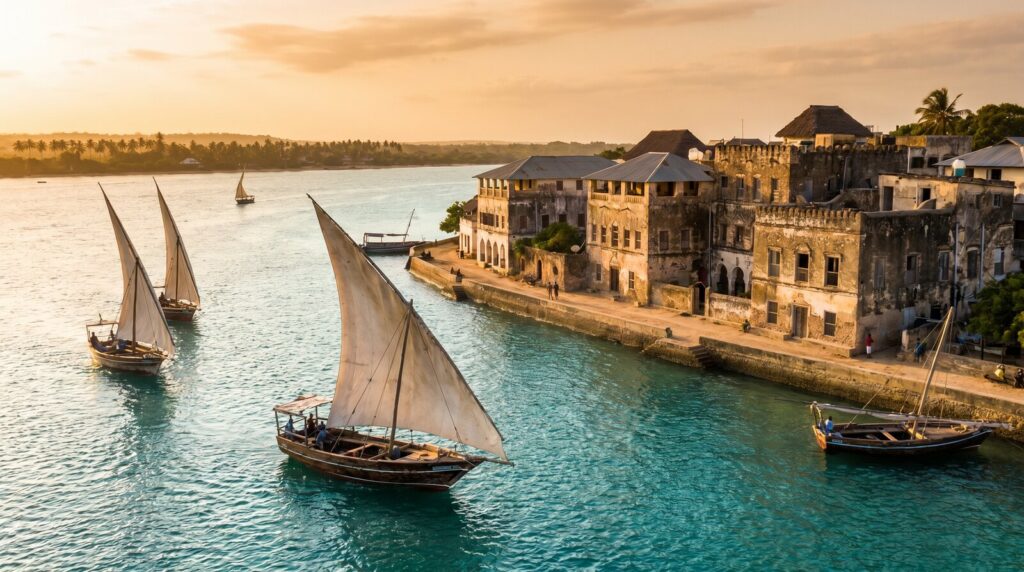
Lamu, Kenya: Swahili Heritage, Dhow Sailing & Car-Free Paradise
Discover East Africa’s most enchanting island where Swahili culture thrives, traditional dhow boats sail clear waters, and vehicles remain forbidden
Lamu Island, located off Kenya’s northern coast approximately 200 kilometers north of Mombasa, represents East Africa’s most authentically preserved Swahili community. The island’s status as a UNESCO World Heritage Site reflects the exceptional preservation of Swahili architecture, urban planning, and cultural traditions spanning centuries. Critically, Lamu maintains a vehicle-free designation—no cars operate on the island, with transportation depending upon walking, donkeys, and traditional boats. This absence of motorized transport creates distinct temporal and sensory quality differentiating Lamu fundamentally from modern tourism destinations.

Swahili civilization, the product of Arab-Indian Ocean merchant diaspora mixing with Bantu-speaking African populations over more than a millennium, created a distinctive East African culture blending Islamic tradition, Indian Ocean mercantile networks, and African agricultural and social foundations. The Swahili language (Kiswahili)—incorporating Arabic vocabulary within Bantu grammatical structure—emerged as the vehicular lingua franca facilitating trade across diverse ethnic groups. Lamu preserves living Swahili culture more intact than any comparable destination, maintaining traditional architecture, maritime practices, and community organization despite modernization pressures.
What You’ll Discover
Swahili Architecture & Urban Form
Lamu’s architectural heritage represents one of the Indian Ocean’s most sophisticated pre-modern building traditions. Swahili architecture emerged from practical adaptation to tropical island conditions, aesthetic preferences emphasizing geometric patterns and calligraphic decoration, and cultural priorities reflecting Islamic and Bantu traditions. The typical Swahili house—the traditional in-house (plural: in-houses)—features coral stone construction with interior courtyards providing ventilation, shade, and privacy. The structures’ multiple stories maximize limited island space while providing cooled interior zones critical for tropical comfort.
The narrow streets characterizing Lamu town create deliberate climate control—the close-set buildings block direct sunlight and wind tunnels created by street geometry improve air circulation. The urban planning, appearing seemingly random to modern planners, represents sophisticated environmental responsiveness. Elevated thresholds and house entrances placed asymmetrically to streets prevent direct viewing into domestic spaces, reflecting Islamic priorities regarding female seclusion and household privacy.
Decorative elements characterizing Lamu architecture emphasize geometric patterns, carved wooden doors with Arabic and Islamic calligraphy, stone lattice windows (baraza) permitting interior viewing without exterior exposure, and plaster work creating relief decoration on external walls. The aesthetic preferences reflect Indian and Persian architectural influences merged with local coral stone resources and Bantu artistic traditions. The visual coherence—predominantly uniform whitewashed stone construction with similar organizational principles—creates distinctive townscape character.
The Grand House serves as the primary architectural monument—a multi-story structure with elaborate interior organization, decorated ceiling plasterwork, and symbolic demonstration of wealth and status. Walking through these preserved houses, observing the spatial organization prioritizing interior courtyards and private quarters, reveals domestic life organization distinct from Western urban residential patterns.
Lamu’s preservation reflects both community values and economic necessity—the island’s isolation and limited modernization investment preserved the architecture when other Swahili cities underwent twentieth-century reconstruction. Contemporary Lamu actively maintains the architectural heritage through UNESCO designation, local regulations preventing vehicular traffic and maintaining construction standards, and community commitment to cultural preservation.
Dhow Sailing & Ocean Culture
The dhow—a traditional wooden sailing vessel with characteristic lateen sail—remains the iconic symbol of Swahili maritime culture. Dhows vary in size from small fishing vessels to large ocean-going traders historically carrying goods and people across Indian Ocean networks. The design’s elegance, efficiency, and suitability for variable wind conditions made dhows the Indian Ocean’s dominant sailing vessel from antiquity through the age of mechanized shipping. Contemporary Lamu preserves active dhow construction and operation, with wooden dhows still sailing from island beaches.
Dhow sailing from Lamu Island offers visitors authentic maritime experience. Multi-day cruises along the Kenya coast, visiting nearby islands and remote beaches, provide immersive sailing adventure. Day trips from Lamu navigate the sheltered waters around the island group, with stops for snorkeling, swimming, and beach picnicking. The sailing experience emphasizes connection with ocean, wind, and maritime tradition rather than luxury or comfort maximization. Travelers should expect basic accommodation, organic scheduling determined by wind and tide conditions, and sensory immersion in working sailing culture.
Fishing remains the primary ocean activity for islanders. Traditional fishing techniques, passed through generations, sustain island economies. Observing fishing dhows departing at dawn, watching fishermen manipulate nets and traditional capture techniques, provides insight into maritime subsistence economies preceding industrial fishing. The relationship between fishing culture and Swahili identity remains fundamental despite modernization pressures.
Contemporary dhow enthusiasts and historians work to preserve traditional boat-building knowledge as mechanized transport displaces wooden sailing vessels. Several woodworkers continue traditional construction techniques, training younger apprentices in skills spanning generations. Supporting these artisans through tourism ensures continued cultural transmission and preservation.
Snorkeling and diving opportunities near Lamu access coral reefs supporting diverse marine life. The shallow reefs near the island group permit snorkeling access to fish, sea turtles, and coral ecosystems. Deeper diving sites accessible by boat offer more advanced reef experiences. The marine environment’s relative health—attributable to limited commercial exploitation and community protection practices—provides superior snorkeling compared to heavily touristed destinations.
Lamu Town & Street Life
Lamu Town, the primary settlement on the island, clusters along the waterfront with narrow streets extending inland. The town’s organization follows Swahili planning principles—the beach and waterfront forming the economic and transportation hub, with residential and commercial areas occupying the interior neighborhoods. The absence of motorized vehicles creates sensory quality—the primary sounds are voices, footsteps, donkey hooves on stone, wind in sails, waves lapping shore. This acoustic environment provides dramatic contrast to modern urban centers.
Donkey transport—the primary land-based cargo movement—occupies central role in daily functioning. Donkeys pull carts transporting goods, supplies, and occasionally passengers through the narrow streets. The animals’ presence reflects economic organization predating motorized transport with no incentive for change given vehicle restrictions. The integration of donkey transport with human pedestrian traffic creates organic street life distinct from car-dependent cities.
Markets concentrate near the waterfront where boats arrive with fresh fish, produce, and goods. The Central Market preserves traditional commerce with vendors selling tropical fruits, fresh vegetables, dried fish, and manufactured goods. Market shopping provides insight into local food systems and daily provisioning practices. Engaging with vendors, negotiating prices, and observing market dynamics offers authentic cultural encounter.
Lamu Fort, constructed by Omani Arabs in 1821, dominates the waterfront. The fortress structure, reconstructed and preserved, documents the military architecture and strategic considerations of Swahili history. The fort grounds host historical artifacts and provide perspective on regional political conflicts and maritime commerce defense needs.
The Lamu Museum occupies a traditional house documenting island history, Swahili culture, and contemporary life. The museum’s approach emphasizes material culture and daily life rather than exclusively focusing on elite monuments. Exhibits include traditional clothing, domestic implements, fishing equipment, and maritime artifacts illustrating comprehensive island life.
Regional Islands & Pate Island
The Lamu Archipelago encompasses multiple islands with distinct characters. Manda Island, neighboring Lamu, hosts airport, resorts, and developing tourism infrastructure while maintaining Swahili communities. Pate Island, accessible by boat through shallow channels, preserves even more isolated Swahili culture than Lamu, with fewer tourists and less tourism infrastructure. The island hosts several small communities including Siyu—an ancient Swahili settlement featuring historic ruins and preserved architecture.
Pate Island’s isolation—limited transportation and minimal tourism development—preserves communities with strong Swahili cultural continuity. Visiting requires hiring dhows or motorized boats from Lamu and contracting guides for land-based exploration. The effort expended rewards with cultural immersion and community encounters less mediated by tourism than Lamu’s more developed infrastructure provides. However, the isolation creates challenges—accommodation remains very basic, food options limited, and expectation-setting critical to ensure positive experiences.
Kiwayu Island, at the archipelago’s northern extent, hosts upscale resorts and provides beaches with snorkeling and diving. The island caters toward international tourists seeking beach relaxation and water activities rather than cultural immersion. Visiting Kiwayu suits travelers prioritizing comfort and amenities; the island contrasts dramatically with cultural emphasis of Lamu and Pate Island experiences.
Smaller islands throughout the archipelago provide day-excursion destinations offering swimming, snorkeling, and beach relaxation. Mangrove creeks separating islands provide kayaking opportunities and bird-watching potential. The archipelago’s interconnected islands and waterways create varied excursion possibilities.
Lamu Town
Primary tourism focus, cultural immersion, architecture preservation, adequate accommodation. Suitable for various traveler types and budgets.
Pate Island
Authentic Swahili culture, minimal tourism, isolated experience. Basic accommodation. Suits adventurous travelers comfortable with rudimentary facilities.
Living Swahili Culture
Swahili cultural identity—distinct from both Arab and Sub-Saharan African identities—reflects hybrid origin mixing Arab, Persian, Indian, and African elements through centuries of Indian Ocean trade. Contemporary Lamu inhabitants maintain Swahili language use (though Standard Kiswahili competes with Lamu dialect), Islamic religious practice, distinctive clothing styles, and cultural priorities reflecting historical trading civilization values. Engaging with living culture—conversing with residents, participating in community events, observing daily practices—provides understanding distinct from historical documentation.
Islamic practice shapes daily rhythms with calls to prayer marking prayer times, Ramadan period emphasizing fasting and spiritual reflection, and religious observances structuring community calendar. Visitors should respect prayer times, dress modestly during religious occasions, and demonstrate cultural sensitivity regarding Islamic practices. Many residents welcome respectful engagement with culture; photography requires asking permission particularly during religious contexts.
Lamu Festival, celebrated annually in October, features dhow sailing races, cultural performances, traditional poetry recitations, and festive atmosphere emphasizing Swahili cultural production. The festival attracts regional participants and international visitors, creating celebration of Swahili identity and historical pride. Attending the festival provides immersion into contemporary Swahili community and cultural expression.
Food culture emphasizes seafood—fresh fish prepared simply grilled or in coconut-based sauces, octopus preparations, and shellfish. Tropical fruits including mango, coconut, papaya, and passion fruit supplement vegetable and grain foods. Traditional dishes—urojo (soup), pilau (rice), biryani (mixed rice and meat)—reflect Indian Ocean cultural exchange and trading history. Street food vendors and small restaurants serve authentic local cuisine at affordable prices.
Textile and handicraft traditions continue among artisans producing traditional clothing, carved wooden items, and decorative objects. Purchasing directly from makers supports cultural preservation and ensures tourism income reaches communities. Several workshops permit visitor observation of production techniques.
Practical Travel Details
Lamu Island is accessed primarily by air through Lamu Airport on Manda Island, with flights from Nairobi and Mombasa. Flight frequency remains limited—typically 1-2 daily services—requiring advance booking and flexibility regarding scheduling. Alternatively, overland travel from Mombasa (approximately 200 kilometers south) via rough roads requires 5-6 hours and remains less comfortable than flying. The overland route permits vehicle travel to Lamu town’s port area for boat access to the island itself.
Accommodation on Lamu ranges from simple guesthouses offering basic rooms with shared bathrooms through mid-range hotels providing private facilities and decent amenities to upscale resorts on Kiwayu Island. Mid-range options represent optimal balance—affordable pricing with reasonable comfort. Budget travelers find extremely affordable guesthouses; luxury seekers can find upscale resorts on Kiwayu. Most Lamu accommodation occupies historic buildings converted for tourism, maintaining architectural authenticity while providing visitor services.
Currency is Kenyan Shilling (KES), with approximately 130 KES equaling 1 USD in 2026. ATMs exist in Lamu town center. Cash remains essential for informal commerce and small establishments. Cards are accepted at tourism-oriented establishments.
Lamu’s climate remains warm year-round with temperatures averaging 25-30°C. Humidity is substantial given the island’s maritime location. The northeast monsoon (October-March) produces reliable winds—ideal for sailing and general comfort. The southwest monsoon (April-September) creates variable conditions with occasional heavy rainfall. Most tourism activity occurs during dry season, though shoulder season months offer acceptable conditions with fewer tourists.
Kiswahili language predominates with English increasingly common among younger residents and tourism workers. Learning basic Swahili phrases enhances cultural engagement significantly. Guides and tourism staff typically speak English fluently; independent exploration is feasible with basic language skills or translation applications.
Best visiting periods are October-March when northeast monsoon winds are reliable, temperatures are moderate, and rainfall is minimal. Ramadan (varies annually) creates different experience as some businesses reduce hours and the community observes fasting. The festival in October combines tourism season with cultural celebration. April-September represents off-season with higher humidity, occasional heavy rainfall, and fewer tourists permitting quieter island engagement.
Health precautions include yellow fever vaccination, malaria prophylaxis if required, and standard traveler precautions. Medical facilities on Lamu are basic; serious illness or injury requires evacuation to Mombasa hospitals. Travel insurance covering emergency evacuation is strongly recommended.
Experience Authentic Swahili Civilization
Lamu Island offers perhaps the most authentic preserved Swahili community experience in the Indian Ocean world. The car-free environment, active maritime culture, preserved architecture, and community commitment to cultural continuity create temporal displacement—visitors inhabit rather than observe Swahili civilization. The experience rewards travelers comfortable with slower pacing, basic amenities, and cultural immersion over luxury comfort.