
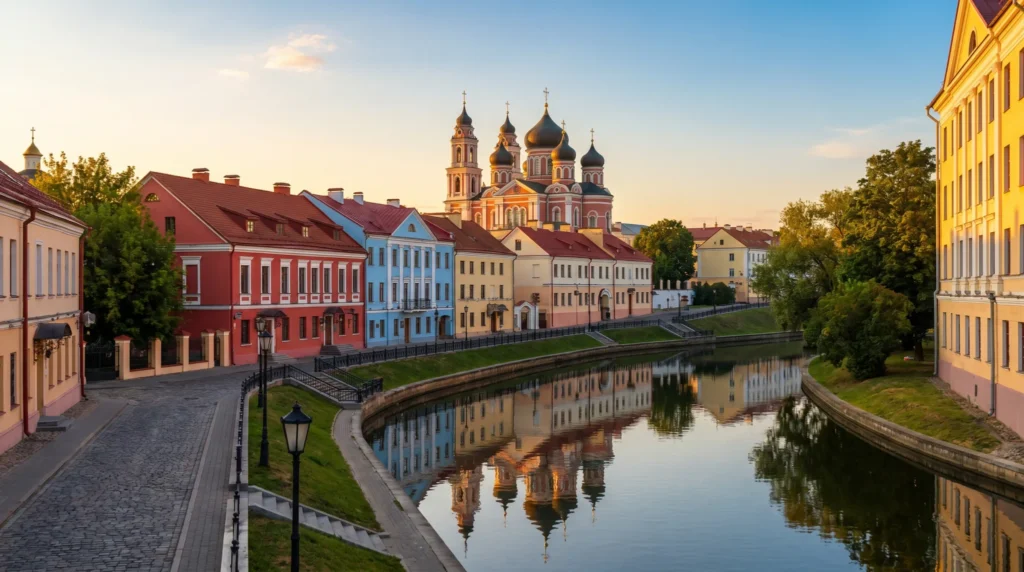
Minsk: Soviet Grandeur
Minsk is a destination that rewards the curious traveler — a place where post-WWII rebuilt capital. Whether you’re drawn by the history, the food, the culture, or simply the desire to see something new, this guide will help you make the most of every moment.
What’s Inside This Guide
- Grandeur Post-War
- Independence Heart
- Cathedrals
- Borscht Comfort
- Parks Culture
- WWII Legacy
- Navigate Minsk
Grandeur Post-War
Minsk is not a city that reveals itself all at once. It unfolds gradually, one winding street and unexpected discovery at a time, rewarding the traveler who takes the time to look closely. Start at National Library, where the story of this place begins to make sense — the architecture alone tells centuries of history without saying a word.
From there, make your way to Independence Square, which provides the perfect counterpoint. If National Library represents the monumental side of Minsk, then Independence Square reveals its intimate character — the side that locals cherish and visitors often miss entirely. Along the way, you’ll pass through streets fragrant with Borscht and alive with the chatter of daily commerce that has defined this neighborhood for generations.
The beauty of exploring Minsk this way — starting with the iconic and gradually discovering the hidden — is that it mirrors how the city itself has evolved. Layer upon layer, era upon era, Minsk has built itself into something that defies simple description. It’s a place best understood through direct experience, one discovery at a time.
Independence Heart
The history of Minsk reads like an epic novel — full of conquests, cultural flowerings, unexpected turns, and characters larger than life. You can trace these chapters through the city’s architecture, where Cathedral stands as one of the most eloquent witnesses to the past. Built during a pivotal era, it embodies the ambition and artistic sensibility that defined Minsk at its peak.
The story continues at Square, which complements the grandeur of Cathedral with something more personal, more intimate. Here, the craftsmanship tells a story of artisans rather than emperors, of community rather than conquest. It’s the kind of place where you find yourself lingering longer than planned, noticing details that reward a second and third look.
Cathedrals
The neighborhoods of Minsk are like chapters in a book, each with its own tone and cast of characters. You could spend a week in any one of them and barely scratch the surface. But even a brief exploration reveals why locals feel such fierce loyalty to their particular corner of the city — each one offers something the others don’t.
Start with Nemiga, Historic. This is where many visitors get their first real taste of local life, and it doesn’t disappoint. The streets here have a particular energy — part commerce, part community, entirely authentic. From there, Square offers a different tempo entirely — Central. The transition between these two areas tells you everything about Minsk’s range.
Nemiga
Historic
Square
Central
Street
Main
District
Residential
Borscht Comfort
The culinary scene in Minsk is a revelation that unfolds one plate at a time. Start with Borscht — the dish that locals consider the true test of any kitchen in Belarus. Done right, it’s a symphony of flavors that tells you everything about the local palate: what grows here, what’s valued, and how centuries of cultural exchange have shaped the way people eat.
Work your way through Pancakes, Pork, and Bread over the course of your visit. Each tells a different story — Pancakes speaks to the everyday, Pork to the street culture, and Bread to the celebratory traditions that mark special occasions. Together, they paint a complete picture of how Minsk feeds itself and its visitors.
Save room for Cucumber and Kvass, both of which deserve a spot on any food-focused itinerary. The local markets are ideal for sampling broadly — wander the stalls, follow your nose, and don’t be afraid to try whatever the locals are eating. The best food in Minsk rarely has an English menu.
Parks Culture
As the day progresses, Minsk transforms. The afternoon light gives way to the golden hour, which gives way to evening — and each transition reveals something new about the city’s character. Start with a late afternoon visit to Park, where locals gather to enjoy the changing light and the social ritual of the early evening.
The evening scene in Minsk ranges from intimate cafes to lively gathering spots that pulse with local energy. The area around Square comes alive after sunset, with restaurants spilling onto sidewalks and conversation filling the air. This is when Minsk feels most like itself — unhurried, social, and deeply invested in the simple pleasure of good company.
WWII Legacy
Every destination has its well-known attractions, but Minsk harbors a wealth of surprises that most visitors never discover. Beneath the surface of the obvious lies a city full of quirky traditions, historical oddities, and little-known facts that add depth to even the most well-planned itinerary.
Consider, for instance, that 90% destroyed WWII. This isn’t the kind of fact you’ll find on a standard city tour, but it’s the kind of detail that makes Minsk endlessly interesting to those who care about the stories behind the stones. Similarly, Glass cube library — another reminder that this city’s history runs deeper than its most visible monuments suggest.
And here’s one more for good measure: 109m building. Minsk is full of these revelations, waiting for the curious traveler who asks the right questions and isn’t afraid to wander off the beaten path. The best discoveries here are almost always unplanned.
Navigate Minsk
A few practical notes will help you hit the ground running in Minsk. The city rewards preparation, not because it’s difficult to navigate, but because a little advance knowledge lets you spend less time figuring things out and more time enjoying what makes this place special.
The best time to visit Minsk depends on what you’re looking for. The peak tourist season brings crowds but also the fullest calendar of events and the longest days. Shoulder seasons offer the sweet spot — decent weather, fewer visitors, and lower prices. Whenever you come, budget at least three full days — anything less means choosing between experiences rather than enjoying them all.
Language-wise, you can navigate Minsk with a combination of basic phrases and goodwill. English is spoken in tourist-facing businesses, but learning a few words of the local language opens doors — literally and figuratively. A simple greeting in the local tongue earns you warmer service, better recommendations, and the occasional off-menu special.
Explore More with Facts From Upstairs
Discover more destinations, surprising facts, and travel guides crafted for curious travelers.