
Mostar, Bosnia: Stari Most Bridge, Ottoman Heritage & Bosnian Resilience
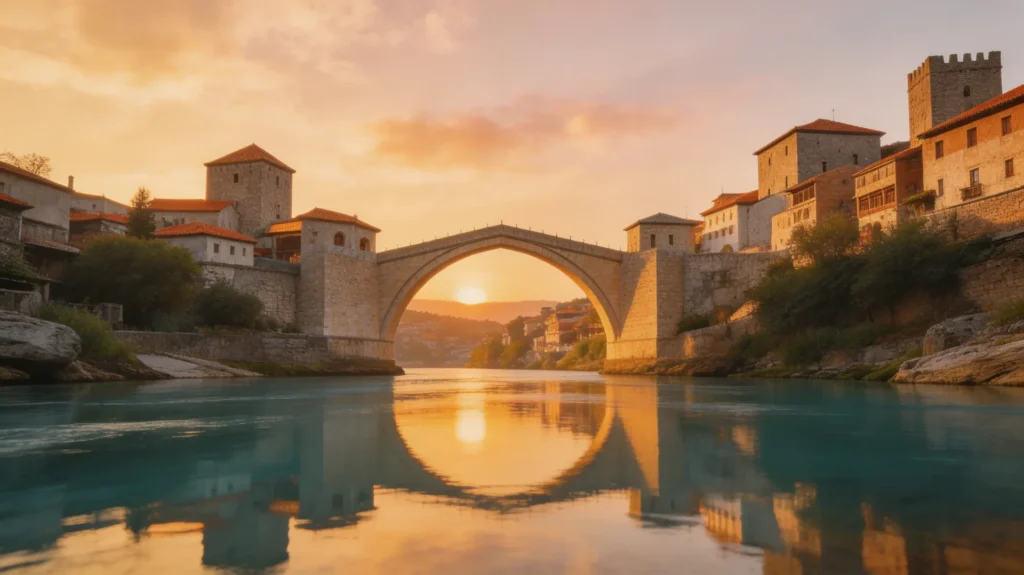
Mostar’s iconic Stari Most bridge carries weight far beyond its physical structure. The 16th-century Ottoman stone arch spanning the Neretva River represents centuries of cultural synthesis, the resilience of human determination, and the powerful symbolism of reconstruction. When Croat forces destroyed the bridge in 1993 during the Bosnian War, they didn’t just demolish architecture—they attempted to erase Ottoman heritage and divide the city’s Muslim and Christian communities. The bridge’s reconstruction between 2001-2004 became an international symbol of reconciliation and cultural persistence.
Visiting Mostar today means witnessing how communities rebuild not just infrastructure but fractured social bonds. The old town’s narrow streets echo with café conversations mixing languages and cultures. Young tourists and locals gather beneath the bridge, and while tensions simmering beneath the surface prevent claims of complete reconciliation, the bridge’s very existence represents determined refusal to let conflict define future generations. Mostar reveals how travel can witness not just picturesque landscapes but genuine human stories of resilience and cultural recovery.
In This Guide
Stari Most: The Icon That United & Divided a Nation
The original Stari Most (Old Bridge) was built in 1566 under Ottoman rule by architect Mimar Hayruddin. The single-span stone arch was an engineering marvel for its time—approximately 29 meters long with a distinctive humpbacked curve designed to accommodate river navigation while clearing the water below. The bridge wasn’t merely functional; it represented Ottoman cultural confidence and engineering sophistication. For over four centuries, it unified Mostar’s communities, literally connecting the two sides of the river and metaphorically representing coexistence.
On November 9, 1993, Croat forces destroyed the bridge using artillery, an act that reverberated far beyond Mostar. The bridge’s destruction symbolized the fragmentation of Bosnia-Herzegovina itself and the attempt to erase Ottoman heritage from the region. For nearly a decade, the city remained divided—literally and ideologically—by the river’s destroyed crossing. The cultural and emotional trauma extended beyond the physical loss; the bridge’s destruction felt like an attack on identity itself for Muslim residents whose heritage the bridge represented.
The reconstruction process involved international cooperation, Turkish funding, and Bosnian determination. Between 2001 and 2004, international teams and local workers rebuilt the bridge using techniques faithful to the original—local limestone, traditional masonry methods, and precise replicas of original architectural details. The reconstruction was meticulous; damaged stones were preserved and incorporated into the new structure where possible, creating a physical continuity between old and new. When the reconstructed bridge opened in July 2004, thousands gathered on both sides for a ceremony celebrating not just infrastructure but reconciliation.

Today’s Stari Most remains Mostar’s primary symbol. Young men dive from the bridge’s arch into the Neretva River during warm months—a practice dating centuries and continuing despite obvious dangers. The bridge’s medieval form creates distinctive acoustics when crowds cross, with footsteps reverberating across the arch. Sunset illumination transforms the stone into amber tones, creating conditions photographers and romantics cherish.
Old Town Bazaar: Ottoman Soul & Mosaic Culture
The streets surrounding Stari Most constitute Mostar’s Old Town (Stari Grad), a maze of narrow passages, traditional shops, and cafes preserving Ottoman character. The bazaar follows typical Islamic urban planning principles with covered passages protecting merchants from weather while creating intimate commercial spaces. Small shops sell traditional crafts—copperware, leather goods, textiles—often produced by families maintaining century-old techniques.
The bazaar’s cultural character reflects Mostar’s complex history. Turkish coffee houses serve strong coffee in tiny cups, a practice unchanged since Ottoman times. Konoba restaurants serve Bosnian specialties including ćevapčići (grilled meat rolls) and burek (pastry filled with meat or cheese). Street musicians perform traditional sevdalinka songs—a uniquely Bosnian musical form blending Ottoman, Austro-Hungarian, and Balkan influences. The bazaar atmosphere captures something authentically Ottoman despite ongoing modernization pressures.
Walking through the bazaar reveals subtle divisions that continue between communities. On one side of the river, Croat shopkeepers serve predominantly Croat customers. On the other, Muslim-owned establishments serve different clientele. Yet younger generations increasingly ignore these divisions, creating new commercial relationships and cultural mixing. International tourists moving freely through bazaar spaces facilitate cross-community interaction that might otherwise remain limited.
Kujundziluk Street
The primary bazaar thoroughfare features traditional copperware shops, jewelry merchants, and souvenir vendors. Covered passages protect shoppers while creating the archetypal Eastern bazaar experience.
Ottoman Cafes
Traditional kahva (coffee houses) serve Bosnian coffee with intense flavor. Sitting in a small cafe overlooking the bridge represents quintessential Mostar experience combining history, culture, and hospitality.
Košci Mosque & Islamic Heritage
The Košci Mosque (Koski Mehmed-Pasha Mosque) dominates the skyline with its distinctive minaret and Ottoman architecture. Built in 1619, the mosque survived centuries of political change, wars, and ideological challenges to Islamic heritage. During the 1990s war, the mosque suffered damage but has been carefully restored to functioning religious and cultural institution. The mosque remains an active place of worship while welcoming respectful visitors to observe architectural details and Islamic tradition.
Climbing the minaret’s narrow spiral staircase leads to a platform offering exceptional views of Mostar’s roofscape, the Neretva River, and surrounding hills. From this perspective, the city’s compartmentalized divisions become apparent—different neighborhoods, different architectural styles, different historical periods layered across the landscape. The minaret visit combines physical challenge (the stairs are steep and narrow) with rewarding vistas worth the effort.
The mosque’s interior features the characteristic Islamic architectural elements—calligraphy, geometric patterns, carpets, and prayer spaces designed for devotion. Visitors are welcome during non-prayer times if appropriately dressed (covered shoulders and knees). The mosque operates as functioning religious space rather than museum, meaning visitors should respect ongoing worship and maintain quiet reverence.
The Neretva River overlook from the minaret platform reveals additional layers of Mostar’s complexity. The river historically served as an ethnic boundary, with Muslim populations on one side and Croat populations on the other. Contemporary Mostar is gradually transcending these divisions, but the geography of settlement remains visible from elevated perspectives.
River Activities: Diving & Swimming Traditions
The Neretva River flowing beneath Stari Most hosts a diving tradition unique to Mostar. During summer months, young men dive from the bridge’s apex (approximately 24 meters above water) into the river below—a practice dating back centuries and continuing despite obvious hazards. Local divers learn the technique from experienced practitioners, understanding the precise approach angle and entry point to safely reach deep water. Tourism companies offer organized dives where professional divers demonstrate the tradition for gathered spectators.
The diving tradition represents more than athletic performance; it embodies cultural identity and courage. Successful dives earn respect and admiration from communities. The practice was nearly extinguished during the 1990s war when the bridge was destroyed, then when conflict made gathering publicly dangerous. The resumption of diving after reconstruction symbolized the return of normal life and cultural continuity despite war’s interruption.
Swimming in the Neretva River is possible during warmer months, though the water remains cold even in summer. Local swimming spots exist above and below the bridge where calmer water and sandy areas accommodate swimmers. The river’s current can be strong, and swimming requires awareness of water conditions and respect for nature’s power.
Ottoman Architecture Beyond the Bridge
While Stari Most dominates attention, Mostar features extensive Ottoman architectural heritage throughout the old town. The Franciscan Monastery, built in the 14th century, survived Ottoman occupation and continues serving the city’s Catholic population. The monastery’s cloister provides peaceful refuge from the bazaar’s activity, featuring traditional Islamic-influenced garden design with fountains and vegetation.
Numerous Ottoman-era buildings retain characteristic features—arched doorways, projecting upper floors, ornamental stonework—visible throughout narrow streets. These aren’t museum pieces but living buildings housing residents and businesses, maintaining Ottoman architectural tradition through occupation rather than preservation. The integration of living communities with historical architecture creates authenticity that reconstructed historic districts often lack.
Ottoman domestic architecture receives less attention than monumental buildings yet provides insight into daily life across centuries. Traditional Bosnian-Ottoman houses featured interior courtyards, second-floor structures projecting over ground-level, and intricate woodwork. Some traditional houses now operate as guesthouses or restaurants, allowing visitors to experience Ottoman domestic space while enjoying contemporary hospitality.
Muslibegovič House
A stunning example of Ottoman-era residential architecture, this 16th-century house features traditional design with courtyards, carved woodwork, and decorative elements preserved through careful restoration.
Radobolja Cemetery
Ottoman grave markers (stećci) reflect medieval Bosnian gravestone traditions. The cemetery’s atmospheric setting beneath trees provides contemplative space and historical perspective.
War Legacy & Contemporary Recovery
Mostar’s recent history fundamentally shaped the city’s contemporary identity. The 1990s Bosnian War destroyed significant portions of the city, displaced entire communities, and created divisions that remain visible in Mostar’s urban landscape. Bullet holes mark numerous buildings, serving as reminders of artillery fire and urban combat. Some damaged structures remain partially reconstructed, creating visual contrasts between rebuilt and still-damaged areas.
The city’s recovery is genuine but incomplete. Younger Mostar residents, too young to remember the war, increasingly interact across ethnic divisions. International investment supports cultural institutions and tourism. Educational initiatives promote reconciliation and shared history understanding. Yet older residents carry unhealed trauma, and economic disparities continue mapping onto ethnic divisions. Mostar represents recovery in progress rather than completed reconciliation.
Visiting Mostar requires sensitivity to this context. The bridge’s reconstruction symbolizes hope, yet conversations with locals reveal ongoing pain. Supporting local businesses, engaging respectfully with residents, and seeking to understand rather than judge the complex post-conflict reality represents appropriate tourism approach. Mostar isn’t a resolved story but an ongoing narrative of resilience.
Visit Mostar with Understanding & Respect
Mostar offers more than postcard beauty. The reconstructed Stari Most symbolizes human determination to rebuild what conflict destroys. The old town bazaar embodies cultural synthesis and ongoing coexistence. The river diving tradition represents cultural continuity despite interruption. Mostar’s story isn’t comfortable or neatly resolved, but it’s undeniably human and profoundly moving. Visit with openness to understanding complexity, respect for ongoing recovery, and genuine appreciation for a community’s determination to move forward.