
Mykonos, Greece: Windmills, Beach Clubs & Cycladic Charm
Mykonos has transformed from a sleepy Cycladic fishing village into the Aegean’s most glamorous destination. The iconic whitewashed buildings, cubic architecture, and narrow streets remain unchanged, yet the island’s character has evolved dramatically since the 1960s when it first attracted international attention. Today, Mykonos represents a paradox—preserving architectural and cultural authenticity while hosting relentless tourism and high-end commercialization. Navigating this contradiction defines the contemporary Mykonos experience: discovering Cycladic charm amid luxury resorts, swimming in crystalline waters off crowded beaches, and experiencing Greek island tradition repackaged for international consumption.
The island’s appeal persists despite—or perhaps because of—its contradictions. Mykonos offers genuine pleasures: exceptional sunsets, excellent food, beautiful architecture, and a cosmopolitan atmosphere found nowhere else in the Cyclades. The wealth of visitors creates year-round energy and infrastructure that smaller islands lack. Yet those seeking untouched island paradise should look elsewhere; Mykonos is best approached as a sophisticated destination offering elegance, entertainment, and people-watching rather than authentic escape from modern civilization.
In This Guide
- Mykonos Town: Whitewashed Streets & Urban Architecture
- Windmills: Iconic Symbols & Historical Function
- Beaches: From Family-Friendly to Glamorous Venues
- Nightlife & Entertainment: The Island’s Primary Attraction
- Dining Excellence: From Street Food to Michelin Stars
- Day Trips: Sacred Delos & Neighboring Islands
Mykonos Town: Whitewashed Streets & Urban Architecture
Mykonos Town, perched on the northern coast, represents Cycladic architecture at its most refined. The cubic whitewashed buildings, blue doors and shutters, narrow streets designed to minimize summer heat, and intricate spatial relationships create an architectural tradition developing over centuries in response to Mediterranean climate and defensive needs. The original settlement pattern reflected protection from pirate raids—narrow streets reduced visibility from ocean, white buildings reflected heat, and cubic forms maximized interior space within minimal footprints.
Contemporary Mykonos Town maintains architectural authenticity while housing boutique hotels, high-end restaurants, and luxury shops replacing traditional functions. Walking through the streets, you observe genuine architectural tradition hosting thoroughly modern commerce. The tension between preservation and transformation defines the contemporary experience—appreciating the architecture while recognizing it frames consumption rather than authentic community living.
The harbor remains the town’s heart. Fishing boats tie up alongside mega-yachts, creating visual contrasts between traditional livelihood and conspicuous wealth. The waterfront cafes serve as gathering spaces where locals and tourists mix. Evening promenade (volta) traditions persist—residents and visitors stroll the harbor watching sunset, observing people, and participating in the social ritual Greeks maintain even as tourism transforms their islands.
Windmills: Iconic Symbols & Historical Function
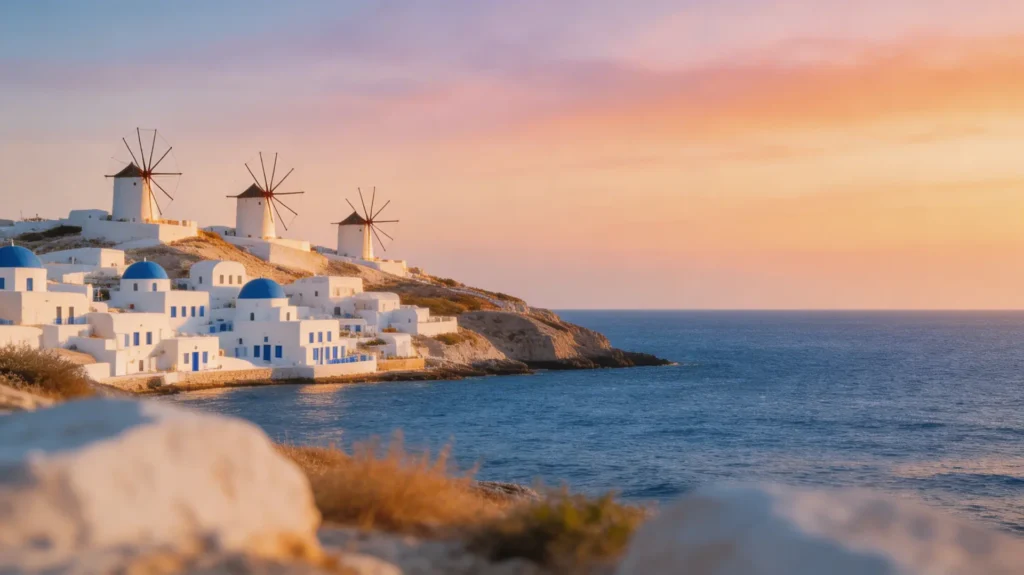
Five iconic windmills dominate Mykonos Town’s western skyline, visible from throughout the island and featured in countless photographs defining Cycladic imagery. Built centuries ago to grind grain, these windmills functioned as essential infrastructure for flour production. The mills operated seasonally when wind patterns provided sufficient force to turn the grinding stones. The whitewashed stone structures with conical roofs remain functional museums and atmospheric landmarks.
The windmills represent technological sophistication adapted to island conditions. The design optimized wind capture while protecting the structure from winter storms. The internal mechanisms—gears, shafts, grinding stones—demonstrate mechanical ingenuity developed before modern industrialization. Climbing inside the mills reveals machinery, milling equipment, and tight spaces where operators worked during grain harvest season.
Contemporary windmills function as museums, restaurants, and photo opportunities rather than working mills. The Kato Mill operates as a museum showing milling equipment and explaining historical processes. Sunset illumination of the windmills creates iconic photographs—the amber light against whitewashed stone producing images defining Cycladic imagery. Visiting early morning or early evening minimizes crowds while optimizing light conditions.
The windmills symbolize Mykonos more than any other icon. Appearing in tourism materials globally, they represent quintessential Mediterranean imagery. Yet they also represent pre-industrial island life before tourism transformed the economy. Standing among the windmills at sunset, you feel the temporal distance between their functioning era and contemporary island reality.
Beaches: From Family-Friendly to Glamorous Venues
Mykonos’s beaches present extreme contrasts between family sections and scene-focused venues. Ornos Beach offers family-friendly swimming with calm water, sandy bottom, and moderate crowds. Kalafatis Beach attracts water sports enthusiasts—windsurfing, parasailing, and jet-skiing operate alongside swimmers. Paradise Beach became famous as the island’s primary party venue, featuring beach clubs blasting electronic music, cocktail service, and the island’s energetic nightlife extending to daylight hours.
The beach club phenomenon dominates Mykonos’s daytime culture. Established venues like Cavo Paradiso, Paradise Club, and Kalo Live transform beaches into entertainment venues with DJs, dancers, bottle service, and resort-style amenities. International party crowds congregate for day-long celebrations, swimming interspersed with dancing and drinking. The culture appeals to party-focused travelers seeking constant entertainment and social scenes; others find it tediously loud and commercialized.
Quiet beaches exist for those seeking respite. Super Paradise Beach, despite its name, offers a more alternative crowd. Elia Beach provides longer stretches with less intense party atmosphere. Northern beaches face winds that discourage swimmers but attract windsurfing and offer more local character. Those seeking traditional Greek island beach experience should venture to neighboring, quieter islands rather than expecting Mykonos beaches to provide escape from commercial tourism.
Mykonos Beach Clubs
Day clubs operate from mid-morning through sunset, offering entry fees (typically €20-30 per person), umbrellas, loungers, and food/drink service. DJs perform continuously, creating party atmosphere. The entry fee often includes drink credits, making full-day beach attendance a significant expense.
Water Sports
Multiple beaches offer rentals for paddleboards, kayaks, jet-skis, and windsurfing equipment. The island’s reliable winds and protected bays support diverse water activities beyond swimming.
Nightlife & Entertainment: The Island’s Primary Attraction
Mykonos’s nightlife reputation is well-earned. The island hosts Europe’s most established dance clubs and nightlife venues. Cavo Paradiso, an open-air club built into cliff faces overlooking the Aegean, hosts internationally recognized DJs. Privilege nightclub fills a converted factory with thousands of clubbers. Little Venice area features intimate bars serving cocktails. The nightlife starts late (midnight onwards) and continues until dawn, creating 24-hour party culture during summer months.
The island’s LGBTQ+ community significantly influences nightlife and culture. Mykonos earned reputation as welcoming destination for gay and lesbian travelers, creating vibrant LGBTQ+ nightlife scene. The community’s presence brought international sophistication and cosmopolitan ethos that attracts diverse visitors. While all travelers welcome, the LGBTQ+-influenced culture creates distinctive atmosphere different from comparable Mediterranean destinations.
Electronic dance music dominates the scene, with clubs hosting famous DJs performing extended sets to thousands of dancers. The music, laser shows, and crowds create immersive experiences where individual identity dissolves into collective rhythm. Some travelers find the scene exhilarating; others find it exhausting and soulless. The key to enjoying Mykonos nightlife is accepting that authenticity is not the goal—the experience explicitly celebrates hedonism, contemporary culture, and collective celebration.
Attending Mykonos nightlife requires accepting high costs—cover charges range €30-50+, cocktails cost €15-20+, and bottle service for groups exceeds €500+. The expense creates VIP hierarchies where those spending most receive prime locations and amenities. This economic stratification shapes social dynamics, with party experience directly correlating to spending ability.
Dining Excellence: From Street Food to Michelin Stars
Mykonos restaurant scene ranges from casual tavernas serving traditional Greek fare to Michelin-starred establishments commanding €100+ per person prices. The range reflects island demographics—wealthy international visitors supporting premium dining alongside traditional local clientele seeking everyday meals. Quality varies dramatically; prestigious location and prices don’t guarantee good food.
Traditional tavernas like Kiki’s (fish-focused, family-run since the 1980s) and Spilia maintain authenticity and reasonable prices. These establishments serve daily specials based on available ingredients, genuine Greek cuisine, and local atmosphere. Seeking out family-run tavernas in residential neighborhoods reveals authentic island food culture away from waterfront commercialism.
The fine dining scene includes contemporary Mediterranean cuisine, international approaches, and Greek ingredients prepared with technical sophistication. Chefs establish reputations through Instagram-worthy presentations and fusion approaches. The best restaurants balance contemporary technique with ingredient quality and cultural respect. The worst prioritize aesthetics and brand recognition over fundamental cooking skill.
Day Trips: Sacred Delos & Neighboring Islands
Delos, an uninhabited island 10 kilometers from Mykonos, ranks among Greece’s most significant archaeological sites. Birthplace of Apollo in Greek mythology, Delos functioned as major religious center and trade hub. Ruins visible today represent Roman and Hellenistic periods, revealing temples, theaters, and residential areas. The archaeological preservation rivals Pompei, with mosaics, sculptures, and architectural details surviving millennia. However, Delos lacks infrastructure—no shade, no food/drink, no facilities—requiring full day preparation (water, sun protection, food) and ferry reservations.
Rhenia Island, near Delos, offers quieter beach experience without archaeological complexity. Ferry services connect to both islands, allowing flexibility in trip planning. The islands’ proximity to Mykonos creates natural day-trip options for those seeking respite from beach club intensity.
Tinos Island, accessible by ferry, features architectural traditions distinct from Mykonos—more modest, less commercialized, genuinely Greek rather than internationally cosmopolitan. A day trip to Tinos reveals what Mykonos was before tourism transformed it, and provides contrast highlighting how much the island has changed.
Experience Mykonos with Eyes Wide Open
Mykonos delivers what it promises—glamorous nightlife, beautiful architecture, excellent restaurants, and cosmopolitan atmosphere. Approaching the island with realistic expectations—accepting its commercialization while appreciating its genuine aesthetic qualities—enables meaningful experiences. The island’s strength lies not in authenticity but in confident commitment to sophisticated entertainment and luxury. For those seeking untouched Greek island escape, look elsewhere. For those embracing what Mykonos actually is, the island offers unmatched Aegean glamour.