
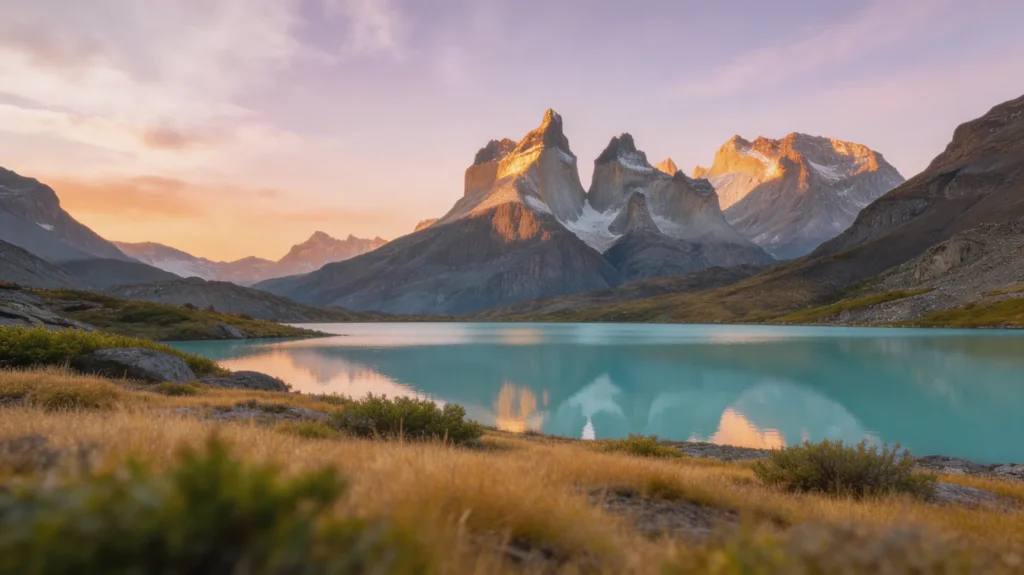
Patagonia, Argentina: Torres del Paine, Perito Moreno Glacier & Edge of the World
The planet’s most dramatic wilderness where mountains meet ice sheets at the world’s end
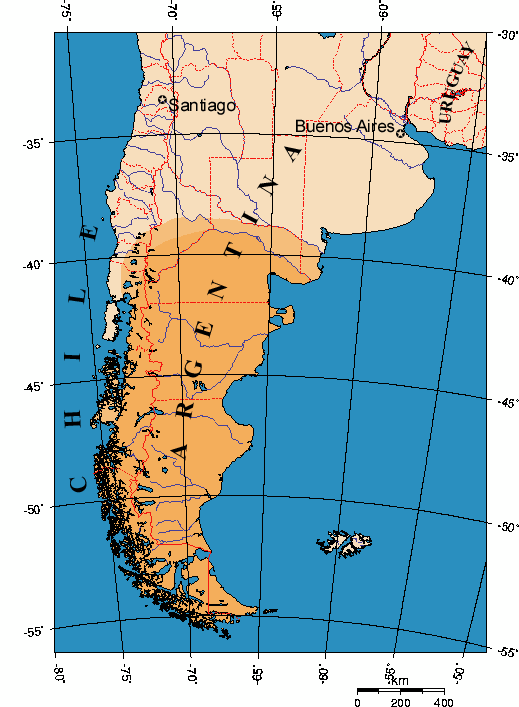
Patagonia exists at the threshold of habitable Earth. The region—encompassing southern Argentina and Chile—extends toward Antarctica, creating landscapes where human presence feels incidental. Massive mountain ranges, including the Torres del Paine, rise sharply from glaciated valleys. Vast ice sheets—the largest in the Southern Hemisphere outside Antarctica—cover valleys and extend toward the sea. The climate alternates between fierce wind and deceptive calm. The vegetation transitions from temperate forest to sparse steppe. Wildlife includes guanacos (wild relatives of llamas), pumas, and birds found nowhere else.
Patagonia’s appeal lies in its extremity and remoteness. Modern tourism has made the region increasingly accessible—reliable lodges, organized tours, and developed trails—yet the fundamental wildness persists. The famous W Trek in Torres del Paine National Park draws thousands annually, yet departure from marked trails leads immediately to genuine wilderness. The Perito Moreno Glacier, one of the world’s few advancing glaciers, demonstrates ice dynamics on dramatic scales. The region rewards those willing to endure uncomfortable conditions for unparalleled natural immersion. Patagonia strips away comfort and confronts you with Earth’s beauty indifferent to human presence.
Where to Go in Patagonia
Torres del Paine: Iconic Granite Peaks
Torres del Paine—”towers of blue”—comprises three granite peaks reaching 3,050 meters, rising dramatically from glaciated valleys. The formation’s distinctive appearance—sheer vertical granite faces—creates instantly recognizable silhouette. The mountains dominate Paine National Park’s landscape, visible from dozens of angles depending on location. The clarity of air at southern latitudes creates visibility extending to impossible distances, making distant mountains appear closer than they actually are.
The Torres themselves, accessible via the Valley of the Towers hike, require technical rock climbing for summit achievement. Most visitors experience the towers through hiking and photography from accessible vantage points. The primary destinations—French Valley hike and Towers approach—offer stunning views without climbing requirement. The landscape—glaciated valleys, hanging glacier remnants, and windswept steppe—remains visually extraordinary despite moderate hiking difficulty.
The mountains’ granite geology, exposed by glacial carving during ice ages, represents incredibly ancient rock. The granite crystallized 200+ million years ago. Subsequent uplift and glaciation shaped the current dramatic form. Walking these trails traverses literally ancient stone while witnessing ice-age processes (glaciers and valleys) still actively reshaping landscape.
Perito Moreno Glacier: Advancing Ice
Perito Moreno Glacier, one of the world’s few advancing glaciers, flows from the southern Patagonian ice field into Lago Argentino. The glacier’s advance and retreat cycles—unusual in the context of global warming causing most glacier retreat—create dramatic ice-calving spectacles. Massive chunks of ice, breaking from the glacier’s advancing front, crash into the lake with thunderous explosions. The frequency of calvings varies from days apart to multiple daily events.
The glacier’s dimensions overwhelm perception. The face rises 60+ meters above lake level. The glacier’s thickness exceeds 700 meters. The advancing edge moves forward approximately 2 meters daily, meaning the glacier advances despite global warming trends affecting other glaciers negatively. The mechanism—abundant precipitation in the accumulation zone, combined with steep descent facilitating ice flow—maintains positive mass balance.
Viewing options range from platform viewpoints near the lodge to boat trips approaching close to the glacier face. The sound of calving—amplified across water—conveys the ice’s power. Witnessing major calvings creates lasting impressions. The combination of visual spectacle (ice blocks larger than buildings launching into the lake) with visceral sound and physical impact generates awe exceeding typical nature observation.
Perito Moreno Glacier
Approximately 50 km from El Calafate. Accessible by vehicle with short walks. Platform viewpoints offer dramatic perspectives. Boat trips provide closer approach. Ice trekking options available (moderate physical demand).
Upsala Glacier
Adjacent glacier visible during boat excursions. Currently retreating, unlike Perito Moreno. The contrast between advancing and retreating glaciers within visible distance illustrates climate change’s varied impacts.
The W Trek: Mountain Pilgrimage
The W Trek, named for its trajectory connecting five valleys forming a W-shape on maps, constitutes the most popular multi-day Patagonia trek. The four-day version (extended trips approach 8 days) covers approximately 50 kilometers of marked trail connecting distinct ecosystems and viewpoints. Days involve typically 7-9 hours hiking, ascending and descending elevation repeatedly. The route ascends the Grey Valley toward Grey Glacier, traverses to Pehoe Lake viewpoints, continues to the iconic Torres del Paine towers, extends to French Valley beneath Mount Paine, and concludes near Cuernos del Paine.
The trek accommodates various fitness levels. The terrain—well-marked trails with mostly moderate grades—remains accessible to reasonably fit hikers without mountaineering experience. The challenge emerges from duration, elevation changes, and unpredictable weather. Fierce winds sometimes restrict progress; hail or snow can appear in summer. The remote environment means assistance if injured or exhausted could require significant time.
Lodge-based trekking (sleeping in established refugios rather than camping) reduces difficulty. The lodges provide meals, allowing hikers to travel light, and eliminate weather camping concerns. The social aspect—meeting other trekkers at lodges—creates community experience. The combination of natural immersion, physical challenge, and social gathering makes the W Trek more than individual hiking accomplishment.