
Puerto Escondido, Mexico: World-Class Surfing, Bioluminescence & Oaxacan Coast
Where consistently perfect waves meet psychedelic marine light shows
Puerto Escondido defies easy categorization. On the surface it’s a surfing destination of international renown—the Mexican Pipeline, as locals call the notorious left-hand wave, breaks with consistent quality attracting competition surfers worldwide. The beaches create an immediate sensory overload: golden sand, turquoise water, and an atmosphere oscillating between laid-back beach town authenticity and escalating tourism commercialization. Yet beyond the beaches lies something equally compelling—the bioluminescent dinoflagellates that illuminate ocean water with ethereal blue light on certain evenings, creating experiences of otherworldly beauty. The broader Oaxacan coast contains fishing villages, indigenous communities, and landscapes revealing Mexico beyond tourist infrastructure. The town maintains enough local character despite tourism growth to avoid feeling entirely fabricated, though the balance grows precarious as development accelerates.
Quick Navigation
Surfing Waves & Global Reputation
Puerto Escondido’s primary claim to fame rests on Playa Principal, where a consistent left-hand wave breaks over a sand bottom creating the “Mexican Pipeline”—a powerful, hollow wave capable of producing barrels (tubular formations where surfers ride inside the breaking wave) exceeding two seconds duration. The wave breaks across shifting sand bars, creating different characteristics at various tidal and swell conditions. The best conditions typically occur May through November when distant Pacific swells reach their peak. Professional competitions occur regularly, with the World Surf League holding events that draw international competitors.
The wave attracts surfers at every skill level. Experienced surfers occupy Playa Principal; intermediate surfers find less-crowded options at Carrizalillo and other nearby breaks; beginners benefit from various gentle beach breaks offering learning opportunities. Surf schools operate throughout the town, renting boards and providing lessons to beginners unaccustomed to the ocean’s complexity. The commercial surfing scene has developed substantially—boards, wetsuits, leashes, and accessories are readily available; repair services can fix damage; experienced guides help surfers navigate unfamiliar breaks.
The professional surfing culture creates particular town atmosphere. Surfers organize around swell forecasts; conversations revolve around wave quality; accommodation and restaurants cater to surfing schedules. Morning sessions occur before dawn; evening sessions follow afternoon meal breaks. Non-surfers can appreciate the cultural energy and the sheer athleticism and artistry of expert surfers, even without participation.
Bioluminescence & Marine Magic
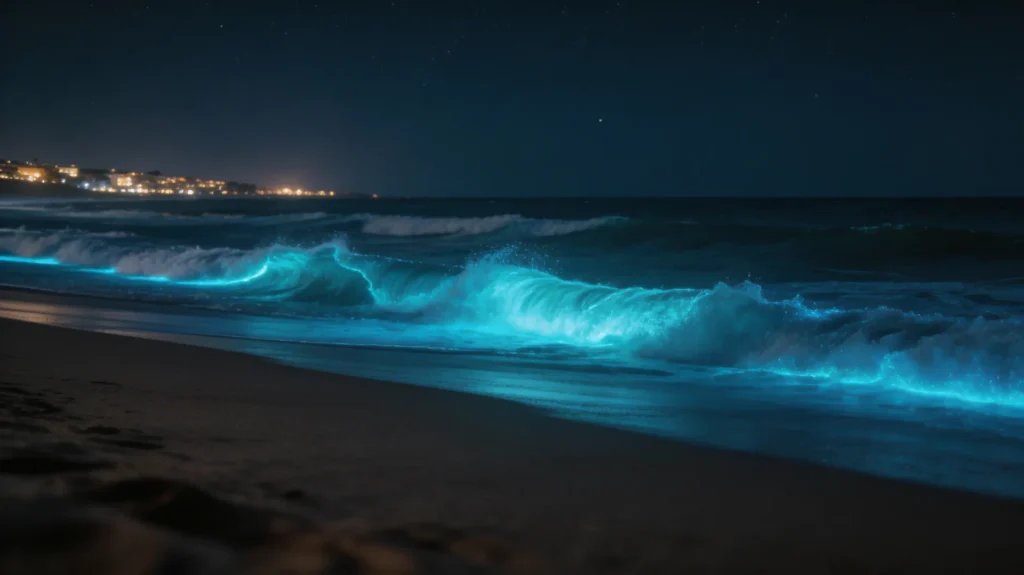
The dinoflagellates creating Puerto Escondido’s bioluminescence phenomenon belong to the species Pyrodinium bahamense, microscopic organisms producing light through chemical reactions triggered by water disturbance. When waves break or swimmers move through water containing high dinoflagellate concentrations, the organisms illuminate, creating blue trails and glowing patterns. The phenomenon transforms night swimming into surreal experience—each movement generates light; splashing creates visible shock waves; entire shoreline glows ethereally under moonless skies.
Bioluminescence appears most consistently during warm-water months (May-December), though appearances remain unpredictable. Availability depends on dinoflagellate population levels, which fluctuate seasonally and based on nutrient conditions. Tourist operators offer “bioluminescence tours” with varying reliability—some nights produce extraordinary light shows; other evenings offer minimal luminescence. The unpredictability enhances rather than detracts from the experience—genuine natural phenomena resist commercial scheduling.
Swimming at night amid bioluminescent organisms remains one of travel’s most psychologically transformative experiences. The light creates sensory dislocation—vision perceives darkness yet movement generates visible light; the brain struggles to reconcile the impossible illumination with darkness. The experience transcends photography or secondhand description—you must immerse yourself to understand the phenomenon’s true impact.
Beach Culture & Nightlife
Puerto Escondido’s beach culture combines authentic Mexican beach town character with international tourism infrastructure. The main beach hosts restaurants, bars, and beach clubs offering food, drinks, and entertainment. The atmosphere transforms dramatically from day to night—early mornings belong to surfers; midday brings families and relaxation seekers; evenings transition to nightlife with live music, dancing, and social gathering. The beach functions as extended living room rather than segregated recreation zone.
The nightlife scene extends far beyond beaches. Restaurants range from street-level taquerias to upscale establishments serving international cuisine. Bars and clubs concentrate in central areas, with options ranging from laid-back beach bars to proper nightclubs operating until dawn. The visiting crowd includes surfers, backpackers, couples, and families—no single demographic dominates, creating social mixing and diverse energy.
The cultural calendar includes several important events—the annual surf competitions, beach celebrations around Christmas and New Year’s, and Day of the Dead observances. These events create heightened tourism but also integrate authentic Mexican cultural traditions with contemporary beach town life. The intersection reveals how tourism has transformed the town while maintaining cultural continuity.
Oaxacan Coast & Surrounding Exploration
The Oaxacan coast extends far beyond Puerto Escondido, encompassing fishing villages, remote beaches, and indigenous communities maintaining traditional lifeways. Zipolite, forty kilometers southeast, offers nude and alternative beach culture with bohemian atmosphere contrasting Puerto Escondido’s commercialization. The village centers on a beach break suitable for intermediate surfers and remains much less touristic than Puerto Escondido despite growing visitor numbers.
Huatulco, another coastal settlement, provides alternative base for exploring the southern Oaxacan coast. The town develops as planned tourist destination with major resort development alongside working fishing port character. Multiple beaches concentrate within short distances, each with distinct character and activity level. National park designation protects coastal ecosystems, restricting development while enabling eco-tourism activities.
Inland excursions to indigenous communities reveal Oaxaca’s cultural depth. The interior mountains host Zapotec and Mixtec communities maintaining ancestral languages, traditional dress, and indigenous spiritual practices. Markets feature local agricultural products, textile crafts, and food preparations reflecting indigenous culinary traditions. The contrast between coastal tourism development and indigenous highland communities illustrates the complex relationship between globalization and cultural preservation in contemporary Mexico.
Carrizalillo Beach
A sheltered beach accessible via steep stairway (stairs number approximately 150), offering calmer waters and less crowded conditions compared to Playa Principal.
Laguna Ojo de Agua
A freshwater lagoon system near town hosting crocodiles and birds. Guided tours navigate the mangrove-bordered lagoon revealing wildlife rarely seen in beach areas.
Waterfall Hikes
Several seasonal waterfalls in the surrounding region offer day-trip excursions combining waterfall swimming with jungle exploration.
Local Boat Tours
Fishing boat operators offer trips to isolated beaches, sea caves, and snorkeling locations inaccessible via land routes.
Diving, Snorkeling & Marine Life
The Pacific coast’s rocky points and underwater formations create snorkeling and diving opportunities distinct from Caribbean reef environments. The cooler water (25-26°C) supports different species than tropical reef ecosystems. Schooling fish, sea turtles, octopuses, and various crustaceans populate rocky areas. Visibility typically ranges from 10-20 meters depending on conditions, adequate for observation though not exceptional by global snorkeling standards.
Diving operations offer certification courses and guided dives to underwater sites. The continental shelf nearby creates deep-water opportunities for more experienced divers. Manta rays appear seasonally; large fish congregations occur during bait-ball events when smaller fish school densely for predator defense. The underwater experience rewards attentive observation rather than expecting Caribbean reef abundance and diversity.
Sport fishing remains popular with visitors and local commercial fishermen. Charter boats target game fish including marlins, tunas, and various smaller species. The fishing culture represents economic mainstay alongside tourism, with working fishing boats operating alongside recreational charter vessels.
Practical Visiting Information
Puerto Escondido sits approximately 260 kilometers south of Oaxaca City, accessible via road (8-hour drive) or domestic flights to the airport serving the town. The road from Oaxaca passes through mountains and provides scenic journey revealing Oaxaca’s topographical diversity. Ground transportation via minibus offers budget option with local experience; rental cars provide greater flexibility. The town remains relatively compact with walkable central area, though some beaches and activities require transportation.
Accommodation ranges from budget hostels catering to surfers to luxury beach resorts. The hostels create community among young travelers and surfers, facilitating social interaction and information exchange about waves, activities, and local conditions. Mid-range hotels offer comfortable stays with personality and reasonable costs. Extended-stay arrangements appeal to surfers planning month-long training or individuals seeking temporary relocation.
The climate remains tropical year-round with temperatures 25-30°C. Humidity elevates significantly during rainy season (May-October), creating steamy conditions. UV exposure proves intense; sunscreen application and reapplication become essential. The ocean contains numerous hazards—strong currents near major breaks, rocks creating injury risks, and sea urchins—demanding respect and caution even for experienced swimmers.
Surf Lessons & Rentals
Numerous schools offer lessons from basic introductions to intermediate progression. Board rentals cost $10-20 daily for standard boards. Quality matters—seek newer boards in good condition rather than damaged equipment.
Restaurants
The dining scene ranges from street tacos and seafood cevicherias to sophisticated restaurants with international menus. Beachfront restaurants offer premium pricing; downtown establishments offer better value with authentic local food.
Seasonal Considerations
Peak tourist season (December-March) brings crowds and higher prices. Shoulder seasons (April-May, September-November) offer better value and calmer crowds. Rainy season (June-September) brings less certainty in weather but excellent bioluminescence probability.
The indigenous Zapotec culture remains visible throughout the region despite centuries of Spanish colonialism and contemporary globalization. Zapotec language persists alongside Spanish; traditional dress appears particularly during festivals and markets; and spiritual traditions preserve pre-Columbian elements integrated with Catholicism. Understanding Puerto Escondido and surrounding region requires acknowledging this indigenous cultural presence alongside the more visible beach tourism infrastructure.
Environmental concerns facing Puerto Escondido deserve consideration from visiting travelers. The town’s rapid development has created pressures on freshwater supplies, sewage treatment, and waste management. Beach erosion affects some areas; coral reef damage from anchors and tourism impact concerns marine conservationists. Supporting businesses emphasizing environmental responsibility, minimizing plastic consumption, using reef-safe sunscreen, and respecting beach closures for sea turtle nesting represent individual contributions to environmental sustainability.
The transition between seasons creates distinct travel experiences. The transition months (April-May, September-November) offer advantages of both seasons—swells remain manageable while bioluminescence appears more regularly. Peak season brings weather certainty and surf consistency but increased crowds and pricing. Off-season offers lower costs and fewer tourists but less predictable conditions. The optimal timing depends on individual preferences regarding crowds, weather, and specific activities.
Chase Waves & Magic Light
Puerto Escondido rewards visitors willing to embrace beach culture whether as surfers or beach enthusiasts. The waves provide obvious attraction; the bioluminescence offers otherworldly magic; the town’s evolving character captures contemporary Mexico balancing tradition and tourism. Plan minimum three to four days to experience surfing, beachside relaxation, nightlife, and at least one bioluminescent evening swim. This is travel that engages the senses and the soul simultaneously.