
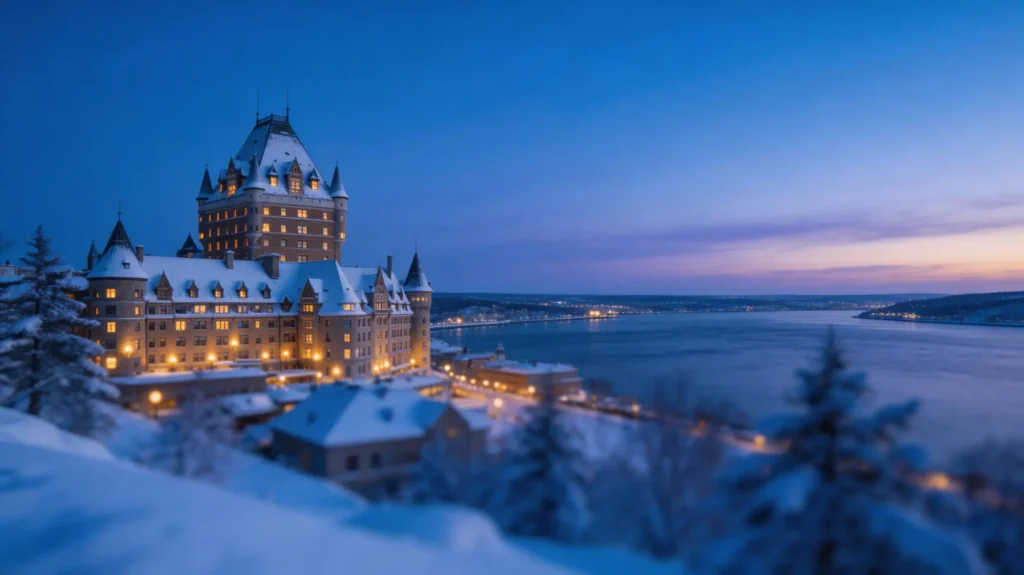
Quebec City, Canada: French Fortress, Winter Carnival & Old World Charm
French Fortress, Winter Carnival & Old World Charm
Quebec City stands as North America’s most European destination, a walled city where French language, architecture, and culture dominate daily life. Founded in 1608 by Samuel de Champlain as a fur-trading post, it evolved into a crucial colonial center and Canada’s capital before Confederation. Today, approximately 95% of residents speak French as their first language, maintaining Francophone distinctiveness unmatched elsewhere north of the Mexican border.

The historic Old City, a UNESCO World Heritage Site since 1985, preserves the most concentrated collection of seventeenth and eighteenth-century architecture in North America. Narrow cobblestone streets wind between stone buildings painted in pastels, their mansard roofs and shuttered windows evoking Parisian neighborhoods rather than North American cities. The city walls, largely intact since construction in the 1600s, make Quebec the only walled city north of Mexico with continuous fortifications.
Winter transforms Quebec into magical landscape where snow blankets architecture and the Winter Carnival draws over three million visitors annually. The carnival, celebrated since 1954, features ice sculptures, snow palaces, parades, and traditional Québécois celebrations creating atmosphere unlike any other North American winter event. Combined with architectural heritage and living French culture, Quebec offers experiences unavailable elsewhere on the continent.
Table of Contents
Old City Architecture & Fortifications
The Vieux-Québec occupies roughly one square kilometer of land rising from the St. Lawrence River valley. The city walls stretch approximately 4.6 kilometers, the only intact urban fortifications in North America, constructed beginning in the 1600s and completed in the nineteenth century. Walking the ramparts offers panoramic views of the river, surrounding mountains, and cityscape while revealing military architecture spanning centuries.
The Basilica-Cathedral of Quebec, constructed in 1771, preserves one of North America’s oldest wooden cathedral interiors. The basilica represents continuous religious life from the city’s founding, serving as the primary Catholic church throughout Quebec’s history. Inside, Renaissance-inspired artwork, ornate woodwork, and historical religious objects document centuries of religious devotion and artistic patronage.
The Place-Royale, a historic square in the lower city where French fur traders originally established trading posts, preserves buildings from the eighteenth century. The Église Notre-Dame-des-Victoires features a wooden model ship hanging from its ceiling, a votive offering reflecting maritime dependence of colonial Quebec.
City Walls
4.6 km intact ramparts from 1600s-1800s offering walks with river and mountain views
Montmorency Falls
83-meter cascade taller than Niagara with tram and suspension bridge access
Place-Royale
Historic square preserving original French trading post buildings from 1600s-1700s
Basilica-Cathedral
1771 wooden cathedral, oldest wooden religious structure in North America
French Language & Living Culture
Quebec represents North America’s largest French-speaking enclave, with 95% of residents speaking French daily and cultural institutions prioritizing French identity preservation. This linguistic distinctiveness creates fundamentally different cultural experience from anglophone Canada—French dominates signage, conversation, media, and cultural expression throughout daily life.
Québécois cuisine reflects French traditions adapted to New World ingredients and colonial influences. Poutine—fries topped with gravy and cheese curds—originated in Quebec and became iconic. Tourtière (meat pie), cretons (pork spread), and sugar pie represent traditional Québécois comfort foods appearing at family tables and restaurants. Contemporary chefs merge traditional recipes with modern techniques.
Literature, music, and visual arts flourish in Quebec City with galleries, theaters, and concert venues throughout the city. The city hosts numerous festivals celebrating music, theater, film, and literature, attracting artists from the Francophone world. These institutions maintain Québécois distinctiveness and provide venues for artistic expression exploring identity and contemporary experience.
Poutine
Fries, gravy, cheese curds—iconic comfort food originating in rural Quebec
Tourtière
Traditional meat pie served at family meals and holiday celebrations
Festivals
Music, theater, film festivals year-round celebrating Québécois and international arts
Language
95% French creates immersive Francophone experience in daily life
Winter Carnival & Seasonal Magic
The Quebec Winter Carnival, celebrated annually for seventeen days straddling January and February, ranks among North America’s largest and most elaborate winter festivals. The modern carnival began in 1954 as effort to celebrate winter rather than flee it, transforming seasonal hardship into cultural celebration. Over three million visitors descend for parades, ice sculptures, snow palaces, and traditional festivities.
The Ice Palace, constructed annually during carnival, showcases ice sculpting on massive scale. Built from thousands of tons of ice harvested from nearby rivers, the palace features intricate carved designs, rooms, staircases, and decorative elements demonstrating ice as sculptural medium. The palace’s eventual melting as temperatures warm creates ephemeral beauty and poignant reminder of winter’s temporary nature.
Traditional carnival activities include horse-drawn sleigh races, the canoe race across frozen St. Lawrence with portage challenges, and night parades featuring elaborate floats and pyrotechnics. These activities celebrate winter sports and Arctic survival traditions reflecting Quebec’s historical relationship with winter climate.
Ice Palace
Massive sculpture from river ice with carved rooms and decorative elements
Bonhomme Mascot
Five-meter snowman mascot photographed millions of times annually
Canoe Race
Historic race crossing frozen St. Lawrence with portage, reviving explorer traditions
Night Parades
Elaborate floats, performers, and pyrotechnics illuminating snowy streets
Québécois Cuisine & Local Flavors
Québécois cuisine evolved from French culinary traditions, Indigenous North American ingredients, and colonial adaptation to climate and geography. Historically, rural Quebec relied on preserved foods, grains, meat, and dairy—ingredients enabling survival through brutal winters. Contemporary cuisine honors these foundations while incorporating modern cooking and Quebec’s agricultural diversity.
Sugar shacks scattered throughout Quebec rural areas offer traditional spring celebrations when maple sap transforms into sugar products. These gatherings feature roasted meats, traditional foods, and the iconic sugar-on-snow dessert where hot maple syrup is poured on clean snow, creating chewy candy rolled on wooden sticks. Sugar shack season represents cultural celebration of spring and maple harvest traditions.
Cheese production flourishes in Quebec, with artisanal producers creating varieties ranging from soft Camembert-style cheeses to firm aged varieties. Quebec cheeses have won international awards and gained recognition among cheese enthusiasts worldwide.
Poutine
Fries, gravy, cheese curds—working-class food elevated to iconic status
Sugar Shack
Spring tradition: maple syrup preparation with traditional foods and sugar-on-snow
Ice Wine
Frozen-grape wine producing sweet, complex flavors internationally recognized
Artisanal Cheese
Award-winning cheese producers creating Camembert, aged, and specialty varieties
Planning Your Visit
Quebec City’s location in eastern Canada, approximately 800 kilometers east of Toronto, makes it accessible by air or overland transportation. Montreal-Pierre Elliott Trudeau International Airport, located 250 kilometers west, serves as the primary international gateway. A scenic drive or train journey from Montreal to Quebec City offers views of Laurentian mountains and St. Lawrence River valleys.
Quebec City’s Old City is highly walkable, with pedestrian streets, narrow lanes, and accessible ramparts. The lower city near the St. Lawrence contains historic trading districts, while the upper city hosts government buildings, museums, and formal squares. Funicular railways connect upper and lower cities.
Canadian currency (Canadian dollar) is accepted throughout, with ATMs widely available. Credit cards are accepted in most establishments, but cash remains useful for small purchases. Visitors from US and European countries benefit from favorable exchange rates making Quebec relatively inexpensive.
Montmorency Falls
Tram and suspension bridge access to 83-meter waterfall northeast of city
Île d’Orléans
Rural island 30 minutes from city with farms, orchards, and agritourism
Montmorency Park
Riverside park with walking trails, picnic areas, and mountain views
Laurentian Mountains
Hiking and outdoor recreation within 90 minutes of city center
Experience Quebec City’s Timeless French Heritage
Quebec City invites you to step into North America’s most authentically European destination, where centuries-old architecture meets living French culture, and winter transforms the landscape into magical splendor. From the Winter Carnival’s three million visitors to quiet cobblestone streets of the Old City, Quebec offers experiences unavailable elsewhere on the continent.
Start planning your Quebec City adventure today with Facts From Upstairs.