
Stone Town, Tanzania: Zanzibar’s Heart, Spice Trade Heritage & Swahili Culture
Zanzibar’s Historic Heart Where Swahili, Arab, and African Cultures Intertwine
Stone Town represents one of the world’s most compelling travel destinations, combining historical significance with contemporary cultural vitality. The city showcases extraordinary architectural achievements, distinctive cultural traditions, and opportunities for meaningful traveler engagement with local communities and heritage preservation.

Visitors to Stone Town encounter layered histories—ancient civilizations, colonial periods, post-colonial development, and contemporary globalization all visible in architecture, cultural practices, and daily life. Understanding these layers enriches travel experiences by providing context for observed phenomena.
Contemporary Stone Town balances preservation of cultural heritage with economic development through tourism. Sustainable travel practices remain essential for ensuring tourism benefits align with preservation goals.
Table of Contents
Historical Significance & Heritage
Stone Town developed through centuries of cultural synthesis. Historical forces including trade networks, empire-building, colonialism, and independence movements shaped the city’s development.
Museums, historical sites, and cultural institutions throughout Stone Town document historical narratives. These resources provide educational opportunities.
Contemporary Stone Town continues evolving—historical preservation coexists with modern development.
Contemporary Culture & Traditions
Stone Town’s cultural character reflects historical inheritances combined with contemporary innovation. Local communities maintain traditions while engaging with global influences.
Markets, festivals, and community gathering spaces provide opportunities to observe and participate in local cultural expression.
Historical Sites
Monuments documenting past periods and achievements
Living Traditions
Contemporary expressions rooted in historical inheritances
Sacred Spaces
Religious sites maintaining spiritual significance
Community Spaces
Gathering areas revealing daily social life
Key Attractions & Sacred Sites
Stone Town contains numerous significant sites reflecting historical importance and cultural significance.
Sacred sites remain functioning religious and community spaces. Visiting requires cultural sensitivity.
Day trips and excursions from Stone Town provide access to surrounding cultural and natural sites.
Local Experiences & Activities
Exploring Stone Town involves engaging with daily life—markets, restaurants, neighborhoods, and social spaces.
Markets provide multisensory immersion in local commerce, agriculture, and culture.
Evening activities in Stone Town range from cultural performances to casual social gatherings.
Food & Dining in Stone Town
Stone Town’s food scene is a spice-infused journey through Swahili, Indian, Arab, and Persian culinary traditions. The Forodhani Gardens night market, set along the waterfront, is an essential evening experience where vendors grill fresh seafood, Zanzibar pizzas (stuffed flatbreads), sugar cane juice, and urojo—a tangy Zanzibari soup blending tamarind, coconut, and lentils. Arrive at sunset for the best selection and atmosphere.
Beyond the night market, Stone Town’s narrow alleys hide family-run restaurants serving pilau rice fragrant with cloves and cardamom, octopus curry, and biryani that reflects centuries of Indian Ocean trade. Fresh tropical fruit juices—mango, passion fruit, and the local favorite, tamarind—are available everywhere. A spice farm tour on the island’s outskirts combines a botanical education with a spectacular lunch prepared using freshly picked ingredients.
Getting Around Stone Town
Stone Town’s labyrinthine alleys are designed for walking, and getting pleasantly lost is part of the charm. Most hotels, restaurants, shops, and historical sites sit within a compact area that takes roughly 20 minutes to traverse on foot. Landmark buildings like the House of Wonders and the Old Fort serve as useful orientation points when navigating the maze of coral-stone streets.
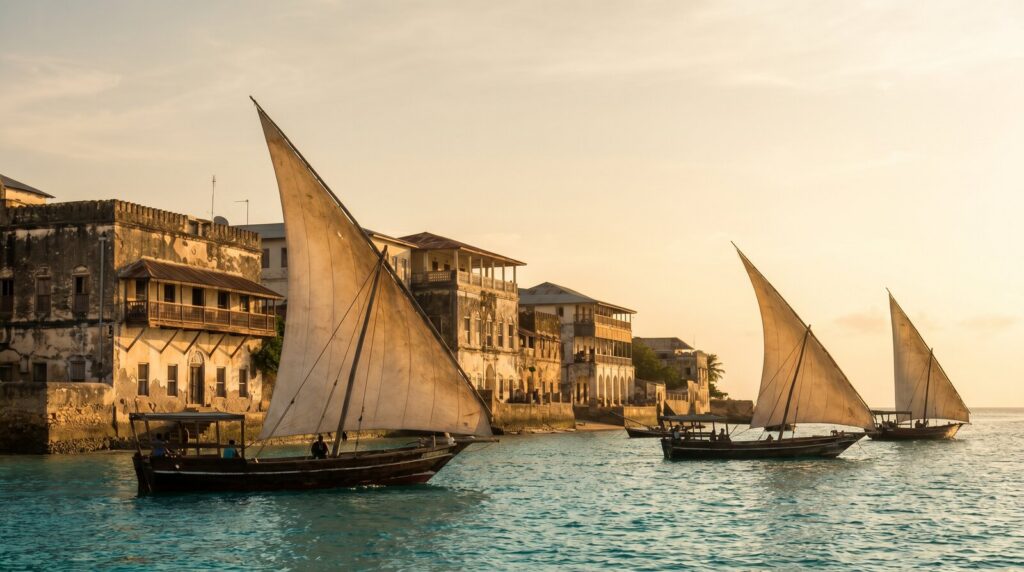
For destinations beyond the old town, dala dalas (local minibuses) run along major routes across Unguja island at very low cost. Hiring a scooter or arranging a taxi through your hotel is convenient for reaching beaches on the north and east coasts like Nungwi and Paje. The ferry from Dar es Salaam docks directly at the Stone Town waterfront, and local dhow sailing trips to Prison Island and sandbank excursions depart from the harbor daily.
Frequently Asked Questions About Stone Town
What is the best time to visit Stone Town?
The dry seasons from June to October and January to February offer the best weather. June through October is cooler with minimal rainfall, while January and February are warm and dry. The long rains (March-May) bring heavy downpours and higher humidity, though accommodation prices drop and the town has a quieter, more local feel.
Is Stone Town safe for tourists?
Stone Town is generally safe for visitors, but standard precautions apply—avoid walking alone through dimly lit alleys at night and keep valuables out of sight. Zanzibar has a conservative Muslim culture, so modest dress is appreciated when walking through town, particularly near mosques. The local people are famously friendly and often eager to share their island’s history with visitors.
How many days do you need in Stone Town?
Two days allows for thorough exploration of Stone Town’s historical sites, markets, and food scene, plus a spice tour. Add two to three more days to experience Zanzibar’s beaches, snorkeling at Mnemba Atoll, or the Jozani Forest to see red colobus monkeys—making five days total ideal for combining the town with the island’s coastal attractions.
What should I wear in Stone Town?
As a predominantly Muslim community, modest clothing is respectful and appreciated. Cover shoulders and knees when walking through town, especially near religious sites. Lightweight, breathable fabrics are essential in the tropical climate. On the beaches outside Stone Town, more casual beachwear is acceptable at tourist-oriented areas.
Do I need a visa for Zanzibar?
Zanzibar is part of Tanzania, and most visitors need a Tanzanian visa. Many nationalities can obtain an e-visa online before travel or a visa on arrival at the airport or ferry terminal. Check current requirements before your trip, as regulations change. A valid yellow fever vaccination certificate may be required if arriving from an endemic country.
Planning Your Visit
Practical planning considerations for Stone Town include transportation, accommodation, visa requirements, climate, and seasonal factors.
Seasonal considerations significantly impact Stone Town experiences. Climate affects outdoor exploration feasibility.
Stone Town accommodations range from luxury establishments to budget guesthouses. Mid-range options typically provide good value.
Discover Stone Town’s Distinctive Cultural Heritage
Stone Town offers incomparable opportunities to experience rich cultural heritage, historical significance, and contemporary vibrancy while engaging respectfully with local communities and supporting sustainable tourism.
Start planning your Stone Town adventure today with Facts From Upstairs.