
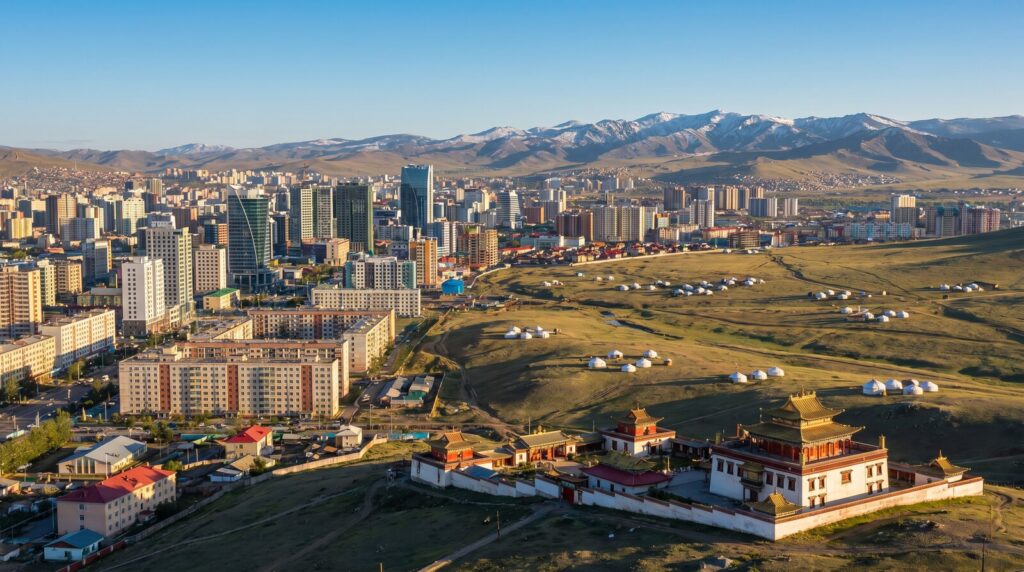
Why Ulan Bator Is Unlike Any Capital You Have Visited
Ulan Bator — also spelled Ulaanbaatar — is one of the most improbable capital cities on Earth. Home to nearly half of Mongolia’s entire population, it sits in a valley at 1,350 meters elevation, ringed by mountains and endless steppe grassland. The city is a study in contrasts: Soviet-era apartment blocks share the skyline with gleaming glass towers, Buddhist monasteries operate steps from modern shopping malls, and nomadic ger (yurt) districts climb the hillsides at the city’s edges. Ulan Bator is rarely anyone’s primary reason for visiting Mongolia — most come for the vast, open landscapes — but the city rewards those who give it time.
As the gateway to the Mongolian steppe, the Gobi Desert, and some of the last truly wild places on the continent, Ulan Bator serves as the starting and ending point for virtually every Mongolia itinerary, with many travelers arriving via Beijing. It is also where you will find the country’s best museums, its most diverse food scene, and a nightlife that surprises first-time visitors with its energy and variety.
Best Time to Visit Ulan Bator
Mongolia has an extreme continental climate, and Ulan Bator holds the distinction of being the coldest capital city in the world. Winters (November through March) are brutally cold, with temperatures regularly dropping below -30°C (-22°F) and heavy air pollution from coal-burning ger districts blanketing the city. Summer (June through August) is the best time to visit, with pleasant temperatures between 15-25°C (59-77°F), long daylight hours, and green landscapes. July is especially popular because of the Naadam Festival, Mongolia’s biggest cultural event featuring horse racing, wrestling, and archery. September brings golden autumn colors and thinning crowds, though nights turn chilly quickly. Spring (April to May) is dusty and windy but offers a sense of the land awakening after its frozen winter.
Top Things to Do in Ulan Bator
Explore Gandantegchinlen Monastery
Gandan Monastery is the most important Buddhist monastery in Mongolia and one of the few to survive the religious purges of the 1930s under Soviet influence. The centerpiece is the Migjid Janraisig temple, which houses a stunning 26-meter-tall gilded statue of the bodhisattva Avalokiteshvara — a spiritual tradition shared with Lhasa, Tibet. Monks chant daily in the prayer halls, incense drifts through the courtyards, and the atmosphere is deeply reverent. Visiting in the morning provides the most authentic experience.
Visit the National Museum of Mongolia
Spanning Mongolia’s history from ancient petroglyphs and Hunnic artifacts through the Mongol Empire, the Soviet era, and the democratic transition, this museum offers an essential crash course before heading into the countryside. Highlights include intricate nomadic costumes, traditional ger furnishings, and exhibits on Genghis Khan’s empire that provide context for the vast landscapes you will encounter outside the city.
Experience the Naadam Festival
Held annually around July 11-13, Naadam is Mongolia’s most celebrated cultural event. The “Three Manly Games” — horse racing, wrestling, and archery — have been practiced for centuries and remain central to Mongolian identity. The opening ceremony at the National Stadium is a spectacle of music, dance, and pageantry. Horse races take place on the outskirts of the city with child jockeys riding across the steppe. If your visit coincides with Naadam, it is an experience you will never forget. Book accommodation and tours well in advance, as the city fills up.
Day Trip to Gorkhi-Terelj National Park
Just 70 kilometers east of Ulan Bator, Terelj is the most accessible slice of the Mongolian wilderness. The park features dramatic rock formations, alpine meadows, forested valleys, and the Tuul River. You can stay in a tourist ger camp, ride horses across the steppe, hike to the famous Turtle Rock formation, or visit the Aryabal Meditation Temple perched on a hillside. Many visitors combine Terelj with a stop at the towering Genghis Khan Equestrian Statue complex, where you can climb inside a 40-meter stainless steel monument of the great khan on horseback.
Where to Eat and Drink
Traditional Mongolian cuisine centers on meat (primarily mutton and beef) and dairy products — a diet shaped by nomadic life on the steppe. Buuz (steamed dumplings), khuushuur (fried meat pies), and tsuivan (stir-fried noodles with meat) are staples found everywhere. For an authentic experience, try Modern Nomads or Mongolians restaurants, which serve traditional dishes in comfortable settings. The city also has a growing international food scene — Korean, Japanese, Indian, and Italian restaurants are easy to find. Rosewood Kitchen + Bar and Bistro Français offer upscale dining. For nightlife, the area around Seoul Street has a concentration of bars and clubs that come alive on weekends.
Getting Around Ulan Bator
Ulan Bator’s traffic congestion is legendary, especially during rush hour on Peace Avenue, the main east-west artery. Buses are affordable but crowded. Taxis are widely available, though ride-hailing apps like UBCab provide more reliable pricing. Walking is pleasant in the city center, where most major sights, hotels, and restaurants are concentrated within a manageable area around Sukhbaatar Square. For trips outside the city — Terelj, the Genghis Khan statue, or the start of countryside tours — arrange private transport through your hotel or a tour operator. Chinggis Khaan International Airport (UBN) is about 50 kilometers southwest of the city center, connected by a modern highway.
Frequently Asked Questions About Ulan Bator
Is Ulan Bator safe for travelers?
Ulan Bator is reasonably safe, though petty theft — especially pickpocketing in crowded markets and on buses — does occur. Be extra vigilant around the Black Market (Narantuul Market) and during Naadam when crowds are dense. Avoid walking alone in poorly lit areas at night. Overall, Mongolians are friendly and hospitable, and serious crime against tourists is uncommon.
Do I need a visa for Mongolia?
Citizens of many countries can enter Mongolia visa-free for stays of up to 30 days, including those from the US, EU, Canada, and Australia. Others may need to apply in advance. Always verify current requirements before travel, as rules can change. Registration with immigration is required for stays longer than 30 days.
Can I use credit cards in Ulan Bator?
Credit and debit cards are accepted at most hotels, upscale restaurants, and larger shops in Ulan Bator. However, cash (Mongolian Tugrik, MNT) is essential for markets, smaller eateries, taxis, and any purchases outside the capital. ATMs are widely available in the city center. Carry sufficient cash when heading to the countryside, where card acceptance is virtually nonexistent.
How do I arrange a countryside tour from Ulan Bator?
Numerous tour operators in Ulan Bator offer trips ranging from one-day excursions to Terelj up to multi-week overland journeys through the Gobi Desert, central Mongolia, and the western Altai Mountains. Booking through a reputable operator is recommended, as self-driving in rural Mongolia requires a capable 4×4 vehicle and solid navigation skills. Guesthouses and hostels in UB can also connect you with freelance drivers and guides. For route planning beyond the capital — the Gobi loop, Karakorum, Khövsgöl and the eagle country of Bayan-Ölgii — see our full Mongolia travel guide.
You Might Also Like
- Mongolia Travel Guide — the full country guide
- Ulaanbaatar, Mongolia — Facts From Upstairs Travel Guide
- Bishkek, Kyrgyzstan — Facts From Upstairs Travel Guide
- Kathmandu, Nepal — Facts From Upstairs Travel Guide
FFU contains affiliate links. We earn a commission when you book through them — at no extra cost to you.
Plan your trip
- Tours & experiences: browse tours and experiences on Klook.
- Airport pickup: pre-book an airport transfer with GetTransfer.
- Car hire: compare rental cars on GetRentacar.
- Bag storage: store your bags with RadicalStorage.
Disclosure: some links above are affiliate links — booking through them supports Facts From Upstairs at no extra cost to you.