
Windhoek, Namibia: Desert Safaris, Etosha Pan & Skeleton Coast
Explore Namibia’s dramatic desert landscapes, world-class wildlife viewing, and remote coastal wilderness from the continent’s most sophisticated safari hub
Windhoek, Namibia’s capital, functions as the logical gateway for exploring one of Southern Africa’s most dramatic and spectacular destinations. Positioned in the country’s central plateau at approximately 1,650 meters elevation, Windhoek remains the cleanest and most organized city in the region with colonial-era German architecture complementing contemporary development. The city serves as primary hub for organizing safari expeditions, car rentals, and guided tours accessing Namibia’s world-class natural attractions including Etosha National Park, the Namib Desert, and the Skeleton Coast.

Namibia’s geography encompasses extreme contrasts—the Namib Desert covering the entire western coastal region, the Kalahari sands occupying the eastern plateau, the dramatic Skeleton Coast along the northern Atlantic shore, and the relatively well-watered northeastern regions hosting abundant wildlife. This geographical diversity creates varied safari experiences depending on visitor interests and time allocation. Windhoek’s centrality provides accessibility to multiple ecological zones within single-country travel, delivering natural diversity typically requiring international travel elsewhere.
What You’ll Discover
Etosha National Park & Wildlife
Etosha National Park covers 22,270 square kilometers dominated by the white Etosha Pan—a massive seasonal salt lake becoming visible from space. The pan represents one of the world’s largest endorheic basins (terminal drainage system where water evaporates without reaching the ocean). During dry season (April-October), the pan transforms into a wildlife magnet drawing elephants, lions, giraffes, zebras, kudu, and dozens of other species to permanent water holes. The pan’s white crystalline expanse creates otherworldly backdrop for wildlife observation and photography.
Etosha’s game-viewing opportunities rank among Africa’s finest. Visitors drive themselves or hire professional guides through the park’s network of roads, stopping at water holes where game concentrates. The park’s open terrain allows visibility exceeding that of more densely vegetated African parks. Wildlife density around permanent water sources reaches impressive levels during dry season, with single water holes regularly hosting 50-100 elephants simultaneously. The concentration creates dramatic predator-prey interactions as lions and other carnivores hunt drinking herbivores.
The park hosts excellent populations of endangered species including black rhinoceros and African wild dogs. Etosha’s conservation success in protecting species decline represents significant achievement given poaching pressures elsewhere. The rhino population recovery, though remaining precarious, demonstrates that protection efforts function when adequately implemented. Big Five species (lion, leopard, elephant, buffalo, rhino) are all regularly sighted, distinguishing Etosha from parks where lion and leopard sightings remain relatively rare.
Self-drive safaris through Etosha require renting vehicles from Windhoek—standard two-wheel-drive vehicles suffice for park roads. The self-drive option provides flexibility, privacy, and significant cost savings versus guided safaris. However, guided game drives led by experienced rangers enhance wildlife observation through their expertise locating animals, interpreting behaviors, and providing historical and ecological context. Most visitors combine self-drive exploration with several guided drives.
Accommodation ranges from luxury lodges outside the park through mid-range rest camps within the park boundaries to basic facilities. The park’s government rest camps offer affordable accommodation with adequate facilities. Private lodges provide superior amenities and personalized service. Most visitors allocate 3-4 days in Etosha for comprehensive game viewing.
Skeleton Coast & Shipwrecks
The Skeleton Coast represents one of Earth’s most dramatic and inhospitable coastal environments. The 180-kilometer stretch of Namibian coastline derives its name from the numerous shipwrecks scattered along the shore—estimated at 1,000+ vessels having wrecked on the coast over the past five centuries. The combination of powerful Atlantic swells, thick fog banks, rocky outcrops, and treacherous currents creates navigation hazards claiming the vessels now visible as rusted hulks on the strand.
The coast’s isolation and extreme conditions preserved shipwrecks visible today—the dry climate prevents rapid decomposition and vegetation growth eliminates organic deterioration. Wrecks ranging from 19th-century wooden sailing vessels to 20th-century steel ships remain visible in various states of preservation. The most famous, the Eduard Bohlen (beached 1910), rises from the sand creating eerie maritime monument to navigational disaster. Walking among wrecks generates contemplation on maritime history, human hubris, and natural forces indifferent to human endeavors.
The coast remains sparsely populated and largely undeveloped, preserving genuine wilderness character. Visitor access requires specialized permits and typically occurs through guided fly-in excursions from Windhoek or Swakopmund. The combination of access restrictions and limited accommodation preserves the coast’s remoteness. Damaraland, the region south of the Skeleton Coast, offers more accessible but equally dramatic desert landscape with stunning geological formations and archaeological significance.
The Skeleton Coast experience emphasizes landscape grandeur, maritime history, and wilderness immersion rather than wildlife viewing. The coastal environment’s extreme conditions limit biodiversity, though desert-adapted species including jackals, hyenas, and specialized birds persist. The experience appeals to travelers seeking raw natural drama over animal encounters.
Namib Desert & Landscapes
The Namib Desert, covering Namibia’s entire western region, represents one of Earth’s oldest and most spectacular desert ecosystems. The dunes reach heights exceeding 300 meters, creating landscape of geometric perfection and color variation—rust-red dunes contrasting with pale sand creating visual drama. The desert’s interior remains sparsely populated, accessible primarily through off-road vehicles or fly-in safari operations. Sossusvlei, the most famous dune location, attracts visitors for its towering red dunes surrounding a white salt pan.
Sossusvlei experiences considerable tourism despite remoteness—the striking aesthetic has made it internationally recognizable through photography and documentary features. Climbing Big Daddy dune (approximately 380 meters) provides panoramic perspectives of the surrounding dune sea. The physical exertion—climbing sand in extreme heat and thin air—challenges most visitors, but rewards with vistas impossible to appreciate from ground level. The adjacent Dead Vlei, a white salt pan surrounded by ancient dead trees standing skeletal against the sand, creates surreal landscape appearing almost extraterrestrial.
Namibrand Nature Reserve, encompassing privately protected terrain south of Sesriem, offers alternative desert experiences with fewer tourists than Sossusvlei. The reserve protects diverse dune landscapes and desert wildlife. Various lodges throughout the reserve provide accommodation ranging from ultra-luxury to basic camps. The reserve demonstrates how private conservation easements can preserve wilderness while generating revenue through tourism.
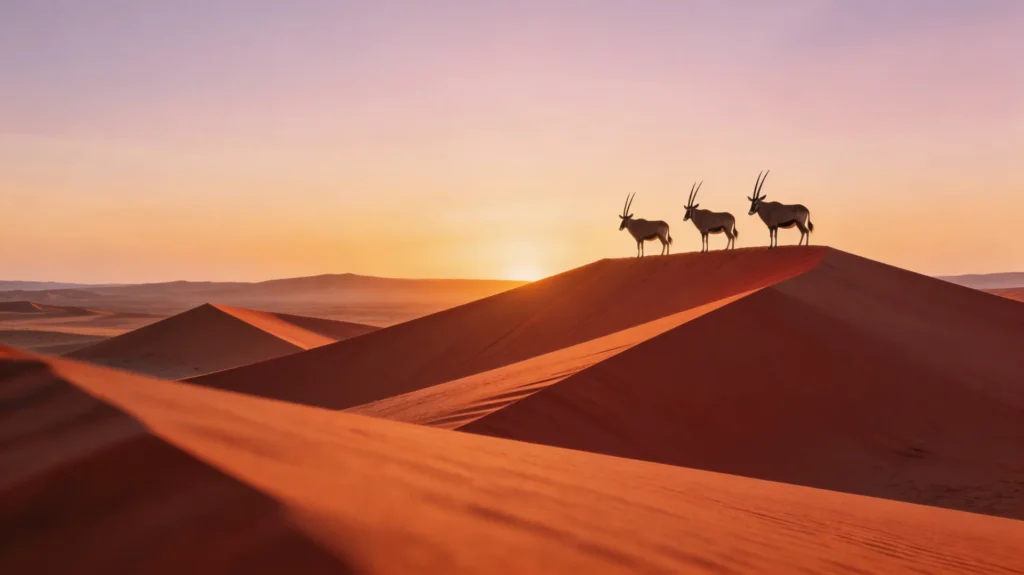
The Namib’s wildlife includes desert-adapted elephants in the northern regions, gemsbok (oryx) antelope specifically evolved for desert survival, springbok, and various smaller species. The sparse vegetation and open terrain differ dramatically from wetter African ecosystems—game viewing here emphasizes landscape drama over animal density.
Windhoek’s Urban Character
Windhoek, established in 1840s as a small settlement, developed during German colonial rule (1884-1918) into a planned colonial town. German architectural influence remains visible throughout the city center—colonial facades, Deutsch language surviving on some signage, and beer hall culture emphasizing German traditions. The Christuskirche (Christ Church), a German colonial-era church, dominates the skyline and serves as the city’s most recognizable landmark. The castle-like Schwerin House reflects German architectural traditions adapted to African climates.
Post-independence (1990), Windhoek modernized rapidly with contemporary development supplementing colonial architecture. The city now hosts shopping centers, restaurants, and services approaching international standards. The Nama and Damara populations provide cultural grounding maintaining African identity despite German colonial heritage. Markets and cultural institutions document Namibian indigenous cultures and contemporary artistic production.
The city’s restaurant and bar scene reflects its role as a regional hub—establishments cater to safari travelers, local residents, and expatriate communities. German cuisine remains influential with bratwurst appearing throughout the city. International restaurants supplement local options. The Soweto Market (particularly Saturday mornings) offers cultural immersion through informal commerce and local food preparation.
Windhoek’s main attractions concentrate downtown with walking tours facilitating neighborhood exploration. The National Museum of Namibia documents indigenous cultures, colonial history, and contemporary development. The Owela Museum focuses on natural history and wildlife. These institutions provide context for understanding Namibian ecology and culture encountered during safari experiences.
Safari Styles & Accommodation
Namibian safaris accommodate diverse budgets and preferences. Self-drive options utilize rented vehicles to explore parks independently, offering flexibility and cost savings. Professional game drives with experienced guides enhance wildlife observation and interpretation. Fly-in safaris utilizing small aircraft access remote regions like the Skeleton Coast and interior desert impossible to reach via standard vehicles. Combination safaris merge multiple modalities—fly-ins with ground exploration and lodge-based operations.
Accommodation spans ultra-luxury lodges with comprehensive amenities and personalized service through mid-range rest camps with adequate facilities to basic self-catering options. Luxury operations justify premium pricing through exceptional locations, professional guiding, and curated experiences. Mid-range rest camps provide comfortable accommodations within parks, eliminating daily driving to external lodges. Budget options appeal to travelers prioritizing cost savings over amenity comprehensiveness.
Self-Drive Safaris
Rent vehicle, explore independently. Flexible pacing, cost-effective. Requires vehicle comfort and navigation skills. Optimal for experienced travelers.
Guided Operations
Professional guides, organized itineraries, interpretation expertise. Higher costs but superior wildlife observation and educational value. Ideal for first-time safari visitors.
Most first-time safari visitors benefit from guided experiences supplementing self-drive exploration. The combination offers flexibility and cost control alongside professional expertise and wildlife knowledge. Multi-day packages typically include accommodation, meals, and guided activities providing all-inclusive simplicity.
Practical Safari Planning
Windhoek International Airport (WDH) receives flights from South Africa, Angola, and limited international connections. Most international visitors transit through Johannesburg before connecting to Windhoek. The airport provides car rental services, accommodation booking, and tourist information. The city center remains 40 kilometers away requiring 45-minute transfer.
Currency is Namibian Dollar (NAD), with fixed parity to South African Rand. Approximately 18 NAD equals 1 USD in 2026. ATMs distribute throughout Windhoek, accepting international cards. Vehicle rentals require international driver’s license or official translation. Credit cards are widely accepted at established establishments; cash remains useful for informal transactions and remote locations.
Namibia’s climate varies by region—Windhoek experiences highland climate with moderate temperatures (15-25°C year-round). Etosha and desert regions experience extreme temperature variations—hot daytime (25-35°C) to cold nights (5-10°C) during winter. Rain probability is minimal throughout most of the country with highest precipitation November-March. Wind is consistent, particularly in coastal regions.
Health requirements include yellow fever vaccination for entry if arriving from endemic countries. Malaria prophylaxis is recommended for Etosha and northeastern regions. Medical facilities in Windhoek prove reasonable; remote areas lack sophisticated healthcare. Travel insurance covering emergency evacuation is advisable.
Visa requirements vary by nationality with most Western passport holders receiving 90-day tourist visas on arrival. Confirm current requirements prior to travel. The country maintains political stability and security favorable for tourism. Standard urban precautions apply in Windhoek; park areas remain safe for tourists.
Explore Namibia’s Untamed Grandeur
Namibia delivers safari excellence combining world-class wildlife viewing with dramatic desert landscapes, maritime history, and manageable tourism infrastructure. From Etosha’s concentration of game through Skeleton Coast shipwrecks to the Namib Desert’s geometric perfection, the country rewards safari travelers with comprehensive African experience exceeding more famous destinations in many respects.