
Languages of Zambia
All languages of Eastern Africa →fluent beta classical · classes by phone with Maya at ranas.ai/maya
Zambia Travel Guide — Victoria Falls, Walking Safaris & the Real Wild Africa
Zambia is the safari purist’s Africa: home to one half of mighty Victoria Falls, the birthplace of the walking safari, and vast, uncrowded national parks where you’re far more likely to share a sundowner with hippos than with other tourists. Safe, peaceful and genuinely friendly, it trades flashy infrastructure for wild authenticity — and, for US visitors, it’s now visa-free.
📋 In This Guide
- Overview — The safari purist’s Africa
- Victoria Falls & the Devil’s Pool
- Best time to visit (season by season)
- Getting there & visas
- Getting around
- Where to go — Livingstone, South Luangwa & the Zambezi
- Culture & people — peaceful & welcoming
- A food lover’s guide to Zambia
- Off the beaten path
- Practical information
- Budget breakdown — what Zambia costs in 2026
- Planning your first trip
- Frequently asked questions
Overview — The Safari Purist’s Africa
Landlocked in southern-central Africa and bordered by eight countries, Zambia is defined by water and wilderness: the Zambezi River, the thundering Victoria Falls, and a string of huge, wild national parks. It’s less developed and less crowded than Kenya, Tanzania or South Africa, and that’s precisely the point — this is where safari feels raw and real.
Zambia invented the walking safari in the South Luangwa Valley, and it remains the country’s signature experience: tracking wildlife on foot with an armed guide, reading the bush at eye level. Add canoeing past elephants on the Lower Zambezi, the spectacle of the Falls at Livingstone, and a reputation as one of Africa’s safest and friendliest countries, and you have a destination for travellers who want substance over polish.
Victoria Falls & the Devil’s Pool
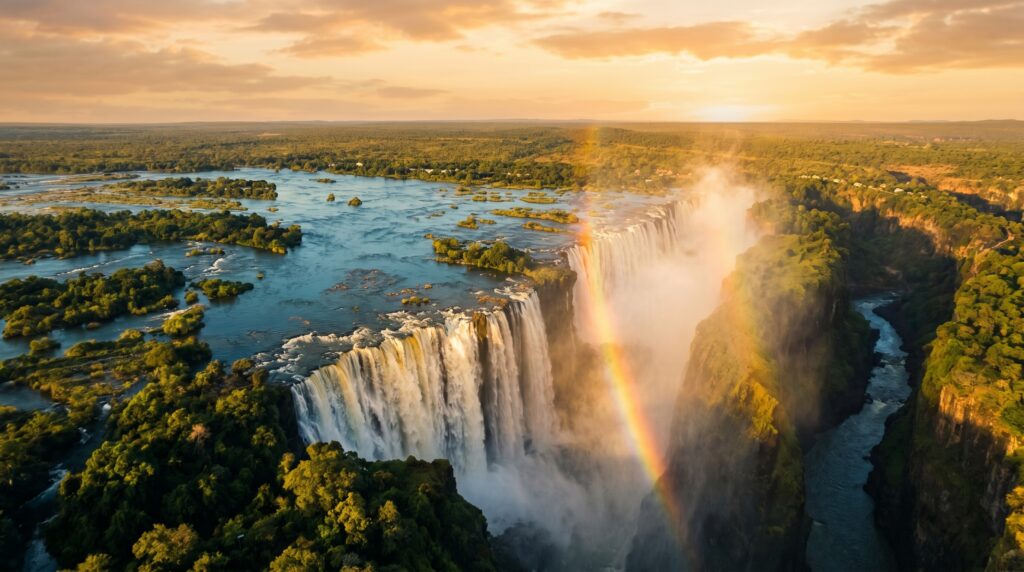
The Zambian side of Victoria Falls — Mosi-oa-Tunya, “the smoke that thunders” — gives you the closest, most visceral encounter with the world’s largest sheet of falling water. When the Zambezi runs low (roughly August to January), the legendary Devil’s Pool opens: a natural rock pool right on the lip of the 100-metre drop, where you can swim to the very edge. At full flood (February to May) the Falls are a wall of spray and rainbows. Either way, the adventure capital of Livingstone — rafting, bungee, gorge swings, sunset cruises — sits right beside it.
Best Time to Visit Zambia (Season by Season)
June–October — Dry (best for wildlife)
The prime safari window: thinning vegetation and shrinking waterholes concentrate wildlife, and walking safaris are at their best in South Luangwa, Kafue and the Lower Zambezi. July–September is peak (and priciest); June and October are great-value shoulders.
February–May — The Falls at full flood
The Zambezi is highest after the rains, and Victoria Falls is at its most powerful (March is the classic peak), though spray can obscure the view. Lush green landscapes and lower lodge prices, but some bush camps are closed.
November–January — Green/emerald season
Hot, with dramatic skies and newborn animals; the cheapest time, and when the Devil’s Pool is usually open. Birding is superb, though some camps close and roads can be tricky.
Getting There & Visas
The main gateways are Kenneth Kaunda International Airport (LUN) in Lusaka and Harry Mwanga Nkumbula International Airport (LVI) in Livingstone for the Falls, with connections via Johannesburg, Addis Ababa, Nairobi and Dubai.
- Visa: US citizens no longer need a visa for tourist stays of up to 90 days. If you plan to cross to Zimbabwe and back at the Falls, the KAZA UNIVISA ($50) covers both countries.
- Passport: valid for at least six months with three blank pages.
- Health: a yellow fever certificate is required if you’re arriving from a country with risk of transmission.
Getting Around
- Light-aircraft flights: the standard way to hop between far-flung parks (Lusaka, Livingstone, South Luangwa, Lower Zambezi, Kafue) — distances and road conditions make flying the sensible choice.
- Guided safari transfers: most visitors travel on a pre-arranged itinerary with camp-to-camp transfers and game drives included.
- Self-drive: possible for the adventurous with a 4×4, but long, rough roads and remote parks make it demanding.
- Livingstone: compact and easy, with taxis and tour transfers to the Falls and activities.
Where to Go — Livingstone, South Luangwa & the Zambezi
Livingstone & Victoria Falls
The Falls, the Devil’s Pool (in low water), Knife-Edge Bridge, and an adventure menu of rafting, bungee and sunset cruises — plus Mosi-oa-Tunya National Park for an easy first safari with white rhino.
South Luangwa National Park
The crown jewel and the home of the walking safari: outstanding leopard sightings, huge hippo pods in the Luangwa River, and intimate, owner-run bush camps. The best all-round park in the country.
Lower Zambezi National Park
Riverine wilderness on the Zambezi, famous for canoeing safaris that glide past elephants and hippos, plus excellent fishing and game drives along the floodplain.
Kafue National Park
One of Africa’s largest parks, vast and little-visited, with the seasonal Busanga Plains for lions and big herds — true off-grid wilderness.
Culture & People — Peaceful & Welcoming
Zambia is famous for its stability and warmth: a peaceful, multi-ethnic nation of more than 70 language groups that takes real pride in being friendly and safe. English is the official language and widely spoken, while Bemba, Nyanja, Tonga and Lozi flavour daily life. The unifying spirit, often summed up in the local idea of community and good humour, makes travellers feel genuinely welcome.
Beyond the parks, culture shows up in vibrant markets, gospel and traditional music, and ceremonies like the Lozi Kuomboka, when the king moves to higher ground as the floods rise. Independence came peacefully in 1964, and the country has remained one of Africa’s most settled ever since.
A Food Lover’s Guide to Zambia
- Nshima — the national staple: a thick maize-meal porridge eaten by hand with relishes of meat, fish or vegetables.
- Relishes (ndiwo) — from kapenta (tiny dried fish) and bream to greens like rape and pumpkin leaves in groundnut sauce.
- Village chicken & game — free-range chicken stews, and, in lodges, occasional well-sourced game.
- Fresh fish & fruit — bream and tilapia from the rivers and lakes, plus mangoes, pineapples and the wild masuku fruit.
Off the Beaten Path
- Bangweulu Wetlands — one of the best places on Earth to see the prehistoric-looking shoebill stork, amid vast swamps and black lechwe herds.
- Kasanka’s bat migration — each November–December, millions of straw-coloured fruit bats fill the sky in one of the world’s great wildlife spectacles.
- North Luangwa — remote, walking-only wilderness for serious safari-goers, with rhino reintroduction.
- Lake Kariba — sunsets, houseboats and tiger-fishing on the world’s largest man-made lake.
- Shiwa Ng’andu — a surreal English-style manor estate deep in the bush, with its own story to tell.
Practical Information
- Money: the kwacha is the only legal tender for payment, even where prices are quoted in dollars; bring crisp US$ for some lodge bills and ATMs in towns.
- Health: malaria is present — take prophylaxis and use repellent; carry a yellow fever certificate if arriving from a risk country.
- Power: 230V, mostly UK-style three-pin plugs — US travellers need an adapter; remote camps run on solar.
- Safety: Zambia is one of Africa’s safest countries; use standard city sense in Lusaka and follow guides’ advice in the bush.
- Connectivity: good in towns; patchy to none in remote camps — embrace the digital detox.
- Walking safaris: always follow your armed guide’s instructions to the letter.
Budget Breakdown — What Zambia Costs in 2026
Safari Zambia is a premium experience, but Livingstone and self-organised trips can be done for much less. Rough per-person estimates in USD:
| Style | Lodging / night | Notes |
|---|---|---|
| Livingstone budget | $30–90 | guesthouses, hostels; Falls & activities pay-as-you-go |
| Mid-range safari | $200–400 | often all-inclusive (meals, drives, park fees) |
| Luxury safari | $600–1,500+ | fly-in bush camps, all-inclusive |
Most safari camps are all-inclusive, so the nightly rate covers game drives, meals and park fees. A full safari tour typically runs from around $2,500 for a week; Livingstone-only trips cost a fraction of that.
Planning Your First Trip
A classic week pairs Livingstone (two or three nights for the Falls and activities) with South Luangwa (three or four nights of game and walking safaris), linked by a short flight via Lusaka. Add the Lower Zambezi for canoeing if you have time. Travel in the dry season (June–October) for the best wildlife, book reputable fly-in camps ahead, and remember you no longer need a visa — just a passport with six months’ validity and three blank pages.
Frequently Asked Questions
Do US citizens need a visa for Zambia?
No — US tourists can now visit visa-free for up to 90 days. If you’ll hop across to Zimbabwe at the Falls, the KAZA UNIVISA ($50) conveniently covers both countries. Carry a passport valid six months with three blank pages.
When is the best time to visit Zambia?
June–October (dry season) is best for wildlife and walking safaris; February–May for Victoria Falls at full power; August–January for swimming the Devil’s Pool when the river is low.
Zambia or Zimbabwe for Victoria Falls?
The Zambian side offers the closest, most adventurous views (and the Devil’s Pool); Zimbabwe gives the broad panoramic vista. With the KAZA UNIVISA you can easily do both.
Is Zambia safe to visit?
Yes — it’s widely regarded as one of Africa’s safest and most peaceful countries. Use normal precautions in Lusaka, and always follow your guide on walking safaris.
Is Zambia expensive?
Fly-in safaris are premium (camps from ~$200 and up, usually all-inclusive), but a Livingstone-based trip with the Falls and activities can be done on a much smaller budget.
Ready to Explore Zambia?
Half of Victoria Falls, the original walking safari and Africa at its wildest and friendliest — Zambia is for travellers who want the real thing. Tell us your dates and travel style and we’ll help you plan it. Plan your trip →
Explore More
How This Guide Was Built
Researched and written by the Facts From Upstairs team, last updated . Prices, visa rules and entry requirements change — always confirm current details with official sources before you travel.
More country guides you might like
Plan your trip to Zambia
The booking tools we use ourselves. FFU may earn a commission at no extra cost to you.
Plan & book your trip to Zambia
Booking through these searches supports our guides at no extra cost to you.