
Kigali Travel Guide — The Cleanest, Safest, Most Surprising Capital in East Africa
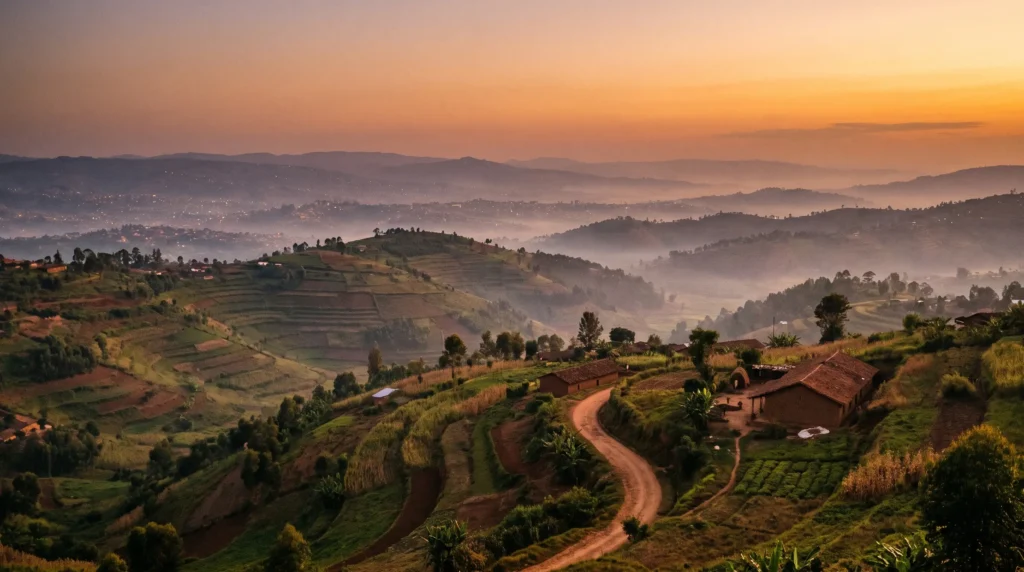
I did not expect to fall for a capital city on this continent the way I fell for Kigali. You land expecting the usual chaos of a fast-growing African capital and instead find swept boulevards climbing green hills, motorcycle taxis lined up in neat queues with spare helmets ready for you, and not a single plastic bag in sight because the country banned them back in 2008 — years before most of the world took the idea seriously. Kigali is built across a thousand hills, quite literally — Rwanda’s nickname, “Land of a Thousand Hills,” is not tourist-board poetry, it is topography — and every ridge here gives you a different view of red-tile roofs, banana groves and jacaranda-lined streets. This is also a city that carries an enormous weight of history: the Kigali Genocide Memorial holds the remains of more than 250,000 people, and no honest visit skips it. What struck me most is how a city that endured 1994 has become, thirty-plus years later, the base camp for one of the most sought-after wildlife encounters on Earth — mountain gorillas, ninety minutes up the road. Kigali is not a place you pass through on your way to the volcanoes. It has earned its own chapter.
In This Guide
- Overview — Why Kigali Is Africa’s Most Surprising Capital
- Umuganda — The Last Saturday of Every Month
- Best Time to Visit Kigali (Season by Season)
- Getting There — KGL & the New Bugesera Airport
- Getting Around — Moto-Taxis, Ride-Hail & Walking
- Neighborhoods — CBD, Kiyovu, Nyamirambo & Kimihurura
- Culture & People — Memory, Language & a Nation Rebuilding
- A Food Lover’s Guide to Kigali
- Off the Beaten Path
- Day Trips from Kigali
- Practical Information
- Budget Breakdown — What Kigali Actually Costs in 2026
- Frequently Asked Questions
Overview — Why Kigali Is Africa’s Most Surprising Capital
Kigali sits almost exactly at the center of Rwanda, spread across a cluster of hills at an average elevation of roughly 1,567 metres — high enough that the equatorial location never feels like it, with daytime temperatures that rarely swing far from the mid-20s Celsius year-round. The city was founded in 1907 by a German colonial administrator and became Rwanda’s capital at independence in 1962; today its population runs somewhere north of two million across the metro area, spread over three districts — Gasabo, Kicukiro and Nyarugenge — each climbing its own set of ridges.
Most first-time visitors arrive with one destination in mind: the mountain gorillas of Volcanoes National Park, a couple of hours north. That is a completely valid reason to come. But treating Kigali as a mere layover undersells a genuinely interesting city — one that has rebuilt itself with striking intention since 1994, investing hard in cleanliness, safety and a rapidly growing convention and tech scene, while never hiding from what happened here. The Kigali Genocide Memorial is not tucked away; it sits prominently in the Gisozi district and was inscribed on UNESCO’s World Heritage list in 2023 alongside three other memorial sites across the country.
What you notice within an hour of arrival: no litter, no plastic bags (they have been illegal since 2008, with real fines behind the law), and a level of order that catches visitors off guard. It is often called the cleanest city in Africa, and while that is a subjective crown, nobody who has walked Kigali’s streets argues hard against it.
Umuganda — The Last Saturday of Every Month
Time your visit around this if you can: on the last Saturday of every month, the entire country stops for Umuganda, a nationwide morning of mandatory community service — streets swept, trees planted, public spaces repaired, neighbors working side by side. From roughly 7am to 11am, shops close, traffic thins dramatically, and even foreign visitors are gently expected to either join in or stay off the roads until it wraps up.
It is a strange and moving thing to witness: this is a genuine, decades-running tradition of collective rebuilding, not a photo-op staged for tourists, and it is a big part of why the city looks the way it does. Plan around it rather than against it — book a driver who knows the schedule, or use the morning for a slow hotel breakfast and a walk once the roads reopen. Car-Free Days on select Sundays in the city center are a lighter-touch version of the same spirit, with car-free zones opened up for pedestrians, joggers and community fitness classes.
Best Time to Visit Kigali (Season by Season)
June – September · Long dry season
The most reliable window and the one gorilla trekkers favor most, with the least mud on the Volcanoes National Park trails and generally clear hill views over Kigali. It is also peak season, so book gorilla permits and lodges well in advance.
Mid-December – February · Short dry season
A quieter, still-dry stretch — good value on hotels, fewer trekking crowds, and pleasant walking weather in the city.
March – May & October – November · Rainy seasons
Rwanda gets two rainy seasons a year rather than one — heavier from March to May, lighter from September to December. Rain typically arrives as intense afternoon downpours rather than all-day washouts, so mornings often stay usable, but trekking trails get genuinely muddy and some travelers prefer to shift gorilla treks to the drier months and use the wet season for city time, museums and food instead.
Getting There — KGL & the New Bugesera Airport
Kigali International Airport (KGL) sits in the Kanombe area, about 5 kilometres east of the city center, and is served by RwandAir plus a growing list of international carriers connecting through Addis Ababa, Nairobi, Doha, Brussels and Amsterdam. A taxi into the CBD or Kiyovu takes roughly 15–20 minutes outside rush hour.
A larger replacement, Bugesera International Airport, is under construction about 40 kilometres south of the city and is intended eventually to take over as Rwanda’s main international gateway and a transit point toward eastern DRC. Until it opens, KGL remains the arrival point for essentially every visitor, and its compact size keeps immigration and baggage claim mercifully fast — visa on arrival included, since Rwanda has issued visas on arrival to citizens of every country since 2018.
Getting Around — Moto-Taxis, Ride-Hail & Walking
Kigali has no metro and only a modest public bus network, so most visitors get around by moto-taxi — motorcycle taxis identified by numbered vests and drivers required to carry a spare helmet for passengers. Agree a price before climbing on, or use one of the ride-hailing apps operating locally, which fix the fare up front and remove the haggling entirely. A cross-town moto-taxi hop typically runs under US$3–4 in local currency.
Car-hire and private drivers are easy to arrange through hotels and are worth it for day trips outside the city. Walking works well within neighborhoods but less well between them — this is a hill city, and what looks like a short hop on a map can mean a serious climb in equatorial midday heat. Traffic is orderly by regional standards but hillside roads add real travel time; budget more than the map suggests.
Neighborhoods — CBD, Kiyovu, Nyamirambo & Kimihurura
City Centre (Nyarugenge Hill)
The historic commercial core, packed onto Nyarugenge Hill — banks, government buildings, the central market, and the older colonial-era streetscape. Busy by day, quiet after dark; come for business and errands rather than nightlife.
Kiyovu
The leafy, upscale district favored by embassies, NGOs and boutique hotels — Kigali’s closest equivalent to an expat quarter, with a growing café and restaurant scene.
Nyamirambo
The most atmospheric neighborhood in the city, historically known as Kigali’s “Muslim Quarter,” with narrow streets, tailor shops, hole-in-the-wall eateries and a genuinely local feel. Guided walking tours run by community cooperatives here are some of the best cultural introductions in the city.
Kimihurura & Kacyiru
Increasingly the city’s dining and nightlife center of gravity, with rooftop bars, international restaurants and co-working spaces reflecting Kigali’s tech-hub ambitions; Kacyiru next door holds government ministries and diplomatic offices.
Gisozi & Nyarutarama
Gisozi is home to the Kigali Genocide Memorial; Nyarutarama, nearby, is a quieter residential hill with golf-course views and some of the city’s newer apartment developments.
Kimironko
Home to Kigali’s largest and liveliest market — the place for kitenge fabric, produce and a genuine cross-section of daily Kigali life away from the tourist circuit.
Culture & People — Memory, Language & a Nation Rebuilding
Rwanda recognizes four official languages — Kinyarwanda, English, French and Swahili — a legacy of shifting colonial ties and regional integration through the East African Community. English is increasingly the language of business and government; French survives from the Belgian colonial period; Kinyarwanda is what you will hear on the street and is worth learning a handful of greetings in.
No discussion of Kigali’s culture is honest without the 1994 genocide against the Tutsi, in which an estimated 500,000 to 800,000 people were killed over roughly one hundred days. The Kigali Genocide Memorial in Gisozi is where most visitors process this — it is sober, well-curated, and not a place to rush; plan at least two hours and go with a quiet mind rather than a checklist mentality. Liberation Day (4 July) and the annual Kwibuka commemoration period beginning 7 April mark the calendar; expect subdued public mood and some closures during Kwibuka week if you are visiting in April.
A Food Lover’s Guide to Kigali
Rwandan home cooking centers on starches — cassava, plantain, sweet potato and rice — alongside beans, and ibihaza (pumpkin) or isombe (cassava leaves cooked with spinach and often peanut or eggplant). The city’s best introduction to it is a buffet lunch, a Kigali institution: pay a flat fee, load a plate from a long spread of local dishes, and eat for a fraction of a sit-down restaurant bill.
Kigali has also become a genuinely serious coffee city — Rwandan arabica, grown on volcanic-soil hillsides, has built a real specialty-coffee reputation, and cafés like Question Coffee (which works directly with women coffee farmers) and Inzora Rooftop Cafe are worth seeking out over a hotel espresso. Brochettes (grilled skewers, usually goat or beef) sold streetside with fried plantain make an excellent, cheap dinner. For a splurge, Kigali’s international dining scene — Lebanese, Indian, Ethiopian, Italian — has grown quickly around the Kimihurura and Kiyovu restaurant rows, reflecting the city’s diplomatic and NGO population.
Off the Beaten Path
Nyamirambo Women’s Center Walking Tour
A community-run cooperative offering neighborhood walking tours, cooking classes and a fabric workshop, with proceeds supporting local women’s education — one of the most genuine ways to see a Kigali neighborhood beyond the hotel district.
Inema Arts Center
A working artist collective and gallery in Kacyiru showing contemporary Rwandan painting and sculpture, with open studios most days — a good counterpoint to the memorial-heavy version of Kigali most guidebooks lead with.
Kigali Public Library & Camp Kigali Memorial
Quieter historical stops overlooked by most itineraries — the latter marks the site where ten Belgian UN peacekeepers were killed at the genocide’s outset, a lesser-visited but significant piece of the same history the main memorial addresses.
Car-Free Zone, City Centre
Sections of the CBD close to vehicle traffic on select mornings, opening pedestrian streets, outdoor markets and community fitness sessions — a low-key, unhurried way to see the city’s civic side.
Day Trips from Kigali
Volcanoes National Park (Gorilla Trekking)
The reason many people fly into Kigali at all: roughly two to three hours’ drive north to Musanze, gateway to Volcanoes National Park, home to the world’s largest population of mountain gorillas. A gorilla trekking permit runs into the thousands of US dollars per person for international visitors, is strictly capped in daily numbers, and needs booking well ahead of a peak-season trip. Most visitors do it as an overnight from Kigali rather than a single long day, given the early-morning trek start.
King’s Palace Museum, Nyanza
A reconstructed royal palace and living museum about two hours south of Kigali, with the famous long-horned Inyambo cattle on the grounds — a window into pre-colonial Rwandan monarchy that most gorilla-focused itineraries skip entirely.
Lake Kivu (Rubavu/Gisenyi or Kibuye)
One of Africa’s Great Lakes, a scenic three-to-four-hour drive west, with beach resorts, boat trips and a noticeably slower pace — a good decompression stop after gorilla trekking, though note that the immediate DRC border zone further south along the lake carries specific government travel advisories.
Nyungwe Forest National Park
Further afield (around four hours southwest), Nyungwe is one of Africa’s oldest rainforests, with a canopy walkway, chimpanzee tracking and colobus monkey troops — best combined with an overnight rather than attempted as a day trip.
Practical Information
Money. The Rwandan Franc floats against the dollar and has traded in the range of roughly 1,400–1,500 RWF per US dollar through 2026. Cards are accepted at hotels, airlines and upscale restaurants; carry cash for moto-taxis, markets and smaller eateries. ATMs are widely available in central Kigali.
Safety. Be honest with yourself about the current advisory picture before booking: as of mid-2026 the US State Department rates Rwanda at Level 3, “Reconsider Travel,” citing crime, unrest and an Ebola outbreak across the border in the DRC, with a Level 4 “Do Not Travel” zone specifically within 10km of the DRC border. The UK FCDO similarly advises against non-essential travel to parts of Rusizi District near the DRC border. None of this affects Kigali itself or the Volcanoes National Park tourism circuit, which sit well outside the restricted zone, but check current advisories before finalizing any western or far-southwestern extension of your trip, and buy travel insurance that covers the region you’ll actually visit.
Health. Malaria risk is present countrywide, and the CDC recommends antimalarial medication for all travelers; yellow fever vaccination isn’t routinely required but is mandatory if arriving from a country with transmission. Avoid swimming in Lake Kivu or other untreated freshwater due to schistosomiasis risk, and stick to bottled or filtered water.
Connectivity & practicalities. Local SIMs and eSIMs are cheap and easy to set up at the airport; Kigali’s 4G coverage is genuinely good for the region. Plugs are type C/J/E, 230V. Timezone: Central Africa Time, UTC+2, no daylight saving. Remember: single-use plastic bags are illegal — customs may confiscate them at the airport, so pack a fabric tote.
Budget Breakdown — What Kigali Actually Costs in 2026
Kigali itself is inexpensive relative to Western capitals, though gorilla permits will dominate any trip that includes Volcanoes National Park.
Budget (US$35–60/day): guesthouse or hostel room, buffet lunches and street brochettes, moto-taxis, walking tours.
Mid-range (US$100–180/day): boutique hotel in Kiyovu or Kimihurura, restaurant dinners, private driver for a half-day, entry to the Genocide Memorial (donation-based) and Inema Arts Center.
Luxury (US$300+/day, before gorilla permits): five-star Kigali hotels, private guided city tours, fine dining — and separately, budget thousands more per person for a gorilla trekking permit and Musanze lodge if that’s on the itinerary.
Tipping is appreciated but not obligatory the way it is in the US — round up for moto-taxi and restaurant service. Visa-on-arrival ($50) and any Umuganda-related schedule changes are the main fixed costs to plan around.
Planning Your First Trip to Kigali
The classic itinerary is two nights in Kigali, then north: arrive, settle in, visit the Genocide Memorial and a Nyamirambo walking tour on day one, then head to Musanze for gorilla trekking, returning to Kigali for a final night of good coffee and Kimihurura restaurants before flying out. Five nights covers a tight version; seven to eight lets you add Lake Kivu or Nyungwe. Kigali also works well as a stopover pairing with East Africa’s other hubs — combine it with our Nairobi guide for a wildlife-and-culture regional trip, or extend into our Uganda or Tanzania guides for more of the region’s parks and coastline.
Frequently Asked Questions
Is Kigali safe for tourists in 2026?
Within the city and on the standard tourist circuit (Kigali, Musanze/Volcanoes NP, the eastern side of Lake Kivu, Nyungwe), yes — Kigali is regularly cited as one of Africa’s safest and cleanest capitals. That said, both the US State Department and UK FCDO currently advise caution or against travel near the DRC border specifically, due to unrest and an Ebola outbreak in the DRC as of mid-2026 — check current advisories before finalizing any itinerary that goes further west than Lake Kivu’s main tourist towns.
Do I need a visa?
Yes, but it’s simple: Rwanda issues visas on arrival to citizens of every country, $50 for a single-entry 30-day tourist visa (East African Community nationals enter free). Bring proof of onward travel and a passport valid at least six months beyond your arrival date.
How much does gorilla trekking actually cost?
A permit for international visitors runs well into four figures per person, on top of park lodging, a guide/driver and park fees — it is genuinely one of the most expensive single wildlife experiences on the planet, and permits sell out in peak season, so book months ahead.
Rwanda or Uganda for gorilla trekking?
Rwanda’s Volcanoes National Park has shorter drives from the capital and famously smooth trekking logistics, but higher permit prices; Uganda’s Bwindi is cheaper and wilder-feeling but requires a longer overland journey. Many serious primate-trip planners do both across a single itinerary.
What should I know before visiting the Genocide Memorial?
Give it real time — two hours minimum — and go early in the day when you have emotional bandwidth. Photography is restricted in parts of the exhibition; audio guides are excellent and worth the small fee. It is heavy, but visitors consistently describe it as essential rather than optional.
What’s the easiest way to see Kigali in a single day?
Morning at the Genocide Memorial, lunch at a local buffet spot, afternoon walking tour in Nyamirambo, evening coffee and dinner in Kimihurura. It is a genuinely full, walkable-with-moto-taxi-hops day that captures most of what makes the city worth the stopover.
Ready to Explore Kigali?
Swept boulevards climbing green hills, a coffee scene that rivals cities twice its size, and a two-hour drive to gorillas found nowhere else on Earth in comparable numbers — Kigali rewards visitors who give it more than a layover. Go with an open mind for both the hard history and the genuinely warm, forward-looking city that’s grown up around it.
Explore More
- Rwanda Travel Guide — Volcanoes National Park, Lake Kivu and beyond the capital
- Nairobi City Guide — East Africa’s other major hub, a short flight away
- Uganda Travel Guide — Bwindi gorillas and the source of the Nile
- Tanzania Travel Guide — Serengeti, Kilimanjaro and Zanzibar’s coast
How this guide was built
Published as part of Facts From Upstairs’ city guide series. Built from authoritative sources — Wikipedia entity pages for Kigali, Rwanda, Kigali International Airport and the Kigali Genocide Memorial; Rwanda’s official immigration authority (migration.gov.rw) and tourism board (visitrwanda.com); UNESCO’s Memorial Sites of the Genocide inscription; the US State Department and UK FCDO Rwanda advisory pages; the US CDC traveler page for Rwanda; Trading Economics for currency data; and independent reporting on Rwanda’s plastic bag ban, Umuganda and gorilla permit pricing. Numeric and checkable claims carry inline citations.
Sources cited on this page
- Wikipedia — Kigali
- Wikipedia — Rwanda
- Wikipedia — Kigali International Airport
- Wikipedia — Kigali Genocide Memorial
- Rwanda Directorate General of Immigration & Emigration — Visa on Arrival
- Visit Rwanda — Immigration & Visas
- US State Department — Rwanda Travel Advisory
- UK FCDO — Rwanda Travel Advice
- US CDC — Rwanda Traveler Health Page
- Trading Economics — Rwandan Franc
- Star Tribune — Rwanda’s Plastic Bag Ban
- UNDP — Umuganda and Plastic Pollution
- SafariBookings — Rwanda Gorilla Permit Guide
More city guides you might like
Plan your trip to Kigali
The booking tools we use ourselves. FFU may earn a commission at no extra cost to you.
Plan & book your trip to Kigali
Booking through these searches supports our guides at no extra cost to you.