

Uyuni, Bolivia: Salt Flat Mirrors, Train Cemetery & Surreal Landscapes
Where earth meets sky in the world’s largest salt flat
Uyuni is where our planet reveals its magic. Imagine standing in a place so vast and white that the horizon dissolves—where sky and earth become indistinguishable, and a single photograph captures something that feels impossible. This is the Salar de Uyuni, the Atacama’s jewel and one of travel’s most transformative destinations. Bolivia’s salt flats aren’t just a photo opportunity; they’re a journey into geological wonder, indigenous heritage, and landscapes so alien they’ve been used as training grounds for Mars rovers. Whether you’re chasing the mirror effect during rainy season or experiencing the geometric patterns of the hexagonal salt cells, Uyuni demands reverence and delivers unforgettable moments.
Quick Navigation
The Mirror Effect & Rainy Season Magic
December through March transforms Uyuni into Earth’s largest mirror. During Bolivia’s rainy season, water pools atop the salt create a perfectly reflective surface where sky and ground become one. This optical phenomenon isn’t just beautiful—it’s scientifically remarkable. The water layer measures only millimeters deep, yet it creates reflections so pristine that photographers must tether themselves to avoid drifting off perspective entirely.
The mirror effect reaches its peak from January to February when rainfall is heaviest. Tourist infrastructure has evolved to accommodate this: specially designed 4WD vehicles with raised suspension navigate the flooded flats without disturbing the delicate water layer. Local guides know the safest routes, and the experience demands patience—you’ll spend hours moving slowly, allowing light and time to create those impossible photographs.
The dry season (May through October) presents a different kind of beauty. The salt’s hexagonal cells become visible, creating geometric patterns that stretch toward the horizon. The air clarity increases, making distant volcanoes appear impossibly close. Many experienced travelers actually prefer the dry season for its rawer, less commercialized aesthetic.
Train Graveyard & Industrial Archaeology
Thirty kilometers southwest of Uyuni town lies the Cementerio de Trenes, a haunting collection of abandoned locomotives and rail cars frozen in time. These machines once transported minerals from Bolivia’s mining regions to the coast, connecting remote industrial outposts during the late 19th and early 20th centuries. Technological advances made the route obsolete, and these iron giants were left to rust under the Andean sun.
Walking through the cemetery feels like archaeology in real time. You’ll encounter massive steam locomotives, some dating to the 1890s, with boilers the size of houses and wheels taller than people. Rust has consumed details, yet somehow the machines remain dignified—monuments to human ambition and the landscapes that ultimately reclaim everything. Photography here rewards detail work: zoom in on corroded rivets, intricate valve systems, and the names of manufacturing cities still visible on plaques.
The train cemetery has become increasingly touristy in recent years, with operators offering organized visits and souvenir stands near the entrance. The best experience comes from arriving early, before tour groups congregate, when you can hear only wind and the creaking of metal cooling in thin mountain air.
Flamingo Lagoons & Colored Waters
South of Uyuni, the altiplano hosts a series of lagoons that harbor some of South America’s most photogenic wildlife. Laguna Roja (Red Lagoon) glows with crimson hues caused by algae and mineral content, creating impossible color gradients that challenge camera sensors. Laguna Verde, the green lagoon, owes its emerald coloring to copper, arsenic, and boron concentrations—a geological palette that looks digitally enhanced but remains entirely natural.
Three flamingo species inhabit these lagoons: the Chilean flamingo, Andean flamingo, and James’s flamingo. The Andean and James’s flamingos are endemic to the region, making Uyuni crucial habitat for these vulnerable species. With luck, you’ll witness flamingos wading in waters that reflect towering volcanoes, creating compositions so surreal that many travelers review photos weeks later, still doubting their own experience.
Access to the southern lagoons requires multi-day expeditions, typically three to four days departing from Uyuni. These journeys venture into territory with minimal infrastructure, where guides become invaluable for navigation, safety, and wildlife interpretation. The landscape becomes progressively more remote and barren, eventually reaching the border with Chile and Argentina at over 4,700 meters elevation.
Salt Flat Trekking & Geological Wonders
Uyuni’s geography reads like a geological textbook written across landscapes. The salt flats themselves are remnants of ancient lakes that existed millions of years ago, with mineral composition revealing earth’s climatic history. Modern salt extraction still occurs in the north, where salt ponds create artificial geometric patterns visible from satellite—a contemporary human intervention that somehow enhances rather than detracts from the landscape’s surreal quality.
Trekking across the flats demands acclimatization to extreme altitude and exposure. Most guides recommend spending at least one night in Uyuni town before beginning expeditions, allowing your body to adjust to the 3,656-meter elevation. The air’s thinness becomes immediately apparent—even minimal exertion triggers breathlessness, and dehydration happens faster than you’d expect at this altitude.
The best trekking experiences partner with local guides who understand terrain hazards: areas where salt crust becomes dangerously thin, regions prone to sudden weather changes, and the handful of routes actually safe for vehicles or foot traffic. A seemingly endless white desert conceals subtle dangers that inexperienced travelers easily underestimate.
Indigenous Heritage & Local Communities
The Aymara and Quechua peoples have inhabited the Bolivian altiplano for thousands of years, long before tourism discovered Uyuni. These communities possess intimate knowledge of landscapes, seasonal patterns, and the medicinal properties of plants growing in this harsh environment. Many Uyuni guides descend from these lineages and represent a living connection to pre-Columbian heritage.
Community-based tourism initiatives increasingly offer alternatives to standard commercial operations. Staying with local families, learning traditional salt harvesting techniques, and participating in cultural ceremonies provides perspective that commercial tours cannot. These experiences demand patience and flexibility—schedules move differently in communities where tourism is supplementary, not primary, income.
Supporting ethical tourism means seeking operators who employ local guides at fair wages, source supplies from regional communities, and commit a percentage of profits back to local education and healthcare. The difference in experience quality when traveling with community-connected operators often exceeds what premium prices alone might suggest.
Practical Travel Information
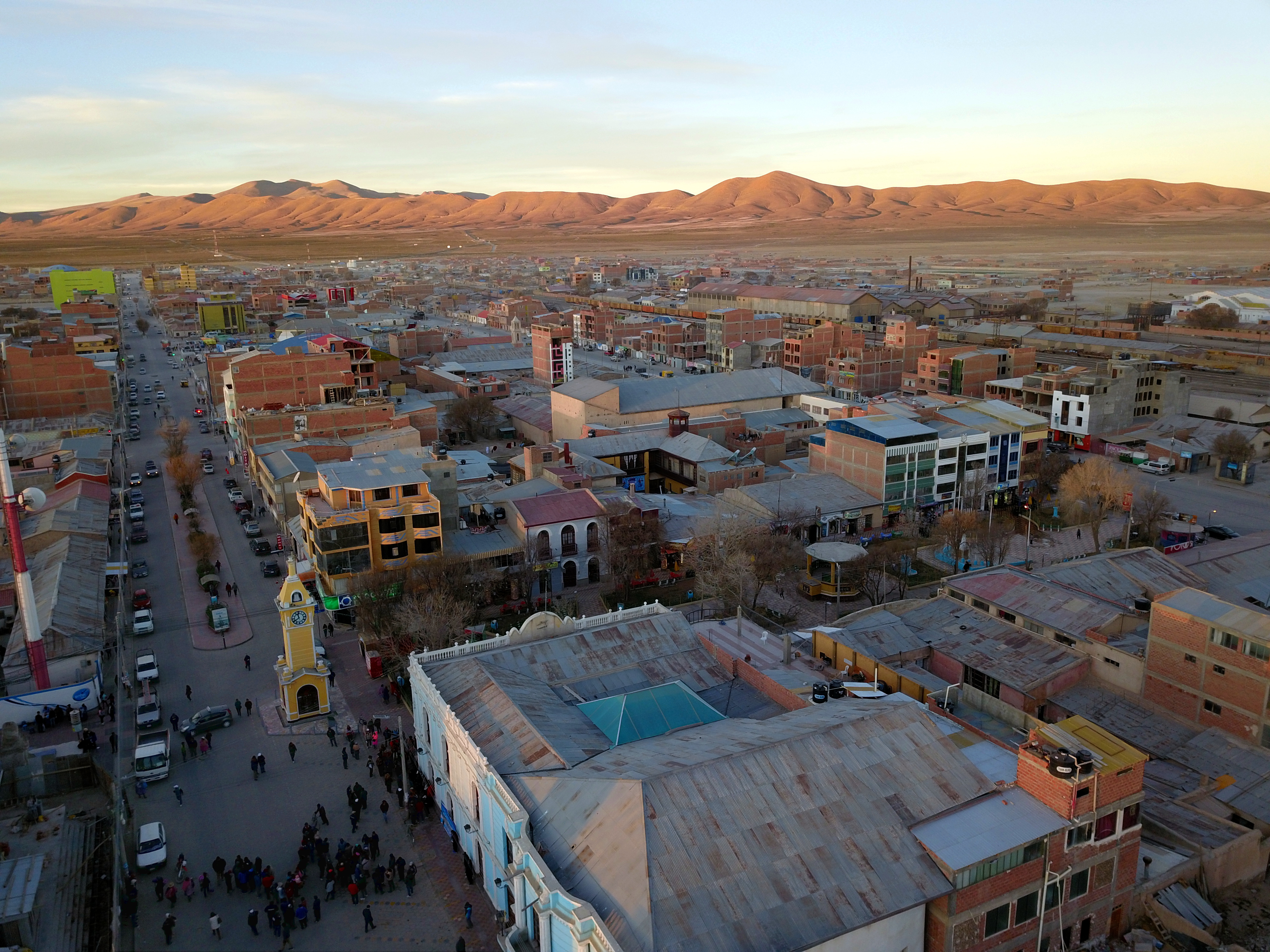
Uyuni sits at 3,656 meters elevation in Bolivia’s southwestern department of Potosí. Flight connections arrive via La Paz, typically requiring a 45-minute flight southward or an 11-hour drive through mountainous terrain. International visitors need valid passports and should check current visa requirements; many nationalities enjoy visa-free entry for 90 days.
The region experiences extreme weather. Temperatures fluctuate dramatically, with daytime highs reaching 18°C in summer and dropping below minus 20°C at night, year-round. Wind velocity can exceed 60 kilometers per hour, and altitude sickness affects most lowland visitors initially. Proper acclimatization, quality gear, and gradual activity increases become non-negotiable for safe travel.
Tour operators range from budget hostels offering two-day salt flat visits to luxury companies providing multi-day experiences with upscale accommodation. Mid-range operators often deliver the best value, balancing comfort with authentic experience. Verify operator credentials—unfortunately, the tourism boom has attracted some operators with questionable safety records and labor practices.
Best Time to Visit
Mirror Effect: January-February (rainy season). Dry Season: May-October for hexagonal salt patterns and stellar photography.
Getting Around
4WD vehicle tours are essential—do not attempt independent driving without expert navigation. Most tours depart early morning and return by evening.
Accommodation
Uyuni town offers hostels, mid-range hotels, and luxury lodges. Many tours include overnight accommodation in salt-flat buildings, an unforgettable experience.
Budget Planning
Budget $50-150 daily for mid-range travel, including tour costs, accommodation, and meals. Altitude-appropriate gear requires investment before arrival.
Understanding Uyuni requires grappling with how your brain processes extremes. The whiteness becomes overwhelming—your eyes lack reference points for depth perception or distance estimation. Shadows barely exist; without them, three-dimensional objects read as flat. The horizon’s absence creates disorientation where sky and salt merge indistinguishably. Visitors experience particular difficulty determining object sizes and distances—a distant rock formation might be ten meters or ten kilometers away. This sensory deprivation, when combined with altitude effects, can trigger psychological responses ranging from euphoria to anxiety. The experience becomes less about conventional tourism photography and more about confronting how your nervous system processes extreme environmental conditions.
The economic history of Uyuni’s development deserves acknowledgment. The salt flats remained largely unknown to international tourism until backpackers discovered the region in the 1990s. Early travelers faced minimal infrastructure; contemporary tourism has expanded accommodation, dining, and tour operations substantially. This development brought economic benefits to local communities while introducing pressures—water scarcity, waste management challenges, and cultural disruption. Responsible tourism in Uyuni means supporting operators respecting these communities and minimizing environmental impact rather than pursuing quantity tourism that maximizes short-term profits while degrading the destination that makes tourism possible.
The celestial experience at Uyuni remains among the world’s finest. The altitude combines with minimal light pollution creating night skies of extraordinary clarity. The Milky Way appears not as a smudge but as a three-dimensional structure with clouds and gaps visible to naked eyes. Stargazing tours guide visitors through constellations and reveal planetary positions with detail impossible in locations with atmospheric light pollution. Some accommodations position themselves specifically for stargazing, offering dark skies and telescope access enabling deep-sky observation. The combination of salt flats by day and celestial wonders by night creates experiences engaging multiple sensory and intellectual dimensions.
Photography in Uyuni becomes almost meditative practice. The infinite white canvas rewards patience and attention to light quality. Early morning and late afternoon create shadow contrast revealing topographical features otherwise invisible. The mirror effect produces images challenging digital sensors’ exposure metering—cameras struggle determining appropriate exposures when confronted with reflective surfaces. Professional photographers often carry neutral density filters, polarizing lenses, and spare batteries accounting for enhanced power consumption in low temperatures. The photographic rewards justify the technical challenges—images from Uyuni often appear digitally manipulated despite being merely faithful representations of actual conditions.
Ready to Witness Uyuni’s Magic?
This destination demands commitment—altitude, isolation, and extreme conditions test your resilience. But the reward is transformation. Few places on Earth offer such unfiltered confrontation with scale, beauty, and silence. Start planning now, acclimatize properly, and prepare to question everything you thought you understood about landscape photography and human perspective.
Frequently Asked Questions About Uyuni Salt Flats
What is the best time to visit Uyuni in 2026?
For the famous mirror effect, visit during the wet season (December-April) when a thin layer of water creates perfect reflections. For dry hexagonal patterns and easier driving, visit May-November. April 2026 catches the tail end of mirror season.
How do you get to Uyuni?
Fly from La Paz to Uyuni (1 hour) or take the overnight bus (10-12 hours). The bus journey is an adventure itself, crossing the Altiplano at 3,600m+. Some travelers arrive via the scenic train from Oruro.
Is altitude sickness a concern at Uyuni?
Yes. The salt flats sit at 3,656m (11,995 ft). Acclimatize in La Paz or Sucre for 2-3 days before visiting. Drink plenty of water, avoid alcohol initially, and consider coca tea, a traditional local remedy.
How long should I spend at the salt flats?
A 1-day tour covers the main salt flat and Train Cemetery. A 3-day/2-night tour is highly recommended, extending to the Eduardo Avaroa Reserve with its colored lagoons, geysers, and flamingo-filled lakes.
What should I pack for Uyuni?
Layers are essential as temperatures can drop below freezing at night, even in summer. Bring strong sunscreen (UV is intense at altitude), sunglasses, a warm sleeping bag liner for multi-day tours, and a good camera for those perspective trick photos.