
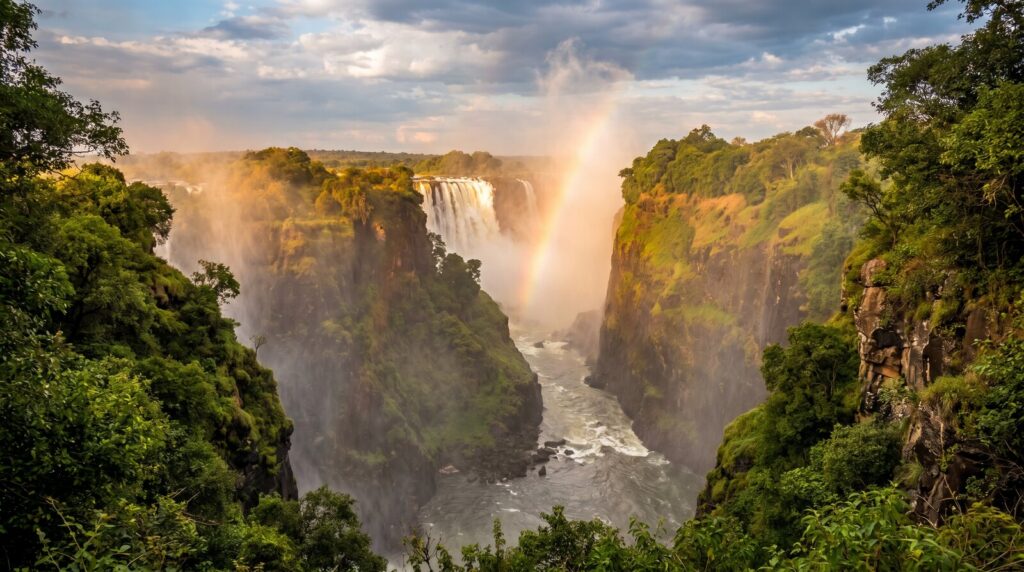
Victoria Falls, Zimbabwe: Smoke That Thunders, Zambezi Adventures & Devil’s Pool
Planning & Logistics
Victoria Falls is accessible via air or road. Air travel involves international flights to either Harare (Zimbabwe) or Lusaka (Zambia), followed by domestic flights to Victoria Falls International Airport. The airport serves both Zimbabwe and Zambia, with buses and transfers handling cross-border movement. Road travel from other southern African cities is possible but time-intensive.
Visas for both Zimbabwe and Zambia are obtainable on arrival for many nationalities, though pre-arranged visas prevent potential delays. Travel insurance is recommended, particularly if participating in adventure activities. Confirm that your insurance covers bungee jumping, rafting, or other extreme activities—standard policies often exclude them.
Vaccinations against yellow fever and malaria prophylaxis are recommended before traveling. The falls region sits within malaria transmission areas during certain seasons. Consult with travel medicine professionals before departure. Tap water is drinkable in Victoria Falls and Livingstone, but travelers with sensitive stomachs may prefer bottled water.
Physical fitness requirements vary by activity. Most people of reasonable fitness can hike the falls and enjoy viewing areas. Rafting requires stronger swimming ability. Extreme sports have specific requirements—check with operators before booking if you have any concerns about capability. Most activities accommodate varying ability levels despite reputations for intense difficulty.
Allow at least 3-4 days in the area—one day for arrival and acclimatization, one day for falls viewing and moderate activity, one or two days for your primary adventure activity choice. Many visitors stay 5-7 days to experience multiple activities and avoid rushing between experiences.
Witness Earth’s Mightiest Waterfall
Victoria Falls isn’t just water cascading over rock—it’s nature demonstrating raw power that makes humans feel appropriately small. Stand in the mist where The Smoke That Thunders roars. Raft through gorges where water moves with unstoppable force. Experience one of Earth’s greatest natural wonders where adventure and majesty converge.
Frequently Asked Questions About Victoria Falls
What is the best time to visit Victoria Falls in 2026?
February to May offers the highest water volume and most dramatic spray. June to August is dry season with better visibility of the rock face. April 2026 is ideal for a balance of water flow and visibility.
Zimbabwe side or Zambia side?
Zimbabwe offers the best panoramic views with 15+ viewpoints along the gorge rim. Zambia gets you closer to the edge, including the famous Devil’s Pool (open September-December). Many visitors do both with a day visa.
Is the Devil’s Pool actually safe?
Yes, when open during low-water season (Sep-Dec) with licensed guides. A natural rock lip prevents swimmers from going over the edge. It’s been a tourist activity for decades with an excellent safety record.
How much does a Victoria Falls trip cost?
Budget travelers can manage on $50-80/day. Park entry is $30 (Zimbabwe side) or $20 (Zambia side). Bungee jumping costs around $160, white water rafting $130-150, and helicopter flights $150-300.
Can you visit from both Zimbabwe and Zambia?
Yes. The KAZA UniVisa ($50) allows travel between Zimbabwe and Zambia, making it easy to see the falls from both sides and do activities in both countries.