
Why Visit Washington DC?
Washington DC is far more than just the political capital of the United States — it’s a world-class destination packed with free museums, iconic monuments, diverse neighborhoods, and a food scene that has quietly become one of the best on the East Coast. Whether you’re a history buff, an art lover, or someone who just wants to explore a vibrant American city, this Washington DC travel guide will help you plan a trip that goes well beyond the National Mall.
Best Time to Visit Washington DC
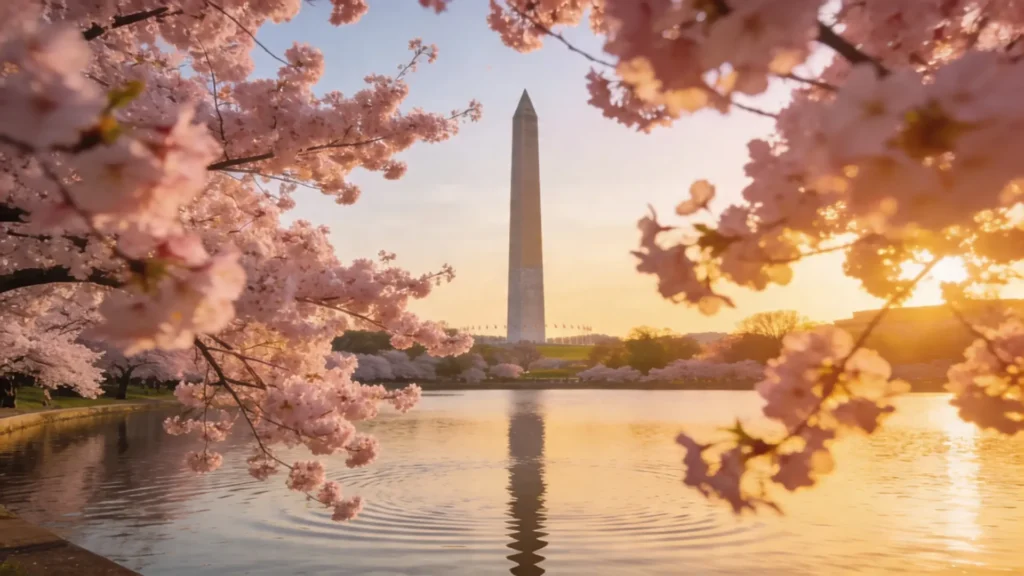
Spring (late March to May) is peak season in DC, and for good reason — the famous cherry blossoms along the Tidal Basin typically bloom between late March and mid-April, drawing millions of visitors. Temperatures are comfortable, ranging from 10–22°C (50–72°F), and the city feels alive with outdoor festivals and events.
Fall (September to November) is another excellent window. The summer crowds thin out, temperatures are pleasant at 10–25°C (50–77°F), and fall foliage paints the city’s many parks in warm colors. This is arguably the best time for sightseeing without the crowds.
Summer (June to August) brings hot, humid weather with temperatures regularly exceeding 32°C (90°F). The upside is that nearly all of DC’s major museums are free and air-conditioned, making them perfect midday escapes from the heat. Winter (December to February) is cold but quiet, with occasional snow and the lowest hotel prices of the year.
Getting to Washington DC
DC is served by three airports. Ronald Reagan Washington National Airport (DCA) is the most convenient, located just across the Potomac River in Virginia and connected directly to the Metro system. Washington Dulles International Airport (IAD) handles most international flights and is about 45 minutes west of the city. Baltimore-Washington International Airport (BWI) is another option, roughly an hour northeast, with budget airline options and an Amtrak/MARC train connection to DC’s Union Station.
Amtrak’s Northeast Regional and Acela trains connect DC to cities along the East Coast. Union Station, DC’s main rail hub, is a beautiful Beaux-Arts building centrally located near the Capitol. New York to DC takes about 3–3.5 hours on the Acela, and the train drops you right in the heart of the city.
Getting Around Washington DC
Washington DC’s Metro system is clean, reliable, and covers most tourist areas. A SmarTrip card (available at any station) is the easiest way to pay, with fares varying by distance and time of day (roughly $2–6 per ride). The Metro runs from early morning until midnight on weekdays and until 1 AM on weekends.
The city is also very walkable, especially around the National Mall, Georgetown, and Dupont Circle. Capital Bikeshare stations are scattered throughout the city if you prefer to cycle. Rideshare services like Uber and Lyft are widely available and reasonably priced for getting between neighborhoods.
Where to Stay in Washington DC
Downtown/Penn Quarter: Central location near museums, restaurants, and the Metro. Ideal for first-time visitors who want easy access to the National Mall and Chinatown dining. Expect mid-range to upscale hotel prices.
Dupont Circle: A lively neighborhood with excellent restaurants, boutique shops, and a vibrant nightlife scene. It has a more local, cosmopolitan feel and is well connected by Metro. Great for travelers who want walkability and dining options.
Georgetown: Charming cobblestone streets, waterfront dining, and upscale shopping along M Street and Wisconsin Avenue. Georgetown doesn’t have its own Metro stop, but the DC Circulator bus connects it to the rest of the city easily.
Capitol Hill: Stay near the US Capitol, the Library of Congress, and Eastern Market — a beloved weekend farmers’ market and community gathering spot. This area has a more residential feel with excellent brunch spots and a friendly neighborhood vibe.
Adams Morgan / Columbia Heights: Budget-friendlier neighborhoods with diverse dining, lively bar scenes, and a more local, multicultural atmosphere. Slightly farther from the tourist core but well connected by Metro and bus.
Top Things to Do in Washington DC
The National Mall: This two-mile stretch is home to some of America’s most recognizable landmarks — the Lincoln Memorial, the Washington Monument, the World War II Memorial, and the Reflecting Pool. Walking the full Mall is free and takes a half day at minimum. Visit at sunrise or sunset for the most dramatic light and smallest crowds.
Smithsonian Museums: DC’s greatest gift to visitors is the Smithsonian Institution — a network of 21 museums and galleries, all completely free. Highlights include the National Air and Space Museum, the National Museum of African American History and Culture (timed entry passes required), the Natural History Museum, and the American History Museum. You could easily spend a full day in any one of them.
The US Capitol and Library of Congress: Free guided tours of the Capitol building run daily and offer a fascinating look at American democracy in action. Nearby, the Library of Congress is the largest library in the world and architecturally stunning — the Main Reading Room alone is worth the visit.
Arlington National Cemetery: Just across the Potomac in Virginia, this solemn and moving site is the resting place of more than 400,000 service members. The Changing of the Guard at the Tomb of the Unknown Soldier takes place every hour (every half hour from April to September) and is deeply moving to witness.
Georgetown Waterfront and C&O Canal: Stroll the scenic waterfront, rent a kayak on the Potomac, or walk along the historic Chesapeake and Ohio Canal towpath. In warmer months, the waterfront comes alive with outdoor dining and live music.
Local Food and Culture in Washington DC
DC’s food scene has transformed dramatically in recent years. The city is home to a growing number of acclaimed restaurants and reflects its incredibly diverse population. Must-try experiences include Ethiopian food along U Street (DC has the largest Ethiopian community outside of Africa), Chesapeake Bay blue crab (especially crab cakes and steamed crabs in season), half-smoke sausages from Ben’s Chili Bowl — a DC institution since 1958 — and the thriving Asian food scene in the H Street corridor.
For market lovers, Eastern Market on Capitol Hill runs a fantastic weekend market with local vendors, fresh produce, and artisan crafts. Union Market in the NoMa neighborhood is a modern food hall with diverse stalls ranging from ramen to arepas to craft cocktails. DC’s craft beer and cocktail scenes are also thriving, with standout breweries and speakeasy-style bars scattered across neighborhoods like Shaw and Navy Yard.
Washington DC Travel Tips
Take advantage of free attractions. Between the Smithsonian museums, the monuments, the National Zoo, and the many memorials, you could fill an entire week in DC without spending a dollar on admission. Very few major cities offer this much free world-class culture.
Reserve timed entry passes early. The National Museum of African American History and Culture and the Washington Monument both require timed entry passes that can book up weeks in advance. Check availability as soon as you know your travel dates.
Dress for the weather and walking. You’ll cover a lot of ground on foot, especially along the Mall. In summer, bring water, sunscreen, and a hat — shade is limited. In winter, layer up and bring a warm coat.
Explore beyond the Mall. Neighborhoods like Georgetown, Adams Morgan, U Street, and the Wharf district offer a completely different side of DC — local restaurants, live music, street art, and waterfront activities that most tourists never discover.
Be aware of security screenings. Many government buildings and museums have bag checks and security screenings at entry. Bring a small bag to speed up the process, and leave large backpacks at your hotel if possible.
Washington DC Budget Breakdown
DC can be surprisingly affordable thanks to its wealth of free attractions. Here’s a rough daily budget per person:
Budget ($80–120/day): Hostel or budget hotel ($40–70), food trucks and casual dining ($20–30), Metro day pass or walking ($0–15), and free museums and monuments all day.
Mid-range ($180–280/day): Comfortable hotel in Dupont Circle or Downtown ($120–180), sit-down meals at local restaurants ($40–60), Metro rides and a guided tour ($20–40).
Luxury ($400+/day): Upscale hotel near the Mall ($250+), fine dining ($100+), private guided tours, and spa or cultural experiences.
Frequently Asked Questions About Washington DC
How many days do you need in Washington DC? Three to four days gives you time to see the major monuments, visit several Smithsonian museums, and explore at least one or two neighborhoods beyond the Mall. A week lets you go deeper and enjoy the city at a relaxed pace.
Is Washington DC safe for tourists? The main tourist areas — the National Mall, Georgetown, Dupont Circle, and Downtown — are generally very safe. Like any major city, use common sense, stay aware of your surroundings, and keep valuables secure.
Are the Smithsonian museums really free? Yes. All Smithsonian museums and the National Zoo are completely free to enter, every day of the year (except December 25). Some special exhibitions or IMAX screenings may have a small fee, but general admission is always free.
When do the cherry blossoms bloom? Peak bloom typically occurs between late March and mid-April, though the exact timing varies year to year depending on weather. The National Park Service provides bloom forecasts starting in early March.
Can you tour the White House? Public tours of the White House are available but must be requested through your member of Congress (for US citizens) or your country’s embassy (for international visitors) at least 21 days in advance. Tours are free but spaces fill quickly.
Final Thoughts on Visiting Washington DC
Washington DC is one of the most rewarding cities to visit in the United States. The sheer volume of free, world-class museums and monuments is unmatched, the food scene is diverse and exciting, and the city’s neighborhoods each have their own distinct personality. Whether you’re walking past the Lincoln Memorial at dusk, tasting Ethiopian injera on U Street, or watching the Changing of the Guard at Arlington, DC offers experiences that are both deeply American and genuinely global. It’s a city that deserves more than a quick stop — take your time and explore.
You Might Also Like
- New York City, USA – Facts From Upstairs Travel Guide
- Philadelphia, USA – Facts From Upstairs Travel Guide
- Boston, United States – Facts From Upstairs Travel Guide
- Chicago, United States – Facts From Upstairs Travel Guide
- New Orleans, USA: Jazz Birthplace, Gumbo & French Quarter Magic
FFU contains affiliate links. We earn a commission when you book through them — at no extra cost to you.
Plan your trip
- Tours & experiences: browse tours and experiences on Klook.
- Airport pickup: pre-book an airport transfer with GetTransfer.
- Car hire: compare rental cars on GetRentacar.
- Bag storage: store your bags with RadicalStorage.
Disclosure: some links above are affiliate links — booking through them supports Facts From Upstairs at no extra cost to you.