
City Guide · The Gulf South
New Orleans, United States: Wrought-Iron Balconies, Brass-Band Streets, and the Best Eating City in America
I have lost whole weekends to New Orleans and never once regretted it, and the thing I tell every first-timer is that this is the least American-feeling city in America — a place that grew up French and Spanish before it was ever part of the United States, that gave the world jazz, and that treats food, music, and a good time as civic duties rather than luxuries. The city proper holds roughly 364,000 people on a crescent of high ground in the bend of the Mississippi River , but it punches so far above that weight culturally that it feels much bigger. My favourite New Orleans ritual is a slow morning at Café du Monde with beignets and chicory coffee, then an aimless walk through the French Quarter before the heat builds, watching the balconies and the brass-band buskers come to life. We tell visitors to stop treating Bourbon Street as the whole city: give it three or four days, eat your way through gumbo and po’boys, catch live music on Frenchmen Street, ride the St. Charles streetcar out to the Garden District, and the city’s improbable joy becomes infectious. Treat this guide as the brief I would hand my own family before they landed at Louis Armstrong airport — where to eat, which neighbourhoods to walk, how the streetcars work, the Katrina history handled with the respect it deserves, and why this is the most distinctive city in the country .
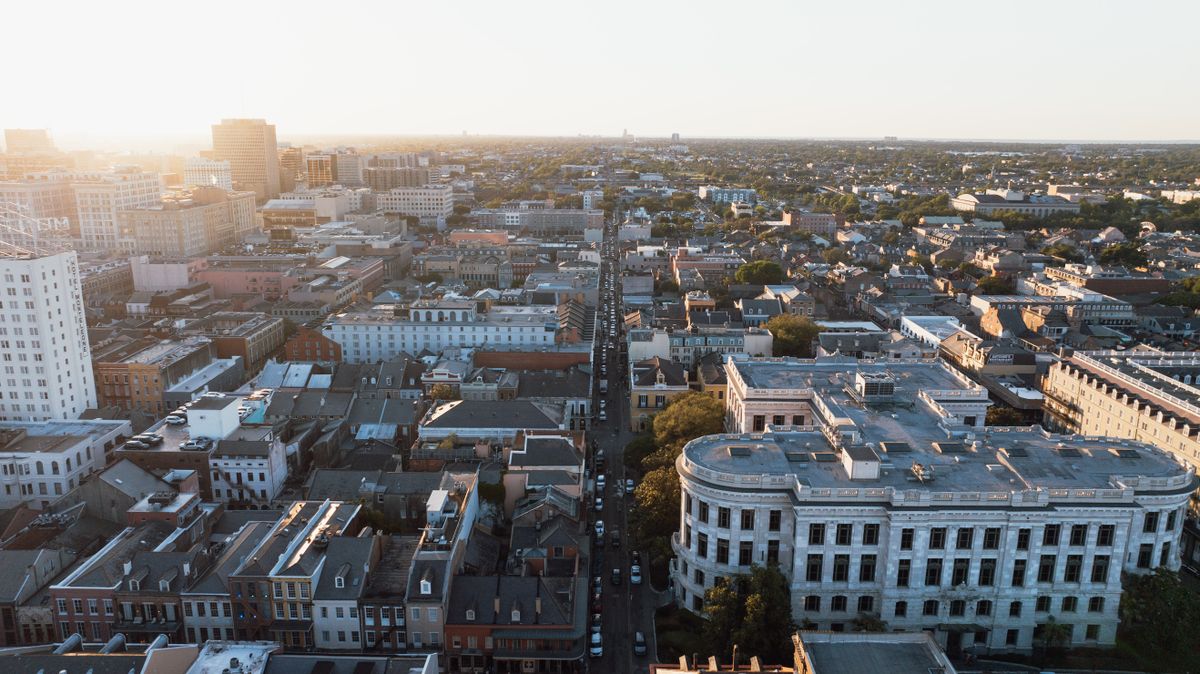
Table of Contents
Why New Orleans?
New Orleans is the great American exception — a city that feels like nowhere else in the country because, for most of its history, it wasn’t part of the country at all. Founded by the French in 1718, handed to Spain, briefly returned to France, and only sold to the young United States in the 1803 Louisiana Purchase, it grew up Catholic, Creole, and Caribbean rather than Anglo-Protestant, and that inheritance still saturates everything from the food to the architecture to the calendar of festivals . The city proper holds roughly 364,000 people on a narrow crescent of high ground in a bend of the Mississippi, the anchor of a metro area of around 1.3 million and the cultural capital of the Gulf South .
The city reads as a set of glorious contradictions. It is famous for the neon excess of Bourbon Street, yet its real soul lives a few blocks away in the quiet courtyards of the French Quarter, the brass bands of Frenchmen Street, and the live-oak avenues of the Garden District. It is the birthplace of jazz and a place where music spills out of doorways most nights of the week, yet it is also a city that has survived repeated catastrophe — most devastatingly Hurricane Katrina and the levee failures of 2005, which flooded roughly 80% of the city and reshaped it forever . That resilience is part of why New Orleanians celebrate so fiercely: the good times here are hard-won.
The geography is the secret to enjoying it. New Orleans is compact and largely flat, built on the high ground nearest the river, with the historic core — the French Quarter, the Central Business District, the Garden District — strung along the Mississippi and easily linked by the city’s beloved streetcars . The river curves so sharply around the old city that downtown directions are given as “riverside” and “lakeside,” “uptown” and “downtown,” rather than by compass — a quirk that makes perfect sense once you stand on the levee and watch the Mississippi bend past.
This guide covers the neighbourhoods you will actually walk, the gumbo-and-po’boy education every visitor needs, the cultural heavyweights (the National WWII Museum, St. Louis Cathedral, the above-ground cemeteries), the live music and the Mardi Gras calendar, the swamp tours and plantation-history day trips beyond the city, and the practical realities of heat, hurricanes, ESTA, and the streetcars. For the wider national context, this city sits inside the broader United States trip — but start in the Quarter and let the city set the pace.
Neighborhoods: Finding Your New Orleans
📍 New Orleans Map: Every Place in This Guide
New Orleans is best understood as a tight, walkable historic core wrapped by a string of distinct neighbourhoods, each with its own architecture, music, and character — and the single biggest mistake first-timers make is never leaving Bourbon Street. The old city sits on the high ground hugging the river: the French Quarter (the Vieux Carré), the adjoining Faubourg Marigny and Bywater downriver, the Central Business District and Warehouse District just upriver, and the grand avenues of the Garden District and Uptown stretching along the St. Charles streetcar line . Beyond them lie Mid-City, Tremé — the historic heart of Black New Orleans and a birthplace of jazz — and the lakefront, each reachable in fifteen to thirty minutes by streetcar or a short rideshare.
This section walks the eight neighbourhoods you will actually use, grouped by character: the historic core (the French Quarter, the CBD & Warehouse District), the bohemian downriver districts (Faubourg Marigny, Bywater), the genteel uptown stretch (the Garden District, Uptown), and the cultural inland neighbourhoods (Tremé, Mid-City), with notes on access and who each district suits best. The reassuring thing for a first-timer is that the parts you will spend most of your time in are tightly clustered along the river and linked by the streetcar, so you can base in or near the Quarter and reach almost everything without ever needing a car — and the further-flung neighbourhoods reward a deliberate half-day rather than a rushed detour.
The French Quarter (Vieux Carré)
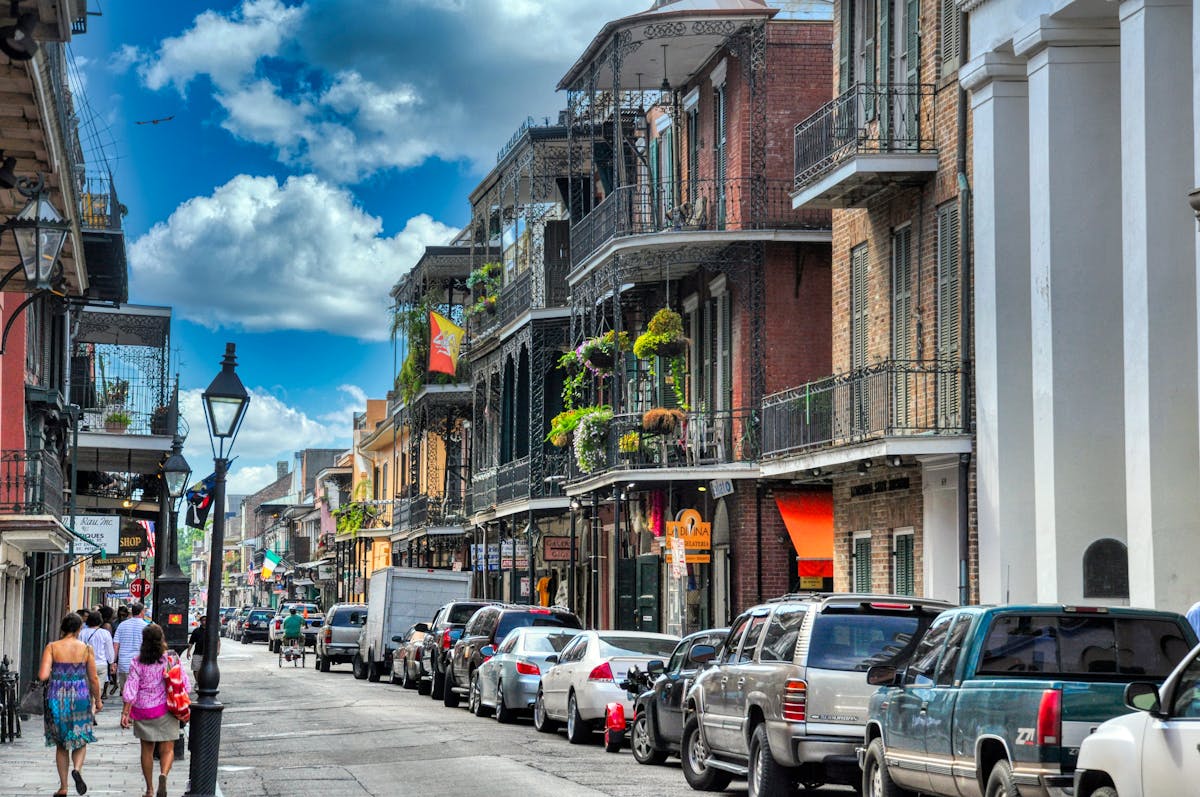
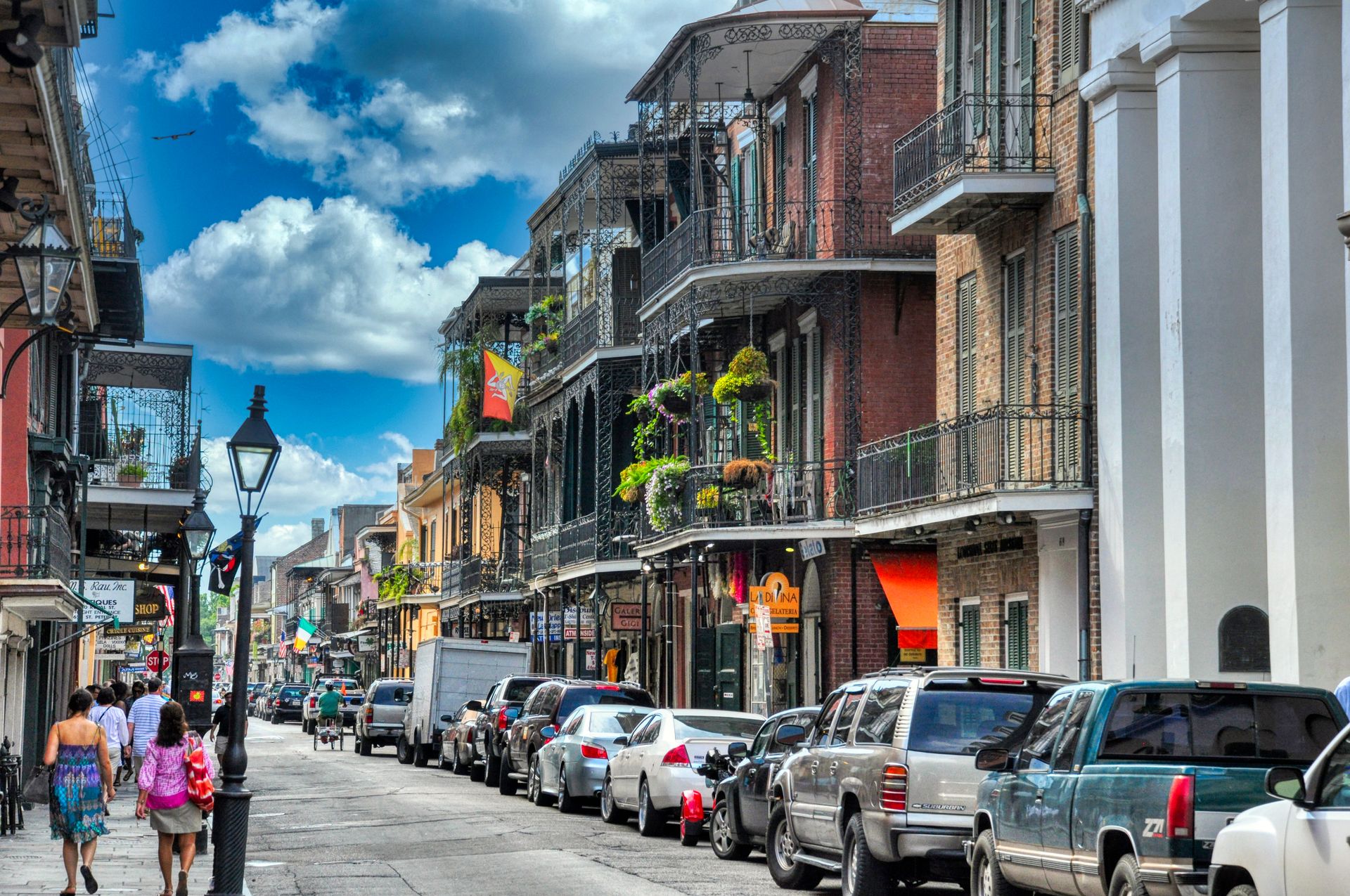
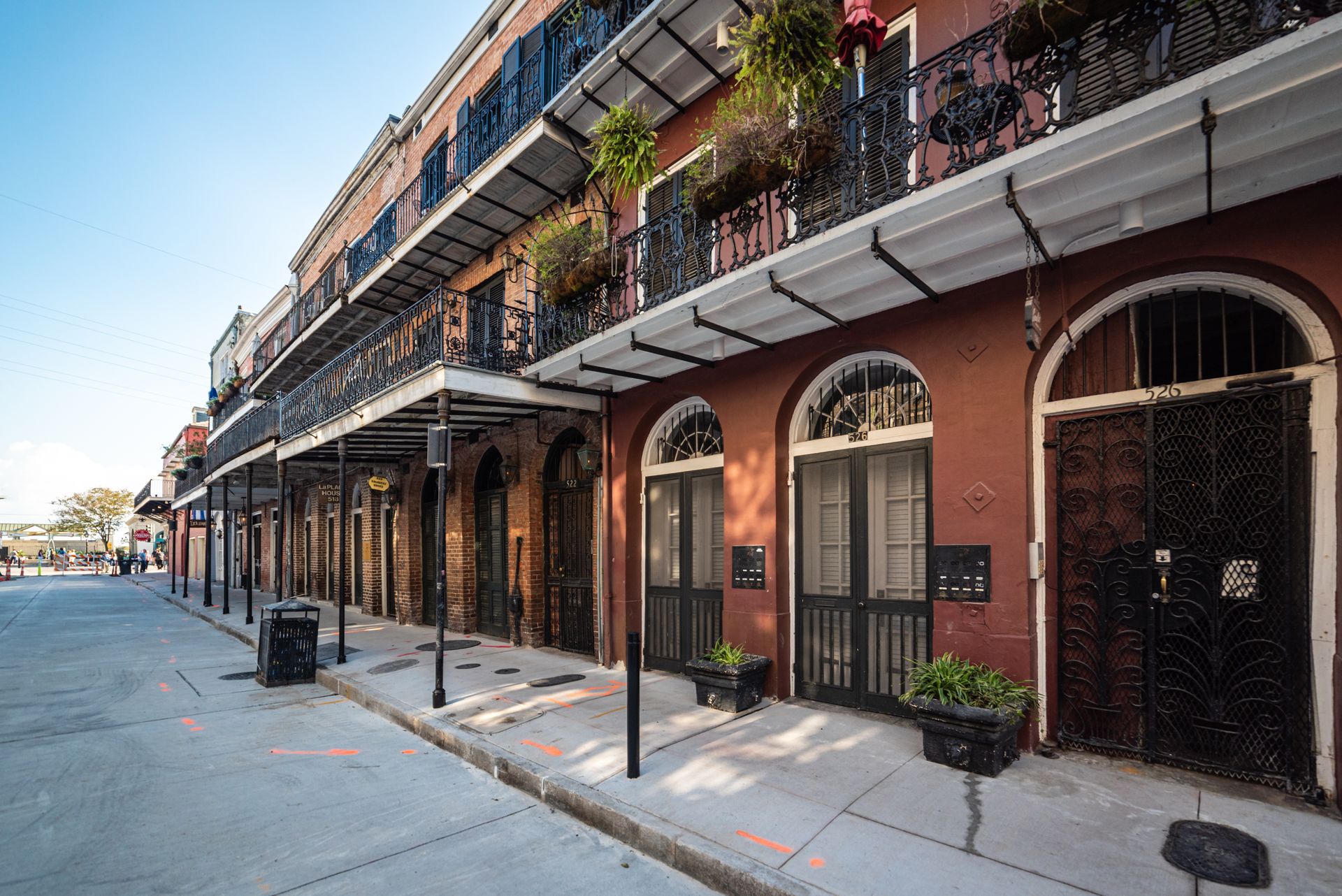
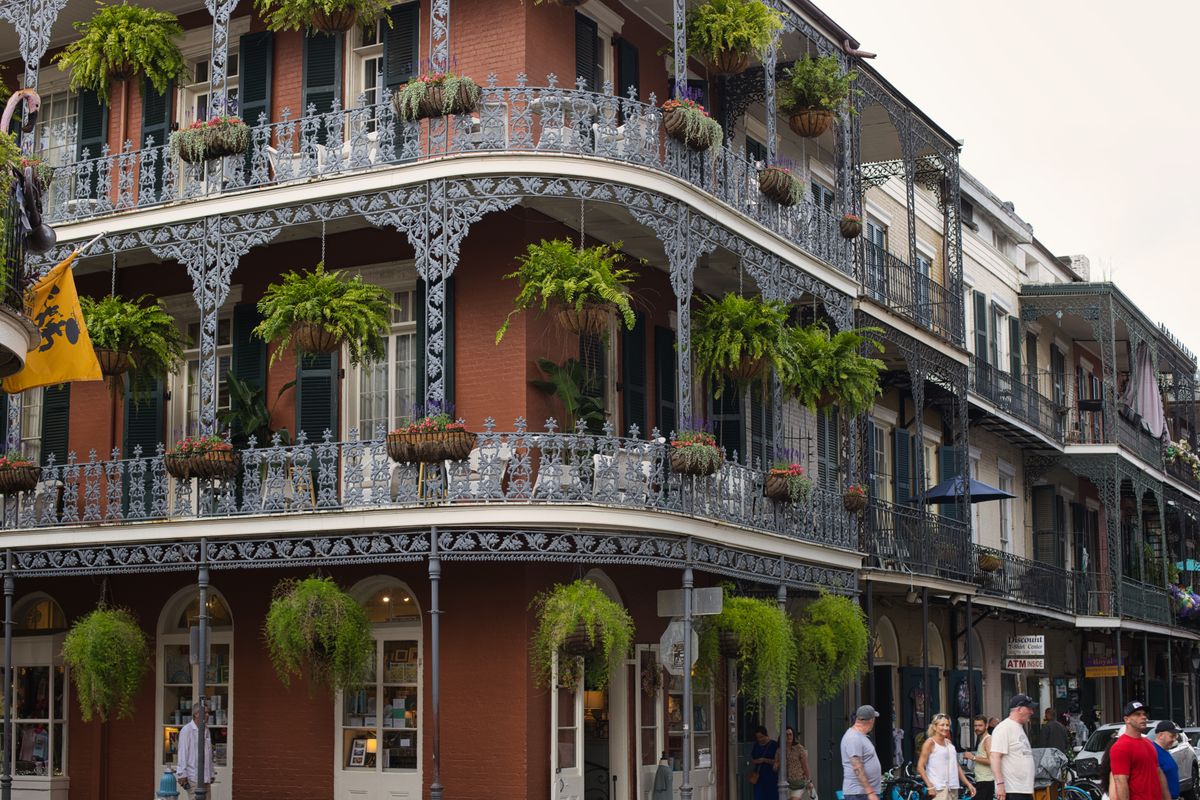
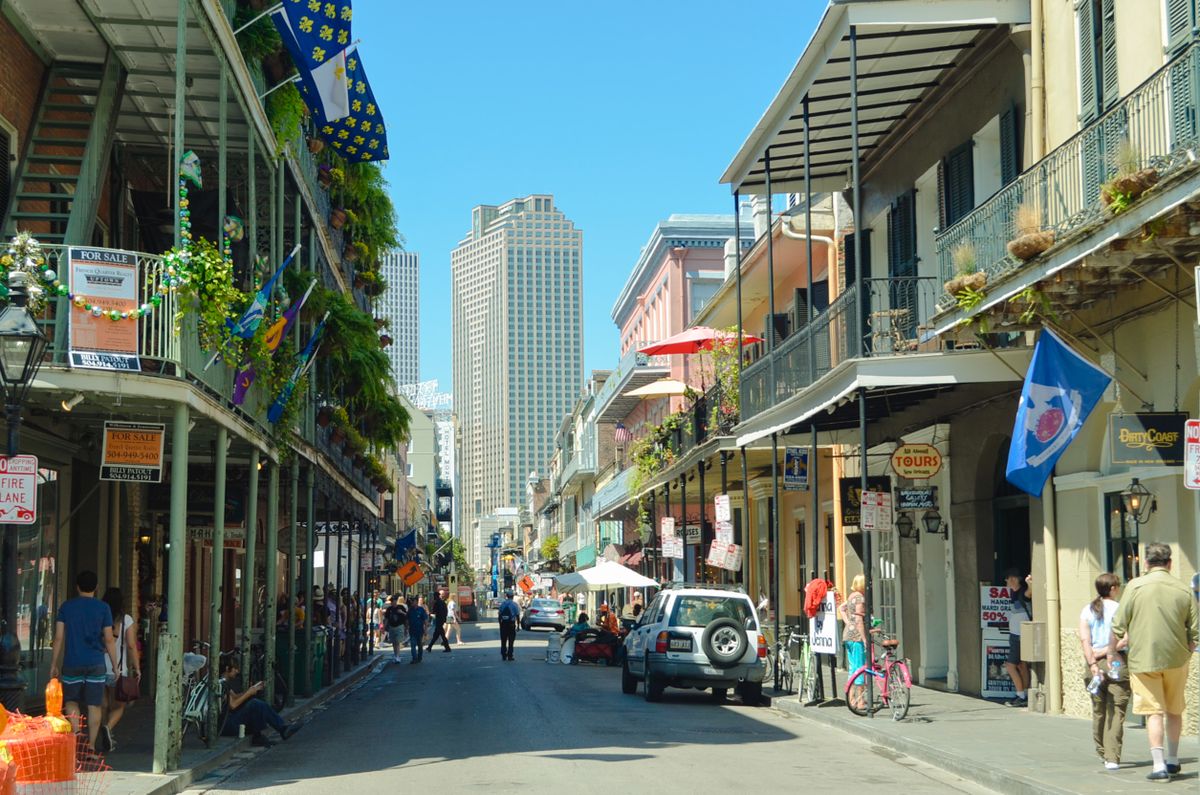
The oldest and most famous neighbourhood — a compact grid of pastel Creole townhouses, lacy cast-iron balconies, hidden courtyards, and the great anchors of Jackson Square and St. Louis Cathedral. It is where most visitors stay and where the city’s history is densest, equal parts genteel and rowdy.
- Jackson Square, St. Louis Cathedral, and the Cabildo museum
- Royal Street’s antique shops and galleries; raucous Bourbon Street
- Café du Monde, the French Market, and the Mississippi riverfront
Best for: first-time visitors, history and architecture, car-free travellers. Access: walkable; Riverfront and Canal streetcars on its edges.
The French Quarter is where every first trip begins and where the city’s identity is most concentrated. It is small enough to walk end to end in twenty minutes, yet dense enough to absorb days: the genteel antique shops and street-musician corners of Royal Street, the neon and daiquiri bars of Bourbon Street a block over, the artists and fortune-tellers ringing Jackson Square, and the beignets-and-chicory ritual at Café du Monde by the river. Stay here if you want to walk to almost everything and soak in the architecture; just know that the Bourbon Street blocks can be loud and rowdy at night, so book a room on the quieter lower Quarter or Royal Street side if you value sleep.
Faubourg Marigny & Frenchmen Street
The bohemian neighbourhood just downriver of the Quarter, centred on Frenchmen Street — the strip of live-music clubs that locals send you to instead of Bourbon Street. Creole cottages, colourful shotgun houses, and a relaxed, arty feel define it.
- Frenchmen Street’s jazz and brass-band clubs (the Spotted Cat, d.b.a., Snug Harbor)
- The nightly art market on Frenchmen and the Creole-cottage streets
- Easy walking access to the lower French Quarter
Best for: live music, nightlife with locals, younger travellers. Access: walkable from the Quarter; Rampart–St. Claude streetcar.
Faubourg Marigny is the neighbourhood that solves Bourbon Street’s biggest weakness, which is that the music there is mostly cover bands for tourists. Frenchmen Street, a short walk downriver from the Quarter, is where New Orleanians actually go to hear live jazz, funk, and brass bands, with a dozen intimate clubs packed into three blocks and an open-air night art market in the middle of it. The surrounding streets of pastel Creole cottages and shotgun houses are some of the prettiest in the city. For a trip that wants real music without the tourist sheen, base in or near the Marigny and you can walk to both the clubs and the Quarter.
Bywater
The hip, artsy neighbourhood further downriver — once working-class and industrial, now the city’s epicentre of murals, indie restaurants, craft cocktails, and converted-warehouse galleries, while keeping a colourful, lived-in edge.
- Crayon-bright shotgun houses and large-scale street murals
- Crescent Park on the riverfront with skyline views
- Independent restaurants, cafés, and bars along St. Claude Avenue
Best for: food and coffee, art and murals, slow-travel and repeat visitors. Access: Rampart–St. Claude streetcar; short rideshare from the Quarter.
Bywater is where the city’s creative energy has migrated, and it rewards an aimless afternoon as much as a planned meal. Its streets of vividly painted shotgun cottages are an attraction in themselves, threaded with murals and anchored by Crescent Park, a reclaimed stretch of riverfront with the best downtown skyline view in the city. The food scene punches far above the neighbourhood’s size, from beloved breakfast spots to ambitious dinner rooms, and the bars are unpretentious and local. It sits a little beyond easy walking distance from the Quarter, so treat it as a relaxed half-day reached by streetcar or a quick rideshare.
The Central Business District & Warehouse District
The modern downtown just upriver of the Quarter — the CBD holds the hotels, the Superdome, and Canal Street, while the adjoining Warehouse District (the “Arts District”) packs galleries, museums, and the National WWII Museum into converted warehouses.
- The National WWII Museum and the Ogden Museum of Southern Art
- Canal Street, the Caesars Superdome, and the riverfront
- Restaurant-lined Fulton and Julia streets in the Arts District
Best for: museums, first-timers wanting modern hotels, conventions. Access: all streetcar lines meet on Canal Street; walkable to the Quarter.
The CBD and the Warehouse District are the city’s modern, businesslike heart, and they make a practical base with the broadest range of hotels. The big draw is cultural: the Warehouse District has reinvented itself as the Arts District, its converted warehouses now home to contemporary galleries, the Ogden Museum of Southern Art, and the extraordinary National WWII Museum, one of the finest museums in the country. Canal Street, the wide boulevard separating the CBD from the Quarter, is the city’s transit spine where every streetcar line converges. Stay here for modern comforts and museum access within a short walk of the historic core.
The Garden District
The genteel uptown neighbourhood of grand antebellum and Victorian mansions, live-oak-shaded avenues, and the celebrity-favoured Magazine Street shopping strip — reached by the historic St. Charles streetcar, the loveliest ride in the city.
- The St. Charles Avenue mansions and the historic streetcar
- Lafayette Cemetery No. 1 and Magazine Street’s boutiques and cafés
- Commander’s Palace, the landmark Creole restaurant
Best for: architecture, leisurely walks and shopping, romance. Access: St. Charles streetcar to Washington Avenue.
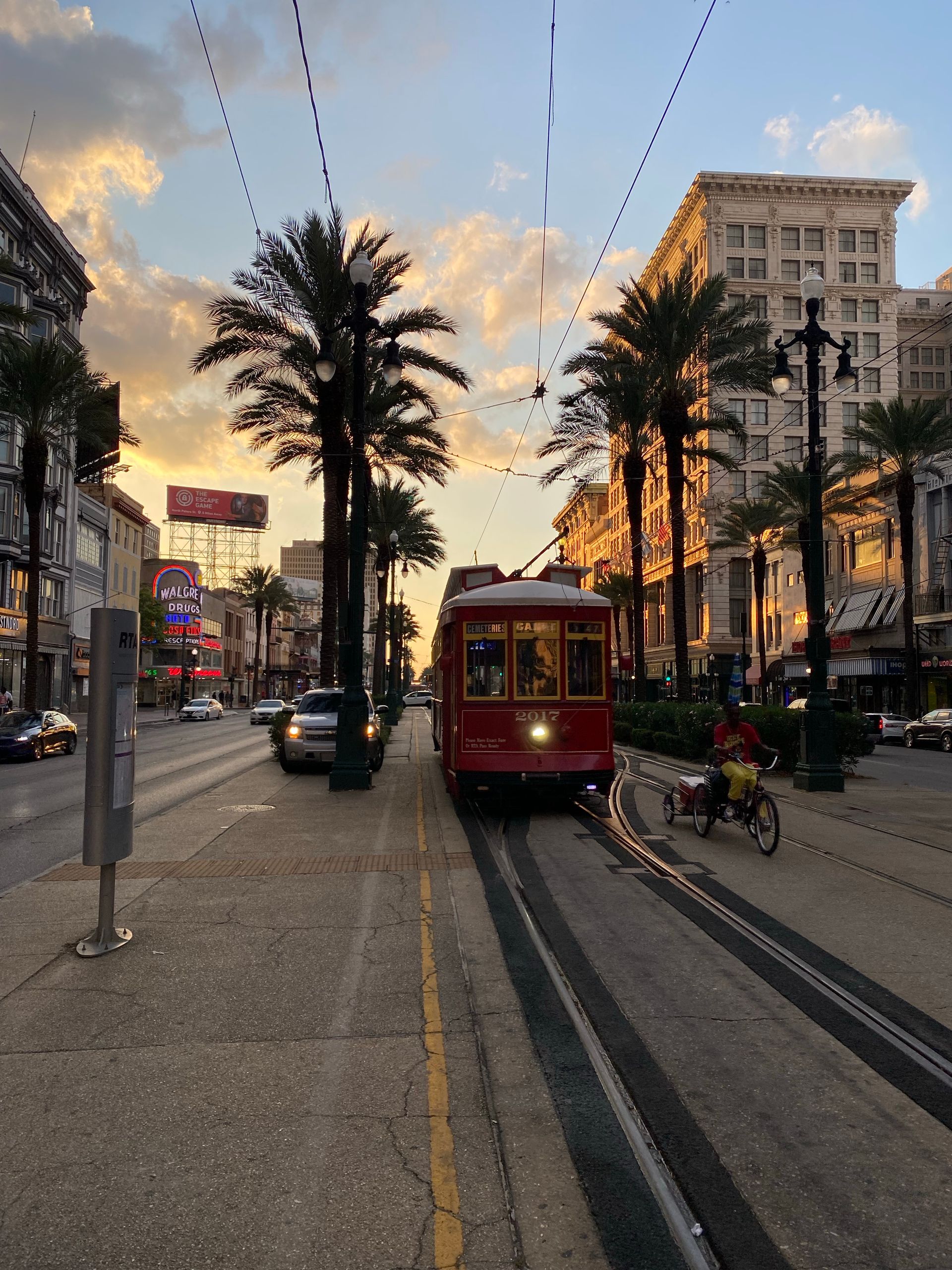
The Garden District is the elegant counterpoint to the Quarter’s density, and the journey there is half the pleasure — the green-and-red St. Charles streetcar, in service since the 1830s and the oldest continuously operating street railway in the world, rumbles beneath a canopy of live oaks past one mansion after another . Settled by wealthy Americans after the Louisiana Purchase, the district is a museum of antebellum and Victorian architecture set behind cast-iron fences and gardens. Walk Magazine Street for its independent boutiques and cafés, peer into the historic above-ground Lafayette Cemetery, and book a table at Commander’s Palace. It is a half-day or a leisurely full day, and an easy, scenic escape from the Quarter’s intensity.
Uptown
The leafy, residential stretch further along St. Charles — home to Tulane and Loyola universities, Audubon Park, and a relaxed run of neighbourhood restaurants and music venues away from the tourist crush.
- Audubon Park, the zoo, and the live-oak St. Charles avenue
- The Tulane and Loyola campuses and college-town energy
- Tipitina’s and the Maple Street and Oak Street dining strips
Best for: calmer stays, local dining, music, repeat visitors. Access: St. Charles streetcar runs its full length.
Uptown is where New Orleanians actually live, and it rewards visitors willing to ride the streetcar past the Garden District. Built around Audubon Park — a Frederick Law Olmsted-designed green space with a zoo, lagoons, and live oaks running down to the river — and the campuses of Tulane and Loyola, it has a relaxed, residential rhythm and some of the best neighbourhood restaurants in the city. It is also a serious music neighbourhood, home to the legendary club Tipitina’s. There are few marquee sights here, which is the appeal: you come to ride the streetcar, eat where locals eat, and feel the texture of the real city. Build in extra transit time and treat it as a relaxed half-day.
Tremé & Mid-City
The historic inland neighbourhoods — Tremé is one of the oldest Black neighbourhoods in the United States and a cradle of jazz, while adjoining Mid-City spreads around the vast City Park and the Bayou St. John.
- Louis Armstrong Park, Congo Square, and the Backstreet Cultural Museum in Tremé
- City Park, the New Orleans Museum of Art, and the sculpture garden in Mid-City
- The Esplanade Avenue mansions and the historic Bayou St. John
Best for: music history, culture, parks and families. Access: Canal Street streetcar to City Park/Museum.
Tremé and Mid-City correct the way many visitors experience New Orleans entirely from the river. Tremé, just lakeside of the Quarter, is among the oldest Black neighbourhoods in the country, the home of Congo Square — where enslaved and free Africans gathered to drum and dance, seeding the rhythms that became jazz — and of the second-line parade and brass-band traditions still alive today, documented at the Backstreet Cultural Museum . Beyond it, Mid-City wraps the enormous City Park, larger than New York’s Central Park, holding the New Orleans Museum of Art, a sculpture garden, ancient live oaks, and the languid Bayou St. John. The Canal Street streetcar reaches City Park directly; give the area a half-day for its profound musical and natural heritage.
The Food
New Orleans is, by common consent, the best eating city in America, and it earns the title not through fine-dining prestige alone but through a singular, unrepeatable cuisine that exists nowhere else. This is a city where French technique met West African ingredients, Spanish stews, Caribbean spice, and Native American staples to produce two intertwined culinary traditions — refined city Creole and rustic country Cajun — that share a holy trinity of onion, celery, and bell pepper and a near-religious devotion to flavour. The result is a city where the best meal of your trip might be a $12 po’boy eaten standing at a counter, a $4 order of beignets dusted in powdered sugar, or a multi-course Creole dinner at a 19th-century institution. Approach it the way locals do: eat constantly and without guilt, chase the specific dish — gumbo, jambalaya, crawfish étouffée, the fried-oyster po’boy — and understand that here, food is the whole point of a day, not an interruption of it. If you organise even one day around eating, it will be the highlight of your trip.
Gumbo, Jambalaya & the Creole-Cajun Canon
The city’s defining dishes are its rich, slow-cooked one-pot wonders, and learning the difference between them is half the fun. Gumbo — a dark, roux-thickened stew of seafood or chicken-and-sausage over rice, often deepened with okra or filé — is the city’s signature dish, and no two cooks make it the same way. Jambalaya is its drier cousin, a Spanish-rooted rice dish cooked with the meat and seafood folded in. Add crawfish étouffée (a buttery, smothered stew over rice), red beans and rice (the traditional Monday meal), and a steaming pot of boiled crawfish in spring, and you have the heart of the local table. These are dishes to seek out in their proper homes rather than tourist traps.
- Dooky Chase’s — the legendary Tremé Creole institution of the late Leah Chase, famous for gumbo z’herbes ($20–$35)
- Cochon — chef Donald Link’s celebrated Cajun room in the Warehouse District ($18–$36)
- Coop’s Place — a no-frills French Quarter bar with a beloved jambalaya and gumbo ($12–$22)
A word on ordering, because the vocabulary is half the pleasure. Gumbo divides cooks along old lines — Creole versions often include tomato and okra, Cajun versions lean on a darker roux and filé powder — and asking which a kitchen makes is a fine way to start a conversation. Red beans and rice is traditionally a Monday dish, a holdover from washday when a pot could simmer unattended, and many neighbourhood spots still feature it then. Crawfish are a spring ritual, sold by the pound at boils where the proper technique — pinch the tail, suck the head — marks you as either a local or a willing student. None of these dishes is expensive in its home kitchen; a generous bowl of gumbo with rice and bread rarely tops $20, which is exactly why locals eat them constantly.
Po’boys, Muffulettas & the Sandwich Classics
Beyond the stews, New Orleans is a great sandwich city, and two icons anchor any food trip. The po’boy — a length of crusty, airy New Orleans French bread stuffed with fried seafood (shrimp, oysters, catfish) or roast beef and gravy, and “dressed” with lettuce, tomato, pickle, and mayo — is the everyday king, born as a cheap meal for striking streetcar drivers (“poor boys”) in the 1920s. The muffuletta is its Italian-American rival: a round sesame loaf layered with cured meats, cheeses, and a tangy olive salad, invented at the French Quarter’s Central Grocery for Sicilian market workers. Add a dozen chargrilled oysters and you have the holy trinity of casual New Orleans lunch, all of it cheap, generous, and beloved.
- Central Grocery — the French Quarter birthplace of the muffuletta ($16–$20 for a whole loaf)
- Domilise’s — the classic Uptown po’boy shop, fried-shrimp and roast-beef ($10–$16)
- Parkway Bakery & Tavern — a Mid-City institution beloved for its roast-beef po’boy ($10–$15)
The vocabulary matters here too. Order a po’boy “dressed” and it comes with lettuce, tomato, pickle, and mayonnaise; “undressed” and it arrives plain. The roast-beef version is gloriously messy, the gravy soaking the bread, so lean over the paper and accept that napkins will be needed. A muffuletta is enormous — a whole one easily feeds two, and most shops sell halves and quarters. Chargrilled oysters, blasted over flame with garlic butter and parmesan, are a more recent New Orleans invention and a near-universal table starter. A full casual lunch of a po’boy and a drink rarely tops $18, which is why these counters are packed at midday.
Beignets, King Cake & the Sweet Side
New Orleans takes its sweets and its coffee as seriously as its savoury food, and no visit is complete without the rituals. The beignet — a square of fried choux dough buried under a snowdrift of powdered sugar — is the city’s signature treat, eaten with a café au lait cut with roasted chicory, a wartime economy that became a beloved habit. The king cake, a ring of cinnamon-laced brioche iced in Mardi Gras purple, green, and gold and hiding a tiny plastic baby, appears in every bakery from Epiphany through Carnival, and finding the baby in your slice means you buy the next cake. Pralines — sugar-and-pecan candies sold all over the Quarter — round out the sweet trinity.
- Café du Monde — the 1862 French Market original, beignets and chicory café au lait around the clock ($4–$6)
- Café Beignet — a French Quarter alternative with shorter queues ($5–$8)
- Dong Phuong Bakery — the cult New Orleans East bakery whose king cake locals queue for ($15–$25)
The beignet ritual is non-negotiable. Café du Monde has served the same short menu — beignets, café au lait, and little else — since 1862, is open almost around the clock, and takes cash; expect a queue and a dusting of powdered sugar on your clothes, both part of the experience. Order three beignets and a café au lait, sit under the green-and-white awning, and watch the French Market come to life. The chicory in the coffee gives it a distinctive roasted edge that grows on you fast. If the main café’s line is long, the to-go window moves quickly, and the Riverwalk and City Park locations are quieter.
Fine Dining & the Creole Grandes Dames
For all its cheap brilliance, New Orleans also runs one of the oldest and most distinctive fine-dining scenes in America, anchored by a handful of grand 19th-century Creole restaurants that have no equal anywhere. This is the city of Antoine’s, founded in 1840 and the oldest family-run restaurant in the United States, birthplace of Oysters Rockefeller; of Galatoire’s, where the Friday lunch is a raucous local institution; and of Commander’s Palace in the Garden District, where Paul Prudhomme and Emeril Lagasse made their names and the 25-cent martini lunch is legendary . Alongside these grandes dames sits a modern scene of ambitious chefs reinterpreting Creole and Cajun cooking. Prices range from $50 bistro dinners to $150-plus tasting experiences; book the marquee rooms well ahead and note that several enforce a jacket-required dress code at dinner.
The Cocktail Birthplace & Where to Drink
New Orleans claims to be the birthplace of the cocktail itself, and its drinking culture is woven into the food scene. The Sazerac — rye, bitters, and a Herbsaint rinse — is the official city cocktail, while the Ramos Gin Fizz, the Vieux Carré, and the rum-soaked Hurricane all have local roots, and the brandy-milk-punch brunch is a genteel institution. Unusually for the US, New Orleans allows open containers on the street, so a “go-cup” of your drink can travel with you between bars. The historic French Quarter bars — the rotating Carousel Bar at Hotel Monteleone, the candlelit Napoleon House, the storied Sazerac Bar, and the dive-y Lafitte’s Blacksmith Shop, reputedly one of the oldest bars in the country — are destinations in themselves. Pair a Sazerac with a plate of chargrilled oysters and you have a quintessential New Orleans evening. A gentle word of caution for visitors used to weaker drinks: New Orleans cocktails are notoriously strong and the city’s permissive drinking culture moves fast, so pace yourself, eat as you go, and the go-cup becomes a pleasure rather than a regret.
Seafood & the Gulf Bounty
It is easy to fixate on gumbo and po’boys and forget that New Orleans sits on the edge of some of the richest fishing grounds in the country, and Gulf seafood runs through the whole cuisine. Gulf shrimp, blue crab, oysters, redfish, and speckled trout appear everywhere from the humblest po’boy shop to the grandest dining room, and the city has its own preparations worth seeking out: barbecue shrimp (not grilled at all, but swimming in a peppery Worcestershire butter, best at Pascal’s Manale where it was invented), blackened redfish (Paul Prudhomme’s 1980s creation that launched a national craze), and raw oysters shucked to order at the historic oyster bars. Crab boils and crawfish boils in spring turn seafood into a communal, hands-on feast. Raw oysters at a classic counter like Acme or Felix’s on the edge of the Quarter — a dozen on ice with crackers, hot sauce, and a cold beer — are one of the great cheap pleasures of the city, and a reminder that the Gulf, not just the kitchen, is what makes New Orleans food taste the way it does.
Food Experiences You Can’t Miss
- Beignets and chicory café au lait at Café du Monde, ideally early or late
- A side-by-side bowl of Creole and Cajun gumbo to taste the difference
- A dressed fried-shrimp or roast-beef po’boy eaten standing up
- A long Creole lunch at one of the 19th-century grandes dames
Cultural Sights

For a city so devoted to food and music, New Orleans is also astonishingly rich in history and culture, and a striking share of its most memorable sights cost little or nothing. The cluster around Jackson Square and the French Quarter, the museums of the Warehouse District, the above-ground cemeteries, and the parks and bayous give the city a cultural density out of all proportion to its size. The practical advantage is geography: most of the marquee sights sit within the compact, walkable, streetcar-connected core, so you can see a great deal on foot in a single day. A useful money-saving note before you start: many of the city’s defining experiences — wandering the Quarter, watching street musicians on Royal Street, walking the riverfront, hearing music spill from Frenchmen Street — are entirely free, so build your splurges around the ticketed heavyweights like the WWII Museum.
The National WWII Museum
Consistently ranked among the very best museums in the United States, this sprawling Warehouse District institution tells the story of the American experience in the Second World War across several pavilions of immersive exhibits, restored aircraft, oral histories, and a moving 4D film narrated by Tom Hanks. It is in New Orleans because the war’s Higgins landing craft were built here. General adult admission runs around $35, with the optional film and submarine experience extra; allow at least half a day, and arrive early to beat the crowds .
Jackson Square & St. Louis Cathedral
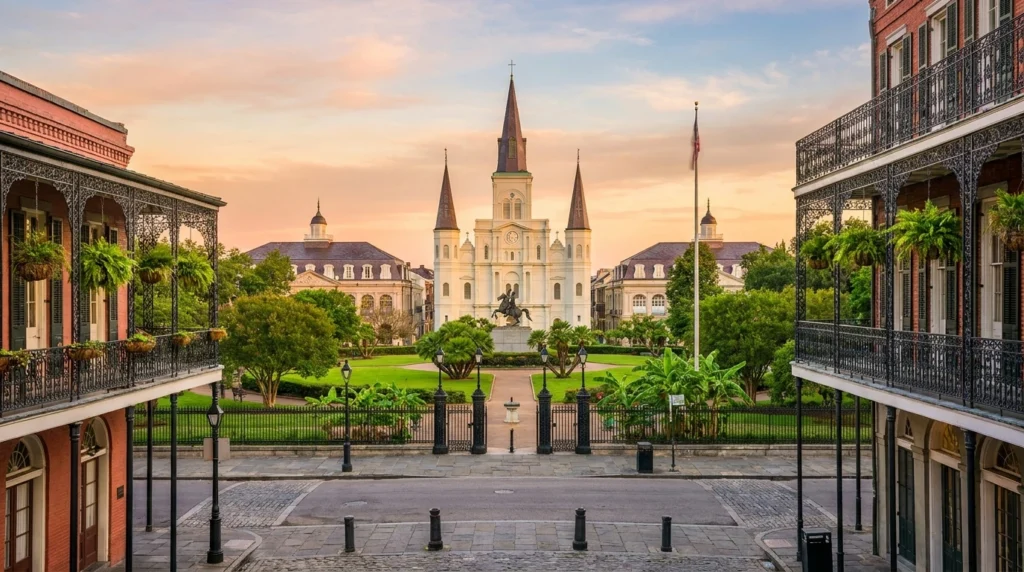
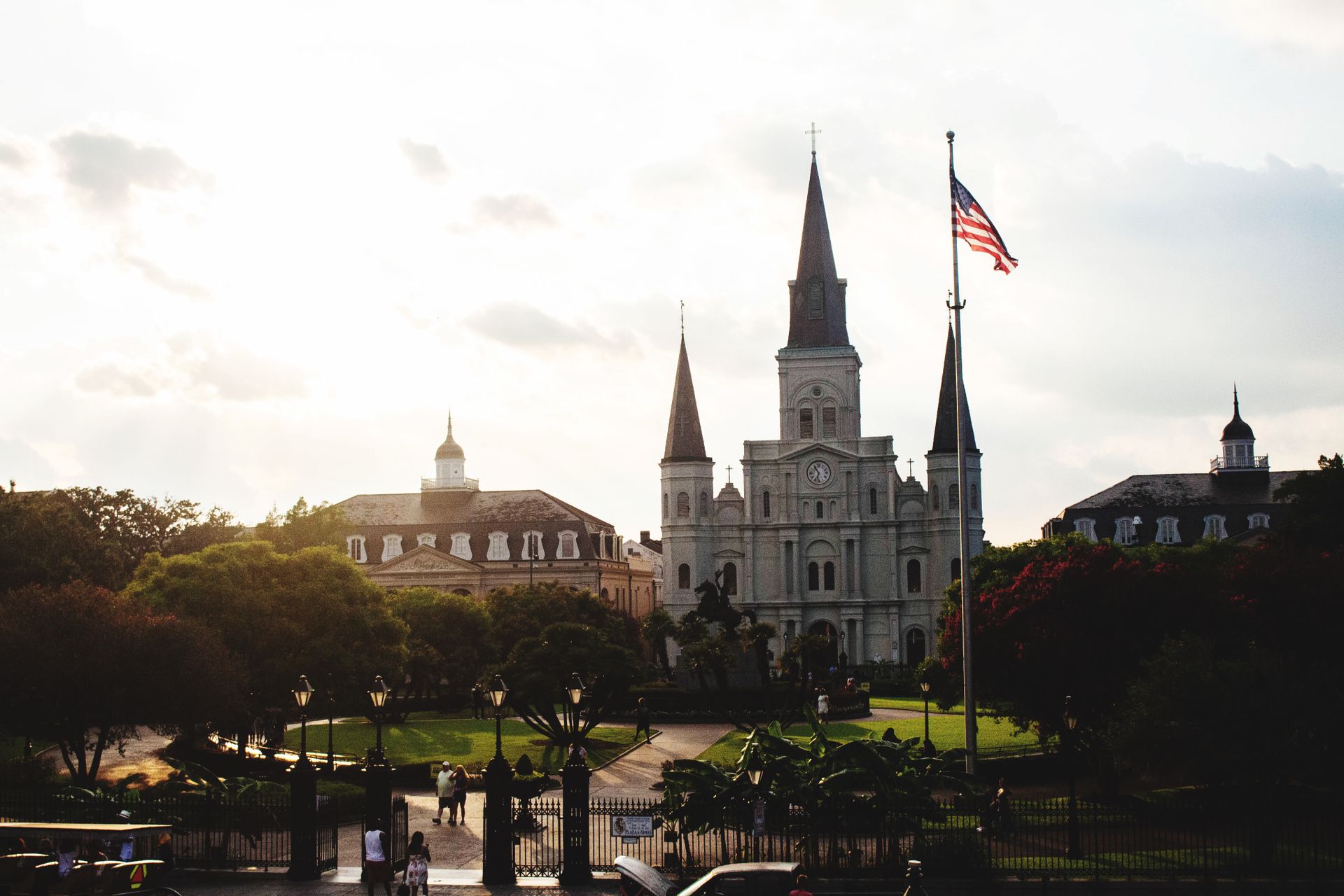
The historic and spiritual heart of the city, a National Historic Landmark park ringed by the triple-spired St. Louis Cathedral — the oldest continuously active Catholic cathedral in the United States — and the Cabildo and Presbytère, the Spanish colonial buildings where the Louisiana Purchase was signed and now part of the Louisiana State Museum . The square itself is free and always lively with artists, fortune-tellers, and brass-band buskers; the cathedral is free to enter outside services, and the museums charge modest admission. It is the single most photographed spot in the city and the obvious place to begin.
The Above-Ground Cemeteries
New Orleans’s “cities of the dead” are among its most evocative sights — labyrinths of whitewashed above-ground tombs and family vaults built up because the high water table made conventional burial impossible. St. Louis Cemetery No. 1, the oldest, holds the reputed tomb of voodoo priestess Marie Laveau and can now only be visited on a licensed guided tour (around $25), while Lafayette Cemetery No. 1 in the Garden District is a quieter, free-to-walk alternative when open . A guided cemetery tour pairs the architecture with the city’s layered history of religion, race, and ritual.
The Garden District & the St. Charles Streetcar
The single loveliest way to spend a New Orleans morning is to ride the historic green St. Charles streetcar — the oldest continuously operating street railway in the world, running since the 1830s — out beneath the live oaks to the Garden District, then walk its avenues of antebellum and Victorian mansions . The streetcar fare is just $1.25, the architecture is free to admire from the street, and Magazine Street’s boutiques and cafés are a short walk away. It is a self-guided sight that costs almost nothing and shows you a completely different city from the Quarter.
Tremé, Congo Square & the Music Heritage
To understand why New Orleans sounds the way it does, walk Tremé, one of the oldest Black neighbourhoods in the country. Its Louis Armstrong Park encloses Congo Square, the ground where enslaved and free Africans were once permitted to gather, drum, and dance on Sundays — the rhythms that, generations later, became jazz . The small but powerful Backstreet Cultural Museum nearby documents the Mardi Gras Indians, second-line parades, and social-aid-and-pleasure-club traditions that remain living culture. It is an essential, humbling complement to the city’s good-time reputation.
City Park & the Mississippi Riverfront
New Orleans’s great green spaces are free and central. City Park in Mid-City is larger than New York’s Central Park, holding ancient live oaks, lagoons, the New Orleans Museum of Art, a free sculpture garden, and the storybook Carousel Gardens, all reached directly by the Canal Street streetcar . Down on the river, the Moonwalk and Crescent Park give you the levee-top view of the Mississippi’s working barges and paddle-wheelers, and a paddle-wheeler cruise aboard the historic steamboat Natchez is a relaxed, classic way to see the city from the water. Both the parks and the riverfront are ideal for a free or low-cost afternoon between richer meals, and they show you the working river that built the city.
Entertainment

New Orleans’s nightlife and entertainment are unlike anywhere else in America, because here music is not an industry bolted onto the city — it is the city. This is the birthplace of jazz, a place where brass bands parade down residential streets on a Sunday afternoon, where music spills from doorways most nights of the week, and where the calendar is built around festivals and Carnival. The trick, as ever, is to skip the tourist clichés and cluster your nights by area — live jazz and funk on Frenchmen Street, brass-band history in Tremé, the rowdy bars of Bourbon Street if you must, and the legendary music halls Uptown — and to time a trip around one of the great festivals if you can.
Jazz & Live Music
No city’s music scene is more foundational to American culture than New Orleans’s — this is where jazz was born, and live music remains a nightly birthright rather than a special occasion. The locals’ move is Frenchmen Street in the Marigny, three blocks of intimate clubs where you can hear traditional jazz at Preservation Hall’s spiritual cousins, brass bands, and funk for little or no cover. The hallowed Preservation Hall in the Quarter itself runs nightly sets of traditional New Orleans jazz in a gloriously unrenovated room (tickets from around $25) , while Uptown’s Tipitina’s and the Maple Leaf carry the funk-and-brass torch. Covers run from free to $25, and catching a set in a small room is the single most authentic New Orleans evening going.
Bourbon Street & the Quarter Bars
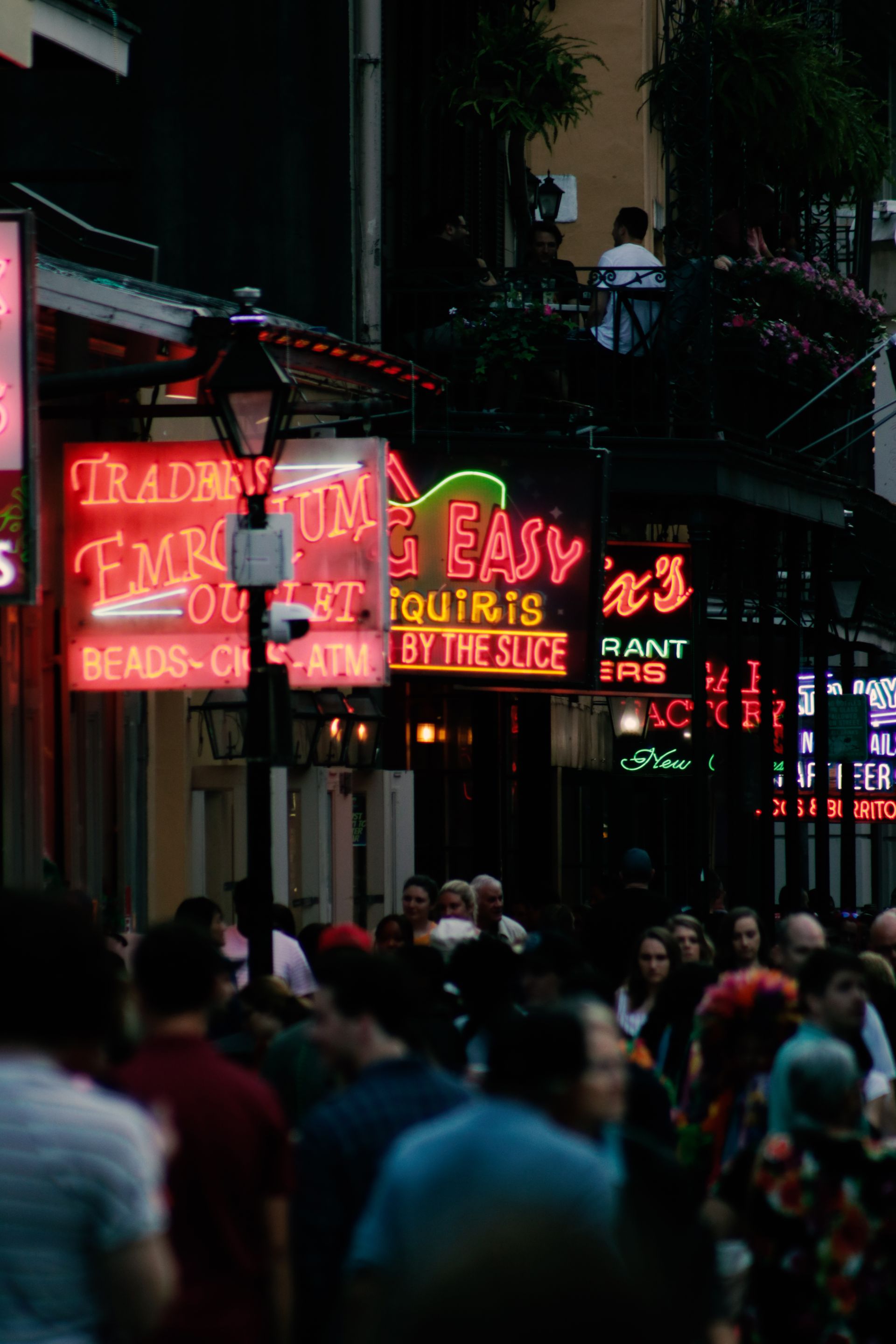
Bourbon Street is the entertainment cliché the locals love to disown, and it is worth one stroll for the spectacle — the neon, the daiquiri shops, the balcony crowds, and the open-container “go-cup” culture that lets you carry a drink between bars. But the music here is largely cover bands for tourists, so treat it as a carnival to walk through rather than a destination. The far more rewarding Quarter drinking happens at the historic bars a block or two away: the slowly revolving Carousel Bar at the Hotel Monteleone, the candlelit 18th-century Napoleon House with its Pimm’s Cup, and the reputed birthplace of the cocktail itself. Cocktails run $12–$18.
Festivals & Carnival
New Orleans is a city of festivals, and timing a trip around one transforms it. Mardi Gras — the climax of the weeks-long Carnival season, falling on the Tuesday before Lent — fills the streets with parades, marching krewes, masked balls, and flying beads, and is the city’s defining spectacle . The New Orleans Jazz & Heritage Festival (“Jazz Fest”) over two late-spring weekends is one of the great music festivals on earth, drawing legends and local acts across a dozen stages alongside a legendary food lineup . The French Quarter Festival, Essence Festival, and a near-constant calendar of neighbourhood second-lines fill out the year. Book accommodation months ahead for Mardi Gras and Jazz Fest.
Theatre & the Performing Arts
Beyond music, New Orleans keeps a lively performing-arts scene anchored by the historic Saenger and Orpheum theatres downtown, which host touring Broadway shows, concerts, and the Louisiana Philharmonic Orchestra, and by the long-running Le Petit Théâtre du Vieux Carré, one of the oldest community theatres in the country, right on Jackson Square. Tickets range widely; the grand restored movie-palace interiors of the Saenger are worth the price of admission alone.
Spectator Sports
New Orleans is a passionate sports town, and catching a game is a great night out. The NFL’s Saints — whose post-Katrina 2010 Super Bowl win became a symbol of the city’s recovery — play in the cavernous Caesars Superdome downtown, while the NBA’s Pelicans share the adjacent Smoothie King Center. Saints game days turn the whole city black-and-gold, and the tailgate-and-go-cup culture around the Superdome is an experience in itself . Ticket prices span a wide range depending on the opponent.
Ghost Tours, Voodoo & the Spooky Side
Few cities lean into the supernatural like New Orleans, and the after-dark walking tours are a genuinely fun way to learn the city’s layered history. Licensed guides lead ghost, vampire, voodoo, and cemetery tours through the Quarter most evenings (typically $25–$35), weaving real history — the Marie Laveau voodoo tradition, the Catholic-Caribbean spiritual blend, the cholera and yellow-fever epidemics — through the theatrical scares. They are touristy but well done, and a good orientation to the Quarter’s stories.
Day Trips

New Orleans sits in a landscape utterly different from the city itself — a watery world of swamps, bayous, and cane fields stretching out in every direction — and the day trips are some of the most distinctive in the country. The variety within a couple of hours is genuinely surprising: alligator-filled swamps, the sobering and beautiful River Road plantations, the dancehalls of Cajun country, and the white-sand Gulf beaches. A car helps for most of these, though several swamp and plantation tours include round-trip transport from the city. The golden rule in summer is to head out early before the heat and the afternoon thunderstorms build. Below are the five that consistently reward the effort. One general tip: book swamp and plantation tours that include hotel pickup if you would rather not drive — Louisiana’s rural roads are easy, but the guided trips spare you the logistics and add expert narration to landscapes that reward context.
Honey Island Swamp (about 45 minutes by car)
The closest taste of the real Louisiana wetlands — a pristine cypress-and-tupelo swamp on the edge of the city where boat tours glide past alligators, herons, wild boar, and Spanish-moss-draped trees . Most operators run two-hour small-boat or airboat tours (around $30–$70) with hotel pickup available, making it the easiest car-free escape and an essential one for first-timers wanting to see the landscape that shaped the region.
Oak Alley & the River Road Plantations (about 1 hour by car)
The stretch of the Mississippi between New Orleans and Baton Rouge — “River Road” — is lined with antebellum plantation estates, the most famous being Oak Alley, with its breathtaking quarter-mile canopy of 300-year-old live oaks. The best of these sites, including the Whitney Plantation, now centre their tours on the lives of the enslaved people who built and worked them, making for a powerful, sobering history lesson rather than a romanticised one . Admission runs around $25–$30; many tour operators combine a plantation with a swamp tour in a single day.
Lafayette & Cajun Country (about 2 hours by car)
Drive west into Acadiana, the heart of Cajun and Creole Louisiana, and the culture shifts again — French still spoken in places, zydeco and Cajun music in the dancehalls, and some of the best regional food in the South. Lafayette is the hub, with the living-history Vermilionville and the Atchafalaya Basin, the largest river swamp in the United States, nearby . It is a long day or, better, an overnight, and a revelation for anyone who thinks they have already seen Louisiana culture in the city.
Baton Rouge (about 1.5 hours by car)
Louisiana’s state capital makes an easy day trip up the interstate, anchored by the Art Deco State Capitol — the tallest in the nation, built under Huey Long, with a free observation deck offering sweeping views over the Mississippi . Add the USS Kidd destroyer museum on the riverfront, the LSU campus, and a strong local food scene, and it rounds out a relaxed day away from New Orleans’s intensity.
The Gulf Coast Beaches (about 1.5 hours by car)
For sand and sea, the white-quartz beaches of the Mississippi Gulf Coast around Bay St. Louis and Biloxi are an easy drive east, offering a low-key seaside contrast to the city — calm Gulf waters, fresh seafood shacks, and casinos for those inclined . It is a car trip and best in late spring or early autumn, when the Gulf is warm but the worst of the summer heat and storm risk has eased.
Seasonal Guide
New Orleans has a humid subtropical climate, and the seasons shape a visit more sharply than the modest temperature swings suggest — the difference between a balmy, festival-filled February and a sweltering, storm-prone August is dramatic. The single most useful thing to understand is the Atlantic hurricane season, which runs from June through November and peaks in late summer, bringing heat, humidity, and the small but real risk of a tropical storm; the spring months, by contrast, are warm, drier, and packed with the city’s biggest festivals .
Spring (March – May)
The peak season, and for good reason — warm, pleasant days with highs climbing from around 21°C to 28°C, low humidity by local standards, and the city’s two biggest events, the tail of Carnival and the late-spring Jazz Fest, drawing huge crowds . This is the city at its absolute best, so book accommodation months ahead and budget for higher hotel rates around Mardi Gras and Jazz Fest. Pack light layers and a light rain jacket; spring is the easiest season to recommend.
Summer (June – August)
Hot, intensely humid, and the heart of hurricane season — daytime highs sit around 32–34°C with oppressive humidity and near-daily afternoon thunderstorms, and a small but genuine risk of a tropical storm . The trade-off is the lowest hotel rates of the year and a quieter city, plus the Essence Festival in early July. Plan around the heat — start early, retreat indoors to museums and air-conditioned bars in the afternoon, and stay hydrated — and travel insurance covering storm disruption is wise.
Autumn (September – October)
A fine and underrated season — the worst summer heat eases into warm, clear days of 24–29°C, the crowds thin, and the festival calendar revives with events like the Crescent City and Voodoo music festivals around Halloween, which New Orleans throws itself into with relish . Early autumn still carries some storm risk, but by October the weather is reliably pleasant and rates sit below the spring peak — a quietly excellent time to visit.
Winter (November – February)
Mild and lively rather than cold — daytime highs hover around 16–20°C with occasional cooler snaps, making it comfortable for walking the Quarter . Winter brings the festive season, the start of Carnival in January (with parades building toward Mardi Gras), and lower rates outside the holidays. Pack a light jacket and an umbrella; it is a relaxed, atmospheric time to visit, with the build-up to Mardi Gras adding energy as the season turns, the holiday lights and Réveillon dinners brightening December, and the lowest crowds of the year outside the festive peak making the Quarter a pleasure to wander.
Getting Around
The Streetcars
New Orleans’s historic streetcars are both transit and attraction, and the green St. Charles line — running since the 1830s and the oldest continuously operating street railway in the world — is a sight in its own right, rumbling beneath the live oaks from Canal Street out through the Garden District and Uptown . Four lines cover the historic core: St. Charles, the riverfront line, and the Canal Street lines (one branching to City Park/Museum). A single ride is $1.25, paid in exact change or via the Le Pass app, and a 1-day Jazzy Pass at $3 quickly pays for itself . They are slow but charming and cover most of what a visitor needs.
Buses & the RTA Network
The Regional Transit Authority (RTA) also runs an extensive bus network that fills the gaps the streetcars miss, reaching neighbourhoods like Bywater, Mid-City, and the lakefront, at the same $1.25 fare on the same Jazzy Pass . The Le Pass mobile app handles fares, passes, and real-time arrivals across both streetcars and buses, which makes a multi-day visit straightforward. For most visitors, the streetcars cover the headline routes and the buses handle the occasional reach beyond the core.
Walking & the Compact Core
The single best way to experience New Orleans is on foot. The French Quarter is tiny — barely a mile end to end — and the adjoining Marigny, CBD, and Warehouse District are all walkable from it, so a great deal of a visit needs no transport at all. The flat terrain makes walking easy; the heat and humidity, not the distances, are the limiting factor in summer, so plan walks for the cooler morning and evening hours and duck into air-conditioned bars and cafés in the afternoon. Stick to well-lit, busy streets after dark and the core is very walkable.
Rideshare & Taxis
Uber and Lyft operate citywide and are how most visitors cover the gaps that the streetcars miss — out to Bywater, Mid-City, or the lakefront — with a typical in-city ride running $10–$20 depending on demand and surge pricing around festivals. Licensed taxis are also plentiful around the Quarter and the CBD. Rideshare is the easy, sensible way to get home late at night, and the only practical option for some of the outer neighbourhoods after the streetcars wind down.
Airport Access
- Louis Armstrong (MSY) to downtown — Airport Express bus (RTA 202), about 45–60 min, $1.50
- MSY to the French Quarter — taxi or rideshare, 25–40 min, flat taxi fare around $36 for up to two passengers
Should You Rent a Car?
For a city-only trip you do not need a car and are better off without one — the historic core is walkable, the streetcars and rideshare cover the rest, and Quarter and downtown parking is scarce and expensive, with strict towing and a confusing patchwork of street-cleaning rules. Rent a car only if you plan the further day trips like Cajun country or the Gulf Coast; even then, several swamp and plantation tours include hotel pickup, so you can often skip the rental entirely and pick one up only for the day you need it.
Navigation Tips
Two apps cover almost everything: the RTA’s Le Pass app handles streetcar and bus fares, passes, and real-time arrivals, while Google Maps gives reliable walking, transit, and rideshare directions across the city. The one quirk to learn is local direction-giving — New Orleanians orient by “riverside” and “lakeside,” “uptown” and “downtown” rather than by compass, because the river’s crescent bend scrambles the usual north-south logic. Pick up the vocabulary and the city suddenly makes sense.
Budget Breakdown: Making Your Dollars Count
| Tier | Daily | Sleep | Eat | Transport | Activities | Extras |
|---|---|---|---|---|---|---|
| Budget | $95–$150 (~£76–£120) | Hostel dorm $40–$70 | Beignets $5, po’boy $12, gumbo $16 | Jazzy Pass $3 | Jackson Square free, Frenchmen St free music | Café au lait $4 |
| Mid-Range | $200–$340 (~£160–£272) | 3-star hotel $160–$260 | Sit-down Creole dinner $35–$60 | Jazzy Pass + occasional rideshare $15 | WWII Museum $35, swamp tour $50 | Cocktails $12–$18 |
| Luxury | $580+ (~£464+) | 4–5-star $380+ (Quarter boutique $500+) | Grande-dame Creole dinner $120–$250 | Private transfer $90, Uber Black | Preservation Hall VIP, private tour | Spa / lounge $150–$300 |
Where Your Money Goes
Accommodation is the big lever in New Orleans, and where and when you book decides whether the city feels expensive or affordable. Hotel rates swing hard by season — a room that is reasonable in the sweltering summer can triple during Mardi Gras and Jazz Fest, when the whole city sells out months ahead — and by location, with French Quarter boutiques commanding a premium over the CBD chains or a guesthouse in the Marigny or Garden District. Food, by contrast, is a genuine bargain: while the grande-dame Creole rooms climb into the hundreds, the city’s defining meals are beignets, po’boys, and gumbo that rarely top $16, so you can eat extraordinarily well on very little. And a remarkable share of the best experiences are free or cheap — wandering the Quarter, the street musicians on Royal Street and Frenchmen, the riverfront, City Park, and the low-or-no-cover music clubs.
The hidden cost that catches first-timers is the car. Quarter and downtown parking runs $30–$50 a night before you have driven anywhere, plus the real risk of a towing fine from the city’s labyrinthine street-cleaning rules, and with a walkable core and streetcars covering the rest, a rental is dead weight for a city stay. Skip it, lean on the streetcars and rideshare, and that single decision can be the difference between the budget and mid-range columns above.
Money-Saving Tips
None of these requires sacrificing what makes New Orleans worth visiting — the food, the music, and the architecture are largely cheap or free already. The savings come from where you sleep, how you move, and timing your visit:
- Skip the rental car — the core is walkable and a Jazzy Pass is $3 a day
- Eat the icons — beignets, po’boys, and gumbo rarely top $16 and are the real local food
- Lean on the free sights — Jackson Square, the riverfront, City Park, and Frenchmen Street music
- Drink with a go-cup — buy at a shop and carry it, rather than paying bar prices all night
- Avoid Mardi Gras and Jazz Fest weeks if budget matters; rates triple and sell out
Practical Tips
Language
English is the working language and there is no barrier for tourists in any visitor-facing situation. New Orleans wears its French and Louisiana Creole heritage in its place names, food terms, and music — you will hear lagniappe (a little something extra), faubourg (suburb), and neutral ground (the median strip) — but every hotel, restaurant, museum, and the transit system operates fully in English. The local accent, closer to the Caribbean and the US East Coast than the Deep South, is part of the city’s distinctiveness rather than anything to navigate.
Cash vs. Cards
Cards and mobile wallets (Apple Pay, Google Pay) are accepted nearly everywhere — hotels, restaurants, shops, and rideshare — and contactless is common. The reliable exceptions are Café du Monde, some music-club covers, street performers, and small neighbourhood spots, which can be cash-only, plus the streetcars, which want exact change if you are not using the app. Carry $30–$50 in small bills for those, plus a little extra for cash tips and tipping the brass-band buskers.
Safety
New Orleans is generally safe for tourists in the French Quarter, the CBD, the Garden District, and the other neighbourhoods they actually visit, provided you take normal big-city precautions. The city’s crime reputation is real but heavily concentrated in specific areas well away from the tourist map, and rarely affects visitors. Take the usual sense: stay in well-lit, busy streets at night, do not wander alone into quiet residential blocks after dark, keep valuables out of sight, and use rideshare rather than walking long distances late. The all-purpose emergency number is 911 .
What to Wear
Dress for the heat and humidity, which dominate from late spring through early autumn — light, breathable, loose clothing, a hat, sunscreen, and comfortable walking shoes are essential. A light rain jacket or umbrella is wise for the near-daily summer afternoon storms. The city is casual by day, but note that several of the grande-dame Creole restaurants enforce a jacket-required dress code at dinner, so check before you book if you plan a smart night out. Winter is mild but can have cool snaps, so pack a light jacket.
Cultural Etiquette
Tipping is not optional in the US and matters more than most overseas visitors expect, because service-worker base wages assume it: budget 18–22% at sit-down restaurants, $1–$2 per drink at a bar, 15–20% for rideshare and taxi drivers, a few dollars per night for hotel housekeeping, and always drop something for the street musicians who soundtrack the city. New Orleanians are warm, talkative, and fiercely proud of their city, food, and the Saints, so engaging with that pride goes a long way. One sensitive note: handle conversation about Hurricane Katrina with care and respect — for many locals it remains deeply personal, recent history.
Connectivity
4G/5G coverage is excellent across the city, with reliable signal everywhere a visitor will go. Visitors from abroad can buy a US prepaid SIM (T-Mobile, AT&T, Mint) at the airport or phone shops, but the easiest option is an eSIM from Airalo or Holafly starting around $9, set up before you fly and activating on landing . Free Wi-Fi is widespread in cafés, hotels, museums, and the airport, so you are rarely offline for long.
Health & Heat
The US has no national health service and medical care is expensive — travel insurance with medical coverage is essential, and given the hurricane season, cover for trip disruption is wise in summer. Pharmacies (CVS, Walgreens) are everywhere and many run 24 hours. The real day-to-day health concern is the heat: in summer, pace yourself, drink far more water than feels necessary, and treat the midday hours as time for air-conditioned museums and bars rather than long walks. Tap water is treated and safe to drink citywide .
Hurricanes & Weather Awareness
If you visit between June and November, keep a casual eye on the forecast — major storms are rare in any given week but the season is real, and the National Hurricane Center gives days of warning for any approaching system . Travel insurance that covers weather disruption, a flexible flight, and a quick check of the forecast before you fly are all the preparation a visitor needs; the city itself is well practised at managing the season.
Luggage & Storage
The airport and several Quarter hotels offer luggage options, and the Bounce and Radical Storage networks place drop points at shops and hotels across the core from $6–$10 per bag per day. Most hotels will hold bags on check-out day for free, which is worth using to squeeze a final beignet run or a last streetcar ride into a late-departure day before heading to Louis Armstrong.
Frequently Asked Questions
How many days do I need in New Orleans?
Three full days is the honest minimum for a first visit — one for the French Quarter, Jackson Square, and Café du Monde; one for the National WWII Museum and a Garden District streetcar ride; and one for a swamp or plantation tour plus a night of live music on Frenchmen Street. Four or five days lets you add Tremé and the music heritage, a leisurely Uptown afternoon, a grande-dame Creole dinner, and a day trip to Cajun country without rushing. If you are timing a trip around Mardi Gras or Jazz Fest, build in extra days for the crowds and the events themselves.
Is New Orleans good for solo travellers?
Yes, very much so. The compact, walkable Quarter makes solo logistics easy without a car, the city is famously friendly and talkative, and the live-music clubs and counter-service food spots make solo dining and evenings completely normal. The main caveats are the usual big-city awareness — stick to busy, well-lit streets at night, use rideshare for late nights and quiet blocks, and keep your wits about you on Bourbon Street, where the crowds and drinking can get rowdy. Guesthouses and hostels cluster in the Quarter and Marigny, and the city’s sociable bar-and-music culture makes striking up a conversation effortless .
Do I need a car, or can I use the streetcars?
For a city-only trip you do not need a car and are better off without one. The historic core is walkable, the four streetcar lines and the RTA buses cover the rest at $1.25 a ride or $3 a day, and rideshare fills the gaps to the outer neighbourhoods, while Quarter parking is scarce, costly, and ringed with towing risk . Rent a car only if you plan the further day trips like Cajun country or the Gulf Coast — and even then, many swamp and plantation tours include hotel pickup, so you can often skip the rental and pick one up only for the day you need it.
Is New Orleans safe to visit after Hurricane Katrina?
Absolutely — the city has been fully rebuilt and welcoming visitors for nearly two decades, and the tourist core was largely spared the worst flooding in 2005. The federal levee and floodwall system has since been comprehensively rebuilt and strengthened, and the city is well practised at managing hurricane season . If you visit in summer, simply keep a casual eye on the forecast and carry travel insurance covering weather disruption. One note of sensitivity: Katrina remains recent, personal history for many New Orleanians, so approach the subject with respect rather than as a curiosity.
When is the best time to visit New Orleans?
Spring (March to May) is the peak-quality window — warm, drier days and the city’s two biggest events, the tail of Carnival and the late-spring Jazz Fest — though those festivals bring big crowds and high rates, so book months ahead. Autumn (late September to November) is a quieter, underrated alternative with pleasant weather and lower prices. Summer is hot, intensely humid, and the heart of hurricane season, but brings the lowest rates of the year; winter is mild and festive, with Carnival building from January . For most visitors, spring outside the festival peaks or a mild autumn is the sweet spot.
Can I really drink alcohol on the street?
Yes — New Orleans is unusual in the US in allowing open alcohol containers on public streets, provided they are in a plastic “go-cup” rather than glass, which is why bars will pour your drink into a cup to take with you when you leave . The drinking age is strictly 21 with ID checks routinely enforced, glass containers are banned outdoors, and public intoxication that causes trouble is still policed. Used sensibly, the go-cup culture is one of the small freedoms that makes a New Orleans night out distinctive, and a great way to bar-hop without paying full bar prices all evening.
What food should I absolutely not miss?
Start with beignets and chicory café au lait at Café du Monde, then work through the essential canon: a bowl of gumbo, a dressed po’boy (fried shrimp or roast beef), red beans and rice if it is a Monday, and a long Creole lunch or dinner at one of the 19th-century grandes dames like Antoine’s, Galatoire’s, or Commander’s Palace . In spring, add a pound of boiled crawfish; year-round, finish with pralines or a slice of king cake during Carnival. The best meals here are as likely to come from a $12 po’boy counter as from a white-tablecloth dining room — eat constantly and follow the locals.
Ready to Experience New Orleans?
New Orleans rewards the traveller who gives it time — a slow morning over beignets, an afternoon walking the Quarter and the Garden District, a swamp tour at dawn, a night of brass bands on Frenchmen Street. Ride the streetcar, eat constantly, follow the music, and the most distinctive city in America reveals itself fast. For the full national context and a route that pairs New Orleans with the wider American trip, read the United States Travel Guide.
Explore More City Guides
- New York City Guide — the East Coast counterweight
- Los Angeles City Guide — the West Coast counterpart
- Chicago City Guide — the Midwest’s lakefront capital
- United States Country Guide
- All City Guides
Alex the Travel Guru
Alex has spent the better part of two decades turning a battered notebook and a tolerance for long walks into the FFU city guide archive. In New Orleans specifically, he has eaten more beignets than he can defend, argued the Creole-versus-Cajun gumbo question in half the kitchens in the city, sweated through an August afternoon and shivered through a January Carnival parade, and learned that the music on Frenchmen Street beats Bourbon Street every single time. He writes these guides to answer the questions he needed answered the first time — where to base, what to skip, where locals actually eat, and why this is the most distinctive city in America.
More city guides you might like

Plan your trip to New Orleans
The booking tools we use ourselves. FFU may earn a commission at no extra cost to you.
Plan & book your trip to New Orleans
Booking through these searches supports our guides at no extra cost to you.