
City Guide · The Midwest
Chicago, United States: Big-Shouldered Architecture, Deep-Dish Appetites, and a Lakefront the Size of a Sea
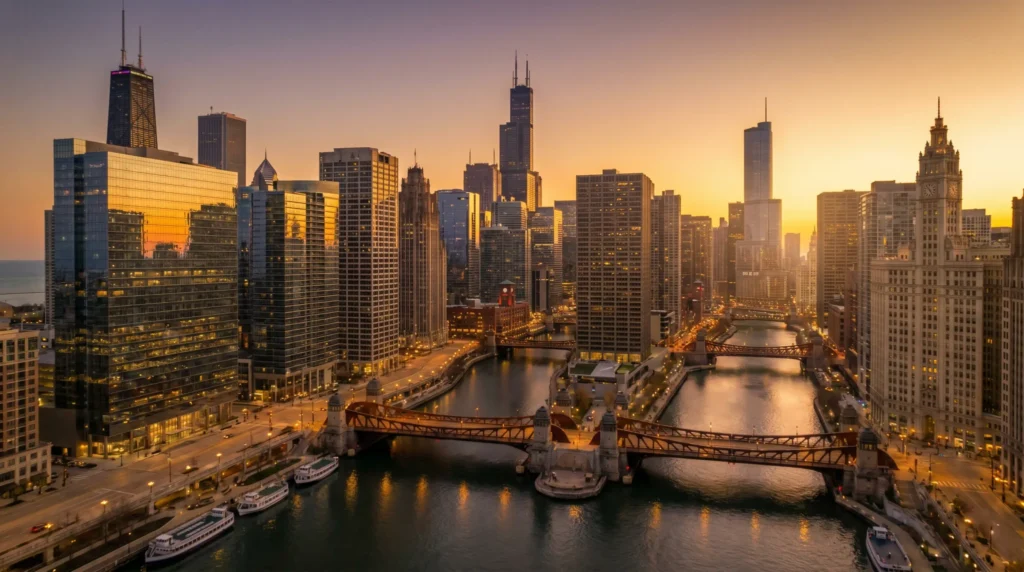
I have walked Chicago in every season it throws at you, and the thing I tell every first-timer is that this is the most underrated big city in America — a place that invented the skyscraper, gave the world the blues and house music, and still feels improbably liveable for a metropolis of roughly 2.7 million people, the third-largest city in the United States . My favourite Chicago ritual is the early architecture-cruise on the river, watching the bascule bridges and the Wrigley Building slide past before the Loop fills up, then a long afternoon walk north along the lakefront with the skyline on one side and an inland sea on the other. We tell visitors to stop treating it as a flyover stopover: give it three or four days, pick a couple of neighbourhoods beyond the Loop, ride the ‘L’ instead of fighting for parking, and the city’s confidence becomes infectious. Treat this guide as the brief I would hand my own family before they landed at O’Hare — the deep-dish-versus-tavern-cut debate, the free museums and the world-class ones, the blues bars, the brutal-but-beautiful winters, and the transit logic that ties it all together .

Table of Contents
Why Chicago?
Chicago is the great American city that travellers chronically overlook, and that is precisely its charm: it has the cultural firepower of New York and Los Angeles without the price tag or the swagger, packed into a walkable, water-fronted grid that is far easier to read than either coast. The city proper holds roughly 2.7 million people across some 600 square kilometres, making it the third-largest city in the United States, the anchor of a metropolitan area of nearly 9.5 million, and the unrivalled capital of the American Midwest . It is a city built on confidence — rebuilt, literally, after the Great Chicago Fire of 1871 — and that rebuilding is why it became the birthplace of the skyscraper and one of the most architecturally significant places on earth.
The city reads as a set of productive contrasts. It is a buttoned-up financial and convention hub by day, home to the Loop’s trading floors and the country’s busiest river of commuters, yet its soul lives in the neighbourhoods — the Mexican murals of Pilsen, the Polish and Puerto Rican heritage of the Northwest Side, the Black cultural powerhouse of Bronzeville and the South Side that gave the world gospel, electric blues, and house music. It is famous for brutal winters and a flat prairie setting, yet it fronts Lake Michigan with 26 miles of public lakefront, beaches, and parkland that no private development is allowed to wall off .
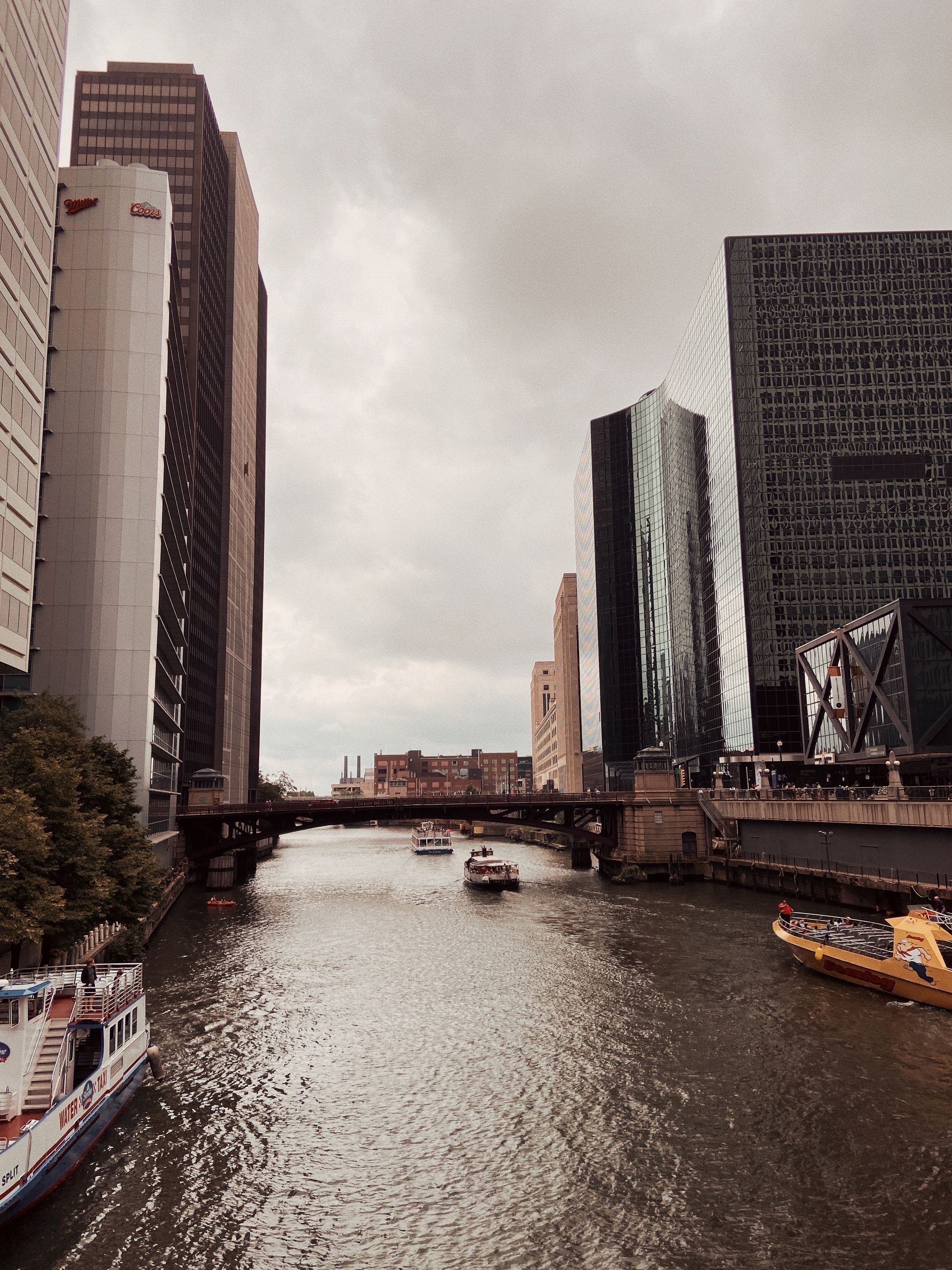
The geography is the secret to enjoying it. Chicago is laid out on a near-perfect grid radiating from the corner of State and Madison, the lake forms an unmistakable eastern edge so you can never truly get lost, and the elevated ‘L’ trains stitch the neighbourhoods to the Loop in minutes . The Chicago River, dyed green every St Patrick’s Day and famously reversed by engineers in 1900 to flow away from the lake, threads the downtown core and is the single best way to read the skyline — from the water, on one of the architecture cruises that locals quietly consider the city’s best activity .
This guide covers the neighbourhoods you will actually spend time in, the deep-dish-versus-tavern-cut and Italian-beef debates worth having, the museum tier (the Art Institute, the Field, the Museum of Science and Industry), the blues clubs and comedy theatres, the day trips Chicagoans take on weekends, and the practical realities of ESTA, the ‘L’, lake-effect weather, and the two airports. Start on the river and the lakefront; everything else flows from there.

Neighborhoods: Finding Your Chicago
📍 Chicago Map: Every Place in This Guide
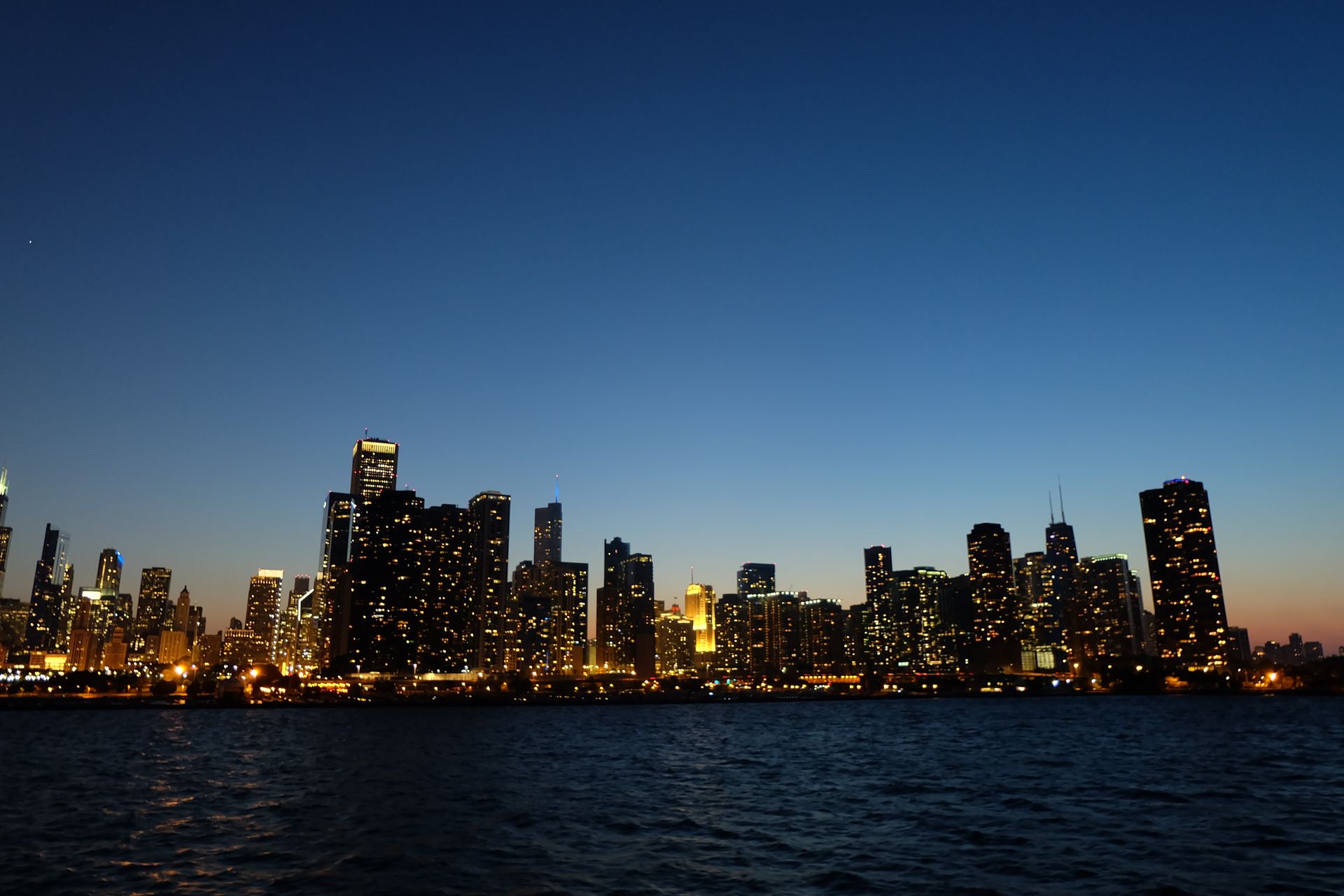
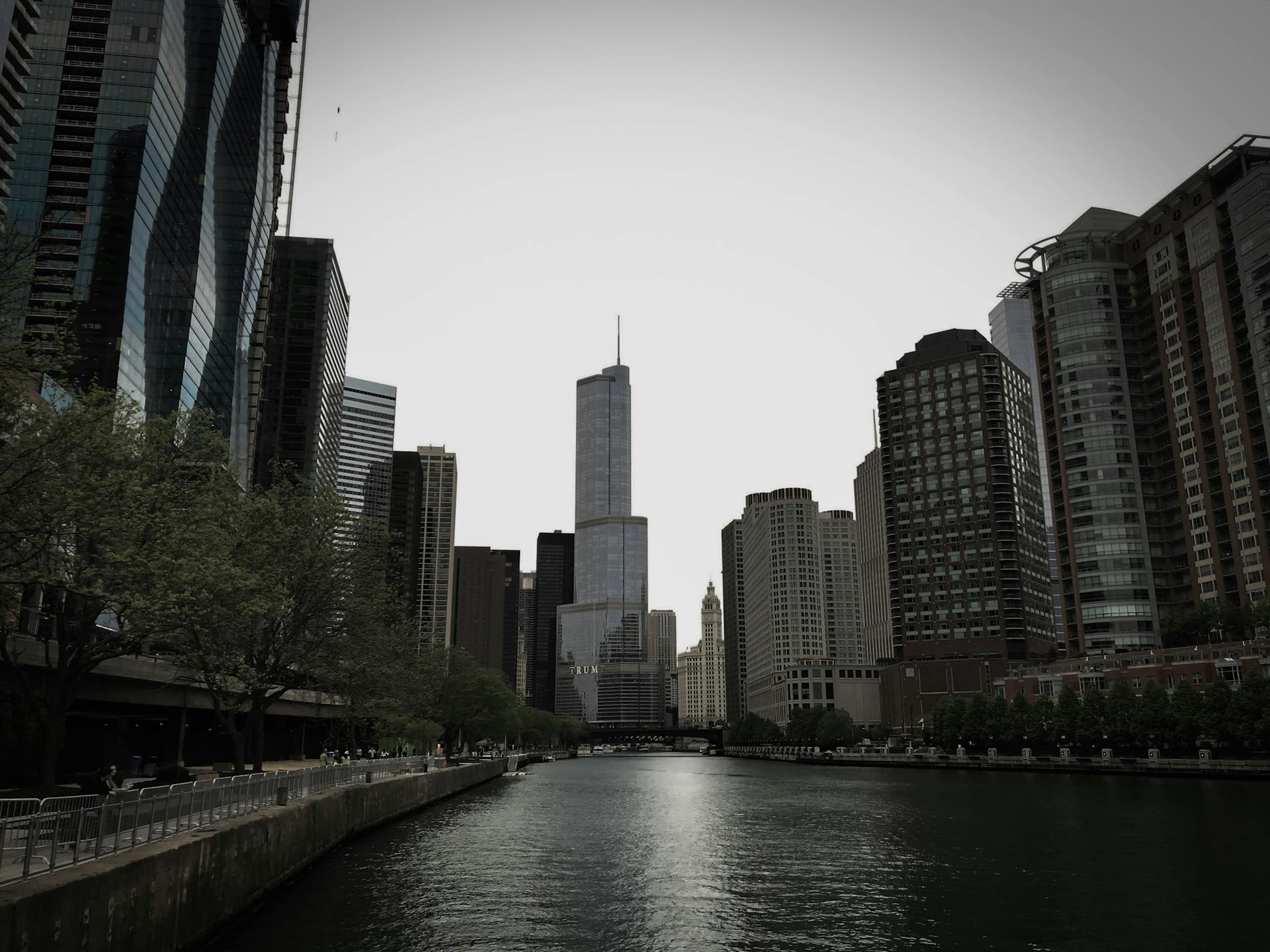
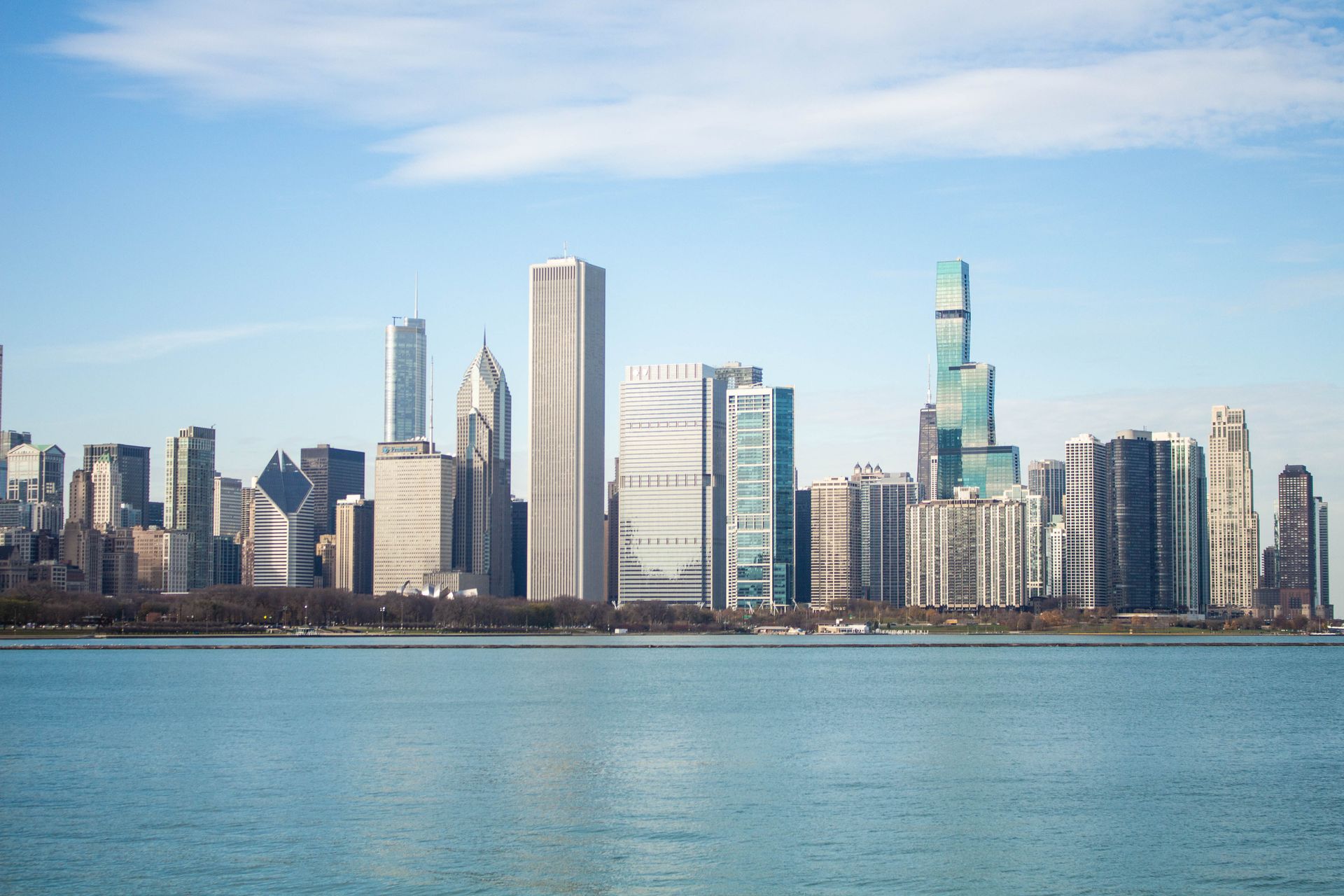
Chicago is best understood as a tight downtown core ringed by 77 official community areas, each with its own character — and the single biggest mistake first-timers make is never leaving the Loop. The downtown sits at the meeting of the lake and the river: the Loop proper (named for the elevated tracks that circle it), the Magnificent Mile shopping spine of North Michigan Avenue, the River North gallery-and-dining district, and the Streeterville lakefront. Beyond that, the city fans out into distinct neighbourhoods reachable in fifteen to thirty minutes by ‘L’ — the lively bars of Wicker Park and Bucktown to the northwest, the Mexican murals of Pilsen to the southwest, the historic Black cultural heart of Bronzeville and Hyde Park to the south, and the leafy, lakefront stretch of Lincoln Park and Lakeview to the north .
This section walks the eight neighbourhoods you will actually use, grouped by character: the downtown core (the Loop, River North), the lakefront north side (Lincoln Park, Lakeview, Andersonville), the hip northwest (Wicker Park & Bucktown), and the cultural south and west (Pilsen, Hyde Park, Bronzeville), with notes on access and who each district suits best.
The Loop
The dense, theatrical downtown core, named for the elevated ‘L’ tracks that literally loop around it — a canyon of landmark skyscrapers, the Art Institute, the Chicago Theatre marquee, and Millennium Park with its Cloud Gate sculpture. It is the most transit-connected square mile in the city, where nearly every ‘L’ line converges.
- Millennium Park, Cloud Gate (“The Bean”), and the Crown Fountain
- The Art Institute of Chicago and the Chicago Cultural Center
- The historic ‘L’ loop and the State Street theatre district
Best for: first-time visitors, museums and architecture, car-free travellers. Access: every ‘L’ line; Millennium Station for Metra Electric.
The Loop is where most visitors begin and where the city’s “city of big shoulders” identity is most visible. It is a working downtown of trading floors and law firms by day, which means it can feel quiet on weekends, but it holds an outsized share of the marquee sights — Millennium Park and the free-to-visit Cloud Gate, the Art Institute, the Chicago Cultural Center with its Tiffany dome, and the bascule bridges over the river. Stay here if your priority is walking to the museums and stepping straight onto any ‘L’ line; just know that the after-dark energy migrates north to River North and the neighbourhoods, so the Loop is a base for daytime efficiency rather than nightlife.
River North
Just across the river from the Loop, River North is the city’s gallery, dining, and nightlife engine — a dense grid of converted warehouses now holding one of the largest concentrations of art galleries in the country, plus the Magnificent Mile’s flagship stores a few blocks east. It is the most central base for a first trip that wants restaurants and bars within walking distance.
- The Magnificent Mile and the historic Tribune Tower and Wrigley Building
- River North gallery district and the original deep-dish pizzerias
- Riverwalk access and the architecture-cruise docks
Best for: first-timers wanting dining and nightlife on the doorstep, shoppers. Access: Red Line to Grand; walkable from the Loop.
River North is the neighbourhood that solves the Loop’s biggest weakness, which is that downtown empties at night. Here the converted warehouses hold steakhouses, the city’s original deep-dish institutions, rooftop bars, and a gallery scene second only to New York’s, all within a walkable grid that stays lively well past midnight. It is also the launch point for the architecture river cruises and the southern anchor of the Magnificent Mile, North Michigan Avenue’s mile of flagship stores running up to the old Water Tower, one of the few structures to survive the 1871 fire. For a first trip that wants to walk everywhere, River North is the single most convenient base in the city.
Wicker Park & Bucktown
The hip northwest-side districts west of the Kennedy Expressway — once working-class and artistic, now the city’s epicentre of independent boutiques, craft-cocktail bars, music venues, and brunch, while keeping a grittier, creative edge than the polished north side .
- The six-corners hub at Milwaukee, North, and Damen avenues
- Independent boutiques, record shops, and vintage stores
- The 606 / Bloomingdale Trail elevated park and the music venues
Best for: nightlife, independent shopping, younger travellers. Access: Blue Line to Damen station.
Wicker Park and the adjoining Bucktown are where Chicago’s creative energy concentrates, and they reward an aimless afternoon as much as a big night out. The six-corners intersection of Milwaukee, North, and Damen is the heart of it, ringed by independent boutiques, third-wave coffee, record shops, and some of the best casual restaurants in the city, while the elevated 606 trail offers a leafy walking-and-cycling spine above the streets. By night the district splits into a dense run of cocktail bars, dive bars, and music venues that draw a young, in-the-know crowd. It is a short Blue Line ride from both downtown and O’Hare, which makes it a smart base for travellers who want neighbourhood texture over downtown polish.
Lincoln Park & Lakeview
The leafy, affluent north-side lakefront — Lincoln Park wraps the city’s largest park and a free zoo, while Lakeview to the north holds Wrigley Field and the Boystown LGBTQ+ corridor. Together they are residential, walkable, and the most family-friendly stretch of the city.
- Lincoln Park Zoo (free) and the Lincoln Park Conservatory
- Wrigley Field, the 1914 home of the Chicago Cubs
- The Northalsted (“Boystown”) nightlife and the lakefront trail
Best for: families, runners and cyclists, baseball, LGBTQ+ travellers. Access: Red/Brown Lines; Red Line to Addison for Wrigley.
Lincoln Park and Lakeview are where Chicagoans actually live the lakefront life, and they make an excellent base for a calmer, greener trip. Lincoln Park itself — the park, not just the neighbourhood — is the city’s largest, running for miles along the lake and holding a free zoo, a conservatory, lagoons, and beaches, all threaded by the lakefront trail that runs the length of the city. To the north, Lakeview centres on Wrigley Field, the ivy-walled 1914 ballpark where a Cubs game is one of the quintessential Chicago experiences, and on Northalsted, the historic heart of LGBTQ+ Chicago. The neighbourhoods are residential and safe, the dining is strong and unpretentious, and the Red and Brown ‘L’ lines put downtown twenty minutes away.
Andersonville
A charming far-north-side neighbourhood with Swedish roots, a walkable main street of independent shops and restaurants along Clark Street, and a relaxed, village-like feel that rewards travellers willing to ride a little further from downtown.
- Clark Street’s independent boutiques, bakeries, and bookshops
- The Swedish American Museum and old-world delis
- A strong LGBTQ+ and dining scene without the crowds
Best for: slow-travel, independent shopping and dining, repeat visitors. Access: Red Line to Berwyn; or the Clark Street buses.
Andersonville is the north-side neighbourhood that returning visitors fall for. Settled by Swedish immigrants in the 19th century — a heritage still visible in the Swedish American Museum and a handful of old-world delis and bakeries — it has become one of the most pleasant walking neighbourhoods in the city, a single long main street of independent boutiques, bookshops, restaurants, and bars with almost no chains and a strong, easy-going LGBTQ+ presence. There are no marquee sights here, which is exactly the appeal: you come to browse, eat, and feel the texture of a real Chicago neighbourhood. It sits at the far north end of the Red Line, so build in a little extra transit time and treat it as a relaxed half-day away from the downtown bustle.
Pilsen
The Lower West Side heart of Mexican-American Chicago — a neighbourhood defined by the country’s most stunning large-scale street murals, the free National Museum of Mexican Art, and a deep run of taquerias, panaderías, and increasingly an arts scene along 18th Street .
- The National Museum of Mexican Art (free admission)
- The 16th Street and 18th Street murals and street art
- Taquerias, panaderías, and the galleries of the arts district
Best for: food crawls, art and murals, culturally curious travellers. Access: Pink Line to 18th station.
Pilsen is the neighbourhood that best captures Chicago’s identity as a city of immigrants, and it is one of the most rewarding to walk. Long the centre of the city’s Mexican community, it wears that heritage on its walls — 18th Street and the surrounding blocks hold one of the densest concentrations of large-scale public murals in the United States — and its anchor, the National Museum of Mexican Art, holds one of the most significant collections of Mexican art in the country and is free to enter . The food is the other draw, from family taquerias and panaderías to a newer wave of galleries and cafés. A short Pink Line ride from the Loop, Pilsen is an essential half-day for any visitor who wants to see past the postcard skyline.
Hyde Park & the South Side
The intellectual and cultural heart of the South Side — home to the University of Chicago’s Gothic campus, the Museum of Science and Industry, the new Obama Presidential Center, and a Black cultural legacy that runs from gospel and blues to the city’s literary history.
- The Museum of Science and Industry and the Obama Presidential Center
- The University of Chicago campus and the Robie House
- Jackson Park, the lakefront, and the 1893 World’s Fair legacy
Best for: museums, architecture, history-minded travellers. Access: Metra Electric to 55th–56th–57th; or the 6 Jackson Park Express bus.
Hyde Park anchors the South Side and corrects the lopsided way many visitors experience Chicago entirely from the north. Built around the University of Chicago’s neo-Gothic quadrangles, it holds the Museum of Science and Industry — the lone surviving structure of the 1893 World’s Columbian Exposition and one of the largest science museums in the hemisphere — alongside Frank Lloyd Wright’s Robie House, a landmark of the Prairie School. The neighbourhood is also the site of the new Obama Presidential Center rising in Jackson Park, and a gateway to the broader South Side’s profound contribution to American culture, from gospel and electric blues to house music. Reach it on the Metra Electric line for the fastest run from downtown, and give it a full day.
The Food

Chicago is one of America’s great eating cities, and it is far more than the deep-dish pizza it is famous for — though we will get to that argument. This is a city built by waves of immigration, from German, Irish, Polish, and Italian arrivals in the 19th century to Mexican, Puerto Rican, Vietnamese, Indian, and West African communities since, and its food map is drawn by those neighbourhoods rather than by a single downtown scene. The result is a city where the best meal of your trip is as likely to be a $4 Italian beef sandwich eaten standing up, or a plate of tacos in Pilsen, as it is a tasting menu in one of the country’s most decorated fine-dining rooms. Approach it the way Chicagoans do: chase the specific dish in its home neighbourhood, embrace the meat-and-portion heartiness that defines the local palate, and do not let anyone tell you the city is only about pizza. If you organise even one day of your trip around eating — a taco crawl in Pilsen, a hot-dog-and-Italian-beef lunch, a steakhouse dinner — it will likely be a highlight.
Deep Dish & Tavern-Style Pizza
The city’s most famous food is also its most misunderstood. Deep-dish pizza — the buttery, high-walled pie baked in a round pan with the cheese under a chunky tomato sauce — was reportedly invented at Pizzeria Uno in 1943 and is the version that put Chicago on the culinary map. But locals are quick to point out two things: deep dish is a special-occasion, knife-and-fork affair eaten less often than visitors assume, and the everyday Chicago pizza is actually the thin, crunchy, square-cut “tavern style” that most neighbourhood spots serve. Try both, and join the eternal debate. The pies take 30–45 minutes to bake, so order ahead or settle in with a drink.
- Lou Malnati’s — the deep-dish benchmark since 1971, famous for its buttercrust ($18–$30 for a medium pie)
- Pequod’s Pizza — the cult favourite, known for its caramelised cheese crust ($16–$28)
- Pizzeria Uno — the original 1943 deep-dish room downtown ($18–$30)
Approach the pizza wars with an open mind. Order a deep dish to split between two or more people as a sit-down meal, and on another day grab a few squares of tavern-cut from a neighbourhood bar to taste what Chicagoans actually eat most weeks. The deep-dish pies are enormous and rich, so one feeds two hungry adults; the tavern style is the late-night, watch-the-game version. There is also a third local style worth seeking out — the “stuffed” pizza, an even deeper pie with a second layer of dough sealing the cheese inside, pioneered at spots like Giordano’s, which divides locals further still. The honest truth is that no Chicagoan agrees on a single best pizza, and the fun of a food trip here is forming your own opinion across a few pies rather than taking anyone’s word for it. A practical note for visitors: because the pies are so filling and slow to bake, many people make pizza a planned dinner with a reservation rather than a grab-and-go meal, and a single deep dish plus a salad can comfortably feed three.
Italian Beef, Hot Dogs & the Street Classics
Beyond pizza, Chicago’s true everyday icons are its street-food sandwiches and dogs, and no food trip is complete without them. The Italian beef — thin-sliced roast beef simmered in seasoned jus, piled on a roll, topped with sweet or hot giardiniera peppers, and “dipped” in the gravy if you ask — is the sandwich Chicagoans are most passionate about. The Chicago-style hot dog is its equal: an all-beef frank “dragged through the garden” with yellow mustard, neon-green relish, chopped onion, tomato, a pickle spear, sport peppers, and celery salt on a poppy-seed bun — and never, under any circumstances, ketchup. Add the Maxwell Street Polish (a grilled sausage with mustard and grilled onions) and you have the holy trinity of Chicago street food, all of it cheap, fast, and beloved.
- Al’s #1 Italian Beef — the Little Italy original, dipped beef with hot giardiniera ($8–$11)
- Portillo’s — the city’s beloved hot-dog-and-beef chain, a one-stop Chicago classic ($6–$11)
- Jim’s Original — the late-night Maxwell Street Polish stand ($5–$8)
A word on ordering, because the vocabulary is half the fun. At an Italian beef counter you will be asked whether you want it “dipped” (the whole roll briefly submerged in jus) or “dry,” and whether you want it “hot” (with spicy giardiniera) or “sweet” (with roasted green peppers); the classic order is “dipped, hot.” The proper way to eat one is the “Italian stance” — leaning over the counter, elbows out, so the gravy drips onto the paper rather than your shirt. Hot dogs come “dragged through the garden” by default, and the no-ketchup rule is treated only half-jokingly. None of these spots are fancy, most are cash-friendly, and a full street-food lunch of a beef or a dog plus a drink rarely tops $12 — which is exactly why locals eat them several times a week.
Beyond Pizza and Beef
To stop at the icons would be to miss the point of eating in Chicago, which is that its immigrant neighbourhoods run some of the best restaurants in their cuisines anywhere in the country. Pilsen and Little Village hold a Mexican food scene that ranks among the best in the US north of the border, from family taquerias to Michelin-recognised mole; Chinatown on the near South Side and the Vietnamese restaurants of Argyle Street (“Little Saigon”) on the north side are both deep and authentic; Devon Avenue on the far north side is a dense run of South Asian sweet shops and curry houses; and the city’s Polish heritage — Chicago has one of the largest Polish populations of any city outside Poland — still shows up in pierogi and old-world delis. Anchoring the casual end is the breakfast-and-brunch culture the city does exceptionally well, and the French-and-American bakery scene that has quietly become one of the country’s best.
- Carnitas Uruapan — Pilsen’s legendary Michoacán-style carnitas by the pound ($12–$18)
- Pho 888 — a benchmark bowl on Argyle Street’s Little Saigon strip ($12–$16)
- The Publican — a beer-and-pork temple in the West Loop’s restaurant row ($25–$45)
- Lao Sze Chuan — fiery Sichuan cooking in Chinatown ($14–$28)
Fine Dining & the Restaurant Scene
For all its hearty street food, Chicago also runs one of the most serious fine-dining scenes in America, and it has punched far above its weight for decades. This is the city of Alinea, Grant Achatz’s avant-garde tasting-menu landmark regularly ranked among the best restaurants in the world, and of a deep bench of ambitious rooms clustered in the West Loop’s “Restaurant Row” on Randolph Street and Fulton Market. The local style runs from molecular gastronomy to refined takes on the Midwestern larder — pork, lake fish, prairie produce — and prices range from $200-plus multi-course tasting menus to chef-driven bistros where $50 buys a memorable dinner. Crucially for visitors, Chicago also perfected the upscale steakhouse, and a night at a classic chophouse with a dry-aged ribeye and a Manhattan is as quintessentially Chicago as anything with tweezers. Book the marquee rooms weeks ahead; many release tables on a rolling basis online.
Coffee, Bakeries & Brunch
Chicago does the slow morning beautifully, and its café and brunch culture is woven into the neighbourhoods. Wicker Park, Logan Square, and the north side overflow with independent roasters and all-day cafés; the city also has a serious bakery scene, from old-world Polish and Mexican panaderías to a new wave of laminated-pastry counters that rival the coasts. Brunch is close to a competitive sport here, with queues forming at the best spots on weekend mornings, so go early or book. Spend a slow morning the way locals do — a pour-over and a pastry, then a walk along the 606 trail or the lakefront — and you will see a side of the city the convention crowds never reach. Diners also deserve a mention: Chicago keeps a strong tradition of the all-day greasy-spoon, and a plate of eggs, hash browns, and bottomless coffee at a neighbourhood diner is both cheap and quintessentially local. In winter, the café and diner culture becomes a survival strategy as much as a pleasure — lingering over a long, warm breakfast is exactly how Chicagoans wait out a cold snap before heading back into the wind.
Markets, Stands & Where to Drink
Two more institutions deserve a place on any itinerary. The first is the city’s market culture: seasonal farmers’ markets fill the squares from spring through autumn, and food halls like Time Out Market in Fulton Market and the Revival Food Hall in the Loop let you graze across a dozen kitchens in one sitting. The second is Chicago’s drinking culture, which runs deep — this is a serious beer town, home to a strong craft-brewery scene and the corner “tavern” that gives the local pizza its name, alongside a sophisticated cocktail scene in River North and the West Loop and the historic dive bars of Wicker Park. A pint in a neighbourhood tavern, an Old Style at a Cubs game, or a craft cocktail in a converted West Loop warehouse all count as authentic Chicago nights. The through-line across the whole food map is the same: in Chicago, the quality of a meal has very little to do with the price of it.
Food Experiences You Can’t Miss
- A side-by-side tasting of deep-dish and tavern-cut pizza to settle the debate for yourself
- A dipped Italian beef with hot giardiniera, eaten standing up the way locals do
- A taco-and-mural crawl through Pilsen and Little Village
- A grazing session through Time Out Market or the Revival Food Hall
Cultural Sights

For a city known for hard work and harder winters, Chicago is astonishingly rich in world-class cultural institutions — and a striking number of the best things to do are free. The cluster around Millennium Park and Grant Park, the Museum Campus on the lakefront, and the architectural heritage of the Loop give the city a cultural density that rivals any in the country. The practical advantage over the coasts is geography: most of the marquee sights sit within a compact, walkable, transit-connected downtown, so you can see a great deal on foot in a single day rather than crisscrossing a sprawl. A useful money-saving note before you start: if you intend to visit several of the big-ticket museums, the Chicago CityPASS bundles the Art Institute, the Field, the Shedd, and others at a steep discount, and most Illinois residents get free or reduced museum days throughout the year, so it pays to check the calendar before you buy individual tickets.
The Art Institute of Chicago
One of the oldest and finest art museums in the United States, guarded by its famous bronze lions on Michigan Avenue, with an encyclopaedic collection strongest in Impressionism and Post-Impressionism — Monet’s haystacks, Seurat’s “A Sunday on La Grande Jatte,” Caillebotte’s “Paris Street; Rainy Day” — alongside Grant Wood’s “American Gothic” and Edward Hopper’s “Nighthawks.” General admission for non-resident adults runs around $32, with discounts for Illinois and Chicago residents and free days for Illinois residents; allow at least half a day, and book timed entry online in summer .
Millennium Park & Cloud Gate
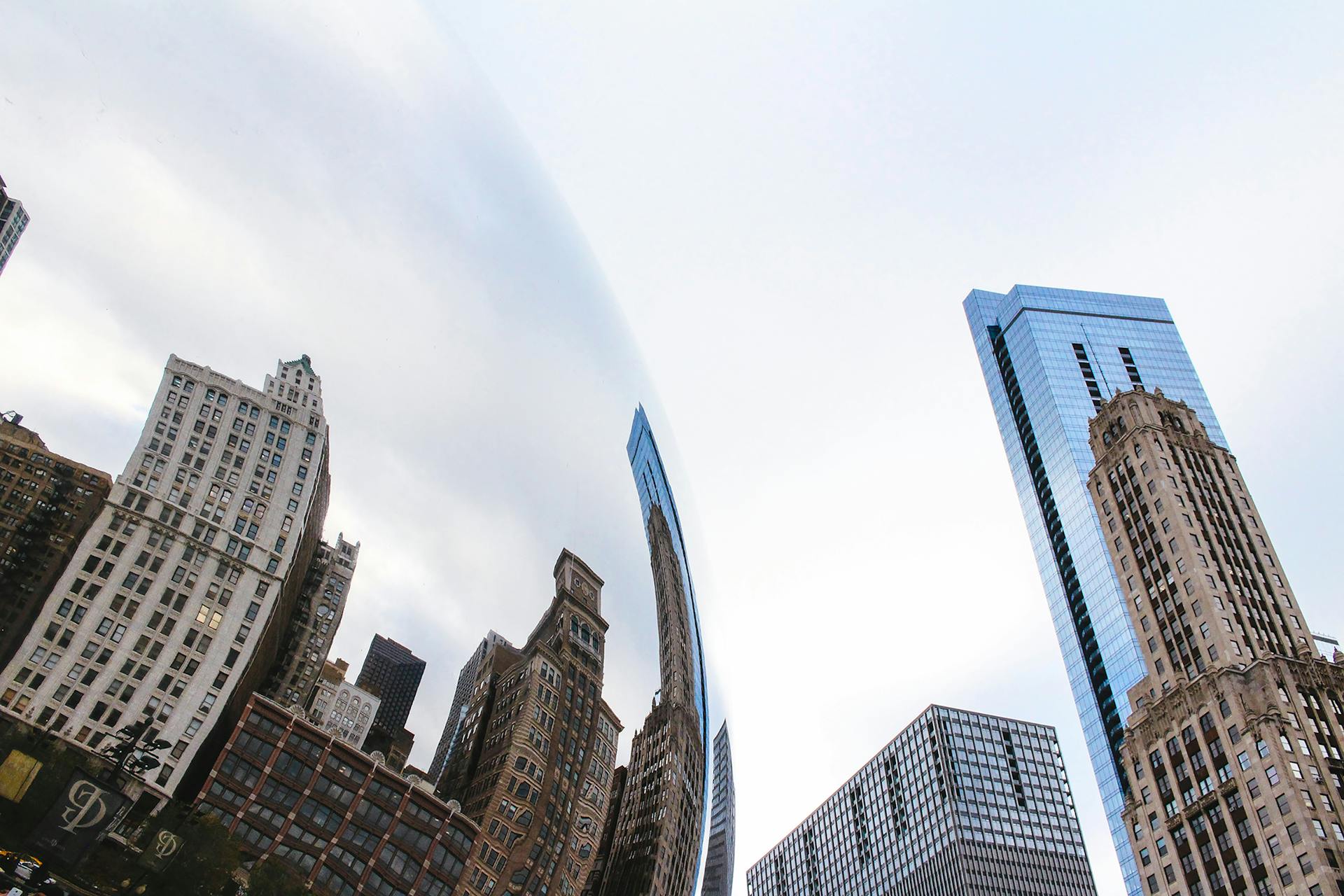
The city’s beloved free front lawn, opened in 2004 on former railyards at the top of Grant Park. Its centrepiece is Anish Kapoor’s Cloud Gate — universally called “The Bean” — a 110-tonne mirror-polished stainless-steel sculpture that warps the skyline and the crowds into its surface, and the single most photographed object in Chicago. Around it sit Frank Gehry’s swooping Jay Pritzker Pavilion (free summer concerts), the Crown Fountain’s video-portrait towers that double as a splash pad in summer, and the Lurie Garden. It is all free and open daily, and it connects by footbridge to the Art Institute and the lakefront .
The Field Museum & the Museum Campus
The lakefront Museum Campus clusters three giants a short walk apart, just south of the Loop. The Field Museum of Natural History is the headliner, home to “Sue,” the largest and most complete Tyrannosaurus rex skeleton ever found, alongside vast anthropology and Egyptian halls; general adult admission runs around $30 . Next door, the Shedd Aquarium and the Adler Planetarium (which offers the definitive postcard view back at the skyline) complete the campus. A combined CityPASS pays off if you plan to visit several.
The Museum of Science and Industry
Housed in the last surviving building of the 1893 World’s Columbian Exposition in Hyde Park, this is one of the largest science museums in the Western Hemisphere, with a captured German U-505 submarine, a working coal mine, and a giant model railway among its headline exhibits. General adult admission is around $26; it rewards a half-day and is an easy pairing with the rest of Hyde Park .
The Architecture of the Loop & the River Cruise
Chicago is, more than anywhere, the birthplace of the modern skyscraper, rebuilt vertically after the 1871 fire by the architects of the first “Chicago School.” The single best way to understand it is from the water: the Chicago Architecture Center’s river cruise aboard the First Lady is a 90-minute guided tour past more than 50 landmark buildings, widely considered the city’s best activity, with adult tickets from around $46 . On land, the Willis Tower (formerly the Sears Tower) Skydeck offers the glass-floored “Ledge” 412 metres up, and the 360 Chicago observation deck atop the former John Hancock Center tilts you out over Michigan Avenue.
Navy Pier & the Lakefront
The 1916 Navy Pier juts more than half a mile into Lake Michigan and is the city’s most-visited attraction — a lively, family-friendly mix of a 60-metre Centennial Wheel, boat cruises, gardens, and the Chicago Children’s Museum. It is free to walk; rides and attractions are individually priced. Beyond it, the 26-mile lakefront trail and its string of free public beaches are the city’s great democratic space, busy with runners, cyclists, and swimmers all summer . Locals have a slightly ambivalent relationship with the Pier — many consider it a tourist trap — but it is genuinely worth a visit for the lake views, the summer fireworks (Wednesdays and Saturdays in season), and as the departure point for many of the lake and architecture cruises. Treat it as one stop on a lakefront day rather than a destination in itself, pairing it with a walk south along the trail to Millennium Park or north to the Gold Coast beaches.
Entertainment

Chicago’s nightlife and entertainment punch far above the city’s reputation, and they are rooted in genuine cultural history rather than spectacle. This is the birthplace of electric blues and house music, the city that produced modern improv comedy and a Tony-winning theatre district, and a sports town with a near-religious devotion to its teams. The trick, as ever, is to cluster your nights by area — blues on the South and West Sides or in River North, comedy in Old Town and Lincoln Park, theatre in the Loop, sport at the historic ballparks — and to book the marquee acts ahead, because the best nights sell out.
Blues & Live Music
No city’s music scene is more foundational to American culture than Chicago’s. This is where the Mississippi Delta blues went electric in the post-war years — the “Chicago blues” sound of Muddy Waters, Howlin’ Wolf, and Chess Records — and where, decades later, the South Side gave birth to house music. You can still hear live blues most nights at clubs like Buddy Guy’s Legends in the South Loop, Kingston Mines and B.L.U.E.S. in Lincoln Park, and the Rosa’s Lounge on the West Side, with covers typically $10–$25. The city’s summer also brings the free Chicago Blues Festival, the largest of its kind in the world, to Millennium Park . Catching a set in an intimate club is one of the most authentic Chicago evenings going.
Comedy & Improv
Chicago invented modern improvisational comedy, and it remains the discipline’s global capital. The Second City in Old Town — the legendary troupe that launched the careers of John Belushi, Bill Murray, Tina Fey, Stephen Colbert, and generations of others — runs nightly shows, as do iO Theater and the Annoyance, and a ticket gives you a real chance of watching tomorrow’s stars workshop their material. Tickets run roughly $25–$50, and reservations are strongly advised. For many visitors, a night at Second City ends up being the most quintessentially Chicago thing they do.
Pro Sports
Chicago is one of the great sports cities, and catching a game is one of the most enjoyable ways to spend an afternoon or evening. The Cubs (MLB) play at the ivy-walled 1914 Wrigley Field on the north side — a day game there is a bucket-list experience in itself — while the White Sox (MLB) play on the South Side; the Bulls (NBA) and Blackhawks (NHL) share the United Center on the West Side; and the Bears (NFL) play at the lakefront Soldier Field. Tickets span an enormous range, from $20 bleacher seats at a weekday Cubs game to several hundred for a marquee playoff night, and a summer afternoon at Wrigley with an Old Style beer in hand is about as classic a Chicago experience as exists .
Theatre & the Performing Arts
Chicago’s theatre scene is among the most respected in the country, anchored by the Tony Award-winning Steppenwolf Theatre Company, the Goodman Theatre, and the touring Broadway houses of the Loop’s revitalised theatre district along State and Randolph. The Lyric Opera and the Chicago Symphony Orchestra, one of the world’s great orchestras under its conductors at Symphony Center, complete a deep classical scene. Tickets range widely; same-day and rush options keep it accessible.
Rooftop Bars & Nightlife
River North, the West Loop, and the Fulton Market district hold the city’s rooftop and cocktail scene, with skyline-and-river views from bars atop the neighbourhood’s hotels and warehouses; cocktails run $14–$20, and many require a reservation on weekends. For a grittier night, the dive bars and music venues of Wicker Park and Logan Square stay lively and cheap well past midnight.
Festivals
Chicago is a city of summer festivals, and timing a trip around one transforms it. The free lakefront and park festivals — the Blues Festival, the Jazz Festival, and the enormous Taste of Chicago food festival in Grant Park — are city institutions, while the ticketed Lollapalooza music festival draws hundreds of thousands to Grant Park each August. The city also throws itself into neighbourhood street fests most summer weekends, dyes the river green for St Patrick’s Day, and lights up the lakefront for the August Air and Water Show .
Day Trips

Chicago’s flat, central position makes it a superb base for day trips, and the variety within a couple of hours is genuinely surprising — beaches and dunes on the lake, architectural pilgrimages in the leafy suburbs, and even another state or two within reach. Having a car helps for the further trips, but several of the best are doable by Metra commuter rail or the South Shore Line. The golden rule is to head out in the morning and time your return to dodge the suburban rush-hour traffic on the expressways. Below are the five that consistently reward the effort, ordered roughly from the easiest car-free escape to the ones where a rental earns its keep. One general tip: Chicago’s regional transit is genuinely good, so before you commit to a rental car, check whether your chosen day trip is reachable by train — the difference in cost and stress is significant, and it spares you the city’s notorious parking and expressway congestion entirely.
Oak Park (about 25 minutes by Green Line ‘L’)
The leafy western suburb where Frank Lloyd Wright lived and worked for two decades, leaving behind the world’s largest concentration of his Prairie School buildings — 25 of them within walking distance, including his own Home and Studio and the masterful Unity Temple, a UNESCO World Heritage Site . It is also the birthplace of Ernest Hemingway. Reachable directly on the Green Line, it is the easiest car-free day trip from the city and an essential one for anyone interested in architecture.
Indiana Dunes National Park (about 1 hour by car or South Shore Line)
Just across the state line in Indiana, this national park protects 15 miles of Lake Michigan shoreline backed by towering sand dunes, beaches, and surprisingly diverse wildlife habitats. Entry is around $25 per vehicle, and the South Shore Line commuter train from downtown Chicago stops nearby, making it a rare car-free escape to a genuine beach-and-dune landscape . Climb Mount Baldy or Mount Tom for the view back across the water to the distant Chicago skyline.
Milwaukee, Wisconsin (about 1.5 hours by car or Amtrak)
Wisconsin’s largest city makes an easy day or overnight trip, reachable in about 90 minutes by car or on the frequent Amtrak Hiawatha service from Union Station . The draws are the spectacular Santiago Calatrava-designed Milwaukee Art Museum on the lakefront with its winged “brise soleil,” a deep brewing heritage and brewery tours, and the Historic Third Ward’s restaurants and markets — a relaxed, walkable counterpoint to Chicago’s intensity.
Starved Rock State Park (about 1.5 hours by car)
Illinois’s most popular state park sits along the Illinois River southwest of the city, famous for 18 wooded canyons carved into the sandstone, with waterfalls that run hardest in spring and freeze into dramatic ice falls in winter . It is a car trip, and the hiking is the whole point — a genuine taste of the natural Midwest within easy reach of the city. Go early on weekends, when the trails and the limited parking fill quickly.
The North Shore & the Bahá’í Temple (about 45 minutes by car or Metra)
The wealthy lakefront suburbs north of the city — Evanston, home to Northwestern University, and the string of towns up to Wilmette — make a gentle, scenic day trip on the Metra Union Pacific North line . The highlight is the Bahá’í House of Worship in Wilmette, a luminous white nine-sided temple completed in 1953 and the oldest surviving Bahá’í temple in the world, free to visit and set in formal gardens, with Evanston’s lakefront beaches and downtown rounding out the day.
Seasonal Guide
Chicago has a true four-season continental climate, and the seasons shape a visit more sharply than in milder cities — the difference between a humid July afternoon on the beach and a January morning with a sub-zero wind off the lake is dramatic. The single most useful thing to understand is the lake’s influence: Lake Michigan moderates the temperature near the shore and drives the bitter “lake-effect” cold and snow of deep winter, while the famous “Windy City” winds whip hardest through the downtown canyons in the colder months .
Spring (March – May)
A swingy, unpredictable season that warms from chilly, wet March into a glorious May, with daytime highs climbing from around 7°C to 20°C as the parks green up and the patios reopen . Late spring is one of the best windows to visit — the weather is pleasant, the crowds are thinner than summer, and the river is dyed green for the mid-March St Patrick’s Day celebrations. Pack layers and a waterproof; the lake keeps spring mornings cool.
Summer (June – August)
Peak season, and for good reason — daytime highs sit around 28–30°C, the lakefront beaches and festivals are in full swing, and the whole city moves outdoors . This is the season of Lollapalooza, the Blues and Jazz festivals, Taste of Chicago, and Cubs and White Sox baseball, so book accommodation well ahead and budget for higher hotel rates. The trade-offs are genuine humidity and occasional dramatic thunderstorms, but a Chicago summer is the city at its absolute best.
Autumn (September – October)
Arguably the finest travel season of all — September and October deliver warm, clear, low-humidity days with highs of 18–24°C, thinning summer crowds, and the parks and the North Shore turning gold and red . The festival calendar continues into early autumn, hotel rates ease off the summer peak, and the light on the skyline and lake is at its sharpest. It is the locals’ quiet favourite, and the easiest season to recommend without caveats.
Winter (November – February)
Genuinely cold and not for the faint-hearted — daytime highs hover around freezing and can plunge well below it during Arctic and lake-effect outbreaks, with the wind off the lake making it feel far colder still . But winter has its rewards: the lowest hotel rates of the year, festive lights along the Magnificent Mile, ice skating in Millennium Park and Maggie Daley Park, and the museums and blues clubs at their cosiest. Come prepared with a serious coat, hat, and gloves, plan indoor anchors for each day, and the city is yours with the crowds gone.
Getting Around
The ‘L’ (Elevated Train)
Chicago’s rapid-transit system, universally called the ‘L’ (short for “elevated”), is the backbone of getting around and one of the great pleasures of a visit — riding the wooden-decked tracks through the Loop’s canyon of skyscrapers is an experience in itself. Eight colour-coded lines fan out from the downtown loop to the neighbourhoods and both airports, running frequently and, on the Red and Blue Lines, 24 hours a day. A single ride costs $2.50 (a flat fare regardless of distance), with reduced-price transfers, and you pay with the contactless Ventra system . It is cheap, reliable, and far faster than driving across the city.
Buses & Metra Commuter Rail
The CTA also runs an extensive bus network that fills the gaps the ‘L’ misses, especially across the grid where the trains run radially — a single bus ride is $2.25 on Ventra. For the suburbs and several in-city neighbourhoods (notably Hyde Park, via the Metra Electric line), the separate Metra commuter-rail network reaches far across the metropolitan area from downtown’s terminals, and the South Shore Line runs into Indiana . A new Regional Day Pass introduced in 2025 covers CTA, Metra, and Pace buses for a single day, simplifying multi-system trips .
Ventra Cards & Prepaid Transit
The Ventra system is the single piece of kit worth understanding. You can buy a reusable Ventra card from machines at every ‘L’ station and load it with value or a pass, but the easiest option for visitors is simply to tap a contactless bank card or phone directly at the turnstile, which charges the same fares automatically. For unlimited riding, CTA day passes are excellent value: a 1-day pass is around $5, a 3-day pass $15, and a 7-day pass $20, all of which pay for themselves quickly and remove any worry about individual fares . Buy a multi-day pass at the airport machines on arrival if you plan to lean on transit.
Airport Access
- O’Hare (ORD) to downtown — CTA Blue Line, 45 min, $5 (special airport fare)
- Midway (MDW) to downtown — CTA Orange Line, 25–30 min, $2.50
Taxis & Rideshare
Licensed taxis are plentiful downtown and can be flagged on the street, with a flag-fall around $3.25 plus mileage; Uber and Lyft also operate citywide and are how many visitors cover the gaps that transit misses, with a typical downtown-to-neighbourhood ride running $12–$25 depending on surge pricing. The one place transit clearly wins is the airport run: the Blue Line from O’Hare beats a $45–$60 taxi in both cost and, often, time during rush hour, since it bypasses the notorious Kennedy Expressway congestion entirely.
Walking, Cycling & the Grid
Downtown Chicago is genuinely walkable, and the city’s near-perfect grid — numbered and named streets radiating from the State and Madison zero point, with the lake as a constant eastern reference — makes it almost impossible to get lost. For longer distances, the Divvy bike-share system has docks across the city and is superb for the flat 18-mile lakefront trail, one of the best urban rides in America; day passes are inexpensive .
Navigation Tips
Two apps cover almost everything: the Ventra app handles fares, passes, and real-time ‘L’ and bus arrivals, while Google Maps and the Transit app both give excellent coverage of the combined CTA, Metra, and Pace networks plus walking and cycling directions. The cardinal rule for a car-free trip is to check whether your destination is on the ‘L’ or needs a bus or Metra connection before you set out — the radial ‘L’ is fast downtown-to-neighbourhood but the buses are essential for cross-grid trips.
Budget Breakdown: Making Your Dollars Count
| Tier | Daily | Sleep | Eat | Transport | Activities | Extras |
|---|---|---|---|---|---|---|
| Budget | $90–$140 (~£72–£112) | Hostel dorm $40–$65 | Hot dog $5, Italian beef $9, food-hall lunch $14 | CTA day pass $5 | Millennium Park free, museum free days | Coffee $5 |
| Mid-Range | $190–$320 (~£152–£256) | 3-star hotel $150–$240 | Sit-down dinner $30–$55 | CTA pass + occasional rideshare $15 | Art Institute $32, river cruise $46 | Cocktails $14–$20 |
| Luxury | $550+ (~£440+) | 4–5-star $350+ (Mag Mile $500+) | Tasting menu $150–$295 | Private transfer $90, Uber Black | Cubs premium seats $150, Skydeck VIP | Spa / lounge $150–$300 |
Where Your Money Goes
Accommodation is the big lever in Chicago, and where you base decides whether the city feels expensive or surprisingly affordable. Hotel rates swing hard by district and season — a 3-star on the Magnificent Mile or in River North runs well above an equivalent room in the West Loop, Wicker Park, or near a neighbourhood ‘L’ stop, and summer and convention weeks can double rates citywide — so timing and neighbourhood are the biggest cost decisions you will make. Food, by contrast, is a genuine bargain: while the tasting-menu scene climbs into the hundreds, the city’s defining meals are hot dogs, Italian beef, tacos, and food-hall plates that rarely top $15, so you can eat extraordinarily well on very little. And a remarkable share of the marquee experiences are free or cheap — Millennium Park and Cloud Gate, the lakefront and its beaches, Lincoln Park Zoo, the museum free days for Illinois residents, and the summer festivals all cost nothing.
The hidden cost that catches first-timers is the car. Downtown hotel parking runs $40–$70 a night before you have driven anywhere, and with the ‘L’ reaching both airports and almost every neighbourhood, a rental is dead weight for a city-only trip. Skip it, lean on transit and rideshare, and that single decision can be the difference between the budget and mid-range columns above.
Money-Saving Tips
None of these requires sacrificing what makes Chicago worth visiting — the food, the lakefront, the architecture, and the music are largely cheap or free already. The savings come from where you sleep, how you move, and timing your visit:
- Skip the rental car — the ‘L’ reaches both airports and a CTA day pass is $5
- Eat the icons — a hot dog or Italian beef rarely tops $10, and they are the real local food
- Lean on the free sights — Millennium Park, the lakefront, Lincoln Park Zoo, and museum free days
- Buy a multi-day CTA pass instead of single $2.50 rides once you take three trips
- Visit in late spring or autumn, when hotel rates drop well below the summer peak
Practical Tips
Language
English is the working language and there is no barrier for tourists in any visitor-facing situation. Chicago is a deeply multilingual city, though — Spanish is near-universal on the South and West Sides, and the city’s Polish heritage is one of the largest of any city outside Poland — but every hotel, restaurant, museum, and transit system operates fully in English. A few words of Spanish are warmly received in Pilsen and Little Village.
Cash vs. Cards
Cards and mobile wallets (Apple Pay, Google Pay) are accepted nearly everywhere — hotels, restaurants, shops, Ventra fare gates, and rideshare — and contactless is the norm. The reliable exceptions are some hot-dog stands, taco trucks, and small neighbourhood spots, which can be cash-only. Carry $30–$50 in small bills for those, plus a little extra for cash tips.
Safety
Chicago is generally safe for tourists in the downtown, lakefront, and north-side neighbourhoods they actually visit, provided you take normal big-city precautions. The city’s violent-crime reputation is real but heavily concentrated in specific South and West Side areas well away from the tourist map, and rarely affects visitors. Take the usual sense: stay aware on the ‘L’ late at night, keep your phone pocketed in crowds, do not leave valuables visible in a parked car, and stick to well-trafficked areas after dark. The all-purpose emergency number is 911 .
What to Wear
Dress for the season, which in Chicago means dressing for extremes — a serious winter coat, hat, and gloves from December to February, and light, breathable clothing for the humid summer. Layers are essential year-round because of the lake breeze and big day-to-night temperature swings. The city is dressed-down and casual; only the highest-end restaurants expect smart attire. Comfortable walking shoes earn their place everywhere.
Cultural Etiquette
Tipping is not optional in the US and is more significant than most overseas visitors expect, because service-worker base wages assume it: budget 18–22% at sit-down restaurants, $1–$2 per drink at a bar, 15–20% for rideshare and taxi drivers, and a few dollars per night for hotel housekeeping. Chicagoans are famously friendly and direct — casual small talk with strangers and servers is normal and not intrusive — and fiercely proud of their city and their sports teams, so a kind word about the lakefront or a Cubs game goes a long way. And do not put ketchup on your hot dog.
Connectivity
4G/5G coverage is excellent across the city, with reliable signal everywhere a visitor will go. Visitors from abroad can buy a US prepaid SIM (T-Mobile, AT&T, Mint) at the airport or phone shops, but the easiest option is an eSIM from Airalo or Holafly starting around $9, set up before you fly and activating on landing . Free Wi-Fi is widespread in cafés, hotels, museums, and throughout both airports, and the ‘L’ has growing connectivity, so you are rarely offline for long.
Health & Medications
The US has no national health service and medical care is expensive — travel insurance with medical coverage is essential. Pharmacies (CVS, Walgreens) are everywhere and many run 24 hours; common medications are sold over the counter. Tap water, drawn and treated from Lake Michigan, is safe and drinkable citywide .
Luggage & Storage
Both airports and Union Station have luggage options, and the Bounce and Radical Storage networks place drop points at shops and hotels across downtown from $6–$10 per bag per day. Most hotels will hold bags on check-out day for free, which is worth using to squeeze a final lakefront walk or museum visit into a late-departure day before heading to O’Hare or Midway.
Tipping & Local Customs
Beyond restaurant tipping, a few small customs smooth a visit: hold doors and offer your seat on a crowded ‘L’, stand on the right of escalators so commuters can pass on the left, and do not be alarmed by the city’s friendly, talkative strangers — small talk is a genuine part of the culture here, not an intrusion.
Frequently Asked Questions
How many days do I need in Chicago?
Three full days is the honest minimum for a first visit — one for the Loop, Millennium Park, and the Art Institute; one for a river architecture cruise, the Magnificent Mile, and the lakefront; and one for a neighbourhood like Pilsen or Wicker Park plus a museum. Four or five days lets you add Hyde Park and the Museum of Science and Industry, a Cubs game, a blues night, or a day trip to Oak Park or the Indiana Dunes without rushing.
Is Chicago good for solo travellers?
Yes, very much so. The compact, grid-based downtown and the excellent ‘L’ make solo logistics easy without a car, the city is friendly and walkable, and counter-service food halls and bars make solo dining completely normal. The main caveats are the usual big-city awareness on the ‘L’ after dark and steering clear of the specific South and West Side areas well off the tourist map. Hostels cluster downtown and in Wicker Park, and the lakefront path, the riverwalk, and the major museums are all comfortable to explore on your own during daylight hours, while the city’s busy bar and live-music scene makes striking up a conversation easy for travellers happy to chat with strangers .
Do I need a car, or can I use the ‘L’?
For a city-only trip you do not need a car, and you are better off without one. The ‘L’ reaches both airports and almost every neighbourhood, runs 24 hours on the Red and Blue Lines, and costs $2.50 a ride or $5 a day, while downtown parking runs $40–$70 a night and the expressways are congested . The ‘L’ plus the occasional rideshare and the Divvy bikes covers any city itinerary. Rent a car only if you plan several further-flung day trips like Starved Rock; even then, several day trips are reachable by Metra, the South Shore Line, or Amtrak.
What about the language barrier?
There is essentially none for tourists — English is universal in every visitor-facing situation, from hotels and restaurants to museums, transit, and rideshare. Chicago is a richly multilingual city, so you will also hear Spanish, Polish, and many other languages depending on the neighbourhood, and areas like Pilsen are visibly bilingual, but none of it creates any barrier for an English-speaking visitor. If anything, the local accent and slang are the only adjustment — Chicagoans have a distinctive flat “a,” call the expressways by name rather than number, and refer to the whole transit system as “the ‘L'” — and a few of those quirks are part of the fun of visiting rather than anything to worry about.
When is the best time to visit Chicago?
Late spring (May to June) and early autumn (September to October) are the peak-quality windows — warm, pleasant days, the festival calendar in swing, and crowds and hotel rates below the summer peak. Summer is the city at its liveliest but also its hottest, most humid, and most expensive, with the marquee festivals like Lollapalooza and Taste of Chicago drawing huge crowds and pushing hotel rates to their annual high. Winter is genuinely cold and not for everyone — January and February can be brutal — but it brings the lowest rates of the year and a cosy, festive city, with holiday lights along the Magnificent Mile, ice skating in Millennium Park, and the museums and blues clubs at their atmospheric best with the crowds gone . The shoulder seasons are the sweet spot for most visitors: good weather, manageable crowds, and the full run of restaurants, cruises, and rooftop bars still open.
Can I use credit cards everywhere?
Almost everywhere. Cards and mobile wallets work at hotels, restaurants, shops, Ventra fare gates, and in every rideshare, and contactless is the norm — you can even tap a bank card straight at the ‘L’ turnstile. The reliable exceptions are some hot-dog stands, taco trucks, and small neighbourhood spots, which are occasionally cash-only and happen to serve some of the city’s best food. Carry $30–$50 in small bills to cover them, plus a little for cash tips.
Is deep-dish pizza really the best Chicago food?
It is the most famous, but locals will tell you it is a special-occasion dish they eat far less often than visitors assume — and that the everyday Chicago pizza is actually the thin, square-cut “tavern style.” The city’s true everyday icons are the Italian beef sandwich and the Chicago-style hot dog, and its best meals are as likely to come from a Pilsen taqueria or a West Loop tasting menu as from a deep-dish pan. Try the deep dish once as a sit-down meal, then eat the way Chicagoans actually do for the rest of your trip .
Ready to Experience Chicago?
Chicago rewards the traveller who gives it time — a morning architecture cruise on the river, an afternoon along the lakefront, a deep dish split with friends, a blues set in an intimate club. Ride the ‘L’, explore a neighbourhood or two beyond the Loop, and the most underrated big city in America reveals itself fast. For the full national context and a route that pairs Chicago with the wider American trip, read the United States Travel Guide.
Explore More City Guides
- New York City Guide — the East Coast counterweight
- Los Angeles City Guide — the West Coast counterpart
- San Francisco City Guide — the Pacific tech-and-bay capital
- United States Country Guide
- All City Guides
Alex the Travel Guru
Alex has spent the better part of two decades turning a battered notebook and a tolerance for long walks into the FFU city guide archive. In Chicago specifically, he has taken the architecture cruise more times than he can count, argued the deep-dish-versus-tavern-cut question in half the pizzerias in the city, frozen on a January lakefront and roasted at a July Cubs game, and learned that the ‘L’ beats a cab from O’Hare every single time. He writes these guides to answer the questions he needed answered the first time — where to base, what to skip, where Chicagoans actually eat, and why this is the most underrated big city in America.
More city guides you might like
Plan your trip to Chicago
The booking tools we use ourselves. FFU may earn a commission at no extra cost to you.
Plan & book your trip to Chicago
Booking through these searches supports our guides at no extra cost to you.