
City Guide · Central Slovenia · The Ljubljanica & the Julian Alps
Ljubljana, Slovenia: Europe’s Greenest Capital — the Car-Free Old Town, Pléčnik’s Bridges & the Gateway to Lake Bled
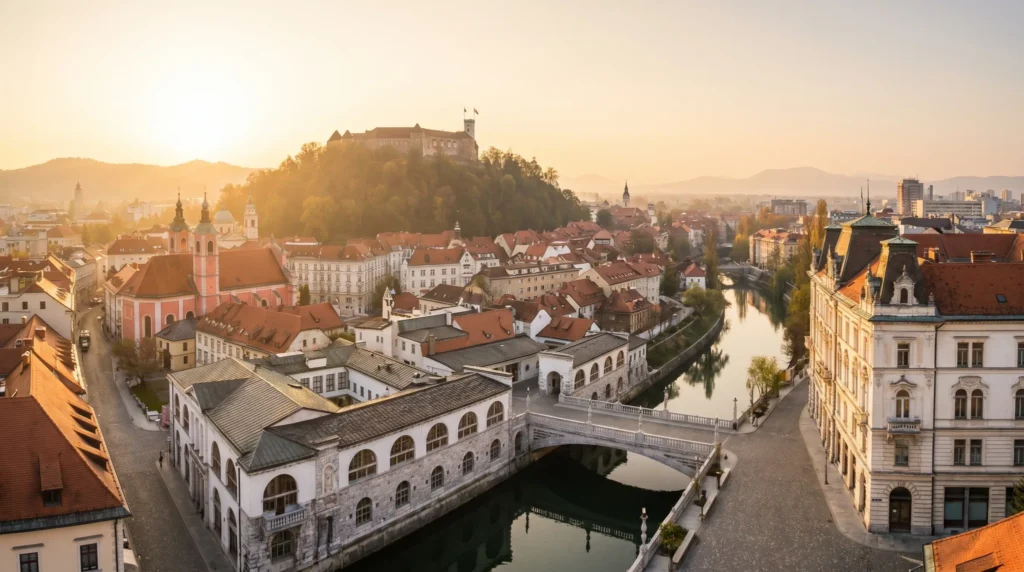
I came to Ljubljana expecting a stopover and stayed four days, which is what happens to most people who arrive thinking the Slovenian capital is just the bus change on the way to Lake Bled. The whole centre is car-free — motor traffic was banished from the old town in 2007 and 2008 — so what you actually walk into is a riverside city of barely 301,000 people where the Ljubljanica curls under a clutch of bridges designed by one obsessive genius, Jože Pléčnik, whose century-old human-scaled urbanism earned the city a UNESCO World Heritage listing in 2021. Above it all a medieval castle sits on a wooded hill; below it a daily market, café terraces, and the alternative-culture sprawl of Metelkova fill the evenings. Ljubljana was named European Green Capital in 2016, the first capital to formally aim for zero waste. And it is the perfect base: Lake Bled, Postojna Cave, Predjama Castle and Triglav National Park are all easy day trips. Treat this guide as the brief I would hand my own family before they flew into LJU — and read it alongside our Slovenia country guide for the wider frame.

Table of Contents
Why Ljubljana?
Ljubljana is the rare European capital that feels like a town and behaves like a capital. With roughly 301,000 residents in the city proper it is one of the smallest capitals in the EU, and yet it carries a full deck of capital-city assets — a national university, an opera house, a parliament, a thriving café and festival culture — in a centre you can cross on foot in twenty minutes. The single decision that defines the place is the closure of the old town to cars: between 2007 and 2008 the city pedestrianised the historic core, banishing traffic from the riverbanks and squares, so what fills the streets now is people, bicycles, the electric Kavalir buggies that ferry the less mobile, and the terraces that spill onto the Ljubljanica embankments.
The city wears two identities at once. It is a Pléčnik masterpiece — the early-twentieth-century architect Jože Pléčnik reshaped his home city into a coherent human-scaled whole, from the Triple Bridge and the willow-lined embankments to the Central Market colonnade and the National and University Library, a body of work inscribed on the UNESCO World Heritage List in 2021 as “The works of Jože Pléčnik in Ljubljana — Human Centred Urban Design.” And it is a green capital — the European Commission named Ljubljana European Green Capital for 2016, recognising its car-free centre, its protected water supply and its push toward zero waste. Tivoli Park, the green lung at the edge of the centre, runs straight into the wooded hills.
What guidebooks under-rate is the position. Ljubljana sits in the dead centre of Slovenia, a small country that packs Alps, karst caves and an Adriatic coast into an area smaller than New Jersey, and the capital is the natural hub for all of it. Lake Bled is under an hour away, Postojna Cave and Predjama Castle about the same, and the peaks of Triglav National Park rise within a short drive. This guide covers all three of Ljubljana’s signatures: the car-free old town and Ljubljanica, Pléčnik’s bridges and the castle, and the Alpine and karst day trips that make the city the best base in the country.

Neighborhoods: Finding Your Ljubljana
📍 Ljubljana Map: Every Place in This Guide
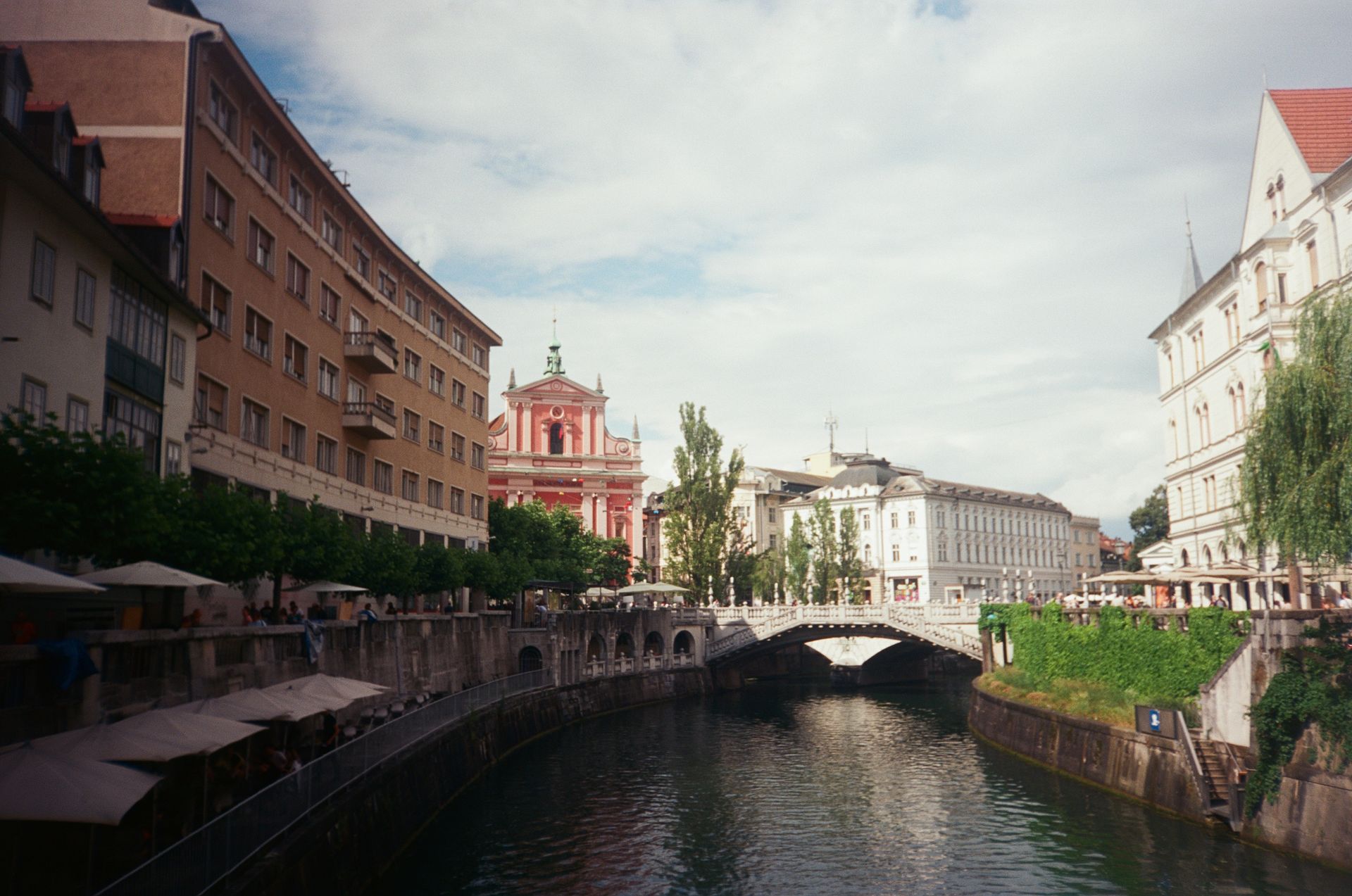
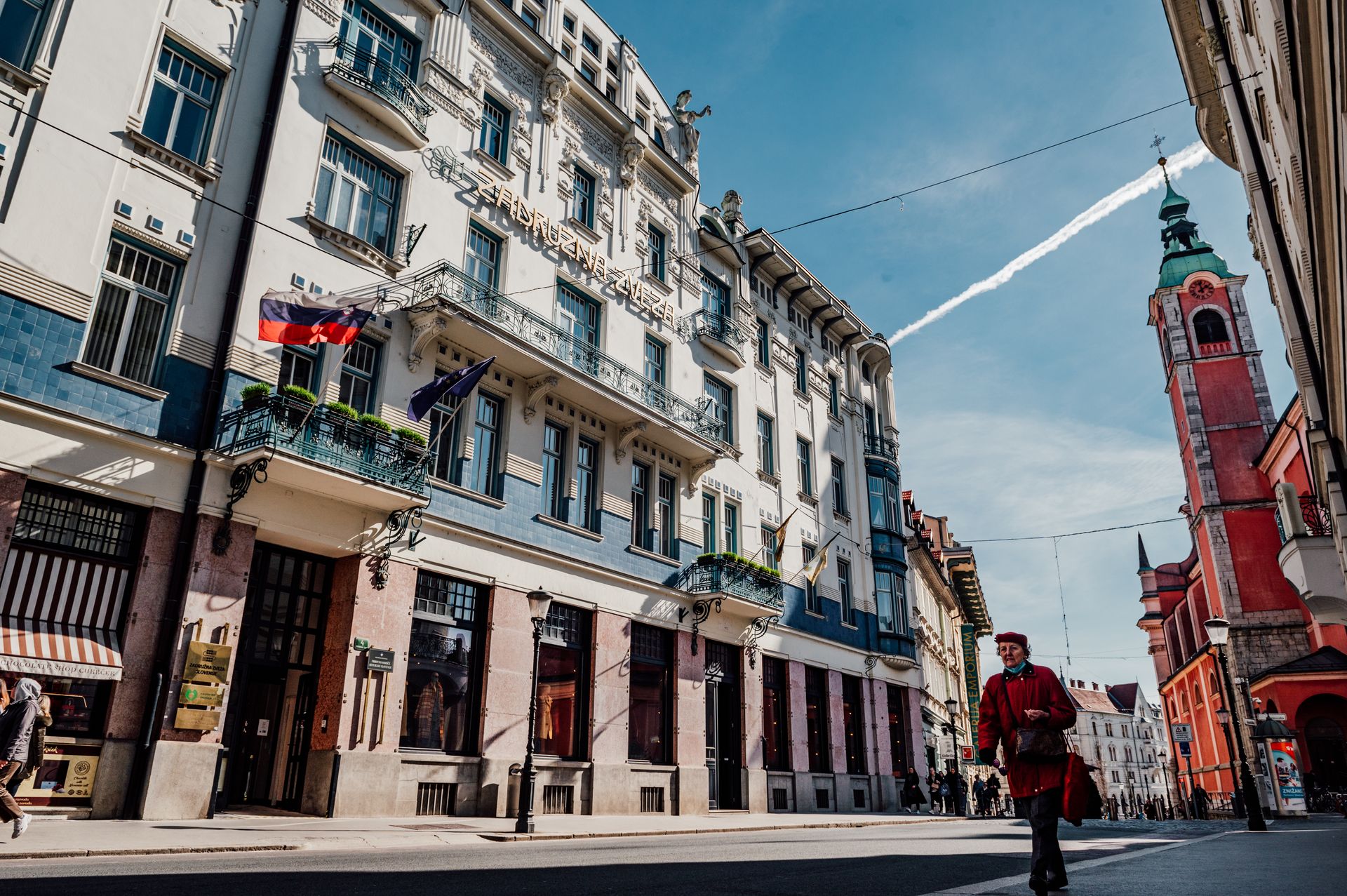
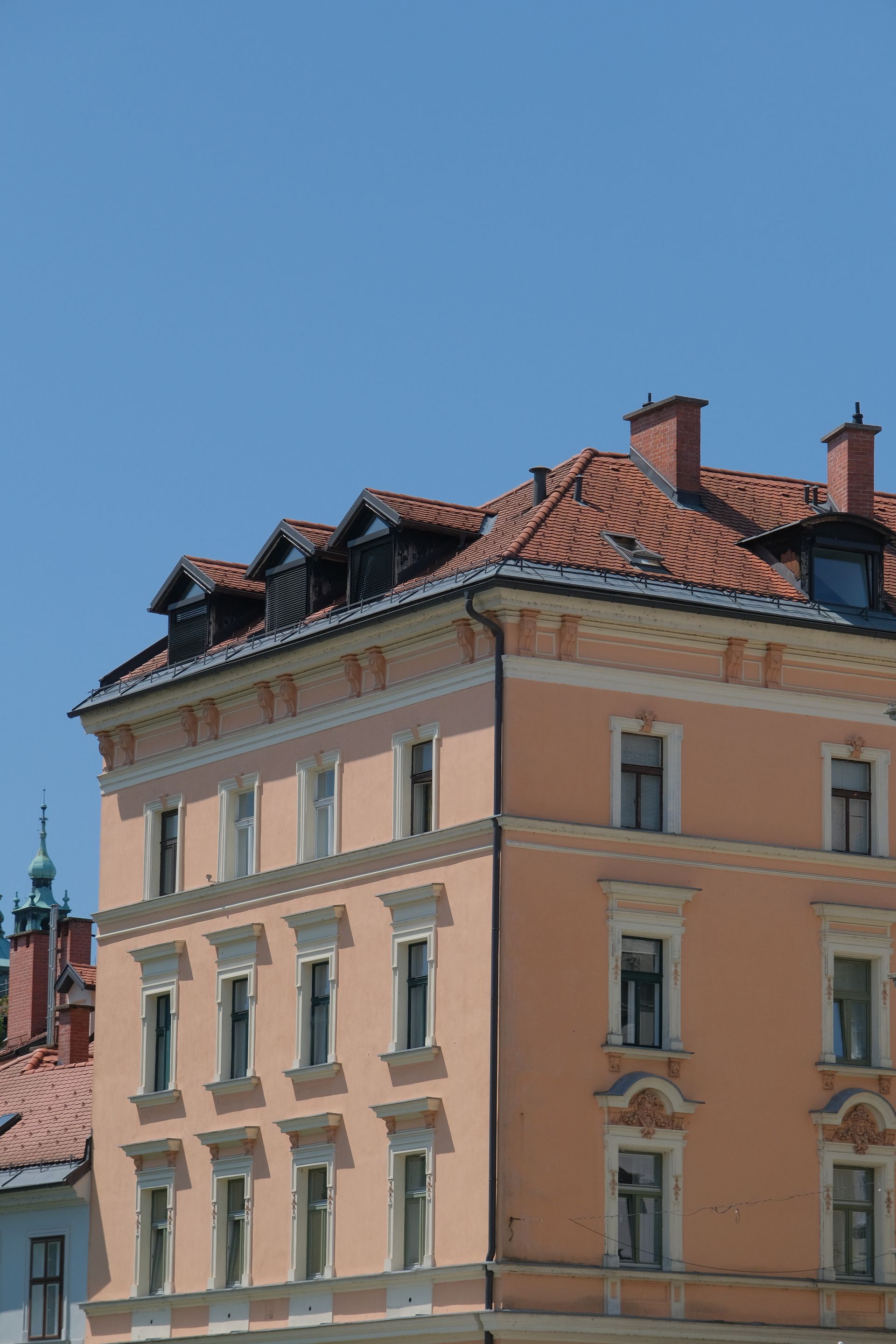
Ljubljana is small enough that its “neighborhoods” are really a set of compact, walkable quarters strung along the Ljubljanica and around the castle hill, and orienting by them is the single most useful thing a first-time visitor can do. The river is the spine: the car-free old town hugs its right bank under the castle, the nineteenth-century city and Prešeren Square sit on the left, and the green belt of Tivoli, the student energy of Metelkova and the leafy suburbs ripple outward from there. The practical upshot for where to base yourself: the old town and the Center district put you within a few minutes of everything and are the right call for most first-timers; the area around the train and bus stations is the budget and early-departure choice; and the quieter residential pockets like Tabor and Trnovo trade a little convenience for local character. Wherever you sleep, the centre is so compact you will walk almost everywhere — the eight quarters below run roughly from the river outward.
The Old Town (Stari trg, Mestni trg, Gornji trg)
The medieval core curls along the right bank of the Ljubljanica beneath the castle hill, a single curving thread of cobbled squares — Mestni trg, Stari trg and Gornji trg — lined with Baroque facades, the Robba Fountain and the Town Hall. This is the car-free heart of the city, closed to traffic since 2007–2008, and it is where the café terraces, craft shops and best restaurants cluster. It is the obvious place to base for a first visit: you can walk out of your door straight onto the riverbank.
The street is essentially one continuous, gently curving lane that changes name three times as it climbs — Mestni trg by the Town Hall, then Stari trg, then Gornji trg as it narrows toward the upper old town — and walking its full length takes barely fifteen minutes, past the Robba Fountain of the Three Carniolan Rivers and a parade of Baroque townhouses rebuilt after the great earthquake of 1895. Because cars were removed, the lane belongs entirely to pedestrians, café tables and the occasional electric Kavalir buggy, and the upper, quieter end around Gornji trg holds some of the city’s most characterful small restaurants and antique shops. Staying here means trading a little nighttime quiet — the terraces can run late in summer — for the unbeatable convenience of having the river, the castle funicular, the market and Prešeren Square all within a few minutes’ flat walk.
- Mestni trg with the Town Hall and Robba Fountain
- The cobbled climb of Stari trg and Gornji trg
- The funicular up to Ljubljana Castle
Best for: first-timers who want everything on the doorstep. Access: entirely pedestrian; the castle funicular departs from Krek Square.
Center & Prešeren Square (Left Bank)
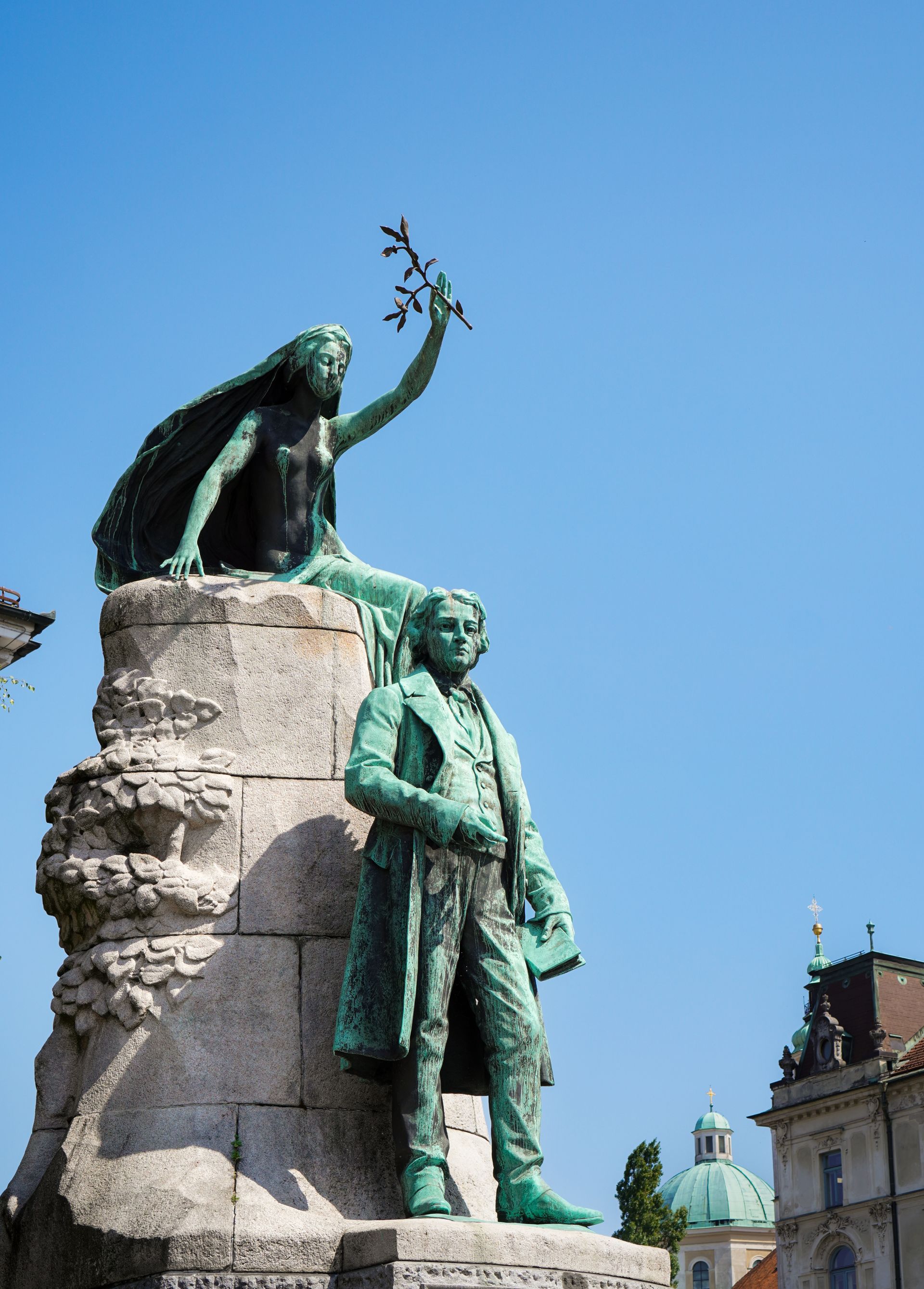
Across the Triple Bridge from the old town lies the nineteenth-century city, anchored by Prešeren Square — the social heart of Ljubljana, dominated by the pink Franciscan Church of the Annunciation and the monument to the national poet France Prešeren. The grand shopping streets of Čopova and Slovenska radiate from here, along with the Art-Nouveau facades the city rebuilt after the 1895 earthquake. It is the busiest, most convenient quarter, full of mid-range hotels, and the natural place to start any walking tour.
This is the Ljubljana that grew up after the 1895 earthquake levelled much of the old town, and it shows in the elegant Secessionist and Art-Nouveau facades along Miklošič Park and the Prešeren-era boulevards. The square itself is the city’s living room: buskers, meeting friends “under Prešeren,” the Christmas-market centrepiece in December, and the spot where every festival procession converges. From here the pedestrian streets of Čopova and Wolfova lead toward the university and the National Gallery, while Slovenska cesta — the city’s main artery, itself largely closed to private cars — runs north toward the station. For most visitors this is simply the most practical place to sleep: hotels at every price point, everything walkable, and the Triple Bridge delivering you into the old town in sixty seconds.
- Prešeren Square and the pink Franciscan Church
- The Triple Bridge and the willow-lined embankments
- The shopping streets of Čopova and Slovenska
Best for: convenience, shopping and people-watching. Access: the pedestrian centre, a minute’s walk over the Triple Bridge from the old town.
The Castle Hill
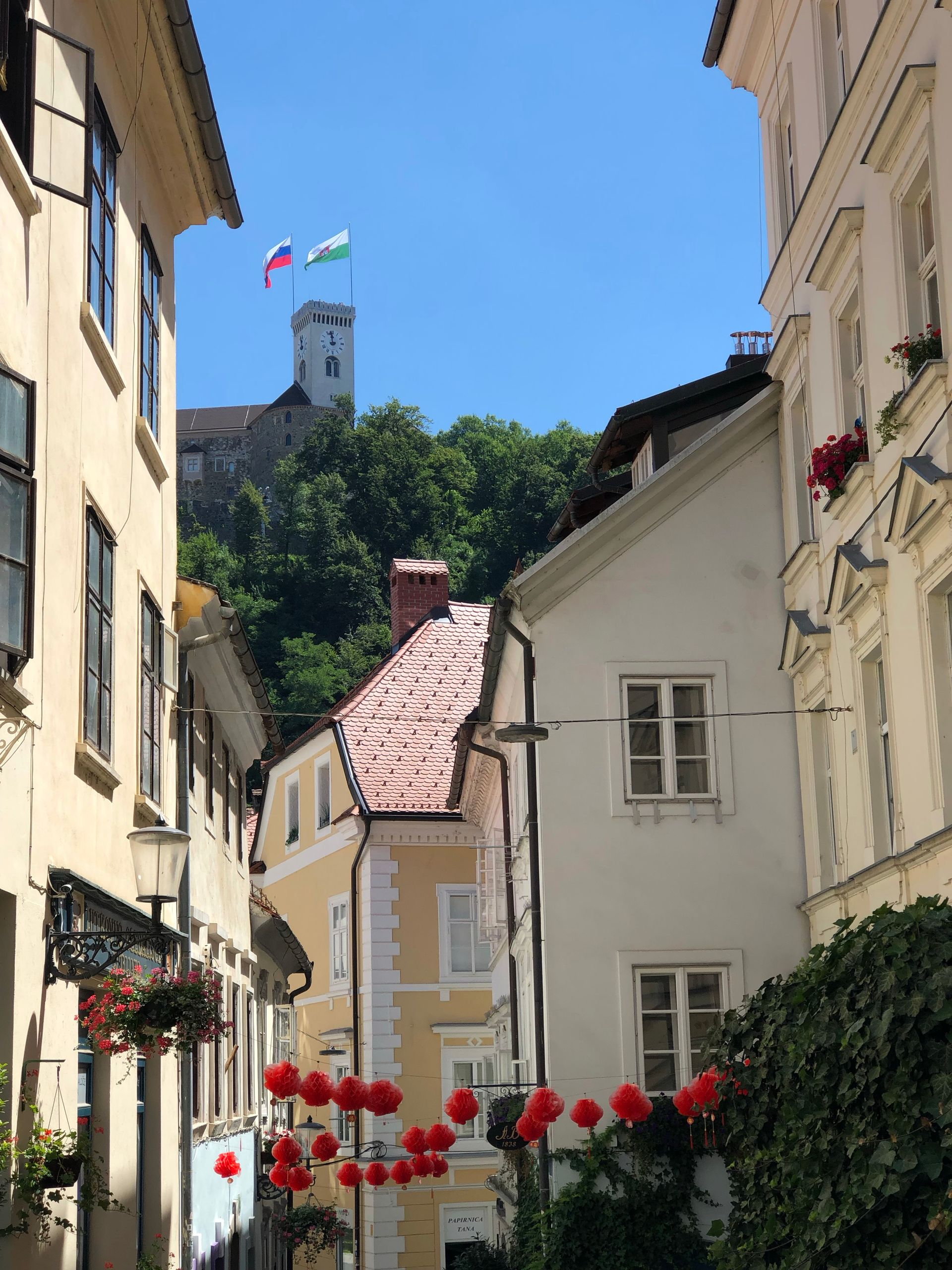
Rising directly above the old town is the wooded castle hill, crowned by Ljubljana Castle — a fortress whose origins go back to the eleventh century and whose ramparts now hold a viewing tower, museum, restaurant and the city’s best panorama. You reach it by a two-minute funicular from Krek Square, by a tourist road train, or on foot up any of several wooded paths in about fifteen minutes. The hill is a green retreat as much as a sight — the forested slopes are laced with walking trails.
The fortress you see today is largely the work of the fifteenth to seventeenth centuries, raised on far older foundations, and it has served as a defensive stronghold, a provincial arsenal and even a prison before its twentieth-century restoration into the cultural venue it is now. The Outlook Tower gives the definitive Ljubljana panorama — red roofs below, the Kamnik-Savinja Alps on a clear day — and the ramparts host the Museum of Slovenian History, the Puppet Museum, summer concerts and an open-air cinema. The walk up through the woods from the old town takes about fifteen minutes on any of several marked paths, a genuine forest stroll that doubles as exercise; those short on time or legs take the glass-fronted funicular, which climbs from Krek Square in roughly a minute and is itself a small attraction.
- Ljubljana Castle, viewing tower and museum
- The funicular from Krek Square
- Wooded walking paths up the hill
Best for: views, history and an easy green walk. Access: funicular, tourist train, or a 15-minute uphill walk from the old town.
The Central Market & Cathedral Quarter
On the old-town side, between the Triple Bridge and the Dragon Bridge, lies Pléčnik’s Central Market — a riverside colonnade and open-air square that has been the city’s daily food market for a century and is itself part of the 2021 UNESCO listing. The Baroque St Nicholas’s Cathedral with its famous bronze doors stands alongside, and the whole quarter hums on market mornings (the open stalls run daily except Sunday). It is the best place in the city to eat cheaply and well from a stall.
Pléčnik conceived the market as a riverside “promenade of food,” a covered colonnade running along the embankment with a fish market in the lower level opening onto the water, and the design is now part of the UNESCO inscription that honours his city-wide vision. The open-air stalls on Vodnik and Pogačar squares sell seasonal produce, honey, dried herbs and flowers daily except Sunday, while the colonnade holds delis, a milk machine and small eateries. The quarter is anchored at one end by the Triple Bridge and at the other by the Dragon Bridge, with St Nicholas’s Cathedral and its extraordinary modern bronze doors in between, so a slow morning here threads market, cathedral and two of the city’s signature bridges into a single short walk. It is the part of town that feels most like everyday Ljubljana rather than a tourist set-piece.
- Pléčnik’s riverside Central Market colonnade
- St Nicholas’s Cathedral and its bronze doors
- The Dragon Bridge at the market’s northern end
Best for: food lovers and early risers. Access: a short walk along the old-town embankment from the Triple Bridge.
Tivoli & the Green Belt
North-west of the centre spreads Tivoli Park, Ljubljana’s largest park, landscaped in part by Pléčnik, whose Jakopič Promenade of lime trees and lanterns leads in from the city. The park rolls straight into the wooded Rožnik hill, a genuine forest within walking distance of Prešeren Square, and it is where locals jog, picnic and visit the Tivoli mansion galleries. It is the clearest expression of why the city wears the “greenest capital” tag.
Tivoli is vast by capital-city standards and yet begins almost at the edge of the centre, so within ten minutes of Prešeren Square you can be on a tree-lined gravel walk with no traffic in earshot. Pléčnik gave it the grand Jakopič Promenade, a broad axis of lanterns and clipped limes that doubles as an open-air photography gallery, and the park’s Tivoli Mansion and the nearby International Centre of Graphic Arts add a cultural layer to the greenery. Beyond the manicured lower park, the paths climb into the genuinely wild Rožnik hill, a forested ridge where locals hike to a hilltop church and inn — a slice of countryside inside the city limits. For families, joggers and anyone needing a break from cobbles, it is the city’s lungs and its playground in one.
- Tivoli Park and Pléčnik’s Jakopič Promenade
- The forested Rožnik hill walks
- The Tivoli mansion and gallery
Best for: joggers, families and anyone craving green. Access: a 10-minute walk west of Prešeren Square.
Metelkova & the Museum Quarter
North-east of the centre, a former Yugoslav army barracks has become Metelkova Mesto — an autonomous alternative-culture squat of clubs, galleries and wildly painted facades that comes alive at night, sitting next to a cluster of serious institutions including the Museum of Contemporary Art Metelkova and the Slovene Ethnographic Museum. The contrast — cutting-edge nightlife beside national museums — is pure Ljubljana, and the quarter is the centre of the city’s alternative and live-music scene.
When the Yugoslav army pulled out of the Metelkova barracks in 1991, artists and activists occupied the site to stop its demolition, and over three decades it has hardened into a permanent autonomous zone whose buildings are encrusted with mosaics, sculpture and ever-changing murals. By day it is quiet and a touch derelict, photogenic in a gritty way; by night its clubs and bars host gigs from punk to electronica and it becomes the engine of the city’s alternative scene. Right next door, almost incongruously, sits the formal Museum Quarter — the Museum of Contemporary Art Metelkova (+MSUM), the Slovene Ethnographic Museum and the Natural History and National museums — so a single afternoon can swing from blue-chip national collections to anarchic street art across one street. It is not a place to sleep, but it is essential to understanding the city’s creative pulse.
- Metelkova Mesto alternative-culture complex
- The Museum of Contemporary Art Metelkova (+MSUM)
- The Slovene Ethnographic Museum
Best for: night owls, art lovers and the alternative scene. Access: a 10-minute walk from the train station.
The Station Quarter
Around the shared train and bus station north of the centre is the practical, slightly workaday quarter where most travellers first arrive and where the budget hotels and hostels cluster. It is not the prettiest part of town — everything scenic is a short walk south toward the river — but it is the most convenient for early departures to Bled, the caves or onward trains to Vienna and Venice. Budget travellers often base here and walk the ten minutes into the centre.
The train and bus stations sit side by side, which makes this the logistical hub of any Slovenian trip: international trains to Vienna, Venice, Zagreb and Munich leave from here, and the adjacent bus terminal is where the frequent, cheap services to Bled, Bohinj and Postojna depart. The streets immediately around it are functional rather than charming — chain hotels, kebab stands, a few hostels — but the trade-off is unbeatable for early starts, and the walk south to Prešeren Square through Miklošič Park takes only about ten minutes past some of the city’s finest Art-Nouveau facades. Metelkova and the Museum Quarter are also a short walk east, so even this workaday quarter is closer to the action than it first appears.
- The combined train and bus station
- Budget hotels and hostels
- Bus departures for Bled, Bohinj and Postojna
Best for: early departures, budget stays and day-trippers. Access: the arrival point for trains and intercity buses.
Trnovo & Krakovo (South of the River)
South of the centre, the low riverside districts of Trnovo and Krakovo are the city’s oldest market-garden quarters, a quiet grid of single-storey houses and vegetable plots that still supply the Central Market. Trnovo is where Pléčnik lived and worked — his house is now a museum — and the Trnovo Bridge over the Gradaščica, planted with birch trees, is one of his quirkier designs. It is a calm, leafy alternative to the centre, a short walk away yet a world apart.
Krakovo’s walled vegetable gardens are some of the oldest continuously cultivated plots in any European capital, and their famous “Krakovo asparagus” and salad greens still travel the short distance to the Central Market each morning. Trnovo, just beyond, was Pléčnik’s own neighbourhood: he lived and worked here for decades, and his house — preserved with his furniture, tools and drawings — is now one of the most rewarding small museums in the city, part of the UNESCO-listed body of his work. His quirky Trnovo Bridge, unusually planted with birch trees and wide enough to feel like a small square, leads to the Baroque Trnovo Church where the poet Prešeren first glimpsed his muse. The quarter rewards a slow wander for anyone who wants to see how Ljubljanans actually live, a ten-minute stroll yet a genuine change of pace from the riverside crowds.
- The Pléčnik House museum in Trnovo
- The tree-planted Trnovo Bridge
- The market-garden lanes of Krakovo
Best for: Pléčnik pilgrims and travellers wanting quiet. Access: a 10-minute walk south of the old town along the river.
The Food
Ljubljana eats at a crossroads. Slovenian cuisine is a genuine meeting point of Alpine, Mediterranean, Pannonian and Balkan traditions, and the capital draws on all four — Austrian-influenced dumplings and strudels, Italian-influenced pastas and olive oil from the coast, hearty Pannonian stews from the east, and the Balkan grill from the south. The country is small enough that its 24 official gastronomic regions are all within a couple of hours of the city, so a Ljubljana menu can range from Karst air-dried prosciutto (pršut) to Alpine buckwheat žganci to coastal seafood in a single sitting. The euro means prices are higher than in the Balkans but still well below Vienna or Venice, and the quality has climbed sharply — Slovenia earned its first Michelin stars when the guide arrived in 2020, and the country was named the European Region of Gastronomy in 2021. The eating geography of the city is simple: the cheapest, most authentic food is at the Central Market and its stalls; the best mid-range dining lines the old-town and riverside terraces; and the destination tasting menus sit just outside the centre. A first-timer should graze the market by day and book one proper dinner.
A note on rhythm: Slovenes take a substantial lunch (kosilo) as the main meal, and many restaurants offer an excellent-value daily lunch menu (dnevno kosilo) on weekdays that is the single best way to eat well cheaply in the capital. Dinner runs later and longer; reserve ahead for the riverside terraces in summer and for any of the tasting-menu restaurants year-round. Tap water is excellent and free — ask for it — and tipping around 10% is appreciated but not obligatory.
Slovenian Classics
The dishes to seek first are the protected national specialities. Kranjska klobasa — the Carniolan sausage, granted EU Protected Geographical Indication status in 2015 — is the country’s emblematic sausage, served with mustard and bread or in a stew. Potica, the rolled nut pastry that is the festive cake of Slovenia, earned EU Traditional Speciality Guaranteed protection in 2021. Beyond those, look for žlikrofi (the Idrija ravioli-like dumplings), jota (a sauerkraut-and-bean stew), žganci (buckwheat spoonbread) and the Alpine and Pannonian roasts. These are the dishes you will see across the city, and the market stalls and casual gostilna (taverns) do them best.
- Central Market stalls — kranjska klobasa with mustard and bread (€4–7)
- Gostilna in the old town — jota or žlikrofi (€8–14)
- A bakery or café — a slice of potica (€3–5)
The Central Market & Street Food
Pléčnik’s riverside Central Market is the heart of the city’s casual eating, an open-air food market that runs daily except Sunday along the colonnade between the Triple Bridge and the Dragon Bridge. Beyond the produce stalls there is a covered fish market, dairy stalls and a milk-dispensing machine, and the famous open-kitchen food market “Odprta kuhna” takes over a nearby square on Fridays in the warmer months, gathering dozens of the city’s restaurants into one stall-lined feast. Graze here for the best-value, most local food in town.
- Odprta kuhna (Open Kitchen) on Fridays — tasting plates from across the city (€5–10 a plate)
- The covered fish market — fried calamari and grilled fish to go (€7–12)
- Market bakeries — burek and štruklji (rolled dumplings) (€3–5)
Riverside & Old-Town Dining
The terraces lining both banks of the Ljubljanica are where the city dines out, a near-continuous run of restaurants, wine bars and cafés that fill from the early evening through the warm months. The cooking here spans modern Slovenian, Mediterranean and Italian, and the setting — eating beside the floodlit bridges with the castle above — is the city’s great pleasure. Reserve a riverside table ahead on summer evenings.
- Riverside terrace mains — modern Slovenian and Mediterranean (€14–26)
- Old-town gostilna — classic roasts and stews (€12–20)
- A wine bar pour — orange and natural wines from the Vipava and Brda regions (€4–8 a glass)
Cafés, Cake & the Coffee Culture
Ljubljana runs on coffee. The Austro-Hungarian café tradition is alive on every old-town terrace, where a long morning over a melange or a macchiato is a local institution, and the city’s pastry culture leans Central-European — strudels, cremeschnitte and the rolled potica. The single most famous cake within easy reach is the Bled cream cake (kremšnita), perfected at Lake Bled in 1953 and worth saving for the day trip. In the city, pair an espresso with a slice of potica on a riverside terrace.
- A riverside terrace coffee — the classic Ljubljana pause (€1.80–3)
- Potica or strudel — the Central-European cake tradition (€3–5)
- Bled cream cake — save it for the Lake Bled day trip (€3.50–5)
Wine, Beer & What to Drink
Slovenia is a serious wine country whose bottles are barely known abroad, which makes Ljubljana a low-stakes place to explore a whole new cellar. The country has three wine regions — Primorska on the Italian border, home of the celebrated orange and natural wines of the Brda and Vipava hills; Podravje in the north-east; and Posavje — and the capital’s wine bars pour the lot by the glass. Orange (skin-contact) wine in particular is a Slovenian and neighbouring-Friulian specialty worth seeking out, and the natural-wine movement has a real foothold here. For something stronger, the local fruit brandies (žganje) — plum, pear and herbal blends — are the traditional aperitif and digestif, and Slovenia’s craft-beer scene has grown fast, with several microbreweries represented in the city’s bars alongside the big domestic lagers Union and Laško. And do not overlook the simplest pleasure of all: the tap water, drawn from protected aquifers and dispensed free from public fountains across the centre, is as good as anything bottled.
Cultural Sights

The Triple Bridge (Tromostovje)
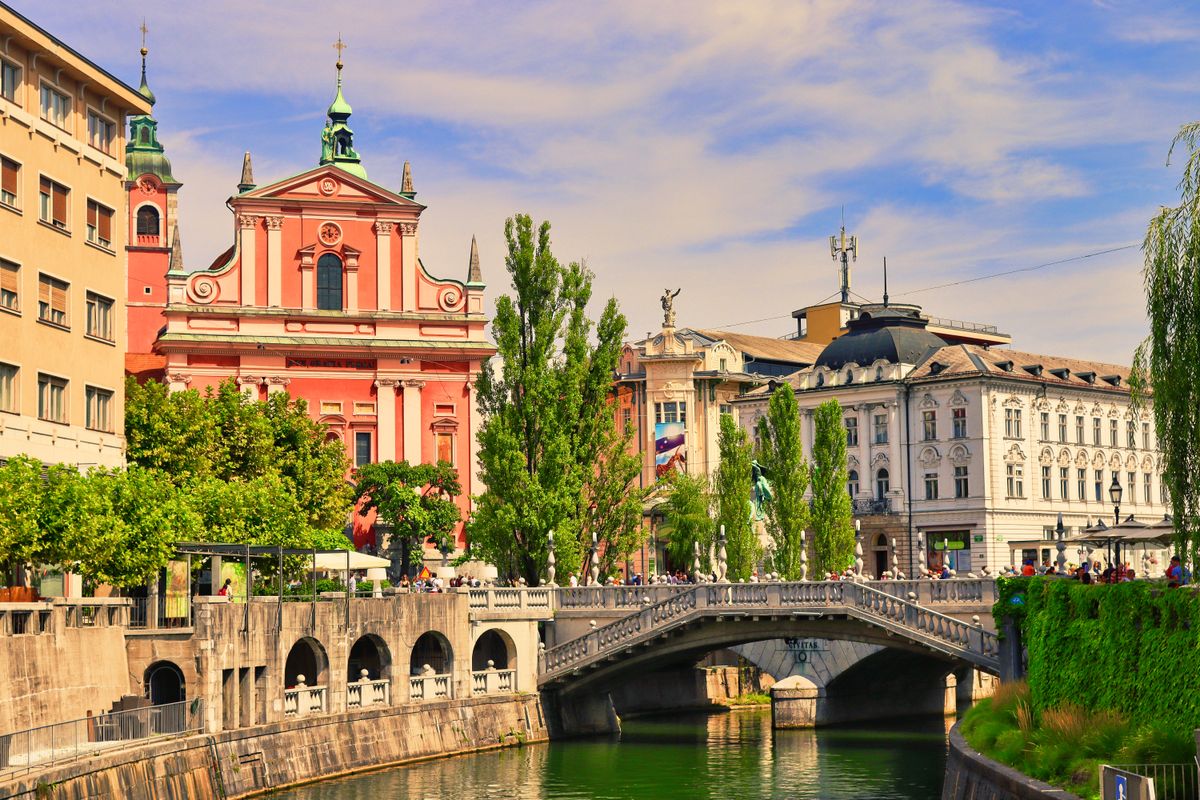
Jože Pléčnik’s signature work and the centrepiece of the 2021 UNESCO listing: between 1929 and 1932 he flanked the existing stone bridge with two pedestrian spans that fan outward, turning a single crossing into a three-pronged piazza linking Prešeren Square to the old town. It is the most recognisable image in the city and the natural place to begin any walk. The genius of the design is subtle: rather than widen the medieval bridge, Pléčnik added two angled footbridges that splay outward like a fan, hiding the awkward junction of streets and creating a riverside terrace lined with balustrades and lamps that doubles as a public square. Stairs lead down to the willow-shaded embankment, knitting the bridge into the wider riverscape he designed. Free and always open.
The Dragon Bridge (Zmajski most)
Completed in 1901, the Dragon Bridge is one of the finest Vienna-Secession structures in Europe and the most famous bridge in the city after Pléčnik’s — four copper dragons, the symbol of Ljubljana, crouch at its corners. It crosses the Ljubljanica at the northern end of the Central Market, and was one of the first reinforced-concrete bridges in Europe when it opened in 1901 to mark forty years of Habsburg emperor Franz Joseph’s reign. The dragons have become the unofficial mascots of the city, and local legend holds that they wag their tails whenever a virgin crosses the bridge. It crosses the Ljubljanica at the northern end of the Central Market. Free and always open.
Ljubljana Castle
The fortress crowning the hill above the old town has origins in the eleventh century, with most of the present structure dating from the fifteenth to seventeenth, and it now holds a viewing tower, a history museum, the Museum of Puppetry, a chapel and a restaurant. The funicular climbs from Krek Square in about a minute; the panorama from the tower over the red roofs to the Alps is the best in the city. A combined funicular-and-attractions ticket runs around €16 for adults, with the castle grounds and courtyard themselves free to wander. Beyond the views, the castle earns its ticket with a genuinely good multimedia exhibition on Slovenian history, the atmospheric Gothic Chapel of St George with its painted coats of arms, the Museum of Puppetry (Ljubljana has a strong puppet-theatre tradition), and a fine-dining restaurant and a casual café within the walls. In summer the courtyard hosts open-air concerts and an outdoor cinema, so an evening visit can pair the sunset panorama with a film or a glass of Slovenian wine.
Prešeren Square & the Franciscan Church
The social heart of the city, dominated by the pink Baroque Franciscan Church of the Annunciation (1646–1660) and the bronze monument to France Prešeren, Slovenia’s greatest poet, whose verse supplies the national anthem. The bronze Prešeren gazes across the square toward a relief of his unrequited love, Julija Primic, set in the facade of a building opposite — a romantic touch locals still point out. The square is the stage for the city’s public life, from the December Christmas-market centrepiece to summer concerts and the convergence point of every festival parade. Everything in the centre radiates from here. Free and always open.
The National & University Library (NUK)
Pléčnik’s architectural masterpiece, built 1936–1941, is a study in symbolism: the dark-brick-and-stone facade gives way to a grand black-marble staircase that climbs toward the light of the reading room, a metaphor for the ascent through knowledge. Part of the UNESCO inscription, it is an active library; the staircase and main hall can be visited outside exam periods.
The Central Market & St Nicholas’s Cathedral
Pléčnik’s riverside market colonnade (1940–1944) curves along the Ljubljanica and is itself part of the UNESCO listing; alongside it stands the Baroque St Nicholas’s Cathedral with its remarkable twentieth-century bronze doors, cast for Pope John Paul II’s 1996 visit and depicting Slovenian history. Market open daily except Sunday; cathedral free to enter.
Metelkova Mesto
The autonomous alternative-culture complex in a former army barracks — a riot of painted facades, sculpture and underground clubs that is the centre of the city’s alternative scene and one of Europe’s most famous urban squats. Quiet by day, alive after dark. Free to wander.
Entertainment
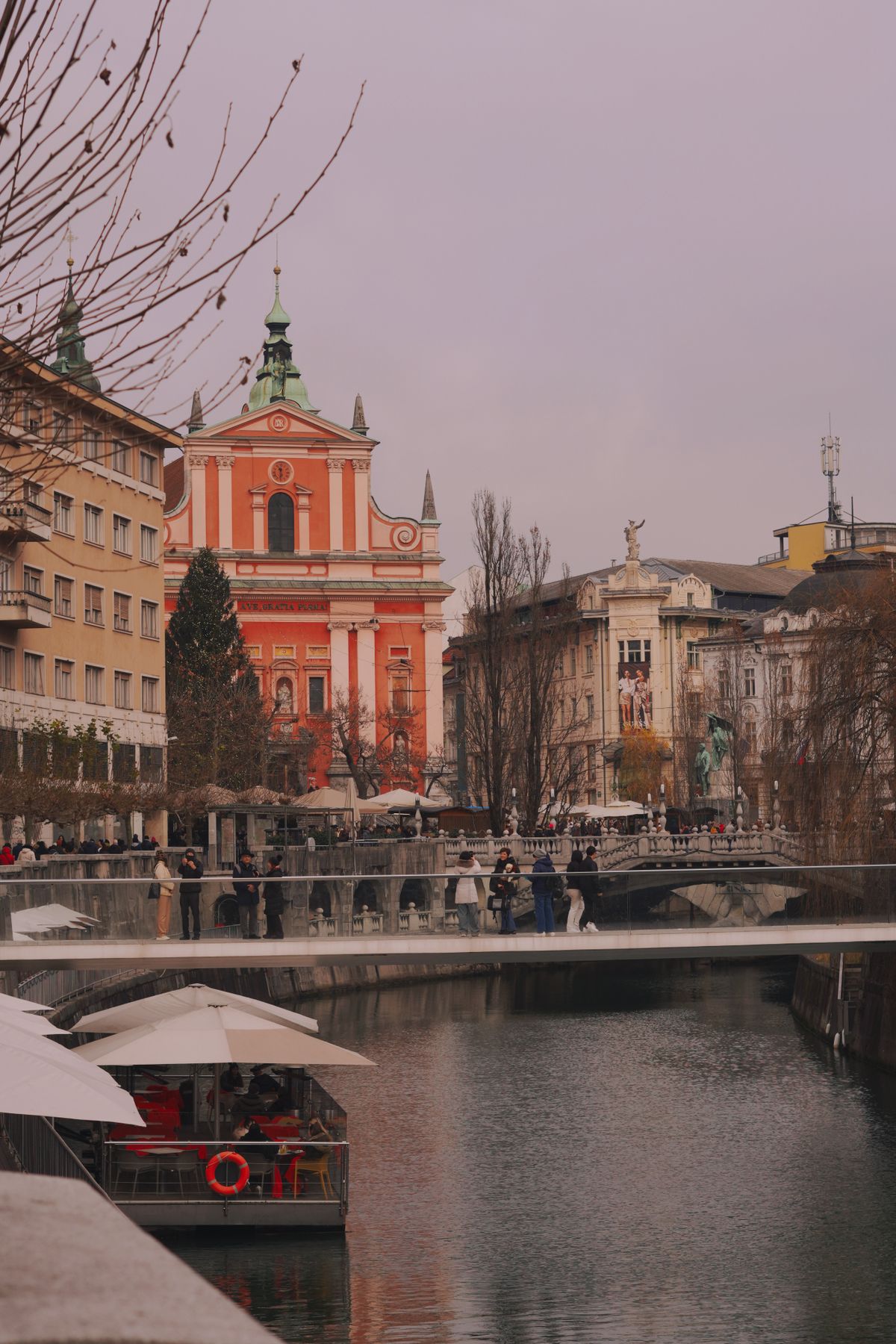
Ljubljana’s entertainment is relaxed and outdoor by nature: a riverside café-and-festival capital rather than a clubbing one, where the evenings revolve around terraces, live music and a remarkably busy events calendar for a city its size. The six categories below cover what actually fills a visitor’s day and night.
Riverside Café & Bar Culture
The single defining pleasure: the Ljubljanica embankments are lined with cafés and bars that fill from the afternoon into the small hours through the warm months, the social engine of the car-free centre. Typical cost: a coffee runs €1.80–3, a craft beer or a glass of wine €4–6. Grab a terrace seat by the floodlit bridges at dusk.
Metelkova & the Alternative Scene
After dark, the Metelkova Mesto complex becomes the centre of the city’s alternative nightlife — underground clubs, live gigs and an anything-goes atmosphere in a painted former barracks. Typical cost: many venues free or with a small cover (€5–12). It is grungy and genuine, the counterweight to the polished riverside.
Festivals & the Summer Calendar
For a small city Ljubljana packs an extraordinary events calendar — the Ljubljana Festival of classical music and theatre runs all summer, alongside the open-kitchen food market, film and street-arts festivals. Typical cost: many street events free; festival concert tickets €20–60. Check what is on when you visit.
Theatre, Opera & Classical
The capital carries a full slate of high culture — the Slovenian National Opera and Ballet, the Philharmonic (one of Europe’s oldest musical institutions), and several theatres. Typical cost: opera and concert tickets €15–50, excellent value by Western-European standards.
River & Park Recreation
Boat trips ply the Ljubljanica, you can rent kayaks or stand-up paddleboards, and Tivoli Park and the Rožnik hill offer jogging, picnics and easy forest walks within the city. Typical cost: a river boat trip runs €10–15; the parks are free.
Museums & Galleries
The city is dense with museums — the National Gallery, the National Museum of Slovenia, the Museum of Contemporary Art Metelkova and the quirky Pléčnik House in Trnovo. Typical cost: €6–10 per museum, with some free days. A rainy-afternoon staple.
What ties it all together is the human scale: because the centre is car-free and compact, an evening in Ljubljana flows naturally from a riverside aperitif to a concert in the castle courtyard to a late gig at Metelkova, all within a fifteen-minute walk and with no traffic to cross. The city punches far above its size on culture for the same reason it feels relaxed — everything is close, walkable and unpretentious, so you can sample high opera and underground punk in the same night without ever needing a taxi.
Day Trips
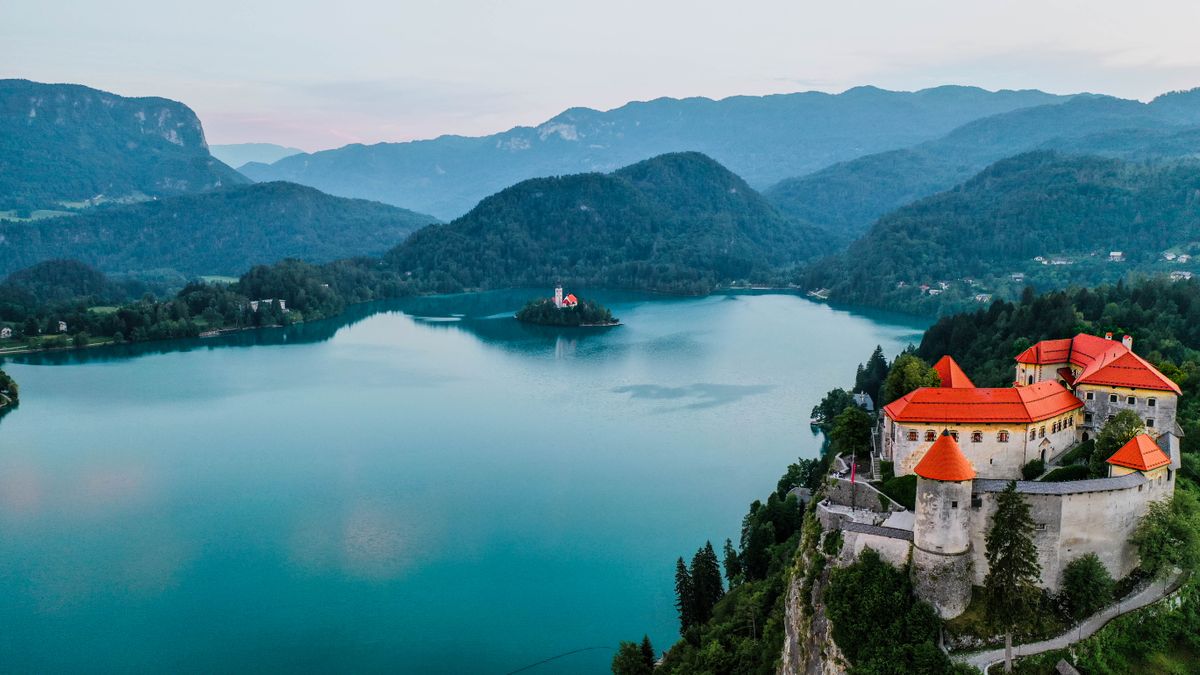
Ljubljana’s greatest asset is its position: it sits in the centre of a country that crams the Julian Alps, karst caves and an Adriatic coast into a tiny area, and almost every headline sight in Slovenia is a day trip from the capital, most reachable by bus or train without a car. The five trips below run roughly in order of fame; any of them slots around a morning in the city.
Lake Bled (about 1 hour)
The postcard of Slovenia — an emerald glacial lake with a church on a tiny island, reached by traditional pletna boat, and a medieval castle on a 130-metre cliff above. Frequent buses run from Ljubljana’s station in about an hour. Once there you can walk the lakeshore in about ninety minutes, row or take a pletna boat to the island, climb the 99 steps to ring the wishing bell in the pilgrimage church, and hike up to the castle for the classic aerial view. Save room for a slice of the original Bled cream cake (kremšnita), perfected at the lakeside Park Hotel in 1953. It is the most popular day trip from the capital for good reason, though it is busiest in midsummer — go early.
Postojna Cave & Predjama Castle (about 1 hour)
The 24-kilometre Postojna Cave system, toured partly by an underground electric train, is the most-visited cave in Europe; a few kilometres away, Predjama Castle is dramatically wedged into the mouth of a 123-metre cliff cave. The two pair perfectly in one day and sit an hour south-west of the capital.

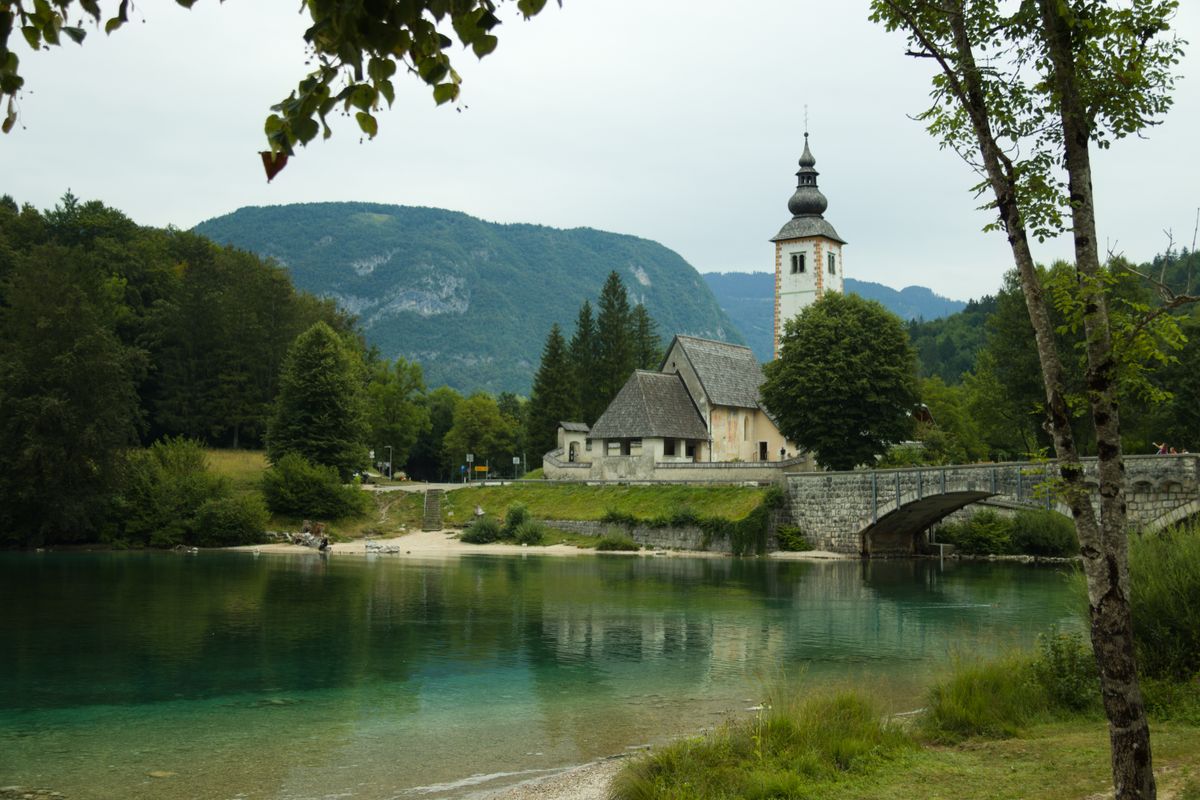
Lake Bohinj & Triglav National Park (about 1.5 hours)
Larger, wilder and quieter than Bled, Lake Bohinj is the gateway to Triglav National Park and the Julian Alps, with swimming, hiking and the Savica waterfall nearby. About 90 minutes from the capital by bus or car, often combined with Bled.
The Soča Valley & Kobarid (about 2 hours)
Over the Vršič Pass or through the Bohinj rail tunnel lies the emerald Soča River, a turquoise Alpine valley famous for rafting, WWI history and some of Europe’s most beautiful river scenery. A long but spectacular day, best with a car.

Piran & the Adriatic Coast (about 1.5 hours)
Slovenia’s sliver of Adriatic coast holds the Venetian-Gothic gem of Piran, a tangle of red-roofed lanes around the oval Tartini Square. About 90 minutes south-west by bus, it makes an easy contrast to the Alpine trips — Mediterranean light, salt pans at nearby Sečovlje, and seafood on the harbour — and pairs naturally with a wider visit toward Venice, whose Venetian-Gothic stamp is written all over Piran’s architecture. The town is named for the Italian composer Giuseppe Tartini, born here, whose statue presides over the marble main square.
Seasonal Guide

Ljubljana is a true four-season city, and the season you choose shapes the trip. The car-free centre is a pleasure year-round, but the terraces, the Central Market and the Alpine day trips are at their best in the shoulder seasons. If your priority is warm-weather strolling and easy day trips with thinner crowds, aim for late spring or early autumn; for festivals, come in summer and accept the heat and crowds; for atmosphere, come in December for the riverside Christmas market. The one constant is that the car-free centre is a joy to walk in any weather, and the city is small enough that a wet afternoon is easily absorbed by its museums and café terraces under cover.
Spring (March – May)
The city wakes up: terraces reopen, Tivoli and the castle hill green up, and daytime highs climb from around 12°C in March to a pleasant 21°C in May. Late spring is ideal — warm enough for the riverbanks, before the summer crowds, with the Alpine day trips opening up as the snow recedes. Pack a layer for cool evenings and some rain.
Summer (June – August)
Peak season and festival time, with the Ljubljana Festival, Open Kitchen and a packed events calendar, but also the hottest and busiest months — daytime highs of 26–30°C and humid afternoons. The riverside terraces are in full swing; book restaurants and day trips ahead and start early to beat both heat and crowds at Bled and the caves.
Autumn (September – November)
The connoisseur’s season — warm early-autumn days, thinning crowds, the castle hill and Tivoli turning gold, and the new wine and chestnut season on the market. Daytime highs fall from around 23°C in September to near 8°C by late November. September and October are arguably the best months to visit.
Winter (December – February)
Cold and often foggy, with daytime highs around 3–5°C, but December transforms the riverbanks into one of Europe’s prettiest Christmas markets, with lights strung over the Ljubljanica and mulled wine on every terrace. January and February are quiet and cheap, and the city is the gateway to nearby ski resorts. Dress warm and expect grey, damp days between the festive sparkle.
Getting Around

Getting around Ljubljana is refreshingly simple: the centre is tiny, flat and car-free, so you will walk almost everywhere, and the rest is covered by an efficient city bus network, a citywide bike-share, and the free electric Kavalir buggies that roam the pedestrian zone. There is no metro and no need for one — the historic core is barely a kilometre across, and even the outlying sights like Tivoli, the station and Metelkova are within a twenty-minute walk of Prešeren Square. The golden rule is simply to leave the car behind: the centre is closed to private traffic, parking is restricted and expensive, and walking or cycling is faster than any vehicle inside the ring.
Walking & the Car-Free Centre
The historic core has been closed to cars since 2007–2008, and you can cross it on foot in twenty minutes. The free electric Kavalir buggies ferry the elderly and less mobile around the pedestrian zone on request, and the riverbanks are made for strolling. Walking is genuinely the best way to see the city.
City Buses (LPP) & the Urbana Card
The LPP city buses cover the wider city and run on the rechargeable Urbana card, tapped on boarding, with a flat fare valid for 90 minutes of transfers. Buy and top up the card at machines, kiosks and the tourist office. You will rarely need it for the centre, but it is useful for Tivoli, the bus to the airport area, and outlying sights.
BicikeLJ Bike-Share & Cycling
Ljubljana is a cycling city, with the BicikeLJ bike-share scheme offering cheap short rentals from docking stations across town and a flat, bike-friendly grid. The first hour is often free or near-free with a short subscription — the fastest way to reach Tivoli or cross the wider centre.
Trains & Intercity Buses
The combined train and bus station north of the centre is the hub for day trips and international travel — frequent buses to Bled, Bohinj and Postojna, and trains onward to Vienna, Venice, Zagreb and beyond. For most Slovenian day trips the intercity bus is faster and more frequent than the train.
Airport Access
- Ljubljana Jože Pučnik Airport (LJU) lies about 24 km north-west of the city; an airport shuttle bus or the public bus runs to the centre in 45–60 minutes for a few euros.
- A taxi or private transfer from LJU to the centre runs about €30–45 and takes around 30 minutes.
Taxis
Taxis are reasonable but always order by phone or app rather than hailing on the street, where overcharging tourists is the one persistent gripe. They are most useful late at night or with luggage; confirm the meter is running.
Navigation Tips
Orient by the river and the castle hill: the Ljubljanica curves through the centre and the castle sits above the old town, so you are never lost for long. Google Maps covers walking, buses and bikes; the city is so compact that offline maps are rarely needed in the centre.
Budget Breakdown: Making Your Euros Count
| Tier | Daily | Sleep | Eat | Transport | Activities | Extras |
|---|---|---|---|---|---|---|
| Budget | $55–80 | Hostel $25–40 | $15–22 | Walk + bus $4 | Market + free sights $8 | $8 |
| Mid-Range | $110–180 | 3-star hotel $80–130 | $35–55 | Bus + bike $10 | Castle + a day trip $40 | $20 |
| Luxury | $300+ | Boutique hotel $200+ | $80+ (tasting menu) | Private transfer $40 | Private guide + Bled $120+ | $40+ |
Where Your Money Goes
Ljubljana uses the euro and sits in a middle band of European prices — noticeably cheaper than Vienna, Venice or the Western capitals, but pricier than the neighbouring Balkans. The good news for travellers is that the city’s greatest pleasures — walking the car-free centre, the Pléčnik bridges, Prešeren Square, Tivoli Park and the castle grounds — are free, and the Central Market lets you eat very well very cheaply. The two costs that dominate a budget are accommodation and the day trips; everything in the centre is walkable, so transport is a minor line item.
Lodging is where the tiers diverge most. A hostel dorm runs roughly €22–38, a comfortable three-star hotel in or near the centre sits around €75–120, and the boutique and design hotels climb past €180 in peak summer. The castle funicular-and-attractions ticket is about €16, and a Postojna Cave ticket is the single biggest day-trip expense at around €28–30. Food is easy to economise on: a market sausage is €4–7, a weekday set lunch €8–12, and a riverside dinner main €14–26. The biggest single lever on your daily spend is whether you day-trip by public bus (cheap and frequent) or book private tours and car hire (convenient but several times the cost); for the headline trips to Bled and Postojna the bus is more than adequate, and a careful traveller can see the capital and two day trips on a genuinely modest budget.
Money-Saving Tips
- Eat the weekday dnevno kosilo (set lunch) as your main meal — far cheaper than the same kitchen’s dinner
- Graze the Central Market for sausages, burek and produce instead of sit-down lunches
- Walk the castle hill instead of paying for the funicular — the grounds and views are free
- Take public buses to Bled, Bohinj and Postojna rather than renting a car or booking a tour
- Drink the free tap water from the public fountains — it is excellent everywhere
- Visit in the shoulder season (May or September–October) for the lowest room rates and thinnest crowds
Practical Tips
Language
Slovene is the language — a South Slavic tongue notable for its rare grammatical dual (a special form for exactly two of something). In practice the language barrier is minimal: English is near-universal among younger Slovenes and in all tourism businesses, with German and Italian also widely understood. A few words — “hvala” for thanks, “dober dan” for good day — are warmly received.
Cash vs. Cards
The currency is the euro, adopted in 2007. Cards are accepted almost everywhere, including the castle and most market stalls, but carry a little cash for small market purchases, public toilets and the occasional cash-only stall. ATMs are plentiful in the centre.
Safety
Ljubljana is one of Europe’s safest capitals, with low crime and a relaxed atmosphere even late at night; Slovenia sits on the lowest-tier travel advisory. The only routine gripe is taxi overcharging, easily avoided by ordering by app. Normal city common sense covers the rest.
What to Wear
Comfortable shoes for the cobbles, layers for the continental climate — warm summers, cold foggy winters — and a rain layer in any season. If you plan Alpine day trips, pack a fleece and proper footwear even in summer, as the mountains are far cooler than the city.
Cultural Etiquette
Slovenes are reserved but friendly and value quiet courtesy; greet shopkeepers, keep your voice down in churches, and do not jaywalk — locals wait for the green man even on empty streets. Tipping around 10% is appreciated in restaurants but not obligatory, and rounding up is normal for casual service. Slovenes take pride in their environment — this is, after all, the European Green Capital of 2016 — so littering and noise are frowned upon, recycling is taken seriously, and the public drinking fountains are there to be used rather than buying bottled water. A quiet, courteous manner goes further than effusiveness.
Connectivity
Mobile coverage and free public Wi-Fi are excellent across the city, and EU roaming rules apply for EU SIMs. Prepaid Slovenian SIMs are cheap and easy to buy. Connectivity is never a problem in the capital; the only gaps are deep in the Alpine valleys on day trips.
Health & Medications
Slovenia’s healthcare is high quality, and Ljubljana has pharmacies (lekarna) throughout the centre and a 24-hour pharmacy near the centre. Carry the EHIC/GHIC if eligible plus travel insurance, and bring any prescription medication you need. The tap water is excellent, so there is no need to buy bottled.
Luggage & Storage
The train and bus station has left-luggage lockers and a staffed counter, handy for day trips or an early-arrival before check-in. Most hotels will also hold bags on arrival and departure day, letting you explore the car-free centre unencumbered.
Frequently Asked Questions
How many days do I need in Ljubljana?
Two full days covers the city itself comfortably — one for the car-free old town, the Pléčnik bridges, Prešeren Square and the castle, and a second for the museums, Tivoli Park and Metelkova. But the real reason to stay longer is the day trips: add one day for Lake Bled and another for Postojna Cave and Predjama Castle, and three to four days becomes the sweet spot. Most travellers under-budget the city and end up wishing they had stayed an extra night. If you only have a single day, prioritise the car-free old town, the Triple and Dragon bridges, the Central Market and the castle by funicular, and accept that the day trips will have to wait for a return visit.
Is Ljubljana good for solo travellers?
Excellent — it is compact, exceptionally safe, walkable and full of hostels and friendly café culture, making it one of the easiest capitals in Europe to explore alone. The riverside terraces and the day-trip buses are easy places to fall into conversation, the hostels run social events, and the small scale means you are never far from your accommodation late at night. Slovenia’s low crime rate makes evening strolls along the lit-up river entirely comfortable alone, and English is so widely spoken that practical solo travel is effortless.
Do I need a car in Ljubljana?
No — in fact a car is a liability in the car-free centre, where parking is restricted and pricey. The city is entirely walkable, and frequent public buses reach Bled, Bohinj and Postojna cheaply. Rent a car only if you want to chain Alpine stops or reach the Soča Valley.
What about the language barrier?
Minimal in practice. English is near-universal among younger Slovenes and in all tourism businesses, and German and Italian are widely understood; Slovene is the official language. Learning “hvala” (thank you) and “dober dan” (good day) goes a long way with locals.
When is the best time to visit Ljubljana?
Late spring (May–June) and early autumn (September–October) are ideal — warm enough for the riverside terraces, with thinner crowds and easy Alpine day trips. Summer brings the festival calendar but heat and crowds, while December offers one of Europe’s prettiest riverside Christmas markets.
Is Ljubljana a good base for the rest of Slovenia?
The best one — the capital sits in the centre of the country, and Lake Bled, Bohinj, Postojna Cave, Predjama Castle and the Julian Alps are all roughly an hour to ninety minutes away, most reachable by public bus. Many travellers see the whole country’s highlights on day trips from a single Ljubljana base.
Is Ljubljana expensive?
It sits in a middle band — cheaper than Vienna, Venice or the Western capitals, but pricier than the neighbouring Balkans, and on the euro. The city’s best pleasures — the car-free streets, the bridges, Tivoli and the castle grounds — are free, and the Central Market and weekday set lunches let you eat very well cheaply, so a careful traveller can keep daily costs modest.
Ready to Experience Ljubljana?
Ljubljana is Europe’s greenest, most walkable capital and the perfect base for the Julian Alps and the karst caves — give the car-free centre two days, then ride out to Lake Bled and Postojna. For the full country context, read the Slovenia Travel Guide.
Explore More City Guides
- Vienna City Guide — the imperial Habsburg capital, a direct train north and a natural Central-European pairing
- Venice City Guide — the lagoon city, an easy onward leg south-west toward the Adriatic
- Dubrovnik City Guide — the walled Adriatic jewel down the coast in Croatia
- Slovenia Country Guide — the wider Slovenian frame: the Alps, the karst, the coast and the euro (full picture in the Slovenia guide)
- All City Guides
Alex the Travel Guru
Alex has been writing Facts From Upstairs city guides for a decade, with a soft spot for walkable capitals and Alpine gateways. He spent four days in Ljubljana for this guide, rode the castle funicular at sunset, grazed the Central Market every morning, and maintains that Ljubljana is the most underrated capital in Europe. When not on a riverside terrace he is arguing that potica beats every other festive cake.
More city guides you might like
Plan your trip to Ljubljana
The booking tools we use ourselves. FFU may earn a commission at no extra cost to you.
Plan & book your trip to Ljubljana
Booking through these searches supports our guides at no extra cost to you.