
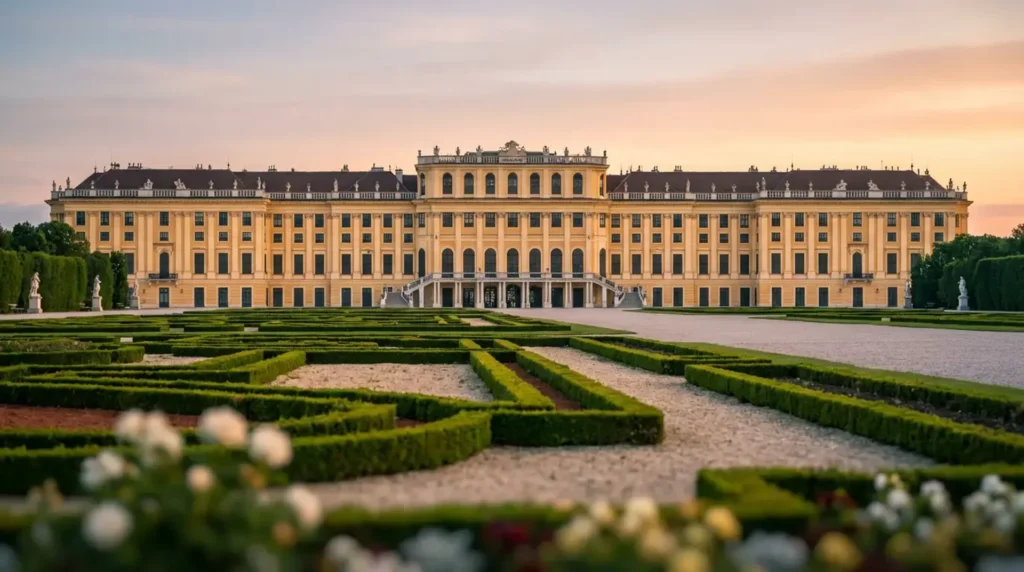
Vienna, Austria: The Habsburg Capital That Still Dances Through Winter
Part of our Austria travel guide.
Vienna City Guide
📑 Table of Contents
Why Vienna?
Vienna is the capital of Austria and the imperial city of the former Habsburg Empire, home to roughly 1.97 million residents inside the city proper as of January 2025 and about 2.9 million across the Greater Vienna metropolitan area. It sits on the Danube in the east of Austria, 60 kilometres from the Slovak border and 80 kilometres from Hungary, at a crossroads that has been fought over, traded through and danced across by Romans, Babenbergs, Habsburgs, Ottomans (twice, in 1529 and 1683), Napoleonic French, and the 20th-century Allied occupiers.
The contrast that defines modern Vienna is that it looks like a 19th-century museum and functions like a 21st-century social-democratic machine. The Ringstraße boulevard, built 1857–1865 on the demolished city walls, is lined with a Parliament, a Rathaus, a Burgtheater, a State Opera, a stock exchange and two imperial museums—and almost every one of them is still performing its original function. Meanwhile, Vienna has held the number-one spot on the Mercer Quality of Living ranking in every consecutive year since 2009, thanks to its public-housing system dating to 1920s Red Vienna, its Alpine tap water piped in through an aqueduct opened in 1873, and a public-transit network that moves almost a billion passenger journeys a year.
Few cities wear their cultural inheritance this heavily. Vienna has two UNESCO World Heritage sites—the Historic Centre (listed 2001) and Schönbrunn Palace (listed 1996) —plus UNESCO Intangible Heritage status for its coffee-house culture (granted 2011) and UNESCO Creative City of Music designation. There is one coffeehouse for roughly every 4,400 residents, 300 opera performances a year at the Staatsoper alone, three resident symphony orchestras, roughly 450 balls each winter, and a civic calendar organised around music: ball season in January and February, concerts in every palace through spring, Schönbrunn Summer Night on the Philharmonic’s lawn in June, the Viennale film festival in October, and the Christkindlmärkte from late November through Christmas.
This guide covers the nine neighborhoods that define the city, the schnitzel counters and Sachertorte kitchens that anchor its food identity, the Habsburg palaces and world-class museums that fill a first-trip itinerary, the day trips down the Danube to the Wachau Valley and across the border to Bratislava, and the transit, ball-season, dress-code and coffeehouse-etiquette details that make a first visit work on arrival at Vienna International Airport.
Neighborhoods: Finding Your Vienna
📍 Vienna Map: Every Place in This Guide
Vienna is organised by number. The 1st district (Innere Stadt) is the imperial core inside the Ringstraße; the 2nd and 20th districts sit across the Danube Canal; the 3rd through 9th form the inner ring of residential and cultural neighborhoods immediately outside the Ring; and the outer districts (10th–23rd) stretch from the Vienna Woods in the west to the Danube floodplain in the east. The five U-Bahn lines (U1, U2, U3, U4, U6) plus 28 tram lines knit the whole thing together, and almost everything a first-time visitor wants to see sits within 30 minutes by rail of Stephansplatz.
Innere Stadt (1st District)
The Innere Stadt is Vienna’s imperial core—the 3.5 km² UNESCO-listed old town sealed inside the Ringstraße on three sides and the Danube Canal on the fourth. Everything foundational to Habsburg Vienna sits inside it: St. Stephen’s Cathedral at the exact geographic centre; the Hofburg Palace complex stretching west toward the Volksgarten; the Graben and Kohlmarkt luxury-shopping streets radiating north from the cathedral; Café Central and Café Sacher and Café Landtmann anchoring three corners of the coffeehouse geography; and the Staatsoper marking the Ring’s south-east quadrant. The streets inside the Ring are a Gothic-to-Baroque palimpsest: Roman excavations under Michaelerplatz, the 1147 nave of the Stephansdom, the 17th-century Plague Column on the Graben, and Otto Wagner’s 1902 Postsparkasse building at Georg-Coch-Platz.
- St. Stephen’s Cathedral (Stephansdom) and its 343-step south-tower climb
- Hofburg Palace complex with Spanish Riding School and Sisi Museum
- Graben, Kohlmarkt and Herrengasse luxury shopping streets
- Café Central (Palais Ferstel) and Café Sacher (the pilgrimage cafes)
- Albertina Museum, Staatsoper and Burggarten
Best for: first-timers and imperial sightseeing. Access: U1/U3 Stephansplatz, U3 Herrengasse, tram 1/2/D/71 on the Ring.
Leopoldstadt (2nd District)
Leopoldstadt is the long island between the Danube Canal and the Danube proper, and the one district where the population grew fastest through the 2010s—Vienna’s young families, startup workers and reverse-gentrifying students all ended up here. The Prater park runs the whole southern half of the island: 6 kilometres of chestnut-lined Hauptallee for walking and jogging, the Wurstelprater funfair at the northern end, and the 1897 Wiener Riesenrad (giant Ferris wheel) that anyone who has seen The Third Man will recognise from Orson Welles’s cuckoo-clock speech. The district’s northern half, around Karmelitermarkt, carries a Jewish history that was the densest in prewar Europe—Stadttempel synagogue on Seitenstettengasse survived Kristallnacht because it was structurally joined to neighbouring buildings. Today the Karmelitermarkt (Saturday farmers’ market), Augarten porcelain manufactory (founded 1718) and the Tempelgasse cafes make up a quiet, grown-up morning.
- Wiener Riesenrad (giant Ferris wheel, 1897) in the Prater
- Prater amusement park and 6 km Hauptallee chestnut avenue
- Karmelitermarkt farmers’ market (Saturdays)
- Augarten porcelain manufactory and Baroque park
- Tempelgasse and the Stadttempel synagogue on Seitenstettengasse
Best for: families and young locals escaping the tourist core. Access: U1 Praterstern, U2 Taborstraße, tram 1/O.
Wieden (4th District)
Wieden is Vienna’s bohemian arts district, wrapped around Karlsplatz and Naschmarkt, and one of the few places in the city where Otto Wagner’s Jugendstil architecture still stands on the street where he designed it. The Majolikahaus (1899) at Linke Wienzeile 40 carries a ceramic-flower facade right above a working bus stop; the Medaillonhaus next door is all gold-leaf Klimt-adjacent relief work. Down the street, the 1898 Secession building—a white cube topped with a gilded laurel dome the locals still call “the golden cabbage”—holds Klimt’s Beethoven Frieze in its basement. The Karlskirche (1737), with a climbable dome and a reflecting pool out front, anchors Karlsplatz; the 1.5 km Naschmarkt runs up the old Wien river channel past 120-plus stalls of produce, fish, Balkan pickles, Persian sweets and Lebanese mezze. Freihaus-Viertel, between Naschmarkt and the U-Bahn, is Vienna’s densest cafe grid.
- Naschmarkt — 1.5 km open-air food market (120+ stalls, Mon–Sat)
- Karlskirche (Charles Borromeo Church, 1737) and climbable dome
- Otto Wagner’s Majolikahaus and Medaillonhaus on Linke Wienzeile
- Secession Building (1898) housing Klimt’s Beethoven Frieze
- Freihaus-Viertel cafe and bar grid
Best for: design nerds and foodies. Access: U1/U2/U4 Karlsplatz, U4 Kettenbrückengasse.
Neubau (7th District — Museum Quarter)
Neubau is Vienna’s creative district, and the MuseumsQuartier that anchors it is one of the ten largest cultural complexes in the world at 90,000 square metres—the Habsburg imperial stables (built 1717–1725 by Fischer von Erlach for the court’s 600 horses) converted into a courtyard-focused arts campus in 2001. The Leopold Museum holds the world’s largest Egon Schiele collection (220+ works) plus major Klimt, Kokoschka and Wiener Werkstatte holdings; mumok covers 20th-century and contemporary art in its dark basalt cube; Kunsthalle Wien runs rotating exhibitions; and the outdoor courtyard’s purple Enzi lounge furniture is Vienna’s summer after-work spot. Beyond the MuseumsQuartier, Neubau’s cobbled lanes around Spittelberg hold Biedermeier houses, Christmas-market stalls in December and wine bars year-round, while Neubaugasse and Lindengasse are the independent-boutique and third-wave-coffee spine of the district.
- MuseumsQuartier (90,000 m² cultural complex)
- Leopold Museum (largest Egon Schiele collection in the world)
- Spittelberg — cobbled Biedermeier lanes, wine bars, boutiques
- Neubaugasse and Lindengasse independent-fashion strip
- Volkstheater (founded 1889) on Neustiftgasse
Best for: art lovers and independent-boutique shopping. Access: U2 MuseumsQuartier/Volkstheater, U3 Neubaugasse, tram 49.
Mariahilf (6th District)
Mariahilf wraps around Mariahilfer Straße—Vienna’s longest shopping street at 1.8 kilometres, pedestrianised in 2015 after a neighborhood-wide referendum, and lined with the flagship stores (Peek & Cloppenburg, Manner, Steffl, Huma Eleven) plus a second layer of independents on the side streets running parallel. Gumpendorfer Straße is the cooler of the two backstreets: third-wave coffee roasters (POC, Fenster Cafe, Kávovar), vintage shops, natural-wine bars, and the Raimund Theater for musicals. Esterhazypark holds an accidental architectural centrepiece—the Haus des Meeres aquarium occupies a WWII Flakturm (flak tower) whose reinforced concrete shell was too hard to demolish, and the 50-metre rooftop bar Ocean Sky is one of the best cheap viewpoints in the city. The district’s southern edge slopes down toward the Gurtel beltway, where techno clubs take over after midnight.
- Mariahilfer Straße pedestrian zone (1.8 km flagship stores and independents)
- Gumpendorfer Straße coffee, vintage and wine bars
- Haus des Meeres (aquarium inside a WWII Flakturm)
- Raimund Theater (musical venue)
- Esterhazypark and Fillgraderstiege Jugendstil staircase
Best for: shoppers and coffee hunters. Access: U3 Neubaugasse/Zieglergasse, U4 Pilgramgasse.
Alsergrund (9th District)
Alsergrund is Vienna’s student quartier, west of the Ring, built around the main University of Vienna building (1884) and the city’s largest teaching hospital. The literary history is unusually dense—Sigmund Freud lived and practised at Berggasse 19 from 1891 until 1938, and the apartment (now the Sigmund Freud Museum) preserves his waiting room and the Oriental rugs that covered the famous couch. Theodor Herzl and Arthur Schnitzler also lived within a few blocks; the Campus der Universität Wien now occupies a converted 18th-century Allgemeines Krankenhaus (general hospital) at Alser Straße, with arcaded courtyards that fill with students in spring. The Votivkirche (1879), a neo-Gothic double-spired church commissioned after Emperor Franz Joseph survived an 1853 assassination attempt, anchors the Ring’s north-west corner. Servitenviertel around Servitengasse is a quiet Baroque pocket—two blocks long, one convent, one square, one excellent ice-cream shop.
- Sigmund Freud Museum at Berggasse 19
- Votivkirche (neo-Gothic, 1879) and Sigmund-Freud-Park
- University of Vienna main building and Campus der Universität
- Servitenviertel — Baroque pocket around Servitengasse
- Liechtenstein Garden Palace (private collection, open by booking)
Best for: literary travellers and quiet cafe afternoons. Access: U2 Schottentor/Schottenring, U4 Rossauer Lände, tram D/37/38.
Landstraße (3rd District — Belvedere)
Landstraße is a diplomatic-quarter mongrel—ambassadors’ villas and embassies on one block, the Hundertwasserhaus’s chaotic rainbow facade on the next. The Belvedere palace complex sits on the district’s western edge: Upper Belvedere (1723), the green-domed summer residence of Prince Eugene of Savoy, holds Gustav Klimt’s The Kiss in its Marble Hall and is the single most photographed painting in the country. Lower Belvedere (1716) hosts rotating exhibitions, and the Baroque garden connecting the two doubles as a free public park. Ten minutes east, the Hundertwasserhaus (1985)—a public-housing block Friedensreich Hundertwasser designed with uneven floors, wild colour blocks and rooftop trees—is one of the city’s most photographed buildings. Wien Mitte, the CAT airport-train terminus, sits in this district, which makes Landstraße a practical base for travellers with early flights.
- Upper and Lower Belvedere (baroque palaces, 1712–1723) with Klimt’s The Kiss
- Hundertwasserhaus (1985) and Kunst Haus Wien museum
- Stadtpark with the gilded Johann Strauss II statue
- Wien Mitte — CAT airport-train terminus and S-Bahn hub
- Rochusmarkt farmers’ market
Best for: art pilgrims (Klimt) and airport-adjacent stays. Access: U3 Rochusgasse, U4 Stadtpark, tram D/71 for Belvedere.
Josefstadt (8th District)
Josefstadt is the smallest of Vienna’s 23 districts at 1.09 square kilometres and one of the prettiest—a grid of low-rise Biedermeier streets between the Ring and the Gurtel with no U-Bahn station of its own inside the district boundary. Theater in der Josefstadt (founded 1788) is Vienna’s oldest continuously operating theatre and the place to see a German-language play in an 18th-century auditorium with gilt boxes. The Piaristenkirche Maria Treu (1698–1753), with frescoes by Franz Anton Maulbertsch, fronts the baroque square Jodok-Fink-Platz, where the restaurant terraces fill on summer evenings. Literary cafes cluster along Lange Gasse: Café Eiles (since 1840), Café Hummel (since 1935) and the new-wave Café Kafka are the classic trio. Rathauspark and the neo-Gothic Rathaus (1883) sit on the district’s eastern edge, and the open-air summer film festival on Rathausplatz pulls the whole city to this corner in July and August.
- Theater in der Josefstadt (founded 1788, Vienna’s oldest)
- Piaristenkirche Maria Treu on Jodok-Fink-Platz
- Café Hummel and Café Eiles (literary-cafe survivors)
- Lange Gasse independent bookshops and wine bars
- Rathauspark and the Rathaus on the border
Best for: theatre nights and quiet strolls. Access: U2 Rathaus, tram 2/43/44, bus 13A.
Ottakring (16th District)
Ottakring is Vienna’s working-class outer district, the one that most clearly shows how the city actually lives once you step past the Ring—the vineyard villages it absorbed in the 19th century, the 1920s–30s social-housing Gemeindebau that made Red Vienna world-famous, and the post-1960s Turkish and Balkan immigration that reshaped the Brunnenmarkt food scene. Brunnenmarkt itself is Vienna’s longest street market at 170-plus stalls running along Brunnengasse Monday through Saturday—Börek, feta, fresh herbs, halal butchers. The adjacent Yppenplatz is the brunch square behind it, with half a dozen cafes that spill onto communal tables on summer weekends. Ottakringer Brauerei, Vienna’s oldest surviving brewery (1837), runs tours plus a beer hall on Ottakringer Platz. The Sandleitenhof Gemeindebau (1928) is a whole small neighborhood of red-brick courtyards. A trail leads up through the Wilhelminenberg vineyards to the Wilhelminenberg Palace for a city panorama.
- Brunnenmarkt — Vienna’s longest street market (170+ stalls)
- Yppenplatz — multi-ethnic brunch square behind the market
- Ottakringer Brauerei (founded 1837) brewery and beer hall
- Wilhelminenberg Palace and vineyard trail
- Sandleitenhof — one of the largest Gemeindebau complexes, 1928
Best for: cheap eats, brewery tours, and seeing how Vienna actually lives. Access: U3 Ottakring, tram 2/44/46.
The Food
Viennese cuisine is the surviving food of a multinational empire—Bohemian dumplings, Hungarian goulash, Italian coffee, Turkish-influenced pastries, Styrian pumpkin-seed oil and Austrian veal and beef all show up on the same menu, because all of them were imperial-capital staples 120 years ago. The defining traits are the veal schnitzel, the chocolate cake (Sachertorte), the slow boiled-beef main (Tafelspitz), the coffeehouse tradition, and the Heurigen wine-tavern culture on the vineyards just outside the Gurtel. You can spend €6 at a Würstelstand (sausage kiosk) or €210 on Heinz Reitbauer’s tasting menu at Steirereck; both are authentically Vienna.
The city’s food infrastructure is unusually dense for a capital this size. Vienna has more than 450 coffeehouses registered with the trade guild, roughly 1,200 Beisl and sit-down restaurants inside the Gurtel, 170 Naschmarkt stalls and roughly 250 active Heurigen wineries on its edge. The Michelin guide awarded 17 restaurants in Vienna at least one star in 2025, with Steirereck (two stars) the flagship and newcomers Amador and Konstantin Filippou holding two apiece. And the 19th-century imperial legacy means that even a €6 sausage run feels unusually formal: you order in German, you use mustard not ketchup, you stand at the counter, and the person behind the counter is a licensed sausage-seller who apprenticed for three years.
Wiener Schnitzel
The Wiener Schnitzel is legally defined in Austria: the genuine article must be veal, thin-pounded to about 4 mm, breaded in three layers (flour, egg, fine semmelbrösel breadcrumbs) and pan-fried in clarified butter until the breading balloons off the meat in a golden puff that stays puffed when it hits your plate. The classic sides are parsley potatoes (Petersilienkartoffeln), a lemon wedge, and lingonberry jam (Preiselbeermarmelade). Pork-version schnitzel is sold as “Wiener Schnitzel Art” or “Schnitzel vom Schwein” and costs roughly half as much—which is why most tourist-menu schnitzel you see in Vienna is actually pork. If you want the real thing, look for “vom Kalb” (veal) on the menu and expect to pay €27–35. Four institutions cover the Vienna schnitzel spread.
- Figlmüller (Wollzeile) — the plate-overflowing 300 g pork schnitzel (€19.90, ~$21) is larger than the plate underneath it; no reservations for the main branch, expect a 30-minute queue
- Meissl & Schadn — original veal Wiener Schnitzel fried tableside in a copper pan of clarified butter (€32.50, ~$35) at the Grand Ferdinand Hotel
- Skopik & Lohn (Leopoldstadt) — veal schnitzel in a scribbled-ceiling bistro (€27.00, ~$29), with an adjacent wine programme worth ordering at
- Schnitzelwirt (Neubau) — neighborhood institution for cheap pork schnitzel the size of a steering wheel (€13.50, ~$14.50), served with potato salad rather than parsley potatoes
- Gasthaus Pichlmaiers zum Herkner — 13th-district suburban classic where locals argue the veal schnitzel is the best in the city (€28, ~$30)
Coffee and Cake
The Viennese coffeehouse is UNESCO Intangible Cultural Heritage (granted 2011) and the ritual has fixed grammar. You order by name—Melange (espresso-strength coffee with warm milk foam, served with a small glass of water on a silver tray), Einspänner (black mocha topped with whipped cream in a tall glass, served over a saucer with a spoon), Brauner (black with a tiny jug of cream), Franziskaner (milky with whipped cream and cocoa), Fiaker (mocha with rum and whipped cream), Verlängerter (long black, the Viennese Americano), Kapuziner (with a drop of cream). Nobody will rush you; waiters in tailcoats top up the water silently. The bill comes when you ask (zahlen bitte), not before. Expect newspapers mounted on wooden rods, a ticking grandfather clock, and a chessboard in a back corner.
The cake counter (Vitrine) sits at the front of every proper Kaffeehaus and Konditorei, and ordering is point-and-nod: pick what you want, tell the waiter the slice number, and it arrives on a plate with a dollop of Schlagobers (whipped cream) on the side. Sachertorte and Apfelstrudel are the headliners; Esterházytorte (layered almond sponge with brandy cream), Kardinalschnitte (meringue-and-coffee-cream tower), Topfenstrudel (curd-cheese strudel warm from the oven), and Linzertorte (lattice of spiced dough over raspberry jam) are the second tier.
- Café Sacher — Original Sachertorte mit Schlag (slice + whipped cream), €9.50 (~$10)
- Demel — Anna-Torte and Kaiserschmarrn in the imperial purveyor since 1786 (€7.80, ~$8)
- Café Central — Melange and Apfelstrudel in the Palais Ferstel vault (Melange €5.80, strudel €7.90, ~$6 / ~$8)
- Café Landtmann — Freud and Mahler’s cafe — Kaffee und Topfenstrudel €6.50 (~$7)
- Café Hawelka — late-night Buchteln straight from the oven after 22:00, €5.80 (~$6)
- Café Prückel — 1955 mid-century interior opposite Stadtpark, Esterházytorte €6.20 (~$6.60)
- Café Sperl — Wieden classic with pool tables and a Polsterzipf (jam-filled pillow pastry) €5.40 (~$5.80)
- Café Sacher — Original Sachertorte mit Schlag (slice + whipped cream), €9.50 (~$10)
- Demel — Anna-Torte and Kaiserschmarrn in the imperial purveyor since 1786 (€7.80, ~$8)
- Café Central — Melange and Apfelstrudel in the Palais Ferstel vault (Melange €5.80, strudel €7.90, ~$6 / ~$8)
- Café Landtmann — Freud and Mahler’s cafe — Kaffee und Topfenstrudel €6.50 (~$7)
- Café Hawelka — late-night Buchteln straight from the oven after 22:00, €5.80 (~$6)
Beyond Schnitzel and Sachertorte
Viennese cuisine extends well past its two headlines, and a first trip that stops at Figlmüller and Café Sacher misses the part of the food culture that Viennese people actually eat through their week. Tafelspitz—boiled Styrian beef (tri-tip cut) in broth with crispy rösti and apple-horseradish—was reportedly Emperor Franz Joseph’s daily lunch and Plachutta built a multi-branch empire around a single copper pot and a fixed three-course ritual (broth first, then marrow on toast, then the beef with accompaniments). The Würstelstand holds the sausage economy: Käsekrainer (cheese-stuffed), Burenwurst (boiled), Bosna (Balkan-style with curry and onion), Debreziner (paprika-hot), each paired with a Semmel roll, senf mustard, and a kleines Bier for €6 all-in. Gasthaus Pöschl and Zum Alten Fassl have revived the offal side—Beuschel (calf-lung ragout), Blunzn (blood sausage)—for a new generation. Breakfast in Vienna is usually Semmel rolls with butter, ham, cheese and soft-boiled eggs; lunch is the main meal of the day for many locals; dinner runs early by continental standards (18:00–21:00).
- Tafelspitz — boiled Styrian beef with rösti, chive sauce and apple-horseradish (€29–36 at Plachutta)
- Käsekrainer — cheese-stuffed sausage from a Würstelstand with Semmel and mustard (€4.50–6.00)
- Beuschel — Viennese calf-lung ragout in sour-cream sauce with a Knoedel dumpling (€16–19)
- Tafelspitz-Groestl — yesterday’s tafelspitz pan-fried with potato and onion, the local hangover cure (€13–17)
- Buchteln — sweet yeast buns filled with plum jam, served warm with vanilla sauce (€5.80 at Café Hawelka)
- Marillenknödel — whole apricot wrapped in potato dough, rolled in buttered breadcrumbs (€9–13, summer-only)
- Gulasch — Hungarian inheritance, best at Gasthaus Pöschl (€16–19)
Food Experiences You Can’t Miss
Five experiences define the Vienna food trip beyond any single dish or restaurant. Each is a small ritual, none of them is expensive, and together they add up to the Vienna food identity more convincingly than any single famous restaurant visit.
- Naschmarkt wander — the 1.5 km market opens Mon–Fri 06:00–19:30, Saturday to 18:00. Stall 110 (Urbanek) for mountain cheese and Tyrolean speck; stall 148 for Gebrüder Wolf pickles and horseradish; Neni at the market entrance for modern Israeli-Persian mezze; the Saturday flea market at the far end adds 200 more stalls of antiques, records and second-hand clothing
- Würstelstand Bitzinger (behind the Albertina) — sausage and champagne at 02:00 after the opera is the Viennese signature post-show move; open daily 08:00 until 04:00. The Käsekrainer with sweet mustard and a Semmel (€5.20) plus a glass of Prosecco (€4.50) is the canonical order
- Heurigen in Grinzing or Nussdorf — farmers’ own wine plus a cold buffet (Brettljause board, Liptauer cheese spread, Blunzn blood sausage, Surbraten cold roast pork). Look for the pine-bough Buschen sign above the door; tram 38 from the Ring to Grinzing (25 min) or bus 35A to Sievering. Wieninger, Fuhrgassl-Huber, and Mayer am Pfarrplatz (where Beethoven lived for a summer) are three of the best
- Demel window theatre — the shop’s signature is the Zuckerbäcker (confectioners) working behind a glass pane while you eat your Anna-Torte; arrive before 10:30 to watch the morning pastry run, or 15:00 for the afternoon one
- Einspänner tutorial at Café Central — sip through the whipped cream, don’t stir; a Viennese will politely correct you if you get it wrong
- Naschmarkt breakfast at Neni or Cafe Drechsler — a full Viennese breakfast plate (Semmel, butter, ham, cheese, Marillenmarmelade, soft-boiled egg in an eggcup) for €14–18; Drechsler opens at 08:00 and the croissants arrive warm
Wine, Beer and Drinks
Austrian wine is the quiet giant of European wine—not as famous as French or Italian, but extraordinary on its own terms. The flagship grape is Grüner Veltliner, a white that pairs as precisely with Wiener Schnitzel as any wine has ever paired with any dish; Rieslings from the Wachau are the second-tier heroes. A Vienna Heurigen visit is the cheapest way to taste widely: farmers pour 1/8 litre (Achtel) glasses of their own wine at €2.80–4.20 alongside a cold Brettljause board. Beer is a serious side category too: Ottakringer is the hometown brewery (founded 1837), Stiegl from Salzburg dominates the national supermarket shelves, and Schwechater from Vienna’s south-east is the late-night local. A Seidel (300 ml) runs €3.80–5; a Krügerl (500 ml) €4.80–6.50.
Non-alcoholic drinks matter in a coffee-centred city: tap water is served free with every coffee (Vienna’s piped Alpine water is nationally proud) and Almdudler, an Austrian herbal lemonade invented in 1957, is the non-alcoholic default with food. Früchtesaft-gespritzt (fruit juice with sparkling water) is the Viennese kid drink of choice, and Frucade orange soda is the equivalent of an American root beer for nostalgia.
Cultural Sights
Vienna’s cultural map is essentially the Habsburg imperial inventory plus a generation of 20th-century modernist additions—two UNESCO World Heritage sites, 100-plus museums, two resident imperial palaces, and the densest concentration of classical-music infrastructure in Europe.
Schönbrunn Palace (Schloss Schönbrunn)
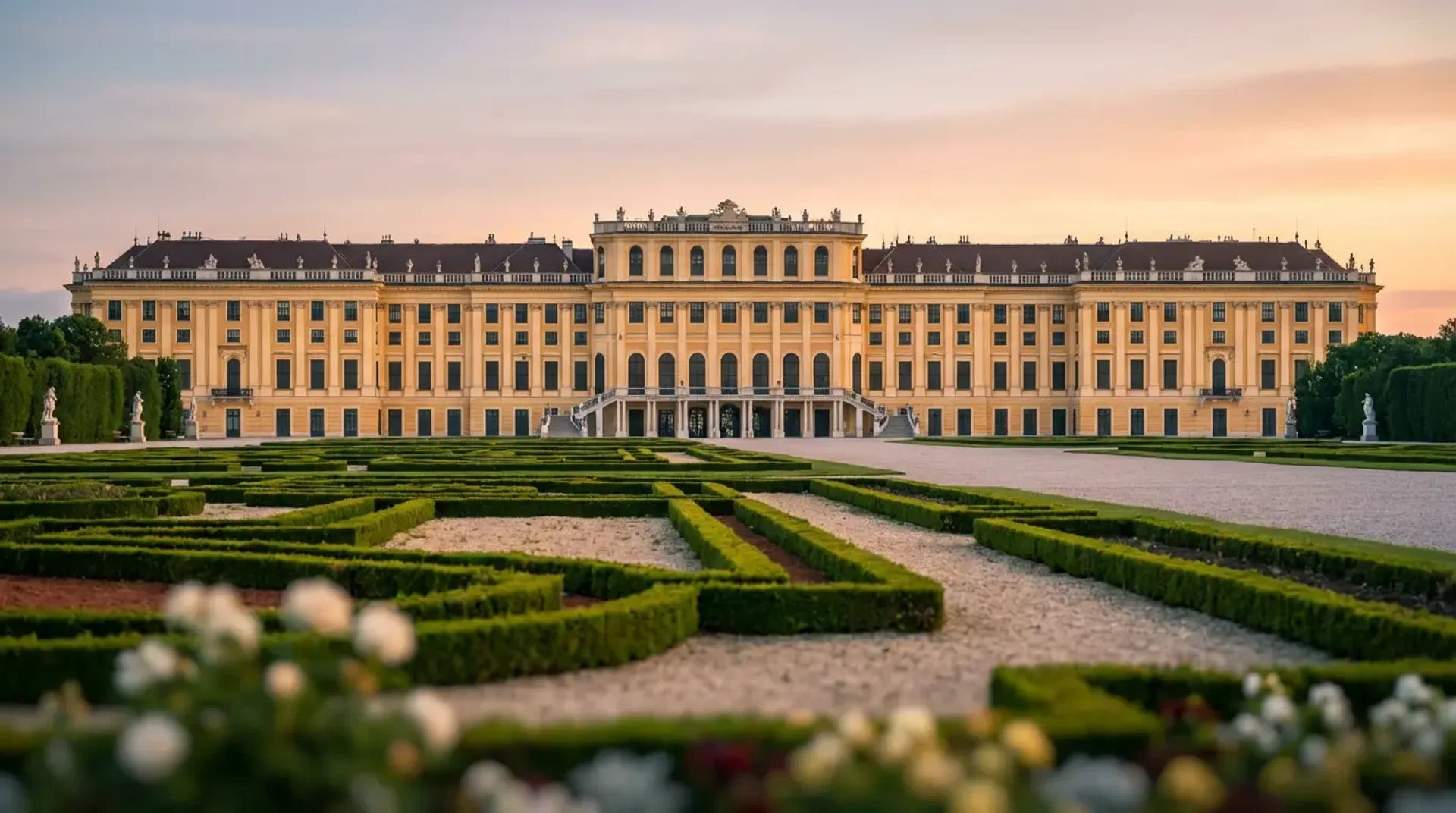
The Habsburg summer residence and UNESCO World Heritage site (listed 1996) is the top of every Vienna itinerary. Designed by Fischer von Erlach and substantially rebuilt under Maria Theresa in the 1740s, the palace has 1,441 rooms of which 40 are open to the public on the Grand Tour ticket. The terraced gardens climb to the Gloriette (1775), a free-to-walk hilltop arch with a panorama over the whole city, and the adjacent Tiergarten Schönbrunn is the world’s oldest continuously operating zoo (founded 1752). Admission €29 (~$31) for the Grand Tour. Opening hours April–October 08:30–17:30, November–March 08:30–17:00 (last entry 60 minutes before close). Book the 10:30–11:30 slot to skip the 09:00 tour-bus crunch.
Historic Centre of Vienna (UNESCO)
The entire 3.5 km² Innere Stadt is UNESCO-listed (2001) for its continuous layering of Roman (Vindobona legion camp under Michaelerplatz), medieval (Stephansdom nave 1147), Baroque (the 1693 Plague Column), and Ringstraße Gründerzeit (1857–1865) architecture. Walking is free. The best single route is the Ringstraße circuit—5.3 km along the boulevard past Parliament, Rathaus, Burgtheater, University, Stock Exchange, Votivkirche, MuseumsQuartier, and the Staatsoper; tram 1 or 2 covers it in 25 minutes if your feet give out.
St. Stephen’s Cathedral (Stephansdom)
Vienna’s Gothic cathedral, begun in 1147 and reconstructed to its current form from 1359, has a 136.4-metre south tower (nicknamed Steffl) that you can climb via 343 stairs for a rooftop view. Admission €6 main nave, €6.50 south tower stairs, €7 north tower lift (~$6.50–7.50). The glazed-tile roof—230,000 tiles in Habsburg double-eagle and Vienna/Austria coat-of-arms patterns—is best visible from the tower climb itself. Tourist hours are Monday–Saturday 09:00–11:30 and 13:00–16:30; Sunday 13:00–16:30 (services only in the morning).
Hofburg Palace Complex
The Habsburg winter residence expanded from a 13th-century castle into a 2,600-room complex across 18 wings by 1918. The Sisi Ticket (€19.50, ~$21) covers the Imperial Apartments, Sisi Museum, and Silver Collection plus Schönbrunn Palace within one year. Inside the broader Hofburg sit the Spanish Riding School’s white Lipizzaner horses (morning exercise €15, full performances €27–180), the Imperial Treasury (Schatzkammer) with the 10th-century Imperial Crown (€14), and the Austrian National Library’s Prunksaal (State Hall, €10), a Baroque library nave that routinely wins “most beautiful library in the world” polls.
Belvedere Palace (Upper and Lower)
The Belvedere’s twin Baroque palaces, built 1712–1723 for Prince Eugene of Savoy, hold Gustav Klimt’s The Kiss (1907–1908) in the Upper Belvedere’s Marble Hall—the single most photographed painting in Austria. Admission Upper €17.50, Lower €15.50, combined €28 (~$19 / ~$17 / ~$30). Open daily 09:00–18:00, Friday until 21:00. Arrive at 09:00 opening to have the Marble Hall to yourself for the first 15 minutes; by 10:30 it is standing-room-only.
Vienna State Opera (Wiener Staatsoper)
The Staatsoper runs approximately 300 opera and ballet performances a year, September through June, on a repertoire that rotates nightly. Guided building tours €13 run daily in multiple languages; standing-room Stehplatz tickets cost €15 and 567 standing places are sold 80 minutes before curtain at the Operngasse side door—the cheapest serious opera ticket in the world. The building itself, opened 1869 and rebuilt 1955 after WWII bombing, is the Ring’s musical centrepiece; the Wiener Philharmoniker draws its players from the Staatsoper orchestra.
Kunsthistorisches Museum
The “KHM” (1891) holds the Habsburg imperial collection across Egyptian antiquities, Greek and Roman sculpture, the Kunstkammer cabinet of curiosities, and the Picture Gallery. Admission €21; combined €25 with the Neue Burg (~$22). The Bruegel Room holds 12 Pieter Bruegel the Elder paintings—the largest single collection of his work in the world, including The Tower of Babel, Hunters in the Snow, and Peasant Wedding. Open Tue–Sun 10:00–18:00, Thursday until 21:00; closed Mondays in low season.
Albertina
The Albertina (1776 collection, 1822 museum) pairs Habsburg state rooms on the second floor with the Batliner modern collection (Monet, Picasso, Degas, Chagall) on the first. Admission €18.90 adults; €25.90 combined with Albertina Modern (~$20 / ~$28). Dürer’s watercolour Young Hare (1502) and Praying Hands rotate onto public display a few weeks per year—the rest of the time they sit in climate-controlled storage. Open daily 10:00–18:00, Wednesday and Friday to 21:00.
MuseumsQuartier Wien
The 90,000 m² MuseumsQuartier, opened 2001 inside the converted imperial stables (1717–1725 by Fischer von Erlach), is the city’s contemporary-art centre. The Leopold Museum (€17, MQ Duo €29 with mumok) holds 220-plus Egon Schiele works—the largest Schiele collection anywhere—plus Klimt, Kokoschka, and Wiener Werkstatte. mumok covers 20th-century and contemporary art. The courtyard’s Enzi lounge furniture fills every summer afternoon. Leopold Tue–Sun 10:00–18:00; mumok Mon 14:00–19:00, Tue–Sun 10:00–19:00.
Entertainment
Vienna’s entertainment calendar is unusually music-heavy, unusually formal, and unusually calendar-dependent. The opera and concert season runs September through June (dark in July and August); the ball season runs January through Fasching (Mardi Gras); the Heurigen run on the vineyards year-round but peak August through October; and the Christkindlmärkte collapse the whole thing into one mulled-wine–and–chestnut month in December.
Opera and Classical Concerts
Vienna runs approximately 300 opera performances a year at the Staatsoper plus roughly 200 at the Volksoper, and three resident orchestras (Wiener Philharmoniker, Wiener Symphoniker, ORF RSO Wien) fill Musikverein’s gold Goldener Saal and the Konzerthaus nightly from September to June. The Wiener Philharmoniker’s New Year’s Concert on 1 January—broadcast to 90+ countries and a billion viewers annually—is the single most-watched concert on Earth, and the Goldener Saal is acoustically the most precisely designed concert hall of the 19th century (Theophil Hansen, 1870). The Vienna Boys’ Choir sings Sunday Mass at the Hofburgkapelle at 09:15, September–June (€12–39 seated, free if you stand at the back). Typical cost Staatsoper Stehplatz €15, seated €25–280; Musikverein €33–160; Konzerthaus €25–120. Staatsoper standing-room tickets go on sale 80 minutes before curtain at the Operngasse side door—queue from 60 minutes before, bring a long scarf to reserve your spot on the brass rail while you step away, and dress smart-casual even for Stehplatz.
The Viennese Ball Season (Ballsaison)
Vienna runs roughly 450 balls between New Year’s Eve and Fasching Tuesday—the largest ball season of any city on Earth. The Opera Ball, traditionally held on the Thursday before Ash Wednesday (2026: 12 February), transforms the Staatsoper into a parquet dance floor for 5,000 guests, runs live on ORF national TV, and is the social centrepiece of the Austrian calendar. Opera Ball entry €390 (standing) or €230 per person with a reserved table (tables of 4 or 6, table fee €200–4,000 depending on location); smaller guild balls €85–160. Opera Ball tickets open 1 October the prior year via operaball.at. Dress code is white tie with tails (black tie is refused at the door); tail coats rent from €90 at Vienna’s Frackverleih shops, gowns from €180 upward.
Heurigen Wine Taverns
On the hills north and west of the city—Grinzing, Nussdorf, Neustift am Walde, Stammersdorf across the Danube—family wineries open their farms as taverns on a rotating schedule. The pine-bough Buschen hung above the door is the signal they’re pouring this week’s own wine alongside a cold buffet of Brettljause cold cuts, Liptauer cheese spread, blood sausage (Blunzn), and bread. Typical cost 1/8 litre (Achtel) of Grüner Veltliner €2.80–4.20; cold platter €9–18. No booking needed—turn up in the late afternoon. Take tram 38 from the Ring to Grinzing, or bus 35A to Sievering and Neustift. Check heuriger-kalender.at to see which farms are open the week of your trip.
Coffeehouse Culture (UNESCO Intangible Heritage, 2011)
UNESCO describes the Viennese coffeehouse as a place “where time and space are consumed, but only the coffee is on the bill.” No one will rush you—one Melange (€4.50–5.80) buys you three hours with today’s newspapers mounted on wooden rods, a glass of Alpine tap water silently refilled by a waiter in a tailcoat, a billiard table or chess set in the back, and the right to sit and write your novel if you feel like it. Einspänner €5.20, slice of cake €5–9. Most grand cafes (Central, Landtmann, Sacher, Demel) don’t take reservations—arrive before 10:00 or after 15:00 to skip queues.
Schönbrunn Summer Night Concert (open-air, free)
Every year in late May or early June the Wiener Philharmoniker plays a free open-air concert in the Schönbrunn palace gardens for approximately 100,000 people—an ORF live-broadcast festival kick-off with a rotating celebrity conductor (Muti, Barenboim, Dudamel, Gatti have all done recent years). In 2026 it is scheduled for Thursday 18 June. The show is free (no ticket), but arrive by 17:00 to find grass space; gates open at 15:30. Bring a picnic—no bottled glass allowed, but plastic is fine. Metro U4 Schönbrunn.
Live Music, Jazz and Electronic Clubs
Beyond the classical circuit, Porgy & Bess runs jazz nightly in a former cinema basement (Riemergasse 11, €22–35, book 1–2 weeks ahead for name acts). Grelle Forelle and Pratersauna cover the techno side with proper Berlin-adjacent programming. Flex, a former Danube Canal boathouse, has been Vienna’s flagship club since 1995 and is a three-minute walk from Schottenring U-Bahn; cover €10–15, drinks €5–9, open until 06:00 on weekends. WUK (Werkstätten- und Kulturhaus, Alsergrund) is the go-to indie venue for touring bands and mid-tier international acts. For electronic festival season, the summer Bank Austria Halle and Electric Love drive the circuit; for jazz, Jazzfest Wien runs late June into early July.
Theatre, Cabaret and Musicals
Vienna’s German-language theatre scene runs thick: the Burgtheater on the Ring (founded 1741) is the German-speaking world’s most prestigious stage and runs nightly repertoire (€14–99); the Theater in der Josefstadt (1788) pairs classics with new Austrian work in an 18th-century auditorium (€18–82); the Volkstheater in Neubau covers progressive and politically engaged repertoire. The musical circuit (VBW — Vereinigte Bühnen Wien) runs Elisabeth, Tanz der Vampire and Mozart! at the Raimund Theater and the Ronacher (€49–145). Kabarett Simpl on Wollzeile has been running satirical cabaret since 1912 (€35–50, German only).
Day Trips
Vienna is an east-Austrian river city with easy rail links to three directions—the Danube west to the Wachau, the Danube east to Bratislava, and ten different Austrian Bundesland capitals within three hours on the Railjet. Five day trips cover the full range.
Bratislava, Slovakia (1 hour by Twin City Liner catamaran or ÖBB Railjet)
The only EU capital-to-capital day trip under 60 minutes—and you cross into a different country. Bratislava’s compact old town is walkable in an afternoon: Michael’s Gate (the last surviving medieval tower), Hlavné námestie main square with its Jesuit and Franciscan churches, the reconstructed hilltop Bratislava Castle with a panorama down the Danube into Hungary, and Slovak cuisine (bryndzové halušky sheep-cheese dumplings, kapustnica sauerkraut soup, lokse potato flatbreads) all fit comfortably into six hours on the ground. The Twin City Liner catamaran leaves Schwedenplatz in Vienna April–October (€45 return, 1 hour 15 minutes, four departures daily at peak). The ÖBB Railjet from Wien Hauptbahnhof runs hourly at €16 for the EURegio day ticket, covering both cities’ transit too. Bring your passport—Austria and Slovakia are both in Schengen but UK and non-EU passports still need ID at hotels, and the Slovak Tatra Tram system uses a separate ticket from Vienna’s transit.
Wachau Valley (1 hour 15 minutes by ÖBB to Krems plus DDSG Danube boat)
UNESCO-listed 36 km Danube gorge between Melk and Krems (inscribed 2000), lined with terraced vineyards, apricot orchards, and medieval villages—Dürnstein with its sky-blue Baroque church steeple where Richard the Lionheart was imprisoned in 1192, Spitz’s hillside vineyards climbing a thousand-step “Thousand-Bucket Hill”, Weissenkirchen’s ochre houses against the water. The Wachau ticket combines return rail from Vienna to Krems and one-way DDSG Blue Danube boat to Melk or back for €79 (~$85). Best in April (apricot blossom, the white-flower weekend runs mid-April) and October (grape harvest and the Sturm wine season). Buy the ticket at Wien Hauptbahnhof the morning of travel or via the DDSG website. Bring walking shoes and swim in the river at Dürnstein’s public beach if it’s August.
Baden bei Wien (30 minutes by Badner Bahn light rail)
The original Habsburg spa town—sulphur thermal baths that Beethoven took for his hearing (he summered here 1804–1825, composing parts of the Ninth Symphony), a Biedermeier town square almost untouched from 1820, the Kurpark with its summer operetta festival and open-air concert shell, the Casino Baden (Austria’s oldest at 1934), and the Helenental gorge for a short 6 km hike along the Schwechat river. The Römertherme spa (€18.50 for 2 hours, €23.50 for a day) is the modern complex with heated indoor pools fed by the sulphur springs; the historic Josephsbad (1804) and Frauenbad are architecture-only visits now. The Badner Bahn light rail runs from Oper-Karlsplatz every 15 minutes, 60 minutes to Baden for €6.60 single. Day pairs well with a late-afternoon return and a Heurigen evening in Gumpoldskirchen en route—get off the Badner Bahn at Gumpoldskirchen stop, walk ten minutes to the vineyards.
Melk Abbey (1 hour 15 minutes by ÖBB Railjet direct)
A 900-year-old working Benedictine monastery on a cliff above the Danube, rebuilt 1702–1736 as one of Europe’s greatest Baroque complexes and the setting for Umberto Eco’s The Name of the Rose. The abbey library holds 100,000 volumes including 1,800 medieval manuscripts; the abbey church’s gold and marble interior and Jakob Prandtauer’s 362-metre terraced facade overlooking the river are the headline images. The basilica’s twin bell-towers and painted ceiling by Johann Michael Rottmayr, and the imperial suite where Napoleon stayed twice, round out the tour. Abbey tour €14.50 (guided) or €13 (self-guided), daily 09:00–17:30. Combine in the same day with the Wachau Valley boat downstream to Krems—Melk in the morning, boat after lunch, train back from Krems at 17:38.
Salzburg (2 hours 22 minutes by ÖBB Railjet direct)
Doable as a long day trip if you start early—Mozart’s birthplace on Getreidegasse (1756, at house number 9), Hohensalzburg Fortress (built 1077, the largest fully preserved castle in central Europe and reached by funicular, €16.80 combined ticket), Getreidegasse shopping with its wrought-iron guild signs, Mirabell Gardens (Do-Re-Mi steps from The Sound of Music), Salzburg Cathedral and the St. Peter’s Stiftskeller restaurant (operating since 803 AD, possibly the oldest continuously running restaurant in Europe) all fit into seven hours on the ground. Book ÖBB Sparschiene advance fare at €19–39 one-way (6 weeks out), or the Einfach-Raus-Ticket regional day pass (€44 for 2 adults). Leave Vienna 07:30, back by 22:00. Overnight is better if you can spare it—Salzburg reads as a different city after dark when the fortress is floodlit and the tour buses have left, and Hohensalzburg’s night tour at 20:30 is one of the best single evenings you can have in Austria.
Seasonal Guide
Vienna has four distinct seasons with real winters and real summers, and the cultural calendar is intensely season-dependent—the opera goes dark in July, the balls run January and February, and the Christkindlmärkte own December. Choosing when to come is really choosing which of four cities you want to see.
Spring (March–May)
4–20 °C, with magnolia in the Volksgarten from late March and cherry blossom in Türkenschanzpark peaking mid-April. Easter markets at Schönbrunn and Am Hof run the two weeks before Easter Sunday (2026: 14 March – 6 April) and are smaller and less touristy than the Christmas circuit. The Vienna City Marathon runs the third Sunday of April (2026: 19 April) and closes the Ringstraße to traffic from 07:00. Fewer crowds than summer and the opera and ball seasons still running into March, with concert tickets easier to get than winter peak. Temperatures are unreliable—pack layers, a light waterproof, and a scarf for mornings. Best month for photography: late April, once the Prater chestnuts have leafed out.
Summer (June–August)
16–29 °C, with occasional 35 °C heatwaves as the Danube basin bakes. Opera and concert halls close from July (Staatsoper dark 1 July–31 August), though the Jazzfest Wien in late June/July and Donauinselfest (the 2.5-million-attendee free music festival on the Danube Island, last full weekend of June) fill the gap. Schönbrunn Summer Night Concert falls 18 June 2026. The Film Festival on Rathausplatz screens opera and classical concerts on a giant outdoor screen nightly (July–early September, free) with food stalls behind the seating. Beat the heat at a Strombad along the Alte Donau where the water stays swimmable through mid-September, or retreat to the air-conditioned KHM. Vienna empties somewhat mid-August as locals decamp to Carinthia lakes—quieter streets, shorter queues at Schönbrunn.
Autumn (September–November)
6–22 °C. Opera and concert season reopens September 1 with the Staatsoper gala and the Wiener Symphoniker’s autumn series at Musikverein; Heurigen fill with Sturm (cloudy fermenting grape must, served in jugs only during the harvest window) through October, and roast chestnuts show up on every street corner from mid-October. The Viennale film festival runs late October into early November (2026: 22 October – 4 November). Autumn colour peaks in the Vienna Woods and the Prater mid-October. This is arguably the best time of year in the city—reasonable weather, the full cultural calendar back on, smaller crowds than summer, and the Heurigen at their annual peak.
Winter (December–February)
−3–5 °C, with frequent snow through January and occasional freezes that turn the Danube Canal into ice floes. Christkindlmärkte at Rathausplatz, Schönbrunn, Belvedere, Spittelberg, Am Hof and Stephansplatz run late November through 26 December (Rathausplatz and Schönbrunn extend through 31 December). The Wiener Philharmoniker New Year’s Concert on 1 January is the annual broadcast event. Ball season (Ballsaison) January into early February peaks with the Opera Ball on 12 February 2026. Museums, cafes, concert halls and the Staatsoper carry the short-daylight months; dawn is 07:30, dusk at 16:30 in late December. Pack a proper coat, waterproof boots, and a scarf.
Getting Around
Vienna’s public transit is among the best in Europe by capacity-per-euro and one of the reasons the city consistently tops quality-of-living indices. Everything you want to see sits within the Wiener Linien zone 100, so a day pass covers U-Bahn, tram, bus and S-Bahn journeys inside the city with no zone arithmetic to worry about.
U-Bahn (Metro)
The Wiener Linien U-Bahn runs five numbered lines (U1, U2, U3, U4, U6; no U5 yet—it is under construction along a partial route through the 8th and 9th districts, scheduled to open 2027) covering 83.3 km of track and 109 stations. Trains run every 3–5 minutes from 05:00 to around 00:30 weekdays, and 24 hours continuously on Friday and Saturday nights. A single U-Bahn ride (Einzelfahrschein) is €2.40 and covers any one-way journey including transfers between lines, tram and bus within 60 minutes. Each U-Bahn station has lifts and step-free access, and the cars are fully air-conditioned (a 2020s upgrade). The U1 runs north-south through Stephansplatz and Karlsplatz; the U3 runs east-west through Herrengasse and the Volkstheater; U4 loops through Karlsplatz and the Danube Canal; U6 covers the Gurtel.
Trams and S-Bahn
Vienna’s tram network is the world’s sixth-largest at 172 km across 28 lines, and the red-and-white trams themselves are so characteristic of the city that they show up on the local beer logos. The Ring tram (route 1 and 2) circles the historic centre in 25 minutes and is the cheapest city tour on wheels; board at Schwedenplatz for a clockwise loop. Tram D runs from the south-west to the Ring and is the cheapest way to reach the Belvedere. The S-Bahn regional rail integrates with the city ticket inside zone 100 (which covers everywhere a tourist would go). Night bus (Nightline) routes N25–N75 cover off-hours when the U-Bahn is closed Sunday–Thursday, though on weekends the U-Bahn simply runs all night at 15-minute intervals.
Tickets and the Klimaticket
Wiener Linien day pass €8.20 (~$8.80); 72-hour pass €17.10 (~$18.30); 7-day pass €19.70 (~$21)—note the 7-day is calendar-week, valid Monday 00:00 until the following Monday 09:00, so buy on a Monday to get the full week. A Vienna City Card (24h €17, 48h €25, 72h €29) adds museum and sight discounts on top of the transit ticket, which can pay for itself in a single day of serious sightseeing. For country-wide Austria travel, the national Klimaticket (€1,095 per year) covers all trains, S-Bahn, U-Bahn, trams and regional buses country-wide—overkill for a week in Vienna, but a genuinely excellent deal for residents and long-stay visitors. Ticket vending machines accept contactless cards and dispense tickets in English, German, French, Spanish and Italian.
Airport Access — Vienna International (VIE)
- City Airport Train (CAT) — 16 minutes non-stop to Wien Mitte, €14.90 single / €24.90 return
- S7 Regional Train — 25 minutes to Wien Mitte (same platforms, S-Bahn service), €4.30 single (covered by 24h/72h Wiener Linien pass)
- Vienna Airport Lines bus — 20–40 minutes to Schwedenplatz, Hauptbahnhof or Westbahnhof, €9.50 single
- Taxi / Uber / Bolt — 25 minutes (no traffic), €38–48 flat zone
Taxis and Rideshare
Taxi flag-fall is €3.80 (day) / €4.60 (nights and Sundays), plus €1.42 per km. Uber, Bolt and FreeNow all operate and are priced identically to taxis (Austrian law). Cash is still accepted in most Viennese taxis, but card is faster. Tipping: round up to the nearest euro (5–10%). Use rideshare for late-night Grinzing-back-to-the-Ring returns when the N38 night bus has stopped.
Navigation Tips
Apps: WienMobil (Wiener Linien’s official app) buys tickets, plans U-Bahn/tram/bus/bike routes and shows real-time arrivals with platform-level accuracy. ÖBB Scotty is the country-wide rail and regional-transit planner, and the one to use for the Vienna–Bratislava, Vienna–Salzburg and Vienna–Graz day-trip circuit. Citymapper, Google Maps and Apple Maps all work well in Vienna and pull live U-Bahn and tram data. For walking, the Innere Stadt is small enough (1 km across) that a paper map from the tourist info at Albertinaplatz is fine—and honestly the Ring walk is better with a paper map, where you can see the relationship between the Rathaus, the Parliament and the Hofburg in one glance.
Bikes, Scooters and Walking
Vienna has 1,700 km of cycling infrastructure and a flat riverbank Donauradweg that runs from the Wachau into the city. WienMobil Rad is Wiener Linien’s bike-share (first 60 minutes free with any Wiener Linien day pass, €10 for each subsequent hour). Lime, Bird and Voi e-scooters swarm the Ring. For a day, walking is the best move—the Innere Stadt, Leopoldstadt, Neubau and Wieden are all walkable from Stephansplatz within 20 minutes.
Budget Breakdown: Making Your Euros Count
Vienna sits in the middle of the Western-European price band—cheaper than Zurich, Copenhagen or London, more expensive than Prague or Budapest, and roughly even with Berlin or Milan. The big variable is ball season and festival overlap: hotel prices in the Innere Stadt jump 40–60% for the Opera Ball week (February) and the Vienna New Year’s Concert week (late December into early January).
| Tier | Daily | Sleep | Eat | Transport | Activities | Extras |
|---|---|---|---|---|---|---|
| Budget | €75–110 (~$80–118) | Hostel dorm €28–42 / budget pension €65–95 | Würstelstand + Naschmarkt + supermarket €18–28 | Wiener Linien 7-day €19.70 / 72h €17.10 | Free Sundays at Belvedere Lower (first Sunday of the month), Kunsthalle Karlsplatz free, 5 km Ringstraße walk | One cafe session €8–12 |
| Mid-Range | €160–260 (~$170–280) | 3-star hotel €95–150 / design B&B €110–170 | Sit-down Beisl dinner €22–32; coffeehouse lunch €14–20 | Vienna City Card 72h €29 (adds museum discounts) | Schönbrunn Grand Tour €29; Belvedere combined €28; one opera Stehplatz or Musikverein concert €20–55 | Heurigen evening €28–40 per person |
| Luxury | €460+ (~$490+) | Hotel Sacher, Park Hyatt, Palais Hansen Kempinski from €380 | Meissl & Schadn schnitzel €32.50; Steirereck tasting menu €210 | Uber/taxi €10–18 per hop | Opera parterre seat €150–280; private Spanish Riding School morning exercise €52 | Sachertorte and Melange at Café Sacher on a corner table |
Where Your Money Goes
Accommodation is the single biggest line item in Vienna—the difference between a €95 pension in Mariahilf and a €380 Innere Stadt hotel is larger than the difference in any other line on your budget, and choosing a 6th, 7th or 9th district base over the 1st will save €80–120 a night without meaningfully compromising walkability. Food sits in the middle: Würstelstand at €6, Naschmarkt takeaway at €10, Beisl sit-down at €22, fine-dining Michelin at €90–210. Transit is the surprise cheap line—€19.70 for a week of unlimited U-Bahn, tram, bus and S-Bahn is arguably the best deal in the city and cheaper than four single rides. Activities stack quickly if you do three €17–29 museums in a day, so the Vienna City Card (€29 for 72 hours with museum discounts) or the Sisi Ticket (€19.50 covering Hofburg plus Schönbrunn within one year) pay for themselves fast. Ball season and the week around the New Year’s Concert push hotel prices 40–60% above their usual band—book those weeks four months out, or avoid them.
Money-Saving Tips
- Vienna museums are free on Austria’s national holiday (26 October); Belvedere Lower is free first Sunday of every month for under-19s; Albertina is free with every Staatsoper ticket stub (same day)
- The Staatsoper €15 standing-room ticket is the cheapest serious opera experience in the world—queue at the Operngasse side door 80 minutes before curtain
- Tap water is piped from the Alps and served free in every restaurant—never pay for bottled water, and ask for “ein Glas Leitungswasser, bitte”
- The 7-day Wiener Linien pass (€19.70) expires Monday 09:00 regardless of when you activate; time your purchase to get a full week rather than buying on a Friday
- Ottakring Brunnenmarkt and Karmelitermarkt both sell takeaway börek, fresh bread and produce at half the Innere Stadt price—lunch for €8 is easy
- Book ÖBB Sparschiene advance fares for day trips 4–6 weeks ahead: Vienna–Salzburg drops from €58 walk-up to €19 advance
- The Sisi Ticket (€19.50) covers Hofburg apartments, Sisi Museum, Silver Collection and Schönbrunn — buy one, use over separate days within a year
Practical Tips
Language
German is the state language, with Austrian German differing in vocabulary from German German (Jänner for January, Erdäpfel for potatoes, Paradeiser for tomatoes, Schlagobers for whipped cream, Obers for cream, Semmel for bread roll). Viennese dialect (Wienerisch) softens consonants and uses unique slang—Beisl for pub, Grüß Gott for hello, Servus for casual hi/bye, Baba for goodbye, leiwand for cool. English is universal in tourist-facing spots in the 1st, 6th, 7th and 9th districts. German formality matters: use Sie (formal you) with anyone older than you and with every service worker; wait to be invited to use du. Getting this right immediately marks you as a serious visitor rather than a tourist.
Cash vs. Cards
Cards—contactless credit and debit, Apple Pay, Google Pay—are accepted almost everywhere inside Vienna, including U-Bahn vending machines, Würstelstände, coffeehouses, and most Heurigen. Cash is still useful for tipping (5–10% rounded to the nearest euro, handed to the server with the bill — never left on the table), small farmers’-market stalls, and older Beisl. ATMs are called Bankomat and are everywhere. Bring €30–50 cash per day for tips and incidentals and you’ll use cards for almost everything else.
Safety
Vienna is one of the safest large cities in Europe—Austria ranked 3rd on the 2024 Global Peace Index, one of the top ratings worldwide. Petty pickpocketing is the main concern, concentrated on the U1 and U3 U-Bahn lines (especially around Stephansplatz, Karlsplatz and Westbahnhof), in Naschmarkt crowds, at Schönbrunn queues, and at Christkindlmarkt density in December. Emergency number is 112 (EU standard). Women travelling solo report Vienna as very comfortable; the U-Bahn runs 24 hours on weekends and is well-lit.
What to Wear (Ball Season Dress Code)
Vienna dresses up. Smart-casual is the floor at a sit-down dinner; opera and concert halls expect (though do not technically require) men in a jacket and women in a dress or trouser suit for main-floor seats. For the ball season in January and February, white tie with tails is enforced at the Opera Ball and most other grand balls—black tie will be turned away at the door. Tail coats rent from €90 at Vienna’s Frackverleih shops (Wollzeile, Neubau); ball gowns from €180 and upward at rental shops around Mariahilfer Straße. In winter (December–February) pack a proper coat and waterproof boots—January snow is the norm, not the exception.
Cultural Etiquette
Greet with Grüß Gott entering any shop (Servus is casual, Guten Tag works too but feels more north-German). Say Auf Wiedersehen or Tschüss leaving. Wait for “Mahlzeit” before starting a shared meal. In a coffeehouse, one coffee buys unlimited time—waiters won’t hand you the bill until you ask (zahlen bitte); never ask for a doggy bag, never eat breakfast quickly. On escalators, stand right, walk left. Jaywalking is fined €60+ and locals genuinely wait for the green man even on empty side streets at 02:00.
Würstelstand Etiquette
The Würstelstand is the city’s most democratic institution. Order by asking for a named sausage (Käsekrainer, Bosna, Burenwurst, Debreziner), choose süß (sweet) or scharf (spicy) mustard, ask for a Semmel roll or a piece of dark Brot, and pair with a kleines Bier. Pay cash or card. Eat standing at the counter—the Würstelstand has no seats and you’re blocking the queue otherwise. Bitzinger behind the Albertina (open until 04:00) and Leo Hillinger on Maria-Theresien-Platz are the two best in the centre.
Connectivity
Austria has excellent 4G and 5G coverage from A1, Magenta and Drei. EU/EEA SIMs roam free under EU roam-like-at-home rules. Prepaid Austrian SIMs (A1 Bob, Yesss!, HoT) cost €9–20 with 10–50 GB of data and are available at supermarkets and tobacco shops (Tabak/Trafik). Eduroam works at most cafes, libraries and universities. Free Wi-Fi is widespread at U-Bahn stations and main-line stations.
Health & Medications
EHIC card holders (EU) or the UK Global Health Insurance Card get state-rate care at Austria’s public hospitals. Pharmacies (Apotheke, marked with a red A sign) close by 18:00 and rotate overnight duty (Nachtdienst—the rota is posted in the window of every closed pharmacy, and 1455 is the national pharmacy hotline). Tap water is Alpine-fresh—Vienna’s plumbing comes directly from Styrian and Lower Austrian mountain springs via an 1873 aqueduct—drink it freely and order it in restaurants.
Luggage & Storage
Wien Hauptbahnhof and Wien Westbahnhof both have luggage lockers (€2–4.50 per 24 hours, coin or card). Wien Mitte (the CAT airport-train terminus) has staffed left-luggage from 05:30 to 23:30. Many hotels will hold luggage for departure-day guests at no charge even after checkout—ask at reception. Vienna Airport has lockers and staffed storage in the main terminal.
Frequently Asked Questions
How many days do I need in Vienna?
Four full days is the sweet spot—two for the imperial core (Schönbrunn, Hofburg, Ring, Stephansdom), one for the museums (Kunsthistorisches, Albertina, MuseumsQuartier), and one for the outer districts, a coffeehouse afternoon, and a Heurigen evening. Add a fifth day for a Wachau Valley or Bratislava day trip. Culture-focused visitors regularly come for a week and still don’t exhaust the concert and opera calendar. If you have only two days, prioritise the Schönbrunn morning, the Stephansdom-to-Belvedere afternoon, a Staatsoper Stehplatz in the evening, and a Ring walk plus Naschmarkt the next day.
Is Vienna good for solo travellers?
Extraordinarily so. The coffeehouse culture is built for solo sitting—nobody thinks twice about one person nursing a Melange for three hours with a book, and waiters won’t hurry you to your bill. The Staatsoper Stehplatz sells one ticket at a time, Beisl taverns seat you at shared Stammtisch tables where locals will happily strike up a conversation, and the U-Bahn runs 24 hours on weekends and is safe well into the small hours. Solo women travellers report Vienna as one of the easiest European cities to navigate alone—the combination of low crime, excellent transit and strong social norms around formality makes harassment rare.
Do I need a transit pass or single tickets?
If you’re staying more than two days, buy the 72-hour pass (€17.10) or the 7-day pass (€19.70—note it expires Monday 09:00 regardless of when you activate, so time your purchase). The Vienna City Card (€29 for 72 hours) adds museum and sight discounts that can pay for themselves in a single day of sightseeing. For a one-day visit, buy the 24-hour pass (€8.20)—a single ride is €2.40, so even four journeys pay it off. There are no turnstiles at U-Bahn stations—validate each ticket once in the blue machine at the station entrance.
What about the language barrier?
English is universal in Vienna’s tourist-facing businesses—museums, coffeehouses, hotels, the Staatsoper, restaurant menus, U-Bahn signage. Learning Grüß Gott (hello), Danke (thanks), Bitte (please/you’re welcome), Auf Wiedersehen (goodbye) and Zahlen bitte (the bill please) is polite and pays off. Don’t say Guten Morgen past 10:00 — Austrians switch to Grüß Gott for the rest of the day. Waiters and shop staff will always answer in English if you open in German—the opening effort matters more than the sustained competence.
When is the Vienna Opera Ball 2026 and can tourists go?
Thursday 12 February 2026 at the Staatsoper. Yes—tickets open 1 October the prior year at operaball.at. Entry €390 (no table) or €230 per person with a reserved table (tables of 4 or 6, table fee €200–4,000 depending on location). Dress code is white tie with tails (black tie will be refused at the door). Tails rent from €90 at Vienna’s Frackverleih shops; gowns from €180 upward at Mariahilfer Straße rental shops. If you miss the Opera Ball, approximately 450 smaller balls run from 31 December through the Tuesday before Ash Wednesday—the Kaffeesiederball (coffeehouse-owners’ ball), Philharmonikerball, Bäckerball, and Rudolfina-Redoute are easier to get into.
Can I use credit cards everywhere?
Yes—contactless cards work at U-Bahn vending machines, every Würstelstand, every coffeehouse, most Heurigen and every taxi. Apple Pay and Google Pay are widely accepted. Carry €30–50 in cash for tipping (handed to the server when paying, not left on the table) and small market stalls at Brunnenmarkt or weekend farmers’ markets. ATMs (Bankomat) are everywhere.
When is Christkindlmarkt and which one should I visit?
Vienna’s Christmas markets run from mid/late November through 26 December (Rathausplatz and Schönbrunn extend through 31 December). Rathausplatz is the biggest and most touristic—150 stalls, a skating rink in the park, and 3 million visitors a season. Schönbrunn’s market in the palace forecourt is the most photogenic and less crowded at weekday lunchtime. Spittelberg’s is the smallest and most local—cobbled lanes, artisan stalls, no Ferris wheel. Belvedere’s pairs handicrafts with palace views from the upper garden. Drink the Glühwein (mulled wine, €4–5) in the souvenir ceramic mug and keep the mug—every market’s mug is a different design.
Is Schönbrunn or the Hofburg better?
Both if you have time. Schönbrunn (the summer palace outside the Ring, UNESCO-listed 1996) has the bigger gardens, the Gloriette hilltop viewpoint, and the world’s oldest zoo. The Hofburg (the winter palace inside the Ring) has the Sisi Museum, the Spanish Riding School, the Imperial Treasury with the 10th-century Imperial Crown, and the Austrian National Library’s State Hall. The Sisi Ticket (€19.50) covers both Hofburg apartments and Schönbrunn within one year—buy it once and use whichever palace you visit first. If you must choose, Schönbrunn wins on first-trip impact; Hofburg wins on density-per-hour.
Ready to Experience Vienna?
Vienna is where the 19th-century European idea of a capital still works—a city where the concert hall is the civic cathedral, the coffeehouse is the living room, and the night train to Venice leaves from Wien Hauptbahnhof at 21:38. Book the Opera Ball ticket a year in advance, pack a proper coat, and leave your rush for another country. For the full country context, read the Austria Travel Guide.
Explore More City Guides
Where to Stay
Vienna hotels guide — from Hotel Sacher to hostel dorms in Mariahilf, with neighborhood-by-neighborhood recommendations.
Alex the Travel Guru
Alex the Travel Guru has dragged friends through 70+ countries and 450 coffeehouses—a running tally that is mostly Vienna’s fault. He first landed in Vienna during ball season 2018, failed to rent tails by noon of the Opera Ball, and spent the evening at Café Central instead. Alex writes FFU’s city and country guides from a home base in the Pacific Northwest, and returns to Vienna every February for a fresh go at the Stehplatz queue.
More city guides you might like
Plan your trip to Vienna
The booking tools we use ourselves. FFU may earn a commission at no extra cost to you.
Plan & book your trip to Vienna
Booking through these searches supports our guides at no extra cost to you.