
☰ On this page
- 📋 In This Guide
- Overview — Why Helsinki Belongs on Every Bucket List
- 🌷 Late-April / Early-May 2026 — Why You’re Right in the Window
- Best Time to Visit Helsinki (Season by Season)
- Getting There — Flights & Arrival
- Getting Around — Metro, Trams, Walking & Ferries
- Top Neighbourhoods & Districts
- 🗓️ Sample Itineraries
- Finnish Culture & Etiquette
- A Food Lover’s Guide to Helsinki
- 📸 Photography Notes
- Off the Beaten Path — Helsinki Beyond the Tourist Trail
- Practical Information
- Budget Breakdown — What Helsinki Actually Costs
- ✅ Pre-Trip Checklist
- 🤔 What Surprises First-Timers
- Frequently Asked Questions
- Ready to Explore Helsinki?
- Explore More
Helsinki, Finland — Design Capital, Sauna Culture & a Pearl of the Baltic
Part of our Finland travel guide.
Helsinki is the only Nordic capital where you can step out of a 1930s functionalist library, walk seven minutes to a public sauna built into a 1980s bathhouse, swim in the Baltic at 4°C in February, and finish the morning with a Karelian pasty pastry at the country’s most famous café — all before 10 a.m. The city is dramatically small for a national capital (676,000 in the inner city, 1.5 million in the metropolitan region) and architecturally restrained in a way that takes most visitors 24 hours to see properly. Helsinki was a small Swedish-built fishing port until 1812, when Russian Tsar Alexander I made it the capital of the autonomous Grand Duchy of Finland and commissioned the German-Swedish architect Carl Ludvig Engel to rebuild the centre in pure neoclassical style. The result is a Senate Square that locals call “the white nights of St. Petersburg in miniature” and one of the most architecturally cohesive 19th-century city centres in northern Europe.
What makes Helsinki different is the obsession with quiet quality. The country runs on a Lutheran-engineering temperament that prizes silence, function and understatement; the design tradition that produced Alvar Aalto, Eero Saarinen, Eliel Saarinen, Marimekko, Iittala, Artek and Marimekko is the same impulse that built Helsinki. The city has the world’s highest density of saunas per capita (3.3 million saunas in a country of 5.5 million people, one for every 1.7 residents), the highest per-capita coffee consumption in the world (12 kg per person per year), and a public-design ethos that produces beautiful things without bragging about them. UNESCO named Helsinki the World Design Capital in 2012; the city has been quietly proving the title ever since.
This guide covers Helsinki neighbourhood by neighbourhood — from the neoclassical Empire-era Senate Square to the design district of Punavuori, plus the islands and saunas that define the city’s relationship with the Baltic. If you’re pairing Helsinki with the rest of the country, see our Finland travel guide for the lake district, Lapland and the Aurora season. The natural Nordic city pairings are our Stockholm city guide (15-hour overnight ferry across the Baltic — the trip itself is half the experience) and our Reykjavik city guide (the Atlantic outlier, 4-hour flight on Finnair).
📋 In This Guide
- Overview — Why Helsinki Belongs on Every Bucket List
- 🌷 Late-April / Early-May 2026 — Why You’re Right in the Window
- Best Time to Visit Helsinki (Season by Season)
- Getting There — Flights & Arrival
- Getting Around — Metro, Trams, Walking & Ferries
- Top Neighbourhoods & Districts
- 🗓️ Sample Itineraries — 2, 4, 6 and 8 Days
- Finnish Culture & Etiquette
- A Food Lover’s Guide to Helsinki
- 📸 Photography Notes
- Off the Beaten Path — Helsinki Beyond the Tourist Trail
- Practical Information
- Budget Breakdown — What Helsinki Actually Costs
- ✅ Pre-Trip Checklist
- 🤔 What Surprises First-Timers
- Frequently Asked Questions
- Ready to Explore Helsinki?
Overview — Why Helsinki Belongs on Every Bucket List
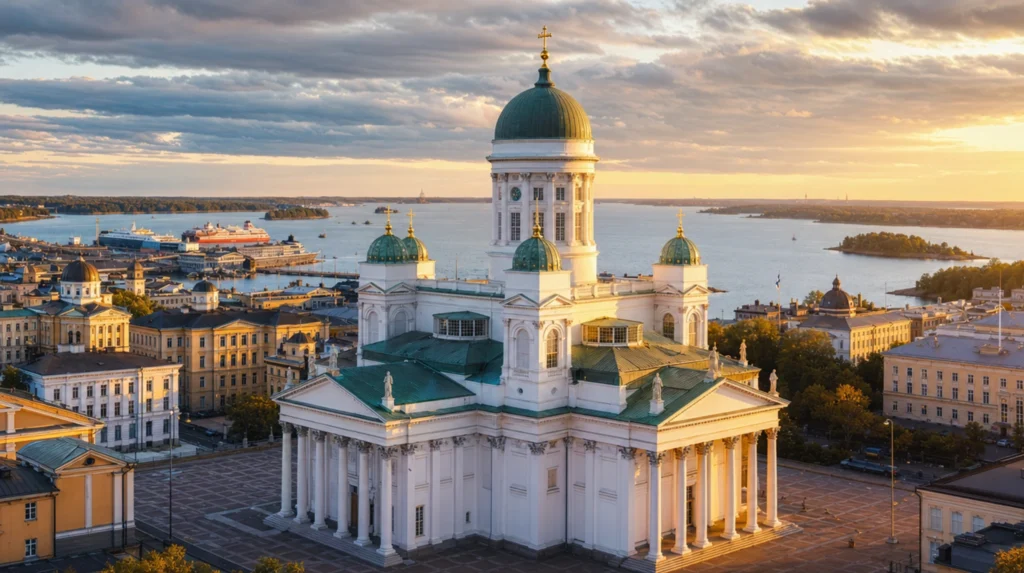
Helsinki sits on the southern Finnish coast at the mouth of the Gulf of Finland, an arm of the Baltic Sea that separates Finland from Estonia (Tallinn is 80 kilometres south, a 2-hour ferry ride). The city was founded in 1550 by Swedish King Gustav Vasa as a counterweight to the Hanseatic League’s port at Tallinn, and remained a small fishing settlement of about 1,500 people for the next 250 years. The transformation happened in 1812 when Russian Tsar Alexander I made Helsinki the capital of the autonomous Grand Duchy of Finland (a status the country held within the Russian Empire from 1809 to 1917) and commissioned Carl Ludvig Engel to rebuild the centre in pure neoclassical style. The result is the white-and-yellow Senate Square — anchored by the 1852 Helsinki Cathedral, the University of Helsinki, the Government Palace, and Sederholm House — which is one of the most cohesive 19th-century cityscapes in Europe.
The modern country is improbable in almost every respect. Finland declared independence in December 1917, fought the Soviet Union to a costly draw in the 1939-40 Winter War (a conflict that produced the term “molotov cocktail” and remains a national reference point), and has spent the postwar decades quietly building one of the world’s most successful societies — first place on the World Happiness Report for seven consecutive years (2018-2024), the world’s most literate population (PISA), and the lowest rate of structural poverty in the EU. The country has also been a serious design power for almost a century — Alvar Aalto’s Paimio chair, Eero Saarinen’s TWA terminal, the Marimekko prints, the Iittala glass tableware, and Linus Torvalds’s invention of the Linux operating system in his University of Helsinki bedroom in 1991 are all part of a continuous national tradition.
For a traveller, Helsinki is the most architecturally restrained Nordic capital — quieter than Stockholm, less ostentatious than Oslo, with a public design culture that runs on the assumption that beauty should not announce itself. The city is small enough to walk corner to corner in 90 minutes (the central core covers about 4 km²) and intimate enough that you’ll see the same locals at the Esplanadi park multiple days running. Show up with patience for silence (Finns are famously comfortable with conversational pauses that would feel awkward elsewhere), a swimsuit (the sauna is non-negotiable), and a willingness to drink the world’s strongest filter coffee — the rest follows.
🏛️ Historical Context
Finland’s parliament — Eduskunta — was founded in 1906 when the country was still a Russian Grand Duchy, and Finnish women were the first in Europe to win the right to vote and stand for election in the same year (the second worldwide, after New Zealand 1893). The 1907 elections to the new Eduskunta saw 19 women elected, the world’s first female parliamentarians. The country declared independence on December 6, 1917 (six weeks after the Russian Revolution), survived a brutal civil war the following year, and has held free elections continuously since 1919 — making the Finnish parliament one of the world’s longest continuously functioning democracies. The current Eduskunta building, a 1931 functionalist landmark by architect J.S. Sirén, sits opposite the new Helsinki Music Centre and is open for free guided tours on Saturdays at 11 a.m.
🎌 Did You Know?
Finland has more saunas than cars — 3.3 million saunas for 5.5 million people, or roughly one sauna for every 1.7 residents. The sauna is so central to Finnish culture that the Finnish embassy in every country in the world has its own sauna, business deals are routinely concluded in saunas, the Finnish presidential residence has a sauna, and the United Nations recognised Finnish sauna culture as Intangible Cultural Heritage in 2020. The newest civic sauna in Helsinki — Löyly on the Hernesaarenranta waterfront, opened 2016 — is the most-photographed contemporary sauna in the country, designed by Avanto Architects with charred-pine cladding and a Baltic-edge cold-water plunge. Public saunas operate at €18-25 entry; the local etiquette (silent, naked, single-sex sessions on most days, mixed sessions clearly marked) takes 24 hours to absorb.
🌷 Late-April / Early-May 2026 — Why You’re Right in the Window
Late April through mid-May is the most underrated three-week window on the Helsinki calendar. The city’s spring arrives compressed and dramatic — daytime highs climb from 8°C in early April to 16°C by mid-May, the daylight curve climbs from 14 hours toward 17 hours, and the city’s tree canopy goes from skeletal to luminescent green in a single explosive week at the end of April. The Esplanadi park, the Kaivopuisto seafront, and the Sibelius Park come alive with locals having their first ice cream of the year (Jäätelötehdas at the Esplanadi pavilion is the institutional first-stop), the harbour’s outdoor saunas reopen full schedules, and the Suomenlinna ferries return to summer service.
The window is anchored by Vappu — Finland’s May Day celebration, which technically begins April 30 and runs through May 1. Vappu is one of Europe’s most distinctive public celebrations: students in white sailor caps wash the Havis Amanda statue at the harbour at 6 p.m. on April 30 (she’s been ceremonially crowned since 1932), a city-wide picnic erupts in Kaivopuisto Park on May 1 morning, and every Helsinki cafe and bakery sells the seasonal sima (a fermented honey-lemon drink) and tippaleipä funnel cakes. Locals tour with champagne in plastic cups and silly hats. If your trip can include Vappu, do it.
This is also the precise window when the Helsinki archipelago opens. The Suomenlinna sea fortress — a UNESCO-listed island fortification 15 minutes by HSL ferry from Market Square — sees crowds drop 70% from peak July, and the smaller islands of Vasikkasaari, Korkeasaari (Helsinki Zoo), and Pihlajasaari are reachable on regular HSL day-trip ferries. The water is still cold (4-8°C in early May), but the sauna-and-cold-plunge culture means you can swim immediately after a sauna session at any of the city’s public bathhouses through the entire shoulder season.
⚠️ Important — Vappu Booking & Logistics
If you’re visiting Helsinki over Vappu (April 30 – May 1), book hotels 4-6 months ahead — Helsinki accommodation sells out faster for Vappu than for any other date except Christmas. Restaurants in the Esplanadi area book out 6 weeks ahead. The May 1 morning picnic at Kaivopuisto runs from roughly 9 a.m. to 2 p.m. and the park can hit 50,000 people; bring a blanket, picnic supplies (the Hakaniemi Market Hall is the local strategy), and the seasonal champagne-in-plastic-cup setup. Most museums and government services are closed May 1; the parade, the picnic, and the saunas are the day’s only attractions. If you’re not in white student-cap dress (only available to current/former Finnish university students), wear a white scarf or hat — the locals will appreciate the gesture. Pickpocketing is statistically zero; the only risk is excessive sima.
Best Time to Visit Helsinki (Season by Season)
Helsinki has four genuine seasons compressed into a high-latitude calendar. The Baltic Sea moderates temperatures slightly, but the city sits at 60.2°N (further north than Anchorage) and the daylight swing is extreme — 19 hours on June 21 vs. 5h 49m on December 21. The city’s character shifts radically with the light.
Spring (April – May)
The shoulder window described above. Daytime highs climb from 8°C in early April to 16°C by late May, the city’s tree canopy and daylight extend rapidly, and crowds remain 40% lower than July. Hotel prices are 30% below July peak (except over Vappu, when they spike). The Vappu celebrations, the reopening of the Suomenlinna ferries, and the harbour-front saunas are the cultural and landscape highlights. Restaurant patios reopen in mid-April, and the Helsinki running and cycling culture restarts. This is the best time to visit if you want the city at its most photogenic with manageable crowds — Vappu (April 30 – May 1) is the can’t-miss event.
Summer (June – August)
The high season and the only time the Finnish summer myth genuinely earns the hype. June 21 brings Juhannus (Midsummer) — the country’s most important non-religious holiday — when the entire urban population effectively decamps to lakeside cottages (mökki) for 3-4 days. Helsinki itself is briefly half-empty in late June; the city stays warm and bright, with daytime highs of 22-25°C and 19 hours of useable daylight. The harbour-front comes into its own — Löyly sauna, Allas Sea Pool, and the Esplanadi park are the anchors. The Helsinki Festival (mid-Aug to early Sep) is the country’s biggest cultural event. The trade-off is crowding at headline sites (Suomenlinna, Temppeliaukio rock church, Design Museum) and prices roughly 35% above shoulder season. Locals decamp to summer cottages in late June and early July; the city is genuinely quieter then.
Autumn (September – October)
The other golden window. By the autumnal equinox the daylight is still 12+ hours, the Helsinki tree canopy goes through a 10-day red-yellow flush in early October (“ruska” in Finnish — the autumn colour season is genuinely spectacular), and the cultural season — Helsinki Philharmonic, opera, Helsinki Design Week (early September) — restarts. Daytime highs drop from 16°C in early September to 7°C by late October. Crowds drop sharply; hotel prices fall 30%. Helsinki Design Week in the first week of September is the cultural anchor for design travellers — 250+ events, exhibitions, studio openings, all centred on Punavuori and Kallio. The autumn brings the country’s strongest mushroom season; foraging walks at Nuuksio National Park (40 minutes by train) are the local weekend.
Winter (November – March)
Six hours of daylight in late December, ice on the harbour by mid-January in cold years, and the city’s defining seasonal experience: sauna followed by ice-swim. The Helsinki Christmas markets at Senate Square (since 1995, mid-November through early January, the country’s largest) and the smaller Esplanadi market run continuously through advent. Daytime highs sit at -3 to 1°C; overnight lows drop to -8 to -15°C and occasionally below -20°C in cold snaps. The Allas Sea Pool harbour saltwater complex stays open year-round and offers winter ice-swimming with sauna recovery (€18 entry). The cultural calendar peaks at the Independence Day on December 6 (the President’s Reception at the Presidential Palace is broadcast live and is genuinely the year’s most-watched television event in Finland) and the December 13 Lucia. Winter is the cheapest season; hotel rates dip 35% off summer peak. Pack proper layers; a Helsinki wind chill at -12°C and 4 m/s requires merino wool, not autumn cotton.
🧳 Travel Guru Tip
If you have one week and want Helsinki at its most distinctively Finnish, aim for the week of Vappu (April 30 – May 1). The daylight is extending, Vappu is one of Europe’s most authentically joyful public celebrations, the post-festival shoulder week (May 2-9) sees prices drop 25%, and the saunas have all reopened summer schedules. Most international guides default to mid-July; the Vappu window is the under-promoted superlative for travellers who want to see Finland as Finland sees itself.
| Experience | Best months | Best locations | Notes |
|---|---|---|---|
| Vappu (May Day) | April 30 – May 1 | Esplanadi, Kaivopuisto, Havis Amanda | Book hotels 4-6 months ahead |
| Public sauna culture | Year-round (peak winter) | Löyly, Kotiharjun, Allas, Kulttuurisauna | €18-25 entry; bring swimsuit |
| Suomenlinna sea fortress | May – Sep (open year-round) | HSL ferry from Market Square | UNESCO; ferry included on HSL pass |
| Helsinki Design Week | Early September | Punavuori, Kallio, Mathallen | 250+ events; book accommodation 8 wks ahead |
| Christmas markets | Late Nov – early Jan | Senate Square, Esplanadi | Senate Square is country’s largest |
| Ice swimming + sauna | Dec – March | Allas Sea Pool, Sompasauna | Year-round at Allas; winter elsewhere |
Getting There — Flights & Arrival
Helsinki has one international airport that matters: Helsinki-Vantaa (HEL), 20 km north of the city. It handles roughly 18 million passengers a year as Finland’s largest airport and a Finnair hub for transatlantic and Asia-Europe routes — the city’s geographic position makes it the shortest northern-hemisphere routing between Europe and East Asia, and Finnair built its long-haul strategy around this for decades. The Asia-Europe transit volume drove the airport’s recent renovation; the new Terminal 2 (opened 2024) is one of Europe’s most efficient design.
From North America, direct flights run year-round from New York (JFK, 8h with Finnair), seasonally from Chicago (8h30m, Finnair), Los Angeles (10h45m, Finnair) and Dallas (10h, Finnair). From Europe, expect 2h45m from London Heathrow, 2h45m from Paris CDG, 2h from Frankfurt, 1h15m from Stockholm, 1h45m from Copenhagen and 4h from Madrid. From Asia, Finnair flies direct to Tokyo (9h45m), Beijing (8h45m), Shanghai (9h), Bangkok (10h), Singapore (12h) and Seoul (9h). Round-trip fares from London or New York in shoulder season typically land between £180–280 / $480–720 if booked 6–10 weeks ahead.
Helsinki-Vantaa arrival is fast and modern. Passport control runs Schengen and non-Schengen lanes; from gate to ground transport is rarely more than 25 minutes. Three options into Helsinki: the I and P commuter trains (Lähijunat) run every 10-12 minutes, €4.40 one-way to Helsinki Central (30 minutes), included on any HSL day pass; the Finnair Bus is €6.90 (35 minutes, drops at Elielinaukio next to Central Station); a taxi is €40-55 fixed-fare to downtown — agree the price at the rank, never get into a non-fixed-fare taxi.
✨ Pro Tip
The I and P commuter trains are the smart-budget option — €4.40 vs. €6.90 for the Finnair Bus and €40-55 for a taxi, only 5 minutes slower than the bus, and the train ticket is included on any HSL multi-day pass you’d buy for the city. The trains run from underground platform 2-3 at the airport’s Terminal 2; signage is clear in Finnish and English. Buy your HSL day or 3-day pass at the airport ticket machine before boarding the train — it activates automatically. The Finnair Bus is faster door-to-door but the train is the practical local choice.
Getting Around — Metro, Trams, Walking & Ferries
Helsinki is the most walkable major Nordic capital. The downtown areas of Senate Square, Esplanadi, Punavuori, Kruununhaka and the harbour front all connect on foot in 20-minute strolls. The central core covers about 4 km² — smaller than Stockholm’s Östermalm or Oslo’s Sentrum. Helsinki is also one of the world’s flattest major capitals — the highest natural point of central Helsinki is 33 metres on Vuorikatu hill in Kallio.
The HSL transit system covers metro (one line, two branches), trams (10 routes), buses, and the Suomenlinna ferry. Single rides cost €3.10 paid by HSL app or contactless card; a 24-hour pass is €9, a 3-day pass is €18, a 7-day pass is €36. The metro is the world’s northernmost, opened in 1982, and runs from Mellunmäki/Vuosaari east to Matinkylä west — useful for connecting the airport-train transfer at Pasila with central Helsinki, but most central tourist sites are tram-or-walk distance.
Trams (Spårvagnen / Raitiovaunu) cover the inner city in 10 lines, fares included on the HSL pass, frequent service. The vintage Tram 2 (a heritage circular route through the central districts) is genuinely useful for orientation and runs every 10 minutes. The Suomenlinna ferry from Market Square (Kauppatori) runs every 20-40 minutes year-round, included on the HSL pass — €5.60 round-trip without a pass. The cycle-hire system Citybike is excellent for the central districts (€5/day, free for first 30 minutes per ride, season runs late April to late October).
⚠️ Important — Cashless Finland & HSL App
Finland is effectively cashless — under 1% of transactions are cash and many shops, restaurants, and museums no longer accept cash. Plan accordingly — every Visa/Mastercard tap works seamlessly, but cash exchange is largely useless for daily spending. Buy your transit tickets via the HSL app (free, top up by card) — the app’s QR-code ticket option works on phones without a physical card. Inspectors check tickets randomly on metro and trams; the fine for travelling without a ticket is €100 and applies even to confused tourists. The app’s automatic-validation feature requires you to actively press “Activate” on the ticket before boarding.
Top Neighbourhoods & Districts
📍 Helsinki Map: Every Place in This Guide
Helsinki divides into roughly seven distinct districts for travellers. Below are the bases worth building an itinerary around, ordered roughly from the neoclassical centre outward.
🏛️ Senate Square & the Empire Quarter
The neoclassical heart of the city, designed in the 1820s by Carl Ludvig Engel after Tsar Alexander I commissioned the rebuilding of Helsinki as the capital of the Grand Duchy of Finland. The square is a textbook of Empire-style symmetry: the white-and-yellow Helsinki Cathedral (Tuomiokirkko, 1852) on the north side, the Government Palace on the east, the University of Helsinki main building on the west, and the 1757 Sederholm House — Helsinki’s oldest stone building — on the south. The cathedral steps are the city’s most-photographed location and the natural starting point of any first walk.
South of Senate Square, the harbour-front Market Square (Kauppatori) is the working-port-and-tourist-market combination — fresh fish from the morning catch, summer flowers, the iconic salmon-and-pea-soup stalls, the Helsinki Mayor’s Office, and the embarkation point for Suomenlinna ferries. The Old Market Hall (Vanha Kauppahalli, 1889, the country’s oldest indoor market) on the harbour’s south side is the more atmospheric food destination — fresh fish, reindeer charcuterie, smoked salmon, traditional Karelian pasties. Lunch at the wood-panel-lined Story (in the same building) for the modern Finnish lunch (€18-24).
The Esplanadi Park — the long tree-lined park that stretches three blocks west of Market Square — is the city’s social spine. It runs between Pohjoisesplanadi (the prestige boulevard with the Marimekko flagship and the Stockmann department store) and Eteläesplanadi, and its central pavilion (Espa) hosts free music in summer and seasonal pop-ups. The Iittala flagship at Pohjoisesplanadi 23 is the country’s premier glassware showroom; the Marimekko store next door is the textile equivalent.
- What to do: Helsinki Cathedral interior and steps; Old Market Hall lunch; Esplanadi Park stroll; Iittala and Marimekko flagships; Suomenlinna ferry departure.
- Signature eats: Karelian pasty (karjalanpiirakka) with egg butter at the Old Market Hall; salmon soup (lohikeitto) at Sundmans Krog by Market Square.
- Access: Tram 2 or 4 to Senaatintori; or 5-minute walk from Helsinki Central.
🎨 Punavuori — The Design District
The southwestern district that contains the largest concentration of design studios, vintage shops, contemporary galleries, and independent boutiques in Helsinki. The Design District Helsinki initiative (launched 2005) covers 200+ design-related businesses across Punavuori, Kaartinkaupunki, and parts of Ullanlinna. The Design Museum on Korkeavuorenkatu (the country’s national design museum, established 1873, the world’s oldest design museum) holds the permanent collection of Marimekko, Aalto, Iittala, Saarinen, and the contemporary Finnish design canon — €15 admission, allow 90 minutes.
Around Korkeavuorenkatu and Uudenmaankatu, the design district’s main streets are dense with studios — Salakauppa (the Finnish Design Shop’s flagship), Lokal (the independent collective gallery), Artek (Alvar Aalto’s furniture company, founded 1935, with the original Paimio chairs and the iconic Stool 60), and the textile design houses Lapuan Kankurit and Marimekko. The Punavuori restaurant scene is the city’s strongest — Olo (1 Michelin star), Ask, Olo Bar, Story, and the new Ultima rotate through year-on-year Best in Helsinki rankings.
The Hietalahti Market Square at the western edge of Punavuori hosts Saturday-morning antique markets and the converted market hall now houses the country’s strongest restaurant collective (B-Smokery, Story, Hima & Sali). The Sinebrychoff Art Museum on Bulevardi — the country’s main historical European art collection in the former brewery family’s mansion — is on the way (€12).
- What to do: Design Museum (90 min); Design District boutique walk on Korkeavuorenkatu; Hietalahti Market Hall lunch; Sinebrychoff Art Museum; sunset at Café Regatta on Hesperia waterfront.
- Signature eats: Modern Finnish tasting menu at Olo (€110-180); reindeer carpaccio at Lasipalatsi.
- Access: Tram 1 or 3 to Eira/Punavuori; or 15-minute walk south of Senate Square.
🏛️ Töölö — Aalto, Sibelius & Modernist Helsinki
The northwestern district where the city’s modernist architecture concentrates. Töölö is the Helsinki of Alvar Aalto and Eero Saarinen — the Finlandia Hall (Aalto, 1971, the country’s national concert hall, currently undergoing renovation through 2026), the Helsinki Music Centre (LPR-Architects, 2011, the new home of the Helsinki Philharmonic), the original Helsinki Olympic Stadium (1938, hosted the 1952 Helsinki Olympics, observation tower €5), and the Sibelius Monument in Sibelius Park (Eila Hiltunen, 1967 — 600 steel pipes welded into a wave form, dedicated to composer Jean Sibelius).
The Temppeliaukio Church on Lutherinkatu (the “Rock Church,” carved directly into bedrock in 1969 by architects Timo and Tuomo Suomalainen) is the district’s most-visited site — a circular church with a copper-coil ceiling, glass-roof skylight, and exceptional acoustics. €5 admission, free guided tours in summer. Sunday services (in Finnish) are open to visitors but the architecture is the draw.
The Aalto House (Tiilimäki 20, in nearby Munkkiniemi) is Aalto’s own 1936 home and studio, preserved exactly as he left it, and the country’s strongest single Aalto experience — €30 admission, guided tours only (book 2 weeks ahead via aaltohouse.fi). The Aalto Studio (Tiilimäki 20) is a 5-minute walk away. Both are 25 minutes from central Helsinki by tram 4 to Munkkiniemi.
- What to do: Temppeliaukio Rock Church; Sibelius Monument; Helsinki Olympic Stadium tower; Aalto House guided tour (advance booking).
- Signature eats: Salmon soup at Café Regatta (the wood-cabin café on Hesperia waterfront); coffee at Andante Kaffebar.
- Access: Tram 4 or 10 to Töölö district; tram 4 to Munkkiniemi for the Aalto House.
🍻 Kallio — The Hipster Eastern District
The historically working-class district northeast of the city centre, Helsinki’s equivalent of Berlin’s Kreuzberg or Brooklyn’s Williamsburg. Kallio was working-class until the 1990s and is now the city’s hipster-and-gentrification battleground, with the highest concentration of independent bars, vintage shops, vinyl record stores, and small-batch bakeries. The Kallio Library (1912, the city’s oldest district library) and the Kallio Church (1912, distinctive granite tower visible from the harbour) are the architectural anchors.
The Hakaniemi Market Hall (Hakaniemen kauppahalli) on the harbour edge is the locals’ grocery hub and the place to stock up for a Suomenlinna picnic — fresh fish, reindeer charcuterie, smoked salmon, the iconic Karelian pasties, and the country’s strongest fresh-bread selection. Lunch at the market hall counters runs €12-18.
The Kotiharjun Sauna on Harjutorinkatu (the city’s oldest still-operating public sauna, since 1928) is a classic wood-fired neighbourhood sauna — silent, single-sex (women’s day Tuesdays, men’s days Thursday-Saturday), absolutely authentic. €18 entry, towel rental €5, the post-sauna sausage stall outside is the local ritual. The newer Allas Sea Pool on the harbour edge of Kallio offers year-round outdoor saunas and Baltic-cold-water plunges.
- What to do: Hakaniemi Market Hall lunch; Kotiharjun Sauna (the authentic experience); Allas Sea Pool harbour saunas; vinyl-shop crawl on Vaasankatu and Helsinginkatu; sunset drink at Siltanen rooftop bar.
- Signature eats: Karelian pasties from Karl Fazer at Hakaniemi Market Hall; pickled herring at Café Esplanad in Eira (technically Punavuori but Kallio-adjacent in spirit).
- Access: Metro to Hakaniemi; or tram 3 or 9.
🌊 Suomenlinna — The UNESCO Sea Fortress
The 80-hectare sea fortress 15 minutes by HSL ferry from Market Square — UNESCO listed since 1991, one of the world’s largest 18th-century sea defences, and home to about 800 year-round residents who commute to work in Helsinki by the same ferry. Suomenlinna (“Castle of Finland”) was built starting 1748 by the Swedish military to defend against Russian expansion, fell to the Russians in 1808, and only became Finnish on independence in 1917. The fortifications cover six interconnected islands and include a 250-year-old dry dock, six museums, the country’s oldest restaurant (Restaurant Walhalla on Iso-Mustasaari, founded 1764 in the original officers’ mess), and km of coastal walking trails.
The Suomenlinna day-trip from Helsinki is the can’t-miss site of any first visit — allow 4 hours minimum, half a day ideal. The HSL ferry runs every 20-40 minutes from Market Square, included on any HSL pass (€5.60 round-trip without). Visit the Suomenlinna Museum (€10, the visitor centre), the King’s Gate at the southern tip, the dry dock, the Vesikko submarine (€10, the only submarine museum in Finland), and the casemates and defensive walls. The walking loop around the islands is 5-7 km on cobbled paths and grassy ramparts.
Lunch at Restaurant Walhalla (in the original 1760s officers’ mess, with a 18th-century menu of Finnish military dishes — €30-45 per person) or at Café Bar Valimo (the cheaper option, in a converted foundry). Bring layers — the islands are exposed and 5-8°C cooler than central Helsinki on a windy day.
- What to do: Suomenlinna Museum; King’s Gate; Vesikko submarine; walking loop of all six islands; Restaurant Walhalla lunch.
- Signature eats: 18th-century Finnish menu at Restaurant Walhalla; modern Nordic at Café Bar Valimo.
- Access: HSL ferry from Market Square (Kauppatori), every 20-40 minutes year-round.
🛍️ Kamppi & Central Shopping
The redeveloped central district immediately west of Helsinki Central station, organised around the Kamppi Shopping Centre and the Mannerheimintie axis. Kamppi was rebuilt in the 2000s as a transit hub and shopping district — the underground Kamppi metro and bus terminal connects the airport, regional buses, and the Helsinki ring metro into a single hub. The Amos Rex art museum (Amos Andersson Art Museum’s contemporary art venue, opened 2018, with the dramatic underground galleries lit by the rounded skylights protruding into the Lasipalatsi Square above) is the headline cultural attraction — €20 admission, allow 90 minutes.
The Kamppi Chapel (the “Chapel of Silence,” 2012, by K2S Architects) is a small wooden circular chapel on the corner of Lasipalatsi Square — non-denominational, free entry, designed as a quiet sanctuary in the busy commercial district. Visit at any time during opening hours (10 a.m. to 5 p.m.) for 5-10 minutes of meditation; it’s one of the city’s most distinctive small architectural experiences.
The Stockmann department store (the country’s flagship, on Aleksanterinkatu near the Esplanadi park) is the institutional shopping experience — Pohjoisesplanadi end is the high-end side, Aleksanterinkatu the everyday side. Open daily 9 a.m. to 9 p.m.
- What to do: Amos Rex art museum (90 min); Kamppi Chapel; Stockmann department store; Lasipalatsi Square sunset.
- Signature eats: Lunch at Lasipalatsi (the 1936 functionalist restaurant, €18-26); evening cocktails at Holiday Bar.
- Access: Helsinki Central station; tram 2, 4, 7, 8.
🏝️ Kaivopuisto & the Southern Beaches
The southernmost point of central Helsinki, where the city meets the Gulf of Finland. Kaivopuisto Park is the city’s premier seafront park (15 hectares), a popular Sunday-walk and picnic destination, and the May 1 Vappu picnic location. The 1830 Kaivohuone restaurant is the country’s oldest, originally built as a spa-pavilion on Engel’s Senate Square plan extension; now a summer restaurant and beachfront café.
The southern coastal walk runs from Kaivopuisto east along Merisatamanranta to Eira, with the Löyly sauna (Hernesaarenranta 4, opened 2016 by Avanto Architects, charred-pine cladding, the country’s most-photographed contemporary sauna) at the eastern end. Löyly’s three saunas (one electric, two wood-fired) plus the Baltic-cold-water plunge are €25 entry — the iconic Helsinki contemporary sauna experience.
The Embassy Quarter immediately northwest of Kaivopuisto is the diplomatic district — most major embassies (US, UK, France, Germany, Russia until 2022) cluster around Bulevardi and Kaivopuisto. The Russian Embassy (the largest building in central Helsinki, originally completed 1953) remains a notable architectural marker but is no longer an active diplomatic presence since the 2022 Ukraine invasion.
- What to do: Kaivopuisto park walk; Löyly sauna (book 2 days ahead in summer); coastal walk to Hernesaarenranta; sunset at Mattolaituri (the rug-washing pier, now a casual outdoor café).
- Signature eats: Salmon soup at Café Mattolaituri; modern Finnish tasting menu at Demo (1 Michelin star).
- Access: Tram 3 to Kaivopuisto; tram 6 to Hernesaarenranta for Löyly.
“The world is full of magic things, patiently waiting for our senses to grow sharper.”
— Tove Jansson, Moominsummer Madness (1954)
🗓️ Sample Itineraries
Helsinki rewards trips that include a sauna evening, a Suomenlinna day, and at least one Aalto-architecture pilgrimage. Below are four templates that have worked for thousands of travellers; pick the one that matches your time, then adjust by district. All distances assume HSL transit and walking; add 25% for any winter ice-swimming session.
2 Days — Quick Stop
Day 1: Arrive Helsinki-Vantaa, train to Helsinki Central, drop bags at central hotel. Walk Senate Square, climb Cathedral steps, lunch at Old Market Hall. Afternoon Esplanadi park stroll, Iittala and Marimekko flagships, evening at Löyly sauna (book ahead). Dinner at Lasipalatsi or Demo. Day 2: Suomenlinna ferry morning (allow 4 hrs including lunch at Walhalla), afternoon Design Museum and Punavuori boutique walk, evening Temppeliaukio Rock Church and Sibelius Monument. Late departure or overnight to airport. This is Helsinki-as-stopover; you’ll see the headlines but miss the sauna culture.
4 Days — The Standard Visit
Day 1: Arrive, Senate Square walk, Old Market Hall lunch, Esplanadi flagships, evening Löyly sauna and harbour-front sunset. Day 2: Suomenlinna full day — ferry, Suomenlinna Museum, walking loop of all islands, Walhalla lunch, sunset return to Helsinki. Day 3: Töölö modernist morning — Temppeliaukio, Sibelius Monument, Helsinki Olympic Stadium, lunch at Café Regatta. Afternoon Aalto House guided tour (book 2 weeks ahead), tram return to central, evening dinner at Olo (book 6 weeks ahead). Day 4: Punavuori design district full day — Design Museum, boutique walk on Korkeavuorenkatu, Hietalahti Market Hall lunch, Kallio for sauna at Kotiharjun, dinner at Hakaniemi Market Hall counters. This is the best four-day balance of architecture, design, and sauna culture.
6 Days — Helsinki + Tallinn Day-Trip
The classic week. Days 1–4: The standard 4-day above. Day 5: Tallinn day-trip — Tallink, Viking Line, or Eckerö Line ferry from West Terminal to Tallinn (2 hours each way, €25-45 round-trip), full day exploring Tallinn’s UNESCO-listed Old Town, return evening ferry. Don’t try to do Tallinn justice in a day — but the day-trip is the standard Helsinki addition. Day 6: Lake district half-day at Nuuksio National Park (40-minute train + bus from Helsinki Central), forest walks, Finnish Nature Centre Haltia (€15), then evening sauna at the Allas Sea Pool harbour saltwater complex.
8 Days — Helsinki + Stockholm Overnight Ferry
For travellers who want the iconic Baltic experience. Use the 6-day template, then add: Days 7–8: Tallink or Silja Line overnight ferry to Stockholm — depart Helsinki West Terminal 5 p.m., overnight on board (cabin from €120, dinner buffet €45 — the buffet is its own bucket-list experience), arrive Stockholm 9:30 a.m. Spend day 8 in Stockholm or fly back to Helsinki for an evening departure. The overnight ferry is one of Europe’s most distinctive travel experiences and the standard local way to combine the two capitals.
🎯 Strategy
If you only have one trip to Finland, do the 6-day Helsinki + Tallinn template — that puts you in the city for 4 days (long enough to internalise the sauna rhythm and walk the design district properly), then unlocks one Baltic day-trip and one nature-and-sauna half-day. Don’t compress Tallinn into a 4-hour visit — the day-trip is fine but won’t do justice. The 8-day version with the Stockholm ferry is the iconic Baltic-capital combo and worth doing if you have the time.
Finnish Culture & Etiquette
Finns are reserved without being cold, direct without being abrupt, and operate on a social code of practical equality and conversational silence that takes most foreigners 48 hours to recalibrate to. The country runs on what the writer Tony Halme called “the silent egalitarian compact” — first names only, no honorifics, the bus driver is addressed the same way as the prime minister — combined with a national comfort with conversational pauses that would feel awkward almost anywhere else in Europe. Loud-on-arrival energy reads as American or Italian and is the single most-mocked tourist behaviour after asking why nobody at the bus stop is making eye contact.
The single mandatory ritual is sauna. The Finnish sauna is not just bathing; it’s the country’s defining social institution and a serious cultural commitment. The standard etiquette: book ahead at most public saunas, bring a swimsuit (some saunas are clothing-optional but mixed sessions usually require swimwear; single-sex sessions are typically nude — check the schedule), shower fully before entering, sit silently on the wooden benches, throw water on the stones (löyly) periodically, and exit when you feel uncomfortably hot for a cold-water plunge into the sea or a cold-water shower. Finns repeat this cycle 3-5 times per session over 60-90 minutes. Tourists who learn to do this without flinching the first time earn instant local respect.
The concept of sisu — roughly, “stoic determination,” “grit,” or “uncomplaining endurance” — is the Finnish equivalent of Iceland’s Þetta reddast or Norway’s friluftsliv. It’s the cultural quality the country invokes for surviving the Winter War, the December darkness, the cross-country skiing in 6 hours of light. Tourists who acknowledge sisu (it’s a frequent conversation topic) earn instant rapport.
💬 The Saying
“Hiljaisuus on kultaa.” Roughly: “Silence is gold.” Finns use this phrase to describe their cultural comfort with conversational pauses — the assumption that not every silence needs to be filled with talk. The phrase appears in 200+ folk poems and is one of the country’s most-quoted maxims. Travellers who learn to leave a 5-second pause after a Finn finishes speaking — without rushing to fill it — earn instant rapport. The phrase is the conversational corollary of sisu — quiet, patient, unhurried.
A Food Lover’s Guide to Helsinki
Helsinki has gone from a culinary backwater (the cliché of boiled cod and cabbage was earned through the 1990s) to one of the most exciting food capitals in the Nordics in 20 years. The transformation happened simultaneously with Copenhagen and Stockholm — a generation of chefs trained at Noma and others returned to Finland with a New Nordic ethos and the country’s exceptional raw materials (cold-water fish, Arctic char, reindeer, wild-foraged berries from Lapland, dairy from grass-fed summer pasture, the country’s national grain rye). The current Helsinki tasting-menu standard is held by Olo (1 Michelin star), Demo (1 star), and Ask (formerly 1 star, now Michelin Bib Gourmand).
Karelian pasties (karjalanpiirakka) are the country’s iconic snack. Open-faced rye-crust pasties from the Karelian region (eastern Finland), filled with rice porridge or potato, baked, and traditionally topped with egg butter (chopped boiled egg mixed with butter). Eaten everywhere — supermarket fresh, market hall counters, café breakfast — but the version at Old Market Hall (Vanha Kauppahalli) and Hakaniemi Market Hall is the city standard. €2.50-3.50 each.
Salmon soup (lohikeitto) is the country’s defining hot dish. Cream-based, with chunks of fresh salmon, potato, leek, and dill, served with crisp rye bread. The version at Sundmans Krog by Market Square is the institutional one (€18); Café Regatta in Töölö makes the rustic-cabin version (€14).
Reindeer (poro) is the iconic Lapland meat that’s now mainstream in Helsinki. Reindeer stew (poronkäristys) is served with mashed potatoes, lingonberry jam, and pickled cucumber — the comfort-food version that Finnish families eat on winter Sundays. Reindeer carpaccio is the elevated version, served at Lasipalatsi and Olo. €18-28 mid-range, €40+ at the tasting-menu level.
Cinnamon and cardamom buns (korvapuusti and pulla) are the universal sweet pastry, eaten at fika across the country. Korvapuusti (“ear-buns” — the cinnamon roll cut diagonally to look like an ear) is the standard; pulla is the larger braided cardamom-bread version. Karl Fazer Café on Kluuvikatu (the country’s most famous café, since 1891, owned by the Fazer chocolate empire) serves the city standard. Café Esplanad on Pohjoisesplanadi is the rival.
Rye bread (ruisleipä) is the country’s defining grain — dense, sour, dark, made with 100% rye flour and a sourdough starter that can be 200 years old. The country eats more rye per capita than any other in the world. Eat it with butter, smoked salmon, or pickled herring. Hakaniemi Market Hall has the city’s best fresh selection; the Fazer-brand industrial version is the supermarket standard.
New Nordic at the top — Helsinki has three Michelin stars across two restaurants: Olo (Punavuori, 1 star, modern Finnish tasting menu €110-180) and Demo (Punavuori, 1 star, intimate counter dining €120). Both book 6-8 weeks ahead. The Ask restaurant (formerly 1 star, now Bib Gourmand) and Story (modern Finnish at Old Market Hall) are the more accessible alternatives.
Coffee (kahvi) is taken with absolute seriousness. Per-capita coffee consumption in Finland is the highest in the world (12 kg per person per year, more than double the US per capita rate), and Helsinki’s third-wave coffee scene — Andante Kaffebar, Johan & Nyström, Kaffa Roastery, La Torrefazione — is the equal of any small-city scene in Europe. Refills are not free; coffee is €4-6 in central locations.
📸 Photography Notes
Helsinki is one of the most photogenic capitals in northern Europe — the architecture is the secret. The city’s neoclassical Empire-quarter, modernist mid-century buildings (Aalto, Saarinen, Sirén), and contemporary harbour-edge architecture (Amos Rex, Helsinki Music Centre, Löyly) produce constant frame opportunities. From late April to mid-August the city has 3-5 hours of “blue hour” every evening, and that low, sideways, unending light is the Helsinki photography signature.
Best light by month: April-May 8:30 p.m.–9:30 p.m. for golden-hour-into-blue; June-July 11 p.m.–2 a.m. for the genuine midnight-light look (sun never fully sets); September-October 5 p.m.–7 p.m. for warm autumn light against the ruska tree colour; November-March 11 a.m.–2 p.m. for the entire useful daylight window.
Five locations worth the detour:
- Helsinki Cathedral Steps (60.1700°N, 24.9525°E) — the iconic Senate Square view from the cathedral steps. Best at golden hour or blue hour; the wide-angle south-facing composition is the postcard.
- Suomenlinna King’s Gate (60.1410°N, 24.9885°E) — the southern-most point of the sea fortress, with Baltic Sea sightlines. Best in late afternoon golden hour with low autumn or spring light.
- Löyly Sauna (60.1521°N, 24.9226°E) — the Avanto Architects charred-pine sauna on the Hernesaarenranta waterfront. Best at sunset for the dramatic silhouette against the Baltic.
- Temppeliaukio Rock Church Interior (60.1733°N, 24.9251°E) — the copper-coil ceiling and bedrock walls. Best at midday when sun streams through the glass-roof skylight.
- Sibelius Monument (60.1820°N, 24.9090°E) — the 600 steel pipes welded into a wave form, dedicated to composer Jean Sibelius. Best at golden hour with low light catching the steel.
Drone rules: Finland enforces EASA Open Category rules. Drones under 250g (DJI Mini class) require online operator registration. Drones 250g+ require an A1/A3 certificate. Helsinki’s central airport buffer zone covers most of the metropolitan area; the Presidential Palace, Eduskunta parliament, and Suomenlinna are restricted airspace and require advance permits via Traficom (15-day lead). Bird-cliff overflights and national park reserves between April 15 and August 1 (nesting season) require additional clearance. Fines start at €500.
✨ Pro Tip — Sauna Photography Etiquette
Photography inside saunas is generally prohibited and culturally taboo — the sauna is a private, naked space and Finns take the privacy seriously. Photographs of sauna exteriors and the cold-water plunge areas are generally fine; explicitly ask permission at the more contemporary saunas like Löyly and Allas before shooting interior architecture during empty hours. The classic “Finnish sauna” exterior shot is at Löyly on the Hernesaarenranta waterfront — the charred-pine cladding against the Baltic at sunset is the most-published Finnish architectural photograph of the last decade. Tripods are tolerated outside the sauna entrance but never on the sauna decks. Drone overflights of saunas are illegal under privacy law.
Off the Beaten Path — Helsinki Beyond the Tourist Trail
The standard tourist circuit (Senate Square + Esplanadi + Suomenlinna + Punavuori) accounts for roughly 80% of foreign visits to roughly 25% of the city’s surface. The remaining 75% is harder to find in English-language guides, less Instagrammed, and much closer to the Helsinki locals actually use.
🌳 Nuuksio National Park
The 53 km² national park 40 minutes from Helsinki by train and bus, established 1994. Nuuksio holds 80+ small lakes, ancient pine forest, and the Finnish flying squirrel — an endangered species the country protects fiercely. The Haltia Finnish Nature Centre (Nuuksiontie 84, €15) is the entry point and visitor centre, with permanent exhibitions on Finnish nature and conservation. Three marked trails (2.2 km, 4.5 km, and 8 km) loop through the park; bring waterproof boots in any season. The trip is the country’s most accessible “wild” forest experience and a genuine alternative to a city day if the weather cooperates.
🛶 Lammassaari & Vanhankaupunginlahti Bay
The bird sanctuary and bayside park 4 km north of central Helsinki, accessible by tram 6 to Arabia or a 30-minute walk along the Vantaanjoki river. The reserve hosts 200+ bird species annually and has marked walking trails through wet meadows and reed beds. The wooden boardwalk at Lammassaari Island gives the city’s strongest birdwatching opportunity, particularly during spring (April-May) and autumn (September-October) migration peaks. Free, open dawn-to-dusk year-round, mosquitoes brutal in late June through early August.
🏛️ The Aalto Studio & Munkkiniemi
Beyond the famous Aalto House, the Aalto Studio at Tiilimäki 20 (a 5-minute walk away) is where Alvar and Aino Aalto did their actual practice work from 1936 onward. The studio is preserved with original furniture, drafting tables, library, and Aalto’s personal sketchbooks. Combined Aalto House + Studio guided tour (€45, 90 minutes) is the deepest dive into Finland’s most influential architectural couple. The surrounding Munkkiniemi neighbourhood is a 1930s functionalist suburb that Aalto helped design as a master-planning consultant — worth a 30-minute walk to see how Aalto’s principles played out at the urban scale.
🚂 Pasila & the Triplet Towers
The redeveloped industrial district 2 km north of Helsinki Central, organised around the new Helsinki Tripla shopping centre (opened 2019) and the rapidly-rising Pasila Triple Towers (the country’s first true high-rise district, 2024). Pasila is genuinely off the tourist route but contains the country’s best contemporary commercial architecture — the Mall of Tripla, the new Pasila railway station, and the converted brick industrial buildings of the Konepajan alue. The Pasila farmer’s market on Saturdays is the locals’ weekend grocery hub. 5-minute commuter train from Helsinki Central, free station entry.
🎭 Korkeasaari Zoo Island
The zoo on the harbour island east of Suomenlinna, accessible by HSL ferry from Market Square (May-September) or bus 16 year-round. Korkeasaari was Finland’s first public zoo, opened 1889, and now houses 200 animal species across 22 hectares. The wild boar, brown bear, snow leopard, and Eurasian lynx exhibits are the strongest. €18 entry, allow 3-4 hours. The island walking paths around the zoo perimeter are free and a quieter alternative to the central tourist sites.
Helsinki by Numbers
- 676,000 — central Helsinki population (2024)
- 3.3 million — saunas in Finland (1 per 1.7 residents)
- 12 kg — coffee per person per year (world’s highest)
- 7 — consecutive years #1 on World Happiness Report
- 1906 — Finland first in Europe for women’s right to vote
- 100% — public transport powered by renewable energy
Practical Information
Currency: Euro (EUR). Finland is effectively cashless — credit and debit cards are accepted everywhere including small village shops, and over 99% of transactions are card-based. Foreign cards work seamlessly; PIN-and-chip and contactless tap are universal. Tipping is not expected; round up to the nearest euro if service was outstanding (10% in upscale restaurants is appreciated but not required). MobilePay (the Nordic peer-to-peer payment app) is used by locals; tourists can use it but it requires a Finnish bank account.
Visa & entry: Finland is in the Schengen Area and the EU. US, UK, Canadian, Australian, NZ and most other passport-holders enter visa-free for 90 days within any 180-day period. The EU’s ETIAS authorisation, originally scheduled for 2025, is now expected to begin enforcement in late 2026 and will require non-EU travellers to register online (€7) before flying. Check the latest at travel-europe.europa.eu before booking.
Language: Finnish and Swedish are the country’s two official languages (about 5% of Finns are native Swedish-speakers, mostly in coastal areas). English fluency is universal — Finland ranks #6 in the world for non-native English proficiency (EF EPI Index 2024). Older speakers may default to Swedish in coastal areas. Learn “kiitos” (thanks), “hei” (hi), “anteeksi” (excuse me), and you’ll get by; everyone you meet will likely switch to English on hearing your accent.
Connectivity: 5G covers central Helsinki and most of the suburbs. 4G covers 99% of populated Finland. eSIMs from Telia, Elisa or DNA cost €15–30 for 10–30 GB and work instantly on arrival. Free Wi-Fi is universal in cafés, hotels, museums, and the public library system.
Tap water: Among the purest in the world. Helsinki’s water comes from the Päijänne lake via a 120-km tunnel completed 1982 (one of the world’s longest water tunnels) and is treated to a level the WHO classifies as “exemplary.” Locals view buying bottled water as eccentric and environmentally embarrassing. Refill from any tap.
Plug type: Type F (European, two round pins, 230V/50Hz). North American travellers need a simple adapter; UK travellers also.
Budget Breakdown — What Helsinki Actually Costs
Helsinki is among the most expensive cities in Europe — restaurant meals, alcohol, and accommodation all run 20-35% above EU averages, but slightly less than Stockholm or Oslo. The structural reasons are similar: high labour costs, a small economy, and most consumer goods imported. The good news is that the things that matter most to a traveller — saunas, public transport, free museum days, the harbour walks, the public library system — are free or modestly priced. The bad news is the wine.
💚 Budget Traveller — $80–130 / day
Hostels, supermarket cooking, public transport. Hostel dorm bed €30–55. K-Market or S-Market supermarket dinner with smoked salmon, rye bread, cheese €15. HSL 24-hour pass €9. Free Suomenlinna ferry on the pass. Public library free. The trick is to use the HSL pass aggressively and eat one meal per day at supermarket prices.
💙 Mid-Range — $190–290 / day
Three-star hotel or boutique double €160–250. Restaurant dinner with wine €60–110. Daily transport €9 (HSL pass). One major museum or activity per day (Design Museum €15, Suomenlinna €0 with HSL pass, Löyly sauna €25, Amos Rex €20). This is the realistic shoulder-season cost for a couple.
💜 Luxury — $480+ / day
Helsinki’s high-end — Hotel Kämp, Lilla Roberts, Hotel Indigo Boulevard 28, Hotel St. George — runs €350–1,100+ per night. Tasting menu at Olo €180-220 plus wine pairing €120. Private sauna evening at Löyly with attendant €350. Helsinki Philharmonic VIP box at the Helsinki Music Centre €280. Helsinki scales beautifully at the top end if you have the budget; Olo alone is worth the trip for serious food travellers.
| Item | Budget (EUR) | Mid-range (EUR) | Luxury (EUR) |
|---|---|---|---|
| Bed (per night) | 30–55 | 160–250 | 350–1,100+ |
| Dinner | 15 (groceries) | 60–110 | 180–340 (tasting + wine) |
| Daily transport | 9 (HSL day pass) | 9 (HSL day pass) | 120 (taxi/private) |
| One activity | 0–5 (free walks/library) | 15–25 (museum/sauna) | 200+ (private sauna/concert) |
| USD daily | $80–130 | $190–290 | $480+ |
🧳 Travel Guru Tip — The Helsinki Card
The Helsinki Card at €54 / 24 hours, €68 / 48 hours, €86 / 72 hours covers all HSL transit (otherwise €9-18-36 for the same period), free entry to 30+ museums (Design Museum, Amos Rex, Suomenlinna Museum, etc — total cost without card roughly €100 over 3 days), and includes the Suomenlinna ferry. For a 3-day visit hitting 5+ museums, the card saves €40-60 vs. paying à la carte. Buy at Helsinki Central station, the airport, or via the Helsinki Card app. Activate by tapping the QR code on the first museum entry; the clock starts then. Don’t buy if you’re skipping the museum-heavy days — the saunas, harbour walks, and Esplanadi park are free.
✅ Pre-Trip Checklist
The minimum kit and admin to have sorted before you fly. Helsinki is a forgiving city for unprepared travellers (cashless, English-fluent, walkable, safe), but a few items genuinely change the trip’s flow.
- Documents: Passport valid 3 months past return date. Register ETIAS (from late 2026 onwards if non-EU). Save offline copies of bookings to your phone.
- Insurance: Travel insurance with European coverage and €1m medical evacuation. World Nomads, SafetyWing and IMG Patriot are the standard options.
- Layers: Even in summer, Helsinki evenings cool 8-10°C below daytime highs, and the breeze off the Baltic adds another 3-5°C of wind chill. A light fleece and a windproof shell are essential year-round; merino wool base layer non-negotiable November-March.
- Footwear: Comfortable walking shoes with traction (cobblestones can slick up after rain). Waterproof leather boots with proper insulation November-March.
- Swimsuit: Mandatory year-round if you want to use any public sauna or swim at Allas Sea Pool.
- Eye mask: Essential for May-July — the sun never fully sets and most hotel curtains are not blackout-rated.
- Reusable bottle: Tap water is excellent and free; bottled water is environmentally and economically punishing.
- Apps to download: HSL (transit tickets, journey planner), Helsinki Card (the city pass), VR Matkalla (national rail, Tallinn ferry booking via separate apps), Foreca (national weather), Visit Finland (official tourism), Google Maps with offline Helsinki download.
- Sauna booking: Book Löyly 2-3 days ahead in summer, walk-in fine in winter. Kotiharjun Sauna walk-in any day.
- Cash: Effectively unnecessary. €100 in small notes for the rare cash-only stall is plenty; many travellers leave Helsinki without using any.
- Credit card: A no-foreign-transaction-fee Visa or Mastercard. Amex acceptance has improved but is still patchy outside hotels and major restaurants.
🤔 What Surprises First-Timers
- Cash is genuinely useless. Many Helsinki shops and restaurants no longer accept cash at all — signs reading “Emme ota käteistä” are common. Bring a contactless Visa or Mastercard; you may not use a single euro coin in a 4-day trip.
- The sauna is a 15-minute commitment, not a quick stop. Travellers expect a 5-minute sauna; the locals’ rhythm is 60-90 minutes — three sessions of 15-20 minutes each, with cold-water plunges between. Book accordingly; don’t try to “fit it in” between dinner and bed.
- Finns will switch to English in 0.4 seconds. Locals are famously polite about language — say “kiitos” with any non-Finnish accent and they’ll typically reply in English. Don’t take it personally.
- Conversational silence is normal and expected. A Finn pausing for 5-10 seconds before responding is a sign of careful thought, not awkwardness. Don’t fill the silence with chatter; let them respond at their pace. The cultural compact rewards patience.
- Restaurants close their kitchens by 9:30 p.m. Helsinki’s dinner rhythm is European-early — kitchens shut at 9:30 p.m. on weeknights, slightly later on weekends. Plan for an 8 p.m. dinner reservation, not a 10 p.m. one.
- Alcohol is sold only at Alko. Finland’s state alcohol monopoly Alko has limited hours (typically 9 a.m.–9 p.m. weekdays, shorter Saturdays, closed Sundays), and beer above 5.5% ABV cannot be bought at supermarkets. The duty-free at Helsinki-Vantaa on arrival is the only practical loophole.
- The library is a serious cultural institution. The Oodi Helsinki Central Library (opened 2018, one of the world’s most-visited public libraries) is genuinely one of the city’s strongest free attractions — a glass-and-wood building with a top-floor reading room overlooking the Eduskunta and Senate Square. Free entry, book a sauna or 3D printer slot via the library’s app.
Frequently Asked Questions
Is Helsinki really as expensive as people say?
Yes, but predictably so. Restaurant dinners run €60–110 mid-range, hotels €160–250 in shoulder season, and a beer at a bar €7–9. Self-catering, free sauna entry at the harbour Allas pool’s free zone, and aggressive use of the HSL pass cut a couple’s daily spend to under USD 200. Compared to peers, Helsinki runs roughly 5% below Stockholm and Oslo, similar to Copenhagen, and 25% above mainland Spain.
Can I see Northern Lights in Helsinki?
Rarely — Helsinki is too far south (60.2°N) for reliable Northern Lights, with sightings only during major geomagnetic storms (3-5 nights per year). For lights, fly to Rovaniemi (1h20m) or Kittilä (1h45m) in November-March. The dark-sky sites accessible from Helsinki include Nuuksio National Park and the outer archipelago islands.
Should I do a sauna?
Absolutely yes — it’s the country’s defining cultural experience and a Helsinki visit without a sauna is structurally incomplete. Löyly on the Hernesaarenranta waterfront is the contemporary architectural sauna (€25, book 2 days ahead in summer); Kotiharjun Sauna in Kallio is the authentic 1928 wood-fired neighbourhood sauna (€18, walk-in); Allas Sea Pool by Market Square is the year-round outdoor harbour-saltwater complex (€18). Bring a swimsuit; respect the silence; don’t rush it.
Is Helsinki safe for solo travellers?
Yes — Finland has one of the lowest violent crime rates in Europe and Helsinki consistently ranks in the top 5 of the Global Peace Index. The genuine safety considerations are environmental: cold-water swimming risks at the Allas Sea Pool in winter (instructors on site), ice on winter streets, and the rare Suomenlinna ferry incident (always carry warm clothes for the return). Solo female travellers report Helsinki as one of the most comfortable destinations in Europe. Pickpocketing is statistically negligible.
Can I drink the tap water?
Yes — and you should. Helsinki tap water from Lake Päijänne is among the purest urban water in Europe. Bottled water is sold widely for tourists; locals view buying it as eccentric.
How long should I stay?
Three full days is the realistic minimum to see Senate Square, Suomenlinna, Punavuori design district, and one sauna evening. Four days lets you add Töölö modernist architecture and Aalto House. Six days lets you add a Tallinn day-trip and Nuuksio National Park. Eight days is the standard combo with Stockholm via overnight ferry.
Is the Helsinki Card worth it?
Yes for visitors hitting 5+ museums in 3 days. The 72-hour pass at €86 covers all transit, 30+ museums, and includes the Suomenlinna ferry. The break-even point is roughly 5 museum visits over 3 days — easy to hit. Skip the card only if you’re committing to mostly free attractions (the harbour walk, sauna evenings, the Oodi library).
Should I day-trip to Tallinn?
Yes — a single-day round-trip is the standard Helsinki addition. Tallink, Viking Line, or Eckerö Line ferries from West Terminal take 2 hours each way (€25-45 round-trip), and Tallinn’s UNESCO Old Town can be walked in 5-6 hours. Bring passport (Estonia is in EU/Schengen but the ferry company will check). Don’t try to do Tallinn justice in a day, but the day-trip itself is genuinely worthwhile.
What about the Stockholm overnight ferry?
The Tallink Silja Line and Viking Line overnight ferries from West Terminal to Stockholm are one of Europe’s most distinctive travel experiences — a 17-hour cruise across the Baltic (€120-300 per cabin including dinner buffet). The dinner buffet is its own bucket-list experience (€45 all-you-can-eat including wine). Depart 5 p.m. Helsinki, arrive 10 a.m. Stockholm. Book 6 weeks ahead in summer. The ferry is the standard local way to combine the two capitals and a far more cultural experience than a 1-hour Finnair flight.
Ready to Explore Helsinki?
Helsinki rewards travellers who balance the design district with the sauna evenings, the Suomenlinna fortress with the Aalto House, the Vappu picnic with the December Lucia. The cathedral, the harbour, the islands, the Karelian pasties and the Karl Fazer cinnamon buns — they will be there. The light, the season, and your willingness to stay quiet for 5 seconds longer than feels comfortable decide the order. Build the itinerary, then let sisu take over.
For a tailored Helsinki trip — including 2026 Vappu logistics, Olo reservation strategy, sauna-circuit booking, or a Helsinki + Stockholm overnight ferry + Lapland Northern Lights two-week design — start with our trip-planning team. We can match you with the right harbour-front base, hot-table reservations, and the sauna schedule.
Explore More
🇫🇮 Finland travel guide
Country-wide guide covering the lake district, Lapland, the Aurora season, and the Saimaa archipelago. The natural Helsinki extension.
🇸🇪 Stockholm city guide
The archipelago counterpoint — 17-hour overnight ferry across the Baltic. Pair Helsinki with Stockholm for the iconic Nordic-capital combination.
🇮🇸 Reykjavik city guide
The Atlantic outlier — 4-hour direct flight on Finnair. The natural Nordic-pair extension for travellers wanting wilderness and volcanoes.
🇪🇪 Tallinn day-trip
The classic Helsinki day-trip — 2-hour ferry south to Estonia’s UNESCO-listed Old Town.
🌌 Lapland & Aurora
The 1h20m flight north to Rovaniemi or Kittilä for the genuine Northern Lights season — November through March.
🗺️ Plan a custom trip
Tell us when you’re going and we’ll design a day-by-day Helsinki itinerary that respects the sauna rhythm and the Baltic weather.
More city guides you might like
Plan your trip to Helsinki
The booking tools we use ourselves. FFU may earn a commission at no extra cost to you.
Plan & book your trip to Helsinki
Booking through these searches supports our guides at no extra cost to you.