
City Guide · Northern California
San Francisco, United States: Seven Square Miles of Fog, Hills, and the Best Sourdough on Earth
I have walked San Francisco end to end more times than my knees would like, and the first thing I tell anyone landing at SFO is that this is the rare American big city you can actually cross on foot — about 47 square miles of land packed onto the tip of a peninsula, holding roughly 827,000 people inside a single dense, walkable, transit-stitched grid of 49 famous square miles . My favourite ritual here is the early-morning climb up Bernal Heights or Corona Heights with a flat white and the fog still pouring over Twin Peaks, the whole basin and the bay laid out before the cable-car bells start downtown. We tell first-timers to stop trying to “do” all of it in two days: this is a city of micro-neighbourhoods, each a few blocks across and each with its own weather, and the joy is in walking one slowly. Treat this guide as the brief I would hand my own family before they picked up a Clipper card — the Golden Gate, the cable cars, the burritos and the dim sum, the famous fog, the hills, and everything else .

Table of Contents
Why San Francisco?
San Francisco is the rare American megacity that fits in your shoes rather than your car — a compact, intensely vertical place where roughly 827,000 people live on the 47 square miles at the tip of a peninsula, hemmed by the Pacific on one side and San Francisco Bay on the other . It anchors the broader Bay Area of about 7.7 million people, a region whose technology economy reshaped the modern world, yet the city itself remains a walker’s city of distinct micro-neighbourhoods, each a few blocks across, each with its own weather, food, and character . Learning to read it on foot — by hill, by fog line, by neighbourhood — is the single skill that turns a frustrating trip into a great one.
The city reads as a series of productive contradictions. It is the global capital of venture capital and software, headquarters to companies that touch billions of lives, yet daily life happens in Mission taquerias, Chinatown dim-sum parlours, North Beach espresso bars, and Sunset District noodle shops — one of the most diverse cities in the country, where roughly 44% of residents speak a language other than English at home and Chinatown is the oldest and one of the largest outside Asia . It is famous for steep hills and the clang of cable cars — the last manually operated cable-car system on Earth, a National Historic Landmark dating to 1873 — yet it is also one of the most progressive, reinventing cities in America, perpetually rebuilding after the 1906 earthquake and the booms and busts since.
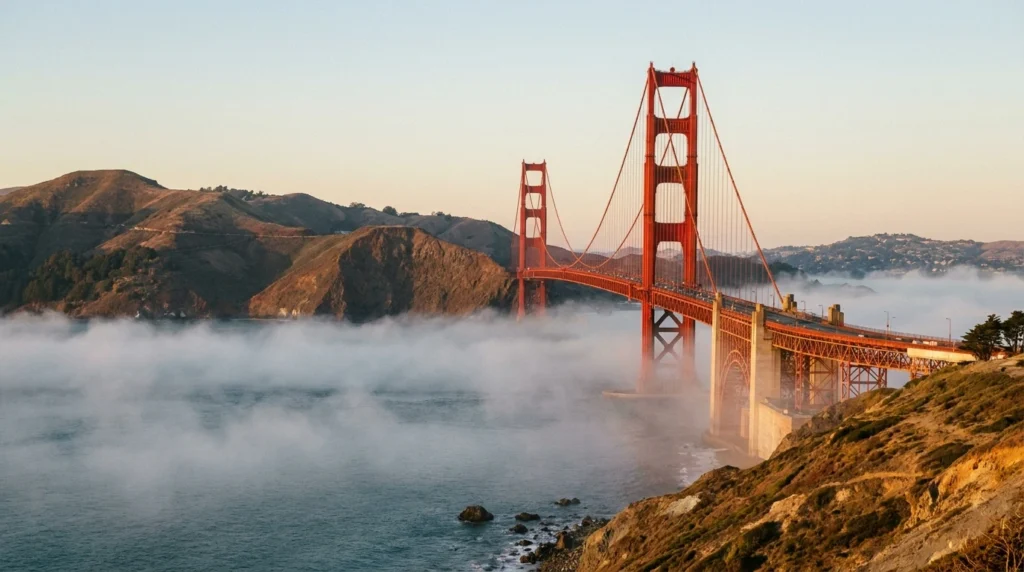
The geography is the secret engine. You can stand under the Golden Gate Bridge in the morning fog, ride a cable car over Nob Hill at midday, and watch the sun set over the Pacific from Ocean Beach at night — all within a city you can cross in 45 minutes on a good transit run. The 1937 Golden Gate Bridge, with its 1,280-metre main span, was the longest suspension bridge in the world when it opened and remains the city’s defining image ; Golden Gate Park, larger than New York’s Central Park at over 1,000 acres, threads a genuine green spine from the city centre to the sea . What makes the density feel navigable instead of overwhelming is accepting its logic: most of what you want sits within a handful of walkable districts strung along a few transit corridors.
This guide covers the neighbourhoods you will actually spend time in, the burritos and tasting menus worth the climb, the museum-and-landmark tier (the de Young, SFMOMA, Alcatraz, the cable cars), the five day trips locals themselves take on weekends, and the practical realities of ESTA, the famous fog, the hills, and the much-discussed street conditions downtown. Pair it with the broader country context and you have everything you need for a first or fifth visit.

Neighborhoods: Finding Your San Francisco
📍 San Francisco Map: Every Place in This Guide


San Francisco is best understood as a tight mosaic of distinct neighbourhoods rather than a single centre, and because the city is so compact, the contrasts come fast — you can pass from the espresso bars of North Beach to the lanterns of Chinatown to the towers of the Financial District in a fifteen-minute walk. The eastern and northern waterfronts hold the visitor icons (Fisherman’s Wharf, the Embarcadero, the Ferry Building); the central hills hold the postcard residential districts (Nob Hill, Russian Hill, Pacific Heights); the Mission and the Castro anchor the sunny, food-rich south-east; and the foggy western avenues (the Richmond and the Sunset) run out to Ocean Beach. Most first-time visitors over-schedule, hopping between districts; returning visitors pick two or three adjacent neighbourhoods and go deep. Staying near a Muni Metro line or a BART station sharply reduces the hill penalty .
This section walks the eight neighbourhoods you will actually use, grouped by character: the waterfront (Fisherman’s Wharf, the Embarcadero), the historic core (Chinatown, North Beach), the hilltop residential districts (Nob Hill, Russian Hill, Pacific Heights), and the vibrant southside (the Mission, the Castro, Haight-Ashbury), with notes on access and who each district suits best.
Fisherman’s Wharf & the Embarcadero
The northern waterfront is the city’s most-visited stretch — touristy in parts, but the launch point for Alcatraz, the bay cruises, and the barking sea lions of Pier 39, with the restored Ferry Building marketplace anchoring the southern end of the Embarcadero promenade. The historic F-line streetcars run the length of it.
- Pier 39 and its resident colony of California sea lions
- The 1898 Ferry Building food hall and its twice-weekly farmers’ market
- Alcatraz ferries from Pier 33 and bay sightseeing cruises
Best for: first-time visitors, families, Alcatraz day trips. Access: F-line historic streetcar; Powell-Hyde cable car to the wharf.
Fisherman’s Wharf is the part of San Francisco most locals warn you about and then quietly enjoy anyway. Yes, the core of it — the souvenir stalls, the wax museum, the chain seafood — is unabashedly touristy, but the bones underneath are genuine: this was a working Italian fishing harbour, and the crab stands at Fisherman’s Wharf still steam Dungeness crab in season. The real reward is to use the wharf as a base rather than a destination: catch the early Alcatraz ferry from Pier 33, watch the sea lions haul out at Pier 39, then walk east along the Embarcadero promenade to the Ferry Building, which has reinvented itself as one of the best food markets in the country. Save the touristy core for a quick photo and spend your time on the water and the walk.
Chinatown
The oldest Chinatown in North America and one of the largest Chinese communities outside Asia — a dense, atmospheric warren of produce markets, dim-sum parlours, temples, and herb shops behind the Dragon Gate on Grant Avenue. It is wedged between the Financial District and North Beach, walkable from both.
- The 1970 Dragon Gate at Grant Avenue and Bush Street
- Waverly Place’s painted balconies and the Tin How Temple
- The Golden Gate Fortune Cookie Factory on Ross Alley
Best for: food obsessives, history, photographers. Access: walk from Union Square; Central Subway T Line to Chinatown-Rose Pak station.
San Francisco’s Chinatown is the country’s oldest, established in the 1850s, and it is still a living working neighbourhood rather than a theme-park version of one — which is exactly what makes it worth slowing down for. Enter through the Dragon Gate on Grant Avenue for the photo, but the real texture is one block over on Stockton Street, where the produce markets, fishmongers, and roast-meat shops serve the actual residents and the pace is frenetic. Climb the quiet side alleys — Waverly Place with its painted temple balconies, Ross Alley with its tiny fortune-cookie factory — and the neighbourhood reveals a layered history that survived the 1906 earthquake and a century of pressure. Come hungry: this is dim-sum and roast-duck country, and a cheap, brilliant lunch is never more than a few doors away.
North Beach
The historic Italian quarter and the birthplace of the Beat Generation — a sociable grid of espresso bars, old-school red-sauce restaurants, and literary landmarks like City Lights Bookstore, tucked between Telegraph Hill and the bay. Coit Tower crowns the hill above it.
- City Lights Booksellers, the 1953 Beat-era landmark bookstore
- Washington Square and the Saints Peter and Paul Church
- Coit Tower atop Telegraph Hill, with 1930s WPA murals
Best for: cafe-sitting, literary history, evening strolls. Access: walk from Chinatown; Powell-Mason cable car nearby.
North Beach is the neighbourhood where San Francisco feels most like a European city, and it is the one I send people to when they want to simply sit, eat, and watch the city be itself. The Italian-American heart of it survives in the espresso bars and the old red-sauce houses around Washington Square, while the Beat legacy — Kerouac, Ginsberg, and the 1953 City Lights bookstore that published “Howl” — gives it a literary spine you can still walk. Above it all rises Telegraph Hill and Coit Tower, reached by the leafy Filbert Steps where wild parrots squawk in the trees. Spend a morning over a cappuccino, climb to the tower for the murals and the view, and stay for an unhurried Italian dinner: North Beach rewards the slow, sociable rhythm it was built for.
Nob Hill & Russian Hill
The grand central hills — Nob Hill with its historic luxury hotels and Grace Cathedral, Russian Hill with the crooked block of Lombard Street and some of the best bay views in the city. Both are steep, residential, and laced with cable-car lines.
- The crooked, switchback block of Lombard Street
- Grace Cathedral and the Fairmont and Mark Hopkins hotels on Nob Hill
- The cable-car lines that cross both hills
Best for: classic views, cable-car rides, a splurge hotel night. Access: all three cable-car lines climb these hills.
Nob Hill and Russian Hill are where the picture-postcard San Francisco lives — the steep, cable-car-laced residential slopes that everyone pictures before they arrive. Nob Hill was the address of the railroad barons in the 1870s, and the grand hotels that replaced their mansions after 1906 (the Fairmont, the Mark Hopkins) still anchor the crest beside the Gothic Grace Cathedral. Just north, Russian Hill holds the famous crooked block of Lombard Street, eight switchback turns banked with hydrangeas, plus a string of hidden stairway walks and pocket gardens with knockout bay views. The pleasure here is simply walking the hills — or, when the legs give out, hopping a cable car, which is the one part of the city where the tourist transport is also the genuinely best way to get around.
The Mission
The sunniest, most food-obsessed neighbourhood in the city — the historic Latino heart of San Francisco, home of the Mission burrito, blocks of vivid murals, the 1776 Mission Dolores, and a dense run of bars, taquerias, and cafes along Valencia and Mission streets.
- The taquerias of the “Burrito Triangle” along Mission Street
- Balmy Alley and Clarion Alley’s painted murals
- Dolores Park’s lawn and skyline view; Mission Dolores (1776)
Best for: food crawls, nightlife, sunshine, murals. Access: BART to 16th St or 24th St Mission stations.
The Mission is the neighbourhood that converts visitors into return travellers, and it is where I send anyone who wants to eat. It sits in the city’s sunniest microclimate — the fog that smothers the western avenues often stops short of the Mission — which is why Dolores Park fills with sunbathers on days when Ocean Beach is grey. The historic Latino community gave the city the Mission burrito, an oversized foil-wrapped meal that has become a national style, and the taquerias that perfected it still line Mission and 24th streets. Beyond the food, the neighbourhood is an open-air gallery: the murals of Balmy and Clarion alleys are some of the best public art in the country, and the 1776 Mission Dolores is the oldest building in the city. Come for a burrito, stay for the murals, the bars, and the sun.
The Castro & Haight-Ashbury
Two neighbourhoods of counterculture history a short walk apart — the Castro, the historic heart of LGBTQ+ San Francisco and the world’s first gay neighbourhood, and Haight-Ashbury, the 1967 “Summer of Love” epicentre, now a vintage-and-record-shop strip below the green expanse of Buena Vista Park.
- The Castro Theatre (1922) and the rainbow crosswalks of Castro Street
- The Harvey Milk landmarks and the GLBT Historical Society Museum
- Haight Street’s vintage clothing, record shops, and 1960s murals
Best for: LGBTQ+ travellers, music and counterculture history, vintage shopping. Access: Muni Metro to Castro station; walk to the Haight.
The Castro and Haight-Ashbury are the neighbourhoods where San Francisco’s reputation as a capital of social change was made, and walking them together is a short, vivid history lesson. The Castro became the world’s first openly gay neighbourhood in the 1970s and the political base of Harvey Milk, the first openly gay elected official in California; the rainbow crosswalks, the 1922 Castro Theatre with its Wurlitzer organ, and the memorials make the history tangible. A fifteen-minute walk west, Haight-Ashbury was the 1967 epicentre of the “Summer of Love,” and while the hippies have given way to vintage boutiques and record shops, the Victorian-lined street still carries the era’s spirit and leads up to the panoramic green of Buena Vista Park. Together they make an easy, walkable half-day in the city’s countercultural soul.
Pacific Heights & the Marina
The city’s most affluent stretch — Pacific Heights’s grand Victorians and Edwardian mansions look down over the flat, bayfront Marina district, with its yacht harbour, the Palace of Fine Arts, and Crissy Field’s promenade beneath the Golden Gate Bridge.
- The Palace of Fine Arts, a 1915 Beaux-Arts rotunda and lagoon
- Crissy Field and the bridge-view walk to Fort Point
- Fillmore and Union streets’ boutiques and brunch spots
Best for: architecture walks, bridge views, upscale brunch. Access: Muni bus lines along Fillmore and Union; walk from the wharf.
Pacific Heights and the Marina are where San Francisco shows off, and they make one of the prettiest walks in the city. Pacific Heights, on the high ground, is a parade of immaculate Victorian and Edwardian mansions — this is where the city’s old money lives — with Lafayette and Alta Plaza parks framing bay views between the rooftops. Drop down the slope to the flat Marina, built on landfill for the 1915 world’s fair, and you reach the dreamlike Palace of Fine Arts, a Beaux-Arts rotunda reflected in its own lagoon, and Crissy Field, a restored shoreline promenade that delivers the single best ground-level walk toward the Golden Gate Bridge. Brunch on Union Street, stroll the mansions, and end at Fort Point under the bridge’s southern anchorage — an easy, photogenic morning.
The Food: Sourdough, the Mission Burrito, and One of America’s Great Dining Cities
I have eaten my way across most of the great American food cities, and I’ll say it plainly: San Francisco punches far above its size. Seven square miles hold more Michelin-starred restaurants per capita than almost anywhere in the country, but the city’s real genius is the everyday stuff — a foil-wrapped Mission burrito the heft of a forearm, a paper bag of dim sum eaten on a Chinatown stoop, a tangy slab of sourdough that genuinely tastes different here than anywhere else. California’s farm-to-table movement was effectively invented an hour north of here, and the city eats accordingly, with the year-round bounty of the Ferry Building’s farmers’ market underwriting everything from taquerias to tasting menus.

The Mission Burrito & Mexican San Francisco
The Mission District gave the world its namesake burrito — an oversized, foil-wrapped meal of rice, beans, meat, cheese, salsa, and often guacamole, all packed into a steamed flour tortilla and engineered to be eaten one-handed. The style was popularised in the taquerias of the Mission in the 1960s and 70s and has since colonised the entire country, but the originals on and around Mission and 24th streets remain the benchmark. Order it “super,” eat it on a bench in the sun, and don’t expect to need dinner.
Dim Sum, Chinatown & the Richmond
San Francisco’s Chinatown is the oldest in North America and one of the largest Chinese communities outside Asia, established in the 1850s during the Gold Rush . Beyond the souvenir stretch of Grant Avenue lies a genuinely working neighbourhood of dim sum parlours, herbalists, bakeries selling egg-custard tarts, and the steam-filled Golden Gate Fortune Cookie Factory. For the deeper, less touristy Chinese food scene, locals head west to the foggy avenues of the Richmond and Sunset, where Clement Street rivals Chinatown for dumplings and roast duck.
Sourdough & the Bread That Made the City
San Francisco sourdough is a protected piece of culinary heritage: the local wild yeast and bacteria (Lactobacillus sanfranciscensis was first identified here) give the bread its distinctive tang, and bakeries have kept their mother starters alive for well over a century — Boudin Bakery has maintained its starter since 1849 . The classic tourist order is clam chowder served in a hollowed sourdough bowl down at Fisherman’s Wharf; the better move is a simple loaf from a neighbourhood bakery, still warm.
Tasting Menus & the High End
For a city its size, San Francisco’s fine-dining scene is extraordinary, anchored by farm-to-table cooking that draws directly on Northern California’s produce, seafood, and wine country an hour to the north. Reservations at the marquee tasting-menu rooms open weeks ahead and vanish quickly, so book before you fly. If the splurge isn’t for you, the same kitchens’ ethos trickles down to mid-priced neighbourhood spots all over the city.
Cultural Sights: Alcatraz, the Golden Gate, and the Landmarks Worth Your Time
San Francisco’s headline sights are genuinely worth the hype, but the order you do them in — and how far ahead you book — makes or breaks the trip. The two essentials, Alcatraz and the Golden Gate Bridge, sit at opposite corners of the bay and reward planning; everything else clusters into walkable pockets you can pick off between them. Below are the landmarks I’d build a first visit around, with the practical detail to do each one well.

Alcatraz Island
The single must-book sight in San Francisco. The former maximum-security federal penitentiary — home to Al Capone and the “Birdman,” and never the site of a confirmed successful escape — is now run by the National Park Service, reached only by the official ferry from Pier 33. The excellent self-guided cellhouse audio tour, narrated partly by former guards and inmates, is included. Tickets routinely sell out weeks ahead in summer, so book the moment your dates are firm .
The Golden Gate Bridge & the Presidio
The 1.7-mile Art Deco span opened in 1937 and remains the city’s defining image. Walk or cycle across it for free; the southern approach sits within the Presidio, a former military base turned national park of forested trails, the Walt Disney Family Museum, and the bridge-view overlooks at Battery Spencer (on the Marin side) and the Welcome Center. Time it for late afternoon when the fog often lifts.
Museums: De Young, SFMOMA & the Academy of Sciences
San Francisco’s museum bench is deep. SFMOMA is one of the largest modern-art museums in the country; in Golden Gate Park, the de Young (fine art, plus a free observation tower) faces the California Academy of Sciences, a combined aquarium, planetarium, rainforest dome, and living roof. The Asian Art Museum and the bayfront Exploratorium round out a city that takes its institutions seriously.
Golden Gate Park & the Painted Ladies
Larger than New York’s Central Park, Golden Gate Park stretches three miles to the ocean and holds the Japanese Tea Garden (the oldest public Japanese garden in the United States), the Conservatory of Flowers, and the Botanical Garden. For the postcard, head to Alamo Square, where the row of pastel Victorian “Painted Ladies” lines up against the downtown skyline.
Entertainment & Nightlife: Live Music, Cocktail Dens, and the Bay After Dark
San Francisco’s nightlife is less about megaclubs than about character: historic music halls, speakeasy-style cocktail bars, dive bars with real history, and a craft-beer and natural-wine scene that mirrors the city’s obsessive food culture. Nights run earlier than in New York — many kitchens wind down by ten — but the variety packed into a small footprint is hard to beat, and you can cross from a Mission dive to a North Beach jazz cellar in a single cab ride.

Live Music
The Fillmore, opened in 1912 and made legendary in the 1960s by Bill Graham, still hangs a poster and offers free apples to every concertgoer; it remains one of the best mid-size rooms in America. North Beach keeps the Beat-era jazz tradition alive in small clubs, while the Mission and SoMa host indie and electronic shows. Check listings before you go — the marquee acts sell out fast.
Cocktails & Craft Beer
San Francisco helped revive the American craft-cocktail movement, and the city is thick with serious bars — from candlelit dens in the Tenderloin and Mission to rooftop spots downtown. The Anchor brewery (founded 1896) gave the city its claim as a birthplace of American craft beer; today neighbourhood taprooms and natural-wine bars carry the torch. North Beach’s old Italian cafés pour grappa and espresso late into the night.
Theatre, Comedy & the Castro
The downtown Theater District stages touring Broadway productions, while the restored 1922 Castro Theatre screens classic films with live organ preludes. The Castro is also the heart of the city’s LGBTQ+ nightlife, with a calendar of events that peaks during June’s Pride, one of the largest in the world.
Day Trips: Wine Country, Big Trees, and the Pacific Coast
One of San Francisco’s quiet advantages is what surrounds it. Within a two-hour drive you can stand among 1,000-year-old redwoods, taste world-class wine, walk a wild stretch of Pacific coastline, or wander a college town and a tech campus. A rental car opens the most options, but several of the best trips work by ferry, bus, or organised tour. Here are the four I’d prioritise.

Napa & Sonoma Wine Country
The most famous day trip of all. Napa Valley and neighbouring Sonoma sit about 90 minutes north and produce some of the most celebrated wines in the world; Napa’s 1976 victory over French labels at the “Judgment of Paris” put California on the global wine map. Book tastings ahead, and if you’re driving, designate a driver or take an organised tour — the rural roads are strictly policed.
Muir Woods & the Redwoods
Just across the Golden Gate Bridge, Muir Woods National Monument protects a grove of towering coast redwoods, the tallest trees on Earth, some over 250 feet high and well past 1,000 years old. Parking and shuttle reservations are mandatory and sell out, so book through the official site before you go .
Sausalito & the Marin Headlands
The easiest car-free escape: ride the ferry from the Ferry Building or Pier 41 across the bay to the Mediterranean-style village of Sausalito for lunch and houseboat-spotting, then walk or bus up into the Marin Headlands for the classic bridge-and-skyline photograph. The return ferry at dusk is one of the city’s great cheap thrills.
Monterey, Carmel & the Coast
A longer day (about two hours south) but a spectacular one: the world-class Monterey Bay Aquarium, the storybook village of Carmel-by-the-Sea, and the 17-Mile Drive’s cypress-studded coast. Continue south and you reach the cliffs of Big Sur — better as an overnight than a same-day return.
When to Visit: A Season-by-Season Guide to San Francisco’s Microclimates
San Francisco breaks every rule about American weather. Summer is the foggiest, coolest stretch of the year — the locals’ wry name for the fog is “Karl” — while September and October deliver the warmest, clearest days. It almost never freezes and almost never gets truly hot; the real variable is the marine layer, which can blanket the western neighbourhoods while downtown bakes in sun. Pack layers in every season and you’ll be fine. Here’s how the year actually feels on the ground.

Autumn (September–November): The Best Season
The locals’ secret. September and October bring the warmest temperatures and clearest skies of the year, with the summer fog finally retreating — this is “Indian summer” in the city, and the best window for bridge views and outdoor dining. Crowds thin after Labor Day and Fleet Week fills the bay with the Blue Angels in early October.
Winter (December–February): Mild & Wet
San Francisco’s “rainy season,” though it rarely drops below the mid-40s Fahrenheit. Pack a waterproof layer; you’ll get bursts of rain between clear spells. Hotel rates are at their lowest, the holiday displays downtown are lovely, and it’s prime season for whale-watching off the coast.
Spring (March–May): Green & Variable
Hillsides green up, gardens bloom, and the weather is a coin-toss of bright days and lingering showers. Crowds are moderate and rates reasonable — a fine, underrated time to visit before the summer fog and crowds arrive.
Summer (June–August): Foggy & Cool
Counterintuitively the coolest, foggiest, and most crowded season. Daytime highs hover in the low 60s Fahrenheit and the western half of the city can stay grey all day while the East Bay swelters. Bring a proper jacket, book attractions well ahead, and expect peak prices.
Getting Around: Cable Cars, BART, Muni, and the Hills
San Francisco is one of the most walkable big cities in America — if you can handle the hills — and its public transport is dense enough that you rarely need a car within the city itself. Between the cable cars, the Muni Metro and buses, the regional BART trains, and the bay ferries, almost everything is reachable on transit. A car is worth renting only for the day trips. Here’s how the pieces fit together.
From the Airports
BART connects directly from San Francisco International Airport (SFO) to downtown in about 30 minutes for a few dollars — far cheaper and often faster than a taxi or rideshare in traffic . Oakland International (OAK) is a slightly longer hop via BART’s connector. Skip the rental car unless your day-trip plans demand it.
Muni: Metro, Buses & the Cable Cars
The San Francisco Municipal Railway (Muni) runs the metro light-rail, the citywide bus network, the historic F-line streetcars along the waterfront, and the three cable-car lines. A contactless tap with the Clipper card or a phone wallet is the easiest fare. The cable cars carry a premium single-ride fare and long queues at the turnarounds — board mid-route to skip the line.
BART, Ferries & Rideshare
BART is the regional rail spine, linking the city to Oakland, Berkeley, and the wider Bay Area under the bay. Ferries run from the Ferry Building and Pier 41 to Sausalito, Tiburon, and Oakland. Rideshare is ubiquitous but subject to surge pricing and the city’s notorious hills and one-way grids; for short hops, walking is often faster than you’d think.
Budget Breakdown: Making Your Dollars Count
| Tier | Daily | Sleep | Eat | Transport | Activities | Extras |
|---|---|---|---|---|---|---|
| Budget | $110–$170 (~£88–£136) | Hostel dorm $50–$80 | Mission burrito $12, dim sum $15 | Muni day pass $5 | Golden Gate Bridge walk free, Golden Gate Park free | Coffee $5 |
| Mid-Range | $250–$420 (~£200–£336) | 3-star hotel $200–$320 | Sit-down dinner $40–$70 | Clipper/Muni + occasional BART/rideshare | Alcatraz ferry $47, SFMOMA $30 | Cocktails $16–$22 |
| Luxury | $700+ (~£560+) | 4–5-star $450+ (Nob Hill $800+) | Tasting menu $200–$450 | Private transfer $130, rental for wine country | Napa tour $250, bay sail $120 | Spa / club $200–$400 |
Where Your Money Goes
Accommodation is the single biggest lever in San Francisco, which routinely ranks among the most expensive hotel markets in the United States . A 3-star room near Union Square or the wharf can cost 30–50% more than an equivalent room in the Mission or the outer avenues, while transit access stays broadly similar, so neighbourhood choice is the decision that most shapes your budget. Food, by contrast, can be a genuine bargain: while the tasting-menu rooms climb into the hundreds, the city’s defining meals — a Mission burrito, a plate of dim sum, a sourdough loaf — rarely top $15, so you can eat extraordinarily well for very little. Many headline experiences cost nothing: walking the Golden Gate Bridge, wandering Golden Gate Park, riding the ferry views, and hiking the Presidio and Lands End are all free.
The hidden cost is the car. You almost never need one inside the city, where Muni, BART, and your own feet cover everything, and parking runs $40–$60 a night at downtown hotels on top of a daily rental rate. Rent a vehicle only for the day or two you head to wine country or the redwoods, and lean on the excellent transit the rest of the time. The second budget watch-point is the timing of your visit: hotel rates swing sharply with the calendar, peaking in the warm, clear autumn months and during the city’s big conventions (San Francisco is one of the busiest convention destinations in the country, and a major tech conference can double room rates citywide overnight), then falling in the rainy winter. If your dates are flexible, a trip in January or February can cost a fraction of an October one for the same room, and the mild winter weather is far better than its reputation suggests.
Activities are where San Francisco quietly rewards the budget traveller. The single most photographed thing in the city — walking or cycling the Golden Gate Bridge — is free, as are Golden Gate Park’s gardens (the de Young’s observation tower included), the Presidio’s trails, the Lands End coastal walk, and the views from Twin Peaks and Coit Tower’s base. Even the paid icons are reasonable next to the hotel bill: the Alcatraz ferry and an SFMOMA ticket together cost less than a single luxury dinner. Build a day around the free outdoors and you can keep your activity spend close to zero.
Money-Saving Tips
None of these requires giving up what makes the city worth visiting — the views, the parks, the bridge, and the food are largely cheap or free already. The savings come from where you sleep and how you move:
- Lean on the free icons — the Golden Gate Bridge walk, Golden Gate Park, the Presidio, and Lands End cost nothing
- Eat burritos, dim sum, and Ferry Building stalls; a great meal rarely tops $15
- Stay in the Mission or outer avenues rather than Union Square and save on the room
- Tap a Clipper card or phone wallet for transfer-friendly Muni/BART fares instead of cash
- Skip the rental car except for wine-country or redwood day trips
Practical Tips
Language
English is the working language and no language prep is needed for tourists. San Francisco is deeply multilingual — you will hear Cantonese and Mandarin in Chinatown and the avenues, Spanish in the Mission, and Tagalog, Vietnamese, and Russian across the city — but every visitor-facing situation operates fully in English.
Cash vs. Cards
Cards and mobile wallets (Apple/Google Pay) work nearly everywhere — hotels, restaurants, shops, Muni and BART fare gates, and rideshare — and contactless is the default. The exceptions are a few taquerias, small markets, and food stalls that stay cash-only, and they happen to include some of the best cheap eats in the city, so carry $30–$50 in small bills for those and for cash tips. For transit, the smartest move is to load a Clipper card (physical or in your phone’s wallet) rather than paying cash fares: Clipper gives you free or discounted transfers between Muni and BART within a set window, caps your daily Muni spend, and spares you fumbling for exact change on a crowded bus.
Safety
San Francisco is generally safe for tourists in the districts they actually visit, with two specific cautions. The first is the car break-in — the “smash-and-grab,” where a window is shattered for a visible bag — so never leave anything in a parked car, even for a moment, and travel with an empty boot. The second is that pockets of downtown, particularly the Tenderloin and parts of Mid-Market, have visible homelessness, open drug use, and street disorder that can feel confronting; these areas are walkable by day but best avoided at night, and they sit immediately west of the main hotel district, so plan your routes. Otherwise, normal big-city awareness applies. The emergency number is 911 .
What to Wear
Layers are the rule, in every season, and getting this right is the difference between enjoying the city and shivering through it. San Francisco’s microclimates and famous fog mean a sunny, t-shirt-warm downtown afternoon can turn into a cold, wind-whipped evening out at the bridge or Ocean Beach within the same hour, and the western neighbourhoods can sit a full ten degrees cooler than the Mission on the same day. Always carry a warm, windproof layer even in high summer — locals never leave home without one — and pack long trousers and closed shoes rather than betting on beach weather. Comfortable, grippy shoes are non-negotiable for the hills, which are genuinely steep and frequently damp.
Cultural Etiquette
Tipping is not optional in the US and matters more than most overseas visitors expect: budget 18–22% at sit-down restaurants, $1–$2 per drink at a bar, 15–20% for rideshare and taxi drivers, and a few dollars per night for hotel housekeeping. Card terminals often prompt for a tip even at counters; there it is appreciated but optional. San Franciscans are friendly, informal, and progressive; casual small talk is normal, and the city is among the most welcoming in the world to LGBTQ+ visitors.
Connectivity
4G/5G coverage is excellent citywide, though the hills and dense downtown can create brief dead spots. Visitors from abroad can buy a US prepaid SIM at the airport, but the easiest option is an eSIM from Airalo or Holafly starting around $9, set up before you fly . Free Wi-Fi is widespread in cafés, hotels, and throughout SFO.
Health & Medications
The US has no national health service and medical care is expensive — travel insurance with medical coverage is essential. Pharmacies (CVS, Walgreens) are everywhere and many run 24 hours; common medications are sold over the counter. Tap water is safe and drinkable citywide, drawn largely from the pristine Hetch Hetchy reservoir in Yosemite .
Luggage & Storage
SFO and the Caltrain/BART hubs connect to the Bounce and Radical Storage networks, with drop points at shops and hotels across the city from $6–$10 per bag per day. Most hotels will hold bags on check-out day for free.
Frequently Asked Questions
How many days do I need in San Francisco?
Three full days is the honest minimum for a first visit — one for the waterfront and Alcatraz (book the ferry weeks ahead), one for the Golden Gate Bridge, the Presidio, and Golden Gate Park, and one for the Mission, the Castro, and the city’s food. Four or five days lets you add a wine-country or redwood day trip, the museums, and slow time in North Beach and the avenues without rushing the hills.
Is San Francisco good for solo travellers?
Yes, and it is one of the easier major US cities to do alone. It is compact and walkable, public transit covers nearly everything so you are not dependent on a car, hostels cluster around Union Square and the wharf, and solo dining is completely normal at the city’s counter-service taquerias, dim sum halls, and Ferry Building stalls — nobody will blink at a table for one. The city’s progressive, welcoming culture makes it especially comfortable for LGBTQ+ solo travellers, and the dense neighbourhood structure means you are rarely far from people and lit streets. The main cautions are practical rather than unusual: skip the Tenderloin and Mid-Market after dark, keep your phone and bag close on crowded transit and at the wharf, and use a rideshare app for late-night hops between districts rather than walking unfamiliar blocks alone .
Do I need a car in San Francisco?
No — and you are usually better off without one inside the city. Muni’s metro, buses, and cable cars, plus regional BART trains and the bay ferries, reach almost everything a visitor wants, and parking is scarce and expensive (often $40–$60 a night at downtown hotels) while the hills and one-way grids make driving a chore . The one exception is the day trips: a rental car makes Napa, Sonoma, Muir Woods, and the coast far easier, so the sensible move is to stay car-free in the city and rent only for the days you head out of town.
Why is San Francisco so foggy and cold in summer?
It is a quirk of geography that catches almost every first-time visitor. In summer the hot Central Valley inland draws cool, moist air off the cold Pacific through the Golden Gate, and that air condenses into the thick fog locals nickname “Karl.” The result is that June through August is the coolest, foggiest, and most crowded stretch of the year, with daytime highs often in the low 60s Fahrenheit and the western neighbourhoods grey all day. September and October, by contrast, bring the warmest, clearest weather — so pack a warm, windproof layer whatever the season, and don’t plan your whole trip around a summer beach day.
When is the best time to visit San Francisco?
September and October are the peak-quality months — the warmest temperatures and clearest skies of the year, with the summer fog finally retreating and crowds thinning after Labor Day. Spring (March–May) is a close second, green and pleasant if more variable. Summer is counterintuitively the foggiest, coolest, and busiest season, and winter is mild but the wettest .
Can I use credit cards everywhere in San Francisco?
Almost everywhere. Cards and mobile wallets (Apple Pay, Google Pay) work at hotels, restaurants, shops, Muni and BART fare gates, and in every rideshare across the city, and contactless is the norm. The reliable exceptions are a handful of taquerias, food stalls, weekend markets, and small neighbourhood shops that stay cash-only — and they happen to include some of the best cheap food in the city — so carry $30–$50 in small bills to cover those plus cash tips, and you will rarely be caught short. ATMs are plentiful, though those inside corner shops and bars often charge a fee, so withdraw from a bank machine when you can. One San Francisco quirk worth knowing: many restaurants now add a “SF Mandate” or healthcare surcharge of a few percent to the bill to cover the city’s employer health rules, which is separate from the tip you are still expected to leave on top.
Is San Francisco safe for tourists?
Yes, in the districts visitors actually use, with two specific cautions. The most common crime against tourists is the car break-in, so never leave anything visible in a parked vehicle. Separately, parts of downtown — the Tenderloin and stretches of Mid-Market — have visible homelessness, open drug use, and street disorder that can feel confronting; they are fine to walk by day but best avoided at night, and they sit just west of the main hotel district, so plan your routes. Beyond that, normal big-city awareness is enough.
Do I need to book Alcatraz in advance?
Absolutely — it is the one San Francisco attraction you must reserve ahead. Alcatraz is run by the National Park Service and reached only by the official Alcatraz City Cruises ferry from Pier 33, and tickets routinely sell out one to several weeks in advance, especially in summer and for the popular night tours . Book the moment your dates are firm through the official site, and ignore third-party resellers charging inflated prices.
Ready to Experience San Francisco?
San Francisco rewards the traveller who slows down — a morning burrito in the Mission sun, a cable car over Nob Hill, a fog-wrapped walk to Fort Point, a late dim sum in the avenues. Pick two or three adjacent neighbourhoods, accept the hills and the fog, and the city stops feeling like a checklist and starts feeling like a place. For the full national context and a route that pairs the city with the wider American trip, read the United States Travel Guide.
Explore More City Guides
Where to Stay
- Los Angeles City Guide — the Southern California counterweight
- New York City Guide — the East Coast counterweight
- Vancouver City Guide — the Pacific Northwest’s coast-and-mountain capital
- United States Country Guide
- All City Guides
Alex the Travel Guru
Alex has spent the better part of two decades turning a battered notebook and a tolerance for long drives into the FFU city guide archive. In San Francisco specifically, he has walked the Golden Gate Bridge in three different fogs, queued for the wrong cable car twice, eaten a super burrito the size of his forearm on a Mission bench, and learned that “summer” here means a windproof jacket. He writes these guides to answer the questions he needed answered the first time — where to base, what to book ahead, where locals actually eat, and how to make peace with a city built on hills and fog.
More city guides you might like
Plan your trip to San Francisco
The booking tools we use ourselves. FFU may earn a commission at no extra cost to you.
Plan & book your trip to San Francisco
Booking through these searches supports our guides at no extra cost to you.