
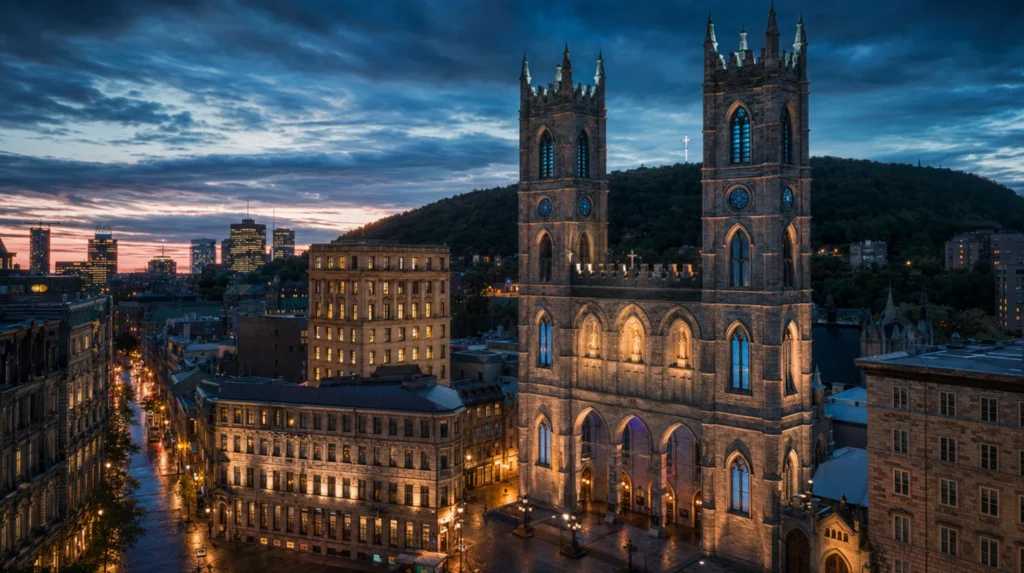
How to Do the Jazz Festival
- Most of it’s free: Hundreds of outdoor concerts fill the Quartier des Spectacles and Place des Festivals. Just show up and drift from one stage to the next — no ticket needed.
- Dates & tickets: The 2026 festival runs June 25–July 4. Book ticketed indoor headliners (Salle Wilfrid-Pelletier, MTELUS and more) early — the big names sell out.
- Getting there: Take the Metro to Place-des-Arts station, which opens right into the festival site — far easier than driving or parking downtown.
- Eat between sets: Smoked-meat sandwiches, fresh bagels and poutine are all steps from the stages — grab a bite and catch the next act.
What’s Happening in Montréal Right Now
Updated June 21, 2026. Starting June 25, Montréal becomes the biggest jazz party on the planet. The Festival International de Jazz de Montréal runs June 25 to July 4, 2026 — its 46th edition, with more than 350 concerts and roughly two-thirds of them free, taking over the Quartier des Spectacles and Place des Festivals downtown. If you’re timing a visit around it, book a downtown hotel early and build your evenings around the free outdoor stages — that’s where the city’s energy peaks after dark.
Montreal, Canada: Bagels, Jazz, and a Bilingual Island City
Part of our Canada travel guide.
Montreal City Guide
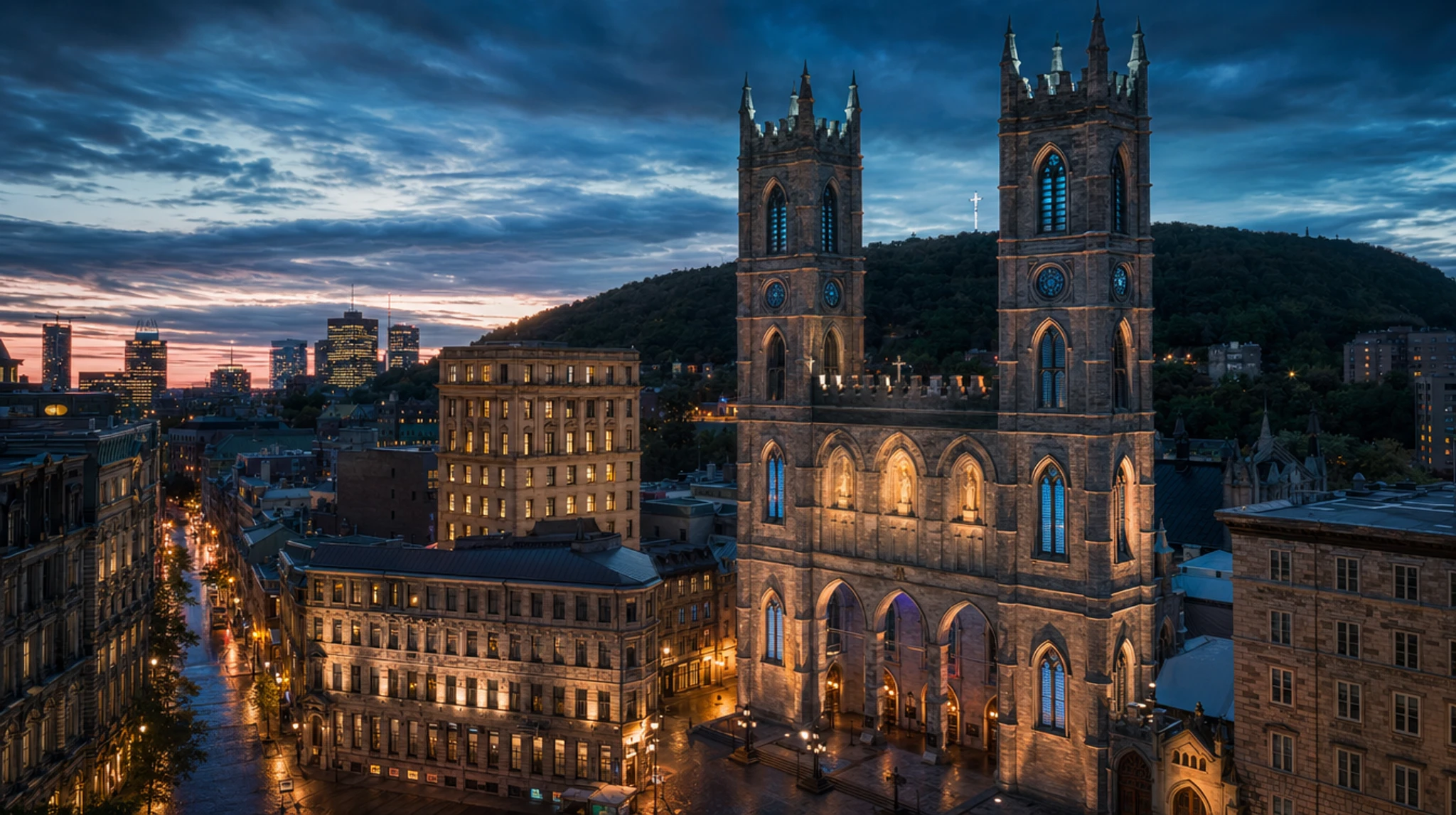
Table of Contents
Why Montreal?
Montreal is Canada’s second-largest city and the beating cultural heart of French-speaking North America — roughly 1.78 million residents within the city proper and about 4.3 million across the Greater Montreal metropolitan area as of 2024. After Paris, it is the second-largest primarily French-speaking city in the world, with roughly 65% of Montrealers speaking French as a first language while a substantial bilingual majority moves comfortably between French and English across the same workday.
The city sits on a 50-kilometre island in the Saint Lawrence River, rising 232 metres above sea level at Mount Royal — the Frederick Law Olmsted-designed urban park completed in 1876 that the city takes its name from. Montréal-Pierre Elliott Trudeau International (YUL) is Canada’s third-busiest airport and Air Canada’s second-largest hub. The skyline layers 17th-century French fortified warehouses in the Old Port directly against 1960s Expo-era skyscrapers, with the underground RESO network — 33 kilometres of climate-controlled pedestrian tunnels linking seven metro stations, 1,200 offices, and 200 restaurants — stitching them together beneath downtown.
Montreal’s defining quality is contradiction, productively held. It is a French city in an otherwise English-speaking continent, a Catholic city with some of the most secular public life in North America, a winter city whose summer festival calendar rivals any city on Earth. Tourisme Montréal counts 120 or more major festivals each year, anchored by the Montreal International Jazz Festival — Guinness-recognised as the world’s largest jazz festival, drawing roughly two million attendees over 10 days each late June and early July. Just for Laughs, the world’s largest comedy festival, takes the same Place des Festivals stages three weeks later.
The superlatives come easy. The Biodôme holds four ecosystems under one roof inside the former 1976 Olympic velodrome. Saint Joseph’s Oratory is the largest church in Canada and the third-largest dome in the world. The Montreal Botanical Garden, founded 1931, is the second-largest in the world at 75 hectares. The Lachine Canal cycle path runs 14 kilometres from the Old Port directly past Saint-Henri’s fine-dining row to the Atwater Market, on a dedicated route that never crosses a traffic lane.
This guide covers 10 neighbourhoods that define Montreal, the bagel-vs-smoked-meat-vs-poutine food scene that makes it Canada’s best eating city, the museums and churches that anchor its cultural calendar, five day trips that turn Montreal into a regional base camp for Quebec City and the Laurentians, and the STM metro, YUL airport, winter-gear, and bilingual-etiquette details that make a first trip run smoothly on arrival.
Neighborhoods: Finding Your Montreal
📍 Montreal Map: Every Place in This Guide
Montreal is organised around Mount Royal and Boulevard Saint-Laurent — “The Main” — which historically divided the French-speaking east from the English-speaking west of the island. The 10 neighbourhoods below cover the widest range of traveller priorities, from first-timer Old Montreal sightseeing to indie-music Mile End, from fine-dining Saint-Henri to market-hall Little Italy. A base near the Orange Line (Berri-UQAM to Place-d’Armes) or the Green Line (Place-des-Arts to Beaudry) puts any of these within 20 minutes by metro on a C$3.75 single fare.
Old Montreal (Vieux-Montréal)
Old Montreal is the 17th-to-19th-century founding quarter along the Saint Lawrence River, built on the 1642 site of the French Ville-Marie settlement. Stone warehouses on Rue de la Commune and Rue Saint-Paul — the oldest street in Montreal, laid out in 1672 — have been converted into boutique hotels, galleries, and the city’s most-photographed streetscape. Notre-Dame Basilica (1829) dominates Place d’Armes; the 2,500-pipe Casavant Frères organ and the blue vaulted ceiling studded with 10,000+ gold stars are the interior signatures. The Old Port, lined with grain silos and the 60-metre Grande Roue de Montréal observation wheel, turns into an outdoor skating rink each winter.
- Notre-Dame Basilica (1829, 10,000-star ceiling)
- Place Jacques-Cartier and the 1809 Nelson Column
- Old Port (Vieux-Port) and Grande Roue de Montréal
- Pointe-à-Callière Archaeological Museum (on the 1642 Ville-Marie site)
- Rue Saint-Paul, laid out 1672
Best for: first-timers, history, boutique-hotel stays, photography. Access: Place-d’Armes or Champ-de-Mars metro stations (Orange Line).
Plateau Mont-Royal
The Plateau is the Victorian duplex-and-triplex residential belt between downtown and Mount Royal that novelist Mordecai Richler and filmmaker Xavier Dolan both immortalised. Its architectural signature is the exterior spiral staircase — built in thousands of pre-war duplexes to save interior floor space under a since-repealed by-law — and its social signature is the weekend brunch queue on Avenue du Mont-Royal. Parc La Fontaine, a 33-hectare green space with a pond and a bandshell, anchors the neighbourhood’s southeast corner; Rue Saint-Denis runs through the Latin Quarter on the Plateau’s west flank. Schwartz’s Deli, on Boulevard Saint-Laurent since 1928, serves the city’s defining smoked-meat sandwich.
- Avenue du Mont-Royal commercial strip
- Parc La Fontaine (33 hectares) with summer bandshell
- Schwartz’s Deli (since 1928, medium smoked meat)
- Fairmount Bagel (since 1919) and St-Viateur Bagel (since 1957)
- Rue Saint-Denis Latin Quarter strip
Best for: residential character, brunch, independent bookshops, long stays. Access: Mont-Royal or Laurier metro stations (Orange Line).
Mile End
Mile End sits just north of the Plateau, a former garment-and-textile district that became the birthplace of Canada’s indie-rock scene in the early 2000s — Arcade Fire, Grimes, Godspeed You! Black Emperor, and the Constellation and Arts & Crafts record labels all traced their roots through these blocks. The neighbourhood holds the original St-Viateur Bagel bakery at 263 Rue Saint-Viateur Ouest (operating since 1957) and the Fairmount Bagel bakery at 74 Avenue Fairmount Ouest (operating since 1919), three blocks apart and in permanent friendly rivalry. A visible Hasidic Jewish community, a Portuguese working-class layer, and the Ubisoft Montreal headquarters all share the same cafés.
- St-Viateur Bagel original bakery (263 Rue Saint-Viateur Ouest, 1957)
- Fairmount Bagel original bakery (74 Avenue Fairmount Ouest, 1919)
- Drawn & Quarterly indie bookshop and comics publisher
- Ubisoft Montreal headquarters (former Peck Building)
- Avenue Bernard and Avenue Laurier Ouest café strips
Best for: bagel pilgrims, indie music, design studios, café sitting. Access: Laurier or Rosemont metro stations + a 10-minute walk.
Downtown & Sainte-Catherine
Downtown Montreal is the glass-and-concrete commercial core, anchored by Rue Sainte-Catherine — Canada’s longest commercial shopping artery at around 11 kilometres total, with the densest two-kilometre stretch running from Atwater to Saint-Denis. McGill University’s 1821-founded main campus sprawls up the Mount Royal slope at the north end; the Montreal Museum of Fine Arts, the Centre Bell (home of the Montreal Canadiens), and the RESO underground network all sit within a 10-block radius. This is the best base for business travellers and first-timers who want metro-adjacent convenience with direct tunnel access to the symphony, the Bell Centre, and the Eaton Centre regardless of winter weather.
- Rue Sainte-Catherine Ouest shopping strip
- McGill University downtown campus (since 1821)
- Montreal Museum of Fine Arts (MMFA) on Sherbrooke
- Centre Bell (Montreal Canadiens, 21,302 seats)
- Place des Arts complex (OSM symphony, Opéra de Montréal)
Best for: business travel, shopping, museum days, winter visits. Access: McGill, Peel, or Bonaventure metro stations (Green/Orange Lines).
Quartier des Spectacles
Quartier des Spectacles is a city-designated one-square-kilometre cultural zone downtown that hosts 40 or more festivals annually, including the Jazz Festival, Just for Laughs, Montreal en Lumière, and Nuit Blanche. The red-dot sidewalk fixtures that demarcate the district light up after dark. Place des Festivals is the main outdoor stage; Place des Arts, which houses the Orchestre symphonique de Montréal and the Opéra de Montréal, anchors the southern edge. The Musée d’art contemporain de Montréal (MAC) closed its Sainte-Catherine location for renovation in 2021 and is scheduled to reopen at a new Place des Arts pavilion by late 2026.
- Place des Festivals (main outdoor stage)
- Place des Arts (OSM symphony, Opéra de Montréal, Ballet)
- Musée d’art contemporain de Montréal (MAC)
- Club Soda and Le National mid-size concert halls
- Illuminated red-dot sidewalks marking the cultural district
Best for: festival-goers, live music, summer visits, opera and symphony. Access: Place-des-Arts metro station (Green Line) — directly under the district.
The Village (Village gai)
The Village is one of North America’s largest LGBTQ+ neighbourhoods, running along Rue Sainte-Catherine Est from Berri-UQAM to Papineau. From mid-May through mid-September the street closes to cars and transforms into a pedestrian promenade; in recent years the signature suspended-art installations have ranged from 180,000 pink resin balls to rainbow canopies visible from the Jacques-Cartier Bridge. Beaudry metro station is Canada’s only rainbow-branded metro station, its pillars painted in the colours of the Pride flag since 1999. Fierté Montréal Pride, held the second weekend of August, is one of Canada’s three largest Pride events alongside Toronto and Vancouver.
- Rue Sainte-Catherine Est pedestrianised (mid-May through mid-September)
- Beaudry metro station (rainbow pillars)
- Cabaret Mado drag shows
- Écomusée du fier monde (former bath-house now labour-history museum)
- Fierté Montréal Pride parade (2nd weekend of August)
Best for: LGBTQ+ travellers, summer patios, nightlife, Pride visitors. Access: Beaudry metro station (Green Line).
Little Italy (Petite Italie)
Little Italy is the post-war Italian immigrant quarter organised around the Marché Jean-Talon — the largest open-air public market in North America, operating on the same site since 1933 and expanding to 300 or more vendors during summer peak. Boulevard Saint-Laurent between Jean-Talon and Beaubien is lined with espresso bars, pasticcerie, and Madonna della Difesa, a 1919 church whose interior frescoes include a controversial Benito Mussolini-on-horseback panel. Italian Week Festival in mid-August closes Saint-Laurent for a weekend of food stalls and live music.
- Marché Jean-Talon open-air public market (since 1933)
- Boulevard Saint-Laurent from Jean-Talon to Beaubien
- Caffè Italia (since 1956) and Milano Fruiterie (since 1954)
- Église Madonna della Difesa (1919 frescoes)
- Italian Week Festival (mid-August on The Main)
Best for: market foragers, espresso drinkers, cooking enthusiasts. Access: Jean-Talon or De Castelnau metro stations (Blue Line).
Saint-Henri & Griffintown
Saint-Henri and Griffintown are the former 19th-century industrial districts straddling the Lachine Canal, once the heart of working-class Irish Canadian Montreal. Heavy demolition in the 1960s for the Autoroute Bonaventure hollowed Griffintown out; the 2010s saw condo redevelopment and a parallel restaurant boom on Notre-Dame Ouest, where Joe Beef (opened 2005 by Frédéric Morin and David McMillan) anchors a cluster that includes Liverpool House, Le Vin Papillon, and McKiernan. The Lachine Canal cycle path runs 14 kilometres from the Old Port past the Atwater Market — a 1933 art deco market hall — directly through both neighbourhoods without crossing a traffic lane.
- Joe Beef (since 2005, Notre-Dame Ouest)
- Liverpool House (sister restaurant to Joe Beef)
- Atwater Market (1933 art deco building on the Lachine Canal)
- Lachine Canal cycle path (14 km to Old Port)
- New City Gas (1859 gasworks, now a nightclub venue)
Best for: fine-dining pilgrims, cyclists, industrial-architecture fans. Access: Lionel-Groulx or Georges-Vanier metro stations (Green/Orange Lines).
Outremont
Outremont is the leafy francophone bourgeois enclave on the north slope of Mount Royal — century-old stone homes on elm-lined streets, a visible Hasidic Jewish community along Avenue Bernard and Avenue Hutchison, and the Université de Montréal, Canada’s largest French-language university (founded 1878). Avenue Laurier Ouest between Hutchison and Parc is the neighbourhood’s café-and-design strip; the 1929 art deco Théâtre Outremont remains operating as an independent movie house. Outremont is the best base for longer stays and family travellers who want a residential Montreal feel with a 15-minute metro ride to downtown.
- Avenue Laurier Ouest café and design strip
- Parc Outremont and Parc Beaubien
- Université de Montréal (founded 1878)
- Théâtre Outremont (1929 art deco movie palace)
- Chabad Lubavitch Hasidic enclave on Bernard / Hutchison
Best for: long stays, family travellers, French-language immersion. Access: Outremont or Édouard-Montpetit metro stations (Blue Line).
Hochelaga-Maisonneuve (HoMa)
Hochelaga-Maisonneuve, known locally as HoMa, is the working-class francophone east-end neighbourhood centred on the 1976 Olympic Park. Hochelaga has been gentrifying rapidly since 2015; Rue Ontario and Promenade Ontario are lined with independent coffee roasters, microbreweries, and French-language bookstores. The Olympic Park’s Tour de Montréal is the tallest inclined tower in the world at 165 metres on a 45-degree angle, with a funicular to a glass observation deck. Neighbouring the tower are the Biodôme, the Insectarium, the Botanical Garden, and the indoor Saputo Stadium.
- Parc olympique and Tour de Montréal (165 m, 45° inclined tower)
- Biodôme de Montréal (4 ecosystems under one roof)
- Montreal Botanical Garden (75 ha, 2nd-largest in the world)
- Promenade Ontario café and brewery strip
- Marché Maisonneuve (1914 public market with 1914 beaux-arts hall)
Best for: French-immersion stays, families with kids, gentrification-curious. Access: Pie-IX or Viau metro stations (Green Line).
The Food
Montreal is Canada’s most distinctive eating city — where Québécois classics, French bistro technique, and a century-old Jewish delicatessen tradition layer on the same three blocks. Tourisme Montréal lists more than 6,000 restaurants across the metro area, with the city claiming one of the highest restaurant-per-capita ratios in North America. The cornerstone dishes were invented or perfected here: poutine, Montreal-style smoked meat, the wood-fired honey-boiled bagel, and tourtière. Beyond the classics sit serious French bistros along Rue Saint-Denis, a cluster of fine-dining temples on Notre-Dame Ouest in Saint-Henri, and the country’s most intense public-market culture at Jean-Talon and Atwater.
Québécois Classics — Poutine, Smoked Meat, Bagels, Tourtière
The four foundational Montreal dishes are tightly tied to place. Poutine — fresh cheese curds melted under brown gravy over hot fries — was invented in small-town rural Québec in the 1950s and was codified as an urban dish in Montreal 24-hour diners by the 1970s; La Banquise, open since 1968 with 33 named varieties, is the pilgrimage site. Montreal smoked meat is a Romanian-Jewish brisket cure unique to this city — coriander-and-peppercorn-seasoned, smoked, then steamed, sliced hand by the counterman at Schwartz’s Deli since 1928. The Montreal bagel is smaller, denser, and sweeter than the New York version — honey in the boiling water, wood-fired in the oven, sesame or poppy on top — and Fairmount Bagel (since 1919) and St-Viateur Bagel (since 1957) have been baking three blocks apart in Mile End for over a century. Tourtière, the pork-and-spice meat pie, is a réveillon (Christmas Eve) tradition from the Saguenay region.
- Schwartz’s Deli (The Main, since 1928) — medium smoked meat sandwich with mustard and pickle (C$12.95, ~$9.30)
- St-Viateur Bagel (263 Rue Saint-Viateur Ouest, since 1957) — warm wood-fired sesame bagel (C$1.20 each, ~$0.85)
- Fairmount Bagel (74 Avenue Fairmount Ouest, since 1919) — poppy seed bagel from the original bakery (C$1.15 each, ~$0.85)
- La Banquise (Rue Rachel, since 1968, 24/7) — La Classique poutine (C$11.25, ~$8)
- Au Pied de Cochon (Plateau, Martin Picard, since 2001) — foie gras poutine (C$32, ~$23)
French Bistro Culture — The Rue Saint-Denis Axis
Montreal’s French bistro scene predates the recent North American vogue by decades — L’Express on Rue Saint-Denis has been serving steak frites in a mirror-lined tiled dining room since 1980, without changing the menu in any meaningful way. The city’s bistro grammar is genuine: wine by the glass from a printed paper list, house-made terrines and rillettes, bone marrow, onglet-à-l’échalote, tarte Tatin. Toqué!, opened by Normand Laprise in 1993, was the first Canadian fine-dining restaurant to treat Québec-grown produce as the equal of any European tradition; it remains the classic Montreal tasting-menu destination. On Notre-Dame Ouest in Saint-Henri, Joe Beef (2005) and its sister Liverpool House (2009) pushed the city’s fine-dining centre of gravity west toward the canal with a rotating English-French menu of oysters, foie gras, and lobster spaghetti.
- L’Express (Rue Saint-Denis, since 1980) — steak frites (C$28, ~$20)
- Lawrence (Plateau brunch institution) — duck confit or crispy egg salad (C$22, ~$16)
- Joe Beef (Notre-Dame Ouest, since 2005) — lobster spaghetti or foie-gras double down (mains C$42–65, ~$30–47)
- Toqué! (Normand Laprise, since 1993) — tasting menu with Québec terroir (C$150, ~$108)
- Liverpool House (Notre-Dame Ouest) — whole roast bird for two (C$95, ~$68)
Jewish Deli Heritage — Mile End & The Main
Montreal’s Jewish delicatessen tradition arrived with Romanian-Jewish immigrants in the late 19th and early 20th centuries, concentrating along Boulevard Saint-Laurent — “The Main” — and northward into Mile End. The surviving institutions punch far above their weight: Schwartz’s for smoked meat, Wilensky’s Light Lunch (at Fairmount and Clark since 1932) for the famous Wilensky Special bologna-salami grilled sandwich with mustard, Beauty’s Luncheonette (since 1942) for the mish-mash omelette, Fairmount Bagel for the bagel, Cheskie’s for Hungarian-Jewish pastries in the Hasidic community, and Snowdon Deli for a second smoked-meat option on the west side. The tradition has been continuous across four generations; these are not revival restaurants but working-class delicatessens that never closed.
- Wilensky’s Light Lunch (Fairmount & Clark, since 1932) — Wilensky Special bologna-salami sandwich (C$5.50, ~$4)
- Beauty’s Luncheonette (Mont-Royal & Saint-Urbain, since 1942) — mish-mash omelette (C$17, ~$12)
- Cheskie’s Bakery (Mile End, Hasidic pastries) — chocolate babka (C$12, ~$9)
- Snowdon Deli (Décarie Boulevard, since 1946) — smoked meat sandwich (C$13.95, ~$10)
- Moishes Steakhouse (Montreal institution since 1938, reopened 2021) — rib steak (C$65, ~$47)
Beyond Poutine and Smoked Meat
Beyond the four classics, Montreal’s everyday plates draw from a century of immigrant waves that have carried recipes here intact and raised them inside neighbourhood restaurants. Portuguese rotisserie chicken centres on Rua Rachel Est and Rue Saint-Laurent around Duluth, with Coco Rico and Romados slow-roasting over charcoal to fill takeout queues that run down the block on weekend evenings. Maghrebi and Lebanese cuisine clusters along Boulevard Saint-Laurent north of Jean-Talon and along Rue Jean-Talon itself, with Boustan serving the city’s defining late-night chicken shawarma pita since 1986. Haitian food is the backbone of the Rosemont-Petite-Patrie and Saint-Michel east end. Vietnamese pho and bánh mì cluster along Côte-des-Neiges and in the Quartier Chinois on Rue de la Gauchetière downtown. Québec itself brings maple products in every imaginable form — maple butter, maple taffy hardened on snow, maple-bacon everything — plus the Oka washed-rind cheese made by Cistercian monks at the Abbey of Oka since 1893, and Québec-grown foie gras and duck confit that anchors every fine-dining menu.
- Portuguese rotisserie chicken — half-chicken with peri-peri at Romados on Rue Rachel Est (C$14, ~$10)
- Boustan chicken shawarma pita — late-night Lebanese staple since 1986 (C$10, ~$7)
- Haitian griot — twice-cooked pork at Agrikol or Kwizinn (C$22, ~$16)
- Vietnamese pho ga — chicken noodle soup at Pho Bac 97 on Rue Saint-Laurent (C$14, ~$10)
- Tourtière — Québec pork meat pie at Aux Anciens Canadiens (C$28, ~$20)
- Oka cheese — washed-rind abbey cheese at Fromagerie Atwater (C$8 per 150g wedge, ~$6)
- Tire d’érable (maple taffy on snow) — cabane à sucre staple in March-April (C$3–5 per stick, ~$2–4)
Food Markets & Public Halls
Montreal’s public-market culture is denser than any other Canadian city’s, with four active markets operated by the Corporation de gestion des marchés publics de Montréal on behalf of the city. Marché Jean-Talon, in Little Italy since 1933, is the largest open-air public market in North America, expanding to 300-plus vendors during summer peak with a year-round indoor core for Québec cheese, charcuterie, foraged mushrooms, maple syrup in every grade (golden, amber, dark, and very dark), and Saint Lawrence River sturgeon caviar from Acadian Sturgeon. Marché Atwater, also opened 1933, is the smaller art deco sibling on the Lachine Canal — narrower but equally serious for Québec butchers (Boucherie Claude et Henri, Boucherie Atwater), bakeries (Première Moisson), and cheese cellars (Fromagerie Atwater with a 300-variety Québec cheese wall). Marché Maisonneuve, a 1914 beaux-arts market hall in Hochelaga, serves the east end with a smaller but growing vendor roster. Summer Saturday mornings at any of the three are the fullest Montreal market experience; winter forces Jean-Talon’s outdoor stalls indoors but keeps the heated interior market alive year-round.
Beyond the public markets, Montreal’s specialty-food retail deserves a deliberate afternoon. La Vieille Europe on Boulevard Saint-Laurent has been curing charcuterie and cutting cheese since 1959; the shop is functionally unchanged in 60 years. Mon Ami on Avenue Laurier Ouest is the densest Québec-cheese selection in the city outside Jean-Talon. The SAQ (Société des alcools du Québec) is the provincial liquor monopoly; the flagship SAQ Signature in Complexe Les Ailes downtown holds roughly 15,000 labels including a strong Québec cider and cidre de glace (ice cider) section. For takeout pâtisserie, Patrice Pâtissier on Rue Notre-Dame Ouest and Rhubarbe on Rue de Bordeaux carry the Parisian technique that Montreal bakers learned during the 1970s Québec-to-Paris pastry migration; expect C$6–9 per croissant, macaron, or tarte aux fraises.
Food Experiences You Can’t Miss
- St-Viateur vs Fairmount bagel taste test — order a half-dozen sesame from St-Viateur (263 Rue Saint-Viateur Ouest) and a half-dozen poppy from Fairmount (74 Avenue Fairmount Ouest). Three blocks apart in Mile End; about C$15 total for both. Eat them warm, the same day.
- Schwartz’s smoked meat, medium fat — the canonical Montreal meal, C$12.95 with mustard and a half-sour pickle; sit at the counter on The Main and watch the hand-carver work.
- Jean-Talon Market summer Saturday — Québec cheese, Saint-Laurent-river sturgeon, foraged wild mushrooms, 50 kinds of maple syrup. Budget C$25–40 for a foraging lunch.
- Cabane à sucre day trip — mid-March through mid-April, 200+ sugar shacks within a one-hour drive of Montreal serve multi-course maple-themed meals including tire d’érable hardened on fresh snow (~C$45–65 per person).
- Au Pied de Cochon tasting menu — Martin Picard’s cheerfully excessive Québec-meat temple in the Plateau; foie gras on everything, C$150+ per person before wine.
- Old Port Time Out Market — curated food hall with 16 Montreal-chef kiosks from Joe Beef’s David McMillan to Normand Laprise of Toqué!; good one-stop introduction to the city’s fine-dining rotation at kiosk prices of C$18–28 per plate.
- Dimanche au marché (Sunday at the market) — Jean-Talon and Atwater both open Sundays 9am–5pm with lighter crowds than Saturday peak; bring a reusable tote and budget C$30 per person for cheese, charcuterie, bread, and fruit to picnic on Mount Royal.
- Festival du Burger Week (first week of September) — 100+ Montreal restaurants compete with signature burgers; tickets free, burgers C$8–18 each.
Cultural Sights
Montreal’s cultural institutions are geographically compressed — the seven sights below all sit within a five-kilometre radius of Place-d’Armes, meaning a determined traveller can cover four in a day with a single C$11.50 STM day pass. Museum admissions stack up fast; the Passeport MTL sightseeing pass at C$105 (~$76) for 48 hours bundles unlimited public transit plus entry to 25 attractions including the Biodôme, Botanical Garden, Notre-Dame Basilica, and MMFA.
Notre-Dame Basilica (Basilique Notre-Dame)
The architectural signature of Old Montreal — an 1829 Gothic Revival Catholic basilica on the west flank of Place d’Armes designed by New York architect James O’Donnell (who converted from Protestantism to Catholicism while building it so he could be buried inside). The interior, completed in 1880 by Victor Bourgeau, is painted deep blue and studded with 10,000 or more gold-leaf stars across the vaulted ceiling; the Sacred Heart Chapel behind the main altar was rebuilt in 1982 after a 1978 fire and is where Céline Dion married René Angélil in 1994. The Aura multimedia light show runs most evenings and projects animated imagery onto the altar and vaults. Parish established 1657; current building 1829. Admission C$15 adult (~$11), Aura show C$32 (~$23). Mon–Fri 9:00–16:30, Sat 9:00–16:00, Sun 12:30–16:00.
Montreal Museum of Fine Arts (MMFA / MBAM)
The MMFA is the oldest art museum in Canada, founded in 1860, and the largest art museum in Québec by collection size — 44,000 works spread across five pavilions on Sherbrooke Street West. The permanent collection runs strongest on Québec and Canadian art (especially the Automatistes movement around Paul-Émile Borduas and Jean-Paul Riopelle), Inuit sculpture, European Old Masters, and decorative arts. The Michal and Renata Hornstein Pavilion of Peace, added in 2016, houses the European old masters. Founded 1860. Admission C$24 adult (~$17); under-20 free; the permanent collection is free every Wednesday 5:00–21:00. Tue–Sun 10:00–17:00; Wed to 21:00.
Mount Royal Park (Parc du Mont-Royal)
The 200-hectare urban park on the 232-metre hill at the centre of the island, designed in 1876 by Frederick Law Olmsted — the American landscape architect who had designed New York’s Central Park 20 years earlier. The Kondiaronk Belvedere, on the south face near the chalet, is the city’s most-photographed skyline overlook; the 31-metre illuminated steel cross on the summit, erected in 1924, is visible from 80 kilometres on clear nights. Tam-Tams drum circles gather on the east slope every Sunday afternoon from May through September. Free admission; open daily 6:00–midnight. Founded 1876.
Pointe-à-Callière Archaeological Museum
Pointe-à-Callière is built directly on top of the 1642 Ville-Marie founding site — where Paul de Chomedey de Maisonneuve first landed and raised the wooden cross that became Montreal. The underground archaeology gallery descends through preserved foundations, the Little Saint-Pierre River channel (diverted into a culvert in the 19th century), and the first Catholic cemetery in the city. The museum is on UNESCO’s Tentative List for World Heritage status. Founded 1992 on the 350th anniversary of the city. Admission C$26 adult (~$19). Tue–Fri 10:00–17:00, weekends 11:00–17:00.
Saint Joseph’s Oratory (Oratoire Saint-Joseph)
Saint Joseph’s Oratory is the largest church in Canada and the third-largest copper dome in the world, after St Peter’s in Rome and Florence Cathedral. The oratory was founded in 1904 by Brother André Bessette, a Holy Cross lay brother whose reported healing miracles drew pilgrims from across North America; construction of the current basilica began 1924 and was completed in 1967. Brother André was canonised as a Catholic saint in 2010; his preserved heart is on display inside the complex. The oratory sits atop the north slope of Mount Royal, reached by climbing the 283 exterior stone steps (many pilgrims still climb the centre row on their knees). Founded 1904. Free admission to the basilica; museum C$7 (~$5); observation dome C$3 (~$2). Daily 6:30–20:30.
Biodôme & Botanical Garden
The Biodôme de Montréal occupies the former 1976 Olympic Velodrome and holds four complete ecosystems — tropical rainforest, Laurentian maple forest, Gulf of Saint Lawrence marine environment, and sub-polar region — under a single dome with 4,500 plants and 250 animal species. Adjacent, the Montreal Botanical Garden is 75 hectares and the second-largest botanical garden in the world after London’s Royal Botanic Gardens at Kew; its Chinese Garden and Japanese Garden are considered among the finest in North America. The Chinese Gardens Lantern Festival in September and October adds evening illumination. Biodôme founded 1992 (in the 1976 building); Garden founded 1931. Biodôme admission C$22.25 (~$16); Garden C$22.75 (~$16).
Olympic Park & Tour de Montréal
Parc Olympique is the 1976 Summer Olympics site in Hochelaga-Maisonneuve, anchored by the Olympic Stadium and the 165-metre Tour de Montréal — the tallest inclined tower in the world at a 45-degree angle. A funicular climbs the tower in about two minutes to a glass observation deck overlooking the city, Mount Royal, and on clear days the Laurentian Mountains 100 kilometres north. The stadium itself has been underused since the Expos MLB team relocated to Washington in 2004 but the Esplanade Financière Sun Life hosts festivals, auto shows, and Igloofest’s southern outdoor electronic-music stage. Founded 1976. Tower admission C$25.50 adult (~$18). Daily 9:00–17:00.
Entertainment
Montreal’s entertainment calendar is defined by festivals — more than 120 across the year per Tourisme Montréal, concentrated most heavily between late June and mid-August. The Quartier des Spectacles cultural district hosts the biggest of them; the Montreal Canadiens anchor the winter calendar at the Centre Bell; and the city’s circus heritage (Cirque du Soleil was founded in Montreal in 1984) keeps a big-top or acrobatic show running most months of the year.
Montreal International Jazz Festival
The Festival International de Jazz de Montréal is Guinness-recognised as the world’s largest jazz festival, drawing roughly two million attendees to the Quartier des Spectacles over 10 days each late June and early July. The programming runs broad, from straight-ahead jazz at Maison symphonique (the OSM’s concert hall) to funk, world, electronic, and Latin at Place des Festivals — with roughly 3,000 musicians across 600 or more concerts, two-thirds of them free outdoor shows. Typical cost free outdoor; indoor shows C$45–150 (~$32–108). Indoor passes go on sale in December; individual ticket releases start in late March. Headliners since 2020 have included Norah Jones, Thundercat, Diana Krall, and Jacob Collier.
Just for Laughs (Juste pour rire)
Just for Laughs, founded 1983, is the world’s largest comedy festival, running late July at Place des Arts and venues across the Quartier des Spectacles. Mainstage galas at Salle Wilfrid-Pelletier have historically launched or accelerated stand-up careers for Jerry Seinfeld, Dave Chappelle, Ali Wong, John Mulaney, Bo Burnham, and Hannah Gadsby. The English-language programme runs concurrently with a robust French-language Juste pour rire side; OFF-JFL handles alt and underground comedy at smaller venues like Club Soda. Typical cost C$35–200 per show (~$25–144). Tickets open in March.
Montreal Canadiens (NHL)
The Montreal Canadiens (“Les Habitants”, or just “the Habs”) are the most decorated franchise in NHL history with 24 Stanley Cup championships, playing home games at the 21,302-seat Centre Bell downtown. The season runs October through April; Hab fans are famously intense, and the city shuts down when the team is on a deep playoff run. Tickets have become harder to source since the mid-2010s; premium seats release to season-ticket holders first, with single-game sales opening in August or September and selling out within days for opponents such as Toronto or Boston. Typical cost C$75–500+ (~$54–360). Same-day secondary-market tickets from C$80 on StubHub or Vivid Seats are often available for weeknight games.
Cirque du Soleil & Circus Heritage
Cirque du Soleil was founded in Montreal in 1984 and remains headquartered in the city’s Saint-Michel borough, on the former Miron quarry landfill. The Big Top residency at the Jacques-Cartier Pier in the Old Port hosts a touring Cirque production most summers from April through July, with performances typically at 7:30pm. The École nationale de cirque in Saint-Michel — the only degree-granting circus arts school in North America — feeds talent across the industry; Tohu performance hall next door hosts smaller-scale contemporary circus year-round. Typical cost C$55–220 (~$40–160). Big Top shows book 2–3 months out for weekends.
Osheaga, Piknic Électronik & Summer Music
Osheaga, at Parc Jean-Drapeau on Saint-Helen’s Island for the first weekend of August, is Quebec’s biggest music festival and one of Canada’s top three alongside Toronto’s Veld and Vancouver’s Bass Coast. Around 135,000 attendees over three days with headliners that have included Arcade Fire, Kendrick Lamar, Billie Eilish, Travis Scott, and The Weeknd. Piknic Électronik runs outdoor electronic-music Sundays at Parc Jean-Drapeau from late May through late September (C$20 per Sunday). Mural Festival, also in June, closes Boulevard Saint-Laurent for a weekend to paint new large-scale wall murals across the Plateau and Mile End. Typical cost Osheaga 3-day pass C$400+ (~$290); Piknic single Sunday C$20 (~$14).
Igloofest & Winter Nightlife
Igloofest is Montreal’s winter signature event — an outdoor electronic-music festival at the Jacques-Cartier Pier in the Old Port, running Thursday through Sunday nights from mid-January through mid-February, with DJs playing in -20°C ambient temperatures and the harbour frozen behind the stage. The festival’s one-piece snowsuit dress code is earnestly enforced, and the Iglooswag contest at the end of each weekend awards the best vintage ski suit. Year-round, downtown nightlife clusters along Rue Crescent (the English-speaking party street since the 1970s) and Boulevard Saint-Laurent between Sherbrooke and Rachel, with last-call at 3am city-wide. Typical cost Igloofest C$35 per night (~$25); downtown club cover C$10–25.
Day Trips
Montreal sits within a three-hour radius of some of Québec’s most important landscapes and of Canada’s national capital. The five day trips below cover the full range: a UNESCO walled city east of the island, the province’s premier ski range north, a cool-climate wine region and fall-foliage corridor to the southeast, the federal capital west, and a constellation of beach and antique-village escapes within an hour of downtown.
Quebec City (3 hours by VIA Rail)
Quebec City is the only walled city north of Mexico and a UNESCO World Heritage Site since 1985 — the Historic District of Old Québec, enclosed by the original 17th-century fortifications, is anchored by the Château Frontenac (Canada’s most-photographed hotel) and the Plains of Abraham where the 1759 battle between British and French forces decided the colonial future of North America. VIA Rail runs the Corridor from Montreal Gare Centrale to Quebec Gare du Palais in roughly 3 hours 10 minutes, with 4–6 daily departures from about C$45 one-way. Le Petit Champlain, a restored 17th-century lower-town quarter, is smaller and more historically intact than Old Montreal. Practical tip: book VIA Rail 2–3 weeks out for the best fares and request a seat on the south side for Saint Lawrence River views between Drummondville and Lévis.
Laurentians & Mont-Tremblant (1.5 hours by car)
The Laurentians (Laurentides) are the mountain range running northwest of Montreal, Québec’s premier ski and cottage region, reached via Autoroute 15 North. Mont-Tremblant is the largest ski resort in eastern North America — 102 runs across a 645-metre vertical on an 875-metre peak, with a Euro-styled pedestrian village at the base. Lift-ticket prices run C$120–140 adult day (~$86–101); the Tremblant village is a destination in itself in summer, with a four-kilometre luge run and the annual Tremblant International Blues Festival in July. Smaller neighbouring resorts Saint-Sauveur and Mont-Blanc are closer (1 hour) and cheaper. Practical tip: Skyport Parkbus runs a seasonal direct coach service from downtown Montreal (Gare d’autocars) to Tremblant for roughly C$65 one-way; otherwise a rental car is essentially mandatory.
Eastern Townships / Cantons-de-l’Est (1 hour by car)
The Eastern Townships are the rolling agricultural country southeast of Montreal, settled by English-speaking Loyalists after 1776 and today Québec’s fastest-growing cool-climate wine region. The 140-kilometre Route des Vins links 22 wineries between Dunham and Magog, producing respected Vidal, Seyval Blanc, Frontenac Noir, and ice wine. Magog, on the north shore of Lake Memphrémagog, is the usual base; the Abbaye de Saint-Benoît-du-Lac, a working Benedictine monastery on the west shore, sells its famous Saint-Benoît blue cheese and a range of apple ciders at the abbey shop. Fall foliage peaks late September through mid-October; weekend traffic jams in late October rival Niagara. Practical tip: designated-driver wine tours from Montreal run C$175–230 per person with lunch and four-to-five winery visits.
Ottawa (2 hours by VIA Rail or car)
Ottawa, Canada’s national capital, sits 190 kilometres west of Montreal on the Ontario side of the Ottawa River. VIA Rail’s Corridor runs Montreal Central to Ottawa Station in about 2 hours, with 6–8 daily departures from roughly C$40 one-way. Parliament Hill, the National Gallery of Canada, the Canadian War Museum, and the ByWard Market are all within walking distance of the train station via Ottawa’s O-Train Line 1. In winter, the 7.8-kilometre Rideau Canal skating rink (UNESCO-listed, reopened 2026 after two consecutive no-ice winters) is the headline attraction from mid-January through late February. Practical tip: time a winter visit for early February when Winterlude festival overlaps with Rideau Canal skating at peak conditions.
Oka, Hudson & Rigaud (45 min – 1 hour by car)
The closest cluster of day trips sits along Autoroute 40 West and the Lac-des-Deux-Montagnes shoreline. Parc national d’Oka has one of the best freshwater beaches in the province — a two-kilometre white-sand strip on the lake with paid parking at C$9 per vehicle. The Abbaye d’Oka, founded 1881 by Cistercian monks, is where Oka washed-rind cheese was developed in 1893 and remains produced; the abbey shop sells cheese, jams, and ciders. Hudson, a bilingual village on the Ottawa River, has an antique-store row and a ferry across to Oka that operates April through October. Rigaud’s Sucrerie de la Montagne is a year-round sugar shack with period-costumed staff and a full traditional Québécois meal for about C$55 per person. Practical tip: rent a car in downtown Montreal rather than from Trudeau Airport; airport tax and surcharges add roughly C$20–30 per day.
Seasonal Guide
Spring (March – May)
Spring arrives late in Montreal — daily highs climb from -2°C in early March to 18°C by late May and a snow squall as late as mid-April is unremarkable. The signature spring event is the cabane à sucre (sugar shack) season mid-March through mid-April, when 200 or more shacks within a one-hour drive of the city open for maple-themed multi-course meals ending in tire d’érable — hot maple syrup poured onto fresh snow and rolled onto a stick. Piknic Électronik outdoor dance Sundays at Parc Jean-Drapeau begin in late May. Spring is excellent shoulder-season value; hotel rates drop 30–40% below summer peak and festival-season pricing hasn’t kicked in.
Summer (June – August)
Summer is when Montreal becomes a festival city at maximum intensity. Daily highs run 22–27°C with humidex spikes to 38°C on heat-dome days. The Jazz Festival takes over the Quartier des Spectacles from late June through early July; Just for Laughs follows in mid-to-late July; Osheaga runs the first weekend of August at Parc Jean-Drapeau; Fierté Montréal Pride draws its biggest crowds the second weekend of August; and Sainte-Catherine Est is pedestrianised in the Village from mid-May through mid-September. Hotel rates run 40–60% above winter; book 2–3 months ahead for Jazz Fest and Grand Prix F1 (mid-June, the year’s most expensive weekend).
Autumn (September – November)
Autumn is Montreal’s most underrated season. Daily highs run 6–22°C across the three months. Fall foliage peaks in the Laurentians and Eastern Townships from late September through mid-October (peak colour typically the second week of October around the city; 10–14 days earlier an hour north). The Festival Black & Blue (early October), POP Montreal independent music (late September), Festival du Nouveau Cinéma (mid-October), and Nuit Blanche return to the city calendar. First snow typically falls mid-to-late November, and the Christmas market at the Old Port opens on the last weekend of November.
Winter (December – February)
Montreal winter is genuinely cold — average daily highs -5°C to -1°C and nightly lows that routinely hit -20°C, with wind-chill values reaching -30°C on bad January and February days. The city’s response is the RESO underground network (33 km of climate-controlled pedestrian tunnels linking seven metro stations and 1,200 offices) plus a dense winter-festival calendar: the Old Port skating rink opens late November; Igloofest outdoor electronic-music festival runs Thursday through Sunday nights from mid-January through mid-February; Montreal en Lumière features Nuit Blanche all-night art crawl in late February; and the Canadiens play 20+ home games at the Centre Bell. Hotel rates sit at their annual low from mid-January through February.
Getting Around
Montreal is compact and walkable by North American standards — the island is only 50 kilometres long, and most neighbourhoods sit within a 15-minute metro ride of downtown. The STM (Société de transport de Montréal) operates the subway, bus, and paratransit network; EXO handles commuter rail to the suburbs; and the new REM light-rail system began phased opening in 2023 and is scheduled to fully connect Trudeau Airport by late 2027. YUL sits 20 kilometres west of downtown.
STM Metro
The Montreal Metro is a four-line rubber-tyred underground system — Green (Angrignon to Honoré-Beaugrand), Orange (Côte-Vernon to Montmorency), Yellow (Berri-UQAM to Longueuil across the river), and Blue (Saint-Michel to Snowdon) — with 68 stations and roughly 71 kilometres of track. All stations are underground; the French-designed MPM-10 and MR-73 rolling stock run on rubber tyres, giving the system a distinctive quiet ride. Trains run every 3–8 minutes from 5:30am to about 1:00am (1:30am Saturdays). The single-ride fare is C$3.75 via contactless credit card, OPUS card, or mobile payment; a 24-hour unlimited pass is C$11.50 (~$8.30) and a 3-day pass is C$21.25 (~$15.30).
Bus & Night Network
STM also operates 220 bus routes covering the island, with 20 high-frequency Réseau 10 Minutes Max lines. Buses accept the same fares as the metro (C$3.75 single ride, free transfers to metro within a 120-minute window). The Night Bus network — 31 routes marked with white-text-on-black signs and line numbers in the 300s — runs after the metro closes at 1am until 5:30am, with 30-to-60-minute headways. The 747 Express Bus runs 24 hours between YUL airport and Berri-UQAM downtown at C$11 per trip.
OPUS Card & Contactless Payment
The OPUS card is the regional reusable transit card for STM, EXO, REM, and regional transit across Greater Montreal. It’s available at metro ticket booths for a C$6 card fee plus loaded value. Since 2023 STM has accepted contactless Visa, Mastercard, Amex, Apple Pay, and Google Pay directly at turnstiles at the same C$3.75 single fare — for trips of three days or less, skip the OPUS card purchase entirely and tap your regular card or phone. The 24-hour and 3-day unlimited passes are only sold on OPUS, on paper-ticket receipts at ticket machines, or through the Chrono mobile app.
Airport Access (YUL)
- 747 Express Bus (YUL ↔ Berri-UQAM metro) — 45–70 min, C$11 (~$8)
- YUL taxi flat rate to downtown — 25–40 min, C$43 (~$31)
- Uber or Lyft YUL to downtown — 25–40 min, typically C$30–55 surge-dependent (~$22–40)
- REM light rail airport station — opening scheduled late 2027; downtown Gare Centrale in roughly 20 minutes at a projected C$12 fare
BIXI Bike Share & Cycling
BIXI is Montreal’s bike-share system — 11,500 bikes across 860 stations, including 2,500 e-bikes in the 2025 fleet — running April through mid-November. The single-trip day pass is C$6 and a season pass is C$105. Montreal is Canada’s most-cycled city per capita; the Lachine Canal and Rivière-des-Prairies bike paths are continuously separated from traffic, and the downtown Réseau express vélo (REV) added four dedicated cycle corridors beginning in 2020. Rent from BIXI or from Fitz & Follwell in the Plateau (C$45 per day for a proper touring bike).
Taxis & Navigation
Flag-fall is C$4.10 plus C$2.05 per kilometre and C$0.63 per minute of waiting time. Uber and Lyft are universally available and usually cheaper than metered taxis; Téo Taxi (Montreal’s electric-vehicle taxi service) closed in 2019, but former Téo drivers run under the Taxi Coop and Taxi Diamond cooperatives. Apps: the Chrono app is the STM official real-time planner; Transit app handles STM, EXO, and REM with reliable crowd-sourced arrivals; Google Maps works across all modes. Signage is French-primary with English secondary on metro station panels; intersection street signs are French-only.
Budget Breakdown: Making Your Canadian Dollar Count
Montreal is the cheapest of Canada’s three major English-Canadian-adjacent metros — noticeably cheaper than Toronto or Vancouver across accommodation, restaurants, and transit. The Canadian dollar trades at roughly C$1.39 per US$1 in April 2026, giving US travellers an implicit discount of about 28% before tax.
| Tier | Daily | Sleep | Eat | Transport | Activities | Extras |
|---|---|---|---|---|---|---|
| Budget | C$90–140 (~$65–100) | Hostel dorm C$40–60 (~$29–43), budget hotel C$110–150 (~$79–108) | C$25–40/day (~$18–29) from bagel bakeries, Jean-Talon, shawarma | STM day pass C$11.50 (~$8.30) | Free: Mount Royal, Old Port, Notre-Dame Basilica exterior, Lachine Canal | MMFA Wed free evenings, Jazz Fest free outdoor stages |
| Mid-Range | C$250–400 (~$180–290) | Boutique hotel or Airbnb C$180–280 (~$130–200) | C$70–110/day (~$50–80) sit-down bistro dinners, market lunches | Day pass + occasional Uber, C$25–40/day (~$18–29) | Notre-Dame + MMFA + Biodôme, C$60–100/day (~$43–72) | Canadiens balcony seat, Cirque du Soleil, jazz club |
| Luxury | C$650+ (~$470+) | Ritz-Carlton, Fairmont Queen Elizabeth, Hotel Le Germain, C$550–1,100+ (~$395–790) | Toqué! C$150 (~$108), Joe Beef C$180 (~$130), Au Pied de Cochon C$150+ (~$108+) | Private transfers, Uber Black | Jazz Fest indoor headline shows, Canadiens reds, F1 paddock pass | Helicopter tour, private cabane à sucre booking, Mile End bagel tour |
Where Your Money Goes
Accommodation is Montreal’s single largest expense — downtown hotels average C$180–300 per night most of the year, peaking at C$500+ during the F1 Grand Prix weekend (mid-June), Jazz Festival weekends (late June through early July), and Just for Laughs (mid-July). Food runs very reasonable by Canadian standards: a smoked-meat sandwich is C$13, a bagel is C$1.20, a bistro dinner is C$40–60, and a fine-dining tasting menu C$150–250 before wine. Transit is genuinely cheap at C$3.75 for a single ride and C$11.50 for a 24-hour unlimited pass; compared to Toronto’s C$13.50 day pass or New York’s C$30+ equivalent, Montreal is among the best transit values in North America. Rideshare stacks up quickly if you default to it; parking downtown runs C$20–35 per day at public lots like Complexe Desjardins and Palais des Congrès. Alcohol retail is relatively expensive thanks to the SAQ’s provincial monopoly — a Québec IPA that’s C$3.50 at a corner store in Toronto is C$4.75–5.25 at a Montreal dépanneur — so if you’re drinking across a long visit, time a SAQ stop for discount bin ends.
Money-Saving Tips
- Use the free outdoor Jazz Festival programming — roughly two-thirds of the ~600 shows over 10 days are free, at Place des Festivals and Quartier des Spectacles outdoor stages.
- MMFA’s permanent collection is free every Wednesday 5–9pm; the Musée McCord offers free entry on the first Wednesday of each month; and the Pointe-à-Callière Museum is free on 18 May each year for International Museum Day.
- Airbnb in the Plateau, Mile End, or Hochelaga runs 25–40% below downtown hotel rates and sits on metro or BIXI access 10–15 minutes from Old Montreal.
- Québec has one of Canada’s lowest restaurant-tax loads in raw percent, but the 15% combined GST+QST still adds up — price mentally with tax plus 18–20% tip baked in.
- Jean-Talon and Atwater markets undercut grocery-store prices on Québec cheese, bread, and produce by 20–30% for daily picnic-style eating in the Plateau and Saint-Henri.
Practical Tips
Language
French is the official language of Québec under Bill 101 (the Charter of the French Language, 1977), and approximately 65% of Montrealers speak French as a first language. Open every interaction in French — “Bonjour” at minimum — and respond to the bilingual greeting “Bonjour-Hi” in whichever language you prefer. English is widely understood downtown, in Mile End and the Plateau, on the West Island, and across the tourism industry; but the French-first greeting is basic Montreal courtesy and service quality materially improves when you extend it. Outside the city — in the Laurentians, Eastern Townships, or Quebec City — English fluency varies from excellent to functional; keep Google Translate handy.
Cash vs. Cards
Montreal is functionally cashless. Contactless tap with Visa, Mastercard, Interac, Apple Pay, and Google Pay works at roughly 99% of restaurants including street food and bagel bakeries, at every STM metro turnstile, and at every major market vendor. American Express is accepted at chains, hotels, and fine dining but less reliably at independent restaurants in Mile End, the Plateau, or Little Italy. Keep C$40–60 in cash for tips, parking meters, the rare cash-only counter at small delis, and emergency taxi top-ups. ATMs at Desjardins, RBC, Scotia, or BMO branches are free for visitor use; third-party ATMs in bars and convenience stores charge C$3–6 per withdrawal.
Safety
Montreal is consistently ranked among the safest major cities in North America — Statistics Canada’s 2023 Crime Severity Index placed the Montreal CMA below Vancouver, Toronto, and Calgary on violent crime per capita. Standard urban caution applies on Rue Sainte-Catherine Est late Saturday nights and at metro platforms after midnight. Every metro station has yellow Designated Waiting Areas marked on platforms with intercoms to the ticket booth. Emergency services are on 911; non-emergency STM issues route to 514-786-4636. Homelessness has grown visibly since 2022 around Berri-UQAM, Square Cabot, and Parc Émilie-Gamelin; the situations are rarely confrontational but keep a situational awareness.
What to Wear
Layer, always. Montreal weather swings 15°C in a single spring day, and the summer humidex can sit at 38°C in the afternoon and drop to 15°C at night. In winter (December through March), a proper down winter coat rated to -20°C, waterproof insulated boots, a warm toque, and gloves or mittens are non-negotiable — this is not fashion, it’s survival; January wind-chill regularly hits -30°C. Summer is hot and humid with sudden thunderstorms; carry a light rain shell even on clear forecasts. Spring and autumn sit around 10°C and call for rain shells and a warm mid-layer.
Cultural Etiquette
Montrealers are warm but direct. The greeting default is “Bonjour” (morning-and-afternoon), “Bonsoir” (evening), or “Salut” (informal anytime); kiss-on-both-cheeks is the greeting between acquaintances in Québécois social settings, though a handshake or nod is standard for strangers. Québec is one of the most secular societies in North America — the Quiet Revolution of the 1960s moved the province dramatically away from Catholic institutional influence — and public discussion of religion, politics, or language policy can get intense quickly; visitors are safer listening more than volunteering opinions on Bill 21 or Bill 96. Indigenous land acknowledgments note that Montreal sits on the traditional unceded territory of the Kanien’kehá:ka (Mohawk) Nation.
Connectivity
5G coverage is universal in Montreal from Bell, Rogers, Telus, and their resellers Fido, Virgin Plus, and Public Mobile. Prepaid SIM plans from the resellers run C$40–55 per month for 20–50GB; for visits under two weeks an Airalo or Holafly eSIM is cheaper and more convenient. Free public Wi-Fi is available at every STM metro station via the MTLWiFi network (no registration, 15-minute sessions renewable). Downtown Montreal and the Plateau are part of the Île sans fil volunteer-operated free Wi-Fi network at most cafés and many public squares.
Health & Medications
Montreal hospitals include McGill University Health Centre (MUHC Glen site, the main English-language teaching hospital) and Centre hospitalier de l’Université de Montréal (CHUM, the French-language equivalent). Non-resident visitors pay out of pocket; an ER visit runs C$900–2,000 without insurance, and a walk-in clinic consult runs C$100–180. Travel insurance is effectively mandatory. Pharmacies — Jean Coutu, Pharmaprix, Familiprix — are open late; some 24-hour. US or EU prescriptions can usually be filled short-term with an email or fax from the original clinic.
Luggage & Storage
Gare Centrale (VIA Rail station) and Gare d’autocars de Montréal (long-distance bus terminal) both offer self-service lockers at C$8–12 per day (~$6–9). Trudeau Airport Terminal 1 has paid storage at Smarte Carte desks at C$15–25 per day (~$11–18). Bounce and Stasher operate across downtown Montreal at C$8–10 per day (~$6–7) at partner hotels and cafés. Most boutique Old Montreal hotels hold bags before check-in and after checkout at no charge. STM metro turnstiles accommodate a single large suitcase but multiple large bags at rush hour (7:30–9:30am, 16:30–18:30) are a real squeeze.
Frequently Asked Questions
How many days do I need in Montreal?
Three full days covers the core. Day 1: Old Montreal, Notre-Dame Basilica, the Old Port, and Pointe-à-Callière. Day 2: Mount Royal hike, Mile End bagel crawl (St-Viateur and Fairmount), Schwartz’s smoked meat for lunch, and the Plateau in the afternoon. Day 3: Montreal Museum of Fine Arts, Quartier des Spectacles, Jean-Talon Market in Little Italy, and dinner on Notre-Dame Ouest in Saint-Henri. A fourth and fifth day let you add Saint Joseph’s Oratory, the Biodôme and Botanical Garden complex in Hochelaga, and a day trip to Quebec City or the Eastern Townships. Festival visitors should plan at least five days to work around show schedules at Jazz Fest, Just for Laughs, or Osheaga.
Do I need to speak French in Montreal?
Not fluently, but a willingness to try goes a long way. About 65% of Montrealers speak French as a first language, and French is the official language of Québec under Bill 101. Opening with “Bonjour” is basic courtesy; most service workers will either respond in French if you continue, or switch to English once they pick up your accent. Staff in tourism, downtown retail, and fine dining are reliably bilingual. Outside central Montreal, French fluency matters more — in Quebec City, the Laurentians, or the Saguenay, English fluency among locals drops noticeably. Google Translate and a phrasebook close the gap for travel-adjacent transactions.
Is Montreal good for solo travellers?
Yes. Montreal ranks among the safest major Canadian cities, the STM metro runs until roughly 1am (1:30am Saturdays), counter seating at bistros and delis is normal so single diners never feel out of place, and the city’s café culture is built around sitting alone over coffee for an afternoon. Hostels including M Montreal, HI Montreal, and Alexandrie-Montréal are centrally located and well-rated. Montreal’s festival density means there’s always a free outdoor concert, comedy show, or market to land at in high season; the language layer adds interest without becoming a real barrier for short trips.
Do I need an OPUS card for the metro?
Not for short trips. Since 2023 STM has accepted contactless Visa, Mastercard, Amex, Apple Pay, and Google Pay directly at every metro turnstile and bus farebox at the same C$3.75 single fare as OPUS — no card purchase needed. For stays of four or more days with heavy transit use, a weekly OPUS pass (C$31.50) beats tapping every ride. For 1–3 day visits, the C$11.50 24-hour and C$21.25 3-day unlimited passes (sold on paper receipts at ticket machines or on the Chrono app) are cheaper than OPUS-card setup.
What about the language-politics controversies?
Québec language policy is a genuine tension — Bill 101 (1977) and Bill 96 (2022) require French primacy in public-facing business, public signage, and workplaces above certain sizes; Bill 21 (2019) restricts religious symbols for certain public-sector workers. Visitors don’t experience these directly, but they are why signage is French-primary, why some multinationals rebrand for Québec (“KFC” is “PFK” here), and why opinions about the provincial government’s language policy run strong. The safest visitor posture is respect the language environment, open in French where possible, and avoid volunteering strong opinions on provincial politics.
When is the best time to visit Montreal?
Late June through mid-August is Montreal at peak: Jazz Fest (late June-early July), Just for Laughs (mid-July), Osheaga (first weekend August), warm patios and pedestrianised streets throughout. October is a beautiful shoulder season — fall foliage peaks in the Laurentians, prices drop, and the city empties of summer tourists. January through February is the genuine winter experience: Igloofest, Montreal en Lumière, outdoor skating at the Old Port, and cold weather that hits -25°C wind-chill. Avoid the first week of January (almost everything indoor-dependent is closed for the holiday break) and mid-November (the least photogenic week of the year, before snow and after foliage).
Can I use credit cards everywhere?
Yes. Montreal is essentially cashless — Visa and Mastercard tap work at 99% of restaurants including bagel bakeries, Tim Hortons, Jean-Talon Market vendors, and STM metro turnstiles. Interac debit (the Canadian domestic network) works everywhere for residents but most visitor debit cards won’t tap into it — use your Visa or Mastercard. American Express is accepted at chains, hotels, and fine dining but less reliably at independent restaurants on The Main, Mile End, or Little Italy. Keep C$40–60 cash on hand for tips, parking meters, and the occasional cash-only small counter.
Which airport should I fly into, YUL or MIRABEL?
Fly into Montréal-Pierre Elliott Trudeau International (YUL, sometimes still written as Dorval) — it’s Canada’s third-busiest airport and the only commercial passenger gateway for the city. Mirabel (YMX), the 1975-built intended supersonic-hub airport 40 kilometres north, closed to passenger flights in 2004 and operates today only for cargo, Bombardier test flights, and the occasional Air Inuit charter. From YUL, the 747 Express bus to Berri-UQAM metro is C$11 and takes 45–70 minutes; a flat-rate taxi to downtown is C$43 and takes 25–40 minutes; Uber is usually C$30–55 surge-dependent. The planned REM light-rail airport station is scheduled to open late 2027 and will cover the same route in about 20 minutes.
Ready to Experience Montreal?
Montreal rewards travellers who arrive curious and a little hungry. From a warm wood-fired bagel at St-Viateur to a medium smoked meat sandwich at Schwartz’s, from the world’s largest jazz festival in July to Igloofest in -20°C in January, the city layers French, English, Jewish, Italian, Portuguese, Haitian, and Irish histories onto the same 50-kilometre island in the Saint Lawrence and somehow makes it cohere. For the full country context before you land, read the Canada Travel Guide — including the Rockies, the VIA Rail corridor, and the Quebec City walled old town you should probably add to a longer trip. Visit Canada’s country guide for the eTA process, domestic flight times, and winter-gear guidance that applies province-wide.
Explore More City Guides
Where to Stay
Montreal hotels guide — our full accommodation breakdown by neighbourhood, with 40+ properties across Old Montreal, the Plateau, Mile End, downtown, and the Village.
- Toronto City Guide — Canada’s largest city and English-Canadian cultural capital
- Vancouver City Guide — Pacific-rainforest seawall city on Canada’s west coast
- Quebec City Guide — the only walled city north of Mexico, UNESCO-listed old town three hours east
- Canada Country Guide — coast-to-coast travel context for planning
- All City Guides — browse our full city-guide index
Alex the Travel Guru
Alex the Travel Guru has crossed 60+ countries chasing the world’s best food cities, the biggest music festivals, and the rail routes that connect them. Montreal is Alex’s pick for the most cohesive French-North American hybrid city on the continent — the place where a Romanian-Jewish smoked meat sandwich, a Québécois poutine, and an OSM symphony concert are all twenty-minute metro rides from the same boutique hotel in Old Montreal. Alex lived two winters on Rue Saint-Urbain in Mile End, spent six summers covering Jazz Fest and Just for Laughs, and has ridden every metro branch and the 747 airport bus enough times to know which station exit pops you closest to Schwartz’s on a Friday night.
More city guides you might like
Plan your trip to Montreal
The booking tools we use ourselves. FFU may earn a commission at no extra cost to you.
Plan & book your trip to Montreal
Booking through these searches supports our guides at no extra cost to you.