
Disclosure: This article contains affiliate links. If you book through our links, we may earn a commission at no extra cost to you. This helps us keep creating free travel content. This cost breakdown is part of our full Japan travel guide.
Your Japan Anxiety, Solved
Japan has this strange effect on people who’ve never been. It’s this perfect storm of excitement and intimidation—you’ve seen the cherry blossoms in photos, heard about the bullet trains, maybe binged a cooking show set in Tokyo. But then reality sets in: the language barrier feels impossible, the train system looks like spaghetti, and you’ve convinced yourself it’s going to cost you a month’s salary just to get there.
Here’s what I hear from people planning their first Japan trip: “Isn’t it super expensive?” Yes. “Won’t I get completely lost?” Probably. “Is 10 days even enough?” Surprisingly, yes—if you plan it right. The thing most first-timers don’t realize is that there’s actually a smarter way to experience Japan than piecing it together yourself. And I’m not talking about the old-school tour-bus experience where you’re herded through temples like cattle. I’m talking about the kind of trip where everything just… works.
This article walks you through what 10 days in Japan actually looks like, breaks down the real costs of going solo versus letting someone else handle the logistics, and shows you why the stress-free approach might be worth every penny.
What 10 Days in Japan Actually Looks Like
Days 1-3: Tokyo – The Sensory Overload (In the Best Way)
You land at Narita or Haneda, and within 30 minutes of leaving the airport, you understand why people say Tokyo is sensory overload. The organized chaos, the neon, the smell of grilled yakitori mixed with fresh ramen, the way 3 million people somehow all know exactly where they’re going on the train platform.
Your first morning, you’re in Shinjuku. You grab a coffee at a tiny stand—it’s perfect, it costs $3, and it’s not what you expected because it’s better. You walk through Shibuya Crossing, and yes, it’s exactly like the videos, except you’re actually in it, and it’s overwhelming. By afternoon, you’re in a neighborhood nobody on Instagram is talking about yet, eating tonkatsu at a counter with a 70-year-old woman who doesn’t speak English, and somehow you both end up smiling.
Day 2 is Asakusa and the east side. Senso-ji Temple in the morning (go early, before the crowds). You wander through Nakamise, the souvenir street—it’s touristy, but there are genuine gems if you look. Lunch is at a place with a line out the door; you don’t know what you’re ordering, but it arrives steaming and delicious. The afternoon is for getting deliberately lost in residential neighborhoods, finding a ramen shop that smells incredible, sitting at the counter, and eating in silence. This is the real Tokyo.
Day 3, you’re ready for something slightly more refined. Museum of Modern Art, or the teamLab Borderless digital art experience (if it’s open—check ahead). Late afternoon is a soak in an onsen (public bath)—it’s awkward for about 30 seconds, then it’s magical. Dinner is somewhere with a view of the city lights, and you realize you’ve seen more of Tokyo in 3 days than most people see in a week.
Day 4: Hakone & Mt. Fuji – Stepping Outside the City
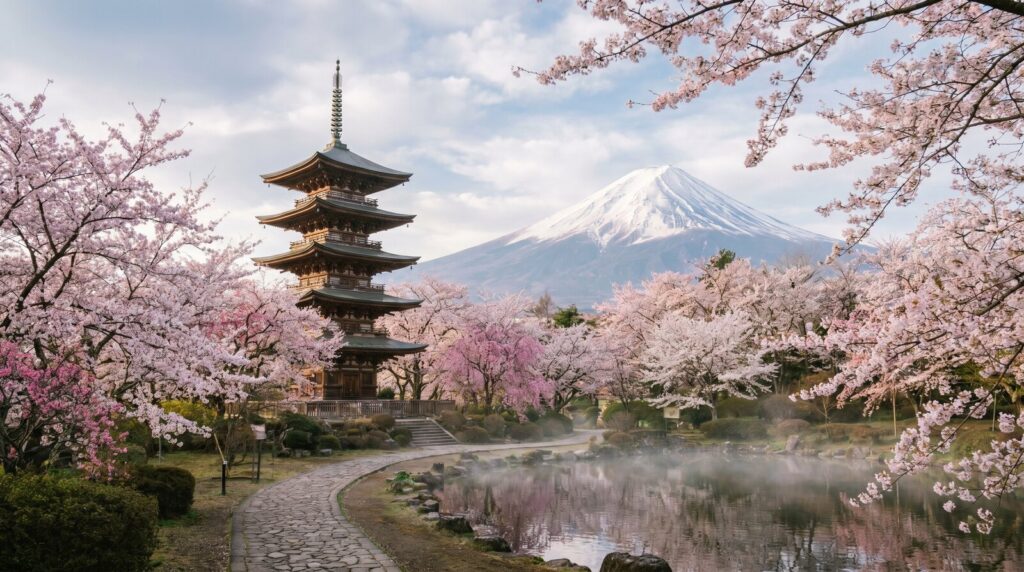
Early train to Hakone. The landscape changes completely—you’re suddenly in mountains, hot springs, and silence. This day is about slowing down. You arrive at a ryokan (traditional inn) with an onsen overlooking Mt. Fuji. If you’re lucky with the weather, you see it perfectly framed in the distance, and you understand why it’s been sacred for a thousand years.
Spend the day hiking, soaking, and eating kaiseki (the multi-course traditional dinner included with most ryokans). There’s no agenda. No email, no crowds, no Instagram moment you’re chasing. Just mountains, hot water, and the most incredible meal you’ve had all week.
Days 5-7: Kyoto – Where Old Japan Lives
The train ride from Hakone to Kyoto is smooth and fast. Welcome to old Japan. Kyoto is temples, bamboo groves, geisha districts, and streets that look like they haven’t changed in 200 years—because some haven’t.
Day 5: Fushimi Inari (go early, like 6 AM, to beat the crowds and experience thousands of red torii gates in eerie, beautiful silence). Saunter through Higashiyama district in the afternoon. It’s all wooden machiya houses, tea shops, and tiny restaurants tucked into buildings that are centuries old. Dinner in the geisha district of Gion, watching elegantly dressed geishas hurry to their appointments.
Day 6: Arashiyama bamboo grove (again, go early). The Togetsukyo Bridge, small temples hidden up forest paths, a boat ride on the river. Stop at a café for matcha and mochi. Spend two hours in a single temple courtyard if it calls to you—this is the beauty of having time. Kyoto isn’t a checklist; it’s a feeling.
Day 7: Kinkaku-ji (the Golden Pavilion) in the early morning. Ryoan-ji temple and its famous rock garden. A late lunch of kaiseki or yudofu (tofu hot pot). By afternoon, you’re sitting in a quiet neighborhood tea house, reflecting on the fact that you came to Japan anxious, and now you don’t want to leave.
Days 8-9: Osaka – Culture & Energy (With Better Takoyaki)
Osaka is Tokyo’s grittier, friendlier cousin. The city feels alive in a different way—less polished, more real. People are louder, eat more, party harder. It’s a refreshing shift after contemplative Kyoto.
Day 8: Osaka Castle in the morning. The surrounding park is massive and worth wandering. Lunch is takoyaki (octopus balls) from a street vendor who’s been in the same spot for 20 years. Afternoon is for exploring Shinsekai and Dotonbori districts—packed with restaurants, pachinko parlors, and the kind of energy that makes you feel alive. Dinner is okonomiyaki (savory pancakes) cooked right at your table.
Day 9: A side trip to Kobe (30 minutes by train) for Kobe beef, one of the world’s best. Spend the morning exploring the Harborland area. Return to Osaka for a final evening exploring neighborhoods where tourists rarely go. Grab street food, watch locals live their lives, soak it all in one last time.
Day 10: The Return
Morning train back to Tokyo or direct to the airport from Osaka, depending on your flight. You spend the last hours in a quiet café, journaling, processing, already planning when you’ll come back.
The True Cost of a Trip to Japan: DIY vs. All-Inclusive
Let’s talk money, because this is where the real insight happens.
Doing It Yourself: The Detailed Breakdown
Flights (round-trip from West Coast US, booked in advance)
$900–1,400 per person
Hotels (10 nights)
Budget: $120–180/night | Mid-range: $150–250/night
Calculation: 10 nights × $150–250 = $1,500–2,500 per person
Japan Rail Pass (7-day pass, covers bullet trains and local transport)
$275 per person
Guided tours & activities (temples, museums, teamLab, etc.)
$50–100 per activity × 4–5 activities = $300–500 per person
Food
Daily total: $50–80 per person | 10 days: $500–800 per person
Miscellaneous (taxis, snacks, temple fees, tips): $200–300 per person
DIY Total Per Person: $3,475–5,475
Most people land somewhere around $4,000–4,500 per person when they book everything themselves. And this assumes you’re not making expensive mistakes, don’t get lost and take cabs when you should take trains, or splurge on a special meal that wasn’t in the budget.
All-Inclusive Packages: The Stress-Free Alternative
An all-inclusive 10-day Japan tour typically starts around $2,199–2,799 per person (prices vary by season, time booked, and specific itinerary).
What’s typically included: Round-trip international flights, 9 nights in 3–4 star hotels, airport transfers and all in-country transportation, guided tours in major cities, entrance fees to 5–8 major attractions, 3–5 meals, professional English-speaking guide, and travel insurance.
What’s usually not included: Lunch and casual dinners (~$400–600) and additional activities (~$200–300).
All-inclusive realistic total: $2,800–3,600 per person
The Numbers: DIY vs. All-Inclusive
- DIY route: $4,000–4,500 per person
- All-inclusive route: $2,800–3,600 per person
- Potential savings: $1,200–1,700+ per person (roughly 30–40% off)
But here’s what the numbers don’t capture: on the all-inclusive route, you’re not spending 10 hours researching hotels, reading reviews, and booking everything separately. You’re not worried about missing a train and losing money on a canceled booking. The all-inclusive package buys you peace of mind, local knowledge, and a guide who can take you to a ramen shop that doesn’t exist on Google Maps—the kind of places that make travel actually magical.
For most people, especially first-timers, that peace of mind is worth the difference.
Who This Is Perfect For
First-time visitors to Japan. If you’ve never been, you don’t know what you don’t know. A guide who’s lived in Tokyo for 10 years and knows which temples are worth your time and which are tourist traps? That’s invaluable.
Couples looking for a romantic trip. All-inclusive packages often include nice hotels and special experiences—a kaiseki dinner, a ryokan with an onsen, a private boat tour.
Travelers who don’t want to deal with language barriers. Yes, you can navigate Japan with Google Translate. But spending your vacation holding up a phone to explain what you want to eat gets old. A guide eliminates that friction entirely.
The 40–65 demographic. You’ve got the budget, you have vacation days, and you actually want to enjoy them without stress. You want hotels with comfortable beds, good restaurants, and English-speaking guides who can tell you the actual history instead of reading plaques.
Anyone who values their time. If your time is worth $50+/hour, spending 20 hours planning a trip that costs less than the time you’d spend planning it yourself is a no-brainer.
What to Know Before You Book
Best Time to Visit
Spring (late March–May): Cherry blossom season. Stunning, but most expensive and crowded. Fall (September–November): Arguably the best time—perfect weather, incredible foliage, less crowded. Winter (December–February): Cold but cheaper, fewer tourists, festive.
Pro tip: October–November is the “Goldilocks” time—perfect weather, beautiful colors, manageable crowds, and usually better prices than spring.
Visas & Documentation
US citizens: 90-day visa-free stay. Just bring a passport valid for 6+ months. No visa application needed. Other nationalities: Check the Japanese embassy website for your country.
Travel Insurance
Get it. Japan is safe, but travel insurance covers flight cancellations, lost luggage, and medical emergencies (which can be expensive for non-residents in Japan). It costs $100–200 and can save you thousands.
What to Pack
- Comfortable walking shoes (you’ll walk 15,000+ steps daily)
- Lightweight layers (Japan has seasons)
- A good power adapter (Japan uses Type A plugs)
- Any medications you need
- A small daypack for daily exploration
- Respect for cultural norms (covered shoulders in temples, no shoes in onsen)
The Bottom Line: Why This Matters for Your First Trip
Here’s the truth: you can go to Japan independently, save maybe $500, and spend 20 hours planning. Or you can let someone else handle the logistics, see more, experience more, eat better, and actually relax while you’re there.
For a first trip to Japan, the all-inclusive approach isn’t a luxury—it’s practical. You get a guide who understands the culture, knows the language, and can navigate you through the complexity. You stay in good hotels, eat well, and see the things that actually matter. You don’t waste a single day being lost or confused.
The best trip isn’t the cheapest one. It’s the one where you actually enjoy yourself.
You Might Also Like
- Our complete travel guide to Tokyo — everything you need to know about Japan’s electric capital
- Explore our Kyoto travel guide — temples, tea ceremonies, and timeless beauty
- Discover Hiroshima with our travel guide — history, peace, and resilience
- South Africa Safari Cost Breakdown — what $1,899 actually gets you on safari
- Best Tours in Bangkok (2026) — another great Asian destination on a budget
- Osaka street food and nightlife guide — Japan’s kitchen, neon lights, and local flavors
FFU contains affiliate links. We earn a commission when you book through them — at no extra cost to you.
Plan your trip
- Tours & experiences: browse tours and experiences on Klook.
- Airport pickup: pre-book an airport transfer with GetTransfer.
- Car hire: compare rental cars on GetRentacar.
- Bag storage: store your bags with RadicalStorage.
Disclosure: some links above are affiliate links — booking through them supports Facts From Upstairs at no extra cost to you.