
Accra, Ghana: The Buzzing Atlantic Capital Where the Diaspora Comes Home
I landed in Accra expecting a stopover and stayed a fortnight. The thing nobody warns you about is the warmth — not the equatorial heat, though there is plenty of that, but the relentless friendliness of a city that greets strangers with akwaaba (welcome) and means it. Accra is loud, sprawling, gloriously chaotic and unexpectedly cosmopolitan: one morning I stood in the dungeons of a slave fort an hour down the coast, that same night I was eating jollof on a rooftop in Osu while Afrobeats shook the floor. This is the city that launched the Year of Return and turned “Detty December” into a global homecoming, and it wears that role with real pride. This guide is the one I wish I’d carried: where to sleep, what things actually cost in cedis, how to stay safe, and why Accra deserves more than a layover.

Table of Contents
Why Accra?
Lagos gets the headlines and Cape Town gets the postcards, but Accra is where West Africa feels most welcoming to a first-time visitor. This is the capital of the first Sub-Saharan African nation to throw off colonial rule — Ghana declared independence here on 6 March 1957 under Kwame Nkrumah — and that history of being first, of leading, runs through the city’s sense of itself. It is at once a sprawling Atlantic megacity of close to three million people and a place where a stranger will still walk you to the door you’re looking for.
The scale is what surprises most arrivals. Greater Accra has grown into one of West Africa’s largest urban regions, home to more than five million people across the metropolitan area, its streets a constant churn of trotro minibuses, street hawkers, gleaming new towers and corrugated market sheds. Yet it never feels hostile the way some megacities do. English is the official language, the vibe is famously laid-back, and the city has reinvented itself in the last decade as a hub of African fashion, tech, art and nightlife that draws creatives from across the continent and the diaspora.
And then there is the homecoming. In 2019 Ghana launched the “Year of Return”, marking four centuries since the first enslaved Africans were taken to Virginia, and invited the global Black diaspora to come home — an initiative that drew hundreds of thousands of visitors and reshaped Accra’s place in the world’s imagination. What began as a single year has hardened into an annual tradition: “Detty December”, the riotous end-of-year season of concerts, beach parties, weddings and festivals that now draws tens of thousands of returnees and turns the city into one long celebration.
What separates Accra from the continent’s other big capitals is its emotional pull. For millions of people of African descent, this coastline is the last place their ancestors saw before the Middle Passage, and standing in the slave dungeons of Cape Coast or Elmina an hour down the road is among the most moving experiences travel can offer. Come for the music, the jollof and the beaches; stay because Accra, more than anywhere, makes the abstract idea of “home” feel real.

Neighborhoods: Finding Your Accra
📍 Accra Map: Every Place in This Guide

Accra sprawls along the Atlantic in a loose ribbon of districts, each with its own flavour, and getting your bearings early makes the difference between a smooth trip and a frustrating one. The city has no real centre in the European sense; instead it’s a constellation of neighbourhoods strung between the old colonial core near the sea and the newer, leafier suburbs to the north. Below is how I’d carve it up for a first visit.
A quick mental map helps. Picture the coast running roughly east–west: the historic heart — Jamestown, Ussher Town, the ministries and Black Star Square — sits down by the water, while the buzzy visitor districts of Osu and Cantonments lie just inland to the east, and the sprawling residential and commercial zones of East Legon and Airport Residential climb north toward the airport. Most travellers base themselves in Osu, Cantonments or Airport Residential and venture down to the coast for sightseeing.
Osu
If Accra has a beating social heart, it’s Osu. Centred on the famous Oxford Street, this is the city’s nightlife and dining hub — a dense, walkable strip of restaurants, bars, rooftop lounges, boutiques and street food that comes alive after dark. It’s lively, occasionally chaotic, and the easiest place for a first-timer to find their feet, eat well and go out.
- Oxford Street’s bars and street food
- Osu Castle (Christiansborg) on the shore
- Independence Square nearby
Best for: first-timers, nightlife, dining, walkability. Access: central; ride-hail or short taxi from most hotels.
Jamestown & Ussher Town
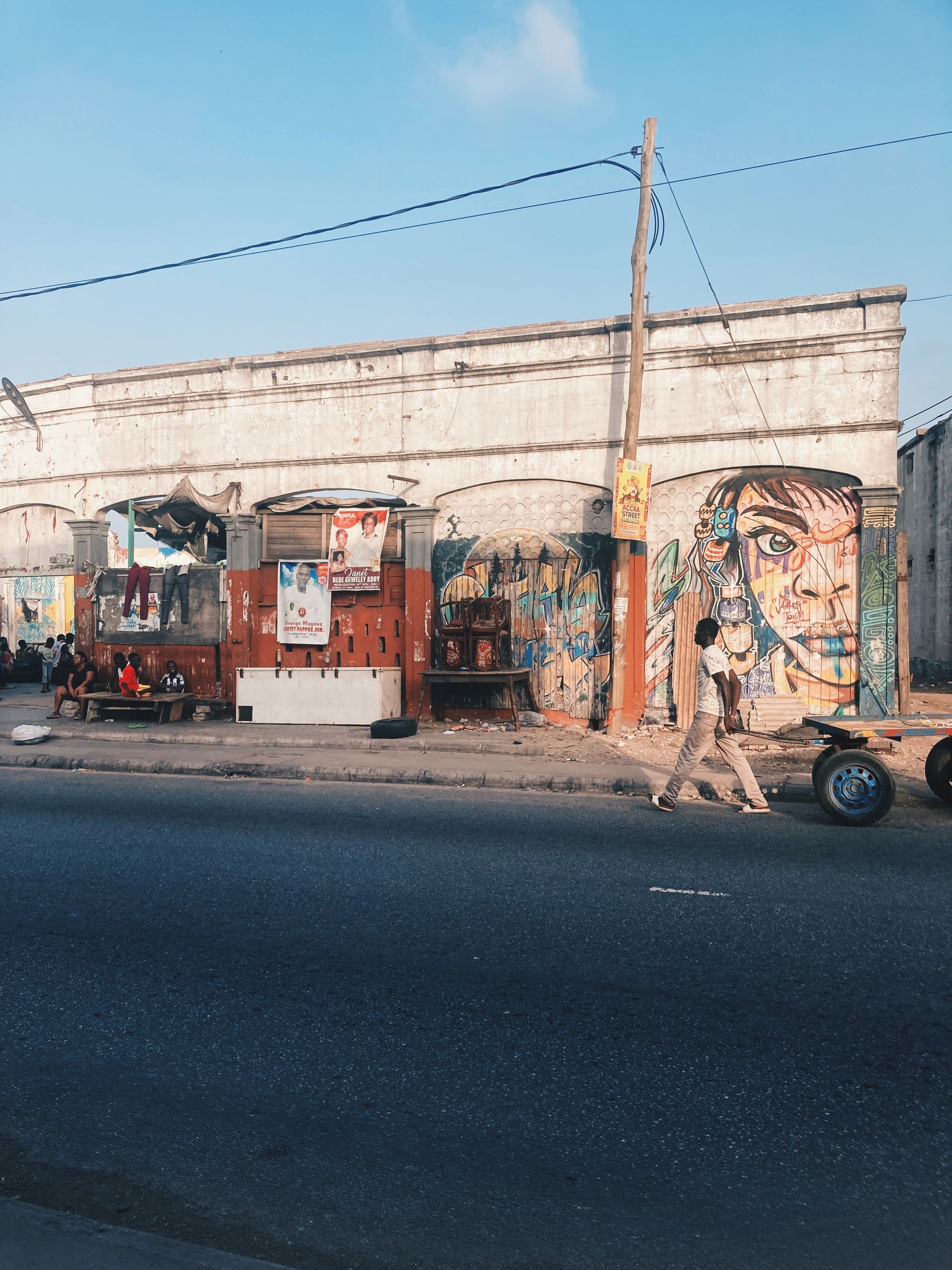
The oldest quarter of Accra, clustered around the colonial-era forts and the working fishing harbour, Jamestown is raw, poor and utterly compelling. Its lighthouse, crumbling colonial buildings, vibrant street art and the boxing gyms that have produced world champions make it the most photogenic and characterful corner of the city. Go with a local guide — both to navigate and to put money into the community — and treat it with respect; people live here.
- Jamestown Lighthouse and harbour
- Street-art murals and boxing gyms
- Ga fishing community life
Best for: photography, history, guided walks. Access: taxi or ride-hail to the lighthouse; explore on foot with a guide.
Cantonments & Airport Residential
These leafy, upmarket neighbourhoods northeast of the centre are where embassies, expats and Accra’s well-heeled live, and where many of the smartest hotels, cafes and galleries sit. Quieter and greener than Osu, with wide streets and gated calm, they make a comfortable, safe base if you value a good night’s sleep over being in the thick of it — and they’re close to the airport.
- Polo Court and Cantonments cafes
- Embassy district calm
- Boutique hotels and galleries
Best for: comfort, families, business travellers. Access: 10–15 minutes to Kotoka airport; ride-hail everywhere.
East Legon
Accra’s most aspirational suburb, East Legon is new-money Ghana made concrete: big houses, buzzy restaurants, lounges and the city’s trendiest nightlife spilling out toward the university. It’s where young, moneyed Accra and the diaspora come to play, especially during Detty December. It sits further north, so factor in traffic, but the dining and bar scene is among the best in the city.
- A&C Mall and lifestyle complexes
- Trendy lounges and restaurants
- Proximity to University of Ghana, Legon
Best for: nightlife, dining, the modern Accra scene. Access: ride-hail; allow extra time for traffic.
Labadi & the Coast
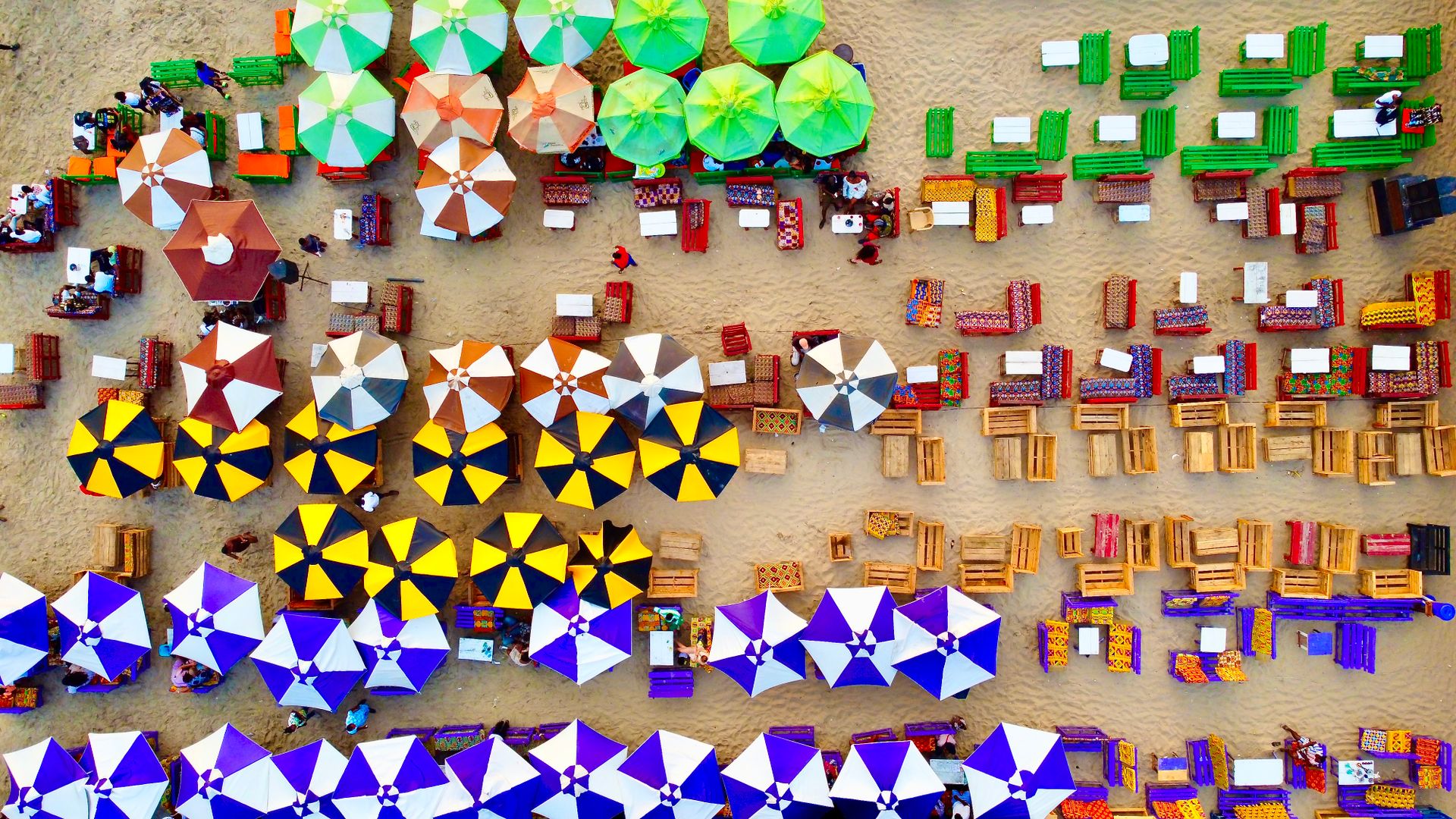
East of the centre, Labadi (La) is home to the city’s most famous public beach, Labadi (Laboma) Beach — busy, sandy and at its liveliest on weekends with drumming, horse rides, live highlife bands and food stalls. The coastal strip here also holds several beach resorts and is the easiest place in the city to get sand between your toes after a hot day of sightseeing.
- Labadi Beach weekend parties
- Beachfront resorts and bars
- Live highlife and drumming
Best for: beach days, weekend energy, live music. Access: short ride-hail east of Osu; entry fee at the public beach.
Asylum Down, Adabraka & the Old Centre
Between the coast and the northern suburbs lies the dense, busy mid-city — Adabraka, Asylum Down and the Ring Road districts — full of budget hotels, chop bars, churches and the everyday hustle of working Accra. It’s not pretty, but it’s authentic and central, and it holds some of the best-value accommodation and most honest local eating in the city.
- Ring Road Central commerce
- Chop bars and budget guesthouses
- Kwame Nkrumah Memorial Park nearby
Best for: budget travellers, central location, local life. Access: very central; trotro and taxi hub.
Makola & the Markets
No neighbourhood captures Accra’s energy like Makola, the vast, gloriously overwhelming central market where you can buy anything from fabric to fetish-shrine paraphernalia. It’s a sensory assault — mamas calling out wares, head-porters (kayayei) weaving through, traffic and trade in total entanglement — and an essential, if exhausting, Accra experience. Go in the morning, carry little, watch your bag and let the chaos wash over you.
- Makola Market’s endless stalls
- Fabric and kente sellers
- Street food and fresh produce
Best for: shopping, photography, market culture. Access: central, near Jamestown; go by day and stay alert.
A practical word on where to base yourself, because it shapes the whole trip. For a first visit, I’d stay in Osu if you want to be able to walk to dinner and nightlife, or in Cantonments and Airport Residential if you prefer leafy calm and an easy airport run. East Legon suits those chasing the buzzy modern scene, while budget travellers will find the best value in the central old city. Wherever you sleep, accept that you will spend real time in traffic — Accra’s roads clog badly at rush hour — so cluster your plans by area rather than crisscrossing the city, and lean on the cheap, reliable ride-hailing apps (Uber, Bolt, Yango) that have transformed getting around.

How the City Fits Together
It helps to understand the deeper logic of how Accra is arranged, because it explains why the neighbourhoods feel so different from one another. The original city was the Ga settlement down by the sea, and the colonial powers built their forts right on the shore to control the trade, which is why the oldest, densest, poorest quarters — Jamestown, Ussher Town, and the area around the old castles — cling to the coast. As the city grew through the twentieth century it pushed steadily inland and uphill, away from the malarial lagoons and toward the cooler, breezier high ground, so as a rough rule the further north and inland a district sits, the newer, leafier and wealthier it tends to be. The embassy belt of Cantonments and Airport Residential, and the aspirational sprawl of East Legon, are the modern expression of that northward drift, while the coast holds the history and the working-class heart.
This geography matters for the visitor in a very concrete way. The things you most want to see — the monuments, the old forts, the markets, the most characterful streets — are mostly down near the water in the south, while the most comfortable, modern places to sleep, eat and go out are mostly inland to the north and east. So your days will tend to involve a commute between the two, and that commute means traffic. Internalise this early and you’ll plan smarter: do a coastal “history and markets” day in the south, then base your evenings around the dining and nightlife of Osu or East Legon, rather than bouncing back and forth across the city and losing hours in the jams. The single most useful mental model is simply “old, dense south by the sea” versus “new, spread-out north”, with Osu sitting conveniently in between as the natural pivot for most trips.
One more thing worth knowing is that Accra is genuinely safe to explore neighbourhood by neighbourhood by day, and the contrasts are part of the pleasure: you can stand among the gleaming towers and air-conditioned malls of the north in the morning and be threading through the fishing nets and street-art lanes of Jamestown by afternoon, all in the same compact city. The trick is to match your expectations to the area — dress down and go with a guide in the old quarters, dress up for an East Legon lounge — and to lean on ride-hailing to stitch it all together. Get the geography straight in your first day and the rest of the trip flows.
Where to Sleep: Matching Base to Trip
Choosing your base is the most consequential decision you’ll make, because Accra’s size and traffic mean you’ll spend real time getting to and from wherever you sleep. For most first-time visitors I steer them to Osu: it’s central, walkable, packed with food and nightlife, and roughly equidistant from the coastal sights and the northern suburbs, so you waste the least time in transit. It can be noisy and a little gritty, but that’s the trade for being in the thick of it. If you value calm, comfort and a reliable night’s sleep over being able to stumble home from dinner, Cantonments and Airport Residential are quieter, greener and stuffed with good hotels, and they’re handy for the airport — ideal for families, business travellers, or anyone arriving jet-lagged on a red-eye.
East Legon suits a particular kind of visitor: the one who has come for the modern Accra scene, the restaurants, lounges and December parties, and doesn’t mind being further out and deeper in the traffic to be where the action is. Budget travellers, meanwhile, will find the best value in the central districts around Adabraka and Asylum Down, close to the monuments and transport hubs, where simple guesthouses and honest chop bars keep costs low. Whatever you choose, two universal tips apply: book somewhere with reliable air conditioning and a backup power arrangement (outages, though far less common than they once were, still happen), and pick a place near a recognisable landmark, since you’ll be directing every ride-hail driver by landmark rather than street address.
The Food

Ghanaians take their food seriously, and nowhere takes it more seriously than the argument over jollof rice — the spiced, tomato-rich one-pot dish whose supremacy Ghana and Nigeria have been cheerfully feuding over for years. Accra is the place to settle the question for yourself, and to discover that Ghanaian cooking runs far deeper than its most famous export. You can eat brilliantly here from a roadside chop bar for a couple of dollars or splurge at a stylish rooftop restaurant; the city does both extremes with relish.
A little context helps. Ghanaian food is built on a handful of beloved starches — rice, cassava, plantain, maize and yam — usually paired with a richly spiced soup or stew and a protein, most often fish, given the long Atlantic coast. The flavours lean savoury, peppery and deeply satisfying, and meals are commonly eaten with the right hand, scooping soft starch through stew. Layered on top are influences from across West Africa and a fast-growing fine-dining and cafe scene catering to a moneyed, cosmopolitan crowd.
Ghanaian Classics
These are the dishes to seek out first — the staples that fill every chop bar and family table. They’re cheap, generous and the truest taste of the city. Don’t be shy about eating where it’s busy and ordering what the locals around you are having.
- Jollof rice — the famous spiced tomato rice, usually with chicken or fish (₵30–70, ~$2–5)
- Banku & tilapia — fermented corn-and-cassava dough with grilled tilapia and hot pepper (₵50–100, ~$3.50–7)
- Waakye — rice and beans cooked with millet leaves, the beloved breakfast plate, with sides (₵20–50, ~$1.50–3.50)
For the best versions, follow the crowds: a waakye seller with a long queue at 9am, or a banku-and-tilapia spot packed at lunch, is your best guarantee of freshness and flavour.
Street & Chop-Bar Bites
The cheapest, most characterful eating in Accra happens at roadside stalls and “chop bars”, and it’s where you’ll eat some of your best meals. Have small cedi notes ready and dive in.
- Kelewele — spicy fried plantain cubes with ginger and chilli, the perfect street snack (₵10–25, ~$0.70–1.80)
- Kebabs (chichinga) — spiced grilled meat skewers dusted with suya pepper, sold at dusk (₵10–30)
- Bofrot / boflot — Ghanaian fried dough balls, sweet and pillowy (₵5–15)
- Fresh coconut & “pure water” — a vendor will machete a coconut for you; sachet water is everywhere (₵5–15)
Beyond Jollof and Banku
The famous dishes are just the start. Ghanaian cuisine has a rich repertoire of soups and stews that reward the curious eater, several of them genuinely unfamiliar to Western palates. Point, ask and try.
- Fufu & light soup — pounded cassava-and-plantain dumpling in a peppery broth, the national comfort food (₵40–90)
- Red red — a bean stew in red palm oil served with fried plantain, a vegetarian favourite (₵25–60)
- Groundnut (peanut) soup — rich, nutty and savoury, usually with chicken or goat and a starch (₵40–90)
- Kenkey & fried fish — fermented corn dough wrapped in husk, with fish and fiery shito sauce (₵30–70)
Don’t leave without trying shito, the dark, smoky-hot pepper-and-fish sauce that accompanies almost everything — locals carry jars of it home, and so should you.
Vegetarians, Vegans & Dietary Needs
Accra is more meat-and-fish-centric than not, but vegetarians can eat well with a little effort. Red red (bean stew with plantain), groundnut and vegetable dishes, gari foto, plain jollof, kelewele and the abundant fresh fruit make for satisfying meat-free eating, and the growing cafe and fine-dining scene in Osu, Cantonments and East Legon caters knowingly to vegetarians and vegans. The main traps are hidden fish or meat stock and crustacean-based shito, so always ask. Fresh produce from the markets is excellent and cheap for self-caterers.
Where to Eat: Chop Bars vs. Rooftops
Accra’s dining divides neatly into two worlds, and the trick is to do both. On one side are the chop bars and street stalls — plastic chairs, a bowl of something delicious, a couple of dollars — where the city actually eats and where the flavours are most honest. On the other is a surprisingly sophisticated restaurant scene in Osu, Cantonments and East Legon, with stylish rooftop spots, pan-African fine dining, sushi, Lebanese, Indian and more, often with cocktails and a view, where you’ll spend Western-ish money for a polished night out. My advice: graze the chop bars by day, treat yourself to a rooftop or a destination restaurant in the evening, and let the contrast tell you the whole story of this fast-changing city.
A practical rhythm that works well: waakye or koko (millet porridge) for breakfast from a street seller, a chop-bar lunch of jollof or banku where the office crowd eats, a fresh-fruit or kelewele snack in the afternoon heat, and then either a relaxed chop-bar dinner or a stylish rooftop meal in Osu or East Legon. Eating out is sociable and unhurried, so don’t over-schedule it.
A word on hygiene, since it’s the question everyone has: eat where it’s busy. A stall with a constant queue of locals turns its ingredients over fast, which is the single best guarantee of a safe, delicious meal. Watch food being cooked to order, drink only bottled or sachet water, peel your own fruit, and you can eat adventurously with confidence. Most travellers’ stomach troubles come from the unfamiliar richness and chilli heat rather than anything sinister, so ease in over the first day or two. Carrying rehydration salts is sensible insurance, but with common sense the street food of Accra is one of the trip’s genuine highlights.
Food Experiences You Can’t Miss
Beyond simply eating, Accra offers a few food experiences worth building a day around.
- A guided street-food crawl through Osu or Jamestown, eating waakye, kelewele, kenkey and kebabs the way locals do
- A fresh banku-and-tilapia lunch at a beachfront spot in Labadi, hot pepper on the side, feet near the sand
- A “Detty December” rooftop dinner-and-Afrobeats night in East Legon during the festive season, if your timing is lucky
Eating Through the Day, and the Week
Ghanaian eating has its own daily and weekly rhythm worth tuning into. Mornings begin early and often on the street: koko (a spiced millet or corn porridge) with koose (fried bean fritters) or bread, or the beloved waakye, all sold from roadside pots and gone by mid-morning, so set an alarm if you want the best of it. Lunch is the big meal for many workers, which is why the chop bars are busiest and freshest around midday — the ideal time to eat your fill of jollof, banku or fufu where the office crowd does. Evenings skew lighter on the street but are when the restaurants and grills come alive, the air filling with the smoke of kebabs and tilapia over charcoal. Snacking between meals is constant and cheap: kelewele, roasted plantain (kaakro), groundnuts, fresh fruit and coconut are never more than a few steps away.
The week has its patterns too. Sundays, after church, are a time for family feasts and for the beach, when spots like Labadi fill with crowds eating grilled fish and drinking beer to live highlife. Fridays and Saturdays are when the city goes out to dinner and the smarter restaurants need booking. And during the December festive season the whole calendar tilts toward celebration, with pop-up food events, beach barbecues and parties layering eating into the nightlife. Tune your own days to this rhythm — street breakfast, chop-bar lunch, grilled dinner, and a relaxed beach feast on a Sunday — and you’ll not only eat better and cheaper but feel the pulse of how the city actually lives. Above all, stay curious and unhurried: the best meal of your trip is as likely to come from a plastic stool at a roadside pot as from any rooftop, and finding it is half the joy.
Drinks & the Sweet Side
Wash it all down like a local. Sobolo (a tart hibiscus drink), fresh coconut water, and bottled local beers like Club and Star are everywhere and cheap; asana (fermented-corn drink) and palm wine reward the adventurous. Ghana grows some of the world’s finest cocoa, so seek out locally made craft chocolate — brands like ’57 and Niche have put Ghanaian bean-to-bar on the map, and a bar makes a perfect, very Accra souvenir.

Understanding How Ghanaians Eat
To eat well in Accra it helps to understand the rhythm and grammar of a Ghanaian meal. The structure is usually a starch plus a soup or stew plus a protein, and the starch is the heart of it: rice in its many forms, but also the pounded and fermented doughs — fufu, banku, kenkey, tuo zaafi — that are scooped up by hand and dipped into the accompanying soup. These doughs surprise many first-timers with their sour tang and stretchy texture, but they’re the soul of the cuisine, and learning to enjoy them is the key that unlocks the whole table. Soups are serious business too: light soup (a clear, fiery broth), groundnut (peanut) soup, and palm-nut soup each have devoted followings, and the protein — goat, chicken, beef, snails, or above all the fish and seafood of the Atlantic coast — is chosen to match.
Chilli runs through everything, and pepper is treated as a food group rather than a seasoning. The ubiquitous shito — that dark, intense sauce of dried fish, prawns, ginger, garlic and chilli fried in oil — turns up beside almost every dish, and fresh pepper sauces and grinds accompany the grills. Ghanaians eat hot, so if you’re chilli-sensitive, learn the phrase for “not too spicy” and ask, though even the “mild” can have a kick. The reward for leaning into the heat is a cuisine of real depth and warmth, savoury and satisfying in a way that quickly becomes addictive. Pace yourself over the first day or two and your palate (and your stomach) will adjust.
Meals are also profoundly social. Food is shared, offered, and central to hospitality — turn up at a Ghanaian home and you will be fed, generously and insistently, and refusing can cause genuine offence. Eating is done with the right hand (the left is considered unclean), and there’s an easy, unhurried sociability to a Ghanaian meal that’s worth slowing down for. Even at a humble chop bar, the act of sharing a long bench, calling out orders to the “mama” stirring the pots, and eating elbow-to-elbow with strangers is part of what makes eating in Accra such a warm, human experience rather than just refuelling. Embrace that, and the food becomes one of the richest windows you have onto the life of the city.
Finally, a note on the modern scene, because Accra’s food culture is changing fast. Alongside the timeless chop bars, a generation of ambitious chefs and entrepreneurs — many of them returnees from the diaspora — is reinventing Ghanaian cuisine, opening stylish restaurants that plate jollof and grilled tilapia with fine-dining polish, craft-cocktail bars built around local spirits and fruits, and bean-to-bar chocolate makers turning the country’s superb cocoa into world-class bars. The result is a city where you can eat a two-dollar bowl of waakye from a roadside pot in the morning and a beautifully composed pan-African tasting menu that night, and both feel authentically of the place. That range — rooted tradition alongside confident reinvention — is exactly what makes eating your way through Accra so much fun.
Cultural Sights
Accra’s sights are a mix of the monumental and the moving — independence memorials, a sobering colonial-era waterfront, and the slave forts of the coast an hour away that draw diaspora travellers from across the world. Many are inexpensive and a few are genuinely profound. Here are the ones worth your time.
Kwame Nkrumah Memorial Park & Mausoleum
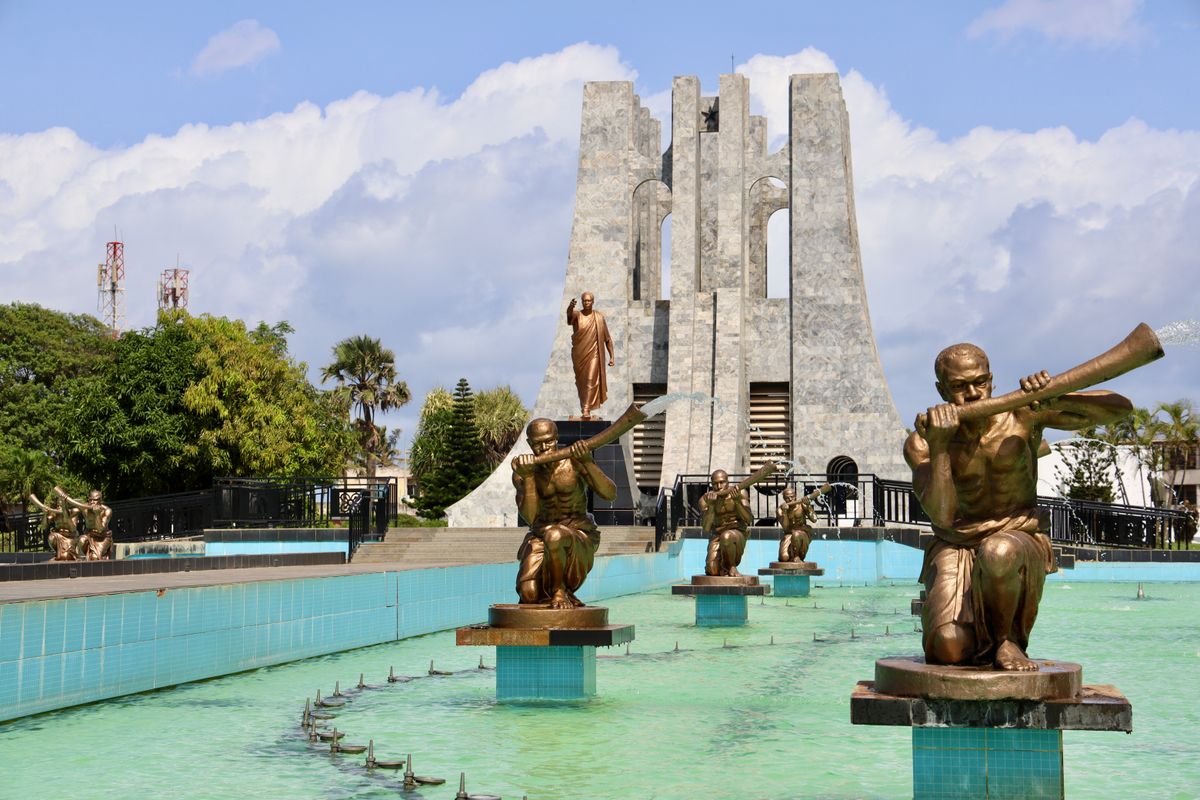
The city’s signature monument: a marble-clad mausoleum and museum honouring Kwame Nkrumah, Ghana’s first president and a giant of Pan-Africanism, set in a landscaped park of fountains and bronze statues on the spot where he declared independence. The refurbished site reopened in 2023. Admission for non-Ghanaian adults is around ₵100 (~$7). Allow an hour; the small museum holds Nkrumah’s personal effects.
Independence (Black Star) Square
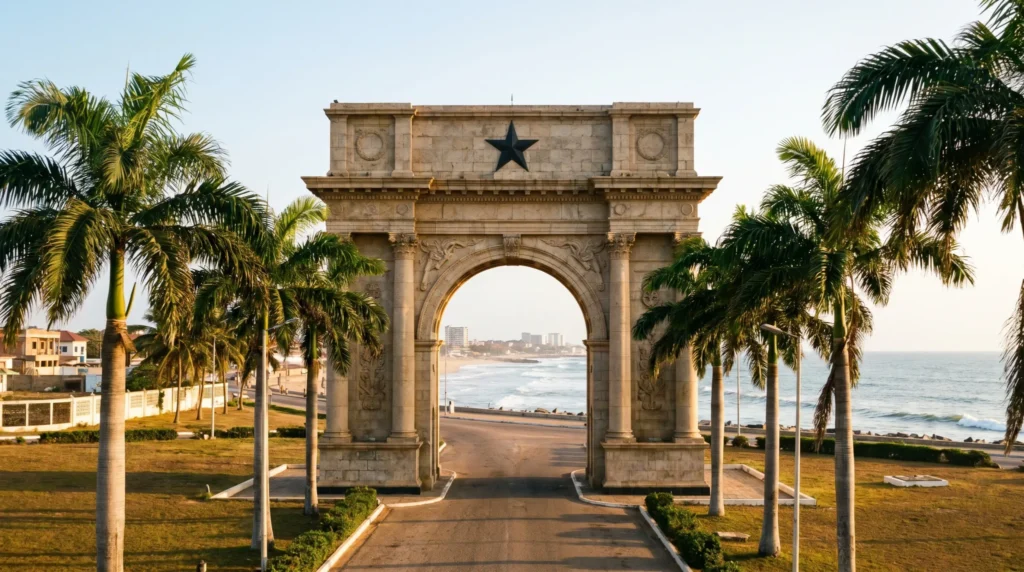
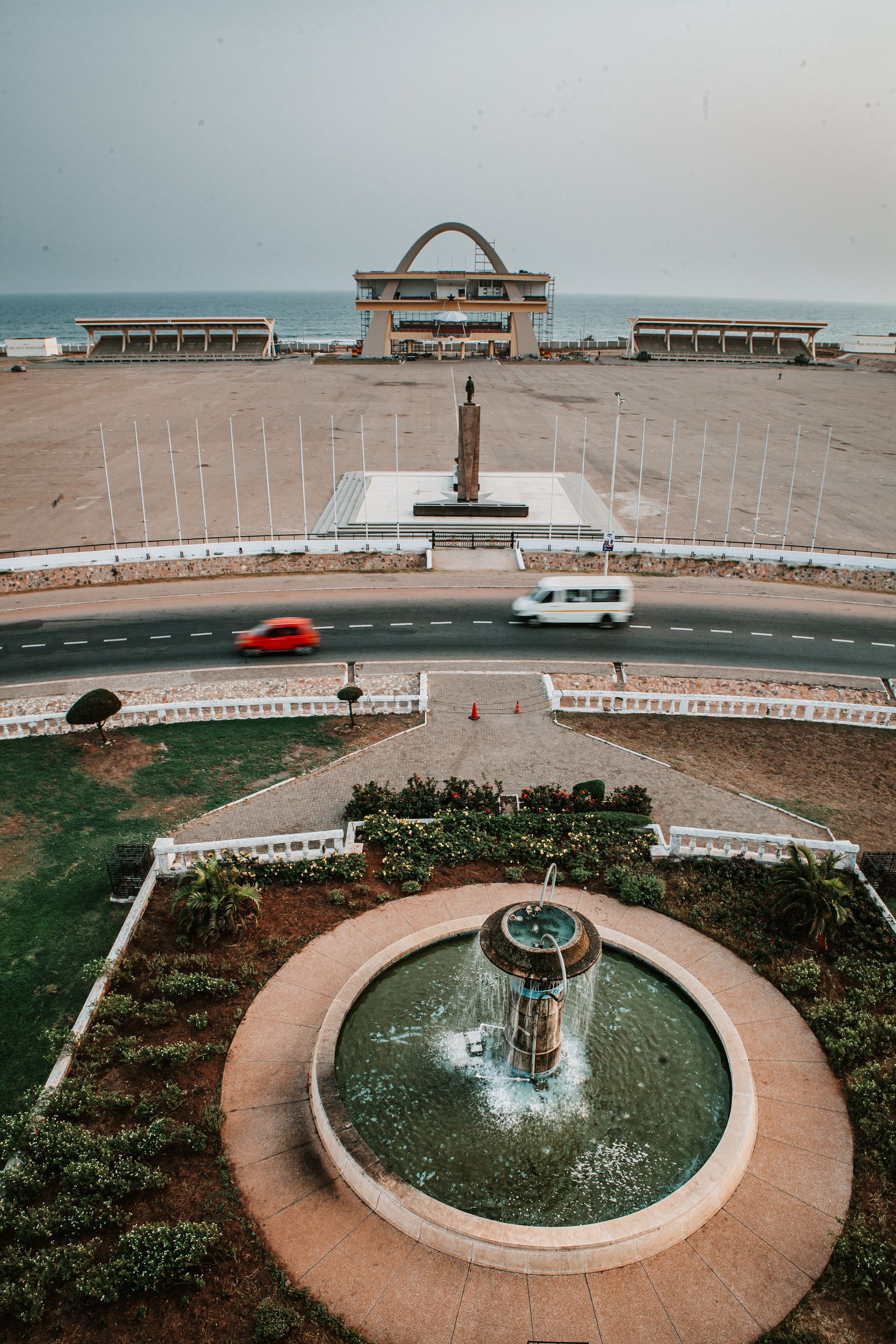
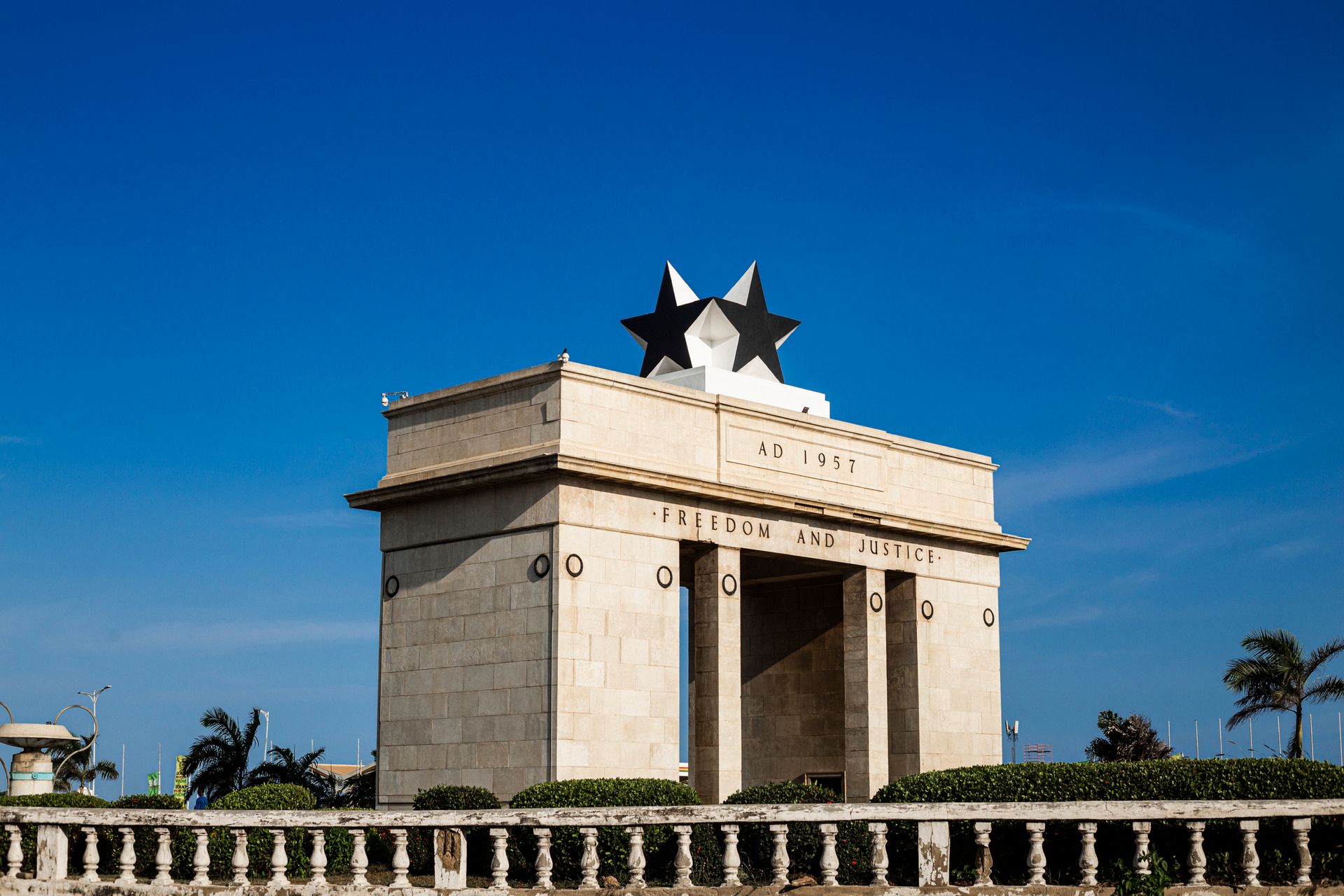
One of the largest public squares in the world, dominated by the Independence Arch inscribed “Freedom and Justice, AD 1957” and the Black Star Gate, this vast parade ground is the ceremonial heart of the nation and the venue for the annual independence-day celebrations each 6 March. It’s free to walk around; come early or late to dodge the equatorial sun, and bring a camera for the arch against the Atlantic.
Jamestown & the Lighthouse
The historic Ga fishing quarter clustered around James Fort and the candy-striped lighthouse is the most atmospheric corner of the city — raw, lived-in, covered in street art and alive with boxing gyms and harbour life. Climb the lighthouse for a small fee for sweeping views over the rooftops and the fishing boats. Best explored on a community-led walking tour, which keeps you oriented and puts money where it’s needed.
Cape Coast & Elmina Castles (UNESCO)
The most important sights in the region sit about two to three hours west along the coast: the whitewashed slave forts of Cape Coast and Elmina, part of a UNESCO World Heritage listing of Ghana’s forts and castles inscribed in 1979. Elmina Castle, built by the Portuguese in 1482, is the oldest European building in Sub-Saharan Africa; the dungeons and “Door of No Return” at both are devastating and essential. Guided tours run frequently; admission is a few dollars.
W.E.B. Du Bois Memorial Centre
The former home and final resting place of the great African-American scholar and Pan-Africanist W.E.B. Du Bois, who moved to Ghana at Nkrumah’s invitation and died here in 1963, is now a museum and library in the Cantonments area. It’s a quiet, reflective stop with deep resonance for diaspora visitors. Admission is modest; the grounds and small museum take under an hour.
Makola Market
Not a “sight” so much as an experience, the sprawling central market is the commercial soul of the city and an essential immersion in everyday Accra. Free to wander (you’ll buy something anyway); go in the morning, travel light, keep your bag close and let the controlled chaos carry you.
Arts Centre & National Museum
The Centre for National Culture (Arts Centre) near the coast is a sprawling craft market for carvings, beads, drums and kente — haggle hard. Nearby, the recently renovated Ghana National Museum traces the country’s archaeology, history and art. Together they make an easy half-day of culture and souvenir shopping in the old centre.
How to See the Sights Without Burning Out
Accra’s traffic, not its distances, is the enemy, so cluster your sightseeing by area. Do the independence monuments, Nkrumah park and Jamestown in one coastal loop on a single day, ideally with a driver who waits, since they sit fairly close together near the sea. Save the Cape Coast and Elmina castles for a full, early-start day trip of their own — the drive is long and the experience emotionally heavy, so don’t try to tack anything else onto it. Mornings are cooler and better-lit; the midday equatorial sun is fierce. And build in slack for the traffic, which can turn a 20-minute hop into an hour at rush hour.
The Weight of the Coast
It’s worth pausing on what makes Accra’s sights distinct from those of almost any other capital, which is the way they carry the history of the Atlantic slave trade. This stretch of West African coast was the centre of the trade for centuries, and the whitewashed forts that look so picturesque from the sea were the holding points from which millions of enslaved people were shipped to the Americas. For the global Black diaspora, that makes Ghana — and the castles a short drive from Accra — a place of pilgrimage, the literal point of departure their ancestors were taken from. The “Door of No Return” at Cape Coast and Elmina, the low dark dungeons, the cannon still pointing out to sea: these are not abstract history but a visceral encounter with one of humanity’s great crimes, and they move visitors to tears as a matter of routine.
This is also exactly why Ghana’s Year of Return resonated so powerfully and why Accra has become the emotional capital of diaspora travel. The government and tourism authority have leaned into that role, framing the country as a homecoming and welcoming returnees with a warmth that is genuinely felt. Many visitors pair the heavy coastal sites with the uplift of the independence monuments — Nkrumah’s mausoleum, the Black Star Gate — which tell the other half of the story: a people who endured that history and then led a continent to freedom. Visiting both, in the right frame of mind, is among the most meaningful things travel can offer, and it’s the reason to give Accra’s sights the time and seriousness they deserve rather than treating them as a checklist.
Entertainment

Set your expectations correctly: Accra goes hard. This is one of Africa’s great nightlife cities, the home of highlife and a thriving Afrobeats and hiplife scene, and the energy peaks every December when the diaspora floods home for “Detty December”. But there’s far more than clubbing — live music, beach parties, comedy, art and culture all thrive here. Here’s how Accra plays.
Afrobeats Clubs & Lounges
Osu and East Legon are the epicentres of Accra’s after-dark scene, with lounges and clubs pumping Afrobeats, amapiano, hiplife and dancehall until dawn. The crowd is stylish and the energy infectious, especially at weekends. Typical cover ranges from free to around ₵100–200, with drinks adding up fast at the smarter spots. Things start late — don’t bother before 11pm.
Live Highlife & Jazz
Ghana invented highlife, the swinging guitar-and-horns sound that shaped West African pop, and you can still catch live bands at venues and hotels around the city, plus a growing jazz and live-music scene. +233 Jazz Bar & Grill is the long-running favourite for live music in a relaxed setting. Typical cost is a modest cover plus drinks. It’s a more grown-up, sit-down alternative to the clubs.
Beach Bars & Parties
The coast is party central, especially at weekends and in December. Labadi Beach draws drumming circles, live highlife and a lively crowd, while beach bars and resort clubs east of the city host day-to-night parties. Typical cost is a beach entry fee of around ₵30–50 plus food and drinks. Sundays at the beach are an Accra institution.
Detty December & Festivals
If you can time your visit to December, do: the festive season packs the calendar with concerts, all-white parties, festivals like Afrochella/AfroFuture and Detty Rave, weddings and pop-up events drawing global stars and the returning diaspora. Tickets for the marquee events run from around ₵200 to several hundred cedis and sell out early. The whole city hums with an energy you won’t find the rest of the year. Book accommodation months ahead.
Art, Comedy & Culture
Beyond music, Accra has a serious creative scene: contemporary art galleries like Gallery 1957 and Nubuke Foundation, the artist-run installations of Jamestown, comedy nights, theatre at the National Theatre, and a fashion industry that increasingly sets continental trends. Typical cost ranges from free gallery visits to ticketed shows. It’s a relaxed, sober-friendly way to spend an evening and tap into the city’s cultural renaissance.
Cinema & the Everyday Evening
For a glimpse of how Accra unwinds on an ordinary night, the malls (Accra Mall, West Hills, the Marina) have modern cinemas, while the city’s pavement bars, spot joints and outdoor “drinking spots” fill with friends, football on big screens and crates of beer. Typical cost is the price of a cinema ticket or a few beers. Football is close to a religion, so catching a big match in a packed spot — everyone roaring at one screen — is its own kind of entertainment.
The Rhythm of an Accra Night
To get the most out of going out in Accra, you have to surrender to its rhythm, which runs much later and looser than a Western night out. Things start slowly — dinner stretches long, the bars fill gradually, and the clubs don’t truly come alive until well after midnight, often peaking at two or three in the morning. Locals call the relaxed approach to time “GMT”, Ghana Maybe Time, and fighting it only leads to frustration; far better to nap in the late afternoon, eat late, and arrive when the energy is building rather than standing in an empty room at ten o’clock. Weekends, and the whole of December, are when the city goes hardest.
The other thing to understand is how broad the scene is. Accra is not a single nightlife district but a spread of overlapping worlds: the stylish lounges and clubs of Osu and East Legon; the beach parties of the coast; the live-music venues keeping highlife and jazz alive; the gallery openings and fashion events of the creative set; and the everyday neighbourhood “spots” where ordinary Accra drinks beer, watches football and puts the world to rights under the stars. You could spend a week sampling all of it. For most visitors, the sweet spot is a mix — one big night out in Osu or East Legon, one relaxed live-music or beach evening, and a couple of laid-back nights at a neighbourhood spot soaking up the everyday sociability that is, in the end, the most authentic entertainment the city offers. Dress well, keep some cash for entry and drinks, use ride-hailing to get home safely, and let the famously warm, music-loving spirit of the place carry you.
Day Trips

Accra is a superb base for day trips: the emotionally essential slave castles of the coast, the rainforest canopy walk at Kakum, the artisan villages of the Eastern Region and the open beaches all the way along the Gulf of Guinea. Distances below are approximate door-to-door times by the mode noted; for most of these you’ll want a hired driver or an organised tour, since public transport is slow and the sites are spread out. The pleasant surprise for many visitors is how much variety sits within reach: a sobering UNESCO castle, a rainforest treetop walk, a craft village and a string of beaches are all day-trip distance. If your time is short, prioritise the Cape Coast loop, which packs the most meaning into a single day.
Cape Coast Castle (2.5–3 hours by car)
The most important day trip from Accra: the whitewashed British slave fort on the Atlantic, where guided tours through the dungeons and the “Door of No Return” are devastating and unforgettable. A UNESCO World Heritage Site and a place of pilgrimage for the diaspora, it’s emotionally heavy — go knowing that, and give it the day it deserves.
Elmina Castle (3 hours by car)
Just along the coast from Cape Coast, the oldest European building in Sub-Saharan Africa, built by the Portuguese in 1482. Its dungeons and the bustling, colourful fishing harbour and market beneath the walls make it a powerful companion to Cape Coast; the two are easily combined into one long day.
Kakum National Park (3 hours by car)
A tropical rainforest reserve near Cape Coast famous for its canopy walkway — a series of rope-and-plank bridges suspended high among the treetops, with sweeping views over the forest. It pairs perfectly with the castles for a day that swings from sombre history to exhilarating jungle.
Aburi Botanical Gardens (1–1.5 hours by car)
A cool, green escape in the Akuapem hills above Accra, these colonial-era gardens offer shade, birdsong, mountain air and a craft market for wood carvings on the road up. An easy half-day that’s a blessed relief from the city heat and traffic.
Ada Foah & the Volta Estuary (2–2.5 hours by car)
Where the Volta River meets the Atlantic east of the city, Ada Foah is a laid-back stretch of sandbars, river beaches, kayaking and weekend river resorts. It’s the easiest place near Accra for a relaxed waterside day or overnight, especially good for a slow weekend.
How you reach these depends on the destination. The Cape Coast–Elmina–Kakum cluster is best done as a single full-day (or overnight) trip with a hired driver or organised tour: set off before dawn to beat the traffic out of the city and to have the sites in cooler morning light. Aburi and Ada are gentler half- or full-day runs that a driver can handle easily. Agree all driver prices in advance and confirm exactly which stops are included; a full day with a car and driver to the coast typically runs in the region of $80–150 for the vehicle, excellent value split between a group. Whichever you choose, start early — Accra’s traffic punishes the late riser.
A word on the emotional shape of the big coastal day, because it’s unlike any other day trip. The drive out is long and the castles are harrowing, so plan the day to give yourself room to absorb it: many travellers find it best to do the heavy history of the dungeons in the morning, then lift the mood in the afternoon with Kakum’s exhilarating canopy walk high in the rainforest, or a simple lunch of fresh grilled fish by the Elmina harbour watching the painted fishing boats come in. Don’t try to cram a third major stop in; the day is full enough, and rushing it does the experience a disservice. If you possibly can, stay a night on the coast rather than driving four hours back to Accra exhausted and emotionally wrung out — Cape Coast and Elmina both have decent guesthouses, and a slow morning by the sea is a gentle way to come back to yourself before the return journey.
Seasonal Guide
Accra sits just north of the equator on the Atlantic coast, so it’s hot and humid year-round, with temperatures hovering in the high 20s to low 30s Celsius whatever the month. What changes is the rain and the dust: the city has two rainy spells and a dry, hazy harmattan season, and timing around them shapes the whole trip. Here’s what to expect season by season — noting that the Western “four seasons” map only loosely onto a tropical climate.
Spring (March – May)
The build-up to and start of the main rainy season. March is hot, humid and increasingly stormy, and by May the heavy rains arrive — May and June are the wettest months, with dramatic downpours that can flood streets and snarl traffic. The upside is lush greenery and fewer tourists; the downside is the rain and humidity. Pack a light rain jacket and expect afternoon storms.
Summer (June – August)
June is the peak of the big rains, but by July and August Accra enters a cooler, drier little lull — often overcast and breezy, with less rain than you’d expect and pleasant temperatures. It’s an underrated, quieter time to visit, comfortable for sightseeing, though grey skies are common. The sea is good for surfing further west along the coast.
Autumn (September – November)
September and October bring a second, shorter rainy season, lighter than the spring deluge, before the weather dries out beautifully in November. Late autumn is one of the best windows to visit: warm, drier and uncrowded, with the festive Detty December crowds not yet arrived. Prices are reasonable and the city is at ease.
Winter (December – February)
The peak season and the best weather: dry, warm and sunny, though the dusty harmattan wind off the Sahara can haze the skies and dry the air from late December into February. December is electric — “Detty December” packs the city with returning diaspora, concerts and parties — so book everything far ahead and expect higher prices. January and February stay dry and pleasant once the festive crowds thin.
Two calendar notes worth planning around. December is the marquee month — magical for the Detty December energy, but accommodation, flights and event tickets sell out and prices spike, so book months ahead. And if you’re sensitive to dust, note that the harmattan haze of late December to February can irritate eyes and throats; bring eye drops and any respiratory medication you need. Whatever the season, pack for heat and humidity, sun protection, and a light layer for air-conditioned interiors and the occasional cool, breezy evening.
Getting Around
Getting around Accra is simpler than it looks, thanks to cheap, ubiquitous ride-hailing apps that have transformed the visitor experience. There’s no metro or tram and the local minibus system takes some decoding, but between Uber, Bolt and Yango on one hand and the colourful trotro minibuses on the other, you’ll never struggle to move — the real challenge is the traffic, which can be brutal at rush hour. The mental adjustment most visitors need is to stop fighting the congestion and instead plan around it, clustering activities by area and travelling off-peak.
Ride-Hailing (Uber, Bolt, Yango)
This is how most visitors get around, and rightly so. Uber, Bolt and Yango all operate widely in Accra, are very cheap by Western standards, and remove all the haggling and route uncertainty of taxis. Fares for a typical cross-city hop run from a couple of dollars up to perhaps $5–8 in traffic. Confirm the driver’s name and plate, and have a Ghanaian SIM with data so you can summon rides anywhere.
Trotros (Shared Minibuses)
The lifeblood of local transport, trotros are battered shared minibuses that run fixed informal routes for a handful of cedis, with a “mate” hanging out the door calling destinations. They’re dirt cheap and a real slice of Accra life, but routes are unmarked, they’re crowded and slow, and they take some local knowledge to use confidently. Adventurous travellers should try one short hop; most will stick to ride-hailing.
Taxis & Prepaid Transit
Traditional drop (private hire) and shared taxis still ply the streets, recognisable by their distinctive colours; always negotiate and firmly agree the fare before you get in, as meters aren’t used and tourist over-charging is common. There’s no rechargeable transit smartcard or metro system in Accra, so the city runs on cash, ride-hail apps and trotros rather than any unified ticketing.
Airport Access
- Ride-hail (Uber/Bolt) from Kotoka International Airport (ACC) to Osu or Cantonments — 15–30 minutes off-peak, roughly $5–10
- Pre-arranged hotel transfer or airport taxi — 20–40 minutes depending on traffic, roughly $15–30
Taxis
For street taxis there’s no flag-fall meter; you simply agree a price up front. Use ride-hailing apps instead wherever possible — they’re cheaper, safer and remove the negotiation — and save street taxis for short hops where no driver is nearby. Always settle the fare before you set off.
Arriving & Leaving Accra
Kotoka International Airport (ACC) is the main gateway to Ghana and one of West Africa’s better-connected hubs, with direct flights from London, New York, Washington, Atlanta and across Africa and Europe. It sits conveniently close to the northern suburbs. For onward domestic travel, there are flights to Kumasi and Tamale, while intercity travel to Cape Coast, Kumasi and beyond is by long-distance bus (reputable lines like VIP and STC) or hired car — the roads are decent but journeys are slow.
Navigation Tips
Apps: Google Maps works well for ride-hailing and driving directions, and the Uber/Bolt/Yango apps are essential. Download an offline map as backup. Note that street addresses barely function in Accra — people navigate by landmarks (“near the Osu Oxford Street KFC”), so learn the major landmarks near your base and use them as anchors when directing drivers. A Ghanaian SIM with a generous data bundle, bought on arrival, is the single best investment for getting around smoothly.
Living With the Traffic
If there’s one thing that will shape your daily experience of Accra, it’s the traffic, so it’s worth a strategy rather than a grumble. The city’s roads were never built for its booming population and car ownership, and the result is congestion that can turn a short hop into an hour, especially on the main arteries at the morning and evening rush. The fix isn’t a magic route but a change of approach: travel off-peak where you can, cluster your day’s plans into one part of the city rather than crisscrossing it, and build generous buffers around anything time-sensitive, above all your flight out, leaving far earlier for the airport than the distance suggests. Treat the traffic as a fixed feature of the city, plan around it, and it stops being a source of stress.
Budget Breakdown: Making Your Cedis Count
Accra can be as cheap or as pricey as you let it: street food, trotros and local life cost almost nothing, while imported goods, smart hotels and the December party scene can run to genuine money. The table below is a realistic per-person daily estimate in three tiers, in US dollars; the local currency is the Ghana cedi (GHS, ₵), and you’ll want cash for markets, taxis and street food. Bear in mind that December is far more expensive across the board — accommodation in particular can multiply during Detty December — so the figures here reflect a normal, non-peak visit.
| Tier | Daily | Sleep | Eat | Transport | Activities | Extras |
|---|---|---|---|---|---|---|
| Budget | ~$30 | $12 hostel/guesthouse | $8 chop bars/street | $4 ride-hail/trotro | $4 entries | $2 water/tips |
| Mid-Range | ~$80 | $40 hotel room | $20 restaurants | $8 ride-hailing | $8 tours/entries | $4 drinks |
| Luxury | $220+ | $140 upscale hotel | $50 fine dining | $20 private driver | $5 spa/extras | $5 extras |
A quick orientation on the currency before the breakdown. The Ghana cedi (GHS, ₵) has been a volatile currency in recent years, so the cedi figures quoted throughout this guide are approximate and the dollar conversions are a more stable guide to real cost; always check the current rate before you travel, and budget in your home currency rather than fixating on cedi prices that may have shifted. Bring a mix of payment methods — a card for hotels and malls, but above all cash, withdrawn in cedis from bank ATMs on arrival, since the everyday city of markets, taxis and chop bars runs on notes and coins. Mobile money is woven into local life and worth setting up for a longer stay.
Where Your Money Goes
Accommodation and nightlife are the big swing factors in Accra. A simple guesthouse versus a smart hotel can be a fivefold difference, and a night out in Osu or East Legon (especially in December) can rival the cost of your room. Food, local transport and most museum entries stay genuinely cheap — you can eat superbly for a few dollars and ride across town for the price of a coffee back home. So your budget decision is really about how comfortably you want to sleep and how hard you want to party; the daily essentials barely move the needle.
Tipping & Hidden Costs
Tipping isn’t deeply ingrained but is increasingly expected in tourist-facing settings: round up for restaurant service, tip guides and drivers a few cedis, and have small notes for the parking “boys”, washroom attendants and porters. The bigger hidden costs are the December surge pricing, the cost of imported goods and Western-style restaurants (often pricier than you’d expect), and the time-cost of traffic, which can quietly eat half a day if you don’t plan around it.
Money-Saving Tips
- Eat where the locals do — chop bars and street stalls serve the best food for a fraction of restaurant prices
- Use Uber, Bolt or Yango rather than negotiating street taxis; the apps are cheaper and remove the haggling
- Buy a local SIM and data bundle on arrival instead of paying roaming or hotel Wi-Fi premiums
- Split a hired driver for the Cape Coast day trip among a group to slash the per-person cost
- Avoid December if budget matters — November and the dry months of January to March are far cheaper and just as pleasant
- Withdraw cedis from bank ATMs and carry small notes; many places can’t change large bills
Practical Tips
Accra is a friendly, rewarding city to visit, but a few practicalities — visas, cash, the heat, the traffic and some real safety considerations — trip up unprepared first-timers. Here’s the on-the-ground detail worth knowing before you go.
Language
English is Ghana’s official language and is widely spoken, so communication is easy for English-speaking visitors — a real advantage over much of West Africa. Alongside it, Akan (Twi) is the most common local language, with Ga (the language of Accra), Ewe and others also widely heard. Learning a few words of Twi or Ga — akwaaba (welcome), medaase (thank you in Twi) — earns warm smiles and shows respect.
Cash vs. Cards
Accra runs largely on cash. Cards are accepted in upmarket hotels, malls and smarter restaurants, but markets, chop bars, taxis, trotros and small shops are cedis-only. Withdraw from reliable bank ATMs (which dispense cedis), carry plenty of small notes, and consider mobile money (MTN MoMo), which is hugely popular locally. The cedi is a closed currency, so plan to draw cash on arrival rather than buying it beforehand.
Safety
Accra is generally welcoming, but petty crime is a real and rising concern: pickpocketing and bag-snatching have increased, and visitors should avoid displaying valuables, stay alert in crowded markets like Makola, and avoid walking alone in poorly lit areas at night. Use ride-hailing after dark rather than walking. Both the UK FCDO and US State Department advise increased caution and against travel to the far northern border areas (which are nowhere near Accra). Importantly, Ghana criminalises same-sex relationships, so LGBTQ+ travellers should be especially discreet.
What to Wear
Light, breathable clothing for the heat and humidity is essential, plus a hat and strong sun protection. Ghanaians dress smartly and modestly, so cover up a little more than beach-resort casual when out in the city, especially at churches, government sites and the slave castles, where respectful dress is expected. Bright Ghanaian prints and tailored outfits are everywhere — having something made by a local tailor is a wonderful souvenir.
Cultural Etiquette
Greetings matter enormously: take time to say hello and ask how someone is before getting to business. Use and receive things with your right hand (the left is considered unclean), always ask before photographing people, and show deference to elders and chiefs. Ghanaians are warm and quick to help, and a little courtesy and patience — this is a relaxed, relationship-first culture — is richly rewarded.
Connectivity
Buy a local SIM — MTN has the best coverage, with Telecel and AirtelTigo as alternatives — with a data bundle on arrival, using your passport; registration is required but quick. It’s cheap and far more reliable than chasing patchy Wi-Fi, and you’ll need data constantly for ride-hailing and maps. Coverage is good across the city.
Health & Medications
A yellow-fever vaccination certificate is required to enter Ghana, and malaria is present, so take antimalarial prophylaxis and use repellent and nets. Drink only bottled or sachet (“pure”) water, ease into the street food, and bring any prescription medication in its original packaging plus a basic kit for upset stomachs. Pharmacies are well stocked and private clinics in Accra are good; comprehensive travel insurance is essential.
Luggage & Storage
Most hotels and guesthouses will store luggage for free on arrival or departure days, useful given that flights to and from Accra are often overnight or red-eye. Pack light for the heat, and leave room (or a foldable bag) for the fabric, crafts and chocolate you’ll inevitably buy.
Visas & Entry
Most visitors need a visa to enter Ghana. Options have been expanding, including an e-visa and, for some nationalities and at certain times, visa-on-arrival, but rules change, so confirm the current requirement with a Ghanaian mission or official source well before you travel. You’ll also need that yellow-fever certificate and a passport valid for at least six months.
Frequently Asked Questions
How many days do I need in Accra?
Three to four days is the sweet spot. Spend one on the coastal monuments — Nkrumah Park, Independence Square and Jamestown; one soaking up the food, markets and nightlife of Osu and East Legon; and a full day on the essential trip out to the Cape Coast and Elmina castles. A fourth day lets you slow down with a beach afternoon at Labadi or a cool escape up to Aburi. Two days is the bare minimum, and you’ll have to choose between the city and the castles.
Is Accra good for solo travellers?
Yes, it’s one of the more comfortable big cities in West Africa for solo travel, helped by English being the official language and by famously friendly locals. The main caveats are practical: rising petty crime means you should stay alert, use ride-hailing after dark, and avoid flashing valuables, while solo women may field some attention and should take the usual precautions. Booking a well-reviewed guesthouse whose staff can orient and advise you makes solo travel here genuinely rewarding.
Do I need a guide for the city?
Not for most of Accra — ride-hailing and a little planning get you around easily on your own. But a local guide is well worth it for Jamestown, where they navigate the lanes, unlock the history and street art, and put money into the community, and many travellers take a guided tour for the Cape Coast castles, where the official castle guides themselves provide the essential, harrowing context. Book through your hotel or a reputable operator.
What about the language barrier?
There essentially isn’t one for English speakers — English is Ghana’s official language and is spoken widely across the city, in hotels, restaurants, taxis and shops. This is one of Accra’s great advantages over much of the region. Learning a few words of the local languages still pays off socially: akwaaba (welcome), medaase (thank you, Twi) and a warm greeting will earn you genuine smiles, since Ghanaian culture places real value on courtesy and taking time to say hello before getting down to business. Many Ghanaians speak several languages, switching easily between English and Twi, Ga or Ewe, so you’ll always find someone to help.
When is the best time to visit Accra?
The dry season from November to March is the most comfortable: warm, sunny and largely rain-free, ideal for sightseeing and the coast. December is the electric peak — “Detty December” floods the city with returning diaspora, concerts and parties — but it’s also the most expensive and crowded, so book far ahead. The rainy spells of May to June and September to October bring heavy downpours and humidity, while the harmattan haze of late December to February can dry the air and dust the skies.
Can I use credit cards everywhere?
No, and this catches many visitors out. Upmarket hotels, malls and smarter restaurants take cards, but the markets, chop bars, taxis, trotros and small shops that make up everyday Accra run almost entirely on cash. Withdraw Ghana cedis from reliable bank ATMs and carry plenty of small denominations, as vendors often can’t change a large note. Mobile money (MTN MoMo) is enormously popular locally and worth setting up if you stay a while. The cedi is a closed currency you can’t easily buy abroad, so plan to draw cash from an ATM on arrival and keep a little aside for your first taxi and day.
Is it safe to visit the slave castles, and are they upsetting?
Yes, the Cape Coast and Elmina castles are safe and well-run to visit, with official guided tours, but they are emotionally heavy — the dungeons where enslaved Africans were held in unimaginable conditions, and the “Door of No Return” through which they were shipped across the Atlantic, are profoundly affecting, especially for diaspora travellers. Go prepared for that weight, allow time and space to process it, and treat the sites with the solemnity they deserve. For many visitors it is the single most powerful and meaningful experience of their entire trip, the very reason Ghana’s “Year of Return” struck such a deep chord.
One last piece of advice that applies to all of the above: come to Accra with patience and an open heart. The traffic will test you, the heat will tire you, and nothing runs quite on time, but the warmth of the people, the depth of the history and the sheer life of the place reward the traveller who slows down, says hello, and lets the city’s famous friendliness do the rest. Do that, and you’ll understand why so many who come for a visit end up calling Accra home.
Ready to Experience Accra?
Base yourself in Osu, give the city three unhurried days and the coast a fourth, and let Accra’s warmth do the rest. For the full country context, read the Ghana Travel Guide.
Explore More City Guides
- Nairobi City Guide
- Cape Town City Guide
- Cairo City Guide
- Ghana Country Guide
- Ghana destination hub
- All City Guides
Alex the Travel Guru
Alex has spent two decades getting lost in the world’s great cities, from the souks of Fez to the chop bars of Accra, and writes the guides he wishes he’d had on the first trip — practical, honest and obsessed with the small details that make a place click.
More city guides you might like

Plan your trip to Accra
The booking tools we use ourselves. FFU may earn a commission at no extra cost to you.
Plan & book your trip to Accra
Booking through these searches supports our guides at no extra cost to you.