
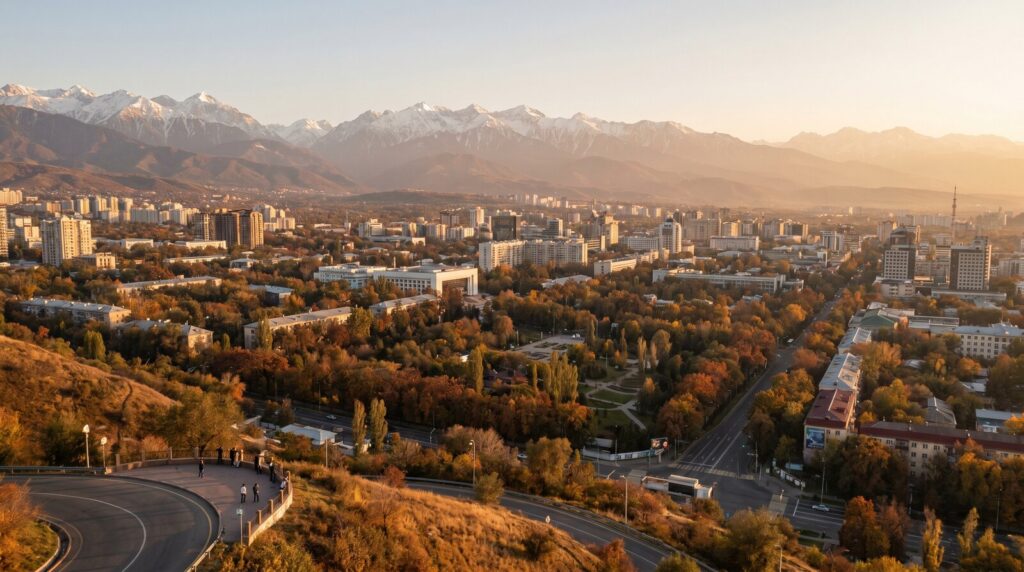
Almaty, Kazakhstan: Tian Shan Mountains, Apple City & Central Asian Gateway
Where Silk Road history meets cosmopolitan Central Asia beneath towering snow-capped peaks
Almaty, Kazakhstan’s largest city, represents a remarkable convergence of historical and contemporary currents. Positioned within sight of the Tian Shan mountains at the edge of sprawling Central Asian steppes, the city functions as cultural crossroads where Silk Road traditions persist alongside post-Soviet modernization and emerging global ambitions. For travelers seeking authentic Central Asia, mountain adventures, and understanding of post-Soviet transformation, Almaty offers experiences unavailable in more established tourist destinations.

The city’s name derives from “Alma,” meaning apple in Kazakh, reflecting the region’s position as the presumed origin of cultivated apples. Apple varieties throughout history trace ancestry to wild apples growing in Central Asia’s mountainous regions, with Almaty’s surrounding regions remaining important agricultural centers. This botanical history—the idea that the fruit tree which shaped human diet and culture originates here—creates imaginative connection to global history and agricultural heritage. Contemporary Almaty celebrates this heritage while pursuing economic diversification and modern development.
Table of Contents
Tian Shan Mountains & Alpine Adventures
The Tian Shan mountains define Almaty’s character, their snow-capped peaks visible from city center on clear days, their foothills enclosing the city on three sides. The proximity of these mountains—the highest peaks rising over 4,000 meters within driving distance—creates opportunities for hiking, climbing, and mountain experiences accessible from urban base. This combination of city sophistication and mountain wilderness accessibility distinguishes Almaty from typical mountain destinations.
The Big Almaty Lake, located approximately forty-five minutes from downtown, showcases mountain beauty with remarkable clarity. Nestled at 2,500 meters elevation, the glacier-fed lake displays brilliant turquoise coloration resulting from glacial silt suspended in the water. The water reflects surrounding peaks and sky, creating visual scenes that seem to exceed photographic possibility. Visiting during different seasons reveals dramatic transformations—spring snowmelt fills the lake with clarity, summer warmth brings hiking crowds, autumn creates golden vegetation contrasts, and winter freezes the surface into walking ground.
Trekking and hiking throughout the Tian Shan offers diverse difficulty levels and durations. Day hikes accessible from the city provide mountain experiences without backcountry camping. Multi-day treks venture into wilderness areas where shepherds graze yaks and horses across high meadows. Climbing opportunities range from trekking peaks achievable by fit non-climbers to technical mountaineering requiring specialized equipment and expertise. The range of options allows visitors to engage with mountains at personally appropriate difficulty levels.
Turgen Gorge, a remote valley within the Tian Shan, hosts pristine forests, waterfalls, and wildlife including lynxes, bears, and argali sheep. Visiting requires hiring local guides and obtaining permits, yet the effort yields encounters with landscapes and ecosystems few visitors experience. The gorge represents tourism development’s early stages, with basic accommodations and minimal infrastructure preserving the wilderness character that makes the journey worthwhile.
Chimbulak ski resort, located within the national park thirty minutes from downtown, provides winter sports access with snowfall guarantees due to altitude and geography. The resort remains small and uncrowded compared to international ski destinations, offering excellent snow and lift access without commercial tourism infrastructure. Summer hiking through ski resort areas provides access to high elevation landscapes otherwise requiring full trekking expeditions.
Silk Road Legacy & Historical Sites
Almaty’s location along Silk Road networks created historical importance extending back millennia. Trade routes connecting China, Central Asia, India, Persia, and Mediterranean worlds passed through or near contemporary Almaty, bringing merchants, pilgrims, armies, and ideas across vast distances. Understanding this historical context enriches contemporary experience of sites that might otherwise seem unspectacular.
The old city of Almaty, located near contemporary downtown, preserves architectural remnants from the nineteenth and early twentieth centuries. Wooden buildings, some featuring Islamic geometric designs and traditional Central Asian decorative elements, contrast with Soviet-era concrete apartment blocks that dominate the contemporary cityscape. Walking through these older neighborhoods reveals layers of historical development—how colonial Russian administrators established urban structure, how Soviet authorities transformed building patterns, and how contemporary developers increasingly demolish historical architecture in favor of modern construction.
The National Museum of Kazakhstan documents the nation’s extensive history, from ancient Scythian peoples through Soviet period to contemporary independence. Exhibits display artifacts including traditional clothing, weapons, religious objects, and archaeological finds revealing cultural sophistication of historical Central Asian societies. The museum provides essential context for understanding contemporary Kazakhstan—how the nation understands itself historically and what cultural inheritances shape contemporary identity.
The Panfilov Park, established in 1846, represents one of the city’s most pleasant green spaces. The park commemorates Panfilov, a Russian general, while serving as gathering space for contemporary residents. The green canopy provides respite from urban commercial intensity, with walking paths revealing sculptures, monuments, and structures documenting different historical periods. The park’s Japanese-style landscape (featuring gardens designed by Japanese architects) creates cultural blending reflective of Almaty’s cosmopolitan character.
Traditional caravanserais (stopping places for merchants along trade routes) once dotted the landscape, though few remain intact. The few surviving examples provide archaeological evidence of how Silk Road commerce functioned—how merchants found shelter, how goods were exchanged, how cultures encountered each other in commercial contexts. Modern Almaty bazaars represent contemporary versions of these historical trading functions, maintaining commerce and cultural exchange across generations.
Bazaars, Food & Local Culture
Central Asian bazaar culture remains vibrant throughout Almaty, with markets functioning as commercial centers, gathering spaces, and cultural institutions sustaining traditions across generations. Markets remain primary shopping locations for residents while increasingly welcoming tourists discovering authentic local commerce and traditional products.
The Green Bazaar sprawls across multiple covered sections selling vegetables, fruits, spices, meats, and prepared foods. The bazaar operates in open-air sections during warm months and moves indoors during winter. Wandering through the bazaar reveals the agricultural and culinary sophistication of Central Asian cuisine. Vendors display dried fruits, nuts, spices, teas, and herbs reflecting trade routes and agricultural traditions. The sensory experience—colors, aromas, textures, sounds of negotiation and commerce—immerses you in authentic local commerce.
Kazakhstani cuisine reflects the region’s pastoral traditions and Silk Road influences. Plov (pilaf), a rice dish cooked with meat, vegetables, and flavorful oils, appears throughout Central Asia with regional variations. Beshbarmak (“five fingers”), hand-pulled noodles served with meat and onion sauce, represents traditional Kazakh food eaten communally. Manty (steamed dumplings), shashlik (grilled meat skewers), and kumiss (fermented horse milk) represent food traditions sustaining nomadic populations for centuries. Understanding these foods requires appreciating how pastoral peoples developed cuisines suited to their environments—preserved foods, meat, and dairy dominating over vegetables.
Teahouses (chaikhanas) scattered throughout the city serve as social centers where locals gather for tea, conversation, and socialization. These establishments, often family-operated across generations, maintain traditional aesthetics and social functions. Sitting in a chaikhana among locals, observing social hierarchies and interaction patterns, provides cultural insights guidebooks cannot convey. The unhurried pace of chaikhana time, where conversations extend over hours and tea remains frequently replenished, contrasts sharply with Western commercial establishments optimizing customer turnover.
Contemporary Almaty’s restaurant scene combines traditional Central Asian cuisine with international offerings and fusion experiments. High-end establishments recreate traditional dishes through contemporary techniques. Street food vendors offer quick versions of traditional foods at minimal cost. This range allows experiencing local cuisine from sophisticated to humble levels depending on budget and preferences. Russian-influenced restaurants also persist, reflecting historical occupation and cultural integration across the nineteenth and twentieth centuries.
Post-Soviet Transformation & Modern Almaty
Almaty’s contemporary character reflects post-Soviet transformation—the rapid shift from Soviet control to independence that fundamentally altered national identity, political systems, economic structures, and cultural expression. Understanding this recent history contextualizes contemporary Almaty and explains the particular blend of Soviet legacy and new national development visible throughout the city.
Soviet-era architecture dominates Almaty’s cityscape, with massive apartment blocks, wide streets, and monumental public buildings testifying to USSR urban planning principles. These structures, built in standardized designs and planned according to central directives, created functional urban space while prioritizing efficiency over aesthetic refinement. Contemporary Almaty undergoes dramatic transformation as new development demolishes older structures and replaces them with modern buildings reflecting post-independence aesthetic values and global architectural trends.
The capital’s relocation from Almaty to Astana in 1997 represented political consolidation and strategic positioning. The move withdrew capital city status and associated resources, yet Almaty retained commercial importance and cultural significance. This shift created ambiguity about the city’s future while allowing it to develop according to market forces rather than government planning. Contemporary Almaty functions more as a cosmopolitan global city than government capital, with private enterprise driving development more than state planning.
Independence created opportunities for religious expression previously restricted under atheist Soviet policy. Mosques have been restored or newly constructed throughout Almaty, reflecting the Muslim majority population’s return to religious practice. The Hazrat Sultan Mosque, one of Central Asia’s largest, accommodates thousands of worshippers and serves as cultural landmark. Christian churches, Buddhist temples, and Jewish synagogues also operate, creating religious pluralism unusual in the Soviet period. This religious diversity reflects how political change enabled diverse identity expression.
Contemporary younger Almaty residents increasingly identify as Kazakh rather than Soviet, pursuing education, business, and cultural expression grounded in national identity while maintaining cosmopolitan global engagement. This generation is reshaping culture, using traditional music and poetry in contemporary contexts, blending fashion traditions with modern styles, and creating hybrid identities that acknowledge history while moving forward. Interacting with younger residents reveals how post-Soviet generations are actively constructing new national culture.
The city’s cosmopolitanism reflects historical geography—positioned at the crossroads of Central Asia, Russia, and China, Almaty naturally developed multicultural character. The population includes Kazakhs, Russians, Uyghurs, Koreans, and numerous other ethnic groups speaking multiple languages and maintaining distinct cultural practices. This diversity creates marketplace of ideas, cuisines, and traditions that distinguishes Almaty from more homogeneous Central Asian cities.
Planning Your Almaty Visit
Almaty’s tourism infrastructure has expanded significantly, with improved accommodations, restaurants, and services making the city increasingly accessible. Planning involves understanding seasons, transportation logistics, entry requirements, and practical details enabling smooth travel experiences.
Kazakhstan requires visas for most nationalities, obtainable through embassies or online systems. The process typically requires several days, though expedited services exist. Tourists receive thirty-day visas, sufficient for Almaty exploration combined with visits to other Kazakhstan destinations. Entry is increasingly accessible as Kazakhstan pursues tourism development.
Almaty International Airport serves as the primary international entry point, with flights from Central Asian capitals, major Asian cities, and increasingly European destinations. The airport lies approximately twenty kilometers from downtown, with taxis, ride-sharing apps, and hotel transfers providing affordable transportation. Flying remains economical, particularly when booking regional flights within Central Asia.
The best tourism seasons extend from May through September, when temperatures remain moderate (20-30°C) and mountain conditions permit hiking and outdoor activities. Winter (November-March) brings cold temperatures and occasional snow, making mountain exploration challenging but creating distinctive winter landscapes. Spring and autumn offer pleasant weather with fewer tourists than summer.
Accommodations range from luxury hotels to budget guesthouses, with quality relatively consistent across price ranges. Downtown hotels provide urban convenience, while properties near mountain areas allow outdoor adventure access. Mid-range options offer good value and comfortable conditions without extreme expense. Guesthouses operated by locals often provide cultural insights and travel advice that larger establishments cannot.
Transportation within Almaty relies on buses, metro (limited coverage), taxis, and ride-sharing apps. The metro, renovated and expanded recently, provides efficient transport though limited geographic coverage. Taxis remain inexpensive but require negotiation or use of ride-sharing apps for transparent pricing. Walking remains feasible for downtown exploration, particularly along Arbat pedestrian street featuring restaurants and cafes.
Currency is the Kazakhstani Tenge, with ATMs widely available throughout downtown and tourism areas. Credit card acceptance has improved but cash remains necessary for bazaar purchases, local restaurants, and transportation. Exchange rates are favorable compared to many regional destinations, making Almaty relatively inexpensive for travelers with Western currency.
Language barriers exist for English speakers, as English proficiency outside tourism sectors remains limited. Learning basic Russian phrases—the language most widely understood after Kazakh—facilitates interactions significantly. This linguistic challenge rewards effort with deeper engagement opportunities and more authentic interactions with locals.
Discover Almaty’s Central Asian Soul
Almaty invites you to experience Silk Road heritage, stand beneath towering Tian Shan peaks, encounter genuine Central Asian bazaar culture, and witness post-Soviet transformation reshaping a nation discovering its identity.
Plan your Almaty journey today and explore one of Central Asia’s most dynamic cities—a place where mountains meet markets, tradition meets modernization, and travelers discover authentic Central Asia.
2026 Travel Update for Almaty
Almaty is rapidly emerging as Central Asia’s most cosmopolitan city in 2026. Kazakhstan’s former capital has invested heavily in tourism infrastructure, with new boutique hotels, revamped public parks, and a growing international food scene. The Almaty Metro has expanded with new stations, and the city’s cable cars and ski facilities in the Tian Shan foothills have been modernized. Kazakhstan’s visa-free regime now covers citizens of over 70 countries for stays of up to 30 days. The Big Almaty Lake area has improved trail infrastructure, and new adventure tourism operators offer heli-skiing, paragliding, and multi-day horseback treks into the Kolsai Lakes region.
Frequently Asked Questions About Almaty
What is the best time to visit Almaty?
The best time depends on your interests. For general sightseeing and hiking, May through September offers warm weather (20–30°C) and access to mountain trails. Autumn (September–October) is particularly beautiful with golden foliage in the mountain valleys. Winter (December–March) transforms the area into a skiing and snowboarding destination, with Shymbulak Resort offering affordable lift passes. Spring brings apple blossoms to the hills—fitting for the “City of Apples.”
Is Almaty safe for tourists?
Almaty is generally safe for tourists. The city center is well-policed and feels comfortable to walk around, even in the evening. Standard urban precautions apply—be aware of pickpockets in crowded markets like the Green Bazaar and avoid poorly lit areas at night. Taxi scams can occur, so use ride-hailing apps like Yandex Go or inDrive. Mountain areas require proper preparation—weather can change rapidly at altitude, and some trails are remote.
How do I get to Almaty?
Almaty International Airport receives direct flights from major hubs including Istanbul, Dubai, Seoul, Beijing, Moscow, and several European cities via Air Astana and other carriers. Air Astana is a well-regarded airline offering comfortable service. From the airport, the city center is about 25 minutes by taxi ($8–12). Internal flights connect Almaty to Astana and other Kazakh cities, and trains provide scenic but slower connections.
What should I eat in Almaty?
Kazakh cuisine centers around meat and dairy. Must-try dishes include beshbarmak (boiled meat with flat noodles, the national dish), lagman (pulled noodle soup), manti (steamed dumplings), and plov (rice pilaf). The Green Bazaar is the best place to sample dried fruits, nuts, kurt (dried yogurt balls), and horse meat sausages. Almaty’s restaurant scene also includes excellent Georgian, Korean, and Uzbek cuisines reflecting the city’s diverse population. Kumys (fermented mare’s milk) is the traditional drink.
What day trips can I take from Almaty?
Popular day trips include Big Almaty Lake (a turquoise alpine lake at 2,500 meters), Charyn Canyon (often compared to a miniature Grand Canyon, about 3 hours east), and Kolsai Lakes (the “Pearls of the Tian Shan”). The Turgen Waterfalls and Issyk Lake are closer options requiring less driving time. Most day trips require a car—either rented or arranged through a tour operator, as public transportation to these natural sites is limited.