
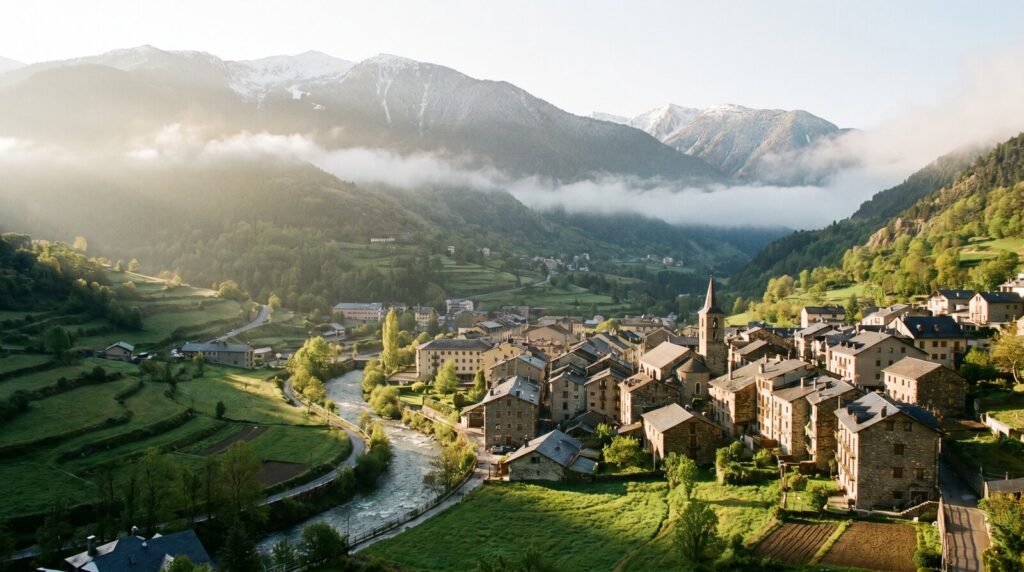
Andorra la Vella: Pyrenean Peaks
Andorra la Vella is a destination that rewards the curious traveler — a place where skiing and duty-free in Alpine principality. Whether you’re drawn by the history, the food, the culture, or simply the desire to see something new, this guide will help you make the most of every moment.
What’s Inside This Guide
- Pyrenean Geography
- Skiing & Alpine
- Medieval Old Town
- Mountain Trout Cuisine
- Duty-Free Culture
- Princes & Politics
- Mountain Planning
Pyrenean Geography
Every great city has a beating heart, and in Andorra la Vella, that heart pulses strongest around Caldea. This isn’t just a landmark — it’s a gathering point, a reference point, and a window into the soul of Andorra. Locals meet here, tourists marvel here, and somehow the space accommodates both without losing its character.
From there, make your way to Casa de la Virge, which provides the perfect counterpoint. If Caldea represents the monumental side of Andorra la Vella, then Casa de la Virge reveals its intimate character — the side that locals cherish and visitors often miss entirely. Along the way, you’ll pass through streets fragrant with Escalivada and alive with the chatter of daily commerce that has defined this neighborhood for generations.
The beauty of exploring Andorra la Vella this way — starting with the iconic and gradually discovering the hidden — is that it mirrors how the city itself has evolved. Layer upon layer, era upon era, Andorra la Vella has built itself into something that defies simple description. It’s a place best understood through direct experience, one discovery at a time.
Skiing & Alpine
To understand Andorra la Vella, you need to understand its history — and that history is written in stone, tile, and timber across the cityscape. Arinsal is perhaps the most striking example, a structure that has survived wars, earthquakes, and the relentless march of modernity to stand as a testament to what this city once was and, in many ways, still is.
The story continues at Engolasters Lake, which complements the grandeur of Arinsal with something more personal, more intimate. Here, the craftsmanship tells a story of artisans rather than emperors, of community rather than conquest. It’s the kind of place where you find yourself lingering longer than planned, noticing details that reward a second and third look.
Medieval Old Town
One of the greatest pleasures of Andorra la Vella is getting deliberately lost in its neighborhoods. Each district has evolved its own identity over decades or centuries, and the boundaries between them are less about geography than about atmosphere, culture, and the particular rhythm of daily life that defines each one.
Old Town — Medieval — has long been considered the soul of Andorra la Vella. Walking its streets, you understand why. There’s a lived-in quality here that tourist districts often lack, a sense that every shop, cafe, and street corner has earned its place over years of serving the same community. Cross into Escaldes, and the feel shifts: Spa district.
Old Town
Medieval
Escaldes
Spa district
Ordino
Village
La Massana
Slopes gateway
Mountain Trout Cuisine
The culinary scene in Andorra la Vella is a revelation that unfolds one plate at a time. Start with Escalivada — the dish that locals consider the true test of any kitchen in Andorra. Done right, it’s a symphony of flavors that tells you everything about the local palate: what grows here, what’s valued, and how centuries of cultural exchange have shaped the way people eat.
Work your way through Conill amb xocolata, Mountain trout, and Botifarra over the course of your visit. Each tells a different story — Conill amb xocolata speaks to the everyday, Mountain trout to the street culture, and Botifarra to the celebratory traditions that mark special occasions. Together, they paint a complete picture of how Andorra la Vella feeds itself and its visitors.
Don’t overlook Crème Brûlée and Vermouth, which round out the essential tasting list. Markets are the best place to sample everything — arrive hungry, bring small bills, and be prepared to point at anything that looks interesting. The vendors appreciate curiosity, and the best meals often start with a simple question: what’s good today?
Duty-Free Culture
Beyond the built environment, Andorra la Vella offers surprising natural escapes and atmospheric evenings that reveal yet another dimension of the city’s character. St Esteve provides a welcome green respite from urban exploration — locals come here to walk, picnic, and escape the pace of the city without actually leaving it.
The evening scene in Andorra la Vella ranges from intimate cafes to lively gathering spots that pulse with local energy. The area around Escaldes comes alive after sunset, with restaurants spilling onto sidewalks and conversation filling the air. This is when Andorra la Vella feels most like itself — unhurried, social, and deeply invested in the simple pleasure of good company.
Princes & Politics
The Andorra la Vella that appears in travel brochures only tells part of the story. Dig a little deeper, and you’ll find a city full of unexpected connections, surprising firsts, and stories that even some locals don’t know. These hidden layers are what separate a visit from a genuine understanding of place.
Consider, for instance, that No army since 1993. This isn’t the kind of fact you’ll find on a standard city tour, but it’s the kind of detail that makes Andorra la Vella endlessly interesting to those who care about the stories behind the stones. Similarly, French bishop & Spanish count co-rule — another reminder that this city’s history runs deeper than its most visible monuments suggest.
And here’s one more for good measure: 4-digit license plates. Andorra la Vella is full of these revelations, waiting for the curious traveler who asks the right questions and isn’t afraid to wander off the beaten path. The best discoveries here are almost always unplanned.
Mountain Planning
Planning a trip to Andorra la Vella requires some practical knowledge that will save you time, money, and unnecessary frustration. The city is welcoming to visitors, but like any destination, it has its rhythms and quirks that are worth understanding before you arrive.
The best time to visit Andorra la Vella depends on what you’re looking for. The peak tourist season brings crowds but also the fullest calendar of events and the longest days. Shoulder seasons offer the sweet spot — decent weather, fewer visitors, and lower prices. Whenever you come, budget at least three full days — anything less means choosing between experiences rather than enjoying them all.
Language-wise, you can navigate Andorra la Vella with a combination of basic phrases and goodwill. English is spoken in tourist-facing businesses, but learning a few words of the local language opens doors — literally and figuratively. A simple greeting in the local tongue earns you warmer service, better recommendations, and the occasional off-menu special.
Explore More with Facts From Upstairs
Discover more destinations, surprising facts, and travel guides crafted for curious travelers.