
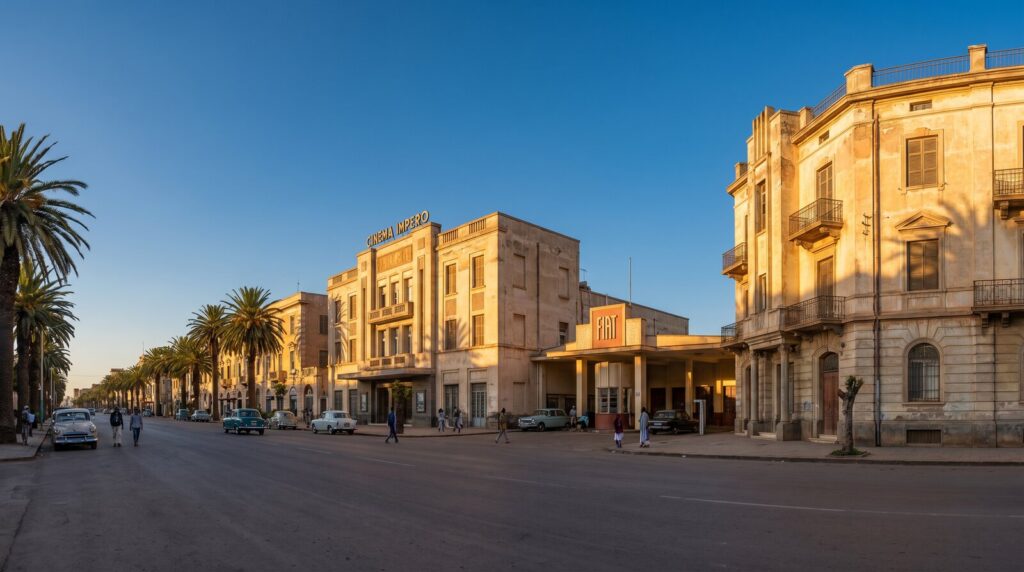
Asmara: Art Deco Capital
Asmara is a destination that rewards the curious traveler — a place where italian colonial charm. Whether you’re drawn by the history, the food, the culture, or simply the desire to see something new, this guide will help you make the most of every moment.
What’s Inside This Guide
- Cultural Experience
- Historical Heritage
- Neighborhoods
- Local Food
- Nature
- Discoveries
- Practical Tips
Cultural Experience
Asmara is not a city that reveals itself all at once. It unfolds gradually, one winding street and unexpected discovery at a time, rewarding the traveler who takes the time to look closely. Start at Landmark1, where the story of this place begins to make sense — the architecture alone tells centuries of history without saying a word.
Beyond Landmark1, the city opens up into a tapestry of experiences that defy easy categorization. Landmark2 offers a different perspective entirely — where the first stop gives you history, this one gives you context. Together, they form the essential introduction to understanding what makes Asmara tick. The walk between them takes you through streets where vendors sell Food1 and the aroma of Food2 drifts from open doorways.
The beauty of exploring Asmara this way — starting with the iconic and gradually discovering the hidden — is that it mirrors how the city itself has evolved. Layer upon layer, era upon era, Asmara has built itself into something that defies simple description. It’s a place best understood through direct experience, one discovery at a time.
Historical Heritage
The history of Asmara reads like an epic novel — full of conquests, cultural flowerings, unexpected turns, and characters larger than life. You can trace these chapters through the city’s architecture, where Landmark3 stands as one of the most eloquent witnesses to the past. Built during a pivotal era, it embodies the ambition and artistic sensibility that defined Asmara at its peak.
The story continues at Landmark4, which complements the grandeur of Landmark3 with something more personal, more intimate. Here, the craftsmanship tells a story of artisans rather than emperors, of community rather than conquest. It’s the kind of place where you find yourself lingering longer than planned, noticing details that reward a second and third look.
Neighborhoods
Like any city worth its salt, Asmara is really a collection of neighborhoods, each with its own personality, pace, and particular charms. To truly know this place, you need to venture beyond the tourist center and let each district reveal its character on its own terms. The differences between neighborhoods can be striking — a five-minute walk can transport you between centuries and social worlds.
Neighborhood1 — Description of neighborhood 1 — has long been considered the soul of Asmara. Walking its streets, you understand why. There’s a lived-in quality here that tourist districts often lack, a sense that every shop, cafe, and street corner has earned its place over years of serving the same community. Cross into Neighborhood2, and the feel shifts: Description of neighborhood 2.
Neighborhood1
Description of neighborhood 1
Neighborhood2
Description of neighborhood 2
Neighborhood3
Description of neighborhood 3
Neighborhood4
Description of neighborhood 4
Local Food
If Asmara had a single dish that captured its essence, it would be Food1 — but narrowing it down to one dish does this city a grave injustice. The food scene here is a sprawling, delicious conversation between tradition and innovation, street carts and fine dining, local ingredients and global influences.
Beyond Food1, the culinary landscape expands dramatically. Food2 is another essential experience — the kind of dish that visitors dream about long after returning home. Street vendors serve Food3 for practically nothing, and it’s often better than what you’d find in a sit-down restaurant. For something more refined, seek out Food4, which represents the elegant side of Eritrea’s culinary tradition.
Don’t overlook Food5 and Food6, which round out the essential tasting list. Markets are the best place to sample everything — arrive hungry, bring small bills, and be prepared to point at anything that looks interesting. The vendors appreciate curiosity, and the best meals often start with a simple question: what’s good today?
Nature
Beyond the built environment, Asmara offers surprising natural escapes and atmospheric evenings that reveal yet another dimension of the city’s character. Landmark5 provides a welcome green respite from urban exploration — locals come here to walk, picnic, and escape the pace of the city without actually leaving it.
The evening scene in Asmara ranges from intimate cafes to lively gathering spots that pulse with local energy. The area around Neighborhood2 comes alive after sunset, with restaurants spilling onto sidewalks and conversation filling the air. This is when Asmara feels most like itself — unhurried, social, and deeply invested in the simple pleasure of good company.
Discoveries
What most visitors miss about Asmara is precisely what makes it unforgettable. Beyond the landmarks and the food, there’s a collection of stories, oddities, and little-known facts that reveal the true character of this place — the details that don’t make it into the glossy brochures but define the city’s soul.
Start with this: Fact 1 about Asmara. Let that sink in for a moment. Then consider that Fact 2 about Asmara. These kinds of details don’t just add color to your visit — they fundamentally change how you see the city. Suddenly, every street corner becomes a potential discovery.
And here’s one more for good measure: Fact 3 about Asmara. Asmara is full of these revelations, waiting for the curious traveler who asks the right questions and isn’t afraid to wander off the beaten path. The best discoveries here are almost always unplanned.
Practical Tips
Getting the most out of Asmara is partly about what you see and partly about how you navigate the practicalities. Here’s what experienced travelers wish they’d known before their first visit — the kind of advice that makes the difference between a good trip and a great one.
The best time to visit Asmara depends on what you’re looking for. The peak tourist season brings crowds but also the fullest calendar of events and the longest days. Shoulder seasons offer the sweet spot — decent weather, fewer visitors, and lower prices. Whenever you come, budget at least three full days — anything less means choosing between experiences rather than enjoying them all.
Budget-conscious travelers will find Asmara manageable, especially when it comes to food — street stalls and local restaurants offer exceptional meals at a fraction of what you’d pay in tourist zones. Accommodations range from budget-friendly guesthouses in Neighborhood1 to upscale options in the modern districts. The best value often lies in the mid-range — clean, comfortable, and close to the action.
Explore More with Facts From Upstairs
Discover more destinations, surprising facts, and travel guides crafted for curious travelers.