
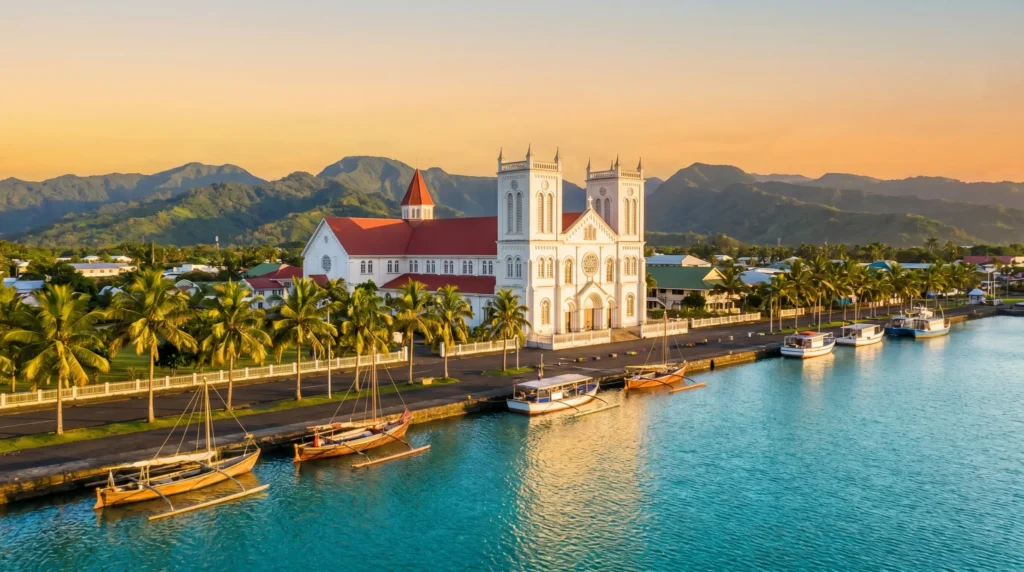
Apia: Pacific Gateway to Samoan Culture
Apia, the capital of Samoa, represents a unique convergence of Pacific island culture, colonial history, and contemporary island nation politics. Perched on the coast of Upolu island, this small but vibrant city hosts the nation’s administrative functions, primary commerce, and cultural institutions. The city’s character emerges from its distinctive blend of Samoan traditions maintained across generations and colonial influences that continue to shape island institutions and aesthetics.
For visitors from larger, more developed nations, Apia offers insights into how small island nations navigate global economic systems while maintaining distinctive local cultures. The city reveals the complexities of colonial legacies—administrative systems, languages, and architectural styles inherited from colonial periods but adapted to contemporary Pacific island contexts. Walking through Apia provides lessons in cultural resilience, economic adaptation, and how communities maintain identity in the face of global pressures.
Understanding Apia requires appreciating the centrality of family, community, and traditional practices in contemporary island life. While tourists visit for beaches and natural beauty, the city itself reveals the social, political, and cultural dimensions of Pacific island existence often invisible to casual visitors.
What’s Inside This Guide
- Waterfront and Coastal Character
- Colonial Architecture and Legacy
- Samoan Cultural Traditions
- Markets and Island Commerce
- Community and Family Life
- Religious and Spiritual Life
- Getting Around and Practical Tips
Waterfront and Coastal Character
Apia’s identity is inseparable from its waterfront location on Samoa’s primary island. The harbor and beachfront create visual and functional anchors for the city, with maritime commerce historically essential to the island’s survival and development. Contemporary waterfronts blend traditional fishing practices with modern commercial shipping, revealing how island economies balance tradition and commerce.
Coastal geography shapes daily life—sea breezes cool the tropical heat, salt spray weatheres buildings, and ocean proximity creates cultural practices centered on marine resources. Residents understand tides, weather patterns, and seasonal fish populations intimately. The ocean remains central to cultural identity and economic survival despite economic diversification.
Public waterfront spaces reveal community use patterns—fishermen launching boats, families gathering on beaches, children playing in water, vendors selling fresh fish and prepared food. These spaces showcase daily life and cultural practices that tourists often miss when visiting for beach recreation.
Colonial Architecture and Legacy
Colonial-era architecture remains visibly embedded in Apia, with buildings from German colonial, British, and American influence visible in the urban landscape. Government buildings, schools, churches, and commercial structures reflect colonial architectural styles adapted to tropical climates. While some colonial structures have been carefully preserved, many show weathering from tropical conditions, creating aged charm and visible histories.
Colonial influences extend beyond architecture into language, administration, law, and social institutions. English remains widely spoken alongside Samoan; colonial administrative structures persist despite island independence; and Western educational and legal systems shape contemporary institutions. Understanding these lingering colonial influences is essential to appreciating contemporary Samoan society.
Contemporary additions create visual contrasts—modern buildings alongside colonial structures, Asian-influenced commercial architecture next to colonial government buildings, and mobile technology infrastructure disrupting colonial streetscapes. These juxtapositions reveal ongoing tensions between tradition and modernization.
Samoan Cultural Traditions
Samoan cultural traditions form the foundation of daily life in Apia, with practices and values passed down through generations. The fa’a Samoa (Samoan way) encompasses respect for family, elders, and community, as well as traditional practices around agriculture, fishing, and social gatherings. These traditions remain vibrantly practiced despite economic modernization and external influences.
Traditional language, music, dance, and arts represent living cultural expression rather than museum artifacts. Samoan language remains in daily use; traditional music and dancing continue at celebrations; traditional crafts are practiced and transmitted to younger generations. Witnessing these living traditions provides insight into how cultures maintain continuity despite globalization pressures.
Contemporary Samoans navigate the tension between maintaining traditional practices and participating in global systems. This ongoing negotiation between tradition and modernity characterizes contemporary island culture and creates complex identities for island residents.
Markets and Island Commerce
Apia’s markets reveal daily island commerce and consumer practices essential to survival on small islands with limited agricultural diversity. Markets overflow with local tropical fruits, fresh fish, taro, coconuts, and other agricultural products reflecting island agriculture. Vendors maintain family businesses across generations, using markets as both commercial spaces and social gathering places essential to community life.
Market rhythms follow island patterns—certain times bring fresh fish from morning catches; afternoons bring household shoppers; evenings bring families gathering for socializing. These temporal patterns create different market atmospheres revealing how time and commerce structure daily life.
Goods sold in markets reflect island isolation and import dependence—while local produce dominates, imported goods from New Zealand, Australia, and Asia fill commercial spaces. These import patterns reveal economic relationships and how island economies rely on trade for survival.
Community and Family Life
Family and community structures remain central to Samoan society, with extended family networks and communal decision-making practices guiding social organization. These networks provide economic support, childcare, elderly care, and emotional support essential to island survival. Understanding community life requires appreciating how families and communities function as interconnected wholes rather than as isolated individuals.
Residential neighborhoods reveal community organization—extended family compounds, neighborhood gathering spaces, churches as community centers. These physical arrangements reflect social values around family unity and community interdependence.
Contemporary Samoans navigate tensions between communal values and individual aspirations, between family obligations and personal desires. These ongoing negotiations shape contemporary island identity and create complex emotional landscapes for residents.
Religious and Spiritual Life
Religion profoundly shapes Apia culture, with Christianity (primarily Methodist and Catholic) and traditional Samoan spiritual practices coexisting in syncretic forms. Churches serve as community centers, social institutions, and spiritual anchors. Sunday services involve communal gathering, traditional dress, and social connection beyond purely spiritual functions.
Traditional Samoan spiritual practices honor ancestors and maintain connections to spiritual dimensions of existence. These practices coexist with Christianity rather than being replaced by it, creating unique Samoan spiritual expressions combining multiple traditions.
Religious observance structures the annual calendar, with holidays and festivals marking important dates and bringing community together. Participating in religious celebrations or respectfully observing them provides insights into spiritual dimensions of island culture.
Getting Around and Practical Tips
Navigating Apia requires patience and a relaxed attitude toward time. The city is small enough to explore on foot, though tropical heat and sudden tropical rain require planning. Transportation options include buses, taxis, and walking, with local taxis and buses following routes understood by residents but not always clearly marked for visitors.
Best times to visit depend on climate preferences. The dry season (May-September) offers moderate temperatures and less rain; the wet season (November-April) brings lush landscapes and potential cyclones. However, island life continues year-round, with cultural events and community gatherings occurring throughout the year.
Practical necessities—currency, communication, food—are addressed through learning local systems and asking residents. Tourist services exist but local residents often provide more useful guidance. Budget travel is possible; basic services may differ from visitors’ home countries but provide authentic island experiences.
Explore More with Facts From Upstairs
Discover more destinations, surprising facts, and travel guides crafted for curious travelers who seek authentic experiences and cultural understanding.
FFU contains affiliate links. We earn a commission when you book through them — at no extra cost to you.
Plan your trip
- Tours & experiences: browse tours and experiences on Klook.
- Airport pickup: pre-book an airport transfer with GetTransfer.
- Car hire: compare rental cars on GetRentacar.
- Bag storage: store your bags with RadicalStorage.
Disclosure: some links above are affiliate links — booking through them supports Facts From Upstairs at no extra cost to you.