
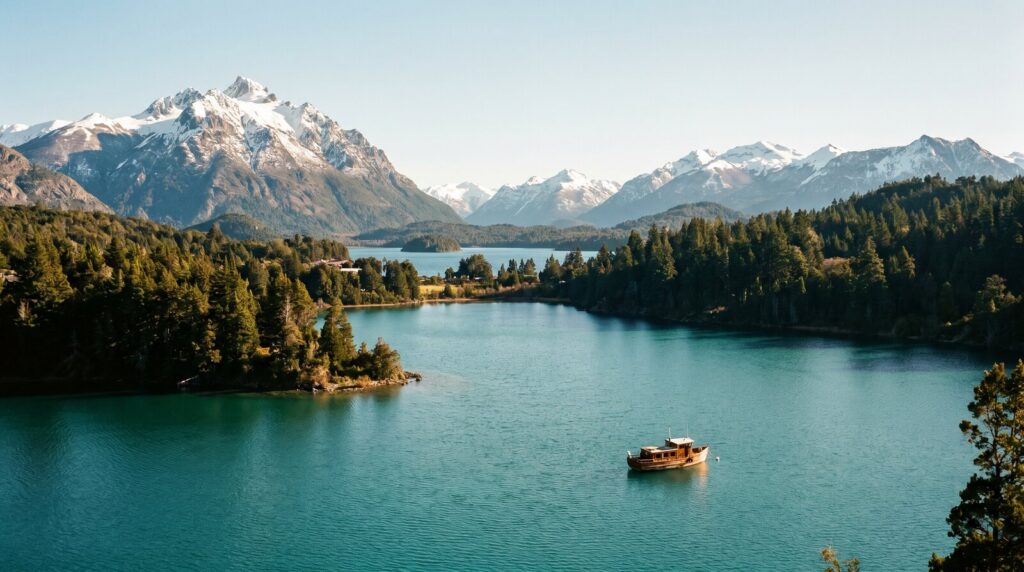
Bariloche, Argentina: Patagonian Lake District, Chocolate Capital & Andean Skiing
Your Complete Guide to Bariloche, Argentina
📍 In This Guide
- When to Visit Bariloche ⛷️
- Cerro Catedral & Skiing 🏔️
- Lake District & Circuito Chico 🚗
- Chocolate & Craft Beer 🍫
- Trekking Refugio Circuit 🥾
- Nearby Excursions 🌋
- Budget & Practical Tips 💰
When to Visit Bariloche ⛷️
Bariloche has two distinct personalities. Winter (June-September) transforms it into South America’s premier ski destination, with Cerro Catedral offering 1,200 hectares of skiable terrain and reliable powder. Summer (December-March) is hiking season — long days, wildflower-covered meadows, and lake temperatures that brave swimmers might call refreshing. Shoulder seasons (April-May, October-November) are quieter and cheaper but some mountain passes close.

⛷️ Ski Season
June to September. Cerro Catedral has 39 lifts and terrain from beginner to expert. Lift passes around $30-50/day.
☀️ Summer
December to March. Hiking, kayaking, and mountain biking. Temps hit 22°C. Book ahead in January.
🍂 Autumn
April-May. Stunning fall colors, fewer crowds, great for photography. Some trails may be muddy.
🌸 Spring
October-November. Snow melting, waterfalls at full force. Some high passes still closed.
Cerro Catedral & Skiing 🏔️
Cerro Catedral is the largest ski resort in South America and the reason most winter visitors come to Bariloche. The resort sits at 2,388 meters and offers everything from gentle beginner slopes to genuinely challenging off-piste terrain. What makes it special isn’t just the skiing — it’s the views. On a clear day, you can see across Nahuel Huapi Lake to the Chilean Andes. The base village has restaurants and rental shops, and a day pass costs a fraction of what you’d pay in the Alps.
🎿 The Skiing
1,200 hectares, 39 lifts, 120km of runs. Season runs June-September with best powder in July-August.
🏔️ Off-Piste
Advanced skiers can access backcountry terrain with local guides. Frey Refuge area is legendary.
🚡 Summer Lifts
Chairlifts run in summer too — ride up for panoramic views and high-altitude hiking without the climb.
💰 Costs
Day passes $30-50 USD. Full equipment rental around $20/day. Much cheaper than European or North American resorts.
Lake District & Circuito Chico 🚗
The Circuito Chico is a 60km scenic loop that every Bariloche visitor should do at least once. It winds along the shore of Nahuel Huapi Lake, through ancient arrayán forests (with bark the color of cinnamon), past hidden beaches, and up to viewpoints that make you pull over every five minutes. You can drive it, cycle it, or take a tour bus. The route passes Llao Llao — one of South America’s most famous luxury hotels — and Bahía López, a stunning lakeside beach.
🚗 Circuito Chico
60km loop from Bariloche. Allow 3-4 hours by car (with stops) or a full day by bike. Free.
🌳 Arrayanes Forest
A forest of cinnamon-barked trees on the Quetrihué Peninsula. Reachable by boat from Villa La Angostura.
🏖️ Bahía López
Black sand beach on Nahuel Huapi Lake. Gorgeous on a sunny day, freezing to swim year-round.
🏨 Llao Llao
Even if you can’t afford to stay, walk the grounds and visit the chapel. The setting is jaw-dropping.
Chocolate & Craft Beer 🍫
Bariloche’s Calle Mitre is basically a chocolate theme park. Over 80 chocolate shops line the main street, and the competition has driven quality sky-high. The tradition started with Swiss and Italian immigrants in the early 1900s, and today the city produces some of the finest chocolate in the Americas. Beyond chocolate, Bariloche has quietly become Argentina’s craft beer capital, with microbreweries tucked into cabins throughout the surrounding hills.
🍫 Rapa Nui
The most famous chocolate shop. Their hot chocolate with churros is practically a religious experience.
🍫 Mamuschka
Known for creative flavors — try the calafate berry or dulce de leche varieties.
🍺 Berlina
One of the best microbreweries. Their Patagonia-inspired IPAs are excellent. Lakeside taproom.
🍺 Cervecería Blest
Argentina’s first brewpub, opened 1989. Try the smoked beer — a Patagonian specialty.
Trekking & Refugio Circuit 🥾
For serious hikers, the refugio circuit is Bariloche’s crown jewel. A network of mountain shelters (refugios) connected by trails through the Andes lets you do multi-day treks without carrying a tent. The most popular is the Frey-Jakob traverse — two days through alpine lakes, granite spires, and forests. Each refugio serves hot meals and has bunk beds. The trails aren’t technically difficult but involve significant elevation gain, and weather can change fast.
🏕️ Refugio Frey
4-5 hour hike from Villa Catedral. Stunning lagoon surrounded by granite towers. Bunks ~$15/night with dinner.
🏕️ Refugio Jakob
Connected to Frey by a full-day traverse. More remote, incredible views of the lake district.
🥾 Cerro López
Day hike option — 5 hours up to a refugio with the best panoramic view in the area.
⚠️ Preparation
Weather changes fast. Bring layers, rain gear, and register with park rangers before multi-day treks.
Patagonia’s lake district is calling.
Alpine lakes, Andean peaks, world-class chocolate, and craft beer at the end of every trail. Bariloche is adventure with a sweet tooth.
❓ Frequently Asked Questions
What is the best time to visit Bariloche?
It depends on your interests. December to March offers warm lakeside weather for hiking and water sports. June to September is ski season at Cerro Catedral. Autumn (April–May) brings spectacular foliage colors across the Patagonian lake district.
Is Bariloche known for chocolate?
Yes, Bariloche is Argentina’s chocolate capital, with over 30 chocolate shops lining its main street, Calle Mitre. The tradition dates back to European immigrants who brought Swiss and German chocolate-making techniques to Patagonia.
How do you get to Bariloche?
San Carlos de Bariloche Airport (BRC) receives daily flights from Buenos Aires (about two hours). You can also reach Bariloche by long-distance bus from Buenos Aires (approximately 22 hours) or drive the scenic Ruta 40 through Patagonia.
What outdoor activities are available in Bariloche?
Bariloche offers world-class hiking in Nahuel Huapi National Park, skiing at Cerro Catedral (South America’s largest ski resort), kayaking on glacial lakes, fly fishing, mountain biking, and scenic lake crossings to Chile via the Andean Lakes Route.