
Languages of Argentina
All languages of South America →fluent beta classical · classes by phone with Maya at ranas.ai/maya
Argentina Travel Guide — Tango Nights, Patagonian Glaciers & Malbec Valleys
Argentina Travel Guide
📋 In This Guide
- Overview — Why Argentina Belongs on Every Bucket List
- 🏔️ Patagonia Hiking Season 2026
- Best Time to Visit Argentina (Season by Season)
- Getting There — Flights & Arrival
- Getting Around — Flights, Sleeper Buses & the SUBE Card
- Top Cities & Regions
- Argentine Culture & Etiquette
- A Food Lover’s Guide to Argentina
- Off the Beaten Path
- Practical Information
- Budget Breakdown
- Planning Your First Trip to Argentina
- Frequently Asked Questions
Overview — Why Argentina Belongs on Every Bucket List
Argentina is a country that stretches the imagination north to south — from the subtropical jungle of Iguazú to the glacier fields at the edge of Antarctica, it runs nearly 3,700 kilometres end to end and passes through almost every climate on Earth between. It is the country of tango and gaucho, of wood-fired asado and Malbec, of Borges and Maradona, and the one place in the Americas where a café in Buenos Aires feels closer to Paris than to the continent it sits on.
At roughly 2,780,400 km², Argentina is the eighth-largest country in the world — larger than India, nearly four times the size of Texas, and the second-largest in South America. Its terrain spans the humid pampas grassland, the high-altitude Andes (Aconcagua tops out at 6,961 m, the tallest peak outside Asia), the wine-growing foothills of Mendoza and Salta, the lake-studded Patagonian Andes, the dry steppe of Santa Cruz, and the wind-lashed archipelago of Tierra del Fuego. INDEC’s 2022 national census counted 46,044,703 Argentines , a third of whom live in Greater Buenos Aires.
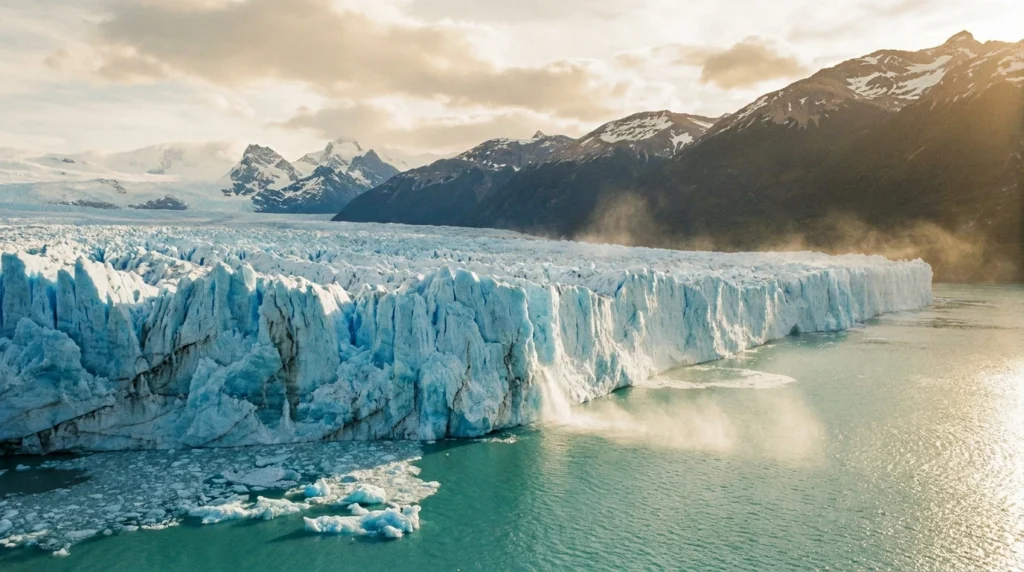
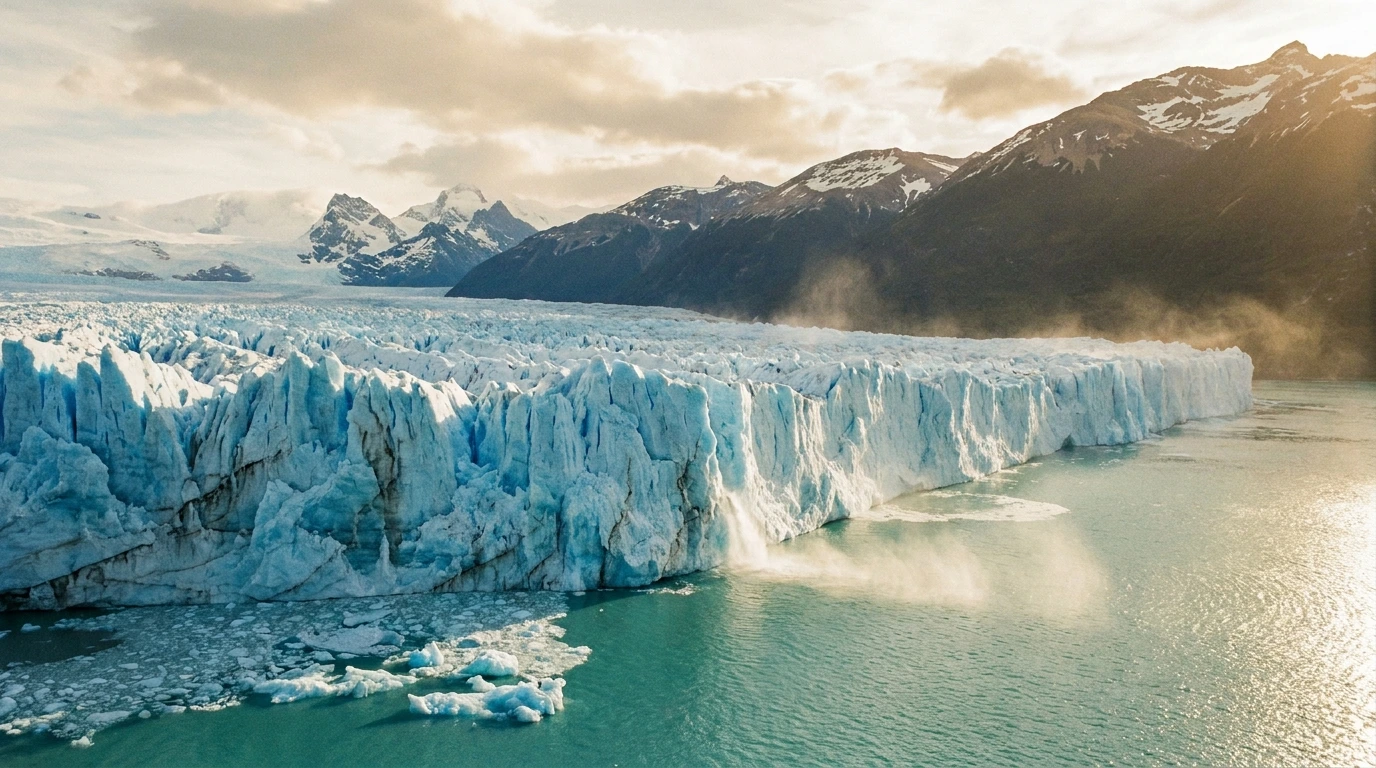
What travellers come for is the contrast inside one passport. Buenos Aires is a European capital with Italian cooking and French-style boulevards that never left the nineteenth century. A ninety-minute flight west drops you into Mendoza’s high-altitude Malbec country at the base of the Andes. A three-hour flight south lands in El Calafate, where the Perito Moreno Glacier calves blocks of ice the size of apartment buildings into Lago Argentino. The country is Catholic by census, Italian by grandparent, and football-mad by Tuesday evening — and the national anthem plays before the first sip of Malbec at any parrilla on 25 May or 9 July.
Tourism is rebuilding after years of currency turbulence. INDEC estimates Argentina welcomed around 7.3 million international visitors in 2024 , a sharp bounce from the pandemic years, with Brazilians, Chileans, Uruguayans, Americans, and Europeans making up the bulk. The December 2023 devaluation and subsequent stabilisation have simplified life for foreign tourists — card payments now settle at roughly the official rate, ending the punishing foreign-card penalty that defined the 2020-2023 era. For a first-time visitor, a typical two-week trip covers Buenos Aires and a wine-country swing through Mendoza, then flights to Iguazú or to El Calafate for Patagonia, with an asado dinner, a tango hall, and a glass of Torrontés folded in between.
🏔️ Patagonia Hiking Season 2026 — The Window Closes in March
Argentine Patagonia has a short, sharp season. The reliable trekking window runs from November 2025 through March 2026, with peak daylight and the most stable weather from mid-December to late February . After March the winds pick up, mountain huts begin to close, and many trails in Los Glaciares and Nahuel Huapi national parks shut entirely until the following spring. If your dream is Fitz Roy at sunrise or Big Ice on Perito Moreno, 2026 means booking before the southern summer fills.
- Peak hiking window: December 2025 through late February 2026 — longest daylight (up to 17 hours in El Calafate) and the driest stretch on the steppe.
- Shoulder windows: early November and March — cooler, fewer crowds, but more weather days and some refugios not yet open (or already closing).
- El Chaltén: Argentina’s self-proclaimed trekking capital — Laguna de los Tres under Mt. Fitz Roy (20 km round trip), Laguna Torre, Loma del Pliegue Tumbado.
- El Calafate & Perito Moreno: glacier boardwalks year-round; Mini Trek and Big Ice ice-trekking tours Sep-May with Hielo y Aventura.
- Bariloche & Lake District: Refugio Frey, Cerro Catedral summit, Circuito Chico, and the Route of the Seven Lakes drive.
- Ushuaia & Tierra del Fuego: Laguna Esmeralda, Glaciar Martial, and the Beagle Channel; Antarctica cruises depart Nov-Mar.
Best Time to Visit Argentina (Season by Season)
Summer (Dec–Feb)
Southern-Hemisphere high season, and the only reliable window for the Patagonian south. Buenos Aires sits at 21–30°C with occasional humid stretches in January; porteños flee the city on weekends for Mar del Plata on the Atlantic coast or Tigre on the delta. El Calafate, El Chaltén, Bariloche, and Ushuaia hit their trekking and kayaking peak — daylight runs to 16-17 hours in the far south. Downsides: Patagonia wind can gust well over 100 km/h on the steppe , January crowds spike across the board, and domestic flight prices peak alongside them. Mendoza is hot (often 32–35°C by afternoon) , and many top Buenos Aires restaurants close for the owners’ own summer holidays in January.
Autumn (Mar–May)
The Mendoza wine harvest (vendimia) runs February into April and crowns with the Fiesta Nacional de la Vendimia in early March — Argentina’s most-attended provincial festival. Buenos Aires cools into mild 15–23°C days and Palermo’s jacarandas finish blooming. Patagonia still hikes through mid-March, then the refugios begin to close. Iguazú is warm and lush, and the Northwest (Salta, Cafayate) turns gold as the wine-country vines drop leaf. For most first-time visitors, late March is the sweet-spot month: post-holiday prices, reliable weather in the centre, and a last window in Patagonia.
Winter (Jun–Aug)
Southern-Hemisphere winter flips the map. Buenos Aires is chilly and damp at 8–15°C — umbrella weather but excellent for milongas, theatre, and the Buenos Aires Tango Festival and World Cup in August. Bariloche and Las Leñas open for ski season (mid-June through early October); Ushuaia runs its Fiesta Nacional del Invierno with torchlight ski descents. Crucially, the far north wakes up: Salta, Jujuy, and the Quebrada de Humahuaca are dry, sunny, and a comfortable 15–22°C — plus Peninsula Valdés enters peak southern right whale season (June to December).
Spring (Sep–Nov)
Pink jacarandas and lapacho trees erupt across Buenos Aires in late October and November; the city’s parks hit their photogenic peak. Patagonia begins its trekking season in November as the refugios reopen. Iguazú is at its loudest after spring rains. Mendoza vineyards bud green, and the Northwest stays dry. The whales are still in Golfo Nuevo through early December. Spring is Argentina’s most underrated shoulder — warmer than winter, cheaper than summer, and arguably the best all-purpose window to see Buenos Aires, Mendoza, and the Lake District in one trip.
Shoulder-season tip: late March and late October are Argentina’s twin sweet spots — manageable crowds, warm centre-of-country weather, and a viable trekking or wine-harvest angle depending on timing.
Getting There — Flights & Arrival
Argentina’s main long-haul gateway is Buenos Aires–Ezeiza (EZE), 32 km southwest of the capital . Overnight flights from North America and Europe land in the early morning, with domestic onward connections via Aerolíneas Argentinas, Flybondi, or JetSmart through Aeroparque (AEP) in the city centre.
- Ministro Pistarini — Ezeiza (EZE) — the long-haul gateway, 32 km southwest of Buenos Aires. Reach the city by Manuel Tienda León shuttle to Retiro, official Taxi Ezeiza, or an off-peak Uber/Cabify.
- Jorge Newbery — Aeroparque (AEP) — the domestic and regional hub on the Río de la Plata, 2 km from Recoleta; nearly every Patagonia, Mendoza, and Iguazú flight departs here.
- Córdoba (COR) and Mendoza (MDZ) — alternate entry points from Santiago, São Paulo, Lima, and Panama.
Flight times: New York → EZE ~10h 30m non-stop, Miami → EZE ~9h, London → EZE ~13h 30m (usually via Madrid), Madrid → EZE ~12h 30m direct.
Flag carrier: Aerolíneas Argentinas, with Flybondi and JetSmart covering most domestic trunk routes.
Visa / entry: 80+ countries (including the US, Canada, UK, EU, Australia, and Japan) enter visa-free for up to 90 days. The old reciprocity fee for US, Canadian, and Australian travellers was phased out between 2016 and 2018.
Getting Around — Flights, Sleeper Buses & the SUBE Card
Argentina has no high-speed rail, and the country is so long north-to-south that domestic flights do most of the heavy lifting. Aerolíneas Argentinas operates the widest network, with Flybondi and JetSmart competing on price along the main trunk routes. For travellers on a slower budget, the legendary long-distance sleeper buses (coche cama and cama ejecutivo) still run — fully reclining seats, blankets, onboard meals, and overnight service that saves a hotel night.
- Buenos Aires → Mendoza (air): 1h 55m on Aerolíneas Argentinas from Aeroparque (AEP).
- Buenos Aires → Bariloche (air): around 2h 30m non-stop.
- Buenos Aires → El Calafate (air): about 3h 15m — the Patagonia workhorse route.
- Buenos Aires → Puerto Iguazú (air): roughly 1h 45m — faster than the 18-hour bus.
- Buenos Aires → Mendoza (overnight bus): approximately 13h in a coche cama from Retiro bus terminal; a budget alternative to the flight.
City transit: Buenos Aires’s Subte (opened 1913 — the first metro in the Southern Hemisphere) has six lines and uses the contactless SUBE card, which also works on colectivos (city buses) and Metrovías commuter trains. Córdoba, Rosario, and Mendoza accept SUBE on their bus networks.
Rideshare: Uber and Cabify work across Buenos Aires, Córdoba, Rosario, and Mendoza; DiDi entered the market in 2021. Fares run 30–50% below a metered taxi in peak hours.
Apps: BA Cómo Llego for Buenos Aires transit routing, Moovit for bus and train nationwide, Google Maps for walking, and Uber / Cabify for door-to-door.
Top Cities & Regions
📍 Map of Argentina: Every Place in This Guide
💃 Buenos Aires
Argentina’s cosmopolitan capital — a city of Parisian boulevards, turn-of-the-century cafés, and tango halls where porteños still dance until dawn. The 2022 INDEC census counted 3,120,612 people in the Autonomous City, with 15.6 million in the greater metro area.
- La Boca — El Caminito open-air street museum and La Bombonera, Boca Juniors’ cauldron stadium
- Recoleta Cemetery with Eva Perón’s tomb, plus the Beaux-Arts mansions of Barrio Norte
- San Telmo Sunday antique fair at Plaza Dorrego with open-air milongas into the evening
Signature dishes: bife de chorizo at a classic parrilla, empanadas from El Sanjuanino, choripán from a Costanera Sur stall, and medialunas con cortado at Café Tortoni.
🍷 Mendoza
High-altitude Andean wine capital at the foot of Aconcagua (6,961 m, the tallest peak outside Asia) — Malbec country for the world since the 1990s, with over 1,200 wineries across the province. Mendoza city sits at 760 m elevation; Uco Valley vineyards climb to 1,500 m .
- Luján de Cuyo and Uco Valley winery-hopping — Bodega Catena Zapata, Zuccardi Piedra Infinita, Salentein
- Aconcagua Provincial Park — day hike to Horcones Lagoon and Puente del Inca natural arch
- Parque General San Martín and Plaza Independencia cafe scene in the city centre
Signature dishes: asado criollo over wood embers, trout from Andean streams, locro on patriotic holidays, Malbec and Torrontés from the vineyard.
🏔️ Bariloche & the Lake District
Alpine-chalet resort town on the shore of Lake Nahuel Huapi, Argentina’s skiing, chocolate-shop, and summer-trekking capital — and the seat of Nahuel Huapi National Park, the country’s oldest (established 1934).
- Circuito Chico drive around the Llao Llao peninsula, with Cerro Campanario viewpoint
- Cerro Catedral resort — skiing in winter, Refugio Frey trekking in summer
- Route of the Seven Lakes (Ruta 40) to Villa La Angostura and San Martín de los Andes
Signature dishes: smoked trout, cordero patagónico (Patagonia lamb) al asador, artisan chocolate from Mamuschka and Rapa Nui, craft beer on Mitre Street.
🧊 El Calafate & Perito Moreno
Southern Patagonia’s trekking gateway on the shore of Lago Argentino — home to the Perito Moreno Glacier, a 30-kilometre-long ice river that is one of the only advancing glaciers on Earth. A short hop north reaches El Chaltén and the Fitz Roy massif.
- Perito Moreno Glacier boardwalks in Los Glaciares National Park (UNESCO 1981)
- Big Ice or Mini Trek ice-trekking with crampons on the glacier surface
- El Chaltén day trip — Laguna de los Tres viewpoint under Mt. Fitz Roy (20 km round trip)
Signature dishes: cordero patagónico lamb al asador, centolla (Patagonian king crab), and calafate-berry liqueur — eat the berry and legend says you return to Patagonia.
🐧 Ushuaia — End of the World
The world’s southernmost city (54°48′S), wedged between the Martial Mountains and the Beagle Channel, and the main departure port for Antarctic expedition cruises (roughly 90% of Antarctic cruise passengers embark here).
- Tierra del Fuego National Park — Lapataia Bay, Pampa Alta viewpoint, the end of Ruta 3
- Beagle Channel boat tour to Isla Martillo penguin colony and the Les Éclaireurs lighthouse
- Antarctic cruise embarkation between November and March from the Ushuaia port
Signature dishes: centolla king crab, merluza negra (black hake), Patagonia craft beer at Cervecería Beagle.
💦 Iguazú Falls
The Argentine side of the world’s largest waterfall system — 275 cascades along 2.7 km of basalt on the Brazil border , set in the subtropical Atlantic forest of Misiones province.
- Garganta del Diablo (Devil’s Throat) catwalk and the Upper/Lower Circuits
- Parque Nacional Iguazú (UNESCO 1984) with coatis, toucans, and howler monkeys
- San Ignacio Miní Jesuit mission ruins on the drive back to Posadas
Signature dishes: surubí grilled river fish, mbeju cassava cake, reviro skillet bread, and Misiones-province yerba mate at its freshest.
Argentine Culture & Etiquette — What to Know Before You Go
The Essentials
- Greetings are physical. A single cheek-kiss (right to right) is standard between women and mixed company even on a first introduction — and increasingly between men among friends in Buenos Aires. Business greetings default to a firm handshake.
- Dinner is late. Restaurants open at 20:00 and porteños begin to arrive around 21:30; 22:00-23:00 is peak. Showing up at 19:30 will mean an empty dining room and a confused waiter. Lunch runs 13:00-15:00 and is often the bigger meal outside Buenos Aires.
- Tipping is modest and cash. 10% at restaurants and bars, often not added to the bill; leave it in cash on the table even when paying by card. Taxi drivers: round up the fare. Hotel porters: ARS$500-1,000 per bag.
- Mate is social, not solo. If you are offered the mate gourd in a group, drink the whole cup before passing it back — not sipping and passing it on. Don’t stir the bombilla straw; it clogs the yerba.
- Football is non-negotiable. Never disrespect the national team, Maradona, or Messi — even as a joke. Club rivalries (Boca vs River, especially) are still a reason to be cautious about wearing the wrong jersey in the wrong barrio on match day.
Parrilla & Asado Etiquette
- Wait for the asador’s call. The person at the grill controls the rhythm — cuts come off in stages (chorizo and morcilla first, then ribs, then steak). Don’t hover.
- Chimichurri is a condiment, not a marinade. A good parrilla serves it on the side so you can decide; premium steaks are often eaten plain with coarse salt.
- Don’t ask for well-done. “A punto” (medium) is the standard — asking for “bien cocido” (well-done) risks visibly disappointing the chef in a steakhouse of reputation.
- Share, don’t split. Parrillas expect a tabla (mixed platter) to land in the middle; ordering individual plates is a tourist tell.
A Food Lover’s Guide to Argentina
Argentine food is the result of a grafting — Italian grandmothers, Spanish colonists, German butchers, Welsh settlers, and the indigenous Mapuche, Quechua, and Guaraní all left something in the pot. The through-line is beef and the wood fire. From the colossal parrilla platters of Buenos Aires to the Andean empanadas of Salta, the Patagonian lamb asador of El Calafate, and the Italian-Argentine pasta houses of La Boca and Chacarita, the country eats late, eats long, and drinks Malbec with almost all of it.
Must-Try Dishes
| Dish | Description |
|---|---|
| Asado | Argentina’s national meal — beef, ribs, sausage (chorizo), blood sausage (morcilla), and offal (chinchulín, mollejas) grilled slowly over wood embers at a parrilla; always ordered with chimichurri, a tomato-onion salsa criolla, and a glass of Malbec. |
| Empanadas | Hand-sized pastry turnovers baked or fried; salteñas (Salta-style, juicy with potato and cubed beef) and tucumanas (Tucumán-style, spicier) are the regional benchmarks, but every province has its own repulgue (crimp pattern). |
| Milanesa Napolitana | Breaded beef cutlet topped with ham, tomato sauce, and melted mozzarella — a post-war Italian-Argentine invention named after Naples restaurant Nápoli in Buenos Aires, not the Italian city; typically served with fries. |
| Choripán | Grilled chorizo split lengthways and stuffed into a crusty pan francés roll with chimichurri or salsa criolla — the football-stadium, Puerto Madero waterfront, and Costanera Sur staple. |
| Locro | A hearty corn, white-bean, squash, tripe, and meat stew served nationally on patriotic holidays (25 May Revolution Day, 9 July Independence Day); the warming Andean winter dish of the Northwest. |
| Dulce de Leche | Milk-and-sugar caramel — spread on toast, swirled into alfajores, baked into flan mixto, and eaten by the spoonful straight from the jar. Argentines consume roughly 3 kg per person per year. |
| Alfajores | Two shortbread-style cookies sandwiched around dulce de leche and often rolled in coconut or coated in chocolate — Argentina’s default sweet, sold everywhere from highway kiosks to the Havanna chain. |
Café & Confitería Culture
If the parrilla is how Argentines celebrate, the café is how they live. Buenos Aires alone counts dozens of officially protected “Bares Notables” — 100-year-old cafés like Café Tortoni (1858) and La Biela where porteños linger for hours over a single cortado, a plate of medialunas, and the morning paper. The ritual is unhurried and inseparable from the national sense of sobremesa.
- Chains & icons: Café Martínez (national chain since 1933), Havanna (the alfajor-and-coffee brand out of Mar del Plata), and Confitería Las Violetas in Almagro for Art Nouveau stained glass and an old-world facturas spread.
- Signature items: cortado (small espresso with a splash of steamed milk), medialuna (small, sweet croissant — de manteca or de grasa), submarino (hot milk with a bar of dark chocolate to melt in), facturas (morning pastry assortment — vigilantes, bolas de fraile, sacramentos), and mate (yerba in a gourd, sipped through a bombilla).
- Mate ritual: the thermos-and-gourd is ubiquitous on park benches, in taxis, and on long-distance buses; Argentines drink an average of 7 kg of yerba mate per person per year — the highest per-capita consumption in the world.
- Helado (ice cream): Argentine ice cream rivals Italy’s — Rapanui, Volta, Lucciano’s, and Freddo are the national chains, with Italian-style artisan gelaterias in every barrio. Dulce de leche granizado is the default flavour.
Between a café breakfast, a late and long parrilla dinner, and a midnight helado, most travellers find Argentina quietly undoes their schedule — and that is largely the point.
Off the Beaten Path — Argentina Beyond the Guidebook
Quebrada de Humahuaca
A 155-kilometre polychrome canyon tracing a pre-Columbian Inca Road through Jujuy province, listed by UNESCO in 2003 . The villages of Tilcara, Purmamarca (famous for the seven-colour Cerro de los Siete Colores hill), and Humahuaca sit at altitudes between 2,000 m and 3,000 m, with side trips climbing to 4,000-plus metres at Salinas Grandes. Andean Carnival in February is the cultural peak — coplas singers, erkes horns, and the opening of the devil. Pack warm layers: desert nights drop sharply even in January.
Esteros del Iberá
A 13,000 km² freshwater wetland in Corrientes province — South America’s second-largest after the Brazilian Pantanal, and the centrepiece of Rewilding Argentina’s reintroduction of jaguars, giant anteaters, green-winged macaws, and tapirs. The village of Colonia Carlos Pellegrini sits on the shore of Laguna Iberá and offers guided canoe trips, horseback excursions, and night safaris from eco-lodges. The most photogenic capybara densities outside Brazil.
Península Valdés
A UNESCO-listed peninsula on the Atlantic Chubut coast where southern right whales calve in Golfo Nuevo between June and December . The year-round stars are the Magellanic and elephant seals on the beaches, the southern sea lions on Punta Norte, and — between February and April — the intentional-stranding orcas that surf the surf line to snatch sea-lion pups. Access is via Puerto Madryn and a short drive into the reserve.
Salinas Grandes & Cuesta de Lipán
An 8,500-hectare salt flat at 3,450 m elevation, crossed by Ruta 40 and reached via the zig-zag Cuesta de Lipán pass over 4,170 m from Purmamarca . The flats are Argentina’s answer to Bolivia’s Uyuni — smaller but accessible as a day trip from Salta or Jujuy — and they feel endless when the salt turns mirror-flat after a rain. Bring sunscreen and water; altitude UV is merciless and altitude sickness is real above 3,500 m .
Quebrada de las Conchas & Cafayate
A red-rock canyon of wind-sculpted amphitheatres along Ruta 68, ending in the wine town of Cafayate — home to Torrontés, Argentina’s signature aromatic white. Vineyards here sit at 1,700 m and above, making them among the world’s highest . Pair a tasting at Bodega El Esteco or Domingo Hermanos with a plate of empanadas salteñas and a goat-cheese board, and drive back through the canyon at golden hour when the rock turns copper.
Practical Information
| Currency | Argentine Peso (ARS$, ARS); official rate roughly 1 USD ≈ ARS$1,075 (April 2026). Card settlement now matches the official rate after 2024-25 reforms. |
| Cash needs | Cards dominate in Buenos Aires, Mendoza, Bariloche, El Calafate, and Ushuaia. Carry ARS$10,000-20,000 in small notes for Northwest markets and rural Patagonia. |
| ATMs | Santander Río, Banco Nación, and BBVA accept foreign cards; daily limits are low (often ARS$30,000-50,000 per transaction) and fees run USD $8-12. Wise / Revolut accounts save money. |
| Tipping | 10% at restaurants, often not added to the bill — leave in cash even when paying by card. Round up taxi fares; ARS$500-1,000 per bag for porters. |
| Language | Spanish (Rioplatense — the “sh” sound for “ll”/”y”); voseo standard. English in BA tourist zones and hotels only. Download Google Translate offline. |
| Safety | Ranked 74 of 163 on the 2024 Global Peace Index — safer than most South American neighbours. Phone-snatching is the main urban risk in Constitución, Once, Retiro, and La Boca after dark. |
| Connectivity | Movistar, Claro, and Personal sell tourist SIMs. 4G is strong everywhere; 5G launched in Buenos Aires in 2023-24. Thin coverage in remote Patagonia. |
| Power | Type I (Australian-style 3-pin) and some Type C; 220V, 50 Hz. |
| Tap water | Potable in Buenos Aires, Mendoza, Córdoba, Bariloche. Stick to bottled in Salta, Jujuy, and small Patagonia towns. |
| Healthcare | Excellent private hospitals in BA (Hospital Alemán, Italiano, Clínica Olivos). Public emergency care is free for tourists. Insurance essential for Patagonia / Antarctic evacuation. |
Budget Breakdown — What Argentina Actually Costs
💚 Budget Traveller
A careful backpacker can travel Argentina on USD $40–80 per day outside Patagonia peak season. Hostel dorms in Buenos Aires and Mendoza run ARS$12,000-22,000 (~USD $11-21); a menú ejecutivo lunch (soup, main, dessert, drink) at a neighbourhood bodegón sits under USD $10; Subte and colectivo fares with a SUBE card are pennies. Long-distance coche cama overnight buses save a hotel night. The real budget-killers are Patagonia domestic flights and Perito Moreno Big Ice tours.
💙 Mid-Range
Most independent travellers land at USD $100–180 per day. A boutique Palermo hotel or a 4-star in Recoleta runs ARS$90,000-160,000 a night (~USD $85-150); a parrilla dinner with Malbec at Don Julio or La Carnicería costs USD $45-75; domestic flights booked ahead on Aerolíneas average USD $120-220 return. Mid-range budgets cover Uber/Cabify instead of colectivos, a Malbec-country winery-lunch day, and a Perito Moreno Mini Trek.
💜 Luxury
Luxury Argentina starts around USD $300 per day and scales sharply in Patagonia. Four Seasons Buenos Aires, Palacio Duhau, and Faena Hotel run USD $550+ a night; chef tasting menus at Don Julio, Aramburu, or Tegui run USD $120-200; Cavas Wine Lodge and Casa de Uco in Mendoza top USD $700; Eolo and Explora Patagonia all-inclusive estancias are USD $900+ per person per night. A two-week trip at this tier runs USD $12,000-25,000 per person.
| Tier | Daily (USD) | Accommodation | Food | Transport |
|---|---|---|---|---|
| Budget | $40–80 | Hostel dorm ARS$12,000-22,000 | Menú ejecutivo & empanadas $4-10 | SUBE metro + overnight coche cama $1-3/ride |
| Mid-Range | $100–180 | 3-4★ hotel / Palermo boutique ARS$90,000-160,000 | Parrilla mid-range $20-45 | Uber/Cabify + domestic flights $25-60/day |
| Luxury | $300+ | Four Seasons / Faena / Eolo USD $550-900+ | Chef tasting $120-200 | Private driver + business-class $250+/day |
Planning Your First Trip to Argentina
- Book Patagonia domestic flights 8-12 weeks ahead. Buenos Aires → El Calafate, Bariloche, and Ushuaia prices spike for December-February departures; Aerolíneas and Flybondi release cheap seats in tranches.
- Reserve Perito Moreno ice-trekking early. Hielo y Aventura Big Ice slots fill weeks out in peak season; Refugio Frey and Piedra del Fraile sleeping spots should be locked in on arrival.
- Plan your season around the flip. Patagonia is summer Nov-Mar; the Northwest and Iguazú are best May-September. Trying to do both extremes in one month means frozen trails or monsoon cataracts.
- Set up Wise or Revolut before you fly. ATM fees are punishing; a multi-currency account withdraws at the official rate with minimal markup. Bring a few hundred USD in crisp bills as a cambio fallback.
- Download offline Spanish (Google Translate), install BA Cómo Llego and Uber / Cabify, and screenshot your accommodation addresses — rural Patagonia WiFi is thin.
Classic 14-Day Itinerary: Buenos Aires (4 days) → Mendoza (2) → Bariloche (3) → El Calafate & Perito Moreno (3) → Iguazú (2). Add 3 days for El Chaltén or Ushuaia; swap Iguazú for Salta if you want altitude and fewer tourists.
Cities & Regions to Explore
Frequently Asked Questions
Is Argentina expensive to visit?
Cheaper than Western Europe on food and drink, pricier than it used to be. A mid-range traveller averages USD $100–180 per day, with a parrilla dinner and a bottle of Malbec landing around USD $45-75 for two. Patagonia is the budget-buster: domestic flights, Perito Moreno tours, and El Calafate hotels cost multiples of Buenos Aires, so add USD $300-500 per Patagonia leg on top of your baseline.
Do I need to speak Spanish?
It helps more than English-first travellers expect. Rioplatense Spanish is clear once your ear adjusts. English is common in BA hotels, Palermo restaurants, and Patagonia tour operators; it drops off in the Northwest. Learn gracias, por favor, ¿cuánto sale? and download Google Translate offline.
Do I need a visa for Argentina?
Probably not. Over 80 countries — including the US, Canada, UK, EU, Australia, and Japan — enter visa-free for up to 90 days. The old reciprocity entry fee for US, Canadian, and Australian travellers was phased out between 2016 and 2018.
Is Argentina safe for solo travellers?
Relatively, yes. Argentina ranked 74 of 163 on the 2024 Global Peace Index — ahead of most of South America. Phone-snatching is the main urban risk in BA’s Constitución, Once, and Retiro. Patagonia, Mendoza, and the Northwest feel notably safer.
When is the best time to visit Patagonia?
November through March. Peak trekking is mid-December to late February with 16-17 hour daylight , stable weather, and every refugio open. Shoulder months (November and March) trade a few weather days for empty trails and half-price lodging. April through October sees most mountain huts close, Torres del Paine-adjacent trails shut, and Ushuaia shifts into ski-and-cruise-only mode.
Can I get by as a vegetarian or vegan?
Easier than the steakhouse stereotype suggests. BA has vegan parrillas like Chan Chan and Let it V; Italian-Argentine pasta and pizza are everywhere. Outside the capital it’s harder — in Patagonia and Northwest empanadas, “sin carne” often means cheese-and-onion only.
What about the “blue dollar”?
The parallel-market blue dollar was a fixture from 2019-2023 when the gap sometimes topped 100%. The December 2023 devaluation and 2024-25 reforms closed the gap — foreign cards now settle at roughly the official rate. Check Ámbito’s Dólar Hoy page the week you fly.
Ready to Explore Argentina?
From Iguazú’s thundering cataracts to the Fitz Roy skyline and the milongas of Buenos Aires, Argentina is built for travellers willing to cover distance — two weeks is a minimum and three is the real thing. Book Patagonia flights early, time your season around the Southern-Hemisphere flip, and let the country’s 3,700-kilometre spine unfold one cortado, one asado, and one Malbec at a time.
Explore More
Cities we cover in Argentina
More country guides you might like
Plan your trip to Argentina
The booking tools we use ourselves. FFU may earn a commission at no extra cost to you.
Plan & book your trip to Argentina
Booking through these searches supports our guides at no extra cost to you.