
Languages of Israel
All languages of Western Asia →fluent beta classical · classes by phone with Maya at ranas.ai/maya
Israel Travel Guide — Holy Sites, Mediterranean Beaches & Desert Silence
Israel Travel Guide
📋 In This Guide
- Overview — Why Israel Belongs on Every Bucket List
- 🧂 Dead Sea Dry-Season Window 2026
- Best Time to Visit Israel (Season by Season)
- Getting There — Flights & Arrival
- Getting Around
- Top Cities & Regions
- Israeli Culture & Etiquette
- A Food Lover’s Guide to Israel
- Off the Beaten Path
- Practical Information
- Budget Breakdown
- Planning Your First Trip to Israel
- Frequently Asked Questions
Overview — Why Israel Belongs on Every Bucket List
Israel occupies a narrow corridor between the Mediterranean and the Jordan Rift — 22,072 square kilometres of coastline, hills, and desert that hold the core sites of three monotheistic faiths, nine UNESCO World Heritage properties, and a population of about 9.9 million people. You can eat a hummus breakfast in Haifa, stand in the Church of the Holy Sepulchre before lunch, float on the Dead Sea in the afternoon, and watch sunset over the Negev desert — all in the same day.
The country is small enough to drive end to end in about six hours. From Rosh HaNikra on the Lebanese border to Eilat on the Red Sea is roughly 470 kilometres. Within that distance you move between four very different climates: humid Mediterranean along the coastal plain, cooler hill country in Jerusalem and the Galilee, arid rift valley at the Dead Sea, and full hyper-arid desert in the Negev and around Eilat. Israel Railways connects the main population centres on a single spine — Nahariya in the north through Haifa, Tel Aviv, Ben Gurion Airport, and Jerusalem. A trip that would take a week to plan in a larger country can be paced here in ten days.
Two things strike most first-time visitors. The first is how compressed the history is: a five-minute walk inside the walls of Jerusalem’s Old City crosses a Herodian street, a 12th-century Crusader church, a Mamluk-era madrasa, and an Ottoman hospice. The second is the everyday modernity stacked on top of it — Tel Aviv is a glass-and-concrete start-up capital with 14 kilometres of beach, a UNESCO-listed Bauhaus district, and a pedestrian cafe culture that runs until 2am.
Food is part of the draw. Hummus is a national obsession with rivalries between Jerusalem, Jaffa, and Abu Ghosh; shakshuka is the default brunch; and the sabich — a fried-aubergine pita invented in Ramat Gan by Iraqi Jewish immigrants — is the country’s most quietly iconic street meal. Israel received roughly 1.0 million inbound visitors in 2024, a fraction of the 4.55-million 2019 peak, which means major sites are currently quieter than they have been in a generation. What follows is a practical, neutrally-framed primer for visiting today.
🧂 Dead Sea Dry-Season Window 2026 — Float, Hike, Watch the Wildflowers
Late March through May is the narrow annual window when the Dead Sea basin is at its most comfortable for travellers: daytime highs of 24-30°C, low humidity, negligible rain, and a brief burst of wildflowers along the Judean escarpment before summer temperatures climb above 40°C. It also overlaps Passover (Pesach), which runs from sunset 1 April to sunset 9 April 2026 — a major domestic-travel week when Israeli families crowd the rift valley, so book hotels in Ein Bokek or Ein Gedi at least two months in advance.
The Dead Sea’s surface continues to drop by about one metre per year, which is slowly reshaping the shoreline — older northern beaches have receded to steep, sinkhole-prone drops, while the southern evaporation pools near Ein Bokek stay stable because they are industrially maintained. Most float-ready swimming now happens on the southern basin.
- First warm-weather window: late March 2026 (Dead Sea basin)
- Peak window: 15 March – 15 May 2026 before summer heat arrives
- Passover 2026: 1-9 April — expect domestic-peak hotel rates and busy Ein Gedi trails
- Masada: the Snake Path up the UNESCO fortress opens for pre-dawn climbers aiming for a sunrise summit
- Ein Gedi Nature Reserve: David Waterfall and Nahal Arugot canyons flow at their fullest after the winter rains; ibex gather at dawn
- Ein Bokek: the southern hotel strip is the main swim-and-float zone; free public beaches with lifeguards and fresh-water showers
Best Time to Visit Israel (Season by Season)
Spring (Mar–May)
The consensus best season. Jerusalem warms from around 10°C in early March to 22°C by late May; wildflowers bloom across the Galilee and Negev; and the Dead Sea, Masada, and desert hikes are still comfortable before summer heat. Passover in early April 2026 (1-9 April) closes many businesses for the first and last days of the festival and pushes domestic tourism to its annual peak — budget accordingly. Easter and Orthodox Easter often fall in this window too, driving Christian pilgrimage numbers up in Jerusalem, Nazareth, and Bethlehem.
Summer (Jun–Aug)
Hot and dry. Tel Aviv sits at 24-31°C with high humidity; Jerusalem is cooler and drier at 18-30°C thanks to its 750-m elevation; and the Dead Sea and Eilat routinely top 40°C by midday. The Mediterranean coast is at its best: Tel Aviv beach culture peaks, Haifa’s Stella Maris draws evening crowds, and the White Nights festival lights up the city end of June. Book air-conditioned rooms and plan desert activity for sunrise or after 4pm. This is the lowest-price window for Jerusalem hotels but high season along the coast.
Autumn (Sep–Nov)
The second shoulder season. Jerusalem cools to 15-27°C, the Mediterranean remains swimmable through October, and Sukkot — an eight-day harvest festival in early-to-mid October — fills the country with open-air booths, festivals, and domestic travel. Rosh Hashanah (Jewish New Year) and Yom Kippur both fall in September or early October; expect many closures on these holy days. The Sea of Galilee olive harvest runs November into December and some kibbutzim open their groves to visitors.
Winter (Dec–Feb)
Mild on the coast, cold and wet in Jerusalem (6-12°C), and occasionally snowy on Mount Hermon, which hosts Israel’s only ski area. Eilat runs 10-21°C and becomes the warm-weather refuge for Israelis and northern Europeans. Christmas Eve in Bethlehem (administered by the Palestinian Authority) is a historic destination though logistics and access depend on the current security situation — check advisories. Rain is concentrated November to March.
Shoulder-season tip: Late October and mid-to-late May deliver the best weather-to-crowds ratio, with warm Mediterranean swimming, comfortable desert hiking, Jerusalem Old City sightseeing in short sleeves, and hotel rates 20-30% below Passover or Sukkot peaks.
Getting There — Flights & Arrival
Israel has one dominant international gateway plus two smaller airports. Direct flights connect Tel Aviv with most major hubs in North America, Europe, and parts of Asia, though routes have shifted since October 2023 as some carriers paused or resumed service. Check operational status before booking.
- Ben Gurion International (TLV) — the primary gateway, 20 km southeast of Tel Aviv; direct Israel Railways service to Tel Aviv (12 min), Jerusalem (32 min), and Haifa (~1h 15m).
- Ramon Airport (ETM) — southern Israel’s international airport, 18 km north of Eilat; low-cost European carriers and domestic Arkia / Israir flights.
- Haifa Airport (HFA) — small northern airport with limited regional service (mostly Cyprus), plus domestic hops.
Flight times: New York JFK–TLV is around 10 hours 30 minutes non-stop; London Heathrow–TLV is 4 hours 45 minutes; Frankfurt–TLV is 4 hours; Dubai–TLV runs about 3 hours 15 minutes; Bangkok–TLV is 10 hours 30 minutes.
Flag carrier: El Al Israel Airlines, plus Arkia and Israir on the domestic network.
Visa / entry: 99 countries are visa-exempt for up to 90 days on arrival. Most visa-exempt nationals must now apply online for the ETA-IL (₪25) before boarding, in effect from January 2025.
Getting Around — Israel Railways, Rav-Kav & the Shabbat Rhythm
Israel Railways (Rakevet Yisrael) is the backbone of intercity travel, linking the coastal plain between Nahariya, Haifa, Tel Aviv, Ben Gurion Airport, Jerusalem-Yitzhak Navon, and Be’er Sheva. Trains run at up to 160 km/h on the newer Jerusalem line and are punctual, clean, and inexpensive. Intercity buses (Egged and Dan) fill in off-rail destinations like Eilat and the Dead Sea. A single Rav-Kav smart card works across all of them.
- Israel Railways: max operating speed 160 km/h
- Tel Aviv → Jerusalem (Navon line): 32 minutes
- Tel Aviv → Haifa: about 1 hour
- Tel Aviv → Be’er Sheva: about 1 hour 15 minutes
- Tel Aviv → Ben Gurion Airport: 12 minutes
Transit pass: there is no single tourist rail pass equivalent to JR or Korail; a reloadable Rav-Kav smart card is the universal transit credential. A 7-day Rav-Kav multi-trip inside a metro area runs roughly ₪64 (~$17); single Tel Aviv–Jerusalem rail ride is about ₪24 (~$6.50).
IC card / apps: Rav-Kav nationwide. Key apps: Moovit (founded in Israel, the best public-transit router), Google Maps, and Gett for metered taxis. Car hire is straightforward and widely used for Negev and Galilee trips where buses run infrequently.
Shabbat transit: From roughly one hour before Friday sunset until Saturday sunset, public buses and Israel Railways do not operate. Sherut shared minibuses, taxis, Gett, and rental cars continue. Tel Aviv introduced limited Shabbat bus service in several neighbourhoods; Jerusalem does not run one.
Top Cities & Regions
📍 Map of Israel: Every Place in This Guide
🕍 Jerusalem
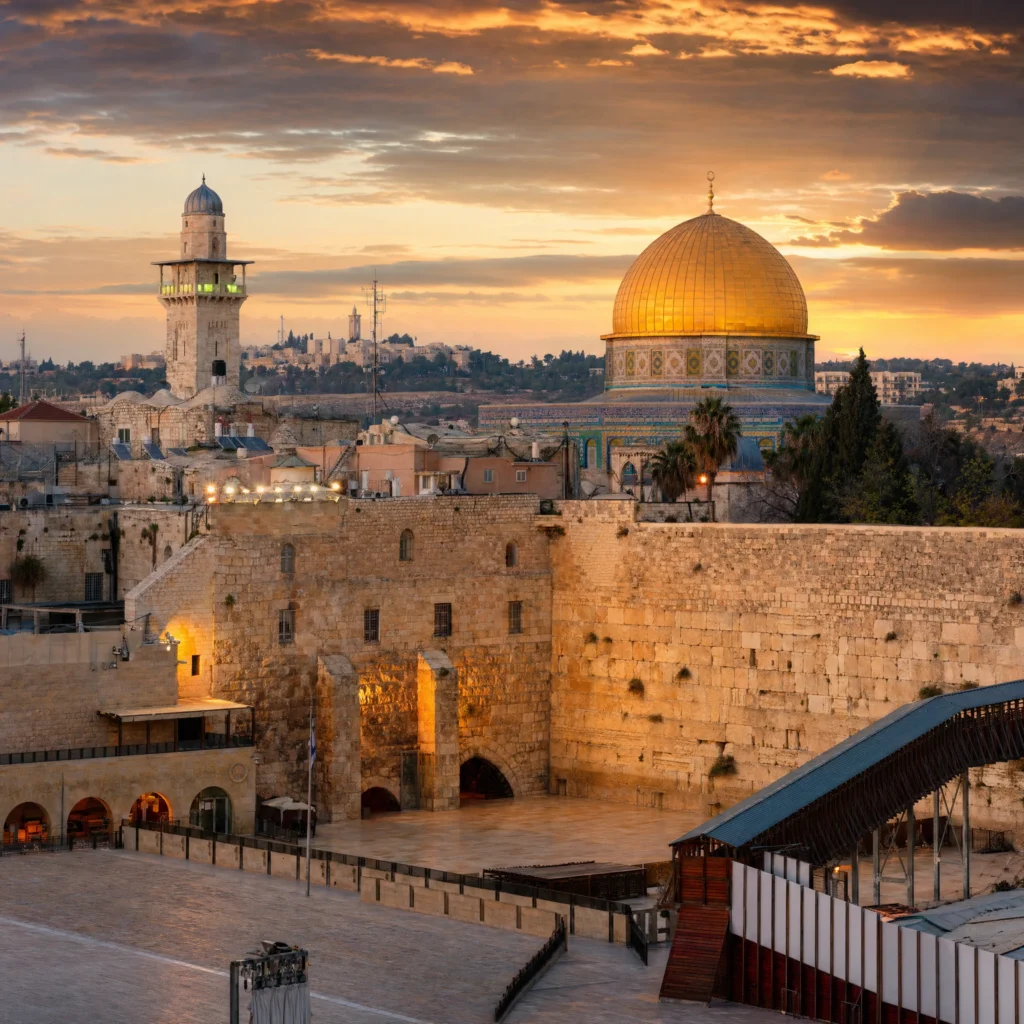
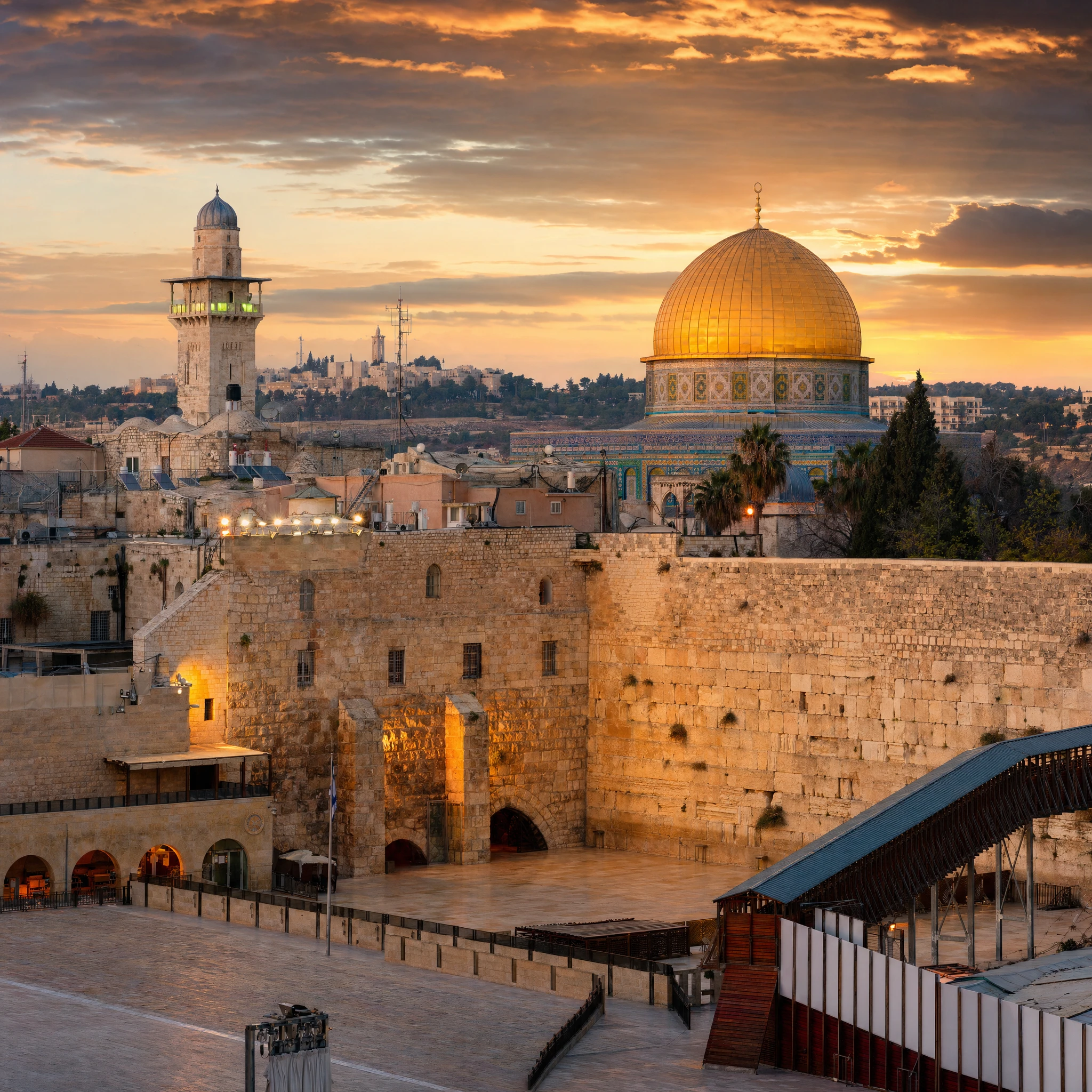
Israel’s capital and the most densely layered city in the country — four quarters inside a 16th-century Ottoman wall, three faiths that all locate their holiest or near-holiest sites within a few hundred metres of each other, and four millennia of archaeology underfoot. The Old City is a UNESCO World Heritage site and works best on foot. Plan 3-4 days minimum to do the Old City, West Jerusalem’s markets, and the Mount of Olives properly.
- Western Wall (Kotel) and the Temple Mount / Haram al-Sharif esplanade
- Church of the Holy Sepulchre and the Via Dolorosa in the Christian Quarter
- Mahane Yehuda Market (Shuk), Tower of David citadel, and the Israel Museum
- Signature dishes: hummus (Abu Shukri, Lina), mixed grill (me’orav Yerushalmi), sabich, halva
🏖️ Tel Aviv
Israel’s economic and cultural engine on the Mediterranean — a start-up capital with 14 kilometres of beach, a UNESCO-listed “White City” of 4,000 Bauhaus and International Style buildings, and a brunch-and-nightlife rhythm that keeps the city moving past midnight. Pair it with the ancient port of Jaffa (Yafo) on the south end for an old-city counterweight.
- White City Bauhaus architecture, Rothschild Boulevard, and Neve Tzedek
- Carmel Market (Shuk HaCarmel) and the Sarona compound
- Jaffa Old City, flea market, and the Mediterranean coastal promenade (Tayelet)
- Signature dishes: shakshuka, Tel Aviv-style hummus, sabich, boureka
⛰️ Haifa
Israel’s largest northern port city, built up the slopes of Mount Carmel. Haifa is known for the UNESCO-listed Baháʼí Gardens — 19 terraces cascading down the hillside — and for a long history of Jewish-Arab coexistence visible in neighbourhoods like Wadi Nisnas and the German Colony. Two days is enough for a first visit.
- Baháʼí Gardens and the Shrine of the Báb (UNESCO)
- German Colony and the Carmelite Stella Maris Monastery
- Wadi Nisnas and the Hadar neighbourhood for hummus and street art
- Signature dishes: hummus (Abu Shaker, Abu Marwan), falafel, knafeh
⛪ Nazareth
The Arab-majority city in the Lower Galilee where Christian tradition places Jesus’ childhood. Nazareth combines its religious draw — the Basilica of the Annunciation is the largest church in the Middle East — with a strong contemporary Arab-Israeli culinary scene that makes it one of the best eating cities in the country.
- Basilica of the Annunciation and the Church of Saint Joseph
- Mary’s Well, the Old City souq, and the Saraya Ottoman building
- Mount Precipice with panoramic views over the Jezreel Valley
- Signature dishes: hummus, maqluba, kibbeh, knafeh Nabulsi
🧂 Dead Sea
At approximately 430 metres below sea level the lowest exposed land on Earth, the Dead Sea is less a lake than a hyper-saline evaporation basin where swimmers float involuntarily and mineral mud is sold worldwide as skincare. Masada, the fortress on its western cliff, is a UNESCO World Heritage site. Base at Ein Bokek on the southern basin.
- Masada — Herod’s desert fortress, climbed via the Snake Path for sunrise
- Ein Gedi freshwater oasis and the David Waterfall nature reserve
- Ein Bokek hotel strip, mineral beaches, and the mud-rich shoreline
- Signature dishes: hummus and Bedouin-style mensaf in the nearby Negev
🐠 Eilat
Israel’s resort city on the Red Sea, sharing the Gulf of Aqaba with Jordan’s Aqaba, Egypt’s Taba, and Saudi Arabia’s NEOM coast on the opposite shore. Eilat offers year-round sun, duty-free VAT status, coral-reef snorkelling, and onward connections to Petra via the nearby border.
- Coral Beach Nature Reserve snorkelling over a protected Red Sea reef
- Underwater Observatory Marine Park
- Timna Park desert rock formations 30 km north
- Signature dishes: fresh grilled Red Sea fish, shakshuka, Yemenite malawach
Israeli Culture & Etiquette — What to Know Before You Go
The Essentials
- Dress modestly at religious sites. Covered shoulders and knees are required for the Western Wall plaza, the Temple Mount / Haram al-Sharif, the Church of the Holy Sepulchre, and most synagogues, churches, and mosques. Women may need a head covering at the Western Wall; men are given paper kippot at the entrance.
- Expect direct communication. Israeli conversation style is famously blunt — what might feel rude elsewhere is normal here. Questions are asked quickly, opinions are offered, bargaining at markets is expected. It is not hostility; it is the cultural register.
- Tipping is standard at 10-12% in sit-down restaurants (not included unless the bill says “service”). Round up taxis; small cash tips for hotel porters and tour guides are appreciated.
- Security checks are routine. Bag screening at bus stations, train stations, malls, and major attractions is standard. Be patient and keep bags open-accessible.
- Shabbat shapes the week. Most of Jerusalem’s businesses, restaurants, and public transit close from Friday sunset to Saturday sunset. Tel Aviv stays busier but still quieter on Friday night. Plan accordingly.
Religious-Site Etiquette
- Temple Mount / Haram al-Sharif: open to non-Muslim visitors only at restricted hours through the Mughrabi Gate. Non-Muslims may not enter the Dome of the Rock or Al-Aqsa Mosque. No religious items or prayer from non-Muslim visitors are permitted on the esplanade.
- Western Wall (Kotel): gender-separated prayer sections; written notes are traditionally tucked into wall crevices; stepping backward when leaving is a local custom, not a rule.
- Church of the Holy Sepulchre: shared by six Christian denominations under a 19th-century status-quo arrangement. Photography allowed, but silence is expected in the Aedicule.
- Mosques: remove shoes before entering; women cover head, shoulders, and knees; non-Muslims may be asked to wait outside during prayer times.
A Food Lover’s Guide to Israel
Israeli food is the product of a kitchen where Jewish immigrant traditions from more than 70 countries — Yemen, Iraq, Morocco, Poland, Ethiopia, Iran, Russia, Argentina — meet the Palestinian and Levantine cuisines of the region. The result is a Mediterranean diet that is extremely vegetable-forward, heavy on legumes and grains, generous with tahini and olive oil, and built around communal small-plates. A shuk visit in Tel Aviv (Carmel, Levinsky) or Jerusalem (Mahane Yehuda) is the single best orientation: tasting hummus, bourekas, jachnun, pickled vegetables, fresh olives, and halva in one hour teaches more than any menu. Most urban restaurants follow kosher rules — dairy and meat are not served together, and pork is uncommon — but Tel Aviv, Haifa, Nazareth, and Arab-majority towns have full-range non-kosher options. A hummus plate with pita and salads runs ₪35-55 (~$9-15); a falafel pita is ₪20-35 (~$5-9).
Must-Try Dishes
| Dish | Description |
|---|---|
| Hummus | Chickpea-tahini dip served warm with olive oil, paprika, and pita. Variants: masabacha (whole chickpeas), hummus ful (topped with fava beans), hummus basar (ground meat). Typical price: ₪35-55 a plate. |
| Shakshuka | Eggs poached in a skillet of spiced tomato-pepper sauce — the Israeli brunch default, of North African (Tunisian/Libyan) origin. |
| Falafel | Deep-fried chickpea balls in pita with tahini, amba mango pickle, chopped salads, and pickled vegetables. The cheapest full meal in the country at ₪20-35. |
| Sabich | Iraqi-Jewish pita stuffed with fried aubergine, boiled egg, amba, tahini, and Israeli salad — a Ramat Gan invention now nationally beloved. |
| Shawarma | Slow-roasted spiced meat (lamb, turkey, or chicken) carved from a vertical spit, served in pita or lafa with tahini and salads. |
| Malabi | A silky rose-water milk pudding topped with crushed pistachios and pomegranate or red-rose syrup — the ubiquitous summer street dessert. |
| Knafeh | Shredded-phyllo pastry soaked in rose or orange-blossom syrup over sweetened goat cheese; Arab-Israeli patisserie heritage, Nazareth and Jaffa are standouts. |
Supermarket & Shuk Culture
Unlike Japan or Korea, Israel’s convenience culture runs through two parallel channels: traditional shuks (covered markets) in every major city, and urban mini-supermarkets. The chains AM:PM and Tiv Ta’am are the main 24-hour, non-kosher, open-on-Shabbat networks in Tel Aviv; Shufersal Deal, Yesh, and Rami Levy run the standard kosher supermarket spectrum. Pita, fresh bourekas, and yogurt drinks (Tnuva, Tara) are the go-to grab-and-go items. Most supermarkets close from Friday afternoon to Saturday evening; Tel Aviv’s non-kosher chains and independent cafes remain the reliable weekend options.
- Chains: AM:PM (Tel Aviv 24h), Tiv Ta’am (non-kosher), Shufersal, Rami Levy, Yesh
- Signature items: fresh pita and laffa, bourekas (cheese/potato/spinach), Milky chocolate pudding cups, Tara / Tnuva yogurt drinks, halva slabs, jachnun and malawach from Yemenite bakeries
Off the Beaten Path — Israel Beyond the Guidebook
Akko (Acre)
On the northern Mediterranean coast, Akko’s Old City is a UNESCO World Heritage site built over a Crusader-era fortress that itself rests on Phoenician foundations. Walk the subterranean Templar Tunnel, eat at Uri Buri for one of Israel’s best seafood tasting menus, and ride the hourly commuter train from Tel Aviv or Haifa. Akko is one of the longest continuously inhabited harbour cities in the Mediterranean and retains a majority-Arab population inside the walls.
Tzfat (Safed)
One of the four holy cities in Judaism and the 16th-century birthplace of Kabbalah mysticism. Tzfat sits at 900 m in the Upper Galilee hills, its artists’ quarter painted the signature cobalt blue thought to repel evil. The Abuhav and Ari synagogues are modest stone buildings that have been in continuous use for almost 500 years. Summer here is cool, winter occasionally snowy.
Makhtesh Ramon
A 40-kilometre-long geological erosion crater in the Negev Desert — not a meteor impact, but a rare form of basin where a softer rock layer was exposed and eroded away. The town of Mitzpe Ramon sits on the northern cliff rim at roughly 850 m elevation, with star-viewing programs on dark-sky nights and ibex grazing near sunrise. Rent a 4×4 for the Makhtesh floor.
Beit She’an
In the Jordan Valley east of Afula, Beit She’an protects one of the most extensively excavated Roman-Byzantine cities in the eastern Mediterranean. The central colonnaded cardo, a 7,000-seat theatre, and the Byzantine mosaics rival the Decapolis sites across the border in Jordan, and a 749 CE earthquake froze the city in a single archaeological layer. Catch it as a half-day stop on a Galilee loop.
Caesarea
On the Mediterranean coast between Tel Aviv and Haifa, Caesarea was Herod the Great’s port city, later the capital of Roman Judea and a Crusader stronghold. The site combines an active archaeological park with a swimmable beach inside the harbour walls. The Roman amphitheatre still hosts summer concerts, and the mosaic floors of the palace of the procurators remain in situ. Easily reached by a 40-minute drive from Tel Aviv.
Practical Information
The reference table below covers what a first-time visitor needs at a glance. Values are current as of April 2026; confirm exchange rates, entry rules, and State Department advisory level before departure because the Israel-Gaza security picture has shifted quickly since October 2023.
| Currency | New Israeli Shekel (₪ / ILS); 1 USD ≈ ₪3.72 (19 Apr 2026) |
| Cash needs | Cards accepted almost everywhere; carry small bills for shuks, Old City Jerusalem alleys, and local taxis. Tipping is largely cash. |
| ATMs | Widely available at banks, post offices, and malls. Bank Hapoalim and Leumi accept foreign cards reliably; always choose local-currency dispensing. |
| Tipping | 10-12% in sit-down restaurants (not included unless “service”); round-up for taxis; small tips for porters and tour guides. |
| Language | Hebrew and Arabic are official; English widely spoken in cities, hotels, and the tech sector. Road signs are trilingual. |
| Safety | US State Department advisory: Level 3 ‘Reconsider Travel’ for Israel (April 2026), with Level 4 ‘Do Not Travel’ zones for Gaza and parts of the northern border. Situation can shift quickly. |
| Connectivity | Strong 4G / 5G in all urban areas and along motorways; tourist eSIMs (Airalo, Holafly) and physical SIMs from Pelephone, Cellcom, and Partner at TLV arrivals. |
| Power | Type H (and some Type C) plugs, 230V, 50Hz |
| Tap water | Safe to drink everywhere, including Jerusalem, Tel Aviv, and the Negev. |
| Healthcare | Excellent; Hadassah, Ichilov (Tel Aviv Sourasky), and Rambam have English-speaking staff. Travel insurance essential — tourist care is fully out-of-pocket. |
| Emergencies | 100 police, 101 Magen David Adom ambulance, 102 fire and rescue. |
Budget Breakdown — What Israel Actually Costs
💚 Budget Traveller
Expect $60-90 per day with hostel-dorm accommodation (Abraham Hostels in Jerusalem, Tel Aviv, Nazareth, Eilat at ₪120-180 / $32-50), falafel or sabich pita lunches at ₪25, supermarket breakfasts, and Rav-Kav bus + rail travel. Free or low-cost attractions go a long way here: the Old City of Jerusalem outside of paid sites, the Tel Aviv beachfront and Carmel Market, Haifa’s Baháʼí Gardens free guided tour, Akko’s walls, and desert national-park hiking at ₪28-39 entry.
💙 Mid-Range
Plan on $150-250 per day for a 3-4-star hotel or well-reviewed boutique guesthouse (₪600-1,100 / $160-300), two sit-down meals including a hummusiya lunch and a casual dinner, a mix of rail + occasional Gett taxis, and a couple of paid attractions per day (City of David, Masada, Israel Museum). This is also the tier where a 5-7-day rental car pays off if you are doing Galilee and the Negev.
💜 Luxury
$400+ per day opens 5-star hotels (King David Jerusalem, Setai Tel Aviv, Ritz-Carlton Herzliya from ₪2,000 / $540+), chef-driven restaurants (OCD, Taizu, HaSalon), private driver-guide days (₪1,300-2,000 / $350-540), and premium desert experiences like Bedouin-style glamping in the Negev or a private Masada sunrise with breakfast at the top.
| Tier | Daily (USD) | Accommodation | Food | Transport |
|---|---|---|---|---|
| Budget | $60-90 | Abraham Hostels dorm ₪120-180 | Falafel/sabich pita, shuk food ($5-12/meal) | Rav-Kav bus + train ($5-12/day) |
| Mid-Range | $150-250 | 3-4-star hotel / boutique ₪600-1,100 | Hummusiya + casual restaurants ($18-40/meal) | Train + Gett + car rental ($30-60/day) |
| Luxury | $400+ | 5-star (King David, Setai, Ritz) ₪2,000+ | Chef restaurants ($100+/person) | Private driver-guide ($350+/day) |
Planning Your First Trip to Israel
A first trip to Israel works best at 10-14 days. That window covers Jerusalem, Tel Aviv, the Dead Sea and Masada, the Galilee, and optionally Eilat or the Negev without feeling rushed.
- Check the current security advisory. The US State Department currently lists Israel at Level 3 ‘Reconsider Travel’ (April 2026), with Level 4 zones for Gaza and parts of the northern border. Read the full advisory and check flight-carrier status before booking.
- Apply for ETA-IL if needed. Most visa-exempt nationals must apply online (₪25) before boarding; approval is usually within 72 hours.
- Book TLV flights and intercity transport. Israel Railways sells on the day, but Abraham Hostels, King David / Setai, and Dead Sea hotels fill far ahead around Passover, Sukkot, and Christmas; book 2-3 months out for those windows.
- Set up connectivity and Rav-Kav. Buy an eSIM before landing or a Pelephone SIM at arrivals; pick up a reloadable Rav-Kav card at Ben Gurion Railway Station on arrival.
- Draft a route around Shabbat. Plan travel between cities for Sunday-Thursday; use Friday afternoon and Saturday for on-foot days in Jerusalem’s Old City or Tel Aviv’s cafe-and-beach zones.
Classic 12-Day Itinerary: Tel Aviv 3 days → Jerusalem 4 days (including Bethlehem day-trip if accessible) → Dead Sea + Masada 2 days → Galilee / Nazareth / Tzfat 2 days → return to Tel Aviv 1 day buffer.
Cities & Regions to Explore
Frequently Asked Questions
Is Israel expensive to visit?
Yes, by regional standards. Israel sits closer to Western Europe than to the rest of the Middle East for prices: Tel Aviv hotel rooms, chef-driven restaurants, and imported groceries are at Paris or London levels, though street food, national-park entries, and public transit remain reasonable. Budget $60-90 a day at the bottom end and $150-250 mid-range.
Do I need to speak Hebrew?
No. English is widely spoken in cities, hotels, the tech sector, and all major tourist sites. Road signs are trilingual (Hebrew, Arabic, English). Learning to read the Hebrew alphabet takes an afternoon and pays off in markets and bus displays; Arabic is a bonus in Nazareth, Akko, and Old City Jerusalem. Google Translate’s camera mode handles most menu situations.
Is the Rav-Kav worth it?
If you are staying mostly in one metro area, yes. A reloadable Rav-Kav smart card is the universal credential for buses, light rail, and Israel Railways, and 7-day metro-area multi-trip products run around ₪64 (~$17). For a multi-city trip across Tel Aviv, Jerusalem, Haifa, and Be’er Sheva, pay-as-you-go on the same Rav-Kav is the simplest approach — there is no JR-Pass-style unlimited product.
Is Israel safe for travellers right now?
The US State Department currently lists Israel at Level 3 ‘Reconsider Travel,’ with Level 4 ‘Do Not Travel’ zones for Gaza and parts of the northern border (April 2026). The situation can shift quickly. Most tourists who do travel report that Jerusalem, Tel Aviv, Haifa, and the Dead Sea feel calm and normal day-to-day, but check the advisory before booking and again before flying.
When is the best time to visit?
Spring (late March to mid-May) and autumn (mid-September to late October) are the consensus windows: warm but not hot, wildflowers or olive harvest depending on the season, and Mediterranean swimming still possible. Avoid July-August heat if you plan to do Masada, Ein Gedi, or Eilat day-hikes.
Can I get by as a vegetarian or vegan?
Israel is arguably the easiest country on Earth to travel as a vegetarian or vegan. Hummus, falafel, sabich, shakshuka, tahini-based salads, pickled vegetables, and freekeh or couscous dishes are default menu items everywhere. Tel Aviv is widely cited as having the highest per-capita vegan restaurant density in the world. HappyCow maps more than 500 vegan-friendly venues nationwide.
What about entry stamps and onward travel to Arab countries?
Israel stopped stamping passports in 2013 — border officers issue a loose paper B/2 entry card instead, which you keep for your stay. This makes onward travel to countries that previously blocked Israel-stamped passports (Lebanon, Iran, Saudi Arabia) easier. Jordan and Egypt have land borders and full diplomatic relations; the UAE, Bahrain, and Morocco have direct flights.
Ready to Explore Israel?
Start with our city guides to Jerusalem, Tel Aviv, and Haifa, or jump to the full Israel trip-cost breakdown.
Explore More
Cities we cover in Israel
Cities to explore in Israel
Deep-dive guides to specific cities, neighbourhoods, and food scenes — written with the same magazine voice.
More country guides you might like
Plan your trip to Israel
The booking tools we use ourselves. FFU may earn a commission at no extra cost to you.
Plan & book your trip to Israel
Booking through these searches supports our guides at no extra cost to you.