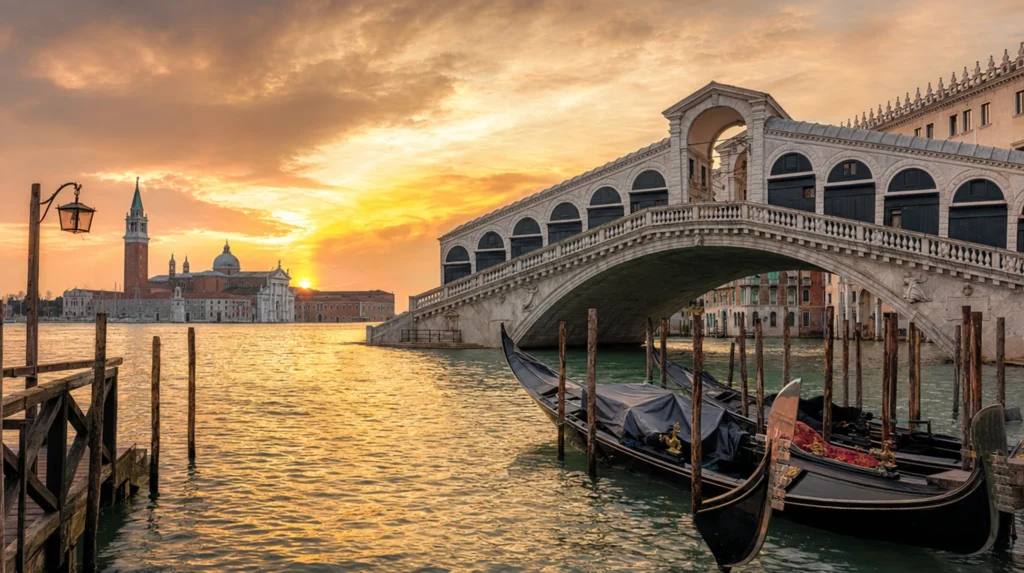
Languages of Italy
All languages of Southern Europe →fluent beta classical · classes by phone with Maya at ranas.ai/maya
Italy Travel Guide — Roman Ruins, Renaissance Masters & the Slow Lunch
Italy Travel Guide
📋 In This Guide
- Overview — Why Italy Belongs on Every Bucket List
- 🎭 Carnevale di Venezia 2026
- Best Time to Visit Italy (Season by Season)
- Getting There — Flights & Arrival
- Getting Around — Frecciarossa, Italo & Regional Trains
- Top Cities & Regions
- Italian Culture & Etiquette
- A Food Lover’s Guide to Italy
- Off the Beaten Path
- Practical Information
- Budget Breakdown
- Planning Your First Trip to Italy
- Frequently Asked Questions
Overview — Why Italy Belongs on Every Bucket List
Italy is an outdoor museum with a coffee bar on every corner. In 301,340 square kilometres — a boot-shaped peninsula the size of the US state of Arizona — it holds 60 UNESCO World Heritage Sites (the most of any country on earth, tied with China), roughly 59 million people spread across 20 fiercely distinct regions, and enough Roman, medieval, Renaissance and Baroque material to keep a first-time visitor humbled for a decade. This is the country that invented the Latin alphabet, the Republic, opera, the piano, the espresso machine, the Vespa and pizza Margherita, then mostly stopped trying to brag about any of it.
Geography does most of the sorting. The 7,600 km of coastline wrap two seas, the Tyrrhenian and the Adriatic, and the Apennine mountain spine runs the full length of the peninsula down to Calabria; roughly 35% of the country is mountainous. The Alpine rim in the north (Monte Bianco, the Dolomites, the Italian Lakes) is a different climate, cuisine and dialect from the sun-baked heel of Puglia or the volcanic island of Sicily. Between them, Italy was stitched together as a single country only in 1861 — younger than most US states — and the regional loyalties (campanilismo) still matter more than the flag.
Culturally, Italy runs on warmth, food and an unapologetic slowness. Dinner is eaten at 8:30 pm, sometimes 9, over three hours; the 6 pm passeggiata fills every piazza; shops close for a 1 to 4 pm riposo in the south; the espresso at the bar banco is €1.10 standing and €4 seated because you pay for the table. Italians are expressive, generous and physical with strangers — handshakes become cheek kisses quickly — and fiercely loyal to their region’s cooking: never serve a Bolognese spaghetti al ragù (the correct pasta is tagliatelle), never put pineapple on a Neapolitan pizza, and do not, under any circumstances, order a cappuccino after 11 am.
Practically, Italy is one of Europe’s great-value travel destinations. English is widely spoken in cities, the Frecciarossa high-speed rail network is excellent, the food is worth every plane ticket, and prices sit below France and Germany across the board. An espresso is €1.10, a Margherita at a Neapolitan pizzeria is €6–€9, a Frecciarossa Rome-to-Florence ticket booked in advance runs €19.90, and a trattoria primo with a quartino of house red is under €18. Italy is sensory overload done with uncommon grace — and most travellers come home already planning their return.
🎭 Carnevale di Venezia 2026 — 11 Days of Masks, Balls and the Flight of the Angel
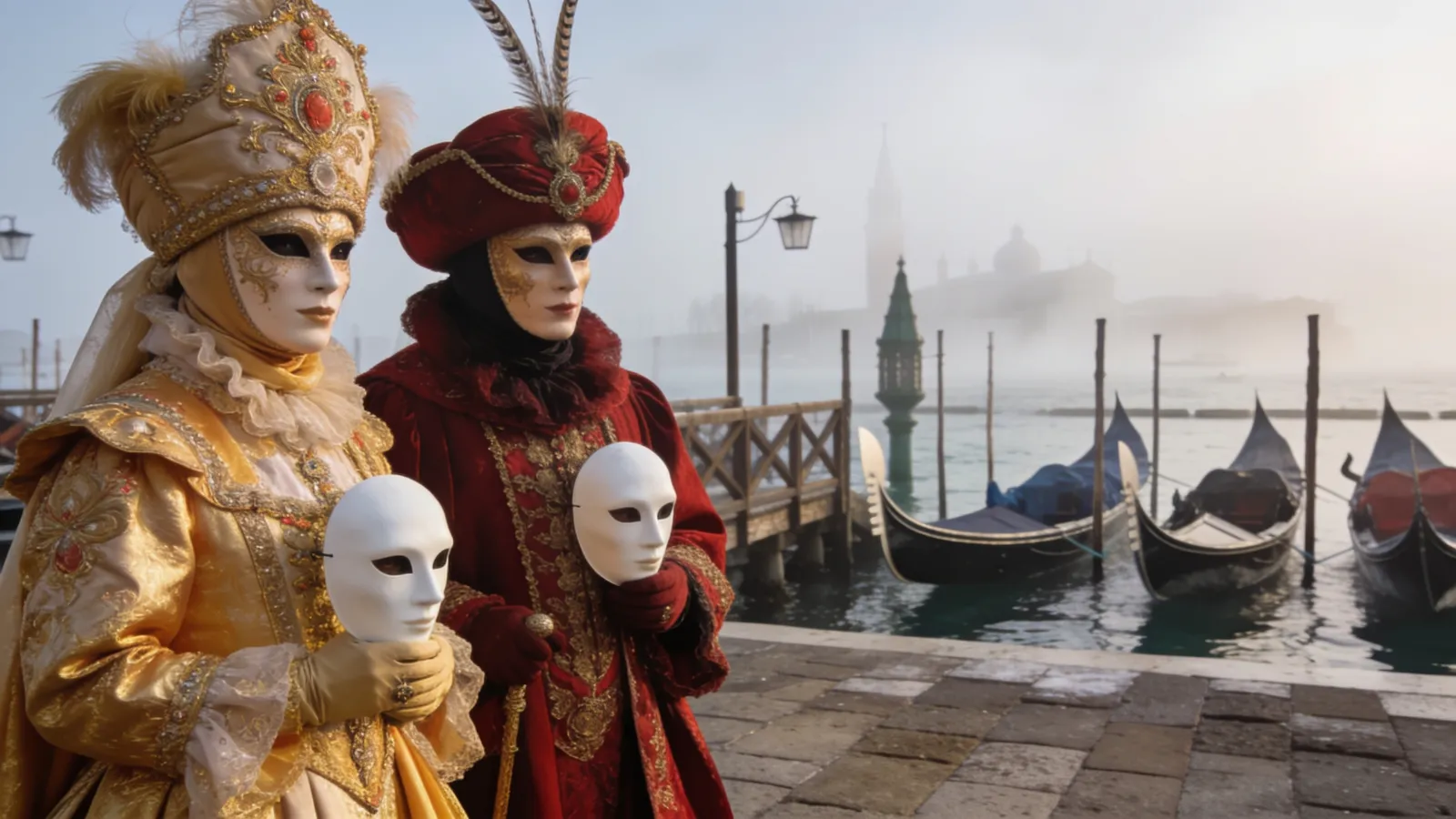
Carnevale di Venezia is not a street festival, it is a city in costume. For eleven consecutive days before Ash Wednesday, Venice swaps its cruise-ship crowds for masked ballgoers in silk, brocade and the white volto full-face mask, turning Piazza San Marco into an open-air Baroque stage. The tradition dates to 1162 as a victory celebration, was codified into a state-sanctioned festival in 1296, outlawed by Napoleon in 1797, and revived in 1979 by a group of Venetians who wanted their winter back. In 2026 Carnevale runs Saturday, February 7 through Shrove Tuesday, February 17 — with the opening water parade on the Rio di Cannaregio on the first Saturday and the Volo dell’Angelo (Flight of the Angel) on the following Sunday at noon, when a young Venetian woman is lowered on a wire from the campanile above Piazza San Marco to thunderous applause.
- Opening water parade: Saturday, February 7, 2026, Rio di Cannaregio
- Festa delle Marie parade: 12 young Venetian women in medieval robes cross the city from San Pietro di Castello to Piazza San Marco
- Volo dell’Angelo (Flight of the Angel): Sunday following the opening, 12:00 noon, Piazza San Marco
- Shrove Tuesday (Martedì Grasso) finale: February 17, 2026 — costume contest and midnight fireworks over the lagoon
- Masked balls: private palazzi (Pisani Moretta, Ca’ Vendramin) and Ca’ Sagredo host €350–€1,500 costumed dinner balls; the Dogaressa Ball is the best known
Best Time to Visit Italy (Season by Season)
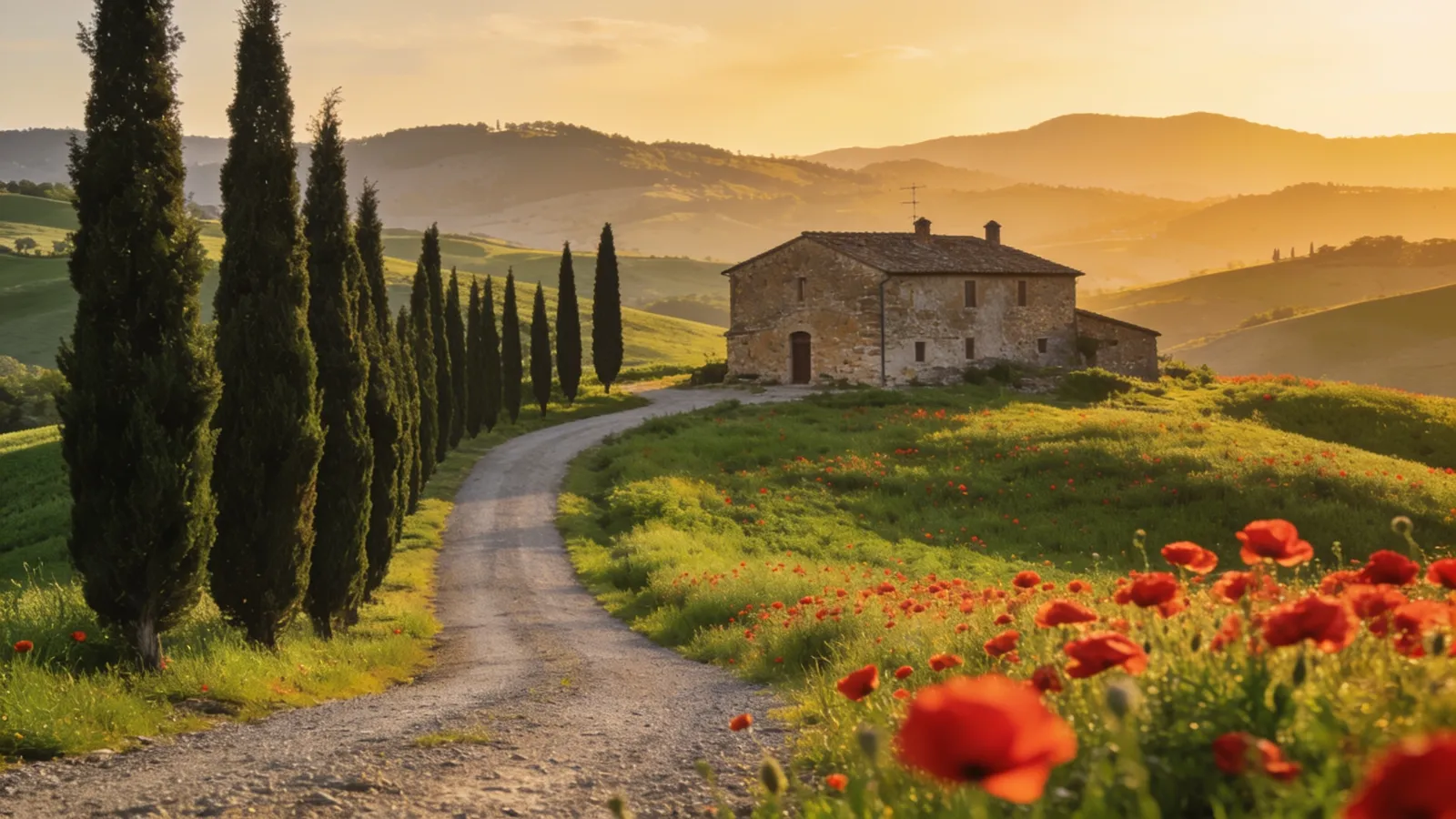
For the full season-by-season picture, see our guide to the best time to visit Italy — including the two months to avoid.
Spring (Mar–May)
Shoulder-season sweet spot. Temperatures climb from 12°C in March to 23°C by late May in Rome and Florence, with the Amalfi Coast warm enough for lunch outside by mid-April. Almond and wisteria blossom in Tuscany, Easter processions in Sicily (Trapani’s Misteri, Enna’s hooded Confraternity) fill Holy Week, and Rome’s Easter Sunday Papal blessing on April 5, 2026 draws 100,000 into St Peter’s Square. Downside: April rain is frequent in the north, and the Dolomites ski season winds down by mid-April with many huts shutting until June.
Summer (Jun–Aug)
Peak season, peak heat, peak crowds. Rome and Florence regularly crest 35°C in July and August, the Amalfi Coast, Capri and Puglia fill with European families, and August 15 (Ferragosto) empties city centres as Italians flee to the coast — many small trattorias close for two weeks. Upside: the Italian Lakes (Como, Garda, Maggiore), the Dolomites and the Alpine valleys are 8–12°C cooler, beaches work at their peak, and the Palio di Siena (July 2 and August 16) delivers Italy’s most visceral 90-second race. Expect pre-booked museum entries everywhere.
Autumn (Sep–Nov)
The traveller’s favourite. September still delivers 27°C and empty Amalfi beaches; October is harvest (vendemmia) season across Tuscany, Piemonte and the Veneto; November brings Alba’s white-truffle fair (early October through late November) and Barolo wine on release. Temperatures taper from 25°C to 10°C over three months. Rain picks up in late October, Venice’s acqua alta flooding is most likely November through January, and the Alpine shoulder quietens before December ski season. Museums and UNESCO sites are half as crowded as August.
Winter (Dec–Feb)
Christmas-markets, Dolomites ski country, and the best museum rates of the year. Rome and Naples stay mild at 10–15°C; Milan and the Po Valley turn grey and foggy; the Dolomites and the Italian Alps open full ski operations mid-December through mid-April. Venice’s Carnevale (February 7–17, 2026) peaks the calendar, and Neapolitan presepi in San Gregorio Armeno run from late November. Many coastal resorts on the Amalfi Coast, Cinque Terre and Capri close October through March — check before booking.
Shoulder-season tip: Late September to mid-October (harvest, warm sea, thinned crowds, full museum hours) and late April to early June (blossom, cool cities, pre-peak pricing, open ski-touring in the Dolomites) are the two windows most first-timers miss — and locals quietly travel then themselves.
Getting There — Flights & Arrival
Italy’s two intercontinental gateways are Rome (FCO) and Milan (MXP); Venice and Naples handle the rest. Pick by region — Rome for the centre and south, Milan for the north and the Lakes, Venice for the Veneto, Naples for Amalfi.
- Rome Fiumicino — Leonardo da Vinci (FCO) — Italy’s main gateway, 49.2 million passengers in 2024; Leonardo Express to Roma Termini in 32 min for €14.
- Milan Malpensa (MXP) — Northern hub; Malpensa Express to Centrale in 52 min for €13.
- Venice Marco Polo (VCE) — Alilaguna water-bus to San Marco in 1h 15min for €15.
- Naples Capodichino (NAP) — Alibus to Napoli Centrale in 20 min for €5.
- Rome Ciampino (CIA) — Ryanair’s Rome airport; Terravision bus to Termini for €6.
Flight times: New York–Rome 8h 50min nonstop, London–Rome 2h 45min, Tokyo–Rome 13h 15min on ITA, Dubai–Rome 6h 25min.
Flag carrier: ITA Airways (successor to Alitalia since Oct 2021, Lufthansa Group). Other domestic operators: Ryanair, easyJet, Neos.
Visa / entry: Schengen — US, UK, Canadian, Australian, Japanese and 60+ other passports visa-free for up to 90 days in any 180-day window. From late 2026, visa-exempt travellers will need a €7 ETIAS applied online.
Getting Around — Frecciarossa, Italo & Regional Trains
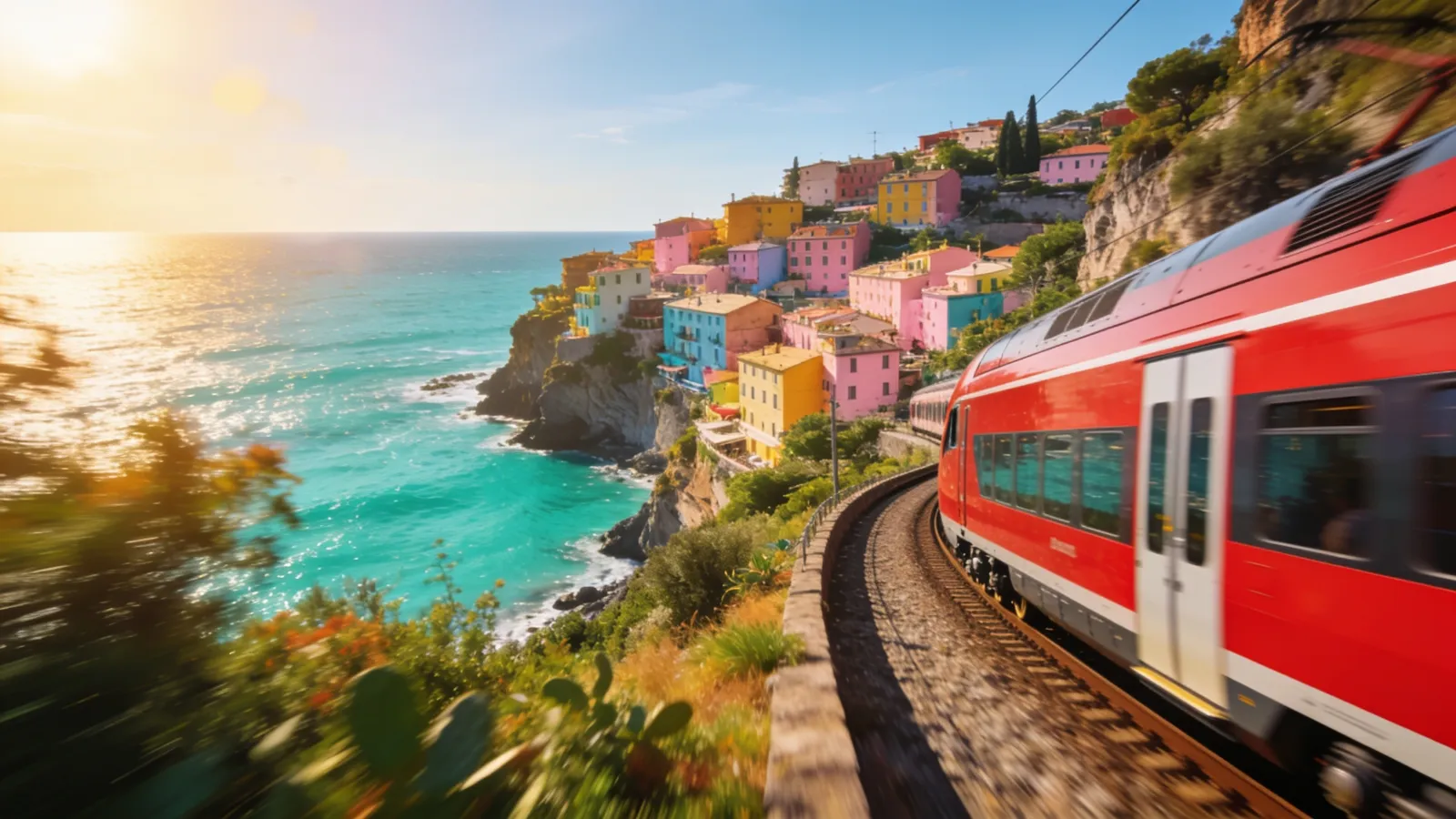
Italy runs on rail. The national high-speed backbone — operated in parallel by state-owned Trenitalia (Frecciarossa, Frecciargento, Frecciabianca) and private Italo (launched 2012) — connects Naples, Rome, Florence, Bologna, Milan and Venice at up to 300 km/h, with trains every 20–30 minutes on the main corridors. For anywhere off the fast line (Amalfi, Cinque Terre, Puglia, Sicily, the Dolomites), regional trains (Regionale) and intercity buses take over, and a rental car earns its keep only in Tuscany, Puglia and the Alpine valleys — never in a historic centre.
- Frecciarossa & Italo: top speed 300 km/h on Naples–Rome–Florence–Milan–Venice.
- Rome → Florence: 1 hour 30 minutes by Frecciarossa (every 30 minutes).
- Rome → Naples: 1 hour 10 minutes by Frecciarossa.
- Florence → Venice: 2 hours 5 minutes direct.
- Milan → Venice: 2 hours 13 minutes by Frecciarossa.
Book advance fares, not passes: Frecciarossa Super Economy fares start at €19.90 Rome–Florence if booked 6+ weeks out on trenitalia.com or italotreno.it. Italo is often €5–15 cheaper on the same route. A Eurail pass rarely beats point-to-point pricing unless you are covering multiple countries over 3+ weeks.
City transit: Rome Metro day pass €7, Milan ATM day pass €7.60, Naples Unico TIC €1.70 per 90 minutes, Venice ACTV vaporetto day pass €25. All accept contactless credit-card tap on metros.
Apps: Trenitalia and Italo Treno official apps for tickets, Moovit for local transit directions.
Top Cities & Regions
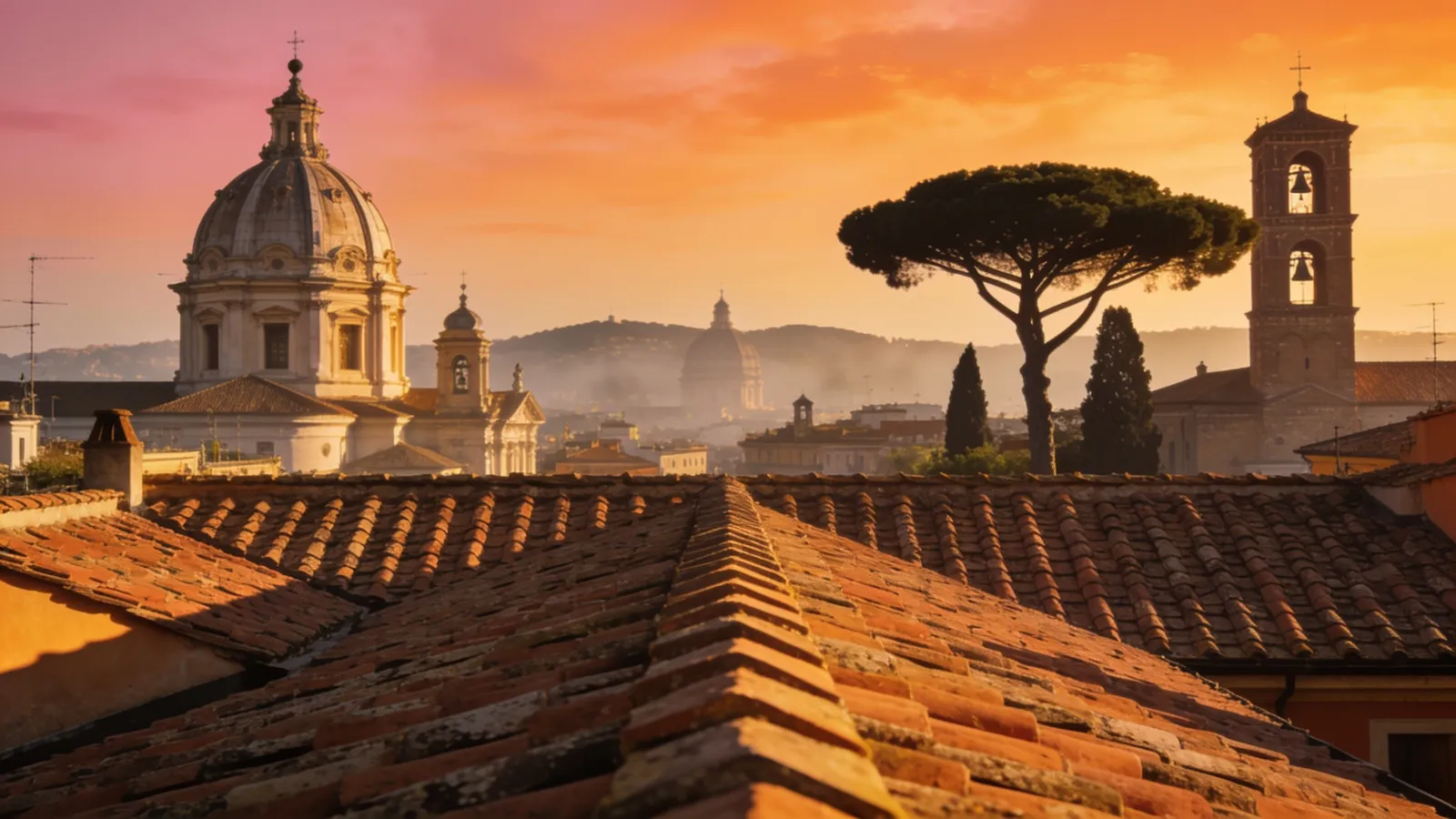
Choosing a base? Our guide to where to stay in Italy compares Rome, Florence, Venice and the Amalfi Coast neighbourhood by neighbourhood.
📍 Map of Italy: Every Place in This Guide
🏛️ Rome
The Eternal City — continuous habitation since the traditional founding on the Palatine in 753 BC, through empire, medieval papacy, Renaissance Vatican and Baroque Bernini. Roughly 2.75 million residents live inside 1,285 km² of layered stone; the UNESCO-inscribed historic centre is what draws you.
- Colosseum, Roman Forum & Palatine Hill (€18 combined)
- Vatican City: St Peter’s (free) and Vatican Museums with the Sistine Chapel (€20 advance)
- Trevi Fountain, Pantheon (€5 ticket), Piazza Navona, Spanish Steps, Villa Borghese
Signature eats: Carbonara at Roscioli, cacio e pepe at Da Enzo, supplì at Supplizio, carciofi alla giudia in the Jewish Ghetto.
🚤 Venice
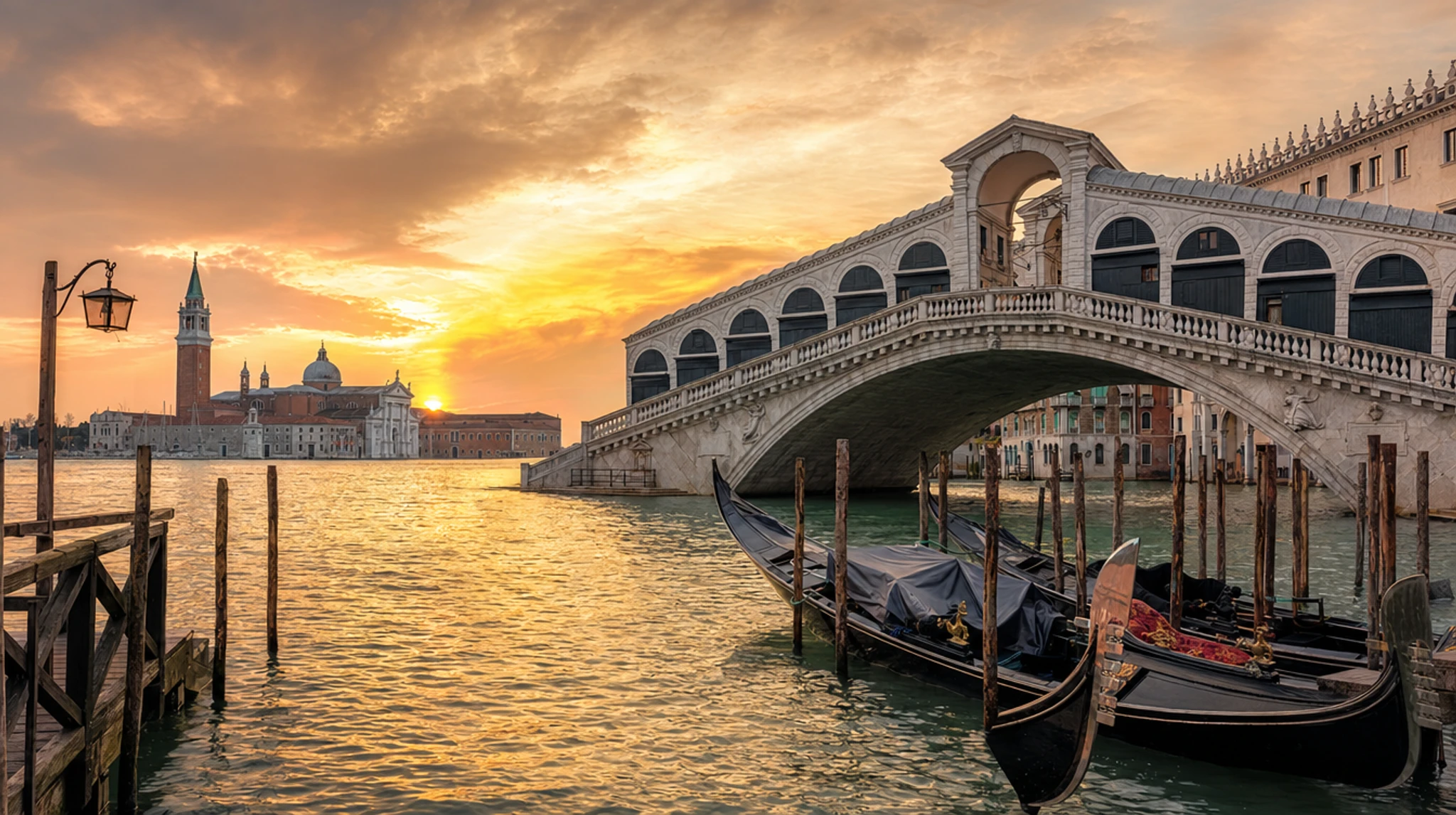
118 small islands, 400+ bridges, zero cars — built on oak pilings by refugees fleeing mainland raids. Roughly 50,000 permanent residents now host 25 million annual visitors. UNESCO-listed since 1987; walk it at 7 am and after 9 pm when the day-trippers have gone.
- Piazza San Marco, Basilica di San Marco, Doge’s Palace and the Bridge of Sighs
- Rialto Bridge and fish market, Peggy Guggenheim Collection
- Murano (glass), Burano (lace and pastel houses) and Torcello
Signature eats: Cicchetti with an ombra of prosecco, sarde in saor, risi e bisi, bigoli in salsa, squid-ink pasta.
🎨 Florence
Cradle of the Renaissance and the Medici city — Brunelleschi’s 1436 dome, Botticelli’s Birth of Venus and Michelangelo’s David all within a 15-minute walk. About 360,000 residents, arguably the highest density of great art per square kilometre in Europe.
- Duomo complex — Brunelleschi’s Dome, Giotto’s Campanile, Baptistery (€30)
- Uffizi Gallery (€25) and Galleria dell’Accademia (€16, Michelangelo’s David)
- Ponte Vecchio, Palazzo Pitti & Boboli Gardens, Piazzale Michelangelo at sunset
Signature eats: Bistecca alla fiorentina at Trattoria Mario, ribollita, pappa al pomodoro, lampredotto panini at a tripe cart.
👜 Milan
Italy’s financial and fashion capital — Leonardo’s Last Supper, the Duomo with 3,400 statues and 135 marble spires, La Scala, Fashion Week, and the Quadrilatero della Moda. Milan is the practical, industrial Italy: punctual, affluent, aperitivo after work.
- Duomo di Milano with rooftop terraces (€22)
- Last Supper at Santa Maria delle Grazie — book 3+ months ahead
- Galleria Vittorio Emanuele II, Navigli canals, Brera, San Siro stadium
Signature eats: Risotto alla milanese, osso buco, cotoletta, panettone at Christmas, Aperol spritz on the Navigli.
🍕 Naples & Pompeii
The chaotic, vital capital of the south — birthplace of pizza Margherita (1889), gateway to the Amalfi Coast and Capri, and a 40-minute Circumvesuviana from Pompeii, buried by Vesuvius in 79 AD.
- Pompeii & Herculaneum archaeological parks (€22 combined, reserve online)
- Museo Archeologico Nazionale (originals from Pompeii)
- Spaccanapoli, Cappella Sansevero (Veiled Christ), Castel dell’Ovo
Signature eats: Pizza Margherita at Da Michele or Sorbillo, sfogliatelle, babà al rum, ragù napoletano, mozzarella di bufala DOP.
🌊 Cinque Terre & Amalfi Coast
Italy’s two most photographed coastlines — five Ligurian cliff-villages linked by the Sentiero Azzurro (UNESCO Cinque Terre) and a 50-km switchback road through pastel Amalfi towns (also UNESCO). Capri, Positano and Ravello form the southern triangle.
- Cinque Terre: Monterosso, Vernazza, Corniglia, Manarola, Riomaggiore + Cinque Terre Card for trains and trails
- Amalfi Coast: Positano, Amalfi duomo, Ravello’s Villa Cimbrone and Villa Rufolo
Italian Culture & Etiquette — What to Know Before You Go
Italian culture runs on hospitality, regional pride and the unhurried enjoyment of a good table. Italians are warm, expressive and physical with friends — handshakes become two-cheek kisses quickly — while reserved with strangers until introduced. Dinner starts at 8 or 8:30 pm, lasts two to three hours; the bill arrives only when you request it.
The Essentials
- Greet every shop, café and hotel with “buongiorno” or “buonasera”. Silence on entry reads as rude.
- Churches enforce a dress code — shoulders and knees covered. Vatican, Duomo Firenze and San Marco turn tourists away at the door.
- Espresso is €1.10 standing and €3–5 seated — the table is an up-charge, not a service charge. Stand at the counter.
- Punctuality is flexible socially (10–20 min late is normal at dinner) but tight for trains and museum slots.
- Cash is still expected at small trattorias, agriturismi and markets — keep €50–100 in small notes in the south.
Aperitivo & Table Etiquette
- Aperitivo runs 6–8 pm: an Aperol spritz or Negroni plus olives, crisps or bruschette free with an €8–12 drink. Milan and Turin extend it into apericena.
- Order pasta as primo, meat or fish as secondo with a contorno — in that order. One-plate combos are a tourist tell.
- Never break spaghetti to fit the pot, never cut pasta with a knife, never serve parmesan on seafood pasta.
- Tip €1–2 only for exceptional service. The coperto is already on the bill.
Say it like a local. Your first word in Italy: buongiorno (bwon-JOR-no), until mid-afternoon, then buonasera. Practise it out loud with Maya on a free phone class, no app needed: book your free class. All six Italy phrases: watch the series. Maya is an AI language coach; this video is AI-generated.
A Food Lover’s Guide to Italy
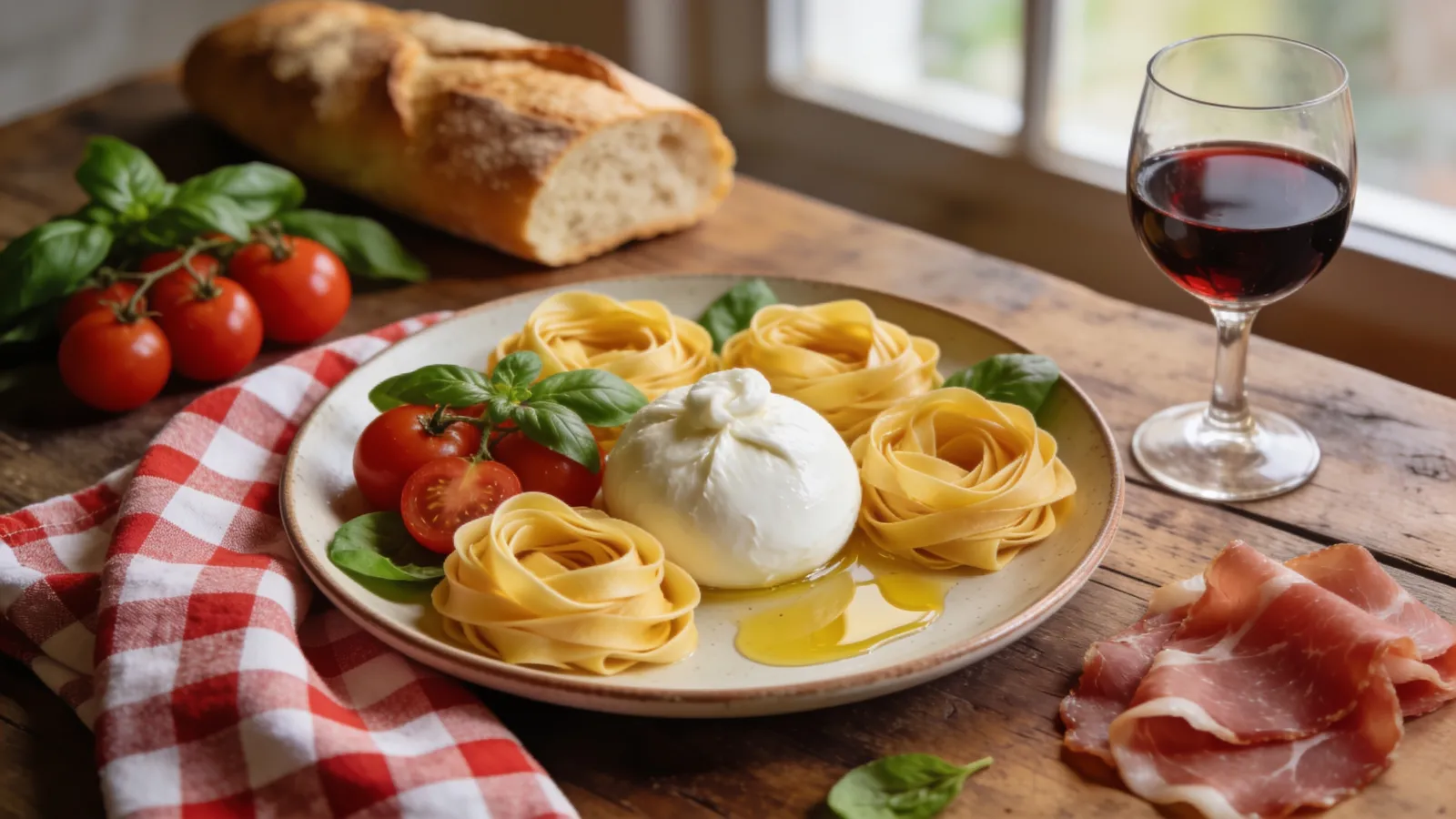
Italian food is not one cuisine, it is twenty. Each of Italy’s 20 administrative regions defends its own pasta shapes, sauces, cheeses, cured meats and wines: Emilia-Romagna produces parmigiano-reggiano and tagliatelle al ragù; Campania produces pizza and mozzarella di bufala; Piemonte produces Barolo and white truffles; Sicily’s kitchen absorbs Arab, Norman and Spanish layers. Italy catalogues 300+ pasta shapes nationally. The one rule that binds all regions: eat what is local, and in season.
Must-Try Dishes
| Dish | Description |
|---|---|
| Pasta (regional) | Italy’s 300+ pasta shapes each match a specific sauce: bucatini all’amatriciana and cacio e pepe in Rome, tagliatelle al ragù alla bolognese in Emilia-Romagna (never spaghetti), trofie al pesto in Liguria, orecchiette con cime di rapa in Puglia, pici in Toscana. Fresh pasta is made daily in small laboratori. |
| Pizza | Neapolitan pizza was inscribed on UNESCO’s Intangible Cultural Heritage list in 2017: San Marzano tomatoes, mozzarella di bufala or fior di latte, basil, a sourdough crust, under two minutes in a wood-fired oven. Margherita was invented in Naples in 1889 for Queen Margherita; the red/white/green mirrors the Italian flag. Rome eats a thinner Romana style and pizza al taglio cut by weight. |
| Risotto | Northern Italian rice dish — short-grain Arborio, Carnaroli or Vialone Nano stirred with hot broth. Signatures: risotto alla milanese (saffron), risotto al nero di seppia (Venetian squid ink), risi e bisi (pea) in spring, risotto al tartufo bianco in Alba during truffle season. Mantecatura — the final butter-cheese stir — is the chef’s flourish. |
| Bistecca alla Fiorentina | Tuscan T-bone cut from the white Chianina cattle breed, grilled over hot embers and served blue-rare (al sangue) as the house default. Seasoned only with salt, olive oil and rosemary, eaten by weight (prezzo al chilo); typical portion 1.2 kg for two. |
| Osso Buco | Milanese cross-cut veal shank braised in white wine, broth and tomato until the marrow can be scooped out of the bone. Finished with gremolata (lemon zest, garlic, parsley) and plated alongside risotto alla milanese — the only Milanese main served with rice on the same plate. |
| Gelato | Churned slower and with less air than American ice cream, served warmer and based on milk rather than cream — giving a denser, silkier texture. Artisanal gelaterie advertise “produzione propria” and use flat metal trays; domed towers of bright whipped colour are industrial. Order pistacchio di Bronte DOP, stracciatella, nocciola, fior di latte. |
| Tiramisù | Invented in Treviso (Veneto) in the late 1960s — still claimed by both Le Beccherie and a rival pastry chef across town. Layers of coffee-soaked savoiardi biscuits and whipped mascarpone with egg yolks and sugar, dusted with cocoa. Literally “pick me up”. |
Slow Food & the Aperitivo Ritual
Italy is the home of the Slow Food movement — founded in 1986 in Bra, Piemonte by Carlo Petrini as a protest against a McDonald’s opening at the Spanish Steps. Slow Food now runs members across 150+ countries, the University of Gastronomic Sciences in Pollenzo, and the Presidia programme protecting at-risk regional ingredients. The daily evening equivalent is the aperitivo — a 6 to 8 pm ritual of spritz or Negroni with free snacks, elevated in Milan and Turin into apericena.
- Drinks: Aperol spritz, Campari spritz, Negroni, Americano, Hugo
- Snacks: olives, taralli, crostini, pizzette, arancini, bruschetta — free with the drink
Off the Beaten Path — Italy Beyond the Guidebook
Matera (Basilicata)
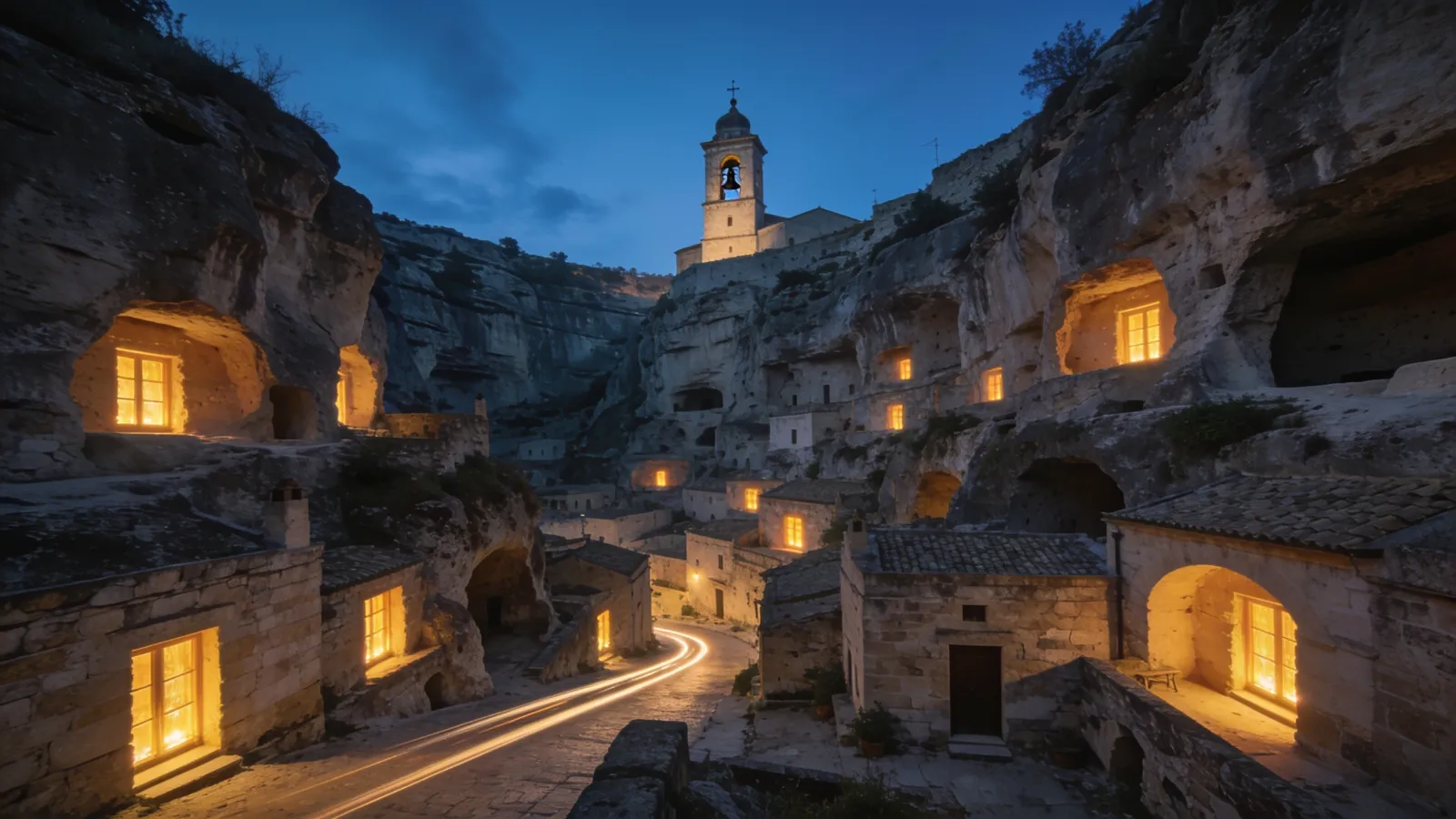
The Sassi di Matera — a UNESCO-listed cave-dwelling city continuously inhabited for roughly 9,000 years, carved into a tufa ravine in Italy’s southern instep. Declared a “national shame” in the 1950s for its cholera-ridden poverty, forcibly emptied by the government in 1952, then reborn as a UNESCO World Heritage Site in 1993 and named European Capital of Culture in 2019. Matera stood in for ancient Jerusalem in Mel Gibson’s The Passion of the Christ and for the opening chase in the 2021 Bond film No Time to Die. Sleep in a cave hotel (Sextantio Le Grotte della Civita), walk across the Murgia canyon to the rupestrian churches, and watch Sunday mass in a 9th-century rock-cut church.
Puglia & the Trulli of Alberobello
The heel of the Italian boot — a sun-baked, olive-grove region of conical-roofed drystone trulli houses unique to the Valle d’Itria, 1,500 of which still stand in UNESCO-protected Alberobello. Combine with Ostuni (the whitewashed “città bianca”), Lecce (Baroque “Florence of the South”), Polignano a Mare (a clifftop town with a restaurant carved into a sea cave — Grotta Palazzese), and orecchiette pasta pressed by hand by nonne on Via dell’Arco Basso in Bari.
The Dolomites (Trentino-Alto Adige)
Pale-pink limestone peaks in Italy’s Alpine far north, inscribed as UNESCO World Heritage in 2009. South Tyrol is German-Italian borderland — menus list canederli and apfelstrudel alongside pasta, signs are bilingual, and the local white wines (Gewürztraminer, Sylvaner, Kerner) outsell the Chianti. Base in Ortisei for the Seceda cable car, drive the Great Dolomites Road between Bolzano and Cortina d’Ampezzo, and hike the Alpe di Siusi — Europe’s largest high-altitude plateau — or the Tre Cime di Lavaredo loop.
Sicily’s Baroque Southeast
Noto, Modica, Ragusa Ibla and Scicli form a cluster of eight towns rebuilt in Sicilian Baroque after the 1693 earthquake — collectively UNESCO-listed in 2002. Pair Modica’s Aztec-style cold-processed chocolate (a legacy of 16th-century Spanish rule) with a granita al caffè con brioche breakfast at a Noto pasticceria, and detour to the Villa Romana del Casale near Piazza Armerina for the most complete Roman floor mosaics in the world.
Sardinia’s Costa Verde & Nuraghi
Sardinia’s wild west coast — the 47-km Costa Verde of dunes and empty beaches at Piscinas and Scivu — plus the 7,000 nuraghi (Bronze Age stone towers) scattered across the island. Nuraghe Su Nuraxi di Barumini is UNESCO-listed and dates to around 1500 BC, predating the Etruscans by a thousand years. Stay in a converted shepherd’s farmhouse (stazzo), eat pane carasau and culurgiones pasta dressed with tomato and mint, and finish with a glass of Mirto della Barbagia digestivo.
Practical Information
| Currency | Euro (€ / EUR); 1 USD ≈ 0.94 EUR (April 19, 2026) |
| Cash needs | Cards accepted widely in cities, but cash still expected at small trattorias, agriturismi and markets. Keep €50–100 in small notes, especially south of Rome. |
| ATMs | Bancomat machines at UniCredit, Intesa Sanpaolo, BNL and Poste Italiane. Refuse dynamic currency conversion — always pick EUR. |
| Tipping | Not expected. Coperto is already on every bill. Round up €1–2 after a good meal; nothing at bars or counter service. |
| Language | Italian is the official language. Regional dialects (Napoletano, Siciliano, Veneto, Sardo) flourish at home. English is widely spoken in tourist areas. |
| Safety | Very safe — violent crime is rare. Pickpocketing on Rome Metro Line A, Naples Circumvesuviana, Milan Duomo tram and Florence Ponte Vecchio is the main risk. Italy ranked 34th on the 2024 Global Peace Index. |
| Connectivity | 4G/5G blanket coverage from TIM, Vodafone, WindTre and Iliad. Tourist SIMs at tabacchi for €15–25; eSIMs (Airalo, Holafly) activate on landing. |
| Power | Type L plug (also accepts C and F); 230 V / 50 Hz |
| Tap water | Safe and excellent. Rome’s 2,500 nasoni street fountains are fed by ancient aqueducts. Ask for “acqua del rubinetto”. |
| Healthcare | Public SSN hospitals are good quality. EHIC/GHIC covers EU/UK; others need insurance. Farmacie post a night-rotation; dial 118 for ambulance. |
Budget Breakdown — What Italy Actually Costs
💚 Budget Traveller
Hostels (Generator Rome, Ostello Bello Milano, Plus Florence), a rapid-fire lunch of pizza al taglio or a panino from an alimentari (€4–7), Frecciarossa Super Economy advance tickets and city day passes. Doable at €70–110 per day (~US$75–120), with Puglia, Sicily and the smaller Umbrian hill-towns among the cheapest regions and Venice, Amalfi and Portofino the priciest. A stand-up espresso is €1.10, a Margherita at a neighbourhood Neapolitan pizzeria €6–9, a half-litre of house red in a trattoria €4–6.
💙 Mid-Range
3-star hotel, a converted palazzo B&B, or an apartment in a historic centre; one sit-down trattoria meal and one café meal per day; Frecciarossa advance tickets; and a couple of paid sights (Vatican Museums €20, Uffizi €25, Colosseum combined €18). Plan €160–240 per day (~US$170–260). Venice during Carnevale (Feb 7–17, 2026) and the Amalfi Coast in July–August push the top of the range.
💜 Luxury
5-star palazzi (Hotel de Russie Rome, Belmond Splendido Portofino, Aman Venice, Four Seasons Firenze), Frecciarossa Executive class, Michelin-starred tasting menus with wine pairings, and private drivers on the Amalfi Coast. Plan €470+ per day (~US$500+). A Carnevale masked ball at Ca’ Vendramin runs €900–€1,500 per couple; a bottle of 2019 Sassicaia at Enoteca Pinchiorri runs €380; a three-star Michelin tasting (Piazza Duomo in Alba, Enoteca Pinchiorri in Florence, La Pergola in Rome) runs €280–€350 per person without wine.
| Tier | Daily (USD) | Accommodation | Food | Transport |
|---|---|---|---|---|
| Budget | $75–120 | Hostel €25–45 / budget B&B €70–95 | €20–35/day | Rome day pass €7; regional Trenitalia singles €5–18 |
| Mid-Range | $170–260 | 3-star hotel €120–200 | €50–80/day | Frecciarossa advance €19.90–49 intercity |
| Luxury | $500+ | 5-star hotel €380–900+ | €150–320/day | Frecciarossa Executive / Amalfi private driver €200–350/day |
Planning Your First Trip to Italy
For a ready-made route, follow our classic Rome–Florence–Venice 10-day Italy itinerary.
- Pick a route, not a checklist. Rome + Florence + Venice in 10 days is the classic; Rome + Amalfi + Naples is the southern alternate; Milan + Lakes + Dolomites is the northern one. Two regions beats seven in a blur.
- Book Frecciarossa 6 weeks early. Super Economy fares start at €19.90 Rome–Florence or Rome–Naples on trenitalia.com; Italo is often €5–15 cheaper.
- Pre-book the three bottlenecks. Vatican Museums (3+ months ahead), the Last Supper in Milan (3+ months), Uffizi (1 month) — all sell out in peak season.
- Avoid driving in historic centres. Rome, Florence, Milan, Bologna, Pisa and 100+ cities enforce ZTL with automatic cameras; fines €80–€200. Park outside and walk in.
- Learn five phrases. “Buongiorno”, “grazie”, “per favore”, “il conto per favore”, “un caffè”. Italians reward the attempt with better tables and warmer service.
Classic 10-Day Itinerary: Days 1–3 Rome (Colosseum, Vatican, Trastevere) · Day 4 Frecciarossa to Florence · Days 5–6 Florence + Siena or San Gimignano day trip · Day 7 Frecciarossa to Venice · Days 8–9 Venice + Murano and Burano · Day 10 Frecciarossa Venice→Milan and fly out of MXP.
Frequently Asked Questions
Is Italy expensive to visit?
Moderately. Cheaper than France or Switzerland, comparable to Spain, more expensive than Portugal. Budget travellers get by on €70–110 per day; mid-range €160–240 per day. Venice during Carnevale and the Amalfi Coast in July–August run 30–40% higher than Rome year-round. Puglia, Sicily and Calabria are materially cheaper than Tuscany.
Do I need to speak Italian?
No, but a few phrases earn goodwill: buongiorno, grazie, per favore, il conto per favore, un caffè. English is widely spoken in Rome, Milan, Florence and Venice; thinner in the south and rural countryside. Google Translate’s camera mode handles menus instantly.
Is the Eurail or Trenitalia pass worth it?
For most short trips, no. Frecciarossa Super Economy advance fares start at €19.90 Rome–Florence or Rome–Naples booked 6+ weeks out — cheaper than a rail pass. Italo is often €5–15 cheaper again. Passes only beat point-to-point on 3+-week multi-country trips.
Is Italy safe for solo travellers?
Yes. Italy is low in violent crime — it sat 34th on the 2024 Global Peace Index. The main risk is pickpocketing on the Rome Metro Line A, the Naples Circumvesuviana, the Milan Duomo tram, and Florence’s Ponte Vecchio. Use a crossbody bag, hand on the zipper in crowds, never a wallet in a back pocket.
When is the best time to visit Italy?
Late April to mid-June and September to mid-October — warm enough for Amalfi, cool enough for Rome, pre- or post-peak on crowds. July and August are hot (35°C+) and tourist-heavy; August 15 (Ferragosto) empties cities. November through February offer low-season rates.
Can I get by as a vegetarian or vegan?
Easily. Italian cuisine is vegetable-forward — pasta al pomodoro, aglio e olio, pizza Margherita, pizza marinara (vegan), risotto ai funghi, caponata, grilled antipasti, legumes and a full vegan sorbetto selection. Say “sono vegano/a, niente prodotti animali”.
Do I really need to cover up in churches?
Yes. St Peter’s, the Vatican Museums, the Florence Duomo, San Marco in Venice and every major church enforce a dress code — shoulders and knees covered. Pack a light scarf; the Vatican Museums sell disposable shoulder covers at the entrance for €2.
📘 Book Your Italy Trip — partner booking links for Rome, Venice and Florence hotels.
Ready to Explore Italy?
Italy rewards travellers who pick two regions over seven, book Frecciarossa six weeks early, pre-book the Vatican and the Last Supper, learn five Italian phrases and sit down for the slow lunch. Start in Rome for the ancient layers, Florence for the Renaissance, Venice for the lagoon, Milan for aperitivo and fashion, Naples for pizza and Pompeii, or the Amalfi Coast for the postcard.
Explore More
Cities we cover in Italy
Cities to explore in Italy
Deep-dive guides to specific cities, neighbourhoods, and food scenes — written with the same magazine voice.
More country guides you might like
Plan your trip to Italy
The booking tools we use ourselves. FFU may earn a commission at no extra cost to you.
Plan & book your trip to Italy
Booking through these searches supports our guides at no extra cost to you.