
☰ On this page
- 📋 In This Guide
- Overview — Why Buenos Aires Belongs on Every Bucket List
- 🌸 Late-April / Early-May 2026 — Why You’re Right in the Window
- Best Time to Visit Buenos Aires (Season by Season)
- Getting There — Flights & Arrival
- Getting Around — Subte, Colectivos, Walking & Taxis
- Top Neighbourhoods & Barrios
- 🗓️ Sample Itineraries
- Porteño Culture & Etiquette
- A Food Lover’s Guide to Buenos Aires
- 📸 Photography Notes
- Off the Beaten Path — Buenos Aires Beyond the Tourist Trail
- Practical Information
- Budget Breakdown — What Buenos Aires Actually Costs
- ✅ Pre-Trip Checklist
- 🤔 What Surprises First-Timers
- Frequently Asked Questions
- Ready to Explore Buenos Aires?
- Explore More
Buenos Aires, Argentina — Tango Capital, Belle Époque Bones & South America’s Most European City
Part of our Argentina travel guide.
Buenos Aires is the only capital in Latin America where you can ride a 1913 wooden subway car under a 1920s French Beaux-Arts boulevard, eat dinner at 11 p.m. in a Spanish-Italian-Jewish neighbourhood that calls itself “the Paris of South America” without a hint of irony, and be woken at 3 a.m. by an accordion bandoneón drifting from a milonga two blocks over. It is the second-largest city in South America by metropolitan population (15.6 million) but the most architecturally European on the continent, the result of a 1880–1930 immigration wave that brought 6 million Italians, Spaniards, Germans, Poles and Lebanese into a city that had been a colonial backwater of 180,000 a generation earlier. The downtown blocks of San Nicolás and Monserrat still read like a slightly faded Madrid; Recoleta could be the 16th arrondissement of Paris if Paris had jacarandas.
What makes Buenos Aires different from anywhere else on the continent is the rhythm. The city operates on a schedule that genuinely begins at 9 p.m. — restaurants don’t fill until 10, theatres curtain at 9, milongas (tango social dances) hit their peak around 1 a.m., and the late-night choripán cart at the Costanera Sur ecological reserve closes at sunrise. Buenos Aires has the highest concentration of bookshops per capita of any city in the world (734 across 48 barrios as of the 2024 UNESCO Cities of Literature audit), the most psychoanalysts (one for every 120 residents in Palermo), and a steak culture that runs through 65 kilograms of beef per person per year. The locals — porteños, “people of the port” — are characteristically funny, intellectually restless, slightly melancholic, and incapable of small talk that doesn’t bend toward politics, football or Borges within ninety seconds.
This guide covers Buenos Aires neighbourhood by neighbourhood — from the cobblestoned San Telmo where tango was born to the Palermo design district reinventing itself every three months. If you’re pairing Buenos Aires with the rest of the continent, see our Argentina travel guide for Patagonia, Mendoza and the northwest, and our Brazil travel guide for the obvious follow-up across the Iguazú border. The natural city pairing is our Rio de Janeiro city guide, three hours by air and the Atlantic-coast counterpoint to BA’s continental introspection.
📋 In This Guide
- Overview — Why Buenos Aires Belongs on Every Bucket List
- 🌸 Late-April / Early-May 2026 — Why You’re Right in the Window
- Best Time to Visit Buenos Aires (Season by Season)
- Getting There — Flights & Arrival
- Getting Around — Subte, Colectivos, Walking & Taxis
- Top Neighbourhoods & Barrios
- 🗓️ Sample Itineraries — 2, 4, 6 and 8 Days
- Porteño Culture & Etiquette
- A Food Lover’s Guide to Buenos Aires
- 📸 Photography Notes
- Off the Beaten Path — Buenos Aires Beyond the Tourist Trail
- Practical Information
- Budget Breakdown — What Buenos Aires Actually Costs
- ✅ Pre-Trip Checklist
- 🤔 What Surprises First-Timers
- Frequently Asked Questions
- Ready to Explore Buenos Aires?
Overview — Why Buenos Aires Belongs on Every Bucket List
Buenos Aires sits 1,400 kilometres south of Rio de Janeiro on the muddy estuary of the Río de la Plata, a 220-kilometre-wide tidal river that locals stubbornly call a sea. The city was founded twice — first by Pedro de Mendoza in 1536 (abandoned within five years to indigenous siege and starvation), then more permanently in 1580 by Juan de Garay — and remained a smuggling port of about 25,000 people until independence from Spain in 1816. The transformation from colonial outpost to belle-époque metropolis happened in a single forty-year burst between 1880 and 1920, when railroad-driven beef exports made Argentina the seventh-richest country on Earth and the boulevards, theatres, opera houses and grand cafés went up almost simultaneously.
The modern city is a study in beautiful contradictions. It runs on the world’s third-most-volatile currency, with inflation hovering between 50% and 200% annually for most of the last decade, yet it produces some of the world’s best wine, theatre and steak at prices that — for visitors holding hard currency — remain a fraction of what equivalent quality costs in New York or Madrid. It has 48 official barrios spread across 203 km², three subway lines completed before 1930, and the widest avenue in the world (the 16-lane 9 de Julio, with the Obelisco rising at its centre). It is also the only city in the Americas where the dominant cultural form — tango — is a UNESCO Intangible Heritage and a living musical scene with 50+ working milongas at any given time.
For a traveller, Buenos Aires is the most walkable major city in South America (flat as a pampa, well-shaded by sycamores and jacarandas, dense with cafés you can drop into between sights) and the most cosmopolitan in the same measure. The locals eat dinner late, kiss everyone hello, talk politics like a contact sport, drink mate in a continuous social ritual, and treat tourists with a genuine curiosity that drops to indifference if you mistake their city for Mexico’s. Show up with a phrase of Spanish, an open evening, and an empty stomach — the rest will follow.
🏛️ Historical Context
Buenos Aires’s transformation from backwater to metropolis was funded almost entirely by beef. The 1876 invention of refrigerated shipping (the French steamship Le Frigorifique) let Argentine grass-fed cattle reach London tables fresh, and within thirty years Argentina was the world’s largest beef exporter and the city’s population had quintupled. By 1913 Buenos Aires was the seventh-largest city in the world (1.5 million people) and the metro system was the first in the Southern Hemisphere — Line A still operates the original 1913 La Brugeoise wooden carriages on the Plaza de Mayo to Primera Junta route on Sundays for ARS 600 (about $0.55), making it the oldest continuously operating subway car fleet on Earth. The economic crash from 1930 onward never quite undid the architectural inheritance.
🎌 Did You Know?
Buenos Aires has more psychoanalysts per capita than any city on Earth — roughly one practising analyst for every 120 residents in Palermo, the so-called “Villa Freud” neighbourhood. The country imported the practice with European Jewish immigrants in the 1920s and never let go. A 2018 University of Buenos Aires study found that 32% of porteños had been in therapy at some point in their lives, more than double the rate in any North American city. The local joke is that the analyst’s couch is the second domestic furniture every porteño owns after the parrilla grill — and roughly accurate.
🌸 Late-April / Early-May 2026 — Why You’re Right in the Window
Late April through mid-May is autumn in the southern hemisphere — and arguably the single best three-week window in the Buenos Aires calendar. Daytime highs sit between 19°C and 23°C (warm enough for shirtsleeves at lunch on Avenida de Mayo, cool enough for a wool jacket at midnight in San Telmo), the humidity has finally broken after the brutal February-March summer, and the sycamore-lined avenidas of Recoleta and Palermo are turning amber. The plane trees lining Avenida del Libertador shed leaves heavily through the first week of May; the jacarandas have bloomed and dropped already by autumn, but their second cousin, the lapacho rosado, holds late pink blossoms into early May along Plaza San Martín.
This is also the precise window when porteños return from summer holidays in Mar del Plata and Punta del Este, the cultural calendar reignites in earnest, and the milonga circuit reaches its autumn peak. The Festival y Mundial de Tango — the city’s flagship two-week tango festival and world championship — runs in late August, but the warm-up milongas through April and May feel less choreographed and more authentic. Theatre season is in full swing on Avenida Corrientes (the Broadway of South America, with 17 active proscenium theatres in a 12-block stretch), and the Teatro Colón opera house — one of the world’s three best by acoustics — has its strongest programming of the year through May and June.
One important caveat for autumn 2026: Argentina remains in an active currency crisis with two parallel exchange rates (the official rate and the “blue” or parallel rate), inflation that recalibrates restaurant menus monthly, and a tourism economy that scales prices unpredictably for foreign-card payments. Bring USD or EUR cash for the best in-country exchange (we cover this in detail in Practical Information below), use Western Union as a workaround for ATM exchange rate haircuts, and check ámbito.com or dolarhoy.com the morning of any major spend. The disorder is part of the texture; the value, for visitors, is currently extraordinary.
⚠️ Important — Autumn Daylight & Safety
Sunset in Buenos Aires by April 30 is at 6:24 p.m.; by May 15 it’s 5:55 p.m. The city stays alive late but daylight ends earlier than visitors used to northern-hemisphere May expect. Walking back from a 9 p.m. parrilla in San Telmo on a quiet Thursday is generally fine, but Constitución, Once after midnight, and the southern strip of La Boca beyond Caminito at any hour all require a taxi (or Cabify/DiDi). The blocks immediately around Florida pedestrian street and Plaza de Mayo see opportunistic phone-snatching in early evening — keep handsets in interior pockets, not visible at café tables. Locals call this “ratoneo” (rat-work) and it’s the single most common tourist crime, ahead of any violent incident.
Best Time to Visit Buenos Aires (Season by Season)
Buenos Aires has a humid subtropical climate softened by the Plata estuary — four genuine seasons, all of them inverted from the northern hemisphere. The city is at 34.6°S, latitudinally roughly equivalent to Cape Town or Sydney, and its weather tracks with both. Annual rainfall is moderate (1,200 mm spread across the year), summers are hot and sticky, winters are mild but damp, and the shoulder seasons are why locals say BA only properly works in spring or autumn.
Autumn (March – May)
The shoulder window described above. Daytime highs drop from 27°C in early March to 16°C by late May, the air clears of summer humidity, and the city’s tree canopy goes through its most cinematic colour change in late April. Crowds thin substantially after Easter — March is still summer-vacation tail; April-May is the calmest tourism month of the year. Hotel prices drop 25–35% off January-February peak, restaurant reservations open up, and the milonga and theatre scenes hit full capacity. Bring layers; the 14°C overnight low can surprise visitors who packed for hemispheric inversion.
Winter (June – August)
Mild by global standards but damp and grey. Daytime highs sit at 14–17°C, overnight lows drop to 6–8°C, and the city sees its most rainfall of the year in June and July (110 mm/month). Snow is statistically unheard of — the last documented Buenos Aires snowfall was July 9, 2007, and stopped traffic for a day. The cultural calendar peaks: Teatro Colón’s main season runs through August, Festival y Mundial de Tango fills the city in mid-to-late August, and Argentine Wine Day events take over Palermo wine bars throughout July. This is also the cheapest time to visit; hotel rates dip 40% off January peak and tourist queues at La Recoleta cemetery and the Caminito drop to a trickle. Pack a wool overcoat; you’ll need it after sunset.
Spring (September – November)
The other golden window — and, by most porteño accounts, the city’s most beautiful month is November. The jacarandas of Plaza San Martín, Recoleta, Palermo and Plaza de Mayo bloom in a violet-purple flush from the second week of November through early December — the city is briefly the colour of a Pollock canvas in lavender. Daytime highs climb from 19°C in September to 26°C by late November. The opera and theatre seasons close, but the city’s outdoor café culture explodes back to life; rooftop bars in Palermo Hollywood and Costanera waterfront restaurants come into their own. Spring also brings the Buenos Aires International Book Fair (late April-early May, technically autumn but adjacent), and Open de Argentina polo fixtures begin in Pilar.
Summer (December – February)
Hot and humid — daytime highs of 30–34°C are routine, and an aging-grid heat wave to 38°C+ now hits the city about three times each summer. Humidity from the Plata estuary makes 28°C feel like 35°C. Half the city decamps to the Atlantic coast (Mar del Plata, Pinamar, Cariló) or the lake district (San Carlos de Bariloche, Villa La Angostura) from December 20 through end of February — which means restaurant and theatre options drop noticeably, but also that the streets feel quieter than the population statistics suggest. Christmas and New Year’s Eve in Buenos Aires are family-domestic affairs; downtown is genuinely empty on December 25. The trade-off is the longest daylight (sunset at 8:10 p.m. on December 21), the open-air tango milongas in Plaza Dorrego, and the cheapest hotel rates of any major capital in summer if you can endure the heat.
🧳 Travel Guru Tip
If you have one week and want Buenos Aires at its most photogenic, aim for the second or third week of November. The jacaranda bloom is at peak, the temperature is shirtsleeves-warm, the dinner-on-a-terrace season has begun, the spring opera programme is closing strong, and the summer-vacation evacuation hasn’t started. Locals call it the “ventana morada” — the violet window. Most international guides default to October or March; November is the under-promoted superlative.
| Experience | Best months | Best neighbourhoods | Notes |
|---|---|---|---|
| Tango milongas | April – November | San Telmo, Almagro, Boedo | Most milongas closed mid-Dec to mid-Jan |
| Opera at Teatro Colón | April – November | San Nicolás | Main season closes late November |
| Jacaranda bloom | Mid-Nov – early Dec | Recoleta, Plaza San Martín, Palermo | Approx 18-day window, weather-dependent |
| Polo (Argentine Open) | Late Nov – mid-Dec | Palermo Polo Field, Pilar | Tickets ARS 30,000–180,000+ |
| Outdoor parrillas | Sep – April | Costanera, Palermo Soho | Open year-round but best in shoulder |
| Mar del Plata weekend | Late Dec – Feb | Atlantic coast 4 hr south | Locals decamp; BA quieter |
Getting There — Flights & Arrival
Buenos Aires has two airports that matter — and the difference between them is critical. Ezeiza International (EZE), 35 km southwest of downtown, handles all intercontinental flights and most regional South American routes. Aeroparque Jorge Newbery (AEP), a 15-minute taxi ride from Recoleta on the Costanera waterfront, handles domestic flights (Patagonia, Mendoza, Iguazú, Salta) and a handful of regional flights to Montevideo and São Paulo. Confirm which airport your domestic connection departs from before booking — it’s the single most common booking error for first-time visitors.
From North America, direct flights run year-round from New York (JFK, 11h with American and Aerolíneas), Miami (8h45m with American, LATAM and Aerolíneas), Houston (10h with United), Atlanta (10h with Delta), and seasonally from Dallas, Los Angeles and San Francisco. From Europe, expect 13h45m from Madrid, 13h30m from Paris CDG, 13h30m from London Heathrow, 13h from Frankfurt, 13h15m from Rome and 14h from Amsterdam. There are no direct flights from Asia or Oceania; Asian visitors typically connect through Atlanta, Houston, or São Paulo. Round-trip fares from London or New York in autumn shoulder typically land between £580–840 / $720–1,050 if booked 8–14 weeks ahead.
Ezeiza arrival is straightforward but slow. Passport control runs separate lanes for Mercosur and non-Mercosur passport holders; non-Mercosur queues regularly run 60–90 minutes after a long-haul arrival, particularly when two intercontinental flights land within 30 minutes of each other. The reciprocity fee for US, Canadian and Australian travellers was suspended in 2016 and remains so. Three options into the city: Tienda León airport bus runs every 30 minutes, ARS 18,500 one-way to Retiro terminal (50 minutes); a remise (pre-paid taxi at the official desk by exits) is ARS 38,000–48,000 for the same trip; Cabify and DiDi rideshare from the dedicated rideshare zone are the cheapest option at ARS 28,000–35,000 if you have an Argentine SIM or roaming data.
✨ Pro Tip
If you’re flying into Ezeiza late at night and don’t have an Argentine eSIM activated, do not get into a non-prepaid taxi from the airport doors. Use the official Taxi Ezeiza desk inside the terminal — they pre-quote a fixed rate, give you a printed receipt, and the drivers are licensed. The “free taxi” touts who approach in the arrivals hall regularly overcharge first-time visitors by 3-4x, and the dispute resolution is non-existent. The fixed-rate desk takes USD or pesos and is the standard local recommendation.
Getting Around — Subte, Colectivos, Walking & Taxis
Buenos Aires is the most walkable major capital in South America. The downtown blocks of San Nicolás, Monserrat, Retiro and Recoleta connect on foot in 30-minute strolls under shaded canopies of sycamores and tipas. Palermo, the largest barrio, is too big to walk corner-to-corner but breaks into manageable subdistricts (Soho, Hollywood, Chico, Botánico) that each warrant a 90-minute foot tour. The city is also flatter than Manhattan — the high point of central BA is 25 metres above sea level — which makes ankle injuries the only real walking risk, and the broken sidewalks of Boedo and Almagro are the genuine source of those.
The Subte (subway) is the workhorse for distances over 25 blocks. Six lines (A, B, C, D, E, H) cover the central city plus inland radials, fares are ARS 600 per ride paid by SUBE card (the rechargeable transit card sold at every kiosk and station), and trains run every 3–6 minutes from 5 a.m. to 10:30 p.m. weekdays, slightly later on Friday and Saturday. Line A — opened 1913, the oldest in South America — still uses the original wooden La Brugeoise carriages on Sunday-only heritage runs; the rest of the line operates Chinese CITIC Construction stock from 2013. Line D (Catedral to Congreso de Tucumán) is the spine for tourist itineraries — it connects Plaza de Mayo, Tribunales, Pueyrredón (Recoleta) and Palermo on one ride.
Colectivos (city buses) run 24 hours, cover every corner of the city the Subte misses, and accept the same SUBE card at ARS 480–800 per ride depending on distance. The route map is overwhelming for first-time visitors (200+ routes), but the Cómo Llego app (free, City of Buenos Aires) plots door-to-door routes with real-time bus arrivals. Taxis are cheap by global standards (a 5 km ride is ARS 5,000–7,000), but Cabify and DiDi rideshare apps are the porteño default — fare transparency is better, no cash needed, and the 2 a.m. Friday taxi pricing surcharge is avoided.
⚠️ Important — Subte Strikes & Sunday Closures
Argentina’s strongest public transit unions are based in the Subte, and 24-hour wildcat strikes happen 4–6 times a year — usually announced 24-72 hours in advance, occasionally same-day. Check ámbito.com or local Twitter the morning of any Subte-dependent itinerary. Lines also operate reduced Sunday service (8:00 a.m.–10:00 p.m.), and Line A’s heritage-car runs only on Sundays. The bus network keeps running through every Subte strike. Single-ticket SUBE cards top up at any kiosk with a “Carga SUBE” sticker — bring a passport for the initial card purchase (ARS 1,500 deposit) at any larger station.
Top Neighbourhoods & Barrios
📍 Buenos Aires Map: Every Place in This Guide
Buenos Aires has 48 official barrios, but for a traveller the city breaks down into roughly eight distinct districts. Below are the bases worth building an itinerary around, ordered roughly from the historic centre outward.
🏛️ San Nicolás & Monserrat — The Historic Centre
The colonial-era core where Buenos Aires was founded in 1580 and where its political heart still beats. Plaza de Mayo, anchored by the pink-fronted Casa Rosada (the presidential palace where Eva Perón addressed crowds from a Juan Domingo Perón balcony in 1952) and the 1791 Cabildo (the colonial-era town hall, now a small revolution museum), is the obligatory first stop. The Metropolitan Cathedral on the plaza’s north side holds the tomb of General José de San Martín, the liberator of Argentina, Chile and Peru — a guarded permanent honour shift stands by the marble sarcophagus.
Avenida de Mayo runs west from the plaza in a perfectly straight kilometre toward Plaza del Congreso and the Greco-Roman Congreso Nacional. The avenue is the city’s most architecturally European — Madrid Beaux-Arts on the south side, Italian neoclassical on the north — and houses Café Tortoni (Argentina’s most famous café, opened 1858, the literary haunt of Borges and Lorca, ARS 12,500 for a coffee that’s worth it for the room and the queue you’ll join). Just south, the 1894 Manzana de las Luces (the colonial Jesuit “block of enlightenment”) preserves underground tunnels from the 1700s.
- What to do: Plaza de Mayo and Casa Rosada balcony tour (Saturdays only, free, book at advance booking); coffee at Café Tortoni; Manzana de las Luces underground tunnel tour.
- Signature eats: Tenedor libre buffet at Pippo on Calle Corrientes (a 1937 institution, ARS 14,000 for unlimited parrilla and pasta); empanadas at El Cuartito on Talcahuano.
- Access: Subte Line A (Plaza de Mayo, Perú, Piedras stations), Line D (Catedral, 9 de Julio).
🎶 San Telmo — Where Tango Was Born
The oldest barrio in Buenos Aires and the spiritual home of tango. Founded in 1734, San Telmo retained its colonial cobblestones because the wealthy abandoned it during the 1871 yellow fever epidemic and moved to Recoleta — the result is the city’s only fully preserved 19th-century streetscape, now alive with antique shops, milongas, art galleries and the Sunday street market that has run on Plaza Dorrego since 1970.
The Plaza Dorrego Sunday Feria de San Telmo is the can’t-miss event of any first visit — 8 blocks of antique stalls along Defensa from Independencia to Avenida Belgrano, free open-air tango performances at the plaza from noon onward, and the highest density of street performers, milonga buskers and silver-haired tango couples in the city. Aim to arrive by 11 a.m. before the heat and crowds peak; eat lunch at El Desnivel (cash only, parrilla, ARS 18,000 for two with wine); circle back at 6 p.m. for the second tango set.
Beyond the Sunday market, San Telmo has the Mercado de San Telmo (a 1897 wrought-iron and glass food hall on Defensa and Bolívar, recently revitalised with empanada specialists, parrilla counters and a craft-beer bar called Bodega Grosso), and the MAMBA contemporary art museum on Avenida San Juan. Milongas at La Catedral, El Beso and Confitería Ideal run nightly; admission is typically ARS 6,000–10,000 with a one-drink minimum.
- What to do: Sunday feria at Plaza Dorrego; milonga at La Catedral (Wednesday-Saturday from 11 p.m.); MAMBA contemporary art; Mercado de San Telmo lunch counter circuit.
- Signature eats: Bife de chorizo and provoleta at El Desnivel (Defensa 855); chocolate-and-coconut alfajores at La Olla de Felix in the Mercado.
- Access: Subte Line C (Independencia), Line E (Belgrano), or 15-minute walk from Plaza de Mayo.
🎨 La Boca — Caminito & the Working Port
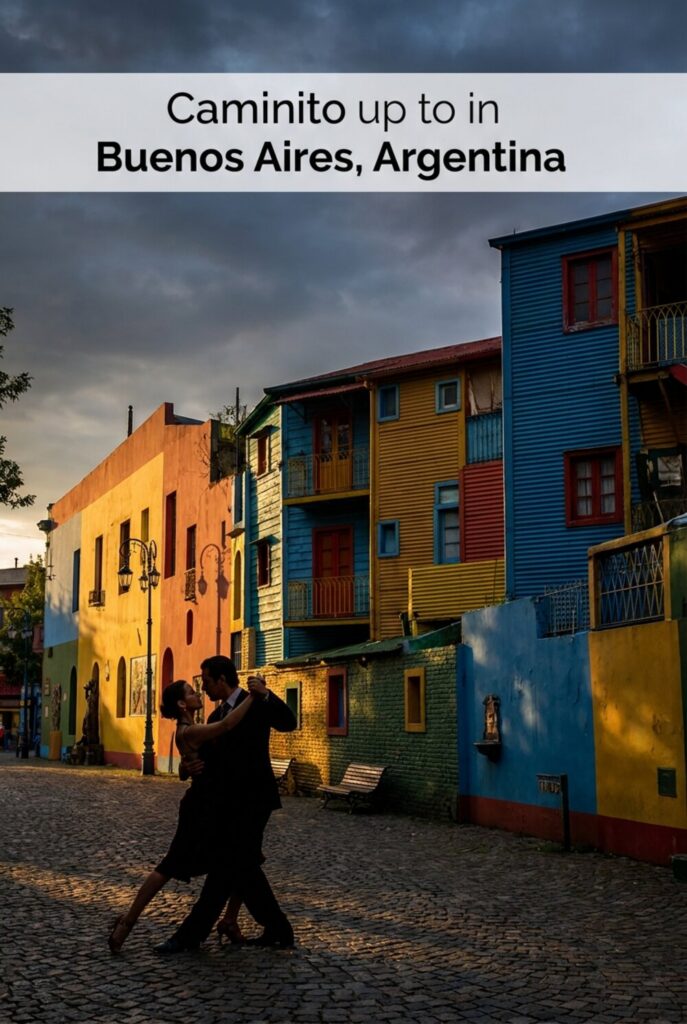
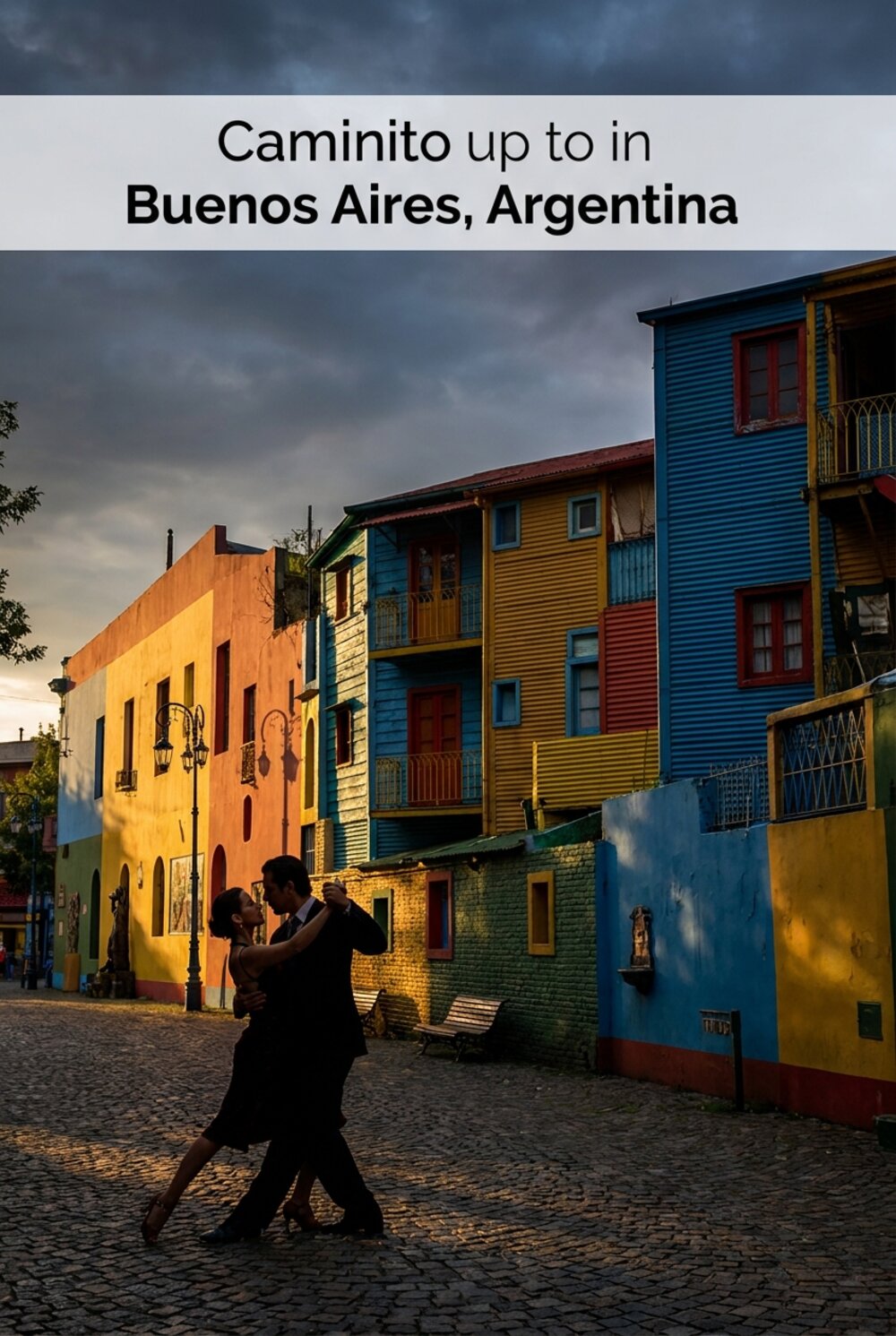
The Genoese-immigrant port neighbourhood at the southern tip of the city, famous for the brightly painted corrugated-iron houses of Caminito Street and the Boca Juniors football club’s La Bombonera stadium. Caminito itself is a single block of artistic-tourism theatre — the houses were painted in their current riot of yellows, blues and reds in the 1950s by local painter Benito Quinquela Martín, who also founded the small Museo Quinquela Martín a block north (ARS 4,500, worth it for the rooftop view across the Riachuelo).
La Boca is where the standard travel-guide warning kicks in, and accurately. The Caminito-La Bombonera-Fundación Proa corridor is heavily policed and safe during daylight; venture two blocks east, west or south and the safety profile changes sharply. Visit between 11 a.m. and 4 p.m., take a registered taxi or rideshare both directions (do not walk in or out from San Telmo), and avoid Sundays around match days at La Bombonera unless you have a guided package.
The genuine attraction beyond Caminito is the Fundación Proa contemporary art gallery on Avenida Pedro de Mendoza — a 2008 Italian-Argentine project housing the city’s strongest rotating contemporary exhibitions, with a rooftop café overlooking the Riachuelo and the Boca Juniors stadium. Boca Juniors stadium tours run daily, ARS 28,000, and include the Museo de la Pasión Boquense.
- What to do: Walk Caminito (45 minutes is plenty); Fundación Proa exhibition and rooftop; Boca Juniors stadium tour.
- Signature eats: Cantina-style spaghetti and matambre at La Cantina del Diego near Caminito.
- Access: Taxi or rideshare from downtown only — no Subte connection. 12-minute ride from Plaza de Mayo.
🌳 Recoleta — Belle-Époque & the Famous Cemetery
The barrio the wealthy decamped to during the 1871 yellow fever crisis and never left. Recoleta is BA’s most architecturally European district, with French-import mansards, Italian palazzo facades, and the kind of broad, tree-lined avenidas that get the “Paris of South America” comparison repeated. Avenida Alvear is the prestige strip — designer flagships, the 1932 Alvear Palace Hotel, and the embassies of half the G20.
The unmissable site is the Cementerio de la Recoleta, a 5.5-hectare necropolis of 4,691 elaborate marble vaults laid out in city-block grids and home to the country’s most prominent dead — including Eva Perón, whose tomb (Familia Duarte) draws roughly 800 visitors a day and is reliably marked by fresh flowers. Wandering the cemetery for two hours is the standard first-day Recoleta itinerary; the on-site map at the entrance flags 75+ notable tombs across categories from politics to the arts.
Adjacent to the cemetery, the Centro Cultural Recoleta hosts free contemporary art exhibitions in a former Franciscan convent (open Tuesday-Sunday), and the MALBA — the Museum of Latin American Art of Buenos Aires — sits 15 minutes north on Avenida Figueroa Alcorta. MALBA holds the country’s strongest 20th-century Latin American collection, including Frida Kahlo’s “Self-Portrait with Monkey and Parrot” (1942), and the rotating exhibitions are consistently the strongest in the city. ARS 14,000 admission, free Wednesdays after 4 p.m.
- What to do: Recoleta Cemetery (allow 2 hrs); MALBA museum; Avenida Alvear stroll; Floralis Genérica giant flower sculpture in Plaza de las Naciones Unidas.
- Signature eats: High tea at Alvear Palace’s L’Orangerie; medialunas at La Biela on Avenida Quintana (an institutional café opposite the cemetery, ARS 5,500 for coffee and pastry).
- Access: Subte Line H to Las Heras, or Line D to Pueyrredón then 12-minute walk.
🌿 Palermo — The Largest Barrio & Its Subdistricts
Palermo is geographically the largest barrio (15.6 km²) and the most culturally restless — what’s hot in Palermo Soho’s restaurant scene at Christmas is replaced with something newer by Easter. The barrio breaks into four subdistricts: Palermo Soho (the original Bohemian core, dense with boutique fashion, mid-century furniture shops and tapas-format restaurants), Palermo Hollywood (across the train tracks west, the production-studio district that became the late-night nightlife strip), Palermo Chico (the wealthy residential pocket between Avenida Libertador and the Bosques de Palermo), and Palermo Botánico (around the botanical garden and Plaza Italia).
The Bosques de Palermo — the city’s largest park (370 hectares) — covers the northern half of the barrio and includes a Japanese garden (Jardín Japonés, ARS 8,500), the rosaledal rose garden (free, peak bloom October-November), pedalo lakes, and the city’s planetarium. The Plaza Italia entrance to the bosques is the standard starting point. Sundays and holidays close Avenida del Libertador to cars between 9 a.m. and 7 p.m. for the Bicisendas weekend bike route.
Palermo Soho’s restaurant density is unmatched in the city — Don Julio (the world’s #2 restaurant on the 2024 World’s 50 Best list, parrilla, ARS 75,000+ per person, 6-week reservation lead), Niño Gordo (Asian-Argentine fusion), Tegui, La Mar (Peruvian seafood), and a rotating cast of natural-wine bodegas around Plaza Serrano. Palermo Hollywood’s late-night specialty is the parrilla-cocktail hybrid format pioneered at Florería Atlántico (a flower-shop-fronted speakeasy on Arroyo, technically Retiro but Palermo-adjacent in spirit).
- What to do: Plaza Serrano weekend market; Jardín Japonés; MALBA (technically Palermo Chico); rooftop sunset at Trade Sky Bar; late-night cocktails at Florería Atlántico.
- Signature eats: Parrilla at Don Julio (book 6 weeks ahead) or its sibling Don Julio Pizza Vegetal; ice cream at Rapanui or Cadore (the old-school heladería on Corrientes that holds the country’s pistachio gelato standard).
- Access: Subte Line D (Plaza Italia, Scalabrini Ortiz, Palermo stations), Line H (Las Heras for Palermo Chico).
📚 Almagro & Boedo — The Tango Heartland
The two adjacent inland barrios where tango’s working-class roots remain most visible. Almagro hosts La Catedral del Tango (an old grain warehouse on Sarmiento converted into a vast bohemian milonga in the 1990s, candlelit, mural-painted, and the most photographed tango space outside San Telmo), the Confitería Las Violetas (a 1884 Belle-Époque café with stained-glass arches that the city refused to demolish in 1998 after a public petition), and the Abasto neighbourhood where Carlos Gardel — the most famous tango singer in history, dead in a Medellín plane crash in 1935 — lived and recorded. The Carlos Gardel Museum on Calle Jean Jaurés is in his last residence, ARS 4,000.
Boedo, on Almagro’s southern edge, is the literary barrio — the 1920s “Boedo Group” of socialist-realist writers (Roberto Arlt, Leónidas Barletta) was based at the Café Cervantes, now a small museum. Esquina Homero Manzi at the corner of San Juan and Boedo is one of the city’s longest-running tango-show restaurants, since 1944, with a less-touristy show than the San Telmo equivalents.
- What to do: La Catedral milonga (Tuesday and Saturday lessons, 8 p.m.); Carlos Gardel Museum; Confitería Las Violetas afternoon tea.
- Signature eats: Pizza al molde (Buenos Aires-style square pizza) at Pin Pun in Almagro; bondiola sandwich at La Mezzetta on Álvarez Thomas.
- Access: Subte Line B (Carlos Gardel, Medrano), Line E (Boedo).
🌊 Puerto Madero & the Waterfront
The reclaimed dock district between the city centre and the Río de la Plata — Buenos Aires’s newest barrio (officially designated 1991, after the 19th-century brick dock buildings were converted into Manhattan-style high-rise condos and waterfront restaurants). The four restored docks now house steakhouses, brand-flagship hotels (Hilton, Faena, Madero), and the Calatrava-designed Puente de la Mujer footbridge.
Beyond the polished waterfront, the Reserva Ecológica Costanera Sur is the genuine surprise — a 350-hectare ecological reserve of grasslands and wetlands on what was originally landfill from 1970s urban renewal, now home to 300 bird species and the closest thing to wilderness within walking distance of any Latin American capital. Free admission, open daily 8 a.m.–6 p.m. summer / 5 p.m. winter, the bike path circles the perimeter in 90 minutes.
- What to do: Walk the Calatrava bridge at sunset; Reserva Ecológica bird-watching loop; dinner at Cabaña Las Lilas (the prestige steakhouse, ARS 95,000+ per person).
- Signature eats: Choripán at the Costanera Sur food trucks (open 6 p.m.–4 a.m. on weekends); ojo de bife at Cabaña Las Lilas.
- Access: 15-minute walk east from Plaza de Mayo, or Subte Line B to LN Alem.
“I have always imagined that Paradise will be a kind of library.”
— Jorge Luis Borges, Poem of the Gifts (1960)
🗓️ Sample Itineraries
Buenos Aires rewards slow trips and punishes rushed ones — the city’s dinner-at-10 rhythm alone makes a 48-hour visit feel like a tourist sprint. Below are four templates that have worked for thousands of travellers; pick the one that matches your time, then adjust by neighbourhood. All distances assume Subte and walking; add 25% to time if you’re committed to taxis-only.
2 Days — Quick Stop
Day 1: Arrive Ezeiza morning, taxi to Recoleta hotel. Lunch at La Biela. Walk Recoleta Cemetery (2 hours), MALBA museum, evening drink on Avenida Alvear, dinner at Don Julio in Palermo (book 6 weeks ahead). Day 2: Subte to Plaza de Mayo, walk Avenida de Mayo to Plaza del Congreso, coffee at Café Tortoni, lunch at El Cuartito empanadas. Afternoon Subte to San Telmo (Sunday only — Plaza Dorrego market). Tango show at Confitería Ideal or La Catedral evening, taxi back to airport for late departure. This is the BA-as-stopover itinerary; you’ll see the headlines but not the texture.
4 Days — The Standard Visit
Day 1: Arrive, Recoleta hotel, Recoleta Cemetery, MALBA, dinner Palermo. Day 2: Plaza de Mayo morning (Casa Rosada exterior, Cabildo, Cathedral), Avenida de Mayo lunch at Café Tortoni, Manzana de las Luces tunnel tour, evening tango lesson at La Catedral. Day 3: San Telmo full day — Plaza Dorrego (Sunday) or Mercado de San Telmo + Defensa antiques walk (any other day), MAMBA museum, dinner at El Desnivel. Day 4: Palermo full day — Plaza Italia, Jardín Japonés, Bosques de Palermo bike loop, sunset at Trade Sky Bar, dinner at Niño Gordo or Tegui, late drink at Florería Atlántico. This is the best four-day balance of headlines and atmosphere.
6 Days — Buenos Aires + Tigre Delta + Colonia
The classic week. Days 1–4: The standard 4-day above. Day 5: Tigre Delta day-trip — train from Retiro to Tigre (1 hour, ARS 800), boat tour through the labyrinth of channels (ARS 12,000), lunch at one of the riverside parrillas, return Buenos Aires by sunset. Day 6: Colonia del Sacramento, Uruguay day-trip — Buquebus ferry from Puerto Madero (1 hour 15 minutes, USD 95 round-trip), walk the colonial old town (UNESCO since 1995), lunch at El Drugstore, evening ferry back. Carry passport (border crossing) and small USD bills for Uruguay.
8 Days — Plus Mendoza or Iguazú
For travellers willing to commit to one domestic flight. Use the 6-day template above as the spine, then add: Days 7–8: Either fly Aerolíneas to Mendoza (1h45m, AEP-MDZ, USD 130 round-trip) for two days of Malbec tastings in Maipú and Luján de Cuyo plus an Andes day-trip; or fly to Iguazú (1h45m, AEP-IGR) for two days at the falls (Argentine side day 1, Brazilian side day 2, requires Brazil visa pre-clearance for some passports). Mendoza is the better wine pairing with BA’s gastronomy; Iguazú is the bigger natural wonder. Don’t try both in 48 hours.
🎯 Strategy
If you only have one trip to Argentina, do the 6-day Buenos Aires + Tigre + Colonia template — that puts you in the city long enough to actually adjust to the late-dinner rhythm by day 4 (the genuine cultural shift), then gives you two contrasting day-trip options. The 8-day template with Mendoza is the only one worth doing if you’ve been to BA before, or if wine is the trip’s primary driver. Don’t compress Mendoza into 24 hours — the city is 1,050 km west and the airport-to-vineyard logistics eat half a day each direction.
Porteño Culture & Etiquette
Porteños are warm without being effusive, opinionated without being aggressive, and operate on a social rhythm that takes most foreigners three or four days to recalibrate to. The country runs on a Italian-Spanish-Jewish hybrid temperament — kissing on greeting (one cheek, even between men in informal settings), late dinners (10 p.m. is standard, restaurants empty before 9), and a habit of treating mealtimes as multi-hour social events that can’t be rushed by an English-speaking visitor’s expectation of efficient service.
The single mandatory ritual is mate, the bitter green tea drunk through a metal bombilla straw from a hollow gourd. Argentines drink an average of 6.4 kilograms of yerba mate per person per year (the highest per-capita consumption on Earth), and the social ritual — one person fills the gourd, passes it around the circle, refills it from a thermos for the next person — is the country’s defining gesture of inclusion. Tourists rarely encounter mate at restaurants but will see it on every park bench, train, and beach. Accept if offered; it’s the porteño equivalent of being offered tea in a London home.
Football is the second mandatory cultural reference. Buenos Aires has 18 first-division club teams (more than any city on Earth) and the rivalry between Boca Juniors and River Plate — the Superclásico — is regularly named the world’s most intense sporting rivalry. Match attendance for non-Argentines requires a guided package (LandingPadBA and similar tour operators run them at USD 150–250); the Bombonera atmosphere is genuinely worth it. Don’t wear the wrong colours in the wrong barrio — La Boca is yellow-and-blue Boca territory, the Núñez waterfront and Belgrano are red-and-white River.
💬 The Saying
“No te hagas drama.” Roughly: “Don’t make drama out of it.” Porteños use this phrase constantly — about taxi delays, about inflation, about the apartment building’s broken elevator, about a missed flight. It’s the local fatalistic shrug, a 200-year-old practical theology earned from cycling through ten currency reforms, three hyperinflations and two military dictatorships. Travellers who learn to deploy it correctly (with a casual hand wave, never a sigh) earn instant rapport. The phrase has been the unofficial Argentine mantra since at least the 1989 hyperinflation crisis.
A Food Lover’s Guide to Buenos Aires
Buenos Aires has one of the most distinctive food cultures in the Americas — Italian-Spanish at its base, beef-saturated at its core, and increasingly cosmopolitan in its high-end refinements. The country’s per-capita beef consumption (65 kg/year, the world’s third-highest after Uruguay and Paraguay), Italian-immigrant pasta tradition, and Spanish-Andalusian café culture combine into a culinary identity that’s instantly recognisable on a Sunday lunch table.
Asado is the national institution. The weekend beef barbecue — slow-grilled over wood embers from a parrilla grill, never propane, with cuts including bife de chorizo (sirloin strip), ojo de bife (ribeye), vacío (flank), and morcilla (blood sausage) — is the single most important social event in Argentine life. The restaurant equivalent is the parrillada, served on a portable cast-iron grill at table. Don Julio in Palermo (the world’s #2 restaurant on the 2024 50 Best list, ARS 75,000 per person, book 6 weeks ahead) is the prestige experience; La Cabrera in Palermo runs a celebrated alternative with side-dish overflow.
Empanadas are the country’s other national dish, with regional variants — Salteñas (small, juicy, beef-with-egg), Tucumán-style (cumin-heavy), and the BA standard (larger, baked rather than fried). El Cuartito downtown serves them as side-of-pizza. La Cocina on Pueyrredón is the Palermo standard. ARS 2,500 each and you’ll eat three.
Pizza in Buenos Aires is its own genre — the local style is square-cut pan pizza (“pizza al molde”) with a thick bready base, mountains of mozzarella and a tradition of fugazza (caramelised onion, no tomato) and fugazzeta (fugazza topped with cheese). Güerrín on Corrientes is the institution since 1932, El Cuartito the rival, Pin Pun in Almagro the locals’ choice. ARS 14,000 for a large pie that feeds two.
The choripán deserves its own paragraph. Grilled chorizo on a crusty bread roll with chimichurri (a parsley-garlic-vinegar sauce) and salsa criolla (chopped tomato, onion, peppers). Eaten standing at a street cart or stadium-side, ARS 4,500. Costanera Sur food trucks are the city’s main outdoor stretch; the Sunday Plaza de Mayo carts the most authentic.
Dulce de leche is the universal sweet — caramelised sweetened condensed milk, slathered on toast for breakfast, sandwiched in alfajores (the country’s national cookie), spooned into churros. Havanna and Cachafaz are the supermarket alfajor brands; the artisanal versions at Compañía de Chocolates in Palermo or El Hornero in Recoleta are the elevated version. ARS 2,800 for a top-tier alfajor.
Wine is taken seriously, with Malbec the headline grape (Mendoza accounts for 70% of Argentine wine production) and Torrontés the under-promoted white. Buenos Aires wine bars like Gran Bar Danzón (Recoleta), Aldo’s (San Telmo), and Pain et Vin (Palermo) pour by-the-glass at ARS 4,500–8,500 for premium Mendoza Malbecs. Bodegas in town for tasting include Mendoza-headquartered Catena Zapata and Chandon’s BA tasting room.
Café and medialunas are the universal breakfast — strong espresso (un cortado is the typical order, with a splash of milk) and a small crescent croissant, sometimes glazed with sugar syrup. Tortoni, Las Violetas, and La Biela are the institutional cafés; Café Margot in Boedo is the locals’ alternative. Refills are not free; the cortado is ARS 5,500 in central locations.
📸 Photography Notes
Buenos Aires is one of the most photogenic capitals in the Americas, and the light is the secret. The city’s wide tree-lined avenues, Beaux-Arts facades and human-scale historic neighbourhoods produce constant frame opportunities; the southern-hemisphere autumn light from late April through mid-June is particularly low-angle and warm. Street photography is the city’s strongest genre — porteños are expressive, the cafés are unrushed, and the street performers in San Telmo will pose for a coin.
Best light by month: April–May 5 p.m.–6:30 p.m. for golden-hour autumn colour through the sycamores; June-August 8 a.m.–10 a.m. and 4:30 p.m.–5:30 p.m. for the brief winter daylight window; November 6:30 p.m.–8 p.m. for the jacaranda bloom against twilight; January-February 7 p.m.–9 p.m. for long summer evenings on the Costanera waterfront.
Five locations worth the detour:
- Recoleta Cemetery (-34.5876°S, 58.3927°W) — the marble-vault grid is best photographed in early morning before tour groups arrive, ideally 8:30 a.m. when the gates open. The vertical compositions through the row of tombs at “Calle 6” are the postcard angle.
- Plaza de Mayo at sunrise (-34.6083°S, 58.3712°W) — the Casa Rosada glows literal pink in early morning light. Sunday mornings are emptiest; Mondays and Thursdays are also calm.
- Caminito, La Boca (-34.6388°S, 58.3625°W) — the painted-house corridor. Best at 11 a.m. when light hits the western wall colours head-on. Avoid Sundays (overcrowded).
- El Ateneo Grand Splendid (-34.5957°S, 58.3935°W) — the bookshop housed in a 1919 theatre, with the original frescoed ceiling and orchestra-level reading café. National Geographic named it the world’s most beautiful bookshop in 2019. Free entry; ask permission for tripods.
- Puerto Madero at twilight (-34.6131°S, 58.3631°W) — the Calatrava bridge over Dock 3 catches the last sun against the Costanera Sur reserve. Best 30 minutes after sunset for blue-hour reflections.
Drone rules: Argentina enforces ANAC drone rules. Drones under 250g (DJI Mini class) require online operator registration and basic theory test (no licence). Drones 250g+ require an A1/A3 certificate. Buenos Aires city centre, Plaza de Mayo, all government buildings, and the Aeroparque-adjacent Costanera and Bosques de Palermo are restricted airspace and require advance permits (15-day lead). Recoleta Cemetery prohibits drones outright. Fines start at ARS 250,000.
✨ Pro Tip — Street Photography Etiquette
Porteños are largely friendly to street photography, but gallery-style portraits without consent will draw a verbal correction within 30 seconds. The accepted convention: shoot wide, ask if you want the close-up, offer to send a copy. Tango couples in Plaza Dorrego are accustomed to photography and will pose for a tip (ARS 2,000-3,000 standard). Children should never be photographed without parental consent — Argentine cultural sensitivity around child imagery is high after the dictatorship-era disappearances. The Avenida 9 de Julio at sunset, looking south toward the Obelisco, is the city’s most photographed long-exposure setup; tripods are tolerated on the median strip outside rush hours.
Off the Beaten Path — Buenos Aires Beyond the Tourist Trail
The standard tourist circuit (Recoleta + Palermo + San Telmo + La Boca) accounts for roughly 80% of foreign visits to roughly 25% of the city’s surface. The remaining 75% is harder to find in English-language guides, less Instagrammed, and much closer to the BA porteños actually use.
📚 Villa Crespo & the Bookshop Circuit
The barrio between Palermo Soho and Almagro, recently the city’s most rapidly-gentrifying district. Villa Crespo has the densest small-bookshop concentration in the city — Eterna Cadencia, Crack-Up, La Coop, and Caburé occupy a six-block radius around Avenida Corrientes — plus the city’s strongest natural-wine bar circuit and a kosher-Jewish bakery tradition (Helueni’s pastries, the Once-adjacent Confitería del Molino branch). The barrio’s main street, Avenida Corrientes, runs continuous bookshops from Pueyrredón to Medrano — the famed “Calle de los Libros” stretch is the longest unbroken bookshop street in the Americas.
🌳 Belgrano & the Chinatown
The northern residential barrio with a small but genuine Chinatown (Barrio Chino) compressed into three blocks of Arribeños around the Belgrano-C train station. The Saturday afternoon dim sum at Casa China and the Sunday-morning fish market on Mendoza street are off the standard tourist route but produce some of the best Cantonese in the Southern Cone. Belgrano’s residential streets — particularly Juramento and Cabildo — are the most gracefully-shaded in the city, with mature jacarandas and tipas creating canopies that close overhead in summer.
🎭 Caballito & the Geographic Centre
The literal geographic centre of Buenos Aires is in Caballito, a middle-class residential barrio that travel guides skip but porteños consider the soul of the city. Parque Rivadavia hosts a Sunday-only book and antique market that’s smaller but more authentic than the San Telmo equivalent. The 1908 Mercado de Caballito on Avenida Rivadavia is a working neighbourhood market — vegetables, butchery, fresh pasta — that has not been gentrified into a food hall. Avenida Rivadavia at the Caballito stretch is the longest continuous avenue in Argentina (35 km from Plaza de Mayo to its western terminus in Moreno).
🚂 Tigre Delta — The City’s Backyard Wilderness
30 kilometres north of downtown, where the Paraná river fans into a 14,000 km² delta of channels, islands and timber houses on stilts. The Mitre commuter train from Retiro reaches Tigre in 60 minutes (ARS 800). From the Tigre dock, lancha (small public boat) services run hourly to dozens of island stops; many of the riverside parrillas (Gato Blanco, El Gato Blanco, La Riviera) have private docks. The Museo de Arte Tigre, in a 1912 Belle-Époque casino building, holds the country’s strongest 19th-century Argentine art collection and is worth the train ride alone. ARS 12,000 for a 90-minute boat tour, ARS 28,000 for lunch and afternoon at a riverside parrilla.
🏛️ Mataderos Sunday Fair
The far western barrio of Mataderos hosts the Feria de Mataderos every Sunday — the country’s largest gaucho-tradition fair, with horseback skill demonstrations (sortijas, where riders charge full speed at a hanging ring), folk music, regional empanadas from across Argentina, and craft stalls that ship to Buenos Aires from Salta, Mendoza and Patagonia. Open 11 a.m.–7 p.m. April-November, 6 p.m.–11 p.m. December-February. 45-minute Subte E + bus combination from downtown, or a flat ARS 12,000 taxi from Recoleta. Genuinely off the tourist route — you’ll be the only obvious foreign visitor in a fair of 8,000 attendees.
Buenos Aires by Numbers
- 15.6 million — metropolitan population (2024)
- 734 — bookshops citywide (UNESCO 2024 audit)
- 48 — official barrios
- 16 — lanes on Avenida 9 de Julio (world’s widest)
- 1913 — Subte Line A opening (oldest in southern hemisphere)
- 1 in 120 — Palermo residents who are practising psychoanalysts
Practical Information
Currency: Argentine peso (ARS). The country operates with two parallel exchange rates — the official rate (used for bank transfers and credit card payments via the MEP system) and the parallel “blue” rate (used for cash USD/EUR exchange). The gap fluctuates between 5% and 100% depending on monetary policy. The most efficient strategy for visitors as of 2026: bring USD or EUR cash for in-country exchange at official cuevas (exchange houses) on Calle Florida, use Western Union to wire yourself USD-to-pesos at the parallel rate, and pay restaurants/hotels by Visa/Mastercard which now apply the MEP rate automatically (introduced 2022). Tipping is 10% in restaurants if service was good, not built in.
Visa & entry: Argentina is in MERCOSUR but applies its own visa policy. US, UK, EU, Canadian, Australian, NZ and most other passport-holders enter visa-free for 90 days, extendable once for 90 more at any Migraciones office (ARS 30,000 fee). The reciprocity fee for US/Canadian/Australian travellers was suspended in 2016 and remains so. No vaccination requirements.
Language: Spanish (Río de la Plata variant — distinctive for the “sh” pronunciation of “ll” and “y”, and the use of “vos” instead of “tú”). English fluency is moderate — strong in Palermo, Recoleta, Puerto Madero hospitality and in younger generations, weak in San Telmo, La Boca, and most colectivo drivers. Learn “gracias” (thanks), “por favor” (please), “la cuenta” (the bill), and “no, gracias” (firmly, for street touts on Florida).
Connectivity: 4G covers the entire city; 5G rolling out in central barrios since 2024. eSIMs from Personal, Movistar or Claro cost ARS 8,000–18,000 for 10–30 GB and work instantly on arrival. Free Wi-Fi is universal in cafés, hotels and most colectivos.
Tap water: Drinkable in all of Buenos Aires city — Aysa treats the city water from the Río de la Plata to the same standards as European capitals, and the WHO has rated BA tap water “safe for daily consumption” since 2008. Many porteños still buy bottled water (cultural inheritance from the 1960s when treatment was patchier), but visitors can drink the tap water with no concerns. Outside Buenos Aires city, especially in the suburbs and Tigre Delta, bottled water is the safer default.
Plug type: Type C (European, two round pins) and Type I (Australian-style, three flat pins) — the country uses both. North American travellers need a simple adapter; UK travellers also.
Budget Breakdown — What Buenos Aires Actually Costs
Buenos Aires is currently one of the most extraordinary value destinations in the world for foreign-currency-holding travellers — the combination of a weak peso, MEP-rate credit card payments, and a sophisticated dining and cultural scene at the Mendoza/Salta production cost basis means the dollar/euro/pound goes substantially further than in any peer capital. The dynamic shifts every 6-12 months with currency reform; check ámbito.com or dolarhoy.com the morning of any major spend.
💚 Budget Traveller — $40–70 / day
Hostels, supermarket cooking, public transport. Hostel dorm bed ARS 12,000–22,000 per night. Choripán + empanadas + supermarket dinner ARS 14,000. Subte and colectivo SUBE-card daily ARS 4,500. Free walking tours (Buenos Aires Free Walks, daily 11 a.m. and 5 p.m.). Public museum entry: most ARS 5,000 or free. The trick is to base out of one San Telmo or Almagro hostel and walk-and-Subte everywhere.
💙 Mid-Range — $90–160 / day
Three-star hotel or boutique double ARS 65,000–110,000 in Palermo or Recoleta. Restaurant dinner with wine ARS 35,000–55,000. Daily transport ARS 8,000 (Subte + occasional rideshare). One major activity per day (tango show ARS 35,000, Boca Juniors stadium tour ARS 28,000, MALBA + Recoleta + Café Tortoni circuit). This is the realistic shoulder-season cost for a couple.
💜 Luxury — $260+ / day
BA’s high-end — Palacio Duhau Park Hyatt, Faena, Alvear Palace, Four Seasons — runs ARS 380,000–950,000+ per night. Tasting menu at Don Julio (book 6 weeks ahead) ARS 75,000 plus wine pairing ARS 55,000. Private guided polo lesson at Pilar ARS 180,000. Private tango class with a maestro at La Catedral ARS 80,000 / hour. Tigre Delta private boat charter ARS 250,000 / day. Buenos Aires scales beautifully at the top end if you have the budget; the same dollar buys roughly 60% more luxury than in Paris or New York equivalent tiers.
| Item | Budget (ARS) | Mid-range (ARS) | Luxury (ARS) |
|---|---|---|---|
| Bed (per night) | 12,000–22,000 | 65,000–110,000 | 380,000–950,000+ |
| Dinner | 14,000 (groceries/choripán) | 35,000–55,000 | 75,000–130,000 (tasting + wine) |
| Daily transport | 4,500 (SUBE) | 8,000 (Subte + rideshare) | 40,000 (private car) |
| One activity | 0–5,000 (free walk + museum) | 28,000–35,000 (tour, tango) | 180,000 (private polo / tango) |
| USD daily | $40–70 | $90–160 | $260+ |
🧳 Travel Guru Tip — Western Union & The Blue Rate
The single most useful financial life-hack for any visitor staying more than 4 days: send yourself USD via Western Union from your home bank account, then pick up the equivalent in Argentine pesos at any Buenos Aires Western Union office (Florida, Recoleta, Palermo branches all open 9 a.m.–6 p.m.). The exchange rate Western Union applies tracks the parallel/blue rate within 2-3%, which means you’ll receive 35-60% more pesos per dollar than your credit card or any ATM. Bring passport for pickup, USD 50–500 per transaction is the typical no-fee range. This is legal, openly used by porteños and expatriates, and saves enough money to fund an extra meal at Don Julio. ATMs in Argentina apply the official rate plus an ARS 12,000 surcharge per withdrawal — the Western Union method beats them by a factor of 2x.
✅ Pre-Trip Checklist
The minimum kit and admin to have sorted before you fly. Buenos Aires is a forgiving city for unprepared travellers (warm climate, cosmopolitan amenities, tap water safe), but a few items genuinely change the trip’s economics and ease.
- Documents: Passport valid 6 months past return date. Print or save Migraciones online entry form (free, completed before boarding). Save offline copies of bookings, hotel addresses, and Spanish-language customs declarations to your phone.
- Insurance: Travel insurance with cover for South American medical (private hospitals only — public is overrun), USD 1m medical evacuation, and trip cancellation. World Nomads, SafetyWing and IMG Patriot are the standard options.
- USD or EUR cash: Bring USD 300–600 in clean, post-2009 series bills (older notes get rejected at exchanges). The single biggest travel-economics decision for a BA trip.
- Comfortable walking shoes: Sidewalks are uneven; a Recoleta-to-San Telmo walk crosses 2.5 km of broken pavement.
- Layers: Even in summer, restaurants are heavily air-conditioned and evenings cool by 4-6°C. A light jacket is essential year-round.
- Eye mask: Buenos Aires nightlife runs late and many guesthouses face busy avenues — a sleep mask helps with the 10 a.m.–noon recovery window.
- Apps to download: SUBE (transit card balance), Cómo Llego (route planner), Cabify and DiDi (rideshare), Mercado Pago (the local payment app, useful for some restaurants), Dolarhoy (exchange rate tracker), WhatsApp (used universally for restaurant reservations), Google Translate with offline Spanish.
- Reservations to book ahead: Don Julio (6 weeks ahead, book through their website at exactly 8 a.m. Buenos Aires time on the 30-day-out date), Teatro Colón opera tickets (4-6 weeks ahead through teatrocolon.org.ar), Boca Juniors home matches (LandingPadBA tour package, 2 weeks ahead).
- SUBE card: Purchase at any kiosk on arrival (ARS 1,500), top up ARS 5,000 minimum.
🤔 What Surprises First-Timers
- Dinner genuinely doesn’t start before 9 p.m. Showing up at a Palermo parrilla at 7:30 p.m. will earn you an empty restaurant and an early-shift kitchen. The local rhythm is 10 p.m. for dinner, midnight for dessert, 2 a.m. for the post-dinner drink. Plan a 5 p.m. snack (merienda — coffee and medialunas) so you can endure.
- The credit card MEP rate is now the right rate. Since 2022, foreign Visa and Mastercard payments at Argentine vendors are processed at the MEP rate, not the official rate — which means paying by card is now equivalent to or better than the parallel-blue cash rate, with no exchange-house overhead. The old “always pay cash” advice is obsolete.
- The wind is not the issue — the humidity is. Buenos Aires summer humidity from the Plata estuary makes 32°C feel like 38°C. Hydration and afternoon-rest is the local survival strategy; the siesta is informal but real, with most non-tourist shops shutting from 1 p.m. to 4 p.m. in January.
- Tipping is 10%, in cash, on top of the bill. Card-payment tipping options exist but cash is the local norm. The bill arrives only when requested (“la cuenta, por favor”) and never automatically — a porteño dinner with a slow request rate can run 4 hours.
- Empanadas are a starter, not a meal. Three empanadas plus a small salad is the standard porteño appetizer; the main course is a separate dish entirely. Don’t order four empanadas as your dinner — your waiter will assume you misunderstood and start the bife de chorizo conversation.
- The Sunday Subte schedule is genuinely reduced. Plan accordingly — most lines run 8 a.m.–10 p.m. on Sundays only, and the heritage Line A wooden carriage runs only Sundays. Check the Subte BA app the night before any Sunday transit-dependent itinerary.
- Argentine credit cards are everywhere except in the wrong cab. Cabify, DiDi, parrillas, supermarkets, museums, theatres all take cards seamlessly. Black-and-yellow street taxis vary — some have card readers, most still don’t. Always have ARS 5,000 in small notes for the unexpected cash-only ride.
Frequently Asked Questions
Is Buenos Aires really as cheap as people say?
Yes, currently — but the answer changes every 6-12 months with currency reform. As of 2026, a mid-range BA dinner with wine for two costs USD 40–60 (vs. USD 100+ for equivalent in Lisbon, USD 180+ in New York). A four-star Palermo hotel runs USD 90–140 per night. Total daily mid-range cost for a couple is USD 90–160 each, vs. USD 250+ in any peer capital. The exception is imported goods (electronics, cosmetics, foreign wine) where prices are 2-3x global norms.
Is Buenos Aires safe?
Generally yes, with neighbourhood-specific exceptions. Recoleta, Palermo, Puerto Madero, Belgrano are statistically as safe as similar barrios in Madrid or Lisbon. San Telmo and the historic centre are safe in daylight, require attention after midnight. La Boca beyond Caminito, Constitución, Once after midnight, and the southern industrial belt require taxi-only access. The dominant tourist crime is opportunistic phone-snatching (“ratoneo”) on the Florida pedestrian street and at outdoor café tables — keep handsets in interior pockets. Violent crime against foreign visitors is statistically rare.
Do I need to learn Spanish?
A basic 50-word phrasebook is highly recommended — English fluency in Buenos Aires is moderate, weaker than in Lima or São Paulo, much weaker outside hospitality settings. Restaurant menus in Palermo are often bilingual; Subte signage is Spanish-only. Google Translate with the Spanish offline pack handles the rest. Argentine Spanish (Castellano Rioplatense) has distinctive pronunciation — the “sh” sound for “ll” and “y” — that even fluent Spanish speakers from Mexico or Spain need a day to recalibrate to.
Should I take a tango class?
Yes — even one beginner lesson radically changes how you watch milongas afterwards. La Catedral del Tango (Sarmiento 4006) runs nightly classes Tuesday-Saturday from 7 p.m., ARS 12,000 for the 90-minute lesson, walk-in. Confitería Ideal downtown is the other introductory option. Don’t book a “dinner-and-show” tourist tango performance until after you’ve taken at least one lesson — the choreographed shows make far more sense once you’ve felt the basic embrace. Private lessons with a maestro start at ARS 80,000/hour.
Can I drink the tap water?
Yes within the city of Buenos Aires — Aysa-treated water meets WHO standards, and locals increasingly drink it. Outside the city in Tigre, the Pampas suburbs, or rural Argentina, bottled water is the safer default. Reusable bottle culture is growing in Palermo cafés which now refill for free.
How long should I stay?
Four full days is the realistic minimum to feel the city’s rhythm — adjusting to the late-dinner schedule alone takes 48 hours. Six days lets you add a Tigre and Colonia day-trip. Eight days lets you add Mendoza or Iguazú. Travellers who try to do BA in 48 hours typically leave feeling rushed and unfocused; the city is built around long lunches, longer dinners, and a culture that resists efficient sightseeing.
Is the Recoleta Cemetery worth it?
Yes, unequivocally — it’s one of the world’s strongest necropolises and the single most photogenic two hours of the trip. Free admission, open 8 a.m.–6 p.m. daily. The Eva Perón tomb is the headline draw but the architectural variety across the 4,691 vaults is what justifies the time. Bring a paper map (free at the entrance) — phones get dropped between marble walls.
What about Boca Juniors at La Bombonera?
The atmosphere is genuinely one of the world’s most intense football experiences and worth the ticket cost — but only via a guided package (LandingPadBA, BA Cultural Concierge, similar) at USD 150–250. Independent ticket purchases for a Superclásico are nearly impossible for non-members and the surrounding-blocks safety profile makes self-organised attendance unwise. Stadium tours on non-match days run daily, ARS 28,000, and include the museum.
Can I day-trip to Uruguay?
Yes — Colonia del Sacramento is a 1-hour, 15-minute Buquebus ferry from Puerto Madero (USD 95 round-trip), and the UNESCO-listed colonial old town can be walked in 4-5 hours. Bring passport for the border crossing. Montevideo is also reachable as an overnight (3-hour ferry) but feels rushed in less than 36 hours. The day-trip to Colonia is the standard porteño weekend escape and a genuinely worthwhile addition to a 6-day BA itinerary.
Ready to Explore Buenos Aires?
Buenos Aires rewards travellers who slow down and lean into the city’s late-evening rhythm. The cafés, the milongas, the parrillas, the bookshops, the cemetery — they will be there. The currency, the strikes, and the dinner reservation at Don Julio decide the order. Build the itinerary, then let the porteño “no te hagas drama” take over.
For a tailored Buenos Aires trip — including 2026 currency-aware budgeting, Don Julio reservation strategy, milonga selection by tango skill level, or a BA + Patagonia + Mendoza two-week design — start with our trip-planning team. We can match you with the right barrio base, hot-table reservations, and after-midnight tango schedule.
Explore More
🇦🇷 Argentina travel guide
Country-wide guide covering Patagonia, Mendoza, the northwest, Iguazú and the Pampas. The natural Buenos Aires extension.
🇧🇷 Brazil travel guide
The North Atlantic counterpoint — Rio, São Paulo, Salvador and the Amazon. Pair Buenos Aires with a Brazilian itinerary across Iguazú.
🏖️ Rio de Janeiro city guide
The Atlantic-coast counterpoint to BA’s continental introspection — beaches, samba, and the world’s most photogenic harbour.
🍷 Mendoza wine country
The classic BA add-on — Malbec terroir at the foot of the Andes, 1h45m flight west of the capital.
🇺🇾 Colonia del Sacramento
The day-trip across the Plata to Uruguay’s UNESCO colonial town — 1h15m ferry from Puerto Madero.
🗺️ Plan a custom trip
Tell us when you’re going and we’ll design a day-by-day Buenos Aires itinerary that respects the late-dinner rhythm and the currency cycle.
More city guides you might like
Plan your trip to Buenos Aires
The booking tools we use ourselves. FFU may earn a commission at no extra cost to you.
Plan & book your trip to Buenos Aires
Booking through these searches supports our guides at no extra cost to you.