
Bratislava, Slovakia: Danube Castle Town, Communist Relics & Wine Trails
The Danube’s medieval castle presides over a transformed post-Soviet capital where communist relics stand alongside contemporary wine bars and Austro-Hungarian charm
Bratislava occupies a peculiar position in Central European geography—close enough to Vienna (60 kilometers) to function as Austria’s overlooked neighbor, yet distinctly post-Soviet in character. The Danube River divides the city, with Bratislava’s old town on the right bank anchored by the medieval castle overlooking red-roofed buildings and baroque churches. For travelers seeking authentic Central Europe without Vienna’s tourist saturation, Bratislava offers genuine medieval atmosphere combined with contemporary energy from younger Europeans revitalizing neighborhoods with cafes, galleries, and cultural ventures.

Slovakia emerged from Czechoslovakia’s dissolution in 1993 to chart its own course as an independent nation. Bratislava transformed from a provincial Soviet city into an EU capital, integrating Western European systems while retaining Soviet-era architecture and post-communist social dynamics. Walking the city reveals layers—communist-era apartment blocks, preserved medieval architecture, contemporary glass office towers, and the psychologically significant presidential palace perched on a rocky outcrop dominating the cityscape.
The city functions as Central Europe’s most affordable major capital, with excellent wine from nearby vineyards, energetic street food culture, and underground music and art scenes attracting younger Europeans. Medieval charm persists in the old town’s narrow alleys despite Soviet and contemporary development, making Bratislava simultaneously historical and surprisingly contemporary.
Table of Contents
Bratislava Castle & Medieval Heights
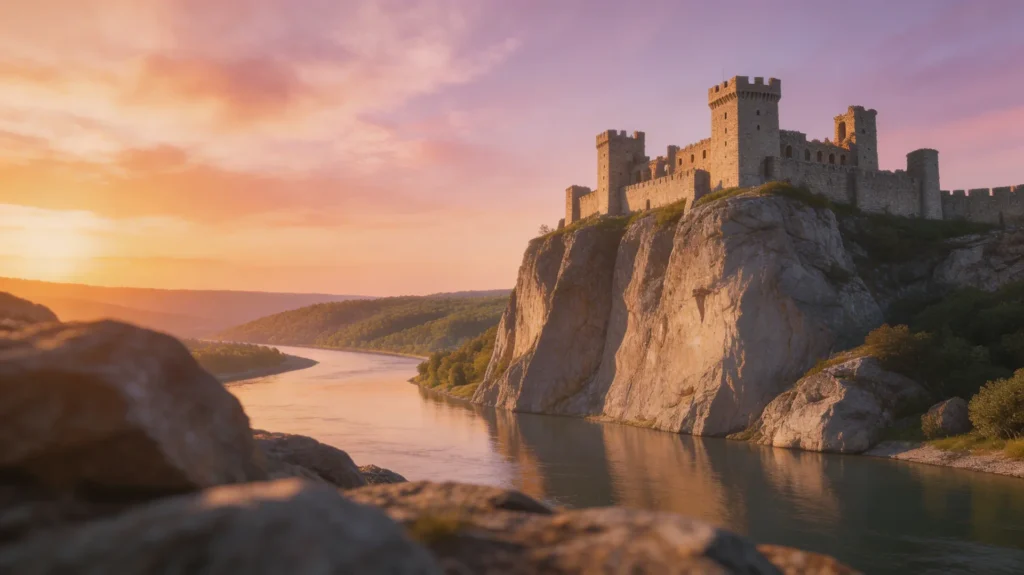
Bratislava Castle dominates the city’s visual and psychological landscape, perched on the rocky hill rising 85 meters above Danube’s right bank. The castle’s distinctive silhouette—four corner towers connected by thick walls—signals historical importance and strategic positioning. Multiple empires and kingdoms built, rebuilt, and modified the castle across centuries, with contemporary reconstruction attempting to restore medieval character while serving as seat of Slovak Parliament.
The castle grounds offer multiple pathways through renovated courtyards and exhibition spaces documenting Slovak history. The terraced gardens provide vantage points overlooking the Danube, old town, and the New Bridge (Nový Most), an unusual structure featuring a UFO-like restaurant pod hovering over the river. Contemporary additions alongside medieval architecture create visual dialogue between historical layers.
The museum within the castle displays artifacts including royal regalia, weaponry, and artwork revealing the castle’s function across centuries. Exhibits document the castle’s role during Ottoman occupation when it remained a Christian stronghold defended by Austrian and Slovak forces. The structure functioned as residence for aristocratic families, some of whom commissioned paintings, tapestries, and decorative elements now preserved in museum collections.
Old Town Wandering & Architecture
Bratislava’s old town comprises compact medieval street network enclosed within ancient walls. The Hauptplatz (Main Square) serves as the old town’s heart, surrounded by baroque buildings, cafes, and restaurants. The square maintains authentic character—locals conducting business alongside tourists, street musicians performing, and the rhythm of contemporary urban life animated by historical setting.
The St. Martin’s Cathedral, where Habsburg monarchs received coronation, dominates old town’s skyline with its dramatic Gothic spire. The cathedral survived multiple occupations and wars, functioning as mosque during Ottoman period before returning to Christian worship. The interior contains royal tombs, historical artwork, and architectural elements revealing craftsmanship of medieval builders and subsequent renovators.
Contemporary artists and galleries have established studios and exhibition spaces throughout old town’s winding alleys. Street art, contemporary sculpture, and gallery installations blend with historical architecture, creating dialogue between centuries. The community of young artists, many recent university graduates, is actively shaping contemporary Bratislava culture and international reputation.
Medieval Churches
Gothic and Renaissance spiritual buildings scattered throughout old town reveal centuries of architectural development and religious practice under different empires.
Baroque Facades
Ornate building exteriors with detailed stonework and decorative elements showcase wealthy merchant and noble residences from 17th-18th centuries.
Communist Memorials
Plaques and monuments document Slovak resistance during Soviet occupation and commemorations of those who perished for national independence.
Contemporary Cafes
Modern establishments occupy medieval buildings, creating anachronistic blend of historic setting and contemporary espresso culture.
Danube Heritage & Wine Routes
The Danube River, Europe’s second-longest river, divides Bratislava and creates crucial boundary between Slovakia and Austria. The river’s historical importance—serving as highway for trade, invasion, and cultural exchange—shaped regional development. Contemporary Bratislava integrates the Danube into urban experience through riverside promenades, boat excursions, and water-oriented recreation.
Day trips along the Danube reveal agricultural regions, small towns, and fortified settlements that once protected Vienna and surrounding territories. Boat excursions from Bratislava travel upstream toward Vienna or downstream into Hungarian plains. These journeys reveal how the river shapes contemporary geography and how communities depend on river commerce and tourism.
Slovakia’s wine regions produce excellent Rieslings, Grüner Veltliner, and red wines from Carpathian foothill vineyards. The small wine-producing communities surrounding Bratislava maintain centuries-old traditions despite post-communist economic disruptions. Wine taverns (vinárne) scattered throughout Bratislava serve local wines in casual, unpretentious atmosphere where locals and increasingly, wine-curious travelers, gather.
Post-Communist Transformation & Culture
Bratislava’s post-1989 transformation from Soviet satellite to EU capital creates unique cultural tension. Soviet-era apartment blocks (panelaky) dominate residential neighborhoods, while contemporary glass and steel office towers signal international corporate presence. This architectural contradiction visually represents the cultural transition—neither fully communist nor fully capitalist, existing in ambiguous hybrid state.
The underground music scene—punk, electronic, hip-hop, experimental—thrives in Bratislava’s smaller venues and independent clubs. Young musicians address post-communist experience, national identity, and contemporary politics through original compositions. This scene represents cultural vitality and generational consciousness distinct from both Soviet and Western European experiences.
Contemporary theater, performance art, and visual art communities create edgy, experimental work often addressing historical trauma and identity questions. The National Theater maintains classical repertoire while independent theaters produce provocative contemporary works. These artistic communities reveal how Slovaks are processing historical experience and constructing new national culture.
Underground Clubs
Smaller venues host live music, DJ events, and experimental performances in authentic atmosphere without commercial tourism orientation.
Gallery Districts
Neighborhoods near old town contain artist studios and galleries displaying contemporary work blending Slovak traditions with global influences.
Street Art
Murals throughout city document Slovak history, contemporary politics, and artistic expression creating outdoor gallery effect.
Cultural Festivals
Annual events celebrate music, theater, film, and traditional culture attracting international participants and local communities.
Visiting Bratislava
Bratislava remains one of Europe’s most affordable major capitals, with excellent value in accommodations, dining, and entertainment. The city center is walkable, with most attractions within manageable distances. Public transportation—buses, trams, and regional rail—provides efficient access to surrounding towns and Vienna.
EU citizens enjoy unrestricted access, while other nationalities may require Schengen visas obtainable through Slovak embassy or consulate. The city is accessible via budget airlines, train connections from Vienna, or bus services from surrounding Central European cities. Direct flights from major European hubs make Bratislava increasingly convenient as regional destination.
Accommodations range from luxury hotels to budget hostels, with quality consistent across price ranges. Mid-range guesthouses operated by local families often provide cultural insights and personalized travel advice. Downtown locations provide old town proximity while neighborhoods across the Danube offer quieter, more residential experiences.
The currency is Euro, with ATMs widely available. Credit cards accepted in major establishments but cash remains necessary for small restaurants, street vendors, and local merchants. Restaurants offer excellent value compared to Western Europe, with three-course meals in mid-range establishments costing 15-25 euros.
Experience Central Europe’s Hidden Capital
Bratislava invites discovery of medieval charm, post-communist transformation, and contemporary Central European culture. From Danube riverside to castle heights to authentic wine cellars, the city rewards curious exploration.
Start planning your Bratislava adventure today with Facts From Upstairs.