
City Guide · Nouvelle-Aquitaine
Bordeaux, France: The World’s Wine Capital, an 18th-Century Stone City, and the Miroir d’eau
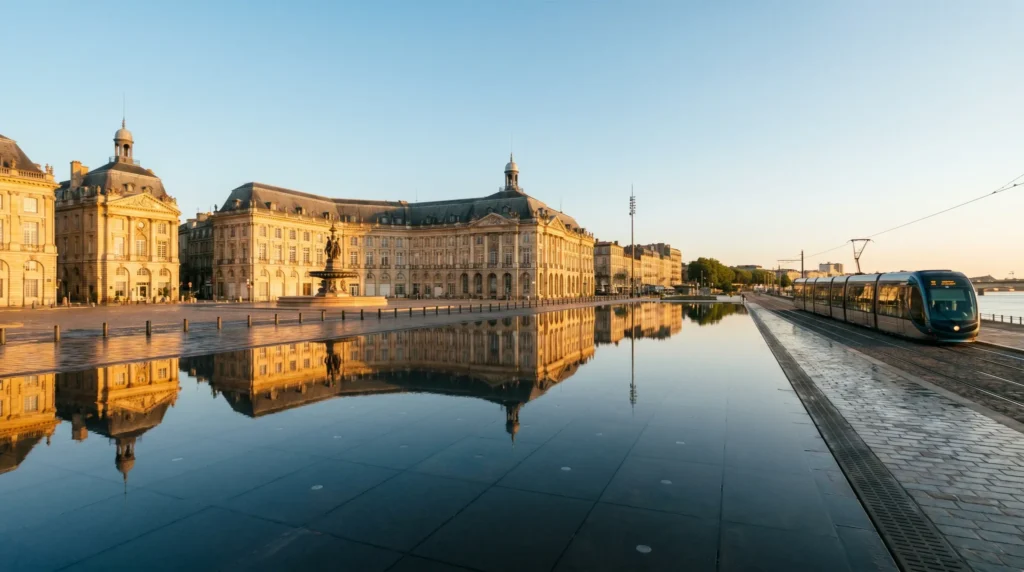
I came to Bordeaux expecting a wine errand and stayed for the limestone. We tell first-time travellers that this is the rare big French city you can read in a single walk — about 268,000 people inside the commune, roughly 1.4 million across the wider metropolitan area — yet half of it, some 1,810 hectares of golden 18th-century stone, is inscribed by UNESCO as a single living World Heritage site, the largest urban ensemble on the list . My favourite Bordeaux ritual is dusk on the Place de la Bourse, when the Miroir d’eau exhales its thin film of water and the whole 1755 facade flips upside down at your feet. Treat this guide as the brief I would hand my own family the day before they boarded the LGV from Paris — the Cité du Vin, a Saint-Émilion or Médoc wine day, the cathedral and the riverfront, and the Dune du Pilat and Arcachon escape when you need the Atlantic .
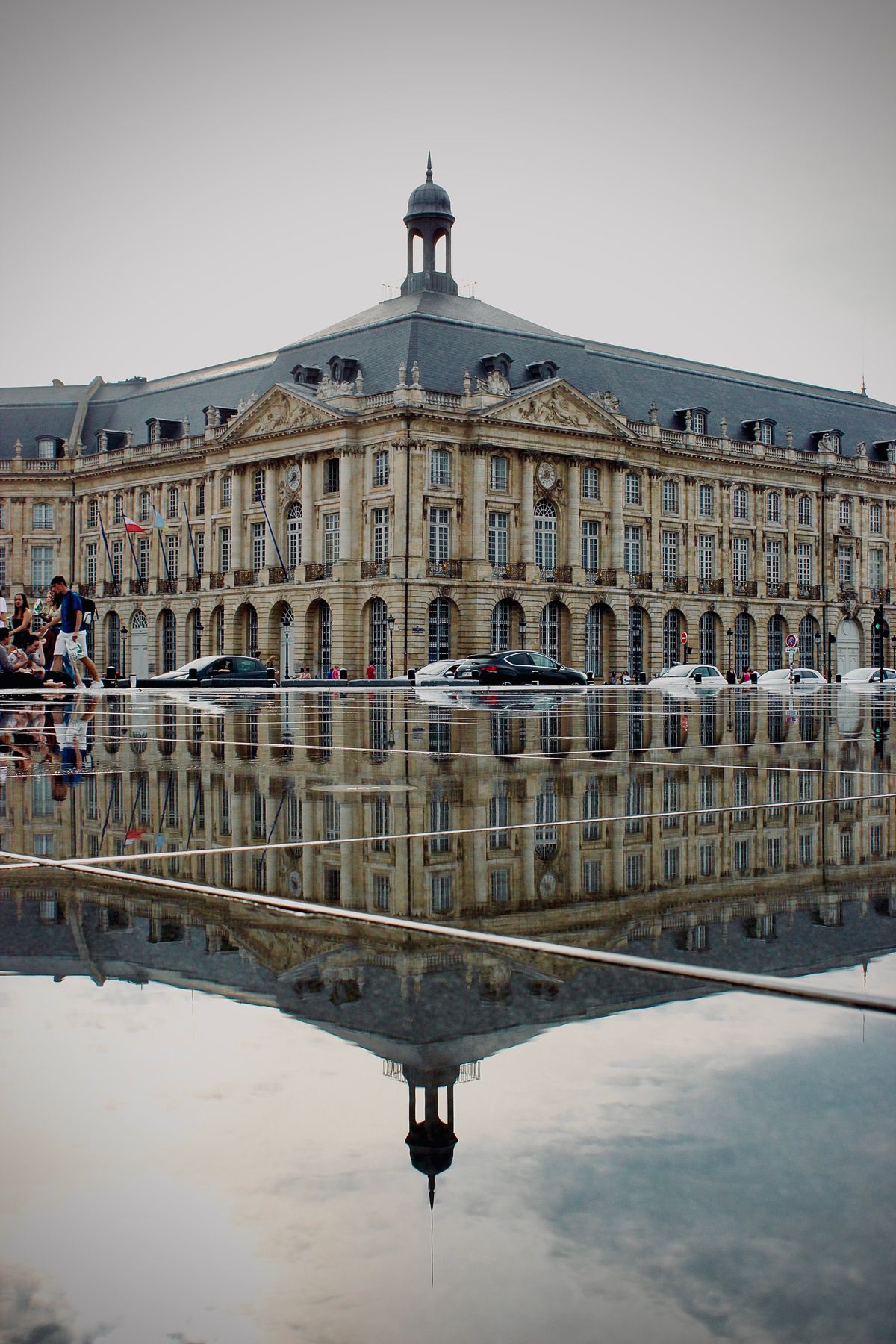
Table of Contents
Why Bordeaux?
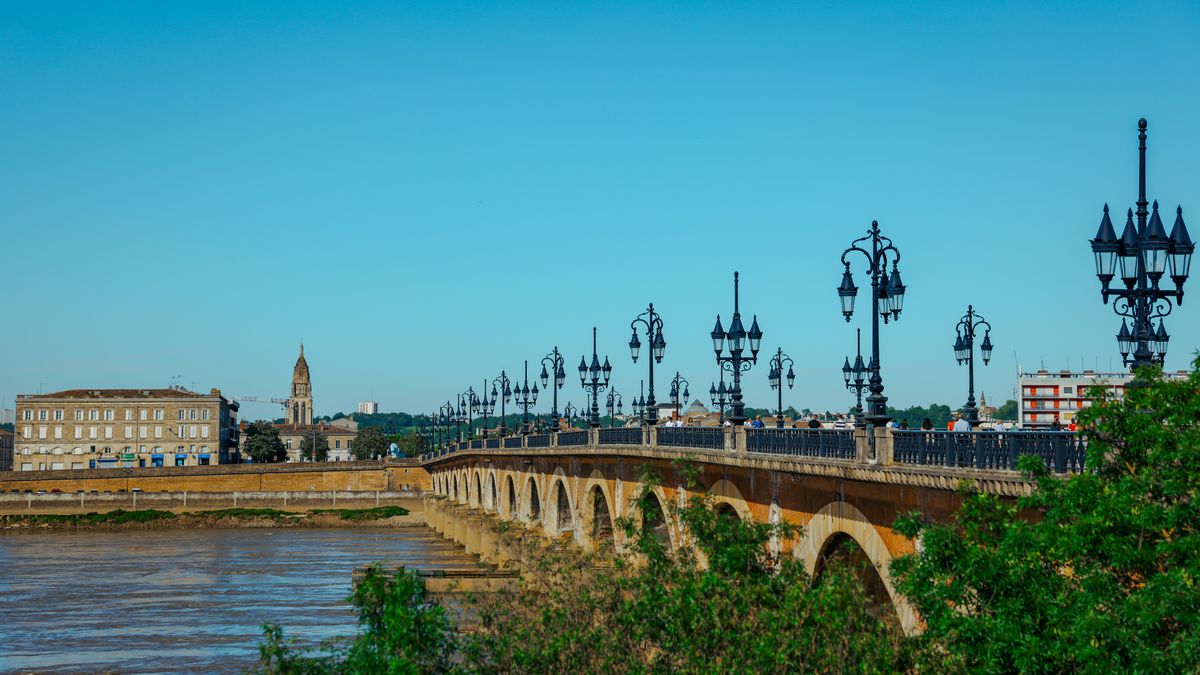
Bordeaux is the great French city that France itself rediscovered late. For most of the 20th century its honey-coloured stone hid under two centuries of traffic grime, and the joke was that the elegant capital of Aquitaine had turned its back on its own river. Then a decade of cleaning, a new tramway and the pedestrianisation of the quays transformed it, and in 2007 UNESCO inscribed 1,810 hectares of the historic centre — the largest urban World Heritage area on the list — recognising it as “an outstanding urban and architectural ensemble of the 18th century” . The city proper holds about 268,000 residents, with roughly 1.4 million across the metropolitan area, which makes Bordeaux the ninth-largest city in France and the capital of the Nouvelle-Aquitaine region .
The city reads as a stack of productive contradictions. It is monumental on a scale that surprises first-time visitors — the Place de la Bourse and its 1755 royal facade, the vast Esplanade des Quinconces (one of the largest city squares in Europe), the neoclassical Grand Théâtre — yet daily life happens at the scale of the wine bar, the covered market and the Saturday morning oyster stall. The whole crescent of the old town curves along the left bank of the Garonne, which the city calls the port de la lune, the “port of the moon”, for the river’s wide lunar bend . And then there is the wine: the surrounding region is the largest fine-wine area on earth, with roughly 6,000 châteaux and around 110,000 hectares of vineyards in its appellations .
The density of heritage per square kilometre is unusual even by French standards. The Golden Triangle — the wedge between the Grand Théâtre, the Cours de l’Intendance and the Allées de Tourny — packs the opera house, the 18th-century mansions and the smartest shopping into a few hundred metres. The Cathédrale Saint-André and its free-standing Pey-Berland bell tower anchor the southern edge; the Miroir d’eau, the world’s largest reflecting pool at 3,450 square metres, mirrors the Place de la Bourse on the riverfront . What keeps it all coherent rather than overwhelming is the human scale: the historic centre is overwhelmingly low-rise limestone, the streets were laid out for shade and ceremony, and almost every sight on a first-timer’s list sits within a 20-minute walk of the Place de la Comédie.
This guide covers the neighbourhoods you will actually walk, the wine bars and covered markets worth seeking out, the cathedral-and-palace tier (Place de la Bourse, the Grand Théâtre, Saint-André Cathedral, the Cité du Vin), the wine-country day trips Bordelais themselves take on weekends — Saint-Émilion and the Médoc above all — and the great Atlantic escape to the Dune du Pilat and Arcachon. Bordeaux’s calendar peaks in early summer, when the biennial Bordeaux Fête le Vin turns the quays into the largest wine festival in Europe, and again at the September harvest, when the whole region works at once . Everything else flows from there.
One more orientation point: Bordeaux is built around its river and its table, not its monuments alone. The rhythm of a good day here is a morning at a market, a long lunch with a glass of something local, an afternoon walk along the quays or out to a château, and a late, unhurried dinner. For visitors, the lesson is simple: do not try to “do” Bordeaux like a museum city. Walk the stone in the morning light, give one full day to the vineyards, and keep the riverfront for the golden hour. For the wider French context, this guide pairs with our France Travel Guide and the sibling Paris, Lyon and Marseille city guides.
Getting There
Bordeaux–Mérignac Airport (BOD), about 12 kilometres west of the centre, is the largest in south-west France, handling roughly 6.8 million passengers in 2024 . It runs domestic links to Paris, Lyon and Nice plus European service on easyJet, Ryanair, Volotea and the legacy carriers. The 30′ Direct shuttle bus reaches the centre in about 30 minutes for a few euros; a taxi to the historic core is roughly €30–€45 depending on time of day.
Rail is usually the smarter inbound from elsewhere in France. Since the LGV Sud-Europe-Atlantique high-speed line opened on 2 July 2017, the TGV INOUI links Paris-Montparnasse and Bordeaux Saint-Jean in about 2 hours 5 minutes, cutting almost an hour off the old timetable . Advance fares start around €30; expect €70–€110 last-minute. Saint-Jean also runs TER regional trains to Saint-Émilion (about 35 minutes), Arcachon (about 50 minutes) and Toulouse.
By road, FlixBus and BlaBlaCar Bus run intercity coaches from Paris, Toulouse and across the south-west into the Saint-Jean coach area . Coaches are the cheapest option and useful for towns the train does not reach; the A10 motorway connects Bordeaux to Paris, and the A63 runs south toward the Basque coast and Spain.
Getting Around
Bordeaux’s historic centre is built for walking, and the network beyond it is one of the best in provincial France: a four-line tramway, a dense TBM bus system, a river shuttle on the Garonne, and the V³ public-bike scheme . The flat terrain and the compact core mean most visitors barely use transit inside the old town — the Place de la Bourse, the Grand Théâtre, the cathedral and the quays are all within a 20-minute walk of each other. Transit matters mainly for the airport, the Cité du Vin, the train station and the right-bank Bastide.
The Tramway
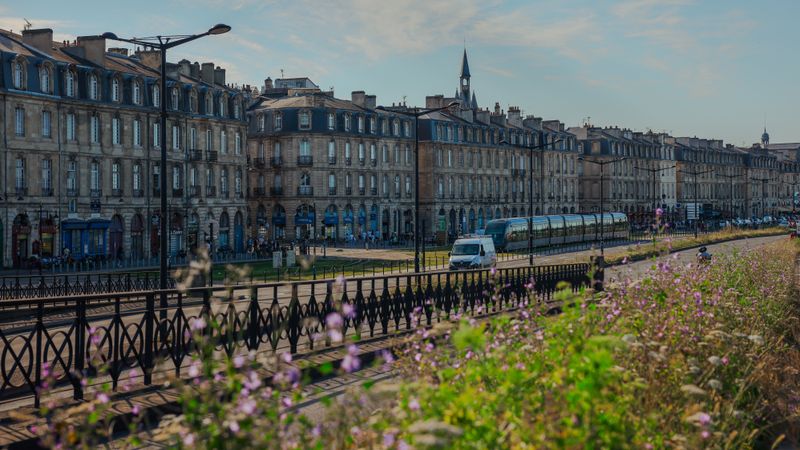
Bordeaux’s modern tram network opened on 21 December 2003 and now runs four lines (A, B, C and D) totalling more than 75 kilometres — one of the largest tram systems in France . Through the historic centre the trams famously run without overhead wires, drawing power from a ground-level third rail (the APS system) so the cables never clutter the UNESCO streetscape. Lines connect Saint-Jean station, the Cité du Vin (Line B to Stalingrad/La Cité du Vin), the airport (Line A to Aéroport) and both riverbanks. A single ticket runs about €1.80 and is valid for an hour with transfers.
Buses and the River Shuttle
The TBM bus network fills in everywhere the tram does not reach, and the same ticket covers bus, tram and the BatCub/Bat³ river shuttle that crosses the Garonne between the Quai Richelieu and the right bank . The river shuttle is a cheap, scenic way to reach the Bastide and the Jardin Botanique, and it is included in a standard transit pass rather than charged as a tourist cruise. Night buses cover the late hours when the trams stop.
V³ Public Bikes and Cycling
Bordeaux’s flat, compact geography makes it one of France’s most cycle-friendly cities, and the V³ (VCub) bike-share scheme is a cheap way to cover ground, with stations across the centre and along both quays. A short-term subscription costs a few euros, with the first 30 minutes of each ride free. The riverside cycle paths run for kilometres along the Garonne, and the absence of hills means even casual riders can manage the whole core and reach the Cité du Vin without breaking a sweat.
Airport Access
- 30′ Direct shuttle bus to the centre — about 30 minutes, roughly €8
- Tram Line A (via Mérignac) to the centre — cheaper but slower at around 50 minutes
- Taxi BOD to the historic centre — about 20–25 minutes, roughly €30–€45
Taxis and Rideshare
Licensed Bordeaux taxis carry an illuminated roof sign; flag-fall and per-kilometre rates are regulated, with higher night and Sunday tariffs. A typical cross-centre ride runs €8–€15. Uber and Bolt both operate in the city and are often cheaper and easier to book than a street hail. Card payment is standard, but carry small notes for shorter trips.
Navigation Tips
The medieval lanes of Saint-Pierre bend and rename themselves within a block, but Bordeaux is easy to orient: the river is always east, the Grand Théâtre and the Place de la Comédie are the centre of gravity, and the tram lines double as a mental map. Google Maps and Citymapper both handle Bordeaux’s transit well. Most of the centre is pedestrian-only or restricted, so do not plan to drive into the core — park at a Park-and-Ride (P+R) on a tram line instead.
Neighbourhoods: Where to Base Yourself
📍 Bordeaux Map: Every Place in This Guide
Bordeaux’s character changes street by street, and choosing the right quartier shapes the whole trip. The historic core is compact — you can walk it end to end in well under half an hour — but each quarter has its own rhythm, price point and noise level. Below are the five neighbourhoods most first-time visitors actually consider, with an honest read on who each suits.



Saint-Pierre and the Old Town
The medieval heart between the Place de la Bourse and the Grand Théâtre is the postcard Bordeaux — narrow lanes, hidden squares, and the river two minutes away. It is also the most touristed and the priciest per square metre. Stay here if it is your first visit and you want everything on your doorstep; be aware that the Place du Parlement and Place Saint-Pierre bars keep the lanes lively until late.
The Golden Triangle (Triangle d’Or)
The wedge between the Grand Théâtre, the Cours de l’Intendance and the Allées de Tourny is the city’s most elegant district: 18th-century mansions, the smartest shopping, fine-dining and the grandest hotels. It is central and walkable, the natural base if you want comfort and the opera on your doorstep, and predictably the most expensive part of town to sleep in.
Chartrons
North along the river, the former wine-merchant quarter of Chartrons has become Bordeaux’s most fashionable neighbourhood, with antique dealers, the Sunday riverside market, independent wine bars and a creative-class crowd. It is a fifteen-minute walk or one tram stop to the centre, sits next to the Cité du Vin, and offers better value and a more local feel than the old town.
Saint-Michel and Capucins
South of the cathedral, the working, multicultural Saint-Michel quarter wraps around its soaring basilica and the daily Marché des Capucins, the city’s great covered market. It is the cheapest, liveliest and most diverse base — good value, excellent food, and a short walk to everything — if you want neighbourhood energy over polish.
Food and Wine: The Table of the South-West
Bordeaux eats the way south-west France eats — richly, seasonally, and always with a glass in reach. The region is duck and oyster country as much as wine country, and the city’s covered markets, wine bars and neo-bistros make it one of the best eating cities in France outside Paris and Lyon. The trick is to anchor a day around the Marché des Capucins, drink local, and never rush a lunch.

What to Order
- Canelé — the city’s emblematic little cake, caramelised crust and soft custard centre, perfumed with rum and vanilla.
- Entrecôte à la bordelaise — ribeye in a red-wine, shallot and bone-marrow sauce, the signature local dish.
- Huîtres du Bassin d’Arcachon — Arcachon Bay oysters, classically eaten with a small grilled sausage (crépinette) and a glass of white.
- Lamproie à la bordelaise — lamprey braised in red wine, an acquired-taste classic of the Garonne and Gironde.
- Magret de canard — seared duck breast, the everyday luxury of the whole south-west.
Where to Eat and Drink
The Marché des Capucins is the place to graze on oysters and white wine on a Saturday morning; the Chartrons and Saint-Pierre quarters hold the densest runs of wine bars and neo-bistros. For wine, look for an aux vins bar with an open list of Bordeaux by the glass — you do not need a grand cru to drink superbly here. The Halles de Bacalan food hall, beside the Cité du Vin, is good for grazing across vendors in one stop.
Wine, Simply
Bordeaux’s appellations split broadly into the firmer, Cabernet-led reds of the Left Bank (Médoc, Graves) and the rounder, Merlot-led reds of the Right Bank (Saint-Émilion, Pomerol), plus the sweet whites of Sauternes and the dry whites and crisp crémant made across the region . You can taste your way through all of it in the city without ever leaving for a château — though you should leave for at least one.
Cultural Sights: Stone, Wine and the River
Bordeaux’s UNESCO World Heritage listing — inscribed in 2007 — covers the whole 18th-century crescent of the old town, so in a sense the city itself is the monument . But a handful of set-piece sights anchor a first visit: the Place de la Bourse and Miroir d’eau, the Grand Théâtre, Saint-André Cathedral, and the 21st-century Cité du Vin. Most sit within a fifteen-minute walk of each other; only the Cité du Vin needs the tram.

Place de la Bourse and the Miroir d’eau
The Place de la Bourse, built 1730–1755 by the royal architect Ange-Jacques Gabriel, was the first breach in Bordeaux’s medieval walls and the symbol of the city’s opening to the river. Facing it across the quay, the Miroir d’eau — installed in 2006 and, at 3,450 square metres, the largest reflecting pool in the world — alternates a thin mirror of water with a drifting mist, doubling the 18th-century facade and delighting children all summer .
The Grand Théâtre and the Golden Triangle

Victor Louis’s Grand Théâtre, opened in 1780, is one of the great neoclassical opera houses of Europe, its twelve-column portico topped by statues of the nine muses and three goddesses; its grand staircase later inspired Garnier’s Paris Opéra. It still hosts the Opéra National de Bordeaux. Around it spreads the Golden Triangle of 18th-century mansions and the Place de la Comédie, the city’s living room .
Saint-André Cathedral and the Pey-Berland Tower

The Gothic Cathédrale Saint-André, where Eleanor of Aquitaine married the future Louis VII in 1137, is a UNESCO-listed stop on the Camino de Santiago pilgrim routes. Its free-standing 15th-century bell tower, the Tour Pey-Berland, can be climbed (231 steps) for one of the best views over the old town’s rooftops; the climb costs around €6, and the cathedral itself is free .
La Cité du Vin

Opened on 1 June 2016 in the Bacalan district, La Cité du Vin is a swirling, decanter-inspired museum dedicated to the world’s wine cultures, not just Bordeaux’s. The permanent tour is immersive and multilingual, and the ticket (around €22) includes a tasting on the 8th-floor Belvédère panoramic bar overlooking the river. Reach it by tram Line B .
Wine Festivals, Opera and Nightlife
Bordeaux’s entertainment runs on its two great loves — wine and music — framed by a riverfront that has become the city’s stage. The biennial Bordeaux Fête le Vin turns the quays into the largest wine festival in Europe; the Opéra National plays the Grand Théâtre; and the bars of Saint-Pierre, Chartrons and the Darwin eco-district keep the city up far later than its monuments suggest.
Bordeaux Fête le Vin
Held over four days every even-numbered year (next in June 2026), Bordeaux Fête le Vin lines the Garonne quays with regional appellation pavilions, a tasting pass that lets you sample dozens of wines, tall ships moored along the river, and nightly concerts and fireworks . It is the single best time to taste across the whole region in one walk — and the busiest, so book rooms far ahead.
Opera and Classical
The Opéra National de Bordeaux performs opera and ballet in the gilded 1780 hall of the Grand Théâtre, one of the most beautiful auditoriums in France, with tickets ranging from budget upper seats to premium stalls . Even if you do not see a show, a guided tour of the interior is worth an hour for the staircase alone. The modern Auditorium hosts the city’s symphony orchestra.
Bars, Quays and the Darwin District
For nightlife, the Place du Parlement and Place Saint-Pierre fill with terrace crowds; Chartrons leans wine-bar and cocktail; and across the river the Darwin eco-district — a former barracks turned skate park, street-art hub, organic canteen and co-working space — draws a younger, creative crowd. The riverside quays themselves, pedestrianised and lit, are where Bordeaux strolls on a warm evening, glass in hand.
Day Trips From Bordeaux
Bordeaux is the natural base for the world’s greatest wine region and a stretch of wild Atlantic coast, with fast trains and easy drives reaching all of it in under two hours. If you have more than two days, give at least one to a vineyard and, if you can, one to the dunes — the contrast sharpens your sense of what makes the city itself distinct.
Saint-Émilion (35 minutes by TER train)
The medieval wine town of Saint-Émilion, a UNESCO World Heritage site in its own right, sits about 35 minutes east by regional train and is the easiest château day from the city . Tour its monolithic underground church carved from the limestone, walk the steep cobbled lanes, and taste the Merlot-led Right Bank reds at a cellar door or in town.
The Médoc (1 hour by car or wine tour)
North-west along the Gironde estuary, the Médoc holds the most famous names in red wine — Margaux, Pauillac, Saint-Julien — lined up along the D2 “Route des Châteaux”. A guided minibus tour from the city (roughly half a day) is the simplest way to taste the grand crus; the great first-growth estates require advance appointments.
Dune du Pilat and Arcachon (50 minutes by train)
About 50 minutes south-west by train, Arcachon Bay pairs an oyster-fishing tradition with the Dune du Pilat, the tallest sand dune in Europe at around 102–110 metres, climbing it for a panorama over the Atlantic, the bay and the pine forest . Eat oysters in the port town of Arcachon and time the tide for the best of the beach.
Bassin and Beyond
For more time, the Bassin d’Arcachon’s oyster villages such as Cap Ferret, the surf town of Lacanau, and the city of Bayonne and the Basque coast are all within a couple of hours, opening a whole second region south of Bordeaux.
When to Visit: A Season-by-Season Guide
Bordeaux’s oceanic climate is milder and wetter than the Mediterranean south, and the wine calendar shapes the year as much as the weather. Here is how each season actually feels on the ground.
Spring (March–May)
One of the loveliest times to visit: the vines bud, the limestone glows, temperatures climb into the high teens and low 20s°C, and the terraces reopen. May in particular offers warm days, long light and manageable crowds before the summer peak. Some rain lingers from winter, so pack a light jacket, but the shoulder-season value is excellent.
Summer (June–August)
Warm and busy, with highs in the high 20s to low 30s°C and the city at its liveliest. June brings Bordeaux Fête le Vin in even years; July and August fill the quays and push the nearby Atlantic beaches to capacity. Book accommodation well ahead, and use the river and the shaded public gardens to escape the afternoon heat.
Autumn (September–November)
Arguably the best season: September brings the vendanges (grape harvest), the vineyards turn gold and russet, the heat eases and the crowds thin. The food is at its richest — game, mushrooms, new-pressed wine — and a Médoc or Saint-Émilion day trip during harvest is unforgettable. October stays warm and uncrowded before the rains arrive.
Winter (December–February)
Mild but wet by French standards — daytime highs of 9–12°C, grey skies and frequent rain — with the lowest prices and thinnest crowds of the year. The monuments and the Cité du Vin stay open, the Christmas market lines the Allées de Tourny, and the wine bars are at their cosiest. Bring waterproofs and lean into the indoor pleasures.
Budget Breakdown: What Bordeaux Actually Costs
Bordeaux is cheaper than Paris but not a budget city — roughly comparable to Lyon for food and lodging, with wine that can be remarkable value or eye-watering depending on the bottle. The figures below are per-person daily estimates excluding flights, in euros, based on 2025–2026 prices.
Backpacker (€55–85/day)
A hostel dorm bed runs €22–35; market grazing and a plat du jour keep food to €18–30; the old town is free to walk. Add one paid sight and a glass of wine and you stay under €85.
Mid-Range (€130–210/day)
A three-star hotel or central apartment is €90–150 for a double (more in summer); add €40–60 for meals, €15–25 for sights and taxis, plus a tasting or the Cité du Vin. This is the typical comfortable-tourist band.
Luxury (€350+/day)
A four- or five-star room runs €280–550+, fine dining adds €90–180, and a private Médoc tour with grand-cru tastings pushes the day well past €350. Festival and harvest weeks lift these figures further.
Key Fixed Costs
- La Cité du Vin entry — about €22 including a tasting
- Pey-Berland tower climb — about €6; the cathedral is free
- Single tram/bus fare — about €1.80
- Airport 30′ Direct shuttle to centre — about €8
- TER train to Saint-Émilion — about €9–12 each way
Practical Tips and Safety
Bordeaux is a safe, easy city for visitors, but a handful of practical habits make the difference between a smooth trip and an avoidable headache. None of this is alarming — it is the ordinary common sense of any popular European destination.
Money and Payments
France uses the euro; cards (including contactless) are accepted almost everywhere, but small markets and some bakeries still prefer cash for low-value orders, so carry €20–30 in small notes. ATMs are plentiful; avoid the standalone non-bank machines, which apply poor exchange rates, in favour of bank ATMs.
Safety and Scams
Violent crime is rare; the realistic risk is pickpocketing in crowds around the Place de la Bourse, on busy trams and at the markets. Use a zipped bag worn to the front, and be wary of petition and friendship-bracelet scams near the major squares. The UK and US governments rate France a low-risk destination overall .
Health and Water
Tap water is safe to drink throughout the city. EU visitors should carry an EHIC/GHIC card; everyone else should have travel insurance. Pharmacies (pharmacies, marked with a green cross) are widespread and competent for minor ailments, and at least one in each district stays open late on a rota.
Practical Essentials
- Language: French; English is common in wine tourism and hotels, less so in neighbourhood bistros — a bonjour opens every door.
- Plugs: Type C/E, 230V — bring an EU adapter.
- Tipping: service is included; rounding up or leaving small change is plenty.
- Sundays: many shops close and bakeries keep short hours; markets are the exception.
- Dress: shoulders and knees covered for the cathedral.
Frequently Asked Questions
How many days do you need in Bordeaux?
Three full days is the sweet spot: one for the stone city (Place de la Bourse, Grand Théâtre, cathedral and the Pey-Berland climb); one for the Cité du Vin and the riverbanks; and one for a wine day in Saint-Émilion or the Médoc. Add a fourth for the Dune du Pilat and Arcachon oysters. Two days covers the city centre at a rush.
What is the best time of year to visit Bordeaux?
September is the standout — grape harvest in the vineyards, warm days, fewer crowds and lower prices — with May a close spring runner-up. Summer is liveliest but busiest, and June brings Bordeaux Fête le Vin in even years. Winter is mild but wet, quiet and the best value of all.
Is Bordeaux expensive?
It is cheaper than Paris but not a budget city — roughly on par with Lyon. A mid-range trip runs about €130–210 per person per day excluding flights, and backpackers can manage on €55–85. Wine can be excellent value by the glass; the grand crus are where costs spiral.
Do I need to visit a château, or can I taste wine in the city?
You can taste superbly without leaving Bordeaux — the Chartrons wine bars, the Cité du Vin and the city’s caves pour across every appellation. But at least one vineyard day, in Saint-Émilion (35 minutes by train) or the Médoc, gives you the landscape and the cellar that the glass alone cannot.
Is Bordeaux walkable, or do I need public transport?
The historic centre is exceptionally walkable — flat, compact and largely pedestrianised. Most visitors use transit only for the airport, the train station and the Cité du Vin (tram Line B). The four-line wireless tramway is excellent when you do need it, with a single ticket valid for an hour.
How do I get from Bordeaux airport to the city centre?
The 30′ Direct shuttle bus runs into the centre in about 30 minutes for roughly €8, while a taxi takes around 20–25 minutes for €30–45 depending on time of day . Tram Line A via Mérignac is the cheapest option but slower at around 50 minutes .
Is Bordeaux safe for tourists?
Yes, very. Violent crime is rare and the main risk is pickpocketing in crowds. Both the UK and US governments rate France a low-risk destination. Take the usual precautions with bags in busy areas and on trams, and watch for petition and bracelet scams near the major squares.
Can I do a day trip to Saint-Émilion by train?
Yes — regional TER trains reach Saint-Émilion from Bordeaux Saint-Jean in about 35 minutes for roughly €9–12 each way, and the village is small enough to explore on foot with cellar doors in town . It is the easiest château day from the city for travellers without a car.
What food is Bordeaux famous for?
Wine above all, but also canelés (the rum-and-vanilla little cakes), entrecôte à la bordelaise (ribeye in red-wine sauce), Arcachon Bay oysters, duck in every form, and the acquired-taste lamproie à la bordelaise. Anchor a day around the Marché des Capucins and eat where the south-west eats.
Was This Guide Helpful?
We update our Bordeaux guide as prices, transit and opening hours change. Let us know if it helped — your feedback shapes the next revision.
Ready to Experience Bordeaux? Walk the Stone, Drink the Region
Bordeaux rewards a slow traveller. Its set pieces are world-class — the Place de la Bourse mirrored in the Miroir d’eau, the Grand Théâtre, the Cité du Vin — but the city’s real magic is in the in-between: a Saturday morning of oysters at the Capucins, a glass of Right Bank red in a Chartrons cellar, the river at golden hour, the Dune du Pilat against the Atlantic. Plan the stone city, give one day to the vines, then leave room to wander. For the wider picture, see our France travel guide, and pair Bordeaux with Paris, Lyon and Marseille for a complete French trip.
Explore More City Guides
Bordeaux is one stop in our growing library of French and European city guides. Keep planning with these companion pages:
More city guides you might like
Plan your trip to Bordeaux
The booking tools we use ourselves. FFU may earn a commission at no extra cost to you.
Plan & book your trip to Bordeaux
Booking through these searches supports our guides at no extra cost to you.