
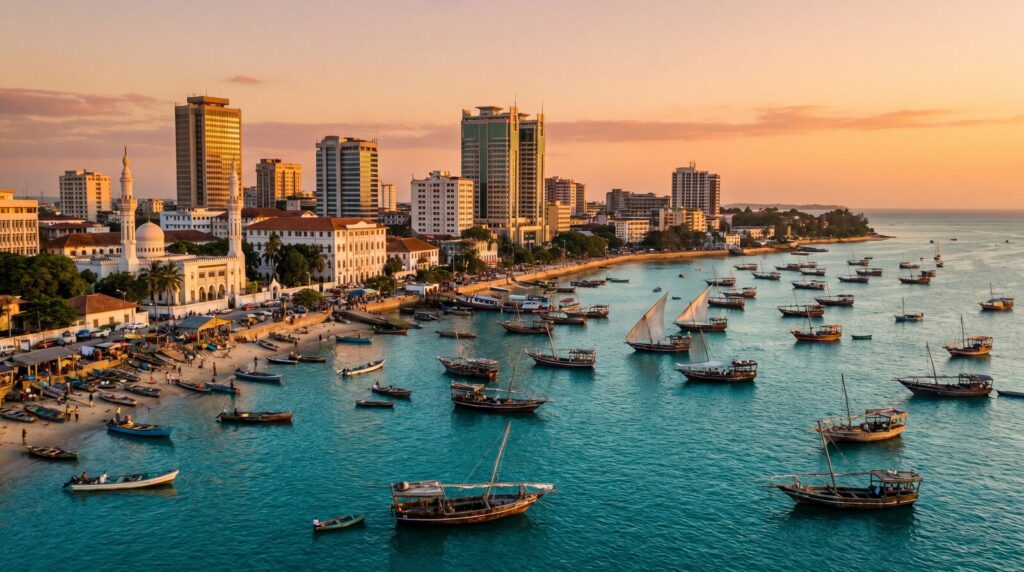
Dar es Salaam, Tanzania: Haven of Peace, Indian Ocean Port & Gateway to Zanzibar
Your Complete Guide to Dar es Salaam, Tanzania
📍 In This Guide
- When to Visit Dar ☀️
- City Markets & Culture 🏛️
- Coco Beach & Coast 🏖️
- Food Scene 🍛
- Zanzibar Ferry 🚢
- Day Trips 🌴
- Budget & Practical Tips 💰
When to Visit Dar ☀️
Dar es Salaam is hot and humid year-round — there’s no cool season to speak of. The long rains (March-May) bring heavy daily downpours that flood streets and make getting around a challenge. Short rains (November-December) are more manageable. June-October is the driest and most comfortable period, with slightly lower humidity. If you’re using Dar as a Zanzibar gateway, the ferry runs year-round and weather rarely disrupts the crossing.

☀️ Dry Season
June-October. Least humid, most comfortable. Best time for city exploring and beach days.
🌧️ Long Rains
March-May. Heavy daily rain, flooding common. Cheap accommodation, few tourists.
🌦️ Short Rains
November-December. Brief afternoon showers. Still pleasant for visiting. Good shoulder season.
🔥 Hot Season
January-February. Hottest months, 32°C+. Manageable if you take it slow and stay hydrated.
City Markets & Culture 🏛️
Kariakoo Market is the heartbeat of Dar — a massive, chaotic trading hub where you can buy anything from live chickens to secondhand electronics to handwoven baskets. The market building itself is an architectural landmark from the German colonial period. The National Museum houses important archaeological finds including some of the oldest human fossils in the world. The Village Museum on the outskirts recreates traditional homes from Tanzania’s 120+ ethnic groups.
🏪 Kariakoo Market
The largest market in East Africa. Come early morning for the full experience. Photography — ask first.
🏛️ National Museum
Important human evolution exhibits. Fossils from Olduvai Gorge. Small but excellent. $5 entry.
🏘️ Village Museum
Open-air museum with traditional dwellings from across Tanzania. Dance performances on weekends.
🎨 Nyumba ya Sanaa
Art center showcasing Tanzanian contemporary art, Tingatinga paintings, and Makonde carvings.
Food Scene 🍛
Dar’s food is a delicious reflection of its position between Africa, Arabia, and India. Chips mayai (french fry omelette) is the city’s beloved street food — cheap, filling, and oddly delicious. Mishkaki (grilled meat skewers) are everywhere after dark. The Indian-influenced curries and biryanis in the Upanga area are excellent. Fresh seafood along the Msasani Peninsula ranges from grilled fish at beach shacks to upscale ocean-view restaurants. Zanzibar pizza (a stuffed pan-fried flatbread) is the ultimate late-night snack.
🍳 Chips Mayai
French fries folded into an omelette. The national street food. Available everywhere for $0.50-1.
🥩 Mishkaki
Grilled skewers appearing at every street corner after sunset. Beef, goat, or chicken. Cents per stick.
🐟 Fresh Seafood
Kivukoni Fish Market for the freshest catch. Beach restaurants at Coco Beach grill fish on the spot.
🫓 Zanzibar Pizza
Not actually pizza — a stuffed, pan-fried flatbread with meat, egg, and vegetables. Best late at night.
Zanzibar Ferry & Islands 🚢
Most travelers pass through Dar en route to Zanzibar, and the ferry crossing is an experience in itself. Fast ferries take about 2 hours and cost $35 for tourists. The Azam Marine ferries are the most reliable. Book one day ahead if possible and arrive early for the (chaotic) boarding process. Beyond Zanzibar, Dar is also the jumping-off point for Mafia Island — a quieter, more authentic alternative with world-class diving and seasonal whale shark encounters.
⛴️ Zanzibar Ferry
2-hour crossing, $35 tourist fare. Azam Marine is most reliable. 3-4 departures daily. Book ahead.
🏝️ Mafia Island
The anti-Zanzibar — quiet, undeveloped, incredible marine park. Whale sharks October-March. Fly or ferry.
🤿 Bongoyo Island
30-minute boat ride from Dar. Day trip for snorkeling and a deserted-island beach experience. $20 round trip.
✈️ Fly Instead?
Flights to Zanzibar take 20 minutes, from $50 one-way. Worth it if time is tight or seas are rough.
Budget & Practical Tips 💰
Dar es Salaam is cheap by any standard. Local food costs almost nothing, accommodation ranges from $5 dorms to luxury hotels, and the bajaji (three-wheeler) network gets you everywhere affordably. Traffic is the city’s biggest challenge — rush hour can turn a 5km trip into a 2-hour ordeal. The BRT (bus rapid transit) system runs along a dedicated lane and is the fastest way to cross the city. Be alert for pickpockets in crowded areas, especially at markets and ferry terminals.
🏨 Accommodation
Backpacker hostels from $5/dorm. Mid-range hotels $20-40. Msasani/Oyster Bay for upscale options from $60.
🛺 Getting Around
Bajaji (tuk-tuks) $1-3 per ride. BRT buses are fast on dedicated lanes. Regular dala-dala buses $0.20 but packed.
💰 Food Budget
Street food $0.50-1. Local restaurant $2-4. Western-style restaurants $8-15. Budget travelers: $20/day easily.
🔒 Safety
Generally safe but petty crime exists. Don’t walk with valuables at night. Use ride-hailing apps after dark.
East Africa’s gateway awaits.
Dar es Salaam is raw, real, and rewarding — a city where the chips mayai costs less than a dollar and the ferry to paradise leaves every morning.
❓ Frequently Asked Questions
What is the best time to visit Dar es Salaam?
The best time to visit is during the dry season from June to October, when humidity drops and temperatures are comfortable around 77–86°F (25–30°C). The short rains in November-December are manageable, but the long rains from March to May can be heavy.
Is Dar es Salaam worth visiting?
Yes, Dar es Salaam offers a vibrant mix of Swahili culture, bustling markets, Indian Ocean beaches, and Tingatinga art galleries. It also serves as the jumping-off point for Zanzibar ferries and southern Tanzania safari circuits.
How many days do you need in Dar es Salaam?
Two to three days is enough to explore the National Museum, Kariakoo Market, Coco Beach, and the Tingatinga art cooperative. Add an extra day if you want to take a day trip to nearby Bongoyo Island.
Is Dar es Salaam safe for tourists?
The city center and tourist areas are generally safe during the day. Use registered taxis or ride-hailing apps, keep valuables out of sight, and avoid walking alone in unfamiliar areas after dark, particularly around the port area.