
Faroe Islands, Denmark: Puffin Colonies, Sea Stacks & Remote Beauty
Discover Earth’s most dramatic seabird sanctuaries in the North Atlantic
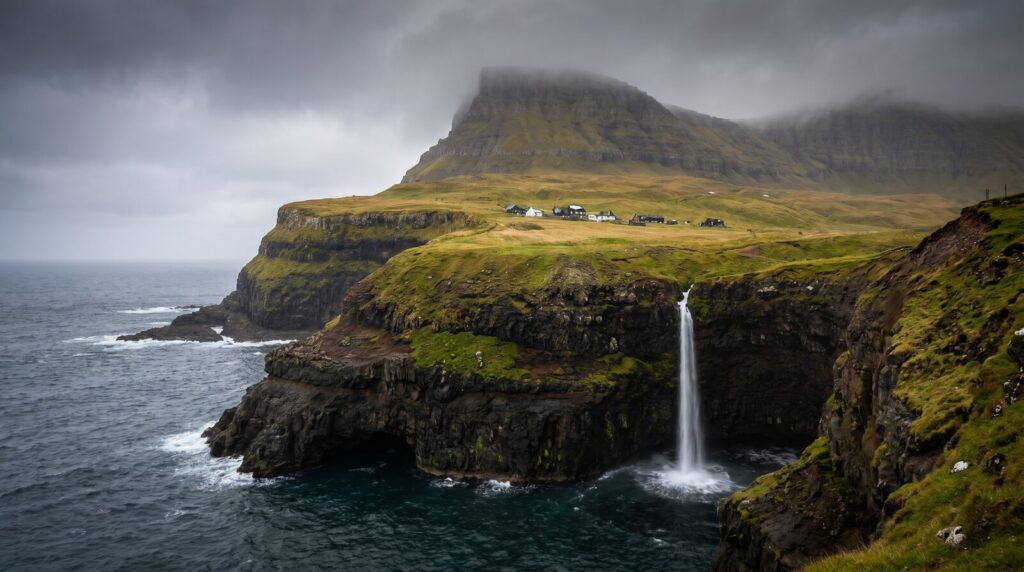
The Faroe Islands sit in the North Atlantic, isolated by ocean swells, fog, and distance from any major landmass. Between Iceland and Norway, these 18 islands have developed a culture distinct from their Scandinavian neighbors—a Viking heritage transformed through centuries of isolation into something uniquely Faroese. The landscape challenges perception: vertical basalt cliffs reach 1,000 meters. Sea stacks, isolated rock pillars emerging from churning water, dot the coastlines. Waterfalls tumble from mountain peaks directly into the sea. The weather changes hourly, creating conditions ranging from brilliant sunshine to torrential rain within minutes.
But the Faroe Islands’ true magic emerges in their wildlife. During spring and summer, the islands host one of Earth’s most extraordinary concentrations of seabirds. Atlantic puffins—adorable creatures with distinctive clown-like faces—nest in burrows by the millions. Gannets, guillemots, and kittiwakes occupy every available cliff ledge. The sea itself teems with marine life. The contrast between the islands’ quiet villages and the overwhelming abundance of wild nature creates a profound sense of being at the edge of civilization, literally at the boundary between human habitation and untamed wilderness.
Where to Go in the Faroe Islands
Puffin Colonies: Adorable Chaos
Puffins arrive at the Faroe Islands in late April and depart by early September, creating a distinct season when visiting should be timed. During breeding season, puffins occupy burrows they’ve dug in island soil, typically on islands accessible by boat. The colonies contain thousands of birds—the chaos of sounds and activity creates sensory overload. Puffins communicate through grunting, purring, and various vocalizations. They nests in densely packed colonies where individual burrows sit mere centimeters apart. Walking through active puffin areas requires careful footsteps to avoid destroying burrows.
The experience of viewing puffins combines comedy with profound appreciation for these creatures’ survival adaptations. Puffins have distinctive features: triangular, colorful beaks (bright orange and yellow during breeding season), dark bodies, white bellies, and endearing expressions. They’re built for ocean life—wings that function as flippers, webbed feet, and dense plumage. Yet on land, they waddle comically. Some struggle taking off from flat ground, requiring momentum from running or launching from cliff edges.
Puffins are monogamous, returning to the same burrow and partner year after year. They spend the rest of the year at sea, traveling thousands of kilometers, then navigate back to the exact same island and burrow. Science still doesn’t fully understand how they navigate such precision. Watching a puffin land precisely at its burrow entrance after months at sea feels like witnessing magic repeatedly performed.
Atlantic Puffin Breeding
Puffins lay single eggs in burrows. Both parents incubate and feed the chick. The chick remains in the burrow for approximately 45 days before fledging. Parents teach flying techniques over weeks until the young puffin eventually departs for the open ocean.
Puffin Fishing Techniques
Puffins dive to depths reaching 60 meters, hunting sand eels and smaller fish. Their wings enable precise underwater maneuvering. They can carry multiple fish in their beaks simultaneously, holding them crosswise. A single puffin can catch 30+ fish daily for hungry chicks.
Sea Stacks: Geological Drama
The Faroe Islands’ basalt geology creates dramatic coastal formations. Sea stacks—isolated rock pillars separated from mainland by erosion—rise vertically from crashing waves. The most famous, Drangarnir near Vágar Island, consists of two massive sea stacks reaching over 200 meters. The smaller stack, Tindhólmur, sits across a narrow gap. Historically, Faroese hunters would leap between stacks during seabird hunting, using hand-carved footholds. Modern visitors observe from safer distances, though the raw drama of the formations remains overwhelming.
The Munnin sea stack, named for a raven from Norse mythology, rises magnificently from the north coast. Hornvik beach, accessible only by boat, sits beneath towering cliffs topped with waterfalls. The interplay between cliff height, water movement, and wildlife creates environments of staggering beauty. Photographic opportunities are infinite—the challenge becomes choosing which angles and moments to capture.
These formations result from massive lava flows 60 million years ago, followed by erosion from Atlantic swells, wind, and freeze-thaw cycles. The basalt columns, formed by cooling lava, cleave into distinctive hexagonal shapes visible on many cliffs. The geological story—ancient volcanism slowly dismantled by ocean persistence—becomes physically visible in the landscape.
Island Hopping: Ferries & Villages
The Faroe Islands’ 18 inhabited islands are connected by ferries, tunnels (some underwater), and bridges. The largest island, Streymoy, contains the capital Tórshavn, a charming harbor village with traditional architecture painted in primary colors. The old harbor district contains narrow lanes, wooden buildings, and a palpable sense of maritime heritage. The Faroese language, distinct from Danish and Norwegian, appears on all signage, adding to the islands’ unique identity.
Secondary islands offer increasingly remote experiences. Kalsoy, connected to Streymoy by bridge, contains the dramatic Kallur lighthouse perched on a clifftop. Hiking to the lighthouse reveals 360-degree views of surrounding islands and sea. Mykines, the westernmost inhabited island, is reached by ferry or helicopter. Only 10 permanent residents remain, yet the island hosts abundant seabirds and visitors seeking maximum remoteness. Villages across the islands maintain sheep farming, fishing, and increasingly, tourism-related activities.
Each island has distinct character. Vágar contains the airport and striking mountains. Eysturoy has villages nestled in dramatic valleys. Borðoy, Kunoy, and more distant islands feel genuinely isolated, accessible primarily by those committed to extended journeys. The transport infrastructure, remarkably sophisticated given the population, allows genuine exploration without requiring private vessels.
Hiking Terrain: Mountain & Coast
The Faroe Islands offer hiking ranging from gentle coastal walks to challenging mountain scrambles. The Kallur lighthouse trail, approximately 3 kilometers, ascends cliffs with dramatic views. Trekking to Slættaratindur mountain near Tórshavn provides panoramic island vistas. More demanding hikes reach peaks like Muli (604 meters) and Malinsfjall, involving scrambling and exposure demanding respect for weather and fitness levels.
Coastal hiking, arguably more accessible, follows clifftops with unobstructed ocean views. Weather dictates safety—clear conditions allow technical hiking; fog and wind warrant caution. The basalt cliffs can be unstable, particularly after rain. Trails become streams during heavy precipitation. Visibility can vanish within minutes. Successful hiking requires preparation, realistic assessment of conditions, and willingness to turn back when safety warrants.
The reward for hiking effort—reaching peaks with views encompassing multiple islands and the North Atlantic in all directions—transcends typical day hiking experiences. The combination of height, ocean proximity, and isolation creates psychological impact beyond standard landscape photography. Standing on Faroese peaks, you’re literally at the edge of Europe.
Marine Wildlife: Whales & Fish
The waters surrounding the Faroe Islands support diverse marine mammal populations. Humpback whales, minke whales, and sperm whales migrate through waters in autumn and spring. Dolphins, particularly white-beaked dolphins and common dolphins, inhabit the region year-round. Seals—both grey and harbor seals—haul out on rocks and beaches. The contrast between abundant wildlife and the islands’ tiny human population emphasizes that this remains a wild frontier where nature dictates landscape character.
Fishing remains central to Faroese economy and identity. Fish farming, primarily salmon, occurs in protected bays. The controversial hunting of pilot whales, traditional for centuries, continues despite international opposition. This disconnect between tourists’ romantic perceptions and locals’ practical relationship with marine resources creates ethical complexity. Understanding Faroese culture requires grappling with this contradiction—romantic and brutal simultaneously.
The sea’s importance transcends economic consideration. The Faroese identity is fundamentally maritime. Ocean swells shape daily life. Ferry schedules adapt to wave heights. Fishing stories define local history. The sea is simultaneously provider and threat, beauty and danger, spiritually central and occasionally deadly.
Faroese Culture: Tradition & Modernity
The Faroese have maintained distinct cultural identity despite geographic isolation and smaller population (approximately 50,000). The Faroese language, derived from Old Norse, remains distinct from Danish and Scandinavian languages. The traditional tunic and clothing style, worn at festivals, displays distinctive patterns. The Faroese chain dance, called a “hvonn,” represents an ancient communal ritual still practiced. These traditions aren’t museum pieces—they’re living culture that continues integrating into contemporary life.
Modern Faroese society blends tradition with surprising sophistication. The population has exceptional education levels. Internet infrastructure rivals any developed nation. The contemporary art scene is vibrant. Musicians from the Faroe Islands have achieved international recognition. Yet this modernity doesn’t displace traditions—it coexists. A resident might perform traditional dance at Saturday celebration, then engage in video calls with colleagues worldwide Monday morning.
The local food culture, based on traditional ingredients (fish, lamb, seabird), remains central to identity and health. Traditional dried fish, called “ræst fiskur,” and other preserved foods connect contemporary Faroese to historical survival strategies. Modern restaurants elevate traditional ingredients using contemporary techniques, creating culinary experiences that honor heritage while embracing innovation.
Ready to Visit the Faroes?
Pack insulated, waterproof gear—weather changes dramatically and frequently. Book accommodations months in advance during puffin season (May-July). Rent vehicles to explore systematically. Take ferries to distant islands. Engage respectfully with Faroese locals and traditions. The Faroe Islands reward curiosity and respect with experiences—from adorable puffins to towering sea stacks to profound isolation—that redefine how you understand Earth’s wild places.