
Granada, Nicaragua: Colonial Beauty, Lake Nicaragua & Volcanic Islands
Central America’s most charming colonial city on shores of freshwater sea
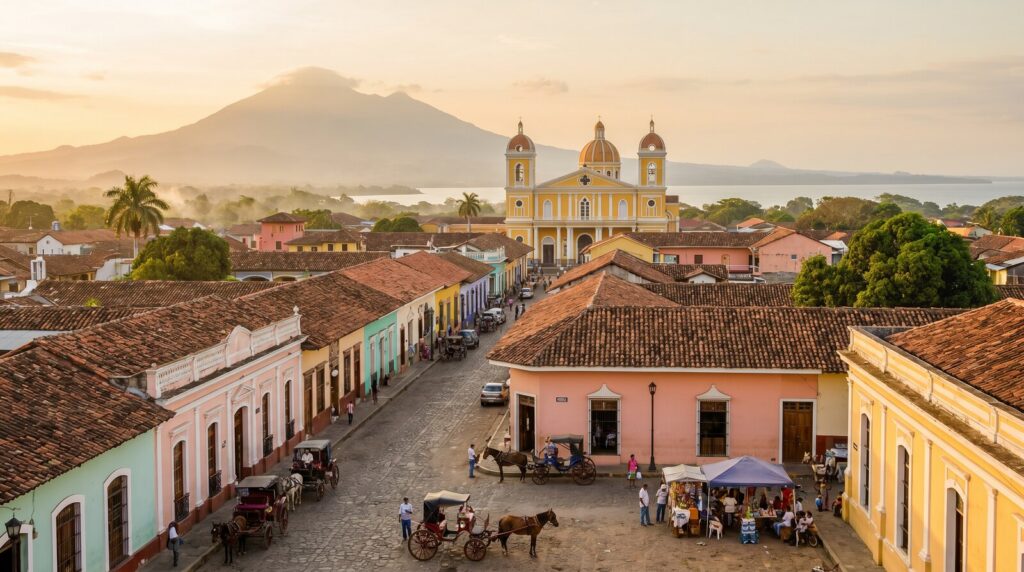
Granada announces itself through color and water. The colonial buildings lining the waterfront reflect in Lake Nicaragua’s waters, their salmon, cream, and yellow facades creating the Central American version of Caribbean colonial architecture. The city sits on the larger of two freshwater lakes dominating Nicaragua’s geography—yes, this is genuinely a freshwater lake despite its “sea” designation, with ecological and historical implications differentiating it from coastal equivalents. The surrounding water supports 365 volcanic islands (one per day of the year, locals claim) ranging from tiny rocky outcrops to substantial islands hosting wildlife, communities, and resort development. Granada combines colonial heritage preservation, bohemian cultural character, authentic Nicaraguan society, and adventure tourism access creating destination appealing to diverse traveler interests. The city avoids the over-commercialization plaguing some colonial destinations yet remains sufficiently developed to offer comfortable travel infrastructure.

Quick Navigation
Colonial Architecture & Heritage Preservation
Granada’s colonial core remains largely intact—buildings dating from the sixteenth century continue functioning as residences, businesses, and tourism infrastructure. Spanish colonizers founded Granada in 1524, selecting the location for its position on Lake Nicaragua, which provided transportation access to both Pacific and Atlantic coasts via canal systems (though these were never effectively developed). The city became a crucial trade hub and administrative center, accumulating wealth visible through architectural grandeur.
The architecture reflects Spanish colonial styles adapted to tropical contexts. Buildings feature covered galleries providing shade, internal courtyards enabling ventilation and water collection, and thick walls moderating heat. The cathedral dominates the central plaza, its neoclassical facade representing later colonial architectural preferences. The surrounding neighborhoods contain residential architecture preserving elements from multiple colonial periods, creating palimpsest of architectural evolution spanning centuries.
Contemporary Granada maintains living relationship with colonial heritage rather than treating it as museum artifact. Locals inhabit colonial residences; businesses operate from centuries-old structures; and new development respects architectural continuity rather than demolishing heritage. This integration distinguishes Granada from colonial cities transformed into heritage parks devoid of authentic residence and activity.
Lake Nicaragua & Freshwater Ecosystem
Lake Nicaragua constitutes the world’s tenth-largest freshwater lake yet remains relatively unknown to international travelers. The lake’s formation resulted from geological processes creating a subsurface connection to the Caribbean despite its declared freshwater status. This geological anomaly supports unusual marine life—sharks, tarpon, and other species typically associated with salt water inhabit the freshwater environment. The ecological community reflects this unique environment, creating biodiversity distinct from typical freshwater or marine ecosystems.
The water’s color and surface conditions vary seasonally and daily. Clear days reveal underwater vegetation and rocky formations; murky periods following heavy rains limit visibility. The climate creates dramatic atmospheric conditions—sudden storms arrive with intensity; calm mornings remain pristine and reflective. Travelers crossing the lake via ferry experience the immensity of this inland sea, with horizons extending to distant mountains and no land visible in immediate vicinity.
The lake’s water quality faces contemporary challenges from agricultural runoff and industrial pollution affecting coastal areas. Yet tourism operators maintain boat routes and swimming activities, suggesting water conditions remain acceptable for recreational use despite environmental concerns. Understanding the lake requires acknowledging both its natural beauty and contemporary ecological pressures.
Volcanic Islands & Island Hopping
The 365 islands range from uninhabited rocky outcrops to substantial islands supporting communities and lodge accommodations. Ometepe Island, the largest, rises dramatically from lake surface with two volcanic cones (Concepción and Maderas) creating distinctive silhouette. The island contains pre-Columbian archaeological sites, small communities, and increasing tourism infrastructure. Day trips enable hiking to viewpoints overlooking the lake or swimming in crater lakes formed at volcano summits.
Smaller islands offer distinct experiences. Some contain bird sanctuaries; others host lodges catering to tourists seeking island retreats; a few remain largely undeveloped. Island-hopping boat tours navigate through island clusters, enabling observation of wildlife, conversations with island residents, and swimming in isolated locations. The experiences emphasize nature and local culture over tourism development.
The volcanic islands create opportunities for geology appreciation—visible geological formations, crater lakes, and volcanic slopes reveal earth’s dynamic processes. Understanding that these islands formed through explosive geological events transforms observation into geological education. The panoramic views from island summits encompass surrounding landscape in ways ground-level travel cannot achieve.
City Exploration & Local Culture
Granada’s compact central area remains walkable, enabling foot-based exploration. Calle La Calzada, the main waterfront boulevard, hosts restaurants, bars, galleries, and shops. The street combines tourist infrastructure with genuinely local businesses. Morning and evening promenades bring residents out for social interaction—couples, families, and groups gather in the cooling air beyond daytime heat. The atmosphere captures Central American culture more authentically than commercialized tourism zones.
The central market operates daily, particularly vibrant early mornings when agricultural vendors display produce brought from surrounding rural areas. Visiting markets reveals local diet, agricultural production, and community commerce. Vendors remain accustomed to tourists though maintain focus on local clientele. Photography requires sensitivity—markets function as workplaces rather than cultural exhibits.
The church anchors the central plaza, with interior decoration reflecting colonial ecclesiastical traditions. Regular religious services continue, with visitors welcome to attend. The convergence of tourists and worshippers in sacred space sometimes creates awkward cultural intersections; respectful behavior and appropriate dress become important in these shared spaces.
Masaya Volcano National Park
Day trip from Granada, the volcano offers crater rim walks, viewpoints overlooking molten lava, and environmental museum documenting volcanic processes and ecology.
Coffee Plantations
Northern regions grow exceptional coffee. Farm visits enable observation of cultivation, harvesting, and processing practices alongside tasting experiences.
Lagoons & Wetlands
Boat tours navigate wetland ecosystems hosting bird species, crocodiles, and other wildlife rarely seen in developed areas.
Surrounding Villages
Small communities surrounding Granada maintain agricultural focus and traditional lifeways. Cultural tourism experiences connect visitors with community-based organizations.
Adventure Activities & Nature Tourism
Granada serves as base for various adventure activities. Kayaking through lake channels navigating islands offers paddling experience at manageable intensity. Fishing trips target tarpon and other species populating the lake. Birding expeditions exploit the lake’s role as migration corridor for Central American bird species. Scuba diving operations enable underwater exploration, though freshwater diving differs significantly from ocean diving in terms of visibility and marine life.
Canyoning and waterfall exploration in surrounding regions offer physical engagement with landscape. Multiple operators provide equipment and guidance for activities appropriate to various fitness levels. The combination of water, geology, and forest ecosystems enables diverse activity options. Many operators emphasize environmental responsibility, supporting conservation initiatives funding park maintenance and wildlife protection.
Extended stays enable deeper immersion—multi-day backpacking trips, longer kayaking expeditions, or intensive cultural programs. The accessibility of diverse activities encourages travelers to try new experiences unrelated to their typical comfort zones.
Practical Information & Visiting
Granada sits on Lake Nicaragua accessible via flight to Managua followed by ground transportation (approximately 45 kilometers, one hour drive), or international flights connecting to regional hubs. The city remains a major tourist destination with well-developed accommodation options—boutique hotels in colonial buildings, budget hostels, mid-range properties, and luxury resorts. Many tourists base themselves in Granada for 4-7 days, using the city as hub for island tours and regional exploration.
The climate remains tropical year-round with temperatures 25-30°C. Rainy season (May-November) brings afternoon precipitation clearing quickly; dry season (December-April) offers clearer skies and less humidity. Wind patterns create variation in lake conditions—calm mornings often transition to choppy water by afternoon, making morning boat departures optimal.
Nicaraguan currency (córdoba) distributes through ATMs throughout Granada. Many establishments accept US dollars, yet using local currency often provides better value. Crime rates require safety awareness—maintain valuables security, avoid isolated areas after dark, and exercise general travel prudence. The city remains safer than many international destinations of similar development level, yet Nicaragua’s economic challenges create property crime pressures.
Boat Tours & Operators
Multiple tour operators offer island tours, ranging from basic sightseeing to specialized experiences focusing on wildlife, culture, or photography. Costs range $25-75 per person depending on tour specifics and group size.
Accommodation Styles
Boutique hotels in restored colonial buildings offer character and cultural connection. Budget hostels provide affordability and social community. All-inclusive resorts on nearby islands offer convenience and luxury amenities.
Dining Options
Granada’s tourism draws international cuisine establishments alongside traditional Nicaraguan restaurants. Waterfront establishments command premium pricing; interior side streets offer better value and local authenticity.
The political history of Nicaragua deserves understanding by visiting travelers. The country experienced authoritarian rule, civil war (1979-1990), and turbulent post-war transitions. Sandinista rule under Daniel Ortega generated enthusiasm and controversy internationally. Contemporary politics remain contested. Visitors encounter a society navigating complex history and contemporary political divisions. Respectful engagement requires avoiding political arguments while demonstrating genuine curiosity about Nicaraguan perspectives on their own country’s trajectory.
The economic realities of Granada and Nicaragua deserve acknowledgment. While tourism brings economic opportunities and foreign exchange, many Nicaraguans remain economically constrained with limited formal employment opportunities. The disparity between tourist spending capacity and local wages creates visible inequality. Respectful tourism means paying fair prices for goods and services, avoiding conspicuous displays of wealth, and supporting locally-owned businesses rather than international chains. These practices contribute minimally to addressing structural economic challenges yet represent ethically conscious engagement.
The environmental conservation of Lake Nicaragua and surrounding ecosystems faces contemporary pressures. Agricultural expansion, pollution from industrial sources, and climate change-induced effects threaten ecological integrity. Yet the lake remains crucial for regional biodiversity—it supports fishing communities, migratory bird populations, and increasingly important tourism economies. Conservation efforts require balancing economic development with environmental protection—an ongoing negotiation in a developing economy with limited government conservation resources.
Discover Granada’s Colonial Charm
Granada offers the rare combination of genuine colonial heritage, natural beauty, and adventure opportunities. Plan minimum 4-5 days enabling city exploration, multiple island tours, and potential regional day trips. The relaxed pace suits those seeking escape from tourism’s commercialization while maintaining sufficient infrastructure for comfortable travel. This destination appeals to culture-focused travelers, adventure seekers, and those seeking balance between comfort and authenticity.