
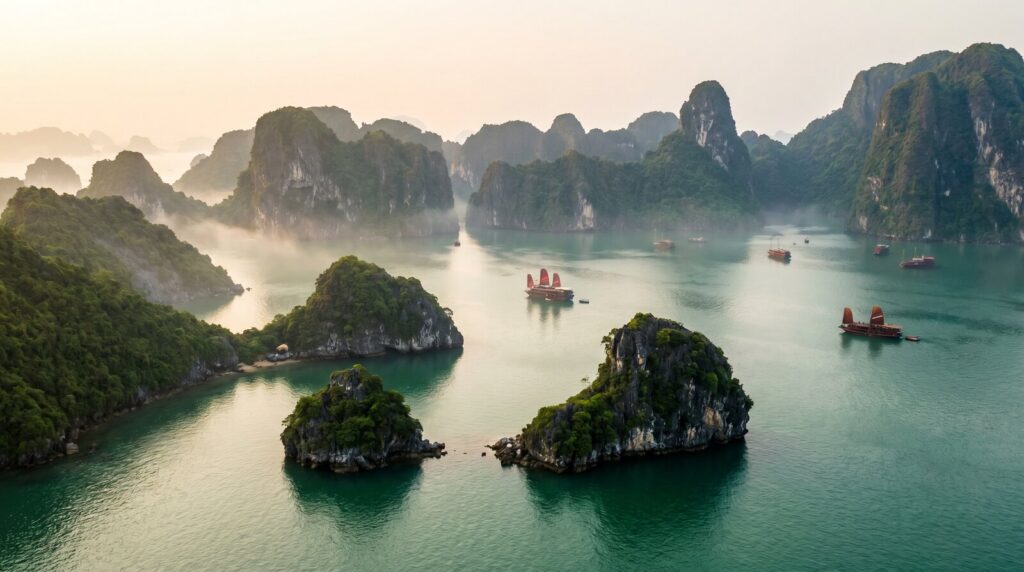
Halong Bay, Vietnam: Limestone Karsts, Emerald Waters & Floating Villages
Emerald Waters, Thousand Limestone Karsts, and UNESCO Natural Wonder
Halong Bay represents one of the world’s most compelling travel destinations, combining historical significance with contemporary cultural vitality. The city showcases extraordinary architectural achievements, distinctive cultural traditions, and opportunities for meaningful traveler engagement with local communities and heritage preservation.

Visitors to Halong Bay encounter layered histories—ancient civilizations, colonial periods, post-colonial development, and contemporary globalization all visible in architecture, cultural practices, and daily life. Understanding these layers enriches travel experiences by providing context for observed phenomena.
Contemporary Halong Bay balances preservation of cultural heritage with economic development through tourism. Sustainable travel practices remain essential for ensuring tourism benefits align with preservation goals.
Table of Contents
Historical Significance & Heritage
Halong Bay developed through centuries of cultural synthesis. Historical forces including trade networks, empire-building, colonialism, and independence movements shaped the city’s development.
Museums, historical sites, and cultural institutions throughout Halong Bay document historical narratives. These resources provide educational opportunities.
Contemporary Halong Bay continues evolving—historical preservation coexists with modern development.
Contemporary Culture & Traditions
Halong Bay’s cultural character reflects historical inheritances combined with contemporary innovation. Local communities maintain traditions while engaging with global influences.
Markets, festivals, and community gathering spaces provide opportunities to observe and participate in local cultural expression.
Historical Sites
Monuments documenting past periods and achievements
Living Traditions
Contemporary expressions rooted in historical inheritances
Sacred Spaces
Religious sites maintaining spiritual significance
Community Spaces
Gathering areas revealing daily social life
Key Attractions & Sacred Sites
Halong Bay contains numerous significant sites reflecting historical importance and cultural significance.
Sacred sites remain functioning religious and community spaces. Visiting requires cultural sensitivity.
Day trips and excursions from Halong Bay provide access to surrounding cultural and natural sites.
Local Experiences & Activities
Exploring Halong Bay involves engaging with daily life—markets, restaurants, neighborhoods, and social spaces.
Markets provide multisensory immersion in local commerce, agriculture, and culture.
Evening activities in Halong Bay range from cultural performances to casual social gatherings.
Food & Dining Around Halong Bay
Halong Bay’s cuisine centers on the incredible bounty of the Gulf of Tonkin. Fresh seafood dominates menus—grilled squid, steamed clams in lemongrass, prawns fried with garlic and chili, and whole grilled fish are staples on both cruise boats and at waterfront restaurants in Halong City. The floating fishing villages that dot the bay have supplied these waters for generations, and the freshness of the catch is unmatched.
Beyond seafood, look for cha muc (fried squid cake), a local specialty unique to the Quang Ninh province. On overnight cruises, onboard cooking classes teach you to prepare Vietnamese spring rolls and pho using traditional techniques. Back on shore, Bai Chay’s tourist strip offers a wide range of Vietnamese and international restaurants, while the local market near the harbor is perfect for sampling banh cuon (steamed rice rolls) and strong Vietnamese drip coffee for a fraction of cruise-boat prices.
Getting to & Around Halong Bay
Most visitors reach Halong Bay from Hanoi, approximately 170 km to the west. The journey takes around 2.5 hours via the modern highway, and most cruise operators include round-trip transfers from Hanoi hotels in their packages. Shuttle buses and private cars are the most common options, while more adventurous travelers can take local buses from Hanoi’s My Dinh bus station to Halong City.
Within the bay itself, everything revolves around boat travel. Day cruises, overnight junk boat trips, and multi-day itineraries are the primary ways to explore the karst landscape. Kayaking through grottoes and lagoons offers intimate access to hidden caves and floating villages. For those wanting fewer crowds, consider Lan Ha Bay (accessible via Cat Ba Island) or Bai Tu Long Bay to the northeast, which offer similarly spectacular scenery with a fraction of the tourist traffic.
Frequently Asked Questions About Halong Bay
What is the best time to visit Halong Bay?
October to December offers the best combination of pleasant weather, calm seas, and good visibility. March and April are also excellent with warming temperatures and minimal rain. Summer (June-August) is hot and humid with occasional storms that can disrupt cruises. Winter months (January-February) can be cool and misty, which creates atmospheric scenery but limits visibility.
Should I do a day trip or overnight cruise?
An overnight cruise is highly recommended. Day trips only scratch the surface and involve significant travel time from Hanoi. A two-day, one-night cruise allows you to kayak through caves, visit floating villages, watch the sunset over the karsts, and wake up surrounded by limestone pillars in the morning mist. Three-day cruises venture into less-visited areas and include more activities like cooking classes and island hikes.
How much does a Halong Bay cruise cost?
Cruise prices range widely depending on the vessel quality and itinerary length. Budget options offer basic but comfortable experiences, mid-range boats provide private balconies and better food, and luxury cruises feature premium amenities and exclusive itineraries. Booking through reputable operators with good safety records is more important than finding the cheapest price—check recent reviews carefully before committing.
Is Halong Bay worth visiting despite the crowds?
Absolutely. While the bay does see significant tourist traffic, the sheer scale of the landscape—nearly 2,000 limestone islands spread across 1,500 square kilometers—means there is plenty of space. Choosing a less common route, visiting during shoulder season, or opting for Lan Ha Bay or Bai Tu Long Bay instead of the main tourist corridor ensures a more peaceful experience.
Do I need a visa for Vietnam?
Many nationalities can enter Vietnam visa-free for stays of up to 45 days. Others can apply for an e-visa online, which is typically processed quickly. Requirements change periodically, so verify the latest regulations before booking your trip. Your passport must be valid for at least six months beyond your planned departure date from Vietnam.
Planning Your Visit
Practical planning considerations for Halong Bay include transportation, accommodation, visa requirements, climate, and seasonal factors.
Seasonal considerations significantly impact Halong Bay experiences. Climate affects outdoor exploration feasibility.
Halong Bay accommodations range from luxury establishments to budget guesthouses. Mid-range options typically provide good value.
Discover Halong Bay’s Distinctive Cultural Heritage
Halong Bay offers incomparable opportunities to experience rich cultural heritage, historical significance, and contemporary vibrancy while engaging respectfully with local communities and supporting sustainable tourism.
Start planning your Halong Bay adventure today with Facts From Upstairs.