
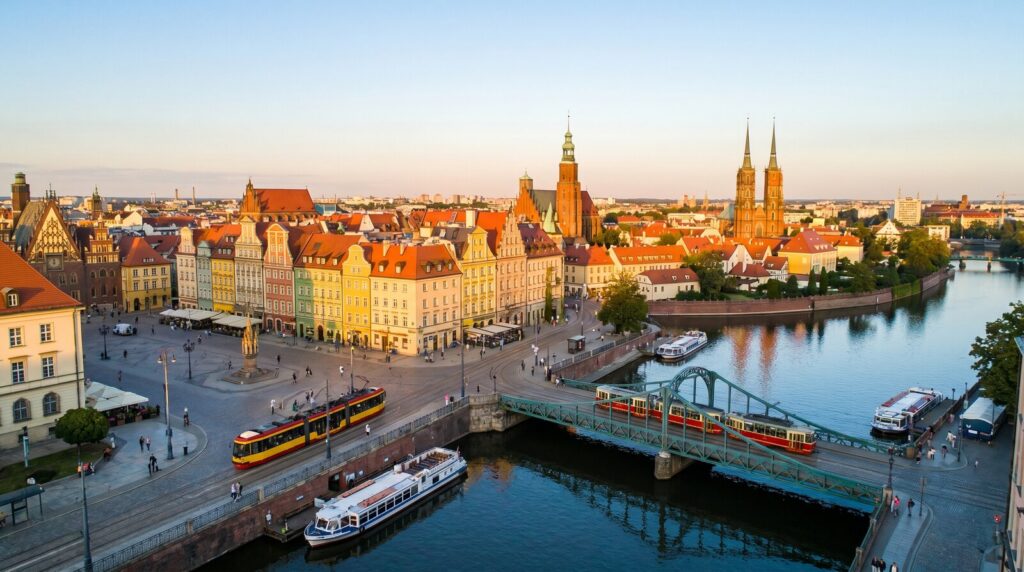
Wroclaw, Poland: Bridge City, Bronze Dwarfs & Centennial Hall
The City of a Hundred Bridges connects Oder River islands with colorful gothic architecture, while bronze dwarfs hidden throughout the city create whimsical contemporary culture
Wroclaw represents Central European complexity—Polish city with German heritage, located on the Oder River creating natural barriers and strategic importance for centuries. The city’s architecture, urban layout, and cultural references reflect multiple empires’ occupation: medieval kingdoms, Austrian Habsburgs, German expansion, Soviet control, and contemporary Polish independence. Walking Wroclaw requires understanding how empires reshape cities and how cities retain memory of multiple identities.

The Oder River divides Wroclaw into multiple islands and peninsulas, requiring numerous bridges for urban connectivity. This water-based geography creates distinctive urban experience—areas isolated and accessible only via bridges maintain separate character. Water reflects medieval architecture, creating atmospheric scenes that justify Wroclaw’s reputation for visual beauty.
Contemporary Wroclaw combines architectural preservation with modern vitality. The discovery and installation of bronze dwarves (replicas of those hidden during Soviet occupation) throughout the city created participatory culture where residents and visitors hunt for hidden sculptures. This contemporary cultural gesture—using art to reclaim urban space—demonstrates how communities actively shape culture and resist authoritarian suppression.
Table of Contents
Bridges, Islands & Water Geography
Wroclaw’s complex geography—twelve islands separated by Oder River branches—required engineering ingenuity creating over one hundred bridges connecting neighborhoods. This water-based urban design creates distinctive character unavailable in grid-patterned cities. Different neighborhoods maintain separate identities based on island geography, with residents having fierce community loyalties to their specific areas.
The Oder River itself shaped Wroclaw’s development, serving as trade route connecting to Baltic Sea and Central European commerce networks. The river created both opportunity (water transport, water power) and vulnerability (flooding, military crossing points). Contemporary Wroclaw maintains river-focused urban development, with parks and walkways along riverbanks.
Cycling represents primary local transportation, with bike paths throughout the city and across bridges. Renting bikes and exploring neighborhoods accessible via bridges provides freedom and local perspective. The bridges themselves offer vantage points for viewing architecture, water reflections, and urban life unfolding below.
Gothic Architecture & Medieval Heritage
Wroclaw’s old town features exceptionally well-preserved medieval gothic architecture. The Church of St. Mary Magdalene dominates the townscape with soaring gothic spire and intricate stonework. The church survived medieval conflicts, wars, and communist-era neglect, with recent restoration returning it to near-original splendor. Walking beneath the church’s shadow creates perspective on medieval urban scale and religious devotion.
The Town Hall, medieval seat of urban governance, features elaborate gothic facade with ornamental details and defensive architecture. The building functions as museum documenting medieval urban life and governance structures. The marketplace surrounding the Town Hall served as commercial and civic center, with markets continuing today alongside medieval architecture.
Narrow medieval alleys, many barely navigable with cars, preserve medieval urban street patterns. Walking through these alleys reveals how medieval residents lived—small ground-floor shops, apartments above, community wells, narrow passages creating natural surveillance and social control. The street pattern wasn’t designed for efficiency but for defensibility and community organization.
Church Architecture
Gothic pointed arches, ribbed vaults, and soaring heights create spiritual aspiration expressed through stone.
Town Hall Complexity
Ornamental elements serving both aesthetic and defensive functions reveal medieval governance ambitions.
Medieval Alleys
Street patterns preserving medieval organization and defensive logic despite modern traffic challenges.
Restored Facades
Post-communist reconstruction honoring historical styles while incorporating modern accessibility and functionality.
Bronze Dwarves & Contemporary Culture
The bronze dwarves phenomenon originated during communist occupation when activists hid small sculptures throughout the city as resistance symbols. These hidden dwarves—often on building facades, under bridges, in parks—created participatory culture and subversive joy during suppressive era. Contemporary Wroclaw has officially adopted this tradition, installing hundreds of additional dwarf replicas creating city-wide treasure hunt.
Contemporary visitors hunt for dwarves using smartphone apps and guide maps, discovering hidden sculptures throughout the city. The search takes visitors to neighborhoods, parks, and buildings otherwise overlooked, creating accidental urban exploration. This gamification of city discovery generates engagement with urban space and local culture.
The dwarves represent cultural reclamation—communities asserting cultural expression and artistic freedom after suppression. Young artists continue creating contemporary sculptures, murals, and installations responding to cultural history and contemporary politics. Wroclaw’s artistic community demonstrates how cities recover cultural vitality after authoritarian periods.
Central European History & Transformation
Wroclaw’s history encompasses multiple empires and cultural identities. Originally medieval Polish city, Wroclaw (called Breslau by German speakers) became part of Austro-Hungarian and later German empires. This history creates cultural ambiguity—German names, Austrian architectural influences, Polish claims, Jewish heritage—creating palimpsest of Central European complexity.
The Jewish community, once comprising 20% of Wroclaw’s population, was virtually eliminated during the Holocaust. Contemporary memorials and cultural institutions document this history. The Jewish quarter still exists as neighborhood, with restored synagogue and museum preserving cultural memory despite physical destruction of community.
Post-communist transition transformed Wroclaw into dynamic contemporary city where private enterprise, cultural innovation, and youth culture create forward momentum. The city hasn’t forgotten historical trauma but has actively reconstructed identity and community. This transformation demonstrates post-communist resilience and cultural vitality.
Discovering Wroclaw
Wroclaw is accessible via frequent train and bus services from Warsaw (350 kilometers) and other major Polish cities. The city center is walkable and bike-friendly, with most attractions accessible on foot or via short bike rides. Public transportation—trams and buses—covers residential areas.
The currency is Polish Zloty, with ATMs widely available. Wroclaw offers excellent value compared to Western European cities, with three-course restaurant meals costing 15-25 euros. Hotel rooms cost 50-90 euros nightly for mid-range options.
Accommodations range from budget hostels to luxury hotels, with quality consistent across price ranges. Family-operated guesthouses often provide local knowledge and personalized service. Downtown locations provide old town proximity while neighborhoods across bridges offer quieter residential character.
Discover Poland’s Cultural Crossroads
Wroclaw invites exploration of Central European complexity, where multiple empires’ legacies persist in architecture and culture. From medieval bridges to hidden bronze dwarves to contemporary artistic resilience, experience the city where history shapes contemporary identity.
Start planning your Wroclaw adventure today with Facts From Upstairs.
Getting Around Wroclaw
Wroclaw’s compact old town is perfect for walking — most major attractions sit within a 20-minute stroll of the Rynek (Market Square). But the city’s island geography and sprawling parks mean you’ll appreciate the excellent public transit too.
Trams and Buses
Wroclaw’s tram network is the backbone of the city’s transport. Buy a contactless ticket via the Urbancard app or at kiosks near major stops — a single ride costs about 4.60 PLN (around $1.10 USD in 2026), and a 24-hour pass is 15 PLN. Trams 0, 2, and 10 connect the main train station with the old town. Validate your ticket when you board — inspectors are regular and fines are steep.
Walking and Cycling
The island district (Ostrów Tumski) is best explored on foot, especially in the evening when the gas lamplighter makes his rounds at dusk. Wroclaw’s Nextbike bike-sharing system has stations throughout the city — the first 20 minutes are free with registration. The Odra River embankment paths make for excellent cycling routes connecting the old town to Centennial Hall and Szczytnicki Park.
Day Trip Connections
Wroclaw’s central location makes it a great base. Trains reach Krakow in about 3.5 hours, Prague in 4 hours, and Berlin in 4.5 hours. Closer day trips include the Ksiaz Castle (1.5 hours by bus), the Wieliczka-style salt mines at Klodawa, and the Owl Mountains for hiking.
Where to Eat & Drink in Wroclaw
Wroclaw’s food scene punches well above its weight — this is one of Poland’s most exciting culinary cities, combining traditional Silesian cooking with a booming modern restaurant culture.
Must-Try Polish & Silesian Dishes
Pierogi are a must — Wroclaw does them in every conceivable style, from traditional ruskie (potato and cheese) to creative fillings like duck confit or wild mushroom. Żurek (sour rye soup) served in a bread bowl is perfect comfort food after a day of bridge-hopping. For Silesian specialties, try rolada śląska (beef roulade with red cabbage and Silesian dumplings) — the region’s signature dish.
Best Spots
Konspira, set in a Communist-era apartment recreation, serves classic Polish food in one of the city’s most atmospheric settings. Pierogarnia Stary Młyn near the Rynek has over 30 pierogi varieties at student-friendly prices. For modern Polish fine dining, Art Hotel Restaurant elevates local ingredients with creative plating. Bar Mleczny Miś is a surviving milk bar — Poland’s Communist-era cafeterias — where you get hearty meals for under 20 PLN.
Craft Beer Scene
Wroclaw has one of Poland’s best craft beer scenes. Kontynuacja has 20+ Polish craft beers on tap in a cozy cellar. Marynka Craft Beer Pub specializes in local Silesian breweries. The annual Good Beer Festival draws beer lovers from across Central Europe. For cocktails, Bułka z Masłem on the Rynek is a beloved late-night spot.
Frequently Asked Questions About Wroclaw
What is the best time to visit Wroclaw in 2026?
May through September offers the best weather, with long days perfect for bridge-hopping and dwarf-hunting. April 2026 is lovely — spring flowers line the Odra riverbanks, outdoor cafés reopen on the Rynek, and Easter markets may still be running. July and August bring festival season and warm weather (25-30°C). Winter is cold (often below freezing) but the Christmas Market on the Rynek is one of Poland’s best — it typically runs late November through December.
How many dwarves are there in Wroclaw?
As of 2026, there are over 400 bronze dwarf figurines scattered throughout the city, with new ones added regularly. The tradition started in 2001, inspired by the anti-Communist Orange Alternative movement of the 1980s. Pick up a dwarf map from the tourist office on the Rynek, or download the “Wroclaw Dwarfs” app — serious dwarf hunters spend an entire day tracking them down. The first and most famous is “Papa Dwarf” on Świdnicka street.
Is Wroclaw expensive?
Wroclaw offers outstanding value compared to Western European cities. Budget travelers can manage on €30-40/day with hostel accommodation, milk bar lunches, and public transit. A nice dinner with drinks for two at a mid-range restaurant costs about 150-250 PLN (€35-60). Hotel rooms in the old town average €60-120/night for 3-4 star properties. It’s significantly cheaper than Krakow’s tourist center.
What’s the deal with all the bridges?
Wroclaw sits on 12 islands connected by over 100 bridges — more than any other city in Europe. The Odra River splits into multiple channels as it flows through the city center, creating a unique island geography. Tumski Bridge (the lovers’ lock bridge), Grunwaldzki Bridge (a striking suspension bridge), and the bridges of Ostrów Tumski are the most photogenic.
Can I visit Auschwitz from Wroclaw?
Yes, though it’s a significant day trip — Oświęcim is about 200 km southeast, roughly 2.5-3 hours by car or 3.5 hours by train via Katowice. Most travelers visit Auschwitz from Krakow instead (70 km). If Wroclaw is your base, consider an organized tour that handles the logistics, or combine it with a night in Krakow to break up the journey.
Explore More Central European Destinations
Central Europe is full of hidden gems like Wroclaw: