
City Guide · Northern Estonia
Tallinn, Estonia: A Medieval Hanseatic Old Town Wired Into Europe’s Most Digital Society
I keep coming back to Tallinn for the way two centuries stand side by side without arguing. We tell first-timers to picture a perfectly preserved medieval merchant town — cobbled lanes, gabled guild halls, a 13th-century city wall with towers still standing — dropped into a country where you sign documents on your phone and the public wi-fi reaches the forest. The city proper is small, about 461,000 people , and the UNESCO-listed Old Town is so compact you can cross it in fifteen minutes, which means you spend your time lingering rather than commuting. My own Tallinn ritual is a 9am coffee on Raekoja plats before the cruise crowds arrive, then a slow climb to the Toompea viewing platforms while the red roofs catch the light. Treat this guide as the brief I would hand my own family the night before they sailed in from Helsinki — where to base yourself, what to eat beyond the medieval-banquet tourist traps, how the free-for-residents transit works for visitors, and how to time a trip around the white nights of June rather than the grey of November .
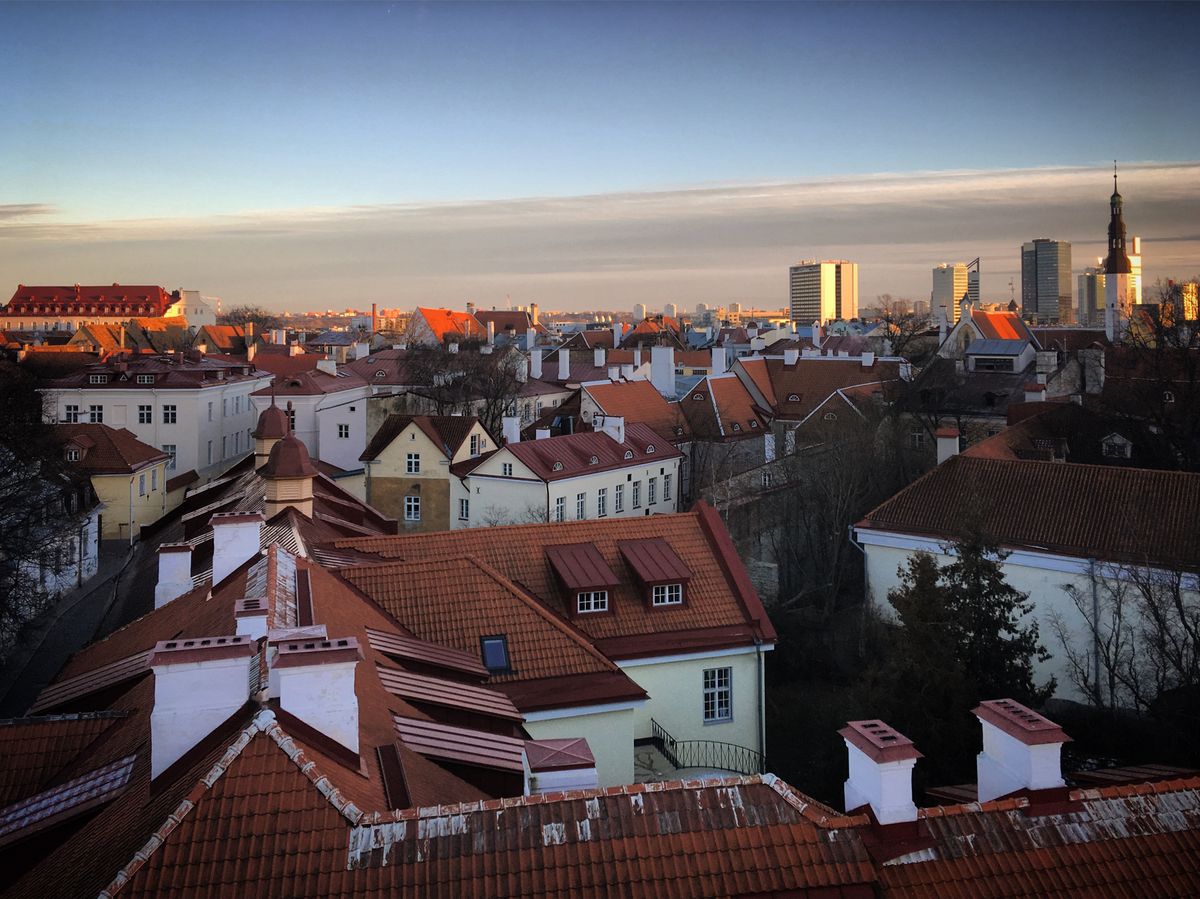
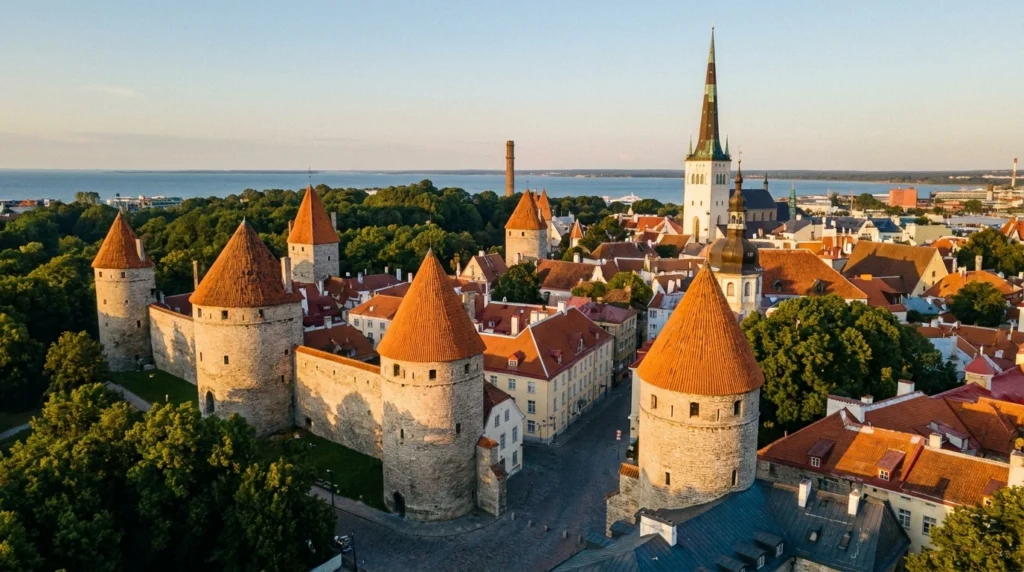
Table of Contents
Why Tallinn?
Tallinn is the rare European capital where a near-complete medieval town and a frontier-grade digital state occupy the same square kilometre. The Old Town — a tangle of cobbled lanes, merchant houses, guild halls and a city wall still bristling with towers — is one of the best-preserved medieval centres in Europe, and it sits a ten-minute walk from glass towers where the engineers who built Skype, Wise and Bolt still work. The city proper holds roughly 461,000 residents, making it comfortably Estonia’s largest city and the third-largest in the Baltic states, with a wider metropolitan area pushing past 600,000 . It perches on the Gulf of Finland, just 80 kilometres — about two hours by ferry — south of Helsinki, a geography that has shaped its entire history as a Baltic trading port.
The contradictions are the whole point. The Historic Centre of Tallinn was inscribed on the UNESCO World Heritage List in 1997 for being an exceptionally complete and well-preserved medieval northern European trading city, a major hub of the Hanseatic League from the 13th to the 16th centuries . The Old Town covers about 113 hectares and preserves its 13th-century street plan almost intact, with sections of town wall rising over 15 metres and roughly two dozen surviving defensive towers . Yet this same city is the showroom of e-Estonia, the world’s most advanced digital society, where citizens vote online, sign contracts with a digital ID and file taxes in minutes — and where the foreign “e-Residency” programme lets non-Estonians run an EU company entirely online .
The density of heritage per square metre is unusual even by European standards. Within a fifteen-minute walk you can stand in the Town Hall Square that has hosted a market since the 13th century, climb a Hanseatic merchant’s house, visit the oldest continuously operating pharmacy in Europe, and look out from the limestone cliff of Toompea over a sea of red roofs to the Baltic. The Old Town divides neatly into the lower town of the merchants and guilds and the upper town of Toompea, the seat of power where the cathedral, parliament and the onion-domed Alexander Nevsky stand. What keeps it coherent rather than twee is that real people still live and work here: it is a functioning city centre, not a museum behind glass.
This guide covers the neighbourhoods you will actually walk — the Old Town, the design-and-food district of Kalamaja, the Rotermann and Telliskivi creative quarters — the food worth seeking out beyond the medieval-banquet traps, the cathedral-and-tower tier of sights, the day trips Tallinners themselves take, and the practical realities of Schengen rules, the free-for-residents transit, and a climate that swings from white-night summers to dark Baltic winters. Tallinn’s calendar peaks in midsummer: the white nights of June and July, the Old Town Days festival, and the city’s turn as a relentlessly walkable, affordable base for the wider region .
One more orientation point: Tallinn is shaped by latitude and by the sea. At 59 degrees north it gets barely six hours of daylight in December and nearly nineteen in June, and that single fact drives the whole feel of a visit. Summer is terrace season, with the Old Town and Kalamaja humming until midnight in soft northern light; winter is short, dark and atmospheric, redeemed by one of Europe’s loveliest Christmas markets on Raekoja plats. Plan around the season you are getting, dress for a Baltic wind that can bite even in June, and Tallinn rewards you with a city that feels both very old and improbably new. For the wider Estonian context, this guide pairs with our Estonia Travel Guide, and with the sibling Baltic-and-Nordic capitals of Helsinki, Stockholm and Copenhagen just across the sea.
Getting There

Lennart Meri Tallinn Airport (TLL) sits just 4 kilometres southeast of the centre — one of the closest capital-city airports in Europe to its downtown . It runs links across Europe on airBaltic, Ryanair, Finnair, Lufthansa, Wizz Air and others, with frequent hops to Helsinki, Riga, Stockholm and the major German and Polish hubs. From the terminal, a city bus reaches the Old Town edge at Viru in about 15 minutes for a couple of euros, and a taxi runs roughly €10–15. The airport tram line is temporarily suspended for infrastructure works, with service expected to resume toward the end of 2026 .
The sea is the other great gateway. Tallinn’s passenger port is one of the busiest in the Baltic, with fast ferries crossing from Helsinki in about two to two-and-a-half hours on Tallink, Viking Line and Eckerö Line — a journey so routine that many Finns make it for the day . The terminals sit a 15-minute walk or short tram ride from the Old Town. Cruise ships also dock here through the summer season.
By land, Lux Express and Ecolines coaches link Tallinn with Riga (about 4.5 hours), Vilnius, St Petersburg and Warsaw, departing from the central bus station (Autobussijaam) . There is no high-speed rail to Tallinn yet, though the Rail Baltica project aims to connect the Baltic capitals to the wider European network in the 2030s.
Getting Around
Tallinn is a walking city first and a transit city second. The Old Town is entirely walkable — you can cross it in fifteen minutes — and most of what a first-time visitor wants sits within a 25-minute stroll of Raekoja plats: the towers, Toompea, the port, Kalamaja and the Rotermann Quarter. Beyond the centre, Tallinn runs an efficient network of trams, buses and trolleybuses, famously free for registered city residents since 2013 but a flat low fare for visitors .
Trams
Tallinn’s tram network is the oldest in the Baltics, dating to a horse-drawn line in 1888 and electrified in 1925, and it remains the backbone of cross-town travel . Modern low-floor CAF Urbos trams connect the port, the centre, Kadriorg and the suburbs. Visitors pay a single fare of around €2 with a contactless bank card or smartphone tapped on the validator, or load a rechargeable green card. Note that the airport tram is suspended for works until late 2026, so use the bus from TLL for now.
Buses and Trolleybuses
An extensive bus network reaches every district, supplemented by the city’s remaining trolleybus routes serving Mustamäe from the centre . Buses 2 and 15 are the workhorses between the airport and the Old Town edge at Viru. Night buses run on weekends, with extra routes added in 2024 toward Viimsi and Vana-Pääsküla. Fares and validation work exactly as on the trams — one tap, one flat fare.
Tickets and the Tallinn Card
For most visitors the simplest approach is to tap a contactless bank card on board for the flat single fare, which then covers transfers within an hour. If you plan to use transit heavily and visit several paid sights, the Tallinn Card bundles unlimited public transport with free entry to dozens of museums and attractions, sold in 24-, 48- and 72-hour versions . Honest advice: in a compact city where you will walk almost everywhere, do the maths before buying — the card pays off only if you are sightseeing intensively.
Ferries and the Port
The passenger port is a 15-minute walk from the Old Town, with trams and buses connecting the D-terminal to the centre. Beyond the Helsinki crossings, summer ferries also serve the islands and the Tallinn Bay; the city’s relationship with the sea is woven into daily life, and a harbour walk along the regenerated waterfront is one of the better free things to do on a clear evening.
Taxis and Rideshare
Tallinn is the home city of Bolt, the ride-hailing app that now operates across Europe and Africa, so app-based rides are cheap, ubiquitous and the local default . A cross-town ride rarely tops €8–10. Street-hailed taxis exist but vary in price; stick to the app or to clearly metered cars and confirm the fare in advance. Card payment is standard everywhere.
Navigation Tips
The Old Town’s medieval lanes twist, fork and rename themselves within a block, so a sense of direction evaporates fast. Google Maps handles Tallinn’s transit cleanly, but the single most useful trick is to navigate by the towers: the tall green spire of St Olaf’s Church and the limestone bulk of Toompea are visible from much of the centre and always orient you. Many Old Town streets are cobbled and pedestrian-only, so wear flat, sturdy shoes and do not plan to drive into the core.
Neighbourhoods: Where to Base Yourself
📍 Tallinn Map: Every Place in This Guide
Tallinn’s character changes sharply from one district to the next, and choosing the right base shapes the whole trip. The Old Town is the obvious draw, but the regenerated harbour districts have become the city’s most interesting places to eat, drink and stay. Below are the five neighbourhoods most first-time visitors actually consider, with an honest read on who each suits.


The Old Town (Vanalinn)
The postcard Tallinn — cobbled lanes, gabled merchant houses, the Town Hall Square and the towers, all inside the medieval wall. It is the most atmospheric and the most touristed, and prices run highest here. Stay in the Old Town if it is your first visit and you want everything on your doorstep; be aware that the cruise-day crowds peak around midday and some lanes echo with stag-party noise on summer weekends.
Kalamaja
North of the Old Town toward the sea, Kalamaja is the former fishermen’s-and-workers’ district turned hipster heartland, full of brightly painted wooden houses, third-wave coffee, the Telliskivi Creative City and the Balti Jaam market. It is a ten-minute walk to the Old Town and the city’s best mix of character, food and value. Stay here for a more local, design-led trip.
Rotermann Quarter and the City Centre
Between the Old Town and the port, the Rotermann Quarter is a striking conversion of 19th-century industrial buildings into bold contemporary architecture, restaurants and shops. The surrounding city centre around Viru and the Viru Keskus mall is the modern downtown — convenient, walkable, and home to many of the business hotels. Central, slightly characterless, but unbeatable for transit and shopping.
Kadriorg and Pirita
East of the centre, Kadriorg is the leafy palace district — baroque Kadriorg Palace, the KUMU art museum, and the parks where Tallinners walk on Sundays. Further out, Pirita has the beach, the marina and the ruins of the Pirita Convent. Quieter and greener, a tram ride from the action; good for a calmer, family-paced stay.
Food and Drink: New Nordic Meets the Baltic
Tallinn’s food scene has quietly become one of the most exciting in the Baltics, pairing a New Nordic obsession with foraging and local produce against deep-rooted Estonian and Hanseatic traditions. The trick is to look past the costumed medieval-banquet restaurants on the Town Hall Square — fun once, a tourist trap twice — and head for Kalamaja, Telliskivi and the Balti Jaam market, where the real cooking happens.

What to Order
- Black bread (leib) — dense, dark Estonian rye, served everywhere and almost a national symbol.
- Sprats and Baltic herring — cured and smoked small fish, the backbone of the local table.
- Verivorst — blood sausage, a winter and Christmas staple often served with lingonberry.
- Kohuke — a glazed curd-cheese snack bar, the beloved Estonian supermarket treat.
- Vana Tallinn — the sweet, rum-based liqueur that is the city’s signature digestif and souvenir.
Where to Eat
The Telliskivi Creative City and the renovated Balti Jaam market hold the densest run of modern food, from New Nordic tasting menus to street-food stalls and craft-beer bars. Estonia punches above its weight on fine dining, with several internationally rated restaurants in and around the Old Town. For something simpler, look for a kohvik (café) serving daily lunch specials, and do not skip the third-wave coffee that Kalamaja does so well.
Timing and Etiquette
Estonians eat earlier than southern Europeans — lunch around noon to 2pm, dinner from 6 to 9pm. Service is friendly but unfussy, and tipping is modest: rounding up or leaving 5–10% for good table service is plenty. Tap water is excellent and free on request, and craft beer has exploded, with local breweries like Põhjala leading a strong scene.
Cultural Sights: Towers, Spires and a Palace
Tallinn’s UNESCO World Heritage listing — inscribed in 1997 — covers the whole medieval Old Town as a single ensemble, and most of its headline sights sit within a fifteen-minute walk of one another . Add Kadriorg Palace and the Seaplane Harbour museum a tram ride away and you have two full days of sightseeing without ever needing a taxi.

Town Hall Square and the Town Hall (Raekoda)
The heart of the lower town, Raekoja plats has hosted a market and the city’s civic life since the 13th century. The Gothic Town Hall, completed in its current form in 1404, is the oldest surviving town hall in the Baltic and northern Europe, topped by the weathervane figure of Old Thomas, the city’s guardian . The square hosts the Christmas market in December and the Old Town Days festival in summer.
Toompea and Alexander Nevsky Cathedral

The limestone hill of Toompea is the upper town, the historic seat of power, now home to the Estonian Parliament (Riigikogu) in the pink Toompea Castle and the onion-domed Alexander Nevsky Cathedral, built 1894–1900 in Russian Revival style during the era of imperial rule . The Kohtuotsa and Patkuli viewing platforms here give the postcard panoramas over the lower town to the sea.
St Olaf’s Church and the Town Wall

St Olaf’s Church (Oleviste), with its soaring green spire, was according to legend once the tallest building in the world; the tower climb is steep but rewards you with the finest view in the city . Nearby, you can walk a preserved section of the town wall and climb several of the roughly two dozen surviving towers, including the cannon tower of Kiek in de Kök and the fat-girthed Fat Margaret at the harbour gate.
Kadriorg, KUMU and the Seaplane Harbour

East of the centre, Peter the Great’s baroque Kadriorg Palace, begun in 1718, anchors a park that also holds the KUMU art museum, the flagship of the Estonian national art collection . Toward the port, the Lennusadam Seaplane Harbour museum fills a 1917 seaplane hangar with submarines, ships and aircraft — one of Europe’s most striking maritime museums and a hit with families .
Festivals, Song and Nightlife
Tallinn’s cultural life runs deeper than its size suggests, anchored by a choral tradition that helped end Soviet rule and a creative scene concentrated in the regenerated harbour districts. Between the white-night summer festivals and the Telliskivi bar scene, the city stays livelier and later than its medieval surface implies.
The Song Festival and Choral Tradition
Estonia’s national Song Festival (Laulupidu), held roughly every five years at the Tallinn Song Festival Grounds, gathers tens of thousands of singers and is inscribed by UNESCO as Intangible Cultural Heritage; the mass singing of the late 1980s gave the independence movement its name, the Singing Revolution . Even outside festival years, the open-air grounds and the choral calendar are central to the city’s identity.
Telliskivi and Kalamaja Nightlife
The Telliskivi Creative City is the hub of contemporary nightlife — craft-beer bars, live-music venues, clubs and pop-up events in converted industrial halls. It is younger, more local and more interesting than the Old Town’s tourist bars, and an easy ten-minute walk from the centre. Põhjala’s brewery taproom nearby is a fixture of the craft-beer scene.
Old Town Bars and Seasonal Events
The Old Town has its share of cosy medieval-themed cellars and rooftop bars, best enjoyed early before the stag-party crowds. Seasonally, the summer Old Town Days festival fills the streets with music and markets, while the December Christmas market on Raekoja plats — regularly ranked among Europe’s prettiest — turns the square into a glühwein-scented fairy tale .
Day Trips From Tallinn
Tallinn is a fine base for the wider region, with fast ferries, good coaches and easy reach to the Estonian countryside. If you have more than two days, give one of them to a day trip — the contrast sharpens your sense of what makes Tallinn itself distinct.
Helsinki (about 2 hours by fast ferry)
The most popular day trip of all: fast ferries cross the Gulf of Finland to Helsinki in roughly two to two-and-a-half hours, making a day in the Finnish capital entirely doable and a favourite of Tallinners and Finns alike . Pair it with our Helsinki city guide to plan the crossing.
Lahemaa National Park (about 1 hour by car)
Estonia’s largest national park, Lahemaa, lies about an hour east of the city — a landscape of bogs, forests, coastal cliffs and restored manor houses such as Palmse. It is the easiest taste of the wild, boardwalk-laced Estonian nature that defines the country beyond its capital.
Tartu (about 2.5 hours by bus)
Estonia’s second city and university town, Tartu, sits about two and a half hours south by Lux Express coach. A youthful, intellectual counterpoint to Tallinn, it was a European Capital of Culture in 2024 and rewards a long day or an overnight .
Naissaar and the Coastal Islands
In summer, boats run from Tallinn to nearby islands such as Naissaar and Prangli, former Soviet military zones now given over to forest, beaches and birdlife. They make a quiet, half-wild escape barely an hour from the medieval streets — check seasonal schedules before planning around them.
When to Visit: A Season-by-Season Guide
Tallinn’s latitude is the single biggest factor in timing a trip. At 59 degrees north the city swings from near-endless summer light to short, dark winter days, and the season you choose changes the whole experience. Here is how the year actually feels on the ground.
Spring (March–May)
A slow, late awakening. March can still be wintry, but by May the parks green up, the terraces reopen and the light lengthens fast. Days warm into the low-to-mid teens Celsius by late spring, crowds are thin and prices low — an underrated, good-value window before the summer rush, though pack for changeable Baltic weather.
Summer (June–August)
The peak and the magic season. The white nights of June and July bring nearly nineteen hours of daylight, the Old Town and Kalamaja hum until midnight, and temperatures sit pleasantly in the high teens to low 20s Celsius. It is the busiest and priciest time, with cruise crowds peaking midday, but the long northern light is worth it. Book rooms well ahead.
Autumn (September–November)
September is a lovely, mild shoulder month with golden parks and far fewer visitors. By October the light fades quickly and November is the city’s greyest, dampest stretch — the one period to avoid if you can. Prices are at their lowest, and the Old Town is atmospherically quiet under low cloud.
Winter (December–February)
Cold, dark and genuinely beautiful when it snows. December is redeemed by the Raekoja plats Christmas market, one of Europe’s prettiest, and the Old Town under snow is a fairy tale. Daylight is scarce — barely six hours in late December — and temperatures often sit below freezing, so dress seriously for it. January and February are the quietest, cheapest months.
Budget Breakdown: What Tallinn Actually Costs
Tallinn is one of the better-value capitals in the eurozone — noticeably cheaper than the Nordic capitals across the sea, though no longer the bargain it was a decade ago. The figures below are per-person daily estimates excluding flights, in euros, based on 2025–2026 prices .
Backpacker (€45–70/day)
A hostel dorm bed runs €18–30; market food, bakeries and a lunch special keep eating to €12–20; the Old Town is free to walk and most viewpoints cost nothing. Budget one or two paid sights and you stay comfortably under €70.
Mid-Range (€100–160/day)
A three-star hotel or central apartment is €70–120 for a double (more in midsummer); add €30–45 for restaurant meals, €10–20 for museum tickets and the occasional Bolt ride. This is the typical comfortable-tourist band.
Luxury (€280+/day)
A four- or five-star room such as the Hotel Telegraaf or Schlössle runs €200–400+, fine dining adds €70–130, and private guides and premium experiences push the day past €280. Midsummer weeks can lift these figures sharply.
Key Fixed Costs
- Single public-transport fare (visitor) — about €2
- St Olaf’s Church tower climb — about €5
- KUMU art museum — about €12
- Seaplane Harbour museum — about €20
- Airport bus to the Old Town — about €2
Practical Tips and Safety
Tallinn is a safe, easy and unusually digital city for visitors, but a handful of practical habits make the difference between a smooth trip and an avoidable headache. None of this is alarming — it is the ordinary common sense of any popular European capital, plus a few Baltic specifics.
Money and Payments
Estonia uses the euro, and it is one of the most cashless societies on earth — cards and phones are accepted virtually everywhere, even for tiny purchases . You can travel for days without touching cash. ATMs are plentiful if you want some; avoid standalone Euronet machines with poor rates in favour of bank ATMs.
Safety and Scams
Violent crime is rare and Tallinn is a low-risk destination overall; the realistic risks are pickpocketing in the busiest Old Town crowds and overpriced or aggressive touts at the costumed restaurants on Raekoja plats. The UK and US governments rate Estonia a safe, low-risk country .
Health and Water
Tap water is safe and good to drink throughout the city . EU visitors should carry an EHIC/GHIC card; everyone else should have travel insurance. Pharmacies (apteek) are widespread, and the Town Hall pharmacy on Raekoja plats — operating since the early 15th century — is among the oldest continuously running in Europe.
Practical Essentials
- Language: Estonian; English is near-universal in tourism and among younger Estonians; Russian widely spoken.
- Plugs: Type C/F, 230V — bring an EU adapter.
- Tipping: modest; round up or leave 5–10% for good table service.
- Connectivity: excellent, fast, free public wi-fi is a national point of pride.
- Footwear: flat, sturdy shoes for cobbles; warm layers for the Baltic wind year-round.
Frequently Asked Questions
How many days do you need in Tallinn?
Two full days covers the essentials: one for the Old Town — Raekoja plats, Toompea, the towers and St Olaf’s — and one for Kalamaja, the Seaplane Harbour and Kadriorg. A third day lets you add a ferry trip to Helsinki or slow down to the city’s actual pace. One day is enough only for a cruise stop focused on the Old Town.
What is the best time of year to visit Tallinn?
June and July, for the white nights and warm terrace season, are the most magical — though busiest and priciest. May and September are quieter, cheaper shoulder months with decent weather. December is lovely for the Christmas market and snow. November is the one month to avoid if you can: grey, damp and dark.
Is Tallinn expensive?
No — it is one of the better-value capitals in the eurozone and noticeably cheaper than the Nordic capitals across the Baltic. A mid-range trip runs roughly €100–160 per person per day excluding flights, and backpackers can manage on €45–70. Prices rise in midsummer but never approach Helsinki or Stockholm levels.
Do I need a Tallinn Card or public transport for sightseeing?
Mostly no. The Old Town and most sights are within a fifteen-minute walk of each other, so you can see the headline attractions on foot. The Tallinn Card pays off only if you sightsee intensively across museums; otherwise just tap a contactless bank card for the flat single fare on the occasional tram or bus to Kadriorg or the port.
How do I get from Tallinn airport to the city centre?
Lennart Meri Airport (TLL) is only 4 kilometres out. A city bus (route 2 or 15) reaches the Old Town edge at Viru in about 15 minutes for around €2, and a taxi or Bolt runs roughly €10–15. The airport tram is suspended for infrastructure works until late 2026, so use the bus for now .
Is Tallinn safe for tourists?
Yes, very. Violent crime is rare and both the UK and US governments rate Estonia a safe, low-risk destination. The main risks are pickpocketing in the busiest Old Town crowds and overpriced touts at the costumed restaurants on Raekoja plats. Take the usual precautions with bags in crowds.
Can I do a day trip to Helsinki from Tallinn?
Easily. Fast ferries cross the Gulf of Finland to Helsinki in about two to two-and-a-half hours, and the terminals are a short walk or tram from the Old Town. It is one of the most popular day trips in the Baltic, done by Tallinners and Finns alike. See our Helsinki city guide to plan the crossing.
What language do they speak in Tallinn, and will English be enough?
The official language is Estonian, with Russian widely spoken, but English is near-universal in tourism and among Estonians under forty. You will have no trouble getting by in English anywhere a visitor is likely to go; learning “tere” (hello) and “aitäh” (thank you) is a friendly touch.
What food is Tallinn famous for?
Dense black rye bread (leib), Baltic herring and sprats, blood sausage (verivorst) in winter, and the sweet rum-based liqueur Vana Tallinn. Beyond tradition, the city has a strong New Nordic fine-dining scene and excellent third-wave coffee — head to Telliskivi and the Balti Jaam market rather than the medieval-banquet tourist restaurants.
Was This Guide Helpful?
We update our Tallinn guide as prices, transit and opening hours change. Let us know if it helped — your feedback shapes the next revision.
Ready to Experience Tallinn? Walk It Slowly
Tallinn rewards a slow traveller. Its medieval Old Town is world-class — the towers, the wall, Raekoja plats, the Toompea panoramas — but the city’s real magic is in the in-between: a quiet morning coffee before the cruise crowds, the climb to a viewing platform as the light turns the roofs copper, a craft beer in Telliskivi at midnight under a sky that never quite goes dark in June. Plan the headline sights, then leave room to get lost. For the wider picture, see our Estonia travel guide, and pair Tallinn with Helsinki, Stockholm and Copenhagen for a complete Baltic-and-Nordic trip.
Explore More City Guides
Tallinn is one stop in our growing library of Baltic and Nordic city guides. Keep planning with these companion pages:
More city guides you might like

Plan your trip to Tallinn
The booking tools we use ourselves. FFU may earn a commission at no extra cost to you.
Plan & book your trip to Tallinn
Booking through these searches supports our guides at no extra cost to you.