
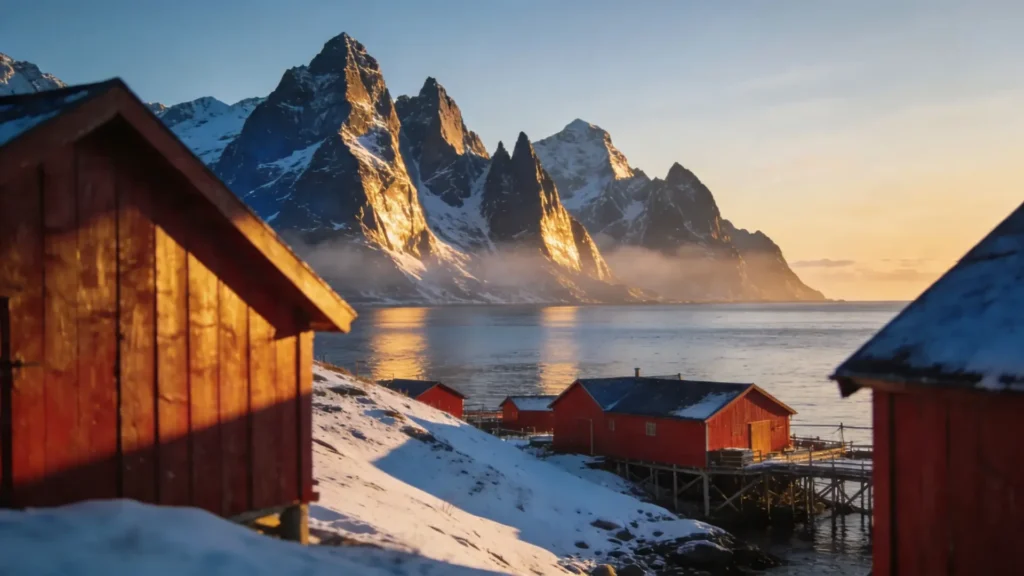
Lofoten Islands: Arctic Fjords, Midnight Sun & Norway’s Dramatic Edge
Discover the true essence of Lofoten Islands
The Lofoten Islands represent one of Earth’s most dramatic meeting points between human settlement and primal nature. Perched 350 kilometers north of the Arctic Circle, these jagged peaks rise directly from dark waters, creating landscapes so visually striking that they seem almost fabricated. Yet Lofoten is viscerally real—a place where the vertical relief challenges physical perception and the seasonal light patterns fundamentally alter consciousness.

These islands are not destinations for passive observers. They demand engagement. They reward those willing to endure cold, wind, and occasional discomfort with experiences that fundamentally recalibrate understanding of what Earth can be. The midnight sun summer creates 99 consecutive days of uninterrupted daylight. Winter offers the possibility of northern lights painting skies in colors that photographs cannot quite capture.
In This Guide
Arrival & First Impressions
Access to Lofoten requires intentionality. There are no direct international flights. Most visitors reach the islands via Tromsø or Bodø, then drive across the Norwegian coastline—a journey that itself becomes transformative. The E10 highway threading through Lofoten offers continuous visual drama with every turn revealing new mountain configurations and fjord perspectives.
Winter access requires mountain passes and weather monitoring. Summer provides easier logistical access but crowds increase significantly. The transition from mainland Norway to island life happens gradually as the road climbs higher and civilization thins.
The Lofoten Islands sit 350 kilometers north of the Arctic Circle, yet remain accessible year-round due to the warming effect of the Gulf Stream. This makes them significantly more habitable than similar latitudes in Canada or Russia, where temperatures are far more extreme.
Iconic Villages Worth Exploring
Lofoten’s villages aren’t aggregations of hotels and restaurants designed for tourism. They are functional communities where fishing remains the economic foundation and residents outnumber tourists even during peak season. This authenticity—the absence of commercialization—defines the visitor experience.
Reine offers the most photographed scenery with jagged peaks reflected in fjord waters so clear they seem unreal. Henningsvær functions as an artists’ village where galleries occupy traditional buildings and creative energy permeates the streets. Svolvær serves as the practical hub with services, amenities, and reliable nightlife. Å represents the southernmost traditional fishing village, seemingly frozen in time with historically preserved buildings and active fishing operations.
Skip Svolvær for accommodation and base yourself in smaller villages like Reine or Henningsvær. Yes, services are more limited, but you sleep surrounded by landscape rather than in standard hotel rooms, and you experience village life rather than tourist infrastructure.
These jagged peaks rise 1,000+ meters directly from sea level, creating some of Europe’s most dramatic vertical relief. This extreme topography results from the interaction of tectonic uplift and glacial carving over millions of years, creating unparalleled photography opportunities.
Outdoor Adventures
Lofoten’s landscape demands physical engagement. Hiking trails range from accessible waterfront walks to technical scrambles up mountain faces. Summer mountaineering offers seemingly endless daylight hours for extended ascents. Winter transforms the islands into a playground for northern lights hunting, dog sledding, and arctic skiing.
The sea itself offers opportunities—kayaking in fjords surrounded by vertical rock, fishing for arctic char in crystalline streams, or simply diving into waters so cold they demand immediate psychological adjustment. The physical sensations of Lofoten travel become memories more vivid than standard vacation experiences.
During summer, the midnight sun creates 99 consecutive days of sunlight, with the sun never fully setting below the horizon. This fundamentally alters circadian rhythms and creates an ethereal quality where the landscape appears painted in otherworldly light.
Fishing Culture & Heritage
Cod fishing has sustained Lofoten for centuries. Traditional fishing villages (rorbuer) remain operational, allowing visitors to observe and participate in active fishing culture. These red wooden huts originally housed seasonal fishermen and now function as tourist accommodation—but they maintain their fishing heritage authentically.
The Lofoten Museum explores maritime history through exhibits and preserved vessels. Watching active fishing boats operate alongside tourist kayaks creates cognitive dissonance that somehow feels appropriate—Lofoten balances between heritage preservation and contemporary reality without resolving the tension.
Many locals operate small fishing boats taking tourists on working trips. These aren’t entertainment—they’re functional fishing expeditions where you participate in actual fishing while learning traditional methods from people who depend on these waters.
Lofoten cod fishing has created some of the world’s most distinctive dried fish (bacalao)—a tradition dating centuries. Traditional preparation methods create intensity of flavor impossible to achieve with modern processing, and visitors can taste this heritage in local restaurants.
Facts About Norway
Population & Density
With 5.5 million people spread across 323,000 km², Norway maintains Europe’s lowest population density in developed nations. Vast wilderness areas remain untouched, preserving natural ecosystems and offering genuine solitude.
Language & Communication
Norwegian is the official language, with widespread English fluency among younger generations and strong connections to Old Norse heritage visible in place names and cultural practices throughout the country.
Economy & Wealth
North Sea oil reserves created extraordinary wealth, reflected in Norway’s advanced social systems, infrastructure investments, and consistent ranking among the world’s happiest nations with exceptional quality of life.
Arctic Experience
The Arctic location creates dramatic seasonal variation—from midnight sun summers (24-hour daylight) to polar nights in winter (extended darkness)—shaping distinctive natural phenomena and requiring cultural adaptations unique to high-latitude living.
Practical Essentials
Successful Arctic travel requires specific preparation. Here’s what you need to know.
Best Time to Visit
June-August offers midnight sun and warmest temperatures ranging 13-17°C. September-May brings darkness and northern lights possibility (November-January optimal). Each season offers completely different experiences—choose based on your primary interest.
Currency & Money
Norwegian Krone (NOK) is required. Norway ranks among world’s most expensive destinations—budget accordingly. Cards are widely accepted, making cash increasingly unnecessary. Expect accommodation and dining prices 30-50% higher than Southern Europe.
Access & Transportation
Reach Lofoten via Tromsø or Bodø, then drive the scenic E10 highway. Summer driving is straightforward. Winter requires mountain experience and weather monitoring. Internal travel utilizes rental cars, ferries between islands, and local shuttle services.
Accommodation & Lodging
Rorbuer (traditional fishing huts) provide unique accommodation immersed in village life. Hotels exist in larger villages. Booking in advance is essential during summer. Winter offers significantly more availability and better pricing with fewer crowds.
Lofoten demands respect and offers transcendence. Pack patience alongside your gear, prepare for discomfort, and ready yourself for a destination that will fundamentally alter how you understand Earth’s capacity for beauty.
Getting Around the Lofoten Islands
Lofoten is connected to the mainland by a series of bridges and tunnels, and having a car is by far the best way to explore. Rent from Bodo or Narvik airport (book well in advance for summer — cars sell out fast) and take the scenic drive via the E10, which threads through the entire archipelago. The drive from Svolvaer to A i Lofoten at the southern tip covers about 170 km of some of the most jaw-dropping coastal road scenery in Europe — allow a full day with stops for photos, hikes, and fishing village detours.
If you prefer not to drive, local buses run along the E10 connecting the major villages, but services are infrequent (sometimes just 2-3 per day), so plan carefully using the Reis Nordland journey planner. Ferries connect several islands and are an experience in themselves — the Bodo-Moskenes ferry crosses the Vestfjord in about 3 hours with stunning mountain views on approach. In summer, cycling the E10 is popular with touring cyclists, though be prepared for narrow roads shared with campervans and sudden weather changes. E-bike rentals are available in Svolvaer and Henningsvaer for shorter excursions.
Lofoten Food and Fishing Culture
Lofoten’s identity is inseparable from the sea. The annual skrei (Arctic cod) season from January to April has shaped these islands for a thousand years — during this period, millions of cod migrate from the Barents Sea to spawn in Lofoten’s waters, and the iconic wooden drying racks (hjell) laden with stockfish become the defining image of the landscape. Stockfish has been exported from Lofoten since the Viking Age and remains one of Norway’s oldest export products.
For visitors, the seafood is extraordinary and remarkably fresh. Most fishing villages have restaurants or casual eateries serving today’s catch — try skrei cooked simply with butter and boiled potatoes during winter, or fresh king crab in the summer months. Anita’s Seafood in Sakrisoy serves what many consider the best fish burger in Norway — flaky fresh cod in a crispy coating that draws visitors from across the archipelago. In Henningsvaer, several restaurants and pubs offer locally caught fish alongside craft beers from the growing Norwegian microbrewery scene. For the ultimate experience, join a fishing boat tour and catch your own dinner — several operators in Reine and Svolvaer offer half-day trips where your catch is prepared for you that evening. The cinnamon buns (kanelboller) from local bakeries are the perfect fuel for hiking, and the coffee culture across even the tiniest villages is surprisingly excellent.
Frequently Asked Questions About the Lofoten Islands
What is the best time to visit Lofoten?
It depends on what you want to experience. June to August offers midnight sun, mild temperatures (12-15°C), and the best hiking conditions — but this is peak season with crowds and premium prices. September-October brings autumn colors, Northern Lights, and fewer tourists. Winter (December-February) is magical for Northern Lights, Arctic photography, and the skrei fishing season, but daylight is extremely limited (just a few hours of twilight in December). March-April offers increasing daylight, good snow conditions, and Northern Lights — many consider this the sweet spot for a winter visit.
Where should I stay in Lofoten?
Traditional rorbuer (fishermen’s cabins) are the quintessential Lofoten accommodation — these red or yellow waterside cabins have been converted into cozy lodgings, many with kitchens and stunning fjord views. Reine, Hamnoy, and Sakrisoy are the most photographed villages and have excellent rorbuer options. Svolvaer is the largest town and practical base with restaurants, shops, and tour operators. Henningsvaer is an artsy fishing village with galleries, cafes, and a famous football pitch on the waterfront. Book months in advance for summer stays — Lofoten has limited accommodation and sells out quickly.
Do I need a car in Lofoten?
Strongly recommended. While buses exist, they are infrequent and don’t reach many of the most scenic spots, hiking trailheads, or remote beaches. A car gives you the freedom to stop whenever a view demands it (and in Lofoten, that’s every few minutes). Book your rental car 3-6 months ahead for summer visits. Roads are well-maintained but narrow in places, and single-lane tunnels require yielding to oncoming traffic. Drive with headlights on at all times — it’s Norwegian law year-round.
How expensive is Lofoten?
Lofoten, like the rest of Norway, is expensive by international standards. A rorbuer cabin costs 1,200-3,000 NOK/night ($110-280), restaurant meals run 200-400 NOK ($18-37) for a main course, and groceries are 50-100% more than continental European prices. Budget travelers can save significantly by renting a cabin with a kitchen and cooking their own meals from supermarkets like Rema 1000 or Coop. Camping is another affordable option — Norway’s allemannsretten (right to roam) allows wild camping almost anywhere, though designated campsites offer facilities for 200-400 NOK/night.
Can I see the Northern Lights from Lofoten?
Yes — Lofoten is one of the best places on Earth for Northern Lights. The islands sit well within the auroral zone at 68°N latitude. The season runs from September to March, with peak activity from October to February. Clear skies are essential, so monitor aurora forecasts (the Norwegian Meteorological Institute’s app is excellent) and be prepared to drive to locations with less cloud cover. The combination of Northern Lights reflected in fjord waters, with snow-capped peaks as a backdrop, creates photography opportunities found almost nowhere else. We’re currently at the peak of a solar maximum, making 2025–2027 an exceptional window for viewing. In 2026, solar activity remains high, offering outstanding aurora conditions.
Getting Around the Lofoten Islands
The E10 highway connects the main Lofoten islands via bridges and tunnels, making driving the most practical way to explore. Renting a car in Bodø or Narvik and taking the ferry across gives you maximum flexibility to stop at fishing villages, viewpoints, and trailheads along the way. Roads are well-maintained year-round, though winter driving requires caution on icy mountain passes.
Public buses operated by Nordland county connect the main towns—Svolvær, Kabelvag, Henningsvær, Leknes, and Reine—but service is infrequent, especially on weekends and in winter. The Hurtigruten coastal ferry stops at Svolvær and Stamsund, providing a scenic arrival option. Ferries from Bodø to Moskenøy run multiple times daily, with the crossing taking about 3–4 hours. Lofoten also has a small airport at Svolvær (SVJ) with connections to Bodø.
Where to Eat & Drink in Lofoten
Lofoten’s cuisine centers on what the sea provides. Stockfish—cod dried on wooden racks (hjell) in the Arctic wind—has been the islands’ primary export for over a thousand years and remains a culinary identity marker. Fresh cod, often simply pan-fried with butter, appears on virtually every restaurant menu during the winter fishing season (January–April). Arctic cod tongue (torsketunger), considered a delicacy, is worth trying for the adventurous.
King crab safari tours combine the experience of hauling crab pots from Arctic waters with preparing and eating the catch on shore. Several operators in Svolvær and Reine offer these experiences. For more refined dining, a handful of restaurants have gained recognition for elevating traditional ingredients—smoked whale, seaweed, and fermented fish—into contemporary Nordic cuisine.
Local bakeries in fishing villages serve traditional cinnamon rolls and skillingsboller alongside strong Norwegian coffee. The craft beer scene has reached Lofoten too, with small breweries producing ales inspired by Arctic botanicals and local water sources.
Frequently Asked Questions About Lofoten
When is the best time to visit the Lofoten Islands?
Late May through July offers midnight sun and the warmest weather (10–15°C) for hiking and kayaking. September through March brings aurora season and dramatic winter light. January–April is peak cod fishing season with the liveliest village atmosphere. Each season offers a fundamentally different Lofoten experience.
How many days do I need in Lofoten?
A minimum of three to four days allows you to drive the length of the islands, hike Reinebringen, visit key fishing villages, and experience either aurora or midnight sun. Five to seven days allows for deeper exploration—sea kayaking, fishing excursions, and relaxed village wandering without rushing.
Can I camp anywhere in Lofoten?
Norway’s allemannsretten (right to roam) allows wild camping on uncultivated land, provided you maintain 150 meters distance from the nearest inhabited dwelling. Popular spots like Haukland Beach and Kvalvika Beach attract many wild campers in summer. Be prepared for rapidly changing weather and always pack out all waste.
Is Lofoten expensive?
Lofoten is expensive even by Norwegian standards. Accommodation in traditional rorbuer (fishermen’s cabins) runs 1,200–2,500 NOK per night. Restaurant meals cost 250–450 NOK. Self-catering from local supermarkets and wild camping significantly reduces costs. The stunning scenery is free.
Do I need a car to visit Lofoten?
A car is strongly recommended. While buses connect the main towns, they run infrequently and don’t reach many of the best viewpoints, beaches, and trailheads. Renting a car or campervan gives you the freedom to explore at your own pace and stop wherever the landscape demands it.