
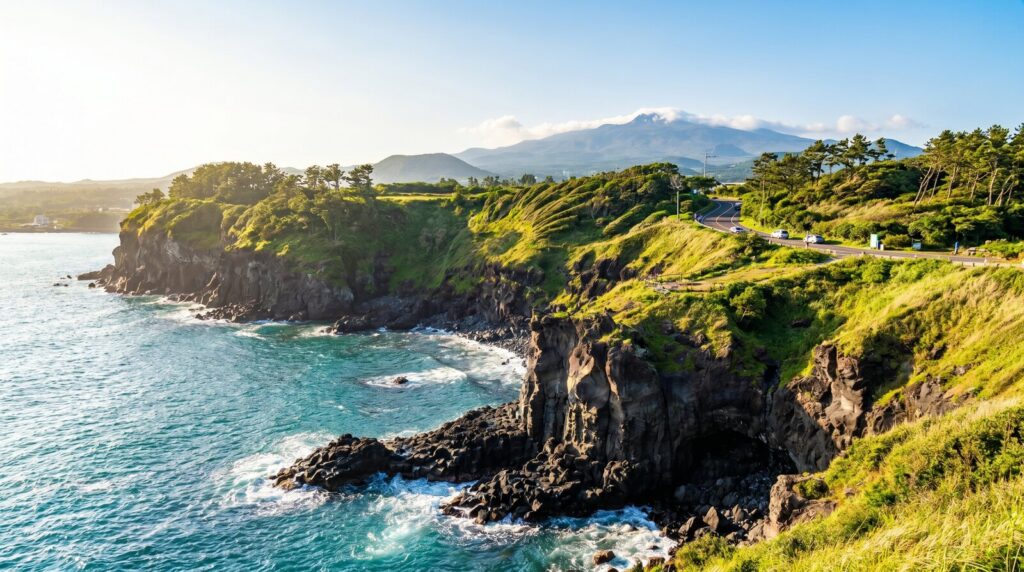
Jeju Island, South Korea: Volcanic Landscapes, Hallasan Summit & Korean Paradise
A dramatic volcanic landscape where hiking, beaches, and local culture converge on Korea’s most enchanting island
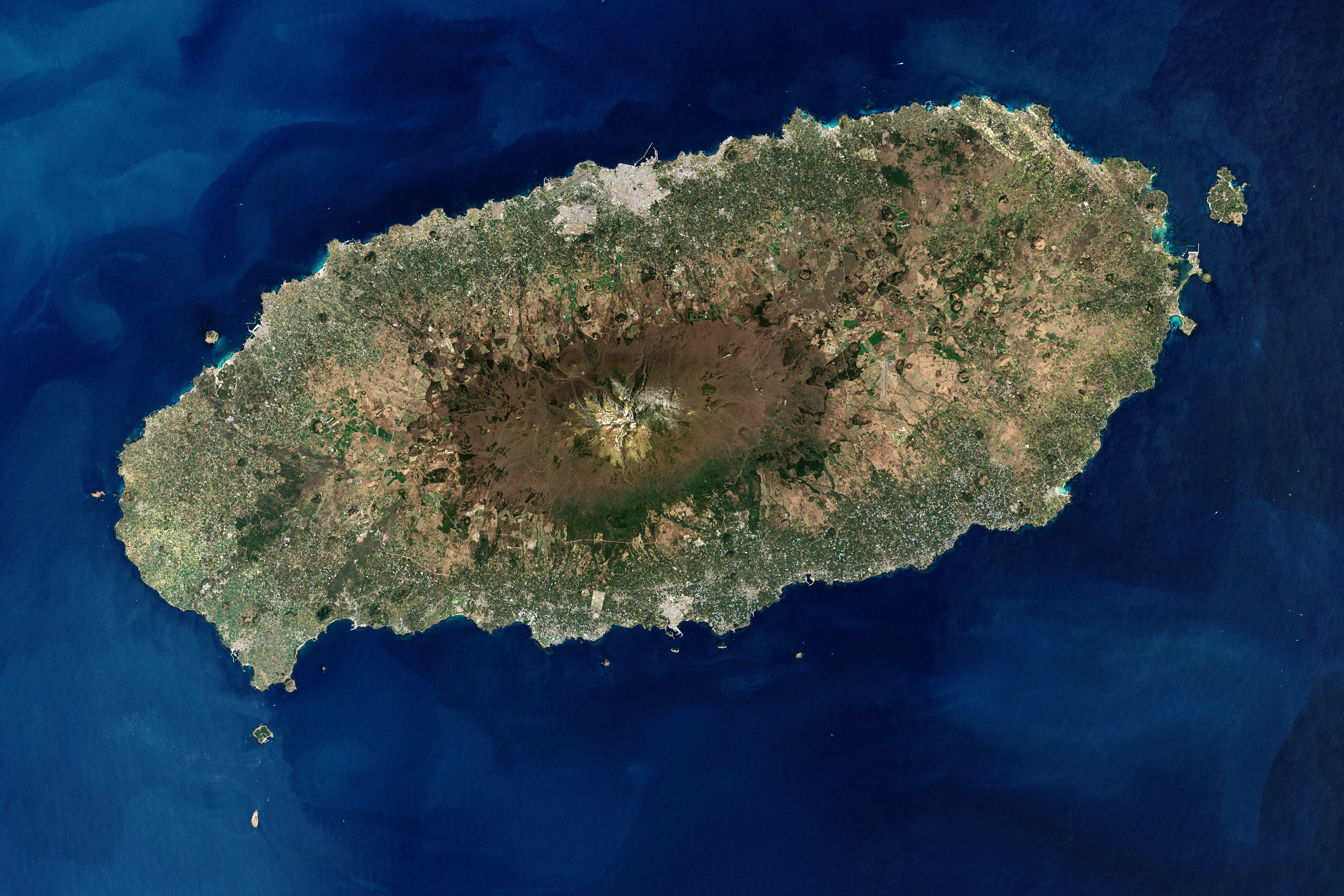
Jeju Island is Korea’s most visited domestic destination, and once you arrive, you understand why. Born from volcanic eruptions hundreds of thousands of years ago, the island’s landscape tells a geological story written in basalt cliffs, lava tubes, and perfectly symmetrical cinder cones. Hallasan, the island’s centerpiece, rises 1,950 meters in a gently sloping dome that demands to be climbed. The summit sits above the clouds, offering (on clear days) views extending to the Korean mainland. Beyond hiking, Jeju offers black sand beaches, haenyeo (female divers) performing traditional free-diving demonstrations, waterfalls plunging into gorges, and some of Korea’s best food. The island feels removed from mainland South Korea—a place with its own dialect, customs, and spirit that’s more closely connected to nature than to urban Korean culture.
In This Guide
Jeju: Volcanic Paradise & Korean Soul
Jeju Island (also written as Cheju) sits 83 kilometers south of mainland Korea, separated enough to develop its own distinct culture and dialect. The island emerged from volcanic activity roughly 2 million years ago, with the last eruptions occurring about 5,000 years ago. This relatively young geology means the landscape is dramatically sculpted—volcanic features dominate the entire island from the center (Hallasan) down to the coasts (dramatic cliffs and lava rock formations).
The island covers 1,849 square kilometers and supports a population of 670,000, making it densely settled by island standards but maintaining a more relaxed atmosphere than mainland Korean cities. The Jeju dialect differs noticeably from standard Korean, and locals retain distinct cultural practices including shamanism and traditional gender roles (historically, women were the primary divers and economic providers).
Tourism has transformed Jeju in recent decades. Once a quiet agricultural island, it’s now Korea’s most popular destination, with flights from mainland Korea arriving constantly and international visitors from all over Asia. Despite development, much of the island retains natural character—the volcanic geology constrains building in some areas, and national parks protect critical ecosystems.
Hallasan: Hiking Korea’s Sacred Mountain
Hallasan represents Jeju’s heart and soul. The mountain, considered sacred in Korean culture, rises as a nearly perfect volcanic cone with a small crater lake at the summit. Hiking to the peak is on the bucket list of many Koreans, and the trails accommodate hikers of all levels—from casual walks to serious mountain expeditions.
The most popular route, the Gwanaumsa Trail (also called Gwaneumsa), covers 8.7 kilometers round-trip and takes approximately 5-6 hours. The trail climbs steadily through changing forest zones—starting in subtropical forest at the base, transitioning through temperate forest with fir and maple trees, and ending in sparse, windswept alpine vegetation near the summit. Hikers witness distinct ecosystems stacked vertically on the mountain, a phenomenon typically seen when traveling thousands of kilometers north.
The alternative Seongpanak Trail is slightly shorter (9.6 km round-trip) but steeper. It also leads to the summit and offers a different perspective of the mountain’s ecology. Many hikers do one trail up and another down, experiencing maximum variety. The summit area is restricted—you must reach it by 3 PM to be allowed higher.
⛰️ Trail Options
Gwanaumsa Trail (most popular), Seongpanak Trail (steeper), and shorter walks for less adventurous hikers at various elevations.
🌲 Ecosystem Zones
Subtropical forest, temperate forest with fir trees, and alpine vegetation. Each zone supports distinct plant and animal species.
Volcanic Landscape & Lava Formations
Beyond Hallasan, Jeju’s volcanic landscape offers extraordinary geological experiences. The island features 183 secondary volcanoes (smaller cones formed by ancient eruptions), many of which remain perfectly intact and hikeable. Seongsan Ilchulbong, the most famous of these, rises 180 meters from the coastal area and offers accessible hiking with panoramic views of the surrounding landscape and ocean.
The lava tubes created by volcanic activity millions of years ago have become popular attractions. Manjangul Cave, one of Korea’s longest lava tubes, stretches 7.4 kilometers (of which 1 kilometer is open to visitors). Walking through these caves, you understand the immense forces that shaped Jeju—the tunnel walls show rippled textures from flowing lava, and the overall scale reveals the power of geological forces.
The island’s black sand beaches are products of volcanic activity—the dark sand consists of basalt fragments created as lava cooled. Beaches like Hyeopjae and Gwanakri offer dramatic contrast between dark volcanic sand and turquoise waters. These beaches are less developed than typical resort beaches, maintaining more natural character.
Beaches, Cliffs & Coastal Wonders
Jeju’s coastline combines dramatic volcanic formations with scenic beaches. The southern coast tends to be less crowded than the northern coast, where most development has occurred. Wajeong Falls, a waterfall plunging into the ocean, is one of Korea’s most iconic natural wonders. The fresh water meets the salt water in a stunning visual and chemical collision.
The island is circumnavigated by the Jeju Olle Trail, a 400+ kilometer coastal hiking route composed of smaller segments. Each Olle (pronounced “alley”) section varies from 10-20 kilometers and can be hiked independently. The trails connect traditional Korean village pathways, creating an experience that’s part hiking, part cultural immersion.
The Teddy Bear Museum, while touristy, provides indoor entertainment on rainy days. However, Jeju’s main appeal lies in natural attractions rather than constructed attractions. The museums and theme parks that have emerged cater primarily to domestic Korean tourists seeking entertainment rather than cultural or natural experiences.
🏖️ Beach Highlights
Black sand beaches, Hyeopjae Beach (less crowded), Wajeong Falls waterfall, and the Jeju Olle coastal hiking trails.
🏔️ Coastal Formations
Columnar basalt cliffs, sea caves, rock formations shaped by water erosion, and dramatic sunset views from various coastal vantage points.
Jeju Culture: Haenyeo, Food & Traditions
Jeju’s most distinctive cultural element is the haenyeo—female divers who free-dive (without modern diving equipment) to collect abalone, sea urchins, and other seafood. This tradition, dating back centuries, was historically one of Jeju’s main economic activities. While modernization has diminished the practice, some haenyeo still dive, and demonstrations can be viewed at Jeju museums and designated performance sites. Watching haenyeo dive is extraordinary—they hold their breath for over a minute while diving 20+ meters deep, moving with remarkable grace and efficiency.
Jeju’s food reflects its island location and volcanic soil. Black pork (Jeju-doem), fed on special grains and endemic to the island, is considered among Korea’s finest meat. Fresh seafood, particularly abalone and sea urchin harvested by haenyeo, appears throughout local cuisine. Jeju tangerines, grown in the island’s subtropical climate, are famous throughout Korea. Gogi guksu (meat noodles) and chogye jjim (lobster casserole) represent classic local dishes.
Shamanic traditions remain strong on Jeju, with shrine festivals occurring throughout the year. The Jeju Haenyeo Festival occurs annually and celebrates the lives and culture of these remarkable women. During this festival, visitors can watch performances, purchase fresh seafood, and learn about haenyeo history.
Planning Your Jeju Adventure
Jeju is easily reached by hourly flights from Seoul, Busan, and other Korean cities. The flight from Seoul takes approximately 1 hour. Most international visitors arrive via Asian hubs (Beijing, Shanghai, Tokyo) with connections to Korea. The island has excellent infrastructure—rental cars are inexpensive, English signage is common in tourist areas, and hotels range from budget to luxury.
💰 Budget Guide
Meals: $8-20 | Black pork BBQ dinner: $25-35 | Hotels from $60/night | Car rental: $40-60/day
🗺️ Getting Around
Rental car recommended for independent exploration. Public buses available but limited. Taxi services expensive. The island is small enough to circumnavigate in 2-3 days.
Spring (April-May) and autumn (September-October) offer the best weather. Summer is hot and humid with occasional typhoons. Winter is cool and can be snowy at higher elevations (including Hallasan summit). Most nationalities receive 90-day visa-free entry to South Korea. The Korean won is the currency; ATMs accepting foreign cards are ubiquitous.
Discover Jeju’s Volcanic Magic
Jeju Island offers what few destinations can—dramatic natural landscape formed by powerful geological forces, combined with living cultural traditions and remarkable local character. Hike Hallasan into the clouds, explore the island’s volcanic formations, watch haenyeo dive deeper than seems possible, and taste food grown on volcanic soil and harvested from the sea.
Start planning your Jeju adventure and prepare to fall in love with Korea’s most enchanting island.