
Kisumu, Kenya: Lake Victoria Sunsets, Hippo Sanctuaries & Lakeside Life

📍 In This Guide
- 🌤️ When to Visit Kisumu
- 💧 Lake Victoria & Dunga Beach
- 🦛 Kisumu Impala Sanctuary
- 🪨 Kit Mikayi Sacred Rock
- 🏛️ Kisumu Museum & City Life
- 🐟 Food: Tilapia, Ugali & Lakeside Flavours
- 🌿 Day Trips: Kakamega Forest & Beyond
🌤️ When to Visit Kisumu
Kisumu sits at 1,131 metres on the northeastern shore of Lake Victoria and enjoys a relatively mild equatorial climate compared to coastal Kenya. The best windows for visiting are the dry seasons: June through August and December through February. July and August are especially pleasant — warm days around 27°C, cool evenings, low humidity, and the lake takes on a deep cobalt colour that photographs exceptionally well.
The long rains (March to May) bring heavy afternoon downpours that can make roads muddy and outdoor activities less reliable, though the surrounding countryside turns a vivid deep green and birdlife peaks dramatically. The short rains (October to November) are lighter and rarely disruptive for more than a few hours per day. Kisumu rewards year-round visits for travellers who understand how to work around tropical rainfall patterns.
💧 Lake Victoria & Dunga Beach
Lake Victoria is the world’s largest tropical lake — 68,800 square kilometres of fresh water shared between Kenya, Uganda, and Tanzania — and Kisumu sits on its northeastern shore with some of the most accessible waterfront on the Kenyan side. The lake defines everything about the city: its economy, its diet, its weather patterns, and the unhurried lakeside rhythm that distinguishes Kisumu from every other Kenyan city.
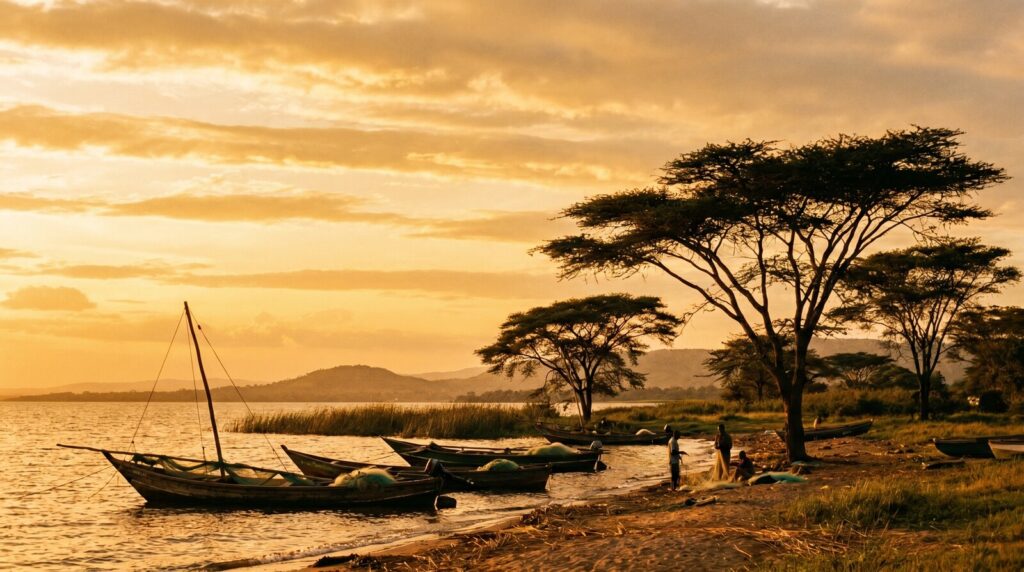
Dunga Beach, 3km south of the city centre, is the most visitor-friendly stretch of waterfront. Traditional wooden fishing boats (ngalawa) return with catches from around 6–8am, and the morning fish market operates with the efficient choreography of a community that has lived this way for generations. You can negotiate boat trips out onto the lake from Dunga — at dawn or dusk, the light on Lake Victoria is extraordinary, with the distant Ugandan hills visible on clear days.
The hippos that live in the papyrus beds around Dunga are regularly visible from the shore or from boats, particularly in the early morning and late afternoon when they emerge to graze. This is a reminder that Lake Victoria’s ecosystem is alive and functioning — approach with respect and stay with experienced local guides.
🦛 Kisumu Impala Sanctuary
The Kisumu Impala Sanctuary is a 44-hectare conservancy on the edge of Lake Victoria, a 10-minute drive from the city centre, and one of the most unusually situated wildlife sanctuaries in East Africa — a genuine wilderness reserve pressed against a major urban area. The sanctuary protects a significant population of impala along with hippos, vervet monkeys, mongooses, and an impressive array of waterbirds including the prehistoric-looking shoebill stork on rare occasions.
Walking through the sanctuary in the early morning is one of Kisumu’s quietly extraordinary experiences. The combination of acacia woodland, Lake Victoria papyrus wetlands, and the distant Kisumu skyline creates a scene that efficiently summarises why western Kenya has its own particular identity within the country. The sanctuary also serves as a rescue and rehabilitation centre for animals confiscated from illegal trade, so there are often unusual residents recovering on-site.
The sanctuary’s Kenya Wildlife Service staff are knowledgeable and worth engaging — they can point you toward the areas of highest activity and provide context on the ecology of the Lake Victoria basin that most visitor guides omit.
🪨 Kit Mikayi Sacred Rock
Kit Mikayi stands 40km from Kisumu along the Kisumu-Bondo Road and represents one of western Kenya’s most quietly powerful cultural sites. The name means “the stone of the first wife” in the Luo language, referring to a local legend about a man who spent so much time at this enormous granite outcrop that his wife complained he visited the rocks more than he visited her. The formation rises 40 metres above the surrounding plains in three massive layered boulders, weathered over millions of years into shapes that seem deliberate from a distance.
Kit Mikayi is a sacred site for the local Luo community, used for prayer, traditional ceremonies, and rites of passage. The climb to the upper viewing platform takes around 20 minutes and delivers panoramic views across the Nyanza landscape. The surrounding area is home to resident baboon troops and various woodland birds. Visiting with a local guide from Kisumu adds significant context to what would otherwise be an impressive but unexplained rock formation.
🏛️ Kisumu Museum & City Life
The Kisumu Museum, run by the National Museums of Kenya, is one of the better regional museums in the country and significantly undervisited as a result. The permanent collection covers the natural history of the Lake Victoria basin, the archaeology of the region from the earliest stone tool users through the Iron Age, and detailed ethnographic exhibits on the Luo, Luhya, Nandi, and Kipsigis communities of western Kenya. The outdoor traditional homestead reconstruction is particularly well done — several intact examples of traditional Luo architecture preserved with original furnishings and explanatory context.
The city centre around Oginga Odinga Street (named for Kenya’s first Vice President, a Kisumu native) hums with a commercial energy particular to lake port cities — fish traders, textile merchants, mobile money agents, and the inevitable matatu conductors producing a constant cheerful chaos. The Jubilee Market is the best place to experience the full commercial spectrum of western Kenya’s produce: Lake Victoria tilapia laid out on tables alongside maize, sorghum, cassava, sukuma wiki, and spices that arrive overland from Uganda.
🐟 Food: Tilapia, Ugali & Lakeside Flavours
Kisumu’s food identity centres on Lake Victoria tilapia, and with good reason — freshwater tilapia pulled from the lake hours before serving and fried or grilled over open charcoal is one of the genuinely excellent meals available in Kenya. Dunga Beach has several open-air restaurants where you select your fish from the display, specify your preparation, and eat at plastic tables while watching boats navigate the papyrus beds. The meal costs less than you’d expect and tastes better than almost anything in Nairobi’s upscale restaurants.
Ugali — the dense maize flour cake that forms the staple starch of western Kenya — pairs with the tilapia in the traditional combination that Luo households have eaten for generations. It arrives as a smooth white mound, pulled apart by hand and used to scoop fish and the accompanying greens (sukuma wiki or steamed managu). Eating this meal with your hands at a lakeside establishment, while the sun sets over Lake Victoria, is one of the more honest travel experiences in East Africa.
The city also has an improving café and restaurant scene around the central business district. Octopus Garden Restaurant and Imperial Hotel’s restaurant both serve reliable Kenyan and continental food at reasonable prices. For breakfast, the tea houses around the bus station serve strong Kenyan chai and mandazi (fried dough) starting at 6am.
🌿 Day Trips: Kakamega Forest & Beyond
Kakamega Forest, 55km north of Kisumu, is the easternmost remnant of the great Central African rainforest that once stretched unbroken to the Atlantic. Entering Kakamega feels like passing through a botanical threshold — the forest has its own microclimate, temperature, and an extraordinary biodiversity that includes species found nowhere else in Kenya. The De Brazza’s monkey, the red-tailed monkey, and over 380 bird species including the great blue turaco make it one of East Africa’s premier birding destinations.
Ndere Island National Park, accessible by boat from Kisumu (about 45 minutes), offers genuine wilderness solitude uncommon in this region of Kenya. The island sits in Lake Victoria and supports healthy populations of hippos, Nile monitor lizards, and breeding colonies of waterbirds. Day-trip boat charters from Dunga Beach serve the island — bring your own food and water as there are no facilities on the island itself.
The Ruma National Park, 2 hours south of Kisumu in Homa Bay County, protects one of Kenya’s last roan antelope populations alongside Jackson’s hartebeest, oribi, and occasionally leopard. It remains one of Kenya’s least-visited parks — arriving here requires effort, but you’re likely to have the park largely to yourself.
Where the Lake Sets the Pace
Kisumu doesn’t try to compete with the safari circuits or the coast — it offers something different and rarer: an authentic, living African city with extraordinary natural assets on its doorstep and a cultural confidence that comes from knowing exactly who it is. The lake, the fish, the hippos at dawn, the sacred rocks, the deep green forest an hour to the north — Kisumu rewards those who come with curiosity rather than a checklist.
❓ Frequently Asked Questions
What is Kisumu known for?
Kisumu is best known as Kenya’s third-largest city and the gateway to Lake Victoria, Africa’s largest lake. The city is famous for its hippo sanctuaries, fresh tilapia fish markets, and stunning lakeside sunsets.
Is Kisumu safe for tourists?
Kisumu is generally safe for tourists who take standard precautions. The city center and lakefront areas are well-traveled, though as with any city, visitors should stay aware of their surroundings, especially after dark.
How do you get to Kisumu from Nairobi?
You can fly from Nairobi to Kisumu in about 50 minutes with daily flights on Kenya Airways and other carriers. Alternatively, the road journey takes approximately six hours via the Nairobi-Nakuru-Kisumu highway.
What is the best time to visit Kisumu?
The best time to visit Kisumu is during the dry seasons from January to February and June to October, when rainfall is minimal and outdoor activities around Lake Victoria are most enjoyable.