
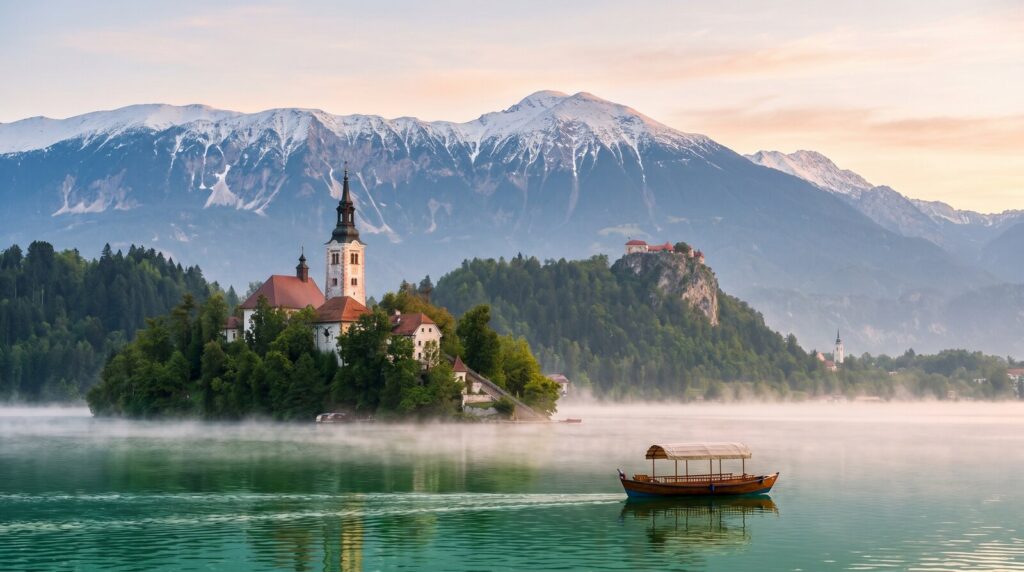
Lake Bled, Slovenia: Island Church, Julian Alps & Slovenia’s Fairy Tale
Lake Bled is Slovenia’s postcard masterpiece—a perfectly composed landscape that looks too beautiful to be real. Perched high in the Julian Alps, this glacial lake reflects surrounding peaks like a mirror, creating the kind of scenery that Instagram was invented to showcase. Yet beyond the photograph-perfect aesthetic lies something deeper: an honest Alpine community where traditional lifestyle persists alongside modern tourism, where nature still dominates human settlement, and where ancient spirituality meets contemporary life in genuine ways.
The lake’s most iconic element—a tiny island church accessible by rowing—appears in travel guides worldwide, yet the reality exceeds the imagery. Standing on the lake’s shore, watching morning mist rise from the water while church bells echo across Alpine valleys, you understand why this place has captivated pilgrims, poets, and travelers for centuries. Lake Bled rewards those who venture beyond organized tours to discover authentic Alpine culture, hidden trails, and the genuine mountain hospitality that makes the region special.
In This Guide
The Island Church: Pilgrimage & Tradition
The Church of the Assumption sits on Bled Island, a small landmass in the lake’s center accessible only by boat. This 17th-century baroque church replaces an earlier structure burned during Ottoman raids, yet pilgrims have visited this sacred site for centuries. The current church, with its distinctive red roof and 27-meter bell tower, creates the iconic silhouette visible from every lakeside vantage point.
Reaching the island requires hiring a traditional wooden rowboat (pletna) operated by local boatmen. The journey takes about 10 minutes, and the boatman typically shares history and local stories during the crossing. Arriving on the island, you encounter stone steps leading to the church entrance. Inside, the baroque interior features ornate decorations, wooden furnishings, and the famous wishing bell—tradition holds that if you ring the bell while making a wish, it will come true.
The pilgrimage tradition endures with visitors making vows, ringing the bell, and leaving candles as offerings. Weddings occur regularly at the island church, with newlyweds arriving via boat as guests watch from the shore. The boat arrival tradition—where grooms carry brides from boat to shore—adds theatrical drama to local wedding culture. Photography from the shore captures these ceremonies in stunning Alpine backdrop, creating scenes that define romantic travel imagery.

The island’s modest size means visitors spend perhaps 20-30 minutes exploring before returning to shore. This brevity is deliberate—the church and island preserve their spiritual character by limiting crowding. The journey matters as much as the destination; the rowing across pristine water, the approach to the island, and the return all contribute to the pilgrimage experience that makes Lake Bled spiritually significant beyond its aesthetic appeal.
Bled Castle: Medieval Fortress Overlooking Majesty
Perched on a cliff 130 meters above the lake, Bled Castle dominates the landscape like a storybook fortress. Dating to the 11th century, the castle served defensive and administrative purposes for centuries before transitioning to a museum and tourist destination. The castle’s white walls and red-tiled roofs create striking contrasts against the emerald lake and surrounding forest.
The castle’s history reflects the region’s complex past. Built by the German prince Henry VIII to control the valley and collect taxes from passing merchants, the castle changed hands repeatedly during Austro-Hungarian, French, and finally Slovenian rule. The original fortifications included defensive walls and towers designed to withstand medieval siege warfare. Later additions including residential quarters and administrative buildings transformed the fortress into a functioning castle rather than purely military installation.
Today’s castle houses museums exploring regional history, a restaurant with panoramic views, and gift shops catering to tourists. The castle courtyard hosts summer concerts and theatrical performances, animating the medieval space with contemporary culture. The dungeon exhibits explain medieval life and punishment methods, while weapons displays illustrate the castle’s military purpose. The view from castle ramparts encompasses the entire lake, surrounding villages, and distant Alpine peaks—one of Slovenia’s finest vistas.
Castle Printing House
A working printshop demonstrates centuries-old printing techniques. Visitors can watch artisans operate wooden presses and create printed items—connecting historical technology with contemporary craftsmanship.
Castle Dungeon Museum
The dungeon’s exhibits explore medieval justice systems, torture devices, and imprisonment practices. Graphic displays and historical context create sobering reflection on historical punishment approaches.
Lake Activities: Rowing, Swimming & Paddling
Lake Bled’s primary appeal involves water activities. The traditional pletna boats, carved from single wood blocks and designed for generations, remain the most iconic transport. Beyond the island church pilgrimage, experienced rowers can rent pletnas independently for multi-hour explorations. Rowing across the pristine water while surrounded by Alpine peaks creates meditative experiences increasingly rare in contemporary travel.
Kayaking offers different perspectives than rowing. Paddling slowly around the lake’s perimeter provides intimate views of cliff faces, hidden coves, and wildlife. The lake’s shallow areas feature water clear enough to see vegetation below. Early morning paddling, before tourist crowds arrive, offers solitude and genuine connection to the landscape. Guided kayak tours depart regularly, providing rentals, safety equipment, and route planning.
Swimming in Lake Bled requires hardy determination. The water temperature rarely exceeds 10-12°C even in summer, making extended swimming uncomfortable for non-accustomed swimmers. However, brave visitors regularly jump into the frigid water, particularly from beaches during warm afternoons. Local swimming culture embraces the cold as character-building, creating communal experiences where shared discomfort becomes bonding activity.
Paddle boating—renting pedal-powered boats—provides family-friendly alternatives to rowing. These boats accommodate multiple passengers and require minimal physical effort compared to rowing, making them ideal for visitors less concerned with athletic exertion. The leisurely pace allows photography, conversation, and observation of Alpine scenery without distraction from physical effort.
Alpine Hiking: Trails Through the Julian Alps
Lake Bled serves as a gateway to the Julian Alps, a mountain range offering trails for every fitness level. Gentle walks around the lake perimeter take two hours and provide constant lake views. Moderate hikes ascend surrounding ridges, offering expansive vistas across Alpine valleys. Challenging routes reach higher elevations and require proper equipment and experience.
The Ojstrica viewpoint, accessible via a 30-minute trail from town, provides one of Lake Bled’s most photographed perspectives. From this elevation, the island church appears in perfect compositional balance with surrounding mountains. The trail itself winds through beech forest before opening to panoramic vistas. Arriving at sunrise rewards early walkers with golden light illuminating the lake while mist rises from its surface.
More ambitious hikers pursue routes toward higher Alpine peaks. Triglav, Slovenia’s highest mountain at 2,864 meters, dominates the skyline above Lake Bled. A two-day ascent from Lake Bled requires proper mountaineering equipment and experience, yet provides accomplishment stories treasured for lifetimes. Less extreme Alpine hikes reach ridges with spectacular views without requiring technical climbing skills.
Mountain trails throughout the region feature Alpine huts offering meals and overnight accommodation. These huts—ranging from simple shelter to comfortable lodges—support multi-day Alpine trekking. The hut culture reflects Alpine tradition where mountaineering is a respected community activity rather than extreme sport. Sharing meals with other hikers in mountain huts creates communal experiences increasingly rare in contemporary travel.
Thermal Springs & Spa Culture
The region surrounding Lake Bled features thermal springs created by geothermal activity deep underground. These mineral-rich waters maintain consistent temperatures year-round, supporting spa culture and wellness tourism. Several resort spas operate within short distances from Lake Bled, offering treatments ranging from simple thermal bathing to elaborate wellness packages.
The tradition of thermal spa use extends centuries, with monks and nobility historically believing in healing properties of naturally heated water. Contemporary spas combine traditional bathing practices with modern wellness services, creating hybrid experiences blending historical tradition with contemporary luxuries. Hot stone massage, herbal treatments, and mineral water immersion define the spa experience.
Many travelers combine Lake Bled’s outdoor activities with spa relaxation. A morning hiking expedition around the lake followed by afternoon thermal spa bathing creates balanced wellness activities appealing to adventure-seekers and relaxation-focused travelers alike. The contrast between Alpine exertion and warm-water recovery creates satisfying rhythmic experiences.
Local Culture: Cream Cakes & Alpine Tradition
Bled Cream Cake (Bledski Ostanki) is not merely a dessert but a cultural institution. This thin sponge cake layers with custard cream, chocolate, and protective frosting—a recipe developed in the 1950s and now produced exclusively by licensed local bakeries. Eating authentic Bled Cream Cake while overlooking the lake represents quintessential Lake Bled experience. The cake’s delicate balance—crispy exterior, creamy interior, subtle chocolate notes—rewards attention.
Alpine tradition permeates Lake Bled’s contemporary culture. Traditional wooden buildings with broad overhanging roofs accommodate heavy snow loads. Mountain meadows dotted with haystacks represent sustainable farming practices unchanged for generations. Local residents maintain Alpine crafts including woodcarving, textile production, and traditional cooking methods. This preservation reflects genuine community values rather than tourism-driven cultural performance.
Visiting local farms provides authentic cultural immersion. Many Alpine farms operate as agritourism destinations, offering accommodations and farm experiences. Guests participate in daily activities—milking cows, making cheese, harvesting crops—creating hands-on connection to Alpine lifestyle. These experiences reveal how communities dependent on mountains maintain sustainable relationships with their environment.
Lake Bled’s community maintains genuine Alpine traditions while accommodating tourism thoughtfully. Local businesses balance economic benefits of tourism with preservation of authentic culture. This balance—imperfect but genuine—makes Lake Bled feel less commercialized than many comparable Alpine destinations.
Experience Alpine Magic at Lake Bled
Lake Bled delivers on its legendary promise. The island church, Alpine vistas, and surrounding hiking trails create genuine travel magic without requiring compromises on authenticity. Whether you’re ringing the wishing bell, hiking to mountain peaks, or simply contemplating the lake’s pristine waters, Lake Bled offers the kind of transformative Alpine experiences that define memorable travel.