
Mérida: Cenotes, Mayan Ruins & the Yucatán’s Cultural Capital
Discover Mexico’s most elegant city, where Mayan civilization meets colonial grandeur
In This Guide:
- Mérida City Center: Colonial Elegance & Yucatecan Soul
- The Main Plaza (Zócalo): Heart of Everything
- Cenotes: Swimming in Sacred Waters
- Chichén Itzá: The Most Famous Mayan Site
- Uxmal: The Pyramid of the Magician
- Yucatecan Cuisine: Regional Flavors & Family Recipes
- Markets & Crafts: Artisanal Traditions
- Day Trips & Adventure Activities
Mérida City Center: Colonial Elegance & Yucatecan Soul
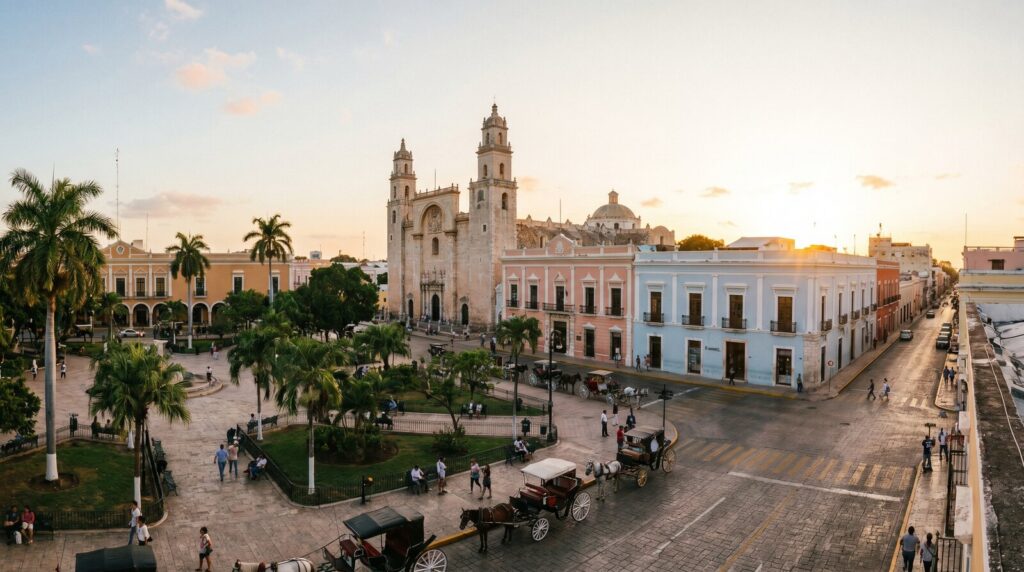
Mérida is Mexico’s most sophisticated provincial city. Unlike touristy Cancún or beachfront Playa del Carmen, Mérida feels genuinely Mexican—where locals outnumber tourists and the city functions for residents rather than visitors. Pastel-colored colonial mansions line streets. Bougainvillea drapes from walls. The architecture blends Spanish conquest with Mayan foundation with 21st-century reinvention.
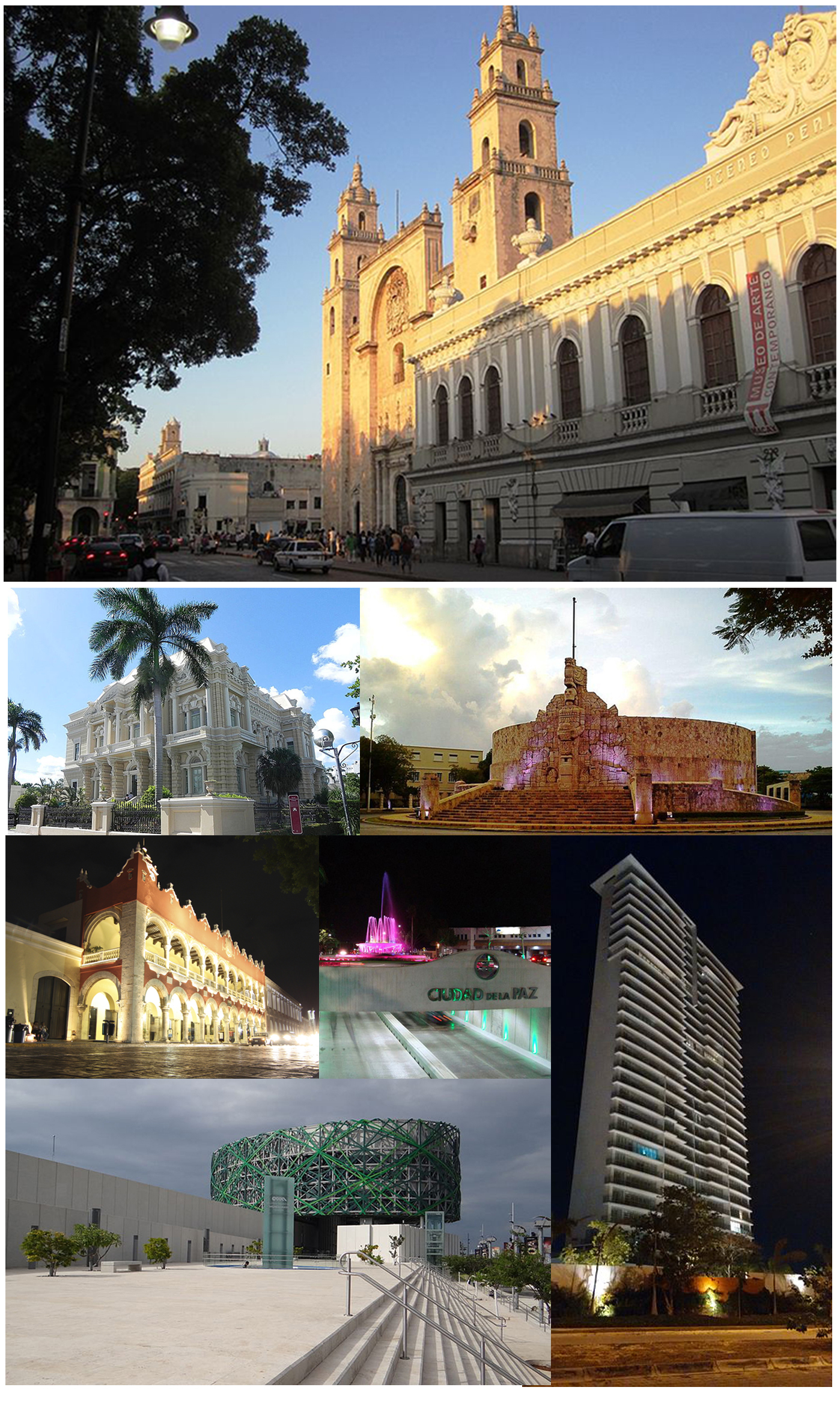
The city has undergone a renaissance. Young chefs are reimagining Yucatecan cuisine. Galleries and cultural spaces occupy colonial buildings. The city attracts artists, writers, and adventurers seeking authenticity. Yet it hasn’t lost character through gentrification—it maintains its working-class neighborhoods, street vendors, and local rhythms.
Walking Mérida’s streets, you’ll encounter colonial facades transitioning from crumbling to beautifully restored to occupied-by-locals to turned-into-galleries. The diversity is refreshing—real cities, not theme parks.
The Main Plaza (Zócalo): Heart of Everything
The Zócalo is Mérida’s beating heart. A massive plaza surrounded by the cathedral, municipal buildings, and colonial mansions, it functions as the city’s living room. Locals gather for evening paseos (social strolls), street musicians perform, vendors sell local food, and the atmosphere is authentically communal.
Circling the plaza, you’ll find excellent restaurants with views. Casa Montejo (a colonial mansion now open to public and dining) offers insight into how wealthy Spanish families lived. Shops selling guayaberas (traditional lightweight shirts), hammocks, and local crafts cluster around the plaza.
Evening is the magic time. As sun sets, locals emerge with strollers, couples hand-in-hand, families in their finest clothes. The plaza transforms into a living celebration of community. Sit at a café, order horchata or local beer, and observe Yucatecan life unfold.
Visit the Zócalo around 8 PM on Friday or Saturday when the plaza hosts live music and feels most vibrant. Avoid 2-4 PM when heat peaks and most locals escape to air conditioning.
Cenotes: Swimming in Sacred Waters
Cenotes are natural sinkholes where limestone bedrock has collapsed, revealing freshwater underground aquifers. The Yucatán contains 7,000+ cenotes, many swimmable and accessible. For the Mayan people, cenotes were sacred—literally and spiritually—the connection between terrestrial and underwater worlds.
Modern cenotes vary dramatically. Some are pristine underground lakes surrounded by stalactites—like swimming inside a cathedral carved by time. Others are open-air pools surrounded by jungle. Water is cool (24°C year-round), crystal-clear, and refreshing. Most cenotes near Mérida charge modest entry fees (50-150 pesos/$3-9).
Popular cenotes near Mérida include Hacienda Mucuyché (open-air with restaurant), Dzibilchaltún (archaeological site with cenote), and Cenote Ik Kil (underground cavern). Each offers unique experiences. Some have changing facilities and restaurants; others are more rustic. Bring swimmers and towel.
Visit cenotes early morning before heat peaks and crowds arrive. The water feels incredible as sun strikes it. Bring underwater camera—the color of cenote water is unforgettable. Don’t touch stalactites or disturb wildlife.
Chichén Itzá: The Most Famous Mayan Site
Chichén Itzá is Mexico’s most visited Mayan ruin for good reason—it’s spectacular. The site showcases the evolution of Mayan civilization across centuries. The dominant structure is El Castillo (The Castle), a 24-meter pyramid with perfectly geometrical design. During equinoxes, the shadow of the stone serpent crawls down the pyramid’s side—ancient astronomers knew their craft.
Nearby structures reveal different eras: the Cenote Sagrado (sacred well), the Ball Court (largest in Mesoamerica), the Temple of Warriors (decorated with 200+ columns carved as soldiers). The scale is staggering. Walking among these structures, you grasp the sophistication of Mayan engineering and aesthetics.
Crowds are significant—up to 2,000 tourists daily. Visit early (site opens 8 AM) or late (closes 5 PM) to avoid peak hours. A guide (available at entrance, 300-500 pesos) greatly enhances understanding. The psychological/spiritual impact of standing before structures built 1,500+ years ago, without modern tools, is profound.
Book tours directly from Mérida hotels rather than through middlemen. Tours cost 400-600 pesos and include transportation, entrance, and often lunch. The 2-hour drive from Mérida each direction allows full afternoon at the site.
Uxmal: The Pyramid of the Magician
Uxmal (pronounced “oosh-mahl”) sits south of Mérida and feels more refined than Chichén Itzá. This “Mayan Athens” showcases the Puuc architectural style—characterized by horizontal lines, geometric patterns, and sophisticated proportion. The dominant structure is the Pyramid of the Magician (75 meters tall), built atop elliptical base—unusual for pyramids and architecturally daring.
Uxmal feels less touristy than Chichén Itzá, though still busy. The architecture rewards close examination—details reveal Mayan obsession with pattern, symbol, and harmony. The Ball Court here is smaller but more beautifully decorated than Chichén Itzá’s. The Governor’s Palace stretches across the plaza like a stone symphony.
Uxmal is 80 kilometers from Mérida—requires more effort than Chichén Itzá but rewards with more intimate experience. Light-and-sound shows happen nightly (in Spanish and English), offering theatrical presentation of Mayan history against illuminated pyramids.
Yucatecan Cuisine: Regional Flavors & Family Recipes
Yucatecan food is distinct within Mexico—influenced by Mayan foundation, Spanish conquest, and Caribbean trade. Unique dishes include cochinita pibil (slow-roasted pork marinated in citrus and achiote), lime soup with chicken, fresh seafood (ceviche, ceviches), and panuchos (fried tortillas topped with refried beans and meat).
Ingredients characteristic to the region: achiote (annatto seeds), habanero chiles, bitter oranges, citrus marinades, coconut milk. Flavors are complex—earthy, spicy, tangy, fresh. Local restaurants serve authentic Yucatecan food at fraction of tourist-area prices.
Dining recommendations: eat where locals eat. Market restaurants and family-run establishments serve generous portions at 50-100 pesos ($3-6). Upscale restaurants cost 150-300 pesos ($9-18). Street vendors sell empanadas, elotes (corn), and fresh fruit. Everything is affordable and authentic.
Learn to say “¿Qué recomienda?” (What do you recommend?) and trust local suggestions. Try everything. Habanero peppers are hot but magnificent. Fresh lime on everything transforms flavors. Drink horchata (rice drink), Jamaica tea, and agua fresca.
Markets & Crafts: Artisanal Traditions
Mérida’s markets overflow with traditional crafts. Hammocks (hamacas) are a regional specialty—locals still sleep in them, and they’re surprisingly comfortable. Guayaberas (lightweight embroidered shirts) are perfect for tropical climate. Henequén (sisal fiber) products—bags, hats, mats—showcase sustainable materials.
Traditional textiles feature Mayan designs. Pottery and ceramics reflect colonial and indigenous aesthetics. Markets like Lucas de Galvéz (Merced Market) buzz with activity—vendors, locals shopping, incredible energy. Getting lost in markets is part of the charm.
Haggle respectfully in markets. Prices are not fixed, but aggressive negotiation is considered rude. A gentle “¿Es tu mejor precio?” (Is that your best price?) often results in small discount. Supporting artisans directly supports the local economy.
Facts About Mérida
Climate & Seasons
Mérida is hot year-round (25-35°C). Hurricane season runs June-November—mostly dry and manageable but can bring serious storms. Best weather: December-April (dry, mild). Monsoon season brings afternoon rains May-September.
Transportation Network
Mérida connects to major sites via colectivos (shared minibuses) and organized tours. Chichén Itzá (2 hours), Uxmal (2 hours), cenotes (30 minutes). Renting cars is option but local transportation is cheaper and easier.
Fiesta Culture
Mérida hosts fiestas constantly. December’s Fiesta de la Inmaculada brings parades, music, fireworks. October’s Festival brings live performances. These celebrations showcase Yucatecan joy and community spirit.
Mayan Language Alive
Unlike much of Mexico, the Yucatecan Mayan language still has native speakers (150,000+). You’ll hear it spoken in markets and rural areas. Learning basic phrases (“Hola” → “Holo” in Mayan) honors indigenous heritage.
Ready to dive into cenotes, explore ancient pyramids, and experience Mexico’s most authentic city? Book your Mérida adventure and discover the Yucatán’s magic.