
Bergen: Gateway to the Fjords, Bryggen’s Colors & Norway’s Rainiest (Best) City
Discover Scandinavia’s most romantic port city where mountains meet the sea
In This Guide:
- Bryggen: The Hanseatic Harbor & UNESCO Wonder
- The Seven Mountains: Bergen’s Geographic Drama
- Fløibanen Funicular: Views from Above the Clouds
- Geirangerfjord & Sognefjord: Fjord Expeditions
- Fish Market: Seafood Paradise & Street Cuisine
- Troldhaugen: Edvard Grieg’s Musical Legacy
- Rain Culture: Embracing Bergen’s Wet Climate
- The Best Time to Visit (Spoiler: Anytime)
Bryggen: The Hanseatic Harbor & UNESCO Wonder
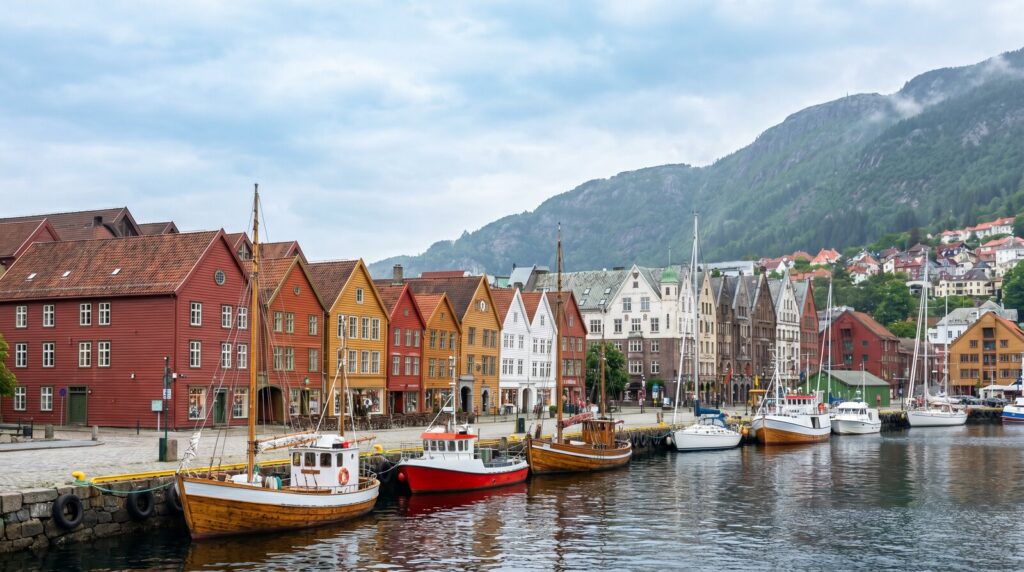
Bryggen is Bergen’s soul. This UNESCO-listed wharf contains 62 wooden buildings painted in colors that seem impossible—crimson, mustard, seafoam, sapphire. The structures date from the 14th-17th centuries when German merchants controlled this harbor, trading fish for grain and establishing one of the Hanseatic League’s most important trading posts.

Today Bryggen operates simultaneously as historic monument, living neighborhood, and tourist destination. Ground floor galleries, shops, and restaurants occupy the old merchant houses. Upper floors serve as apartments where locals actually live and work. The result feels authentic rather than theme-parked—you’ll find professional artists, real cafés, and locals navigating the cobbles with tourists.
Walk the narrow alleyways between buildings and you’ll discover tiny courtyards, hidden passages, and intimate museums. Photography here is almost uncontrollable—every angle is picturesque. The light changes constantly as clouds move across mountains.
Visit Bryggen early morning or during rain when tourists clear out. The atmosphere shifts from museum-like to genuinely atmospheric. The wet cobbles reflect colorful façades in puddles—better than any clear-day photo.
The Seven Mountains: Bergen’s Geographic Drama
Bergen is surrounded by mountains so dramatically positioned that the city feels like it’s inside an amphitheater. Ulriken, Fløyen, Løvstakken, and others create a natural fortress. Hikers can reach most peaks within 1-2 hours from the city center. Summer trails offer wildflowers and expansive views; winter brings snow, cold, and mystical landscapes.
Ulriken (643m) is the tallest and offers a cable car (Ulriksbanen) for non-hikers. Fløyen (320m) is accessible via the Fløibanen funicular, offering restaurant, observation deck, and extensive hiking from the top. The views encompass Bryggen, the harbor, fjords stretching toward distant mountains, and the city below.
Take the funicular up and hike down. Trail loops from Fløyen summit offer various difficulty levels and return you to the city from different angles. Bring rain gear—weather changes rapidly, and fog can descend suddenly.
Fløibanen Funicular: Views from Above the Clouds
The iconic Fløibanen funicular has transported visitors up Fløyen mountain since 1918. Today it’s Norway’s most-used mountain railway with 4+ million passengers annually. The ride takes 8 minutes and covers 320 meters elevation. At the summit, a restaurant, gift shop, and observation areas offer panoramic views.
From the top, you grasp Bergen’s geography viscerally. The city sprawls below. Mountains rise beyond. Fjords thread between land masses. Clouds often hover at mid-height, making the peak feel isolated from the world below. Early morning or sunset light transforms everything into watercolor painting.
Geirangerfjord & Sognefjord: Fjord Expeditions
Bergen serves as the departure point for fjord cruises. Two fjords deserve your attention: Geirangerfjord (most famous, surrounded by waterfalls) and Sognefjord (longest, deepest, wildest). Full-day tours depart daily from the harbor. Shorter cruises (4-6 hours) combine harbor scenery with fjord experience. Longer trips (2-3 days) include mountain lodges and hiking.
Geirangerfjord feels dramatic—waterfalls plunge hundreds of meters directly into the water. Cruise operators strategically position boats so you can see your reflection among the cascades. The water is so clear you can see boulders 20+ meters deep. It feels primordial.
Sognefjord extends 205 kilometers inland. Some branches reach town-size villages. Others terminate in glaciers. The fjord feels less touristy than Geirangerfjord—you’ll encounter more locals, smaller villages, and less-known beauty.
Book tours directly with operators rather than through tour companies. Prices are equivalent but support local businesses. Cruise in May-September when weather is stable and daylight extends into evening. Winter cruises offer Northern Lights possibilities but cold and storms.
Fish Market: Seafood Paradise & Street Cuisine
Bergen’s Fish Market (Fisketorget) dates to 1276 and remains the city’s culinary heart. Today it blends traditional wet market with tourist-friendly food vendors. You’ll find Norwegian seafood: salmon, cod, halibut, prawns, sea urchins. Local specialties like fish soup and marinated herring are exceptional.
Wander the stalls, sample products, and chat with vendors. Prices are reasonable: a portion of smoked salmon costs 80-100 NOK ($8-10). Fish soup runs 90-120 NOK. For sit-down dining, restaurants surrounding the market offer prepared seafood at higher prices but in comfort.
Dining recommendation: buy raw ingredients from the market and prepare them at your rental accommodation. Norwegian cuisine at home—cooking fresh fish, local vegetables, artisanal bread—is memorable and affordable.
Troldhaugen: Edvard Grieg’s Musical Legacy
Edvard Grieg, Norway’s most famous composer, lived in a charming villa outside Bergen. Troldhaugen (Troll Hill) now functions as a museum preserving his home, workspace, and personal effects. The villa’s musical studio overlooks a lake—it’s easy to imagine him composing in such surroundings.
The museum operates as a working concert venue. Chamber performances happen regularly, often in Grieg’s original studio. Hearing a string quartet in the room where Grieg composed is profoundly moving. Performances happen evenings and weekends—check ahead.
Rain Culture: Embracing Bergen’s Wet Climate
Bergen receives more rain than London, Seattle, or most places on Earth. Rather than viewing this as a drawback, Norwegians embrace it. The phrase “det finnes ikke dårlig vær, bare dårlige klær” (there’s no bad weather, only bad clothing) defines the mindset. Rain creates drama, mist frames mountains mysteriously, and locals radiate resilience.
Pack proper rain gear (not just a light jacket). Invest in a quality waterproof jacket and pants. Waterproof hiking boots transform rainy days from miserable to adventurous. Layers work better than bulk—remove/add as needed. Locals prioritize staying dry and comfortable.
Rain days offer unique advantages. Crowds disappear. Bryggen’s colorful buildings reflect in wet cobbles creating surreal beauty. Fjord mist reveals landscape in dramatic ways. Rainy evening wandering through old streets with warm coffee feels authentically Norwegian.
Facts About Bergen
The Hanseatic League
The Hanseatic League was a powerful medieval merchant confederation. Bergen was one of four major trading posts (others: London, Bergen, Bergen). German merchants controlled this harbor for 400+ years, creating Bryggen’s character.
Northern Lights Winter
While Tromsø in northern Norway is famous for Aurora, Bergen occasionally offers Northern Lights during clear winter nights. The displays are rarer but stunning when they occur.
Midnight Sun Summer
Bergen doesn’t experience midnight sun as dramatically as northern regions, but June evenings stay light until 11 PM. Summer hiking and activities can extend into late evening.
Viking Heritage
This region was the birthplace of Norwegian statehood. King Haakon established his court near Bergen. The city remains a symbol of Norwegian independence and maritime tradition.
Ready to experience Bergen’s fjords, Bryggen’s colors, and Nordic beauty? Embrace the rain and book your Norwegian adventure today.